English







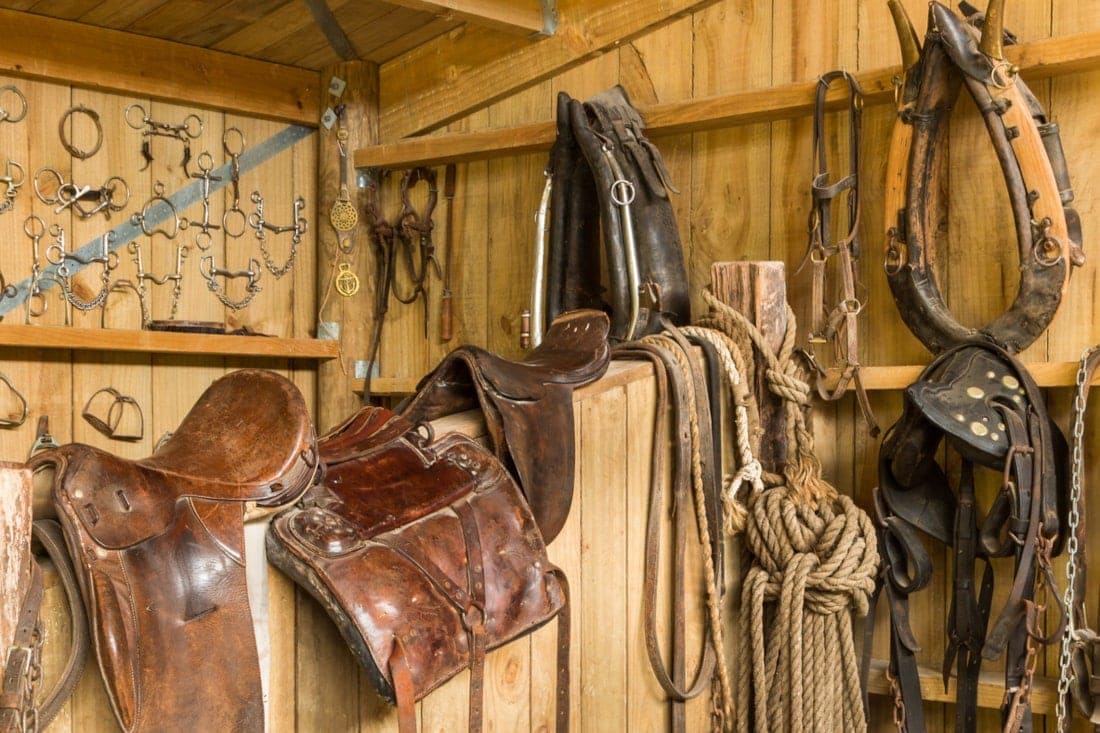
Do you ever get tack room envy scrolling through Instagram and seeing those perfectly staged barn setups? In reality, a well-organized tack room isn’t about maintaining a photoshoot-ready space; it’s about designing a layout that makes daily barn work easier while keeping your equipment protected and accessible.
A clean and tidy tack room makes it easier to find the accessories and equipment you need, reduces dust and moisture exposure, discourages rodents, and prevents unnecessary wear on saddles, bridles, and other gear.
Clutter is more than an inconvenience; crowded aisles, unstable storage, and misplaced supplies can lead to tripping hazards or damaged tack. In busy barns, searching for a missing girth or sorting through tangled bridles can delay training schedules and disrupt the flow of daily routines.
Whether you’re maintaining your personal barn or managing a shared tack room with multiple riders, efficient organization improves workflow, saves time, and reduces lost equipment and day-to-day frustration.
This guide outlines practical, space-saving strategies that work from layout planning, smart storage systems, cleaning stations, seasonal rotation, and organizational methods that keep equipment accessible and protected. With thoughtful design and consistent upkeep, any tack room can become a clean, functional hub that supports the demands of daily horse care.
Tack Room Organization
Tack and equipment represent some of the highest-value investments equestrians make. Saddles, bridles, girths, boots, grooming supplies, and training tools add up quickly, particularly in multi-horse households, boarding barns, or lesson programs.
Whether your barn uses individual tack lockers, shared storage areas, wall-mounted racks, or a combination of systems, proper organization helps keep equipment protected, functional, and easy to find. Gear that’s stacked in corners or stored on unstable hooks is more likely to crack, mold, rust, or become damaged by rodents and other barn pests.
Good organization also supports better biosecurity. Clear storage zones reduce the chance of contaminated items touching clean equipment, prevent horses or pets from accessing products they shouldn’t, and make it easier to keep high-traffic areas clean and disinfected.
In shared barns, clutter creates more than inconvenience; it can lead to confusion, lost or misplaced gear, and unnecessary conflict between boarders. A consistent storage system sets expectations for new boarders, helps prevent mix-ups, and reduces the time spent tracking down missing equipment or reorganizing communal areas.
In addition to its potential impact on equipment, a disorganized tack room can present safety risks for personnel, riders, and visitors to your facility. Tripping over loose items or navigating cluttered aisles increases the chance of injury and insurance claims, particularly in busy barns.
Thoughtful organization safeguards your investment and promotes a more professional barn environment for everyone.
What's your top priority with your horse's health?

Enter your email to receive your store credit
Layout
Before investing in shelves, racks, or storage containers, take time to assess your tack room floorplan and consider how the space can be used most effectively. Good layout planning keeps items accessible, improves traffic flow, and avoids wasted space.
In busy horse facilities, tack rooms often serve several functions, storing the personal tack of boarders as well as daily supplies, including:
- Tack and riding equipment: Saddles, saddle pads, bridles, martingales, breastplates, girths, stirrups, and half pads
- Horsewear: Blankets, sheets, coolers, fly sheets, saddle covers, and neck covers
- Grooming and care supplies: Grooming tools (brushes, curry combs, hoof picks), detanglers, fly sprays, shampoos, sweat scrapers, sponges, and grooming totes
- First-aid and medical supplies: Thermometers, bandaging materials, wound care products, antiseptics, poultices, liniments, and commonly used medications
- Boots and wraps: Splint boots, bell boots, tendon boots, polo wraps, standing wraps, and bandage pads
- Cleaning and tack maintenance: Saddle soap, leather conditioner, sponges, rags, stitching tools, hole punches, oil, and drying racks
- Personal items and rider gear: Helmets, gloves, half chaps, spurs, crop/whip, show clothing, and personal storage bags
- Seasonal and weather-related gear: Fly masks, turnout boots, rain sheets, quarter sheets, and winter accessories
- Insect control and barn care products: Insect control sprays, traps, repellents, and barn-safe disinfectants
- Tools and repair equipment: Screwdrivers, scissors, pliers, tape, zip ties, and spare hardware for quick repairs
Some facilities even have tack rooms that double as feed rooms and laundry stations. Identifying how your tack room is used day-to-day will help you design a layout that suits all of the required functions.
Start by measuring the available floor space and any fixed features you’ll need to work around: windows, doors, electrical outlets, light switches, vents, heaters, and plumbing. These elements determine where you can safely place shelving, trunks, or racks without blocking airflow, restricting access, or creating damp corners where mold or moisture can accumulate.
Pay attention to environmental conditions throughout the year. Areas prone to dampness, drafts, or poor lighting are not ideal for storing leather tack, electronics, or medications. Reserve those zones for items that tolerate temperature and humidity fluctuations better, such as tools or plastic storage bins.
Once you understand the usable space, group items into functional zones based on how they’re used. This creates predictable storage patterns, improves traffic flow, and makes it easier for riders to return gear to the right spot.
Common Tack Room Zones
Tailoring storage to your tack room’s layout is a simple way to streamline daily routines and reduce clutter in the long run. A well-planned tack room is a functional space where every item has a designated place based on how and when it is used.
Dividing the tack room into functional zones can help improve workflow, keep equipment in better condition, and minimize time spent searching for supplies.
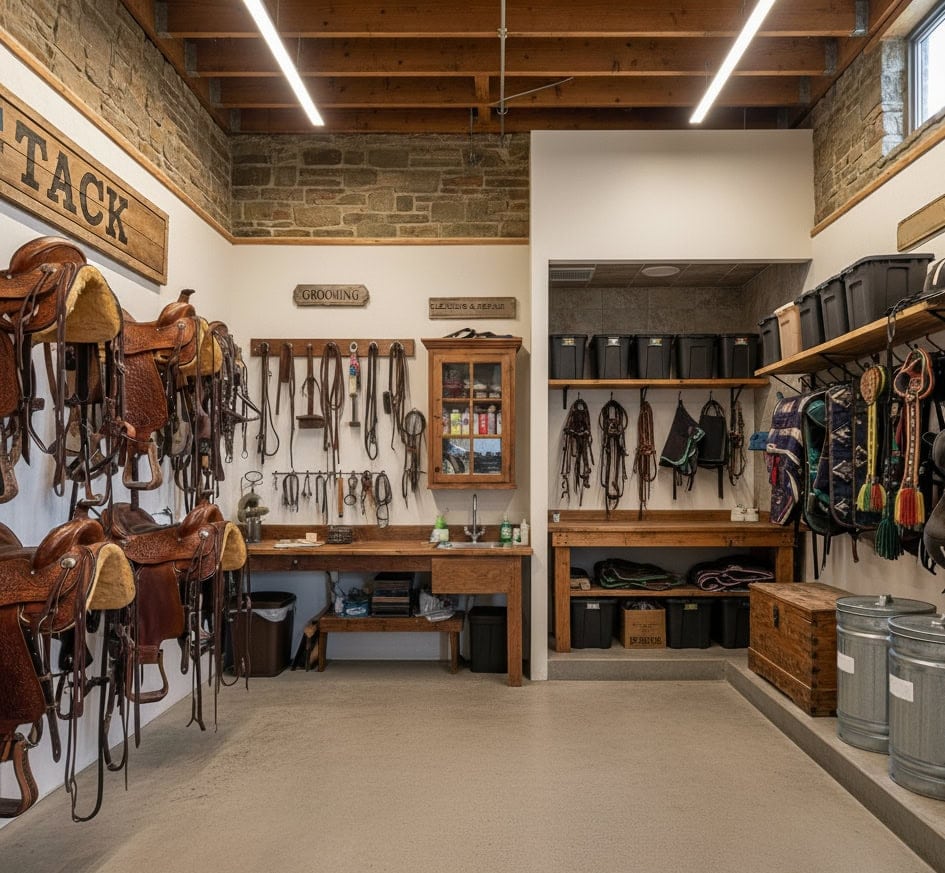
Common zones in tack rooms include: [1][2]
- Saddles and bridles: Wall-mounted saddle racks or freestanding trees keep tack off the floor, while spaced hooks or bridle holders help prevent tangling and encourage ventilation.
- Grooming: Storage for brushes, hoof picks, fly sprays, and everyday care products. Cabinets, rolling carts, or open shelving keep items accessible and visible.
- Cleaning and maintenance: A dedicated space for tack care, with storage for tack soap, conditioner, rags, and tools.
- Laundry and repairs: Some facilities have running water in their outbuildings, allowing for a dedicated laundry to enhance operations.
- Other equipment storage: Hooks, racks, and labelled bins may be used to store everything from blankets and coolers to parade gear and rider aids.
- Feed storage: If your tack room doubles as storage for feed, supplements, medications, or treats, keep these items in sealed containers and a clean, rodent-resistant zone.
Vertical Storage Strategies
When square footage is limited, vertical storage is one of the most effective ways to maximize tack room space without compromising accessibility.
Shelving can accommodate everything from saddles and bridles to saddle pads, blankets, and grooming tools.
Vertical storage options include: [1][2]
- Saddle racks mounted directly to the wall
- Foldable or swing-out racks
- Bridle hooks and pegboards
- Blanket bars
- Swing arms for hanging items to dry
Marking storage areas with paint or labels adds clarity and encourages consistent use. Multi-tier designs allow efficient layering while promoting airflow and preventing mildew buildup.
Maximizing Space
In addition to vertical solutions, small tack rooms benefit from compact, modular storage strategies. With thoughtful planning and space-efficient systems, even the tightest corner can become a functional and clutter-free area.
Modular and multi-use storage options allow you to adapt as needs evolve, whether that means rotating seasonal gear or reorganizing around new routines.
Space-saving ideas include: [1][2][3]
- Over-the-door storage: Provides additional space for lightweight items such as grooming gloves, fly sprays, or small tools.
- Hanging organizers: Offer accessible storage for frequently used supplies without taking up shelf or floor space.
- Wheeled carts: Function as mobile storage that can move between grooming areas, wash stalls, and the tack room.
- Magnetic strips: Hold metal tools like scissors, hoof picks, or mane combs, keeping them visible and easy to retrieve.
- Under-shelf baskets: Make use of the space beneath shelving to store smaller items such as wraps, sponges, or towels.
- Stackable bins and drawers: Increase vertical storage capacity and help categorize equipment or supplies.
- Fold-down workstations: Create a small cleaning or repair surface that can be folded away when not in use.
- Multi-functional furniture: Items like benches with built-in storage or rolling units provide combined seating and organizational space.
Tack Trunks & Cabinets
Open racks and shelves are useful for daily items, but enclosed storage is better suited for valuable equipment that needs extra protection. Tack trunks and cabinets keep gear free from dust, moisture, and pests, and help maintain an orderly tack room.
Choosing the Right Tack Trunk
Tack trunks come in a variety of materials, from lightweight plastic to durable wood to heavy-duty composite materials. Many feature built-in trays, compartments, or brush boxes that make it easier to keep small items organized.
When selecting a trunk for your horse tack, consider: [4]
- Portability: Wheeled models are ideal for travel or busy barns
- Size and weight: Heavy trunks may require fixed placement
- Durability: Resistance to moisture or rodent damage are key features, especially in wet climates
- Locking mechanisms: May be beneficial in shared spaces
- Internal compartments: Useful for separating grooming tools, first-aid kits, or show gear
In shared facilities, assigning each horse or rider their own trunk promotes personal responsibility and helps avoid equipment mix-ups.
Cabinets & Cupboards
Sturdy, closed storage units are ideal for storing cleaning supplies, folded blankets, and medical gear. Adding a childproof lock or magnetic latch increases safety.
For a cohesive, professional look, use matching bins, clear labels, or a color-coded system that aligns with your barn’s interior design.
Labeling & Inventory
Even the most thoughtfully organized tack room can descend into disorder if labeling and inventory systems are overlooked. Without clear identification, gear is easily misplaced, borrowed without being returned, or lost altogether.
Implementing a consistent labeling strategy helps ensure every item has a designated home, and that it gets put back after use.
It’s also useful to keep a running inventory of tack items, especially in shared facilities or when gear is being stored for multiple horses. This not only helps ensure all of your tack is accounted for, it also prompts regular inspection of each individual piece.
By keeping track of your equipment, you can replace broken or worn out gear promptly without missing any training days.
Labeling Tips
Start by labeling all bins, drawers, shelves, and storage units using waterproof labels, laminated tags, or vinyl decals. Color-coding your labels by category, such as tack, grooming, medical supplies, or blankets, can make it easier to locate items at a glance.
For shared barns, including horse or rider names on labels helps personalize service and maintain accountability. Refresh labels seasonally, especially if storage layouts shift between summer and winter or as new equipment is added.
Inventory Logs
Maintaining an inventory log adds another layer of organization. A simple spreadsheet or digital checklist can track high-value gear, medical supplies with expiration dates, or frequently used consumables including fly spray and liniment.
This is especially helpful in lesson barns, where gear is shared and restocking is essential. Mount a clipboard with the inventory list or provide a QR code linked to a shared document near the tack room entrance, so riders can quickly update it in real time.
Seasonal Rotation
Tack rooms can quickly become cluttered, especially when seasonal gear remains in place year-round. Winter blankets, neck covers, and heavy turnout rugs take up valuable space during the summer months — just as fly sheets, masks, and cooling gear take up valuable real estate in winter.
By rotating equipment according to the season, barn managers and horse owners can maintain a cleaner, more functional storage area that reflects current needs. In the spring, staff can pack away winter gear in clearly labeled, airtight containers or vacuum-seal bags to reduce bulk and protect against dust, moisture, and rodents.
In the fall, summer items such as fly sprays, mesh sheets, and sun visors can be cleaned and stored until the following year. Whenever possible, place these containers in a loft, spare room, or secondary storage area to free up daily-use space.
Conducting a tack room audit twice a year, ideally at the start of spring and fall, allows for a thorough inspection of gear. This is the time to clean and condition leather, check blankets for wear, repair minor damage, and discard anything that no longer serves a purpose.
By aligning storage with the seasons, the tack room stays organized, accessible, and well-suited to the horse’s current needs, creating a smoother workflow and protecting valuable equipment from unnecessary wear.
Tack Cleaning Stations
Cleaning tack is not just about appearance, it plays a vital role in preserving leather, ensuring rider safety, and extending the life of equipment. However, this routine task can become a burden if supplies are disorganized or difficult to access.
Establishing a dedicated tack cleaning station helps streamline the process, minimizes product waste, and encourages consistent care. Barns with enough space may want to designate a specific area for tack cleaning and light repairs.
A small table or countertop placed near the tack room or wash stall works well. This zone should include basic supplies such as saddle soap, leather conditioner, sponges, clean rags, soft towels, and a small bucket for water. Tools for minor fixes, such as screwdrivers, stitching awls, or hole punches, can also be kept in this area to handle quick adjustments or repairs on the spot.
To keep everything tidy, wall-mounted baskets, hooks, or a drawer organizer can hold items neatly and prevent clutter. A rubber mat or drop cloth under the cleaning area protects flooring from spills and provides a non-slip surface for cleaning tasks.
In smaller barns or mobile setups, a portable cleaning kit offers a practical alternative. A plastic tote or compact toolbox stocked with essentials can be easily carried to the grooming stall, wash bay, or trailer. Riders can quickly gather what they need without searching through shelves or disrupting other areas.
Shared Tack Rooms
Shared tack rooms are common in boarding barns, riding schools, and lesson programs, but they also present a unique set of organizational challenges. Without a clear system in place, tack rooms used by multiple riders can quickly become chaotic. Items may be misplaced, borrowed without permission, or damaged unintentionally.
To keep shared tack areas functional, barn managers should implement clear policies and physical organization systems that promote personal responsibility and respect for communal space. Assigning each rider their own labeled shelf, trunk, or section of wall helps maintain boundaries and ensures accountability.
Color-coded bins, name tags, or halter labels provide quick visual identification and reduce confusion between similar-looking items. Posting a tack room usage policy, such as designated areas, borrowing rules, and expectations for cleanliness, sets a standard that everyone can follow.
A simple cleaning schedule posted on the door can help divide upkeep responsibilities fairly among users. Rules around borrowing equipment should be made explicit so there is no confusion or miscommunication.
With thoughtful management, shared tack rooms can operate smoothly, supporting a positive and respectful environment for all equestrians.
Personal Aesthetic Choices
Whether working with a tight budget or outfitting a high-end facility, design choices have a big impact on how a space feels and functions. Adding decorative yet practical elements helps personalize the environment.
A chalkboard or corkboard near the entrance offers a convenient place to hang show schedules, farrier appointment dates, reminders, or messages between riders. Old bits, vintage riding prints, and framed ribbons are attractive personal touches that double as both art and memorabilia.
Choosing a cohesive look, such as rustic wood tones, black metal hooks, or leather-trimmed fixtures, creates visual harmony and a professional atmosphere. A small bench or chair provides a place to change boots, wait during lessons, or socialize briefly.
Lighting also plays a key role. Making sure the space is well-lit and inviting goes a long way to creating a welcoming space. Thoughtful aesthetic choices also encourage riders to take pride in the area, helping to keep it tidy and well-organized.
Cost-Effective Storage & Design
For those organizing on a budget, there are numerous creative approaches to keep your decorating costs low without compromising the visual effect.
Repurposed furniture such as bookshelves, filing cabinets, or kitchen carts can serve as effective storage. Farm auctions, tack swaps, or online marketplaces are excellent sources for affordable supplies.
Local feed stores may also give away surplus bins or buckets from bulk shipments. Ultimately, a clean, attractive tack room does not require a large investment, just thoughtful design, consistent habits, and a bit of imagination.

Safety Considerations
An organized tack room also improves barn safety, an important consideration for facility managers who want to minimize avoidable injuries and reduce the likelihood of incidents that could lead to insurance claims.
A well-structured storage space lowers the risk of accidents, reduces fire hazards, and helps prevent health issues for both people and animals.
Loose equipment and cluttered aisles make it harder to maneuver, particularly when people are carrying tack or leading horses. Keeping walkways clear and storing gear in predictable locations reduces the likelihood of trips, spills, or equipment damage.
Basic structural considerations also improve safety. Saddle racks and bridle hooks should be anchored securely into studs or solid walls, and shelving or cabinets should be stable and not top-heavy. Flammable products such as sprays, liniments, and cleaning solution should be kept away from heat sources, electrical panels, and direct sunlight.
Regular sweeping helps reduce dust buildup, which can contribute to fire risk and general barn air quality issues. Good ventilation also limits moisture, mold, and mildew, all of which can damage leather and irritate the respiratory health of both horses and staff.
Medications, supplements, and veterinary supplies should be stored in closed or locked cabinets to prevent access by children, pets, or horses. Clear labeling and routine checks for expired products help keep these items safe and easy to manage.
A well-organized tack room doesn’t need to resemble a high-end magazine spread; a thoughtful layout and reliable storage systems go much further in supporting the day-to-day activities of barn life. With a few practical changes, any space can become clean, functional, and easy to maintain.
Frequently Asked Questions
The most efficient approach is to organize the room according to how it is used every day. Daily-use items such as saddles, bridles, and grooming kits should be stored closest to the door or grooming area. Less frequently used items can be placed higher up or toward the back of the room. Creating clear zones for tack, grooming supplies, medical items, blankets, and tools helps riders find what they need quickly and return items to the correct place.
It is possible to organize a tack room effectively without spending much money. Repurposed bookshelves, DIY racks, plastic bins, hooks, or an old trunk can provide excellent storage. Many barns use secondhand shelves or cabinets found on local marketplace sites, at auctions, or at tack swaps. In most cases, grouping similar items together and labeling storage areas has a greater impact on organization than purchasing new equipment.
Shared tack rooms stay organized when every rider has a clearly assigned space such as a shelf, locker, bridle hook, or bin. Communal supplies should be stored in clearly marked zones so that everyone knows where to find and return them. Posting simple expectations for borrowing, cleaning, and returning equipment helps prevent confusion and reduces the likelihood of misplaced items.
Tack stays in better condition when it is stored on sturdy racks that allow airflow. Leather items should be kept away from damp areas, windows, and direct sunlight. Saddle covers can help reduce dust buildup. A ventilated tack room limits humidity and helps prevent mold. Regular cleaning and conditioning play an important role in preserving leather and are more effective than any specific storage container.
Daily tack, grooming kits, blankets, rider equipment, and basic first-aid supplies are appropriate for the tack room. Feed, medications, and flammable products such as sprays or cleaners are better stored in designated feed rooms or locked cabinets. This is especially important in barns with pets, children, or frequent visitors.
A full reorganization twice a year works well, especially in spring and fall when blankets and seasonal gear are rotated. This is a good time to check equipment for wear, discard expired medical supplies, and identify items that are no longer in use. A brief weekly tidy helps maintain order throughout the year.
It is important to ensure that saddle racks and hooks are securely mounted and that shelving is stable. Walkways should remain clear so that riders and horses can move safely through the space. Chemicals and other hazardous items should be stored away from heat sources and kept out of reach of children and animals. Adequate lighting and ventilation further reduce the risk of dust, mold, and clutter-related accidents.
Summary
Effective tack room organization makes daily barn work easier, protects your equipment, and keeps shared spaces running smoothly. A practical layout and consistent storage habits help riders quickly find what they need and keep the barn clean and functional.
- Well-planned storage protects tack from dust, moisture, pests, and wear, which helps extend the lifespan of saddles, bridles, and leather goods.
- Functional zones for tack, grooming supplies, blankets, medical items, and tools make it easier for riders to locate and return equipment, especially in shared barns.
- Vertical racks, modular shelving, and compact organizers help maximize limited space and keep high-use items within easy reach.
- Seasonal rotation keeps the room uncluttered by storing blankets, fly gear, and weather-specific equipment only when it is needed.
- Clear labeling and basic inventory tracking reduce misplaced items and improve accountability among riders and boarders.
- Good lighting, airflow, and clean pathways contribute to a healthier environment and limit mold, dust buildup, and general maintenance issues.
References
- Ambrosiano. N. W. and Harcourt. M. F. Complete Plans for Building Horse Barns Big and Small. Ossining, NY : Breakthrough Publications. 1989.
- Wheeler. E. F. Horse Stable and Riding Arena Design. 1st ed. Wiley. 2006.
- Ortega. L. Maximizing Your Small Tack Room: 5 Innovative Layout Ideas for Efficiency and Organization. Homestyler. 2025.
- Roger. N. Your Guide for Choosing the Perfect Tack Trunk. TACKTRUNKS. 2023.