English
Thiamine, also known as vitamin B1, is an essential nutrient that plays a role in energy metabolism and nervous system function in horses. This water-soluble vitamin helps convert carbohydrates from the diet into usable energy while supporting normal nerve signaling and muscle function.
Because horses rely heavily on carbohydrate metabolism during exercise, adequate thiamine intake is important for maintaining performance, coordination, and overall health.
Although true thiamine deficiency is uncommon, inadequate levels can impair normal neurological function and energy metabolism. Horses affected by low thiamine status may develop changes in appetite, coordination, behavior, or performance, reflecting the vitamin’s critical role in maintaining normal nerve and brain activity.
Understanding how thiamine functions in the equine body, what factors influence thiamine status, and when supplementation may be beneficial can help horse owners and caretakers support optimal metabolic health and performance.
What is Thiamine for Horses?
Thiamine, also called vitamin B1, is a water-soluble vitamin that helps the horse’s body convert food into energy.
It is one of the B-complex vitamins, a group of related water-soluble nutrients that support energy metabolism, nerve function, and normal cellular activity.
Thiamine works with enzymes to break down carbohydrates into usable fuel, supporting energy availability for cells that power muscles, nerves, and other tissues.
Thiamine Functions in the Horse’s Body
Thiamine’s effects on the body are an ongoing area of research, more commonly studied in people than in horses. It’s absorbed in the small intestine, released into circulation, and then converted into thiamine pyrophosphate in the liver and kidney. [1][2]
It’s only sparingly stored in tissues, with excess thiamine excreted in urine. [3]
Thiamine plays roles in: [4][5]
- Carbohydrate, fat, and protein metabolism
- Oxidative stress responses
- Nervous system function
Thiamine’s role in oxidative stress and neurological health is less well understood in horses, although its roles in carbohydrate metabolism appear similar in both people and horses. [6]
What's your top priority with your horse's health?

What's your top priority with your horse's health?
Carbohydrate Metabolism
Thiamine helps the body convert carbohydrates from food into usable energy. It supports enzymes that process sugars through the metabolic pathways to produce adenosine triphosphate (ATP), the molecule that powers everyday functions such as movement, digestion, and normal organ activity.
In these pathways, sugars from the diet are broken down into smaller compounds that must be processed further before cells can produce energy.
Thiamine acts as a cofactor for enzymes such as pyruvate dehydrogenase and alpha-ketoglutarate dehydrogenase. These enzymes carry out key steps in metabolism that allow carbohydrates to continue through the energy-producing process and ultimately generate ATP. [7][8]
By supporting more than one energy-related enzyme, thiamine plays a role in keeping the horse’s energy-making processes running efficiently.
DNA Synthesis & Antioxidant Function
Thiamine supports normal cell maintenance beyond energy production. Its active form helps certain enzymes manage how sugars are handled inside cells, supplying materials needed for routine cell renewal and supporting natural antioxidant processes that protect cells from everyday stress.
Thiamine’s active form supports the enzyme transketolase, which moves units between sugar molecules within the pentose phosphate pathway. This process provides raw materials used during DNA formation and contributes to systems that limit oxidative damage. [9]
Together, these actions support regular cell turnover during normal daily activity.
Thiamine Requirements for Horses
Most horses are thought to meet their thiamine needs through a balanced, forage-based diet, because thiamine is supplied in feed ingredients and can also be produced by microbes in the hindgut. However, some horses, including those in heavy work or under other forms of stress, may benefit from additional supplementation. [6]
Thiamine requirements for horses are generally based on recommendations from the National Research Council (NRC), which publishes nutrient requirement guidelines for equine diets. These values are designed to estimate the amount of thiamine needed to prevent deficiency and support normal physiological function in healthy horses.
However, NRC recommendations are best understood as minimum requirements, not necessarily the optimal intake for every horse. Individual thiamine needs may vary depending on workload, feeding program, digestive health, stress, and other management factors.
For this reason, thiamine supplementation may be considered for horses with low dietary intake, reduced hindgut function, high carbohydrate demands, or circumstances that increase metabolic stress, even when clear deficiency signs are not present.
Maintenance Horses
Maintenance horses refer to those not in regular training or doing strenuous work. These horses usually need less energy to meet their daily needs, and as a result, they typically require less thiamine.
The National Research Council (NRC) recommends that horses at maintenance have 3 mg of thiamine per kg of their predicted daily voluntary dry matter intake. [6]
This equates to roughly 0.06 mg thiamine per kg body weight, or 30 mg of thiamine for a mature, 500 kg horse at maintenance.
Thiamine Requirement Calculator
Growing Horses
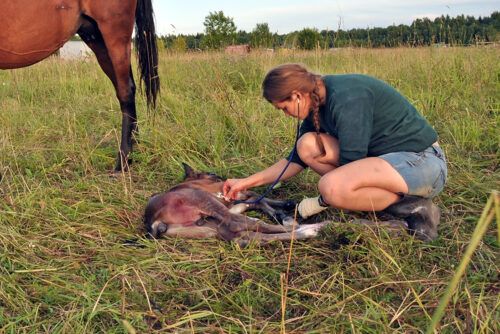
Thiamine requirements for growing horses are similar to those of maintenance horses, as young horses are not yet in heavy work and have modest energy demands. At the same time, there is some evidence that growing horses may benefit from thiamine supplementation.
For example, research has shown young horses given more thiamine (6.6 mg per kg of dry matter intake) grew at a faster rate than unsupplemented peers. [6] An equine nutritionist can help assess whether additional thiamine is recommended for your foal’s feeding plan.
Exercising Horses
Horses in regular training or competition, including those doing ranch work or competing in equestrian sports, are engaged in physically demanding work that increases daily energy needs.
During sustained work, exercising horses show higher activity of enzymes that rely on thiamine. [6][10] Matching thiamine intake to workload helps support the added metabolic demands seen in active and performance horses.
The NRC recommends a maximum thiamine intake of 5 mg per kg of dry matter intake for exercising horses, or 0.125 mg of thiamine per kg body weight per day. [6]
Table 1. Thiamine requirements for a healthy adult 500 kg (1,100 lb) horse in work
| Exercise Level | Thiamine Requirement (mg) |
|---|---|
| Light exercise | 30 mg |
| Moderate exercise | 56.5 mg |
| Heavy exercise | 62.5 mg |
| Very heavy exercise | 62.5 mg |
Sources of Thiamine
Horses naturally produce thiamine in their hindgut, and get the rest through their diet. Overall thiamine levels vary with feed type, processing methods, and storage conditions.
Because thiamine is a water-soluble vitamin and toxicity is rare, inadequate intake is generally a greater concern in horses than excessive intake. As a result, owners and caretakers do not typically need to worry about horses consuming too much thiamine in the diet.
Hindgut Production
Thiamine is produced by microbes in a horse’s hindgut and absorbed into circulation, contributing to overall vitamin status.
This internal production does not meet a horse’s full thiamine needs, so dietary sources remain an important part of total intake. [6][11]
Forages
Forages include fresh pasture and dried hays. Pasture generally provides higher thiamine levels, while dry, stored hay may contain lower concentrations as vitamin content declines over time. [3]
Thiamine levels in dried hays often fall below the range recommended for horses at maintenance, which makes them even less sufficient for those in heavy work. Diets based on preserved forages may benefit from mixing in other sources of thiamine to help meet daily needs.
Table 2. Estimated thiamine concentration for common forages [12]
| Forage Source | Thiamine Content (mg / kg dry matter) |
|---|---|
| Alfalfa Meal | 3.4 – 3.9 mg |
| Alfalfa Hay | 0.36 – 2.92 mg |
| Grass Hay | 0.89 – 1.49 mg |
Feeds
Thiamine content is often higher in grains than in hay, and grain-based feeds can supply enough thiamine to meet a horse’s baseline needs when included as part of a balanced ration. [13]
Table 3. Thiamine levels in cereal grains commonly fed to horses [6]
| Cereal Grain | Thiamine Content (mg / kg DM) |
|---|---|
| Corn | 3.5 mg |
| Oats | 5.2 mg |
| Wheat | 5.5 mg |
| Barley | 5.7 mg |
| Wheat bran | 8 mg |
| Wheat middlings | 12 mg |
| Rice bran | 23 mg |
| Cottonseed meal | 6.4 mg |
| Peanut meal | 12 mg |
Thiamine levels within grain feeds can decline during storage, with losses of up to 50% over time as handling, age, and storage conditions affect vitamin stability. [3]
Supplements
Thiamine is commonly added to commercial feeds and supplements. [3]
Supplemental thiamine can be supplied through brewer’s yeast and baker’s yeast, both of which are commonly included in digestive supplements. [6][12] Thiamine content in these ingredients typically ranges from about 150 to 160 mg per kg of dry matter. [12]
Protein supplements, including cottonseed meal and peanut meal, can further increase overall dietary thiamine intake when included in a ration. Purified thiamine sources, including thiamine hydrochloride and thiamine mononitrate, are also used to fortify feeds and supplements. [6]
In exercising horses, intravenous thiamine administration has been associated with changes in glucose use and lactate buildup during work, impacting cellular energy efficiency along with fatigue and metabolic response during exercise. [14]
Thiamine needs can vary between horses, and assessment of thiamine status usually occurs under veterinary supervision. Decisions around additional thiamine intake are often guided by evaluation from a qualified veterinary nutritionist.
Assessing Thiamine Status
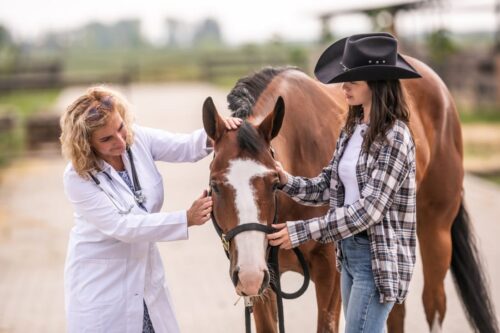
Determining whether a horse is getting enough thiamine should begin with a review of the total diet by an equine nutritionist, who can assess whether intake from forage, feed, and supplements is likely to meet the horse’s needs. If deficiency is suspected based on the diet and clinical signs, a veterinarian can help investigate with bleed testing.
Blood samples collected by a veterinarian can be submitted to a diagnostic laboratory, where transketolase activity or whole blood thiamine levels are analyzed. [2]
Results help determine whether thiamine intake aligns with a horse’s metabolic needs and overall diet over time. Whole blood plasma concentrations ranging from 5 to 23 ng/ml are associated with normal thiamine levels. [2]
Thiamine Deficiency
Although thiamine deficiency is rare under normal feeding conditions, certain plants, medications, or health issues can interfere with a horse’s regular metabolism. Thiamine deficiency can result in symptoms including: [6][15]
- Anorexia (lack of appetite)
- Bradycardia
- Muscle fasciculations
- Ataxia (incoordination)
- Hypothermia
Certain feeds and substances can interfere with thiamine metabolism, including bracken fern and amprolium (a feed additive used to prevent coccidiosis). [6][11] Horsetail has also been linked to reduced thiamine availability, with horses showing lower sensitivity to its effects than some other livestock species. [12]
Other factors that can impact thiamine sufficiency include: [2][12]
- Chronic digestive issues
- Disruption of the gut microbiome
- Prolonged feed restriction or inappetence
When thiamine deficiency occurs, injectable thiamine may resolve associated symptoms. [11] Parenteral administration is commonly used in these situations, particularly in clinical settings, as digestive absorption of thiamine remains limited and declines further at higher levels of intake. [3]

Thiamine Toxicity
Excessive thiamine intake has been linked to health problems in some species, including humans. Evidence specific to horses remains limited, as comparable effects associated with high thiamine intake have not yet been clearly documented in equine populations.
In humans, excessive thiamine supplementation has been associated with symptoms such as: [16]
- Headaches
- Increased irritability
- Insomnia
- Rapid pulse
- Weakness
- Trembling
In horses, thiamine toxicity from a typical diet or routine supplementation appears unlikely and has not been reported. [6] Higher thiamine concentrations (such as by injection) may result in similar symptoms as those seen in other species. [2]
Do Most Horses Need Thiamine Supplements?
Most healthy horses consuming a balanced, forage-first diet obtain enough thiamine to meet basic daily requirements through a combination of hindgut production and dietary intake.
However, some horses benefit from thiamine supplementation to support optimal energy metabolism and performance. Horses in heavy work, under stress, with reduced feed intake, digestive disruption, or less reliable hindgut synthesis may benefit from additional thiamine or broader B-vitamin support.
When the horse’s overall diet is already balanced and the goal is to specifically increase B-vitamin intake, a targeted B-complex supplement is the most direct option.
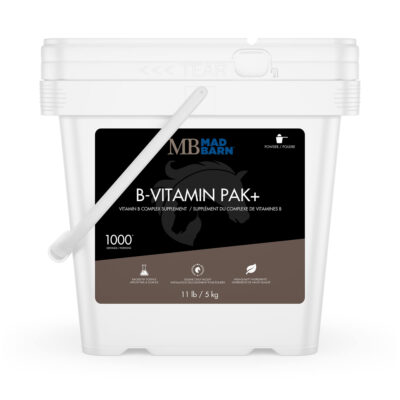
Mad Barn’s B-Vitamin Pak is a complete powdered B-complex supplement that provides a balanced profile of B vitamins. It is formulated for horses in intense training, and those under stress from transport or illness, which may increase B-vitamin needs or reduce reliable hindgut synthesis.
However, supplementing thiamine alone is not the best starting point for most horses. Many feeding programs fall short in multiple nutrients at the same time, especially when forage makes up most of the diet or when fortified feeds are not fed at the full recommended rate. In these cases, adding a single B vitamin may increase thiamine intake, but it does not address broader nutritional gaps in the total ration.
For most horses, a complete vitamin and mineral supplement is the more effective approach because it helps balance the entire diet rather than focusing on one nutrient in isolation.
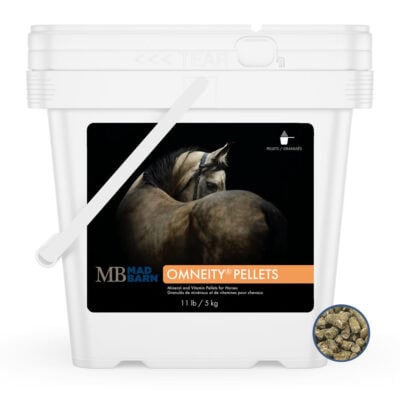
Mad Barn’s Omneity® Pellets are formulated for this purpose, providing concentrated vitamins, trace minerals, amino acids, and other key nutrients to complement hay, pasture, or partial grain feeding programs.
Omneity® also provides full B-vitamin fortification, including thiamine at levels that exceed the daily requirement, helping support adequate intake as part of a complete diet-balancing strategy.
Frequently Asked Questions
Here are some frequently asked questions about thiamine for horses:
Thiamine (vitamin B1) plays a key role in carbohydrate metabolism, helping horses convert sugars and starches into usable energy. It also supports normal nervous system function, muscle activity, and cellular metabolism. Because horses rely heavily on carbohydrate metabolism during exercise, adequate thiamine intake is important for maintaining performance and neurological health.
Yes. Horses require thiamine as part of a balanced diet. Most horses obtain this vitamin from forage and microbial synthesis in the hindgut, where beneficial microbes produce B vitamins during fiber fermentation. Healthy horses consuming adequate forage typically produce enough thiamine to meet their needs.
Thiamine supplementation may be considered in situations where hindgut microbial activity is disrupted or thiamine requirements increase. This can occur with high-grain diets, digestive disturbances, illness, stress, certain medications, or exposure to plants containing thiaminase enzymes that break down thiamine.
Thiamine deficiency is uncommon but can affect neurological function and energy metabolism. Clinical signs may include reduced appetite, muscle tremors, weakness, incoordination (ataxia), slow heart rate, and abnormal body temperature. Severe deficiencies can lead to neurological disturbances that require veterinary attention.
Thiamine is naturally present in many feeds, including fresh pasture, hay, and some grains. In addition, microorganisms in the horse’s hindgut produce thiamine during fermentation of dietary fiber. Balanced commercial feeds and vitamin-mineral supplements may also provide added thiamine.
Yes. Diets high in rapidly fermentable carbohydrates may disrupt hindgut microbial balance, which can reduce microbial production of B vitamins such as thiamine. Feeding a forage-first diet and maintaining healthy hindgut fermentation helps support normal thiamine status.
Yes. Some plants contain thiaminase enzymes that break down thiamine in the digestive tract. Examples include bracken fern and horsetail. Horses that consume large amounts of these plants may develop thiamine deficiency if exposure is prolonged.
Thiamine toxicity is extremely rare in horses. Because it is a water-soluble vitamin, excess amounts are typically excreted in urine. Normal dietary intake and typical supplementation levels are considered safe when used appropriately.
Thiamine is sometimes included in calming supplements because of its role in nervous system function. However, scientific evidence supporting its effectiveness for reducing anxiety or excitability in horses is limited, and behavioral issues are often influenced by management, training, and overall diet.
For most horses, the best way to increase thiamine intake is with a complete vitamin and mineral supplement that helps balance the entire diet. Mad Barn's Omneity® Pellets provides a horse's daily thiamine requirement along with other essential vitamins, trace minerals, and amino acids that are commonly lacking in rations. For horses that are already fed a balanced diet but need targeted B-vitamin support, B-Vitamin Pak is another option. It supplies a concentrated source of thiamine and other B-complex vitamins in an easy-to-feed powder.
Summary
Thiamine (vitamin B1) plays a key role in energy production, nervous system function, and metabolic processes in horses. As a water-soluble vitamin, it is essential for breaking down carbohydrates, fats, and proteins into usable energy.
- Thiamine helps enzymes convert carbohydrates into energy for muscles, nerves, and other body tissues
- Horses need a regular intake of thiamine since their bodies store only small amounts and excrete excess quickly
- In addition to energy production, thiamine supports nervous system health, antioxidant defenses, and DNA synthesis
- Thiamine requirements vary by horse class, with exercising horses needing higher levels than those at maintenance
- Deficiency in thiamine can cause symptoms such as anorexia, bradycardia, and muscle fasciculations
- Thiamine toxicity has not been documented in horses, but excessive intake through injections could cause adverse effects
- Horses obtain thiamine from microbial synthesis in the hindgut, forages, grains, and supplements, but total content varies by source
References
- Brown. G. Defects of Thiamine Transport and Metabolism. Journal of Inherited Metabolic Disease. 2014.
- Finno. C. J. Interpretation of Equine Laboratory Diagnostics. John Wiley & Sons, Ltd. 2017.
- Remillard. R. L. Equine Clinical Nutrition. John Wiley & Sons. 2023.
- Kaźmierczak-Barańska. J. et al. Thiamine (Vitamin B1)—An Essential Health Regulator. Nutrients. 2025.
- The Importance of Thiamine (Vitamin B1) in Humans . Bioscience Reports. 2023./li>
- Nutrient Requirements of Horses: Sixth Revised Edition. The National Academies Press, Washington, DC. 2007. View Summary
- Parkhomenko. Y. et al. Vitamin B1 and the Pyruvate Dehydrogenase Complex. Molecular Nutrition. Academic Press. 2020.
- Rex Sheu. K.-F. and Blass. J. P. The α-Ketoglutarate Dehydrogenase Complex. Annals of the New York Academy of Sciences. 1999.
- Nauton. L. et al. Insights into the Thiamine Diphosphate Enzyme Activation Mechanism: Computational Model for Transketolase Using a Quantum Mechanical/Molecular Mechanical Method. Biochemistry. American Chemical Society. 2016.
- Manore. M. M. Effect of Physical Activity on Thiamine, Riboflavin, and Vitamin B-6 Requirements. The American Journal of Clinical Nutrition. 2000.
- Carroll. F. D. et al. The Synthesis of B Vitamins in the Horse. Journal of Animal Science. 1949.
- Pan. X. et al. Thiamine Status, Metabolism and Application in Dairy Cows: A Review. British Journal of Nutrition. 2018.
- McMENIMAN. N. P. et al. Effect of Grain Type and Vitamin Supplementation on Performance of Exercising Horses. Equine Veterinary Journal. 1995.
- Laus. F. et al. Effect of Thiamine Pyrophosphate (Bicarbossilasi®) Administration on the Exercising Horse Metabolism. Israel Journal of Veterinary Medicine. 2017.
- Cymbaluk. N. F. et al. Amprolium-Induced Thiamine Deficiency in Horses:Clinical Features. 1978.
- Mills. C. A. Thiamine Overdosage and Toxicity. Journal of the American Medical Association. 1941.