English



Western Pleasure is one of the most distinctive and enduring disciplines in Western riding, originating from the practical needs of working ranch horses. The discipline has evolved into a refined competitive sport where riders aim to make their horses appear effortless to ride, with smooth transitions and a soft, consistent gait.
Judged subjectively, Western Pleasure places importance on a horse’s ability to maintain a steady, comfortable pace at the walk, jog, and lope. The rider should demonstrate minimal interference, guiding the horse with light rein contact and subtle cues. The ideal Western Pleasure horse is well-trained, responsive, and appears to move naturally while remaining attentive and relaxed.
Understanding the rules, judging criteria, horse selection, and proper tack helps riders and trainers prepare for success. Whether at local shows or national events, Western Pleasure demands precise training, skilled horsemanship, and a solid grasp of competitive standards.
This guide explores the history of Western Pleasure, its competitive structure, and tips on horse care and management.
Western Pleasure
Western Pleasure is a Western equestrian discipline that demonstrates the horse’s ability as a comfortable, steady mount during extended periods of riding. Unlike action-oriented disciplines such as reining or cutting, Western Pleasure emphasizes the horse’s pleasant, smooth demeanor and consistent movement. [1][2]
The discipline focuses on the horse’s natural way of moving at the three Western gaits: [2][3]
- Walk: same as the classical or English walk
- Jog: a slow, collected trot
- Lope: a slow, collected canter
In addition, the judges may ask the rider to demonstrate a direction reversal. [3]
The goal is to present a horse that seems effortless to ride and maintains the same pace and frame throughout the class. [2]
Unlike Western dressage, which emphasizes collection and engagement through more obvious rider aids, Western Pleasure seeks a more relaxed appearance with minimal visible cues. The rider should appear to be along for the ride, with the horse moving forward willingly and consistently. [2][4]
History of Western Pleasure
Western Pleasure originates from the working horses of the American West. Ranchers needed horses with a naturally smooth and efficient gait, allowing them to cover long distances comfortably while checking cattle or managing large properties.
Horses that move too quickly or have choppy gaits are tiring to ride for extended periods. As a result, ranchers favored mounts with steady, balanced movement and a relaxed, trainable disposition. [5]
As Western riding evolved into competitive disciplines, Western Pleasure emerged as a way to showcase the most stylish, comfortable, and well-trained horses. By the mid-20th century, Western Pleasure classes were a staple at breed-specific and open horse shows. [5]
Over time, changes in training techniques and judging preferences led to a distinct evolution in the discipline, with emphasis shifting toward slow, collected gaits and increased rider control. Modern Western Pleasure classes still reflect the original intent, demonstrating a horse’s pleasant, rideable nature, but with an increased focus on frame, cadence, and consistency. [4][5]
The Evolution of Modern Classes
As a formal competition class, Western Pleasure began in the mid-20th century. By the 1980s, the Western Pleasure style shifted dramatically toward slower and lower movement. Trainers bred and conditioned horses to perform an extremely slow jog and lope with a very low head position – producing the so-called “peanut rollers“, horses whose noses were carried near the ground. [6]
This trend led to controversial training methods as some tried to create the excessively low-headed look through harsh techniques. This resulted in gaits that, while slow, lacked true impulsion and appeared unnatural. [5][6]
In response to growing criticism, rule changes were introduced in the 1990s to discourage inhumane training methods. Judges were instructed to penalize horses carrying their poll below the withers, and riders were expected to show with light contact on the reins. [5][6]
These rule changes favored a more functional, quality gait. Today, the American Quarter Horse Association (AQHA) continues to refine Western Pleasure standards and maintains a commitment to horse welfare in sanctioned competition. [4]
Sport Organizations
Western Pleasure is overseen by several major equestrian organizations, primarily breed associations that set the class rules. These organizations work similarly to those governing other Western disciplines, but with specific focus on the unique requirements of Pleasure classes.
Breed-Specific
The AQHA is the leading authority on Western Pleasure in North America. Its rulebook provides detailed specifications for Western Pleasure, defining gait descriptions, acceptable head carriage, and faults. [4]
Similarly, the American Paint Horse Association (APHA) and the Appaloosa Horse Club (ApHC) include Western Pleasure in their show circuits, largely mirroring AQHA’s standards for stock horse breeds. These organizations ensure that judges apply consistent criteria, and they update rules as needed to improve fairness and horse welfare. [7][8]
General
Unlike the FEI’s governance of international disciplines like dressage or show jumping, Western Pleasure remains primarily a North American discipline with breed-specific rule variations.
The United States Equestrian Federation (USEF) governs Western Pleasure for certain breeds, such as Morgans and Arabians, in all-breed competitions in the United States. [9]
Similarly, Equestrian Canada includes Western Pleasure classes under the umbrella of their General Performance, Western and Equitation rules. [10]

Western Pleasure Competition
Western Pleasure competition follows a format distinct from timed events like barrel racing and pattern classes like reining. Instead, it uses a rail class format where multiple horses compete simultaneously in the same arena.
Competition Format
In a Western Pleasure class, riders enter the arena together and work their horses around the rail in both directions. All competitors perform simultaneously, creating a comparative judging environment. [4][7]
The judges, typically positioned in the center of the arena, call for specific gaits and maneuvers. Competitors must demonstrate the walk, jog, and lope (with occasional requests to extend the jog or lope) in both directions around the arena. [4][11]
Throughout the class, horses and riders are evaluated comparatively rather than against a predetermined score. This is in contrast to disciplines such as dressage or reining, where specific movements receive individual marks. Due to this, the judging is more subjective, with rankings based on how well each horse-rider combination meets the defined ideal. [4][11]
At the end of the class, competitors may be asked to line up in the center of the arena and back their horses individually. This final test demonstrates the horse’s responsiveness and training under closer scrutiny. [4][11]
Judging Process
Judges evaluate Western Pleasure horses on several key points, creating a competitive ranking throughout the class. These areas include: [4][11]
- Training and Responsiveness: The horse should move on a loose or light rein with little apparent effort from the rider. They should respond promptly to cues and maintain a calm demeanor without ear pinning, tail swishing, or resistance.
- Quality of Movement: The gaits should be smooth, collected, and rhythmic. An ideal jog is a slow two-beat trot that is balanced and easy to sit. An ideal lope is a true three-beat canter that, while slow, has reach and drive from behind with no hint of an extra fourth beat. The topline should stay level and relaxed at all gaits, giving the movement an effortless appearance.
- Head Carriage: The head and neck should be carried in a natural yet controlled position. The neck is nearly level with the withers, the poll about even with the withers, and the horse’s nose just in front of vertical. A horse that goes behind the vertical (over-bent) or drops their head too low (below the withers) will be penalized, as both indicate improper training or balance.
Using these criteria, judges rank the entries throughout the class and select the horse that best meets the ideal as the winner. Unlike scored events such as reining or dressage, Western Pleasure uses comparative judging similar to Hunter Under Saddle or English Pleasure classes.
Faults & Penalties
Judges also watch for specific faults that can result in lower placings or disqualification. These include: [4]
- Breaking Gait: This includes taking the wrong lead at the lope
- Speed Issues: Excessive speed or excessive slowness that sacrifices correct cadence
- Head Position: Head carried too high or too low for an extended period of time
- Flexion Problems: Over-flexing or nosing out
- Gait Irregularities: Four-beating or losing the pure three-beat gait
- Disobedience: Obvious signs of disobedience such as pinned ears, kicking, or lack of forward impulsion
Horses with major faults will place lower in the class and any horse showing obvious lameness is disqualified, as in other disciplines.
Western Pleasure Classes
Each sports or breed organization divides Western Pleasure competitions into various classes based on horse age, experience, rider age, and more.
Age-Based Classes
Like many Western disciplines, Western Pleasure offers age-specific classes that allow horses to compete against others at similar stages of training. Common age-based classes include: [4][7][8][9]
- Two-Year-Old: Introductory classes for young horses beginning their show careers, typically shown in snaffle bits with less demanding requirements
- Three-Year-Old: Classes for horses advancing in training, often transitioning to curb bits and more refined movement
- Aged: Classes for horses four years old and older, representing the highest level of training and refinement
Rider Experience-Based Classes
Western Pleasure accommodates riders of all experience levels, including: [4]
- Open: Classes open to professional trainers and experienced amateur riders
- Amateur: Reserved for non-professional riders, ensuring fair competition among those who don’t earn income from horse training
- Youth: Classes for riders 18 years old and under, often with modified requirements to encourage young competitors
- Novice: Designed for inexperienced riders or horses new to the discipline
Specialty Classes
Some organizations offer specialty Western Pleasure classes that add variety to the traditional format: [4][8]
- Western Pleasure Driving: Horses are judged on Pleasure movement while pulling a cart, demonstrating versatility similar to combined driving disciplines
- Western Pleasure Trail: Combines Pleasure movement with basic trail obstacles, testing both riding horse qualities and practical skills
Training
Training a Western Pleasure horse requires a different approach from other disciplines due to its emphasis on consistent, slow gaits. The aim is for the horse to carry themselves in the desired frame and rhythm with minimal input from the rider.
Unlike reining horses that must learn to perform dramatic stops and spins, or cutting horses that develop cow sense and quick reactions, Western Pleasure horses learn to maintain steady, comfortable movement regardless of arena conditions or other horses nearby. Achieving this requires a combination of fitness building, skilled cueing, and patience.
Trainers develop this quality by using subtle cues to set the gait, then allow the horse to travel on a loose rein. If the horse speeds up or loses their frame, the rider quietly corrects them then returns to a neutral position, giving the horse a chance to maintain the pace on their own. Over time, with patient repetition, the horse learns to carry themselves in balance for longer stretches without constant input from the rider. [2][11]
Preserving a horse’s willingness is a core principle in Western Pleasure training. Horses that are forced into compliance through heavy-handed riding or aggressive use of artificial aids may become tense, resistant, or sour. Effective trainers prioritize relaxation and trust, using light cues and rewarding desired responses.
Ultimately, the best Western Pleasure horses have benefited from patient, methodical training. When a horse is given time to develop strength and comprehension, they will exhibit the consistency and calmness that the judges reward, all while staying sound and happy.
Equipment
Western Pleasure equipment reflects the discipline’s emphasis on traditional Western tack and attire, that combine function with show-ring style. The equipment requirements differ from other Western disciplines in subtle but important ways.
Horse Tack
The saddle is a classic Western stock saddle, complete with a horn on the pommel. Show saddles are allowed tooling and silver trim. [4] Beyond looks, the saddle’s design provides a secure, balanced seat for the rider and distributes their weight evenly over the horse’s back.
Unlike English bridles, the Western bridle typically has no noseband, and features a browband and often a throatlatch. Silver accents on the browband or cheekpieces are common, to match the saddle’s decoration.
Western Pleasure horses are typically shown in curb bit, which provide additional leverage for a refined performance. Unlike snaffle bits used in some other Western disciplines, curb bits allow for the light contact and subtle communication essential to Pleasure classes. [4]
Western-style spurs are commonly used by riders to give subtle cues. These spurs have small rowels and are used lightly, more for finesse than force.
Rider Attire
Western Pleasure riders dress in keeping with Western tradition, but with greater emphasis on show ring presentation than working disciplines. A cowboy hat, long-sleeved shirt, jeans or fitted pants, and cowboy boots form the foundation for proper attire.
In the show ring, most riders wear show chaps over their pants for a polished look and added grip. Show attire can be largely decorative, but must still appear neat and traditional. The attire should complement rather than distract from the horse’s performance. [4]
Many riders coordinate the color of their outfit with their saddle pad or saddle trim for a cohesive presentation. This attention to coordinated presentation is more pronounced in Western Pleasure than in working disciplines like cutting or team penning, where function takes precedence over appearance.
However, it’s similar to other show disciplines like Western Horsemanship, where rider presentation is part of the overall evaluation.
Judges do not score the clothing itself, but a well-coordinated presentation helps create an overall impression of professionalism.
What's your top priority with your horse's health?

Enter your email to receive your store credit
Western Pleasure Horses
Not every horse is built or inclined to excel in Western Pleasure. The discipline tends to favor certain conformation, movement, and temperament traits that make some horses better suited than others. [11][12]
Western Pleasure Breeds
Western Pleasure horses are predominantly stock-horse breeds, especially American Quarter Horses, which dominate the discipline more than any other Western performance event. [13]
American Paint Horses and Appaloosas also excel in Western Pleasure, sharing many of the same stock-breed characteristics of American Quarter Horses. These breeds are known for their moderate size, muscular build, and calm temperament.
An ideal Western Pleasure horse has strong, well-developed hindquarters and a relatively short, level back that makes it easier to carry the desired frame. This conformation differs from the one preferred in disciplines like cutting, where longer, more athletic builds may be advantageous for quick turns and stops. [14][15]
The neck should tie in fairly low at the withers, which naturally encourages a level topline when moving. A balanced build, where the horse’s height and length are proportionate, helps them move in a relaxed, efficient manner. Stock breeds have been selectively bred for these traits over generations, making them particularly well-suited to Western Pleasure competition. [14][15]
Movement & Temperament
The ideal Western Pleasure movement is often described as “slow-legged” and flat-kneed, meaning the horse takes relatively slow, low strides that create the appearance of gliding across the ground. [14][15]
Even though the gaits are slow, they must remain correct and consistent. Judges penalize a four-beat, impure lope or a shuffle-like jog. [4] This emphasis on correctness within slow movement is unique to Western Pleasure and requires both breeding and training to achieve.
A gentle, trainable temperament is essential for success in Western Pleasure. The discipline demands a horse that can handle the stimulating show environment while remaining quiet and responsive.
Managing Western Pleasure Horses
Western Pleasure horses require management that supports their specific performance requirements while maintaining their naturally calm temperament. Unlike high-energy disciplines, Western Pleasure management focuses on maintaining steady, consistent conditioning.
Regular veterinary checkups and quality farrier care help maintain the soundness essential for consistent performance. The repetitive nature of Western Pleasure training, while less intense than disciplines like reining or cutting, still requires careful attention to prevent overuse injuries.
All performance horses, including Western Pleasure horses, experience stress from travel, training, and competition. [15] However, the nature of Western Pleasure competition, with its emphasis on calm performance, makes stress management particularly important for maintaining the desired temperament.
Western Pleasure horses perform best when their mental and physical health is prioritized. Management programs should ensure horses have adequate turnout and social interaction, helping maintain the natural calm demeanor that judges reward. [15]
Feeding Western Pleasure Horses
Western Pleasure horses have unique nutritional needs that differ from other Western disciplines. Unlike cutting or reining horses that may require high energy intakes to fuel explosive performance, Western Pleasure horses need steady energy that supports consistent, calm performance. This typically means avoiding high-sugar, high-starch feeds that might cause energy spikes or behavioral changes.
These horses often have more moderate calorie requirements compared to other performance disciplines. In addition, many stock breeds used in Western Pleasure are easy keepers who maintain weight efficiently and are at higher risk of obesity compared to other breeds. Keep track of your Western Pleasure horse’s body condition score throughout the year to ensure they are maintaining a healthy body weight.
A forage-first diet built around good-quality grass hay provides sufficient energy and fermentable fiber without excessive calories or sugars.
If sugar content is a concern — such as for insulin-resistant horses — soaking hay for 30–60 minutes before feeding can lower simple carbohydrate levels. [16] If you aren’t sure how energy-dense your horse’s hay is, consider conducting a hay analysis to get an accurate snapshot of your forage’s nutrition profile.
Forage alone is not enough to meet all of your horse’s nutrient requirements. [17] Horses on hay-only diets will be deficient in key vitamins and minerals, which can affect hoof strength, coat quality, immune function and overall vitality.
To meet your horse’s micronutrient needs, provide a balanced vitamin-mineral supplement made without added sugars so it’s appropriate for easy keepers.
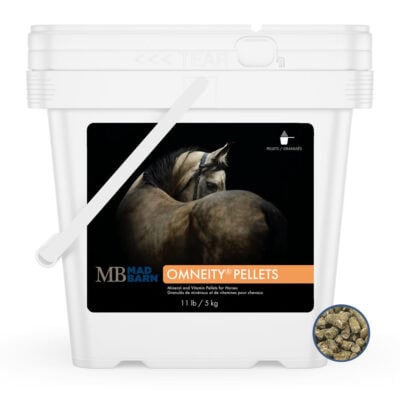
Mad Barn’s Omneity® is an all-in-one formula designed by expert nutritionists with 100% organic trace minerals, amino acids, digestive enzymes, yeast, and a full B-vitamin profile. With no added sugars, Omneity® is a great choice for easy keepers.
The best diet for a Western Pleasure horse depends on their individual needs, including breed, age, competition schedule, and training program.
Work with a qualified equine nutritionist to ensure your feeding program supports your horse’s performance and training in and out of the ring.
Frequently Asked Questions
Here are some frequently asked questions about Western Pleasure riding:
While both Western Pleasure and Western Dressage are Western disciplines that showcase the horse's training and responsiveness, dressage focuses on precision, patterns, and progressive schooling. Riders follow set tests that require transitions, circles, and lateral movements. Western Pleasure is a rail class judged on the horse's overall demeanor, smoothness, and the ability to maintain consistent, relaxed gaits with minimal rider input. The objective in Western Pleasure is to appear effortless and pleasurable to ride, whereas Western Dressage emphasizes accuracy and engagement.
The best horses for Western Pleasure are typically stock-type breeds, especially American Quarter Horses. They dominate the discipline due to their naturally smooth gaits, muscular build, and calm temperament. American Paint Horses and Appaloosas also excel in this discipline. Individual success depends on conformation, movement quality, and training.
Western Pleasure uses traditional Western tack including a stock saddle with horn, a bridle without noseband, and often decorative silver trim. Riders wear cowboy hats, long-sleeved shirts, jeans or fitted pants, cowboy boots, and chaps. Western-style spurs with small rowels are commonly used for subtle cueing.
Western Pleasure judges evaluate horses on manners and responsiveness, quality of movement, and proper head carriage. The ideal horse moves with smooth, collected gaits, maintains a calm demeanor, and appears effortless to ride. Judges penalize breaking gait, improper speed, incorrect head position, and signs of disobedience or lameness.
Summary
Western Pleasure remains a beloved discipline for showcasing a smooth, willing riding horse. Its evolution from ranch roots to the modern show ring has led to a renewed focus on natural movement and horse welfare.
- Western Pleasure horses are judged subjectively on having smooth gaits with minimal rider cues
- Western Pleasure competitions are rail classes where a group of competitors all perform together
- Marks are awarded comparatively across all participants. The horse deemed best in the group wins
- The ideal traits in a Western Pleasure horse are a calm temperament, smooth, gliding gaits, and ability to perform with minimal cues
References
- Strickland. C. The Basics of Western Riding. Storey Books, Pownal, Vt. 1998.
- Showing Western Pleasure: The Basics. AQHA. 2025.
- Miller, Western Pleasure. AQHA. 2025.
- AQHA Official Handbook. AQHA. 2025.
- Chown. T. and Davison. M. Western Pleasure: It's Time to Move Forward and Straighten Things Out. Show Horse Today. 2015.
- Brown. L. Pain and Gain: AQHA Welfare Concerns. Horse Canada. 2014.
- 2025 Official APHA Rulebook. APHA. 2025.
- Appaloosa Competitive All-Breed Activities Program. Appaloosa Horse Club. 2025.
- Western. USEF. 2025.
- Section F General Performance, Western, Equitation. Rules of Equestrian Canada. 2022.
- Lecture: UNL Horse Judging: Evaluating Western Pleasure. University of Nebraska–Lincoln. 2024.
- Western Pleasure. Arabian Horse Association. 2024.
- Hagstrom. D. J. University of Illinois 4-H Horse Judging Manual. Equine Extension Specialist University of Illinois. 2006.
- Roth. I. T. et al. Comparison of American Quarter Horses Competing in Western Pleasure, Hunter under Saddle, and Reining Using Linear Traits. Animals. 2021.
- Lesimple. C. et al. Free Movement: A Key for Welfare Improvement in Sport Horses?. Applied Animal Behaviour Science. 2020.
- Bochnia. M. et al. Effect of Hay Soaking Duration on Metabolizable Energy, Total and Prececal Digestible Crude Protein and Amino Acids, Non-Starch Carbohydrates, Macronutrients and Trace Elements. Journal of Equine Veterinary Science. 2021. View Summary
- Nutrient Requirements of Horses: Sixth Revised Edition. National Academies Press, Washington, D.C. 2007.