English










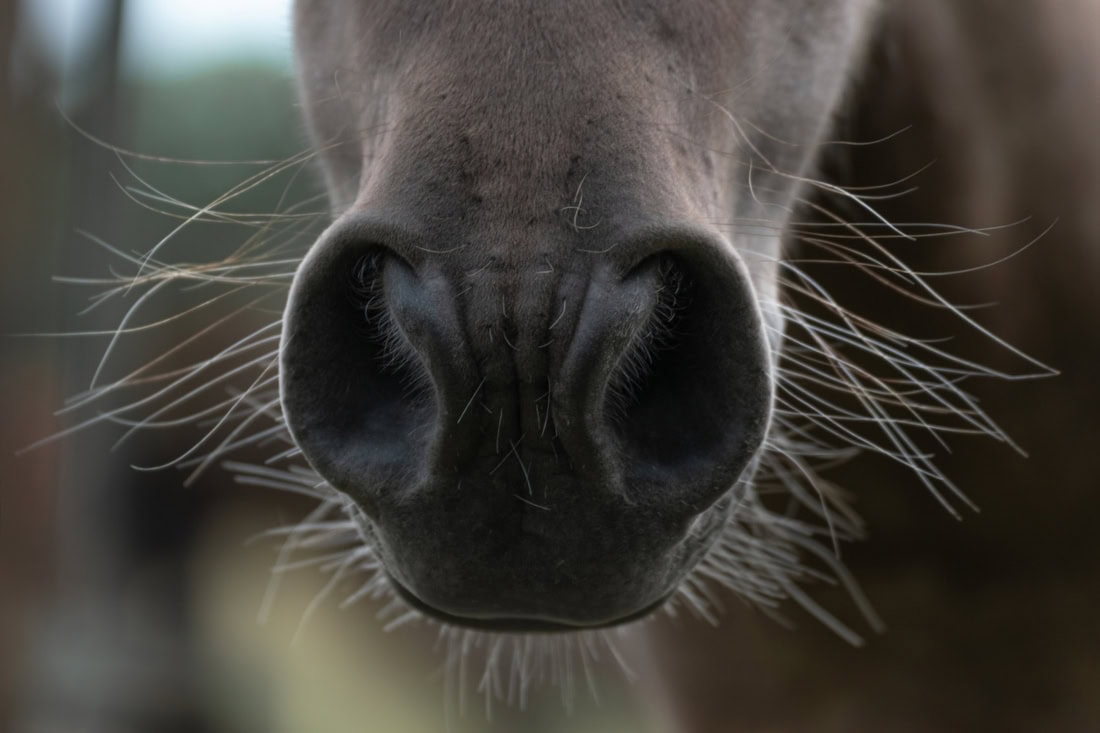
Whisker trimming involves the removal of a horse’s long, sensitive vibrissae — specialized hairs around the muzzle, eyes, and sometimes ears. These hairs are deeply rooted and connected to nerve endings, playing a key role in sensory perception.
Traditionally performed for cosmetic purposes, especially in competitive settings where a polished appearance is prioritized, whisker trimming may compromise a horse’s ability to navigate and interact safely with its surroundings. [1][2][3]
Awareness of the welfare concerns associated with whisker trimming, including reduced sensory function and an increased risk of injury, has led to its prohibition in several countries, including Germany, Switzerland, and France.
The Fédération Équestre Internationale (FEI) has also recently banned whisker trimming in FEI-regulated competitions, reflecting a broader commitment to improving equine welfare. As awareness of welfare concerns grows, more governing bodies are moving towards regulations that protect the sensory well being of horses. [4][5]
Whiskers on Horses
Horse whiskers (vibrissae) are long, coarse, highly sensitive hairs located mainly around the muzzle and eyes. Unlike regular hair, they are deeply rooted, do not shed, and are connected to nerve endings, making them highly responsive to tactile input. [3][6][7]
Each whisker is directly linked to specific areas in the brain, allowing horses to receive precise tactile mapping that aids in environmental awareness and decision-making. [3][6][7]
Horses have a wide field of vision with large eyes positioned on the sides of the head, allowing them to see nearly 360 degrees around them. However, this creates a small blind spot directly in front of their muzzle, which they cannot see without moving their head. [4][8]
To compensate for this limitation, horses rely heavily on their whiskers, which play a critical role in their sensory system. Much like humans use their hands to explore and understand their surroundings, horses use their muzzle whiskers to gather essential tactile information that influences their behavior. [2][5][9]
Purpose
Whiskers help horses detect nearby objects by sensing physical contact or subtle vibrations from their environment, including walls, food, or other animals. This heightened sensitivity allows them to judge distances, avoid obstacles, and identify objects, especially in low-light or unfamiliar settings. For example, whiskers around the muzzle help horses assess the safety of food and detect potential hazards. [3][4]
In addition to environmental navigation, whiskers may play an important role in social communication. Horses can use their whiskers to interact with each other, particularly during social grooming or when establishing proximity. This tactile communication helps maintain herd dynamics and ensures safe, non-aggressive interactions. [2][6]
What's your top priority with your horse's health?

Enter your email to receive your store credit
Whisker Organization
Whiskers, or vibrissae, are typically organized in a grid-like pattern of rows and columns in many mammals, particularly those that are nocturnal, tree-dwelling, or aquatic. These organized patterns enhance the animal’s ability to sense environmental details in low-light conditions or complex environments, as seen in species like rats, cats, and seals. [7]
In contrast, diurnal mammals, such as horses and deer, tend to have fewer, less-organized whiskers. This difference is likely because these species rely more heavily on their other senses, particularly vision, hearing, and smell, to navigate their environments. [9]
Foal Whiskers
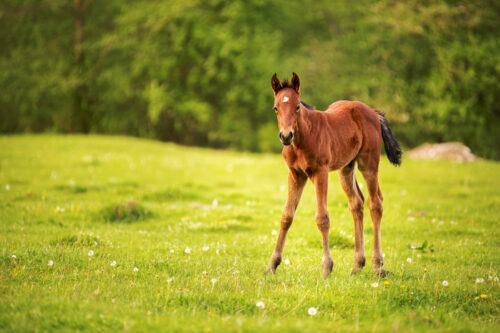
Newborn foals have notably longer and more numerous whiskers around their muzzles and chin compared to adult horses, serving a critical function in their early development. Given their limited vision at birth, these extended whiskers enable foals to navigate their environment and interact with their surroundings. [2][7]
The whiskers of foals are believed to play a key role in helping them detect their mother’s teat and establish initial social contact with the mare. As they grow and their vision improves, the length of their whiskers gradually decreases.
Whisker Trimming in Horses
Whisker trimming in horses, although increasingly scrutinized for its potential welfare implications, remains a practice driven by a variety of reasons, including aesthetic appeal, tradition, and competition expectations. Understanding the motivations behind this practice is essential in evaluating its ongoing use and the ethical debates surrounding it.
Cosmetic Appeal
In many competitive and show environments, appearance plays a significant role. A smooth, uniform look is often emphasized, and trimming whiskers is seen as a way to achieve a “cleaner” or more polished appearance. [2]
This is especially common in disciplines like dressage or show hunters, where precision and form are critical. The idea is that trimming the whiskers removes stray hairs that might detract from the horse’s refined look, creating a more aesthetically pleasing, neat, and symmetrical muzzle. [10]
Tradition
The practice of whisker trimming has deep roots in equestrian culture, particularly in countries like the UK and throughout Europe. Historically, whisker trimming was considered an essential part of standard grooming routines, with little understanding of its physiological effects on the horse.
This tradition has been passed down through generations, making it a normalized part of equestrian culture. Even as awareness of the importance of whiskers for sensory input grows, the long-standing tradition of whisker trimming persists in some regions, with minimal questioning of its impact on the horse’s welfare.
Improved Visibility or Focus
Some trainers and riders have anecdotally suggested that trimming a horse’s whiskers may help the horse focus more on other senses, such as vision or hearing, particularly in competitive environments.
This theory suggests reducing sensory input from the whiskers could minimize distractions. However, this belief is under increasing scrutiny due to the essential role whiskers play in navigation, distance judgment, and safety.
Welfare Implications
Whiskers are crucial for a horse’s ability to navigate and interact with its environment by providing tactile feedback. When trimmed, this sensory function is disrupted, impairing the horse’s ability to assess object size, shape, and proximity. [7][9]
This is particularly problematic in low-light or unfamiliar environments where horses rely on their whiskers to judge distances and avoid obstacles. Without whiskers, horses may struggle to navigate effectively, increasing the risk of injury from collisions with objects like stall walls, fences, or sharp corners.
Further research is necessary to fully understand the long-term effects of whisker trimming in horses, as current studies primarily focus on other species, such as rodents, felines, and marine mammals. [5]
Sensory Deprivation & Anxiety
As prey animals, horses rely heavily on their sensory system for detecting threats and interacting with their environment. Whiskers provide vital tactile feedback, helping horses gauge objects in low-light or unfamiliar conditions. The loss of whiskers can lead to disorientation and increased anxiety, potentially resulting in heightened stress. [2][3]
Studies in rodents and felines demonstrate that the removal of sensory hairs, such as whiskers, leads to significant behavioral changes, including: [3][9][11]
- Increased stress
- Diminished motivation
- Impairments in social and locomotor functions
These effects underscore the critical role of sensory organs in animal behavior.
Given that humans lack similar tactile structures, the importance of whiskers for the emotional well being of domesticated animals is often overlooked. [12]
Regulatory & Legislative Actions
In recent years, heightened awareness of the welfare implications of whisker trimming has driven significant regulatory and legislative changes in the equine industry.
Germany, Switzerland, and France were among the first countries to ban trimming of horse whiskers, incorporating these prohibitions into their animal welfare laws or equestrian sport regulations. These nations emphasize the essential role sensory hairs play in a horse’s ability to interact with its environment safely and effectively. [1][5][13][14]
Penalties for violations in these countries are often severe, reflecting the importance placed on animal welfare. For instance, Germany’s equestrian federation explicitly highlights whisker trimming as a welfare concern and enforces strict compliance, while France and Switzerland extend the prohibition to non-competitive settings.
These early national actions laid the groundwork for global policies, including the Fédération Équestre Internationale’s (FEI) ban on whisker trimming.

FEI’s Policy on Whisker Trimming
The Fédération Équestre Internationale (FEI), founded in 1921, is the global governing body for equestrian disciplines including:
Committed to equine welfare, the FEI has prohibited the trimming or removal of sensory hairs, such as whiskers, to safeguard horses’ natural abilities to perceive their environment. These regulations apply to all FEI-sanctioned events globally and aim to uphold the welfare of participating horses. [15]
The FEI Veterinary Committee emphasizes that sensory hairs play a vital role in navigation and safety, aiding horses in detecting obstacles and maintaining spatial awareness. Their removal can impair these critical functions, thereby compromising welfare.
In November 2020, the FEI approved a formal ban on whisker trimming during its General Assembly. The rule, which became effective on July 1, 2021, under updated FEI Veterinary Regulations, prohibits horses with trimmed or removed whiskers from participating in FEI-sanctioned events, except in cases where whiskers were removed for medical reasons by a veterinarian.
This policy complements national bans in several European countries, where violations often carry significant penalties, underscoring an international consensus on the importance of preserving sensory hairs for equine welfare.
Beyond FEI Jurisdiction: Whisker Trimming in Other Equestrian Competitions
While the Fédération Équestre Internationale (FEI) has enforced a ban on whisker trimming in competitions under its jurisdiction, this policy does not always extend to non-FEI events.
Many equestrian competitions, such as hunter shows, breed-specific classes, and local or national events, fall outside of the FEI’s governance and are regulated by other organizations, each with varying welfare standards. As a result, trimming remains common in these settings, driven by traditional grooming practices or aesthetic preferences.
In Canada, there is no national legislation explicitly banning the trimming of whiskers. Equestrian Canada (EC) updated Article A517 of its General Regulations to allow sensory hairs to remain unclipped or unshaven. However, whisker removal does not incur penalties during competitions, reflecting a recognition of the practice without strict enforcement. [16][17]
In the United States, no federal legislation prohibits whisker trimming. However, some equestrian organizations are beginning to address welfare concerns related to sensory hair removal, signaling progress. Despite this, widespread enforcement of welfare measures has yet to be achieved across non-FEI events.
Challenges
The differing regulations between FEI-governed events and other competitions create inconsistencies in equine welfare standards. Advocacy and education are essential to raise awareness of the importance of preserving sensory hairs and to encourage broader adoption of welfare-focused policies across all levels of equestrian sports.
Frequently Asked Questions
Here are some frequently asked questions about whisker trimming in horses:
Yes, horse whiskers (vibrissae) play a crucial role in sensory perception. They help horses navigate their environment by detecting nearby objects, especially in low light or unfamiliar settings. Whiskers also aid in social communication and help horses judge distances and avoid obstacles.
Trimming a horse's whiskers is generally discouraged due to welfare concerns. These whiskers provide vital tactile feedback that helps horses interact with their surroundings, and trimming them can impair their ability to navigate, potentially increasing the risk of injury. [2][9]
Yes, whiskers do grow back after being trimmed, though the process can take time. Horses' whiskers (vibrissae) are deeply rooted and connected to nerve endings, making them more resilient than regular hair. [7]
Whisker trimming is banned in several countries, including Germany, Switzerland, and France, as well as in FEI-regulated competitions. However, in some countries like the U.S. and Canada, no national laws prohibit whisker trimming, though some equestrian organizations are beginning to address whisker trimming as a welfare concern. [4][5][13]
Summary
Whisker trimming removes sensitive hairs around a horse’s muzzle, eyes, and ears, impacting sensory functions vital for navigation and object detection.
- Whiskers, or vibrissae, are special sensory hairs that help horses navigate and detect nearby objects, especially in low light or unfamiliar settings
- Several countries have banned whisker trimming due to welfare concerns, including Germany, Switzerland, and France, with the FEI enforcing this ban in its competitions since 2021
- Non-FEI competitions may still allow whisker trimming, as many governing bodies have not adopted similar welfare regulations
- Education and advocacy remain critical for standardizing welfare regulations across equestrian events
References
- Emerson L. et al., Practice and Attitudes Regarding Trimming of Equine Vibrissae (Sensory Whiskers) in the UK and Germany. J Vet Behav. 2024.
- Bergen A.P.I. van, Vibrissae of the horse, a pilot study on how to assess the effect of manipulation. Utrecht University. 2013.
- Ahl A.S., The Role of Vibrissae in Behavior: A Status Review. Vet Res Commun. 1986.
- Hazel S.J. et al., What’s the Fuzz: The Frequency, Practice and Perceptions of Equine Facial Hair Trimming Revealed in a Survey of Horse Owners in Australia. Human-Animal Interactions. 2024.
- Henderson A.J.Z., Ask the Equine Psychologist: A bristly subject - Ethics and legality of whisker trimming. Horse Sport. 2019.
- Prescott T.J. et al., Vibrissal Behavior and Function. Scholarpedia. 2024.
- Rørvang M.V. et al., Sensory Abilities of Horses and Their Importance for Equitation Science. Front Vet Sci. 2020. View Summary
- Murphy J. et al., What Horses and Humans See: A Comparative Review. International Journal of Zoology. 2009.
- Grant R.A. and Goss V.G.A., What Can Whiskers Tell Us about Mammalian Evolution, Behaviour, and Ecology?. Mammal Review. 2022.
- Christie J.L. et al., Demographics, Management, and Welfare of Nonracing Horses in Prince Edward Island. Can Vet J. 2004. View Summary
- Wolfe J. et al., Social Facial Touch in Rats. Behav Neurosci. 2011.
- Nielsen B.L., Making Sense of It All: The Importance of Taking into Account the Sensory Abilities of Animals in Their Housing and Management. Applied Animal Behaviour Science. 2018.
- Poncet P.-A. et al., Ethical Reflections on the Dignity and Welfare of Horses and other Equids - Pathways to Enhanced Protection. The Swiss Horse Industry Council and Administration. 2024.
- Reglement Des Competitions. Federation Française D'Equitation. 2024.
- Proposals for 2020 Modifications to the Veterinary Regulation. Fédération Équestre Internationale. 2020.
- Rules of Equestrian Canada: Section A. Equestrian Canada Équestre. 2023.
- 2022 Equestrian Canada Rules Now Available. Equestrian Canada Équestre. 2021.