English




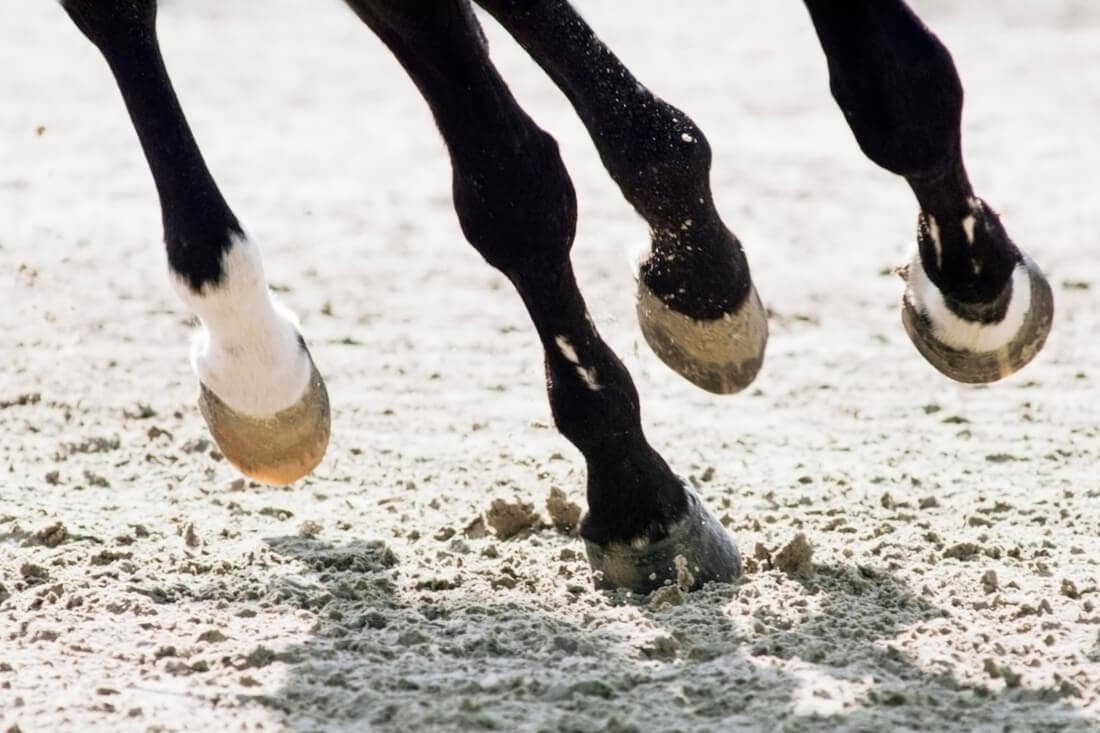
Ergots are small, hardened skin growths found on the lower legs of horses. They are easily overlooked due to their position beneath the fetlock where they are usually concealed by surrounding hair.
Though commonly mistaken as minor or insignificant, ergots are living tissue that continues to grow throughout a horse’s life. As such, they may occasionally require attention to maintain the horse’s comfort and appearance.
While they are a normal and expected feature of the horse’s anatomy, improper handling during maintenance such as aggressive pulling or cutting can lead to discomfort or injury.
Understanding the nature of ergots, their typical location, and appropriate methods for softening and trimming them is important for ensuring proper care. In most cases, maintenance is simple and painless when done correctly. However, in situations where overgrowth is excessive or trimming is uncertain, professional assistance is recommended.
Read on to learn everything you need to know about ergots in horses, including their structure and function and grooming tips. By familiarizing themselves with best practices for ergot care, owners and caretakers can support their horse’s foot and skin health without causing distress or harm.
Horse Ergots
The ergot (also known as a fetlock wart) is a rough, thick patch of skin located on the back and bottom of each fetlock joint in the middle of a tuft of hair. In heavier breeds such as draft horses, the ergots tend to be thicker and bigger than in lighter horses. [1][2][3]
The ergot is a normal part of equine anatomy, although they may not be visible on the skin’s surface. They are not associated with any health problems or medical concerns. [2]
Structure
The structure of the ergot has been well documented. Ergots are a patch of keratinized (hardened) skin tissue, which is known as a callosity. They are closely connected to different layers of tissue in the lower part of a horse’s leg. [4]
Higher up, ergots are joined to the tissue that wraps around the ligaments running down the back of the horse’s leg. Lower down, it blends into the tissue just under the skin that eventually connects with the area around the hoof. [4]
Function
The function of the ergot is not fully understood, although early research has revealed some interesting possibilities. The ergot, which was previously considered a vestigial attribute leftover from one of the horse’s evolutionary ancestors, may actually play a small but meaningful role in how the horse’s lower leg functions. [4]
The ergot is a meeting point where the connective tissues from the upper and lower parts of the leg come together, helping form both the outer and inner layers of support in that area. [4]
Shock Absorption
Since the ergot is a soft, cushion-like lump under the skin, it may help absorb and reduce the force that travels up the leg when the horse’s hoof hits the ground. In this way, it may be similar to the heel pad in the human foot, which helps absorb shock and protect the joints from strain. [4]
Support & Proprioception
The ergot’s position as a central anchor for various tissues in the lower leg suggests it may play a role in limb movement and support. It is firmly attached to a strong band of tissue near the fetlock, which helps it act as a central anchor. This anchor connects the skin and supportive tissues of the lower leg. [4]
While the ergot probably does not have a strong mechanical role in limiting how far the horse’s fetlock bends backward, it may help in another way. The ligaments around the ergot contain nerves called Ruffini endings that are specialized to sense pressure and movement. [4]
The presence of Ruffini endings in the ergot suggests the structure may play a role in the horse’s sense of proprioception — the awareness of where the legs are relative to each other and in space. This type of nervous signaling is important for balance, coordination, and preventing injury. [4]
Ongoing Inquiry
The ergot’s close connection to the skin might demonstrate that the skin plays a bigger role in the horse’s lower legs’ mechanics than previously thought. In fact, the skin is so tightly attached to the ergot tissue that researchers could not separate the two cleanly during dissection. This suggests that the skin and the tissue underneath it work closely together as a unit. [4]
Although the skin’s contribution to joint support and movement remains poorly understood, some researchers propose it may help stabilize equine joints and distribute forces generated during motion. Dissipating forces may be especially important at the back of the fetlock joint, where repeated bending stretches the skin significantly. [4]
Because the skin and ergot tissue are so tightly linked, any stretching or pulling on the skin is likely to affect the ergot and its connective tissues — and the other way around. The ergot is also firmly anchored to a strong ligament in the fetlock area that connects to bones in the lower leg. This keeps the ergot in a fixed position, making it a steady anchor point for the skin and connective tissues around it. [4]
All of this suggests the ergot plays an important role in supporting the joints of the lower leg. These findings also suggest the lower part of the horse’s front leg might be more passively coordinated than previously thought, opening up new ideas for future research into how horse legs work during movement. [4]
What's your top priority with your horse's health?

Enter your email to receive your store credit
Ergots vs. Horse Leg Chestnuts
Recent anatomical findings show that ergots share significant structural and biological similarities with horse chestnuts. In fact, the tissue structure of ergots is nearly identical to that of chestnuts. Both structures are made of thickened, dry, keratinized skin tissue, which gives them their tough, horn-like appearance. [4]
Ergots, like chestnuts, are considered by some experts to be vestigial structures — parts of the body that no longer serve a clear function but were likely useful to the horse’s evolutionary ancestors. However, this long-held interpretation is currently disputed as recent findings show the ergot may play a role in proprioception and structural support of the lower limb. [4]
Origin
Despite their similarities, ergots and chestnuts likely developed from different anatomical features in the horse’s evolutionary history. Some researchers suggest that ergots correspond to the middle section of the three-lobed foot pads found in animals like dogs and cats. [1][5]
Conversely, chestnuts, particularly those on the front legs, may be related to wrist pads, also known as carpal pads, seen in other four-legged animals. [1][5]
Location
Another feature that differentiates ergots from chestnuts is their location. Ergots are found lower on the horse’s leg, typically just below the fetlock joint. Chestnuts are located higher up on the inner side of the legs, near the knee on the front legs and near the hock on the hind legs. [1][4]
Anatomy
In terms of attachment, ergots are deeply embedded in the tissues of the leg and usually anchored firmly at their center to a strong ligament near the fetlock. This makes them more structurally integrated into the leg. [1][4]
Chestnuts, on the other hand, are more superficial. They appear as dry, callous-like patches of skin that can usually be peeled or trimmed without causing discomfort to the horse. [1][4]
Appearance
Size and shape also help distinguish ergots from chestnuts. Ergots are generally smaller and rounder than chestnuts, which tend to be oval and can be up to four times larger. In some cases, the structure of the ergot develops under the skin but does not appear above the skin. [1]
Grooming
Since ergots grow continuously, they should be checked regularly by a farrier. If necessary, they can be trimmed using a blade. Chestnuts, on the other hand, often require no tools—softening them with petroleum jelly or baby oil is usually enough to allow them to be peeled by hand. [2]

Breed Differences in Ergot Presentation
It is uncommon for ergots to be absent on the horse, however some Arabian horses may not have them. [1]
There may be some breed predisposition to horses having invisible ergots that are present below the skin. The reasons for this presentation are not fully understood, and the matter is a subject of ongoing scientific investigation.
One theory is that differences in the speed of circulation among horse breeds may influence whether the ergot is visible on the horse’s skin. Horse breeds with slower circulation tend to have visible ergots. However, there have been contradictory findings and more research is required to assess breed variance in ergot presentation. [4]
Grooming and Removing Ergots
Not all horses require grooming of the ergots. Ergots continue to grow throughout a horse’s life and may require occasional maintenance. It is recommended that a farrier help the horse owner determine whether care is needed and if so, the farrier can include ergot maintenance in their standard trimming regimen. [2]
When overgrowth occurs, ergots can be softened with water, baby oil, or an equine-safe moisturizing product to make trimming or peeling easier. In some cases appropriate tools such as nippers or blades may be required to trim or remove the ergots, especially if they have become hard or unsightly. [2]
Allowing your farrier to trim your horse’s ergots is the easiest way to ensure the procedure is performed safely and does not cause discomfort. Twisting or pulling off dry ergots can result in bleeding and pain.
It’s important to monitor the horse for any signs of distress during trimming, and the process should be stopped immediately if pain is evident. [2]
Regular softening of the ergot tissue can help make maintenance easier while also preventing excessive hardening or cracking. In all cases, trimming should be conservative and gentle, ensuring the horse remains comfortable and unharmed. [2]
Frequently Asked Questions
Here are some frequently asked questions about ergots on horses:
Ergots are small, callous-like growths typically located at the back of the horse’s fetlock joint. Often hidden beneath long hair, they are usually easier to detect by touch than sight. Ergots are made of toughened skin tissue and were previously thought to be vestigial features inherited from the horse's evolutionary ancestors. More recent research suggests they may play a larger role in the horse's leg function.
While horse ergots do not require frequent attention, they may need occasional maintenance as they continue to grow throughout a horse's life. If they become overly long, cracked, or unsightly, they can be carefully trimmed. Routine inspection and softening of the tissue can help manage their growth more easily and avoid discomfort or complications. It's recommended to leave ergot maintenance to a qualified farrier to perform.
Yes, if not done correctly, trimming ergots can cause the horse discomfort or even bleeding. Twisting or pulling off dry, hardened ergots can be painful for the horse. To avoid this, trimming should always be done gently, preferably after softening the tissue, and should be stopped immediately if the horse shows any sign of distress. It's recommended to leave ergot maintenance to a qualified farrier to perform.
To prepare horse ergots for trimming, it is helpful to soften them using warm water, baby oil, or an equine-safe moisturizing product. This makes the calloused tissue more pliable and easier to remove with minimal effort. Regular softening can also prevent the ergot from becoming excessively hard or cracked over time.
If there is any uncertainty about how to safely trim ergots, it is best to consult a farrier or veterinarian. Farriers commonly address ergots as part of routine hoof care and can ensure they are trimmed safely without causing pain.
Summary
Ergots are small, keratinized growths of skin located behind the fetlock joint that may require occasional maintenance due to continuous growth. They are a normal feature of the horse's leg and are structurally integrated into the limb.
- Ergots are found behind the fetlock, often hidden by hair, and are usually located by touch rather than sight. In some cases, the ergot does not feature on the surface of the skin but still exists inside the horse's leg.
- They grow throughout life and may become hard or overgrown, requiring periodic softening and trimming
- Improper removal methods like twisting or pulling can cause pain and bleeding; trimming should be gentle and conservative
- When unsure, trimming should be left to trained professionals such as farriers, who commonly address ergots during hoof care
- Regular moisturizing can keep the tissue pliable and make maintenance easier while helping prevent cracking or discomfort
References
- Ridgeway. W., The Origin and Influence of the Thoroughbred Horse. Cambridge, University Press. 1905.
- Henry. M., Why Do Horses Have Chestnuts and Ergots on Their Legs?. Saddle Up. 2023.
- Funnell. R., Horses Have A Crusty Remnant Of Evolution Stuck To Their Legs. IFLScience. 2022.
- Lusi. C. M. and Davies. H. M. S., The Connectivity and Histological Structure of the Equine Ergot—A Preliminary Study. Journal of Equine Veterinary Science. 2017.
- Dyce. K. et al. Textbook of Veterinary Anatomy. Saunders Elsevier. 2010.