English










If you own a horse with metabolic health issues, you are likely familiar with the risks associated with lush pasture grasses. Excess sugar intake from grazing green pasture can trigger abnormal insulin responses in metabolic horses, increasing their risk of laminitis.
To mitigate this risk, many horse owners keep their metabolic horses off lush pastures during the growing season, typically spring and early summer.
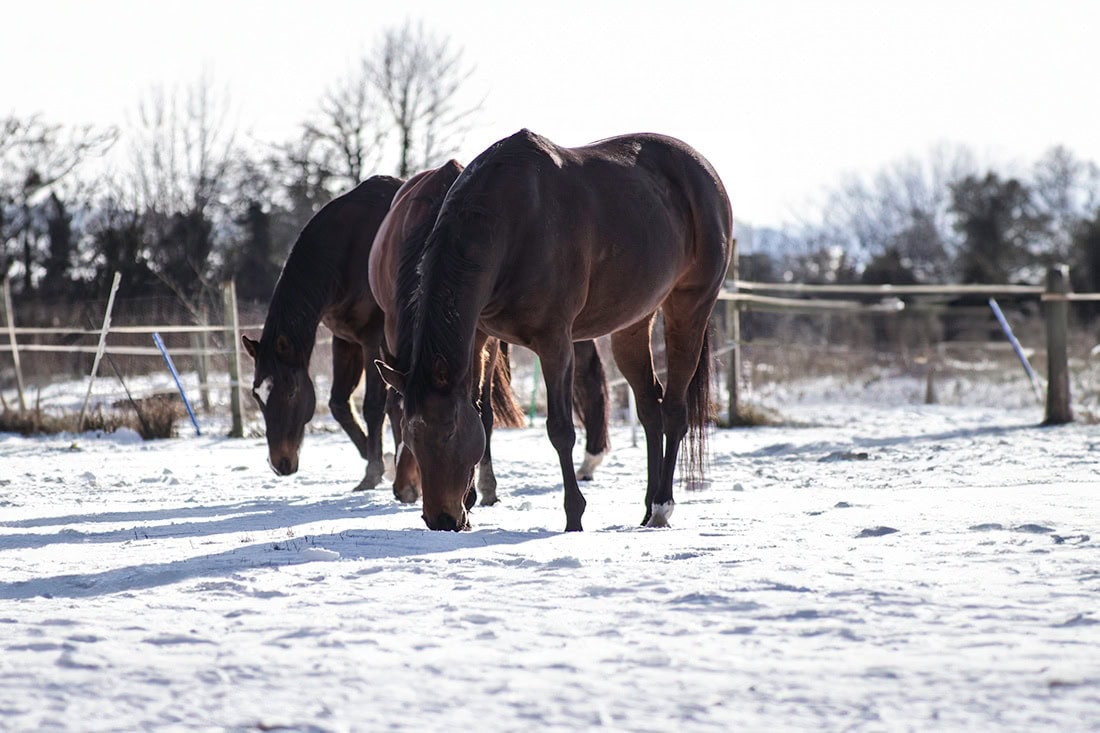
So what about winter pasture grazing? Grasses that are brown, dormant, or even covered in snow might appear safe for your horse. But appearances can be deceiving.
Winter poses unique challenges for managing metabolic horses because cool-season grasses, though not actively growing, can still store sugars. Factors like sunlight and changes in temperatures affect how these grasses metabolize and retain sugar.
Read on to learn everything you need to know about winter grazing for horses with metabolic issues so you can make the most effective management decisions to ensure they are well fed and comfortable all year long.
Risks of Winter Pasture for Metabolic Horses
Grasses produce energy through photosynthesis, using sunlight to convert carbon dioxide and water into sugars. These sugars are stored as carbohydrates, such as sucrose and fructans, to fuel growth and survival for the plant.
In cool-season grasses, sugar levels increase under certain conditions, especially during rapid growth — such as in the spring — or periods of environmental stress. For example, sugar concentrations can spike during sunny days followed by cold nights, as photosynthesis continues to produce sugars, but cooler temperatures slow down their use for growth. Similarly, drought, frost, or a sudden temperature drop can stress the plant, causing it to store more sugars as a survival mechanism.
For metabolic horses, consuming grasses high in sugars can lead to harmful insulin levels. This can impair blood flow to the hooves, increasing the risk of laminitis — a painful and potentially debilitating condition.
Winter pastures may seem harmless, with mature grasses that appear brown, dry, snow-covered and dead. However, for metabolic horses, these pastures can still pose significant risks.
Despite their inactive appearance, cool-season grasses can exhibit elevated carbohydrate levels. This makes managing grazing in winter just as critical as during the growing season to prevent complications like laminitis.
Pasture-Associated Laminitis
Pasture-associated laminitis (PAL) occurs when a horse’s insulin levels rise to dangerous levels, often due to consuming plants high in hydrolyzable carbohydrates (HC). These carbohydrates, which include simple sugars and starches, are rapidly digested in the small intestine, causing a spike in blood sugar (glucose) levels. This triggers a corresponding insulin response as the body tries to regulate glucose levels.
In metabolic horses, the ability to control blood sugar is impaired due to insulin resistance, leading to prolonged high insulin levels. Elevated insulin has been shown to directly impact blood flow, particularly to the hooves. Reduced blood flow damages the sensitive laminae in the hoof, causing inflammation, pain, and the structural instability characteristic of laminitis.
The risk of PAL is highest when horses graze on lush pastures, especially during times when grasses accumulate large amounts of hydrolyzable carbohydrates, such as in the spring or after environmental stress. Managing grazing and limiting access to high-sugar forages is critical to reducing the risk of laminitis in horses prone to metabolic issues.
Sugars in Winter Pasture
Cool-season grasses, which dominate many pastures, are specially adapted to survive harsh winters by storing large amounts of carbohydrates. These stored carbohydrates provide energy for new growth in the spring and help protect the plant from freezing temperatures during winter. The main forms of these carbohydrates are sucrose and fructans.
- Sucrose: A simple sugar that can rapidly raise blood glucose levels, triggering an insulin response. This makes it particularly risky for metabolic horses.
- Fructans: Complex carbohydrates that are not digested in the small intestine, meaning they do not directly cause blood sugar spikes or insulin responses.
However, fructans are not entirely harmless for horses. In cool-season grasses, stored fructans can be broken down into sucrose under certain conditions.
This typically happens during warm periods in winter to fuel the plant’s growth or during cold stress as a protective mechanism. As a result, even after a hard freeze, grasses can still contain high levels of sucrose, potentially making winter pastures unsafe for metabolic horses.
What's your top priority with your horse's health?

Enter your email to receive your store credit
Impact on Insulin Levels and Laminitis
Winter pastures can contain high levels of hydrolyzable carbohydrates (HC), with some studies reporting levels as high as 15% of dry matter. [1] However, predicting HC levels in winter pastures is challenging due to variations in temperature, grass species, and regional conditions.
This variability means insulin responses in metabolic horses grazing on winter pastures can be inconsistent and difficult to manage.
Interestingly, winter itself can influence insulin sensitivity. One study showed that a herd of ponies (half of which grazed on pasture) had higher levels of insulin resistance in winter compared to spring and summer. [2]
This may be an adaptive response to changing seasonal food availability: in spring, increased insulin sensitivity allows animals to better handle high sugar intake from lush new growth; in winter, reduced insulin sensitivity helps preserve glucose stores in the body during food scarcity. [2]
Conversely, another study found that metabolic ponies grazing on a winter pasture did not exhibit the same signs of insulin resistance as those grazing on summer pastures. [3]
This discrepancy could be explained by differences in diet. The ponies in the winter study were supplemented with hay, which may have reduced their reliance on pasture grasses and lowered their overall intake of HC.
Incidence of Laminitis
The occurrence of laminitis in metabolic horses during winter varies widely due to fluctuating insulin levels and environmental factors. Research shows mixed results:
- A UK study reported higher incidences of laminitis in winter and summer, compared to spring and fall. [4]
- A Danish study found lower incidences of laminitis in winter compared to summer. However, horses that developed laminitis in winter were more likely to be euthanized. [5] This suggests that winter conditions may worsen the severity of laminitis by decreasing blood supply to the hoof.
One reason for increased severity in winter is the impact of cold temperatures on blood flow. One response horses have to cold weather is reduced blood flow to the extremities, which aids in overall thermoregulation. While this is not a problem for healthy horses, metabolic horses often already have compromised circulation.
Reduced blood flow in these horses can lead to insufficient oxygen and nutrient delivery to the hooves, potentially triggering or exacerbating winter laminitis.
More research is required to understand how winter pasture and cold temperatures impact laminitis risk. However, cold conditions combined with variable sugars levels in pasture means horse owners need to be vigilant when grazing metabolic horses on winter pasture.
How to Manage Metabolic Horses on Winter Pasture
Despite the risks to metabolic horses, winter turnout is highly beneficial for horses as it supports their physical and mental welfare by promoting movement, reducing stress, and preventing boredom.
Even during cold months, turnout allows for natural behaviors like foraging, voluntary movement and social interaction. Outdoor turnout also promotes respiratory health by allowing horses to breathe fresh air in a well-ventilated environment, reducing their exposure to dust, ammonia, and other irritants commonly found in barns.
However, turnout needs to be managed properly to reduce the risk of laminitis. If your horse is metabolic and has access to winter pasture, consider these methods to minimize risks:
- Provide Hay: Offering hay as an alternative forage source may reduce pasture intake, especially when pasture is buried under snow.
- Wait for Deep Snow: A thick, hard layer of snow will make it harder for horses to reach the grass. This can slow down pasture intake and increase energy expenditure while grazing, helping to maintain healthy insulin levels.
- Grazing Muzzles: Most wintering plants store their sugars in the roots or the base of their stem. Use a grazing muzzle if you notice your horse pawing through the snow to reach these parts of the grass.
- Monitor Blood Insulin: Regularly testing insulin levels can help determine if your horse has an abnormal insulin response to pasture and should be removed from grass.
Dormant grasses can still accumulate hydrolyzable carbohydrates, posing a risk for metabolic horses. Implementing these practices can help protect their health during the winter months.
For metabolic horses, dry lot turnout with appropriate hay is another excellent alternative. This setup keeps them off pasture grass, reducing the risk of consuming sugars while still providing the benefits of outdoor activity.
Feeding hay ensures metabolic horses have a safe and controlled forage source, meeting their nutritional needs without compromising their health.
Sugar Levels in Winter Pasture Grass
To better understand the risk posed by winter grazing, it is helpful to understand how and why plants accumulate sugars during cold weather.
Sucrose Protects Plants from Freezing
Plants like pasture grass have a high water content, consisting of roughly 80 – 90% water, and do not make a substantial amount of internal heat. This leaves them susceptible to freezing during winter, which can damage plant cell membranes, impacting the plant’s viability.
To survive freezing conditions, plants accumulate cryoprotectant compounds when exposed to cool weather and shorter daylight hours in winter. [6] Cryoprotectants are substances that help prevent cells from freezing.
One of the most common cryoprotectants is sucrose, a soluble sugar. Sucrose and similar sugars reduce the risk of freezing by inhibiting water molecules from bonding and forming ice. [6] Different plant species rely on various types of sugars for protection.
However, plants cannot actively produce these protective sugars during freezing temperatures. Therefore, the plant relies on previously stored carbohydrates to safeguard itself in freezing weather.
Sugar Storage in Winter Plants
The amount of sugar in a plant depends on how much it produces, consumes, and stores.
During sunny conditions, plants make sugars through photosynthesis. During the warmer months, these sugars are used immediately to support growth, repair, or reproduction of the plant.
When temperatures drop below 8 – 10°C (46 – 50°F), plants stop growing. [7] However, they can still produce sugars as long as the temperature remains above freezing. Since growth is no longer occurring, the sugars made during this period are not used but instead stored within the plant.
As the cold season continues, plants accumulate significant reserves of sugar. This process enables them to survive harsh conditions but also results in elevated sugar levels in winter pasture grasses, which can pose risks for grazing animals with metabolic sensitivities.
Types of Grasses
Grasses are categorized into two main groups: warm-season (C4) and cool-season (C3) grasses. These groups differ in how they produce, utilize, and store sugars, as well as their photosynthetic pathways.
Table 1. Summary of sugar distribution in seasonal grasses [8][9][10][11]
| Warm Season (C4) | Cool Season (C3) | |
|---|---|---|
| Examples |
|
|
| Main Types of Sugar |
|
|
| Sugar Storage Locations |
|
|
| Minimum Temperature for Sugar Production |
|
|
| Geographic Distribution |
|
|
Sugar Fluctuations in Cool-Season Grasses
Sugar levels in cool-season grasses fluctuate significantly with seasonal temperature changes.
In late fall, cool-season grasses are subjected to low temperatures combined with adequate sunlight, allowing them to continue photosynthesis and sugar production. However, since plant growth halts in cool conditions, these sugars are not used for growth. Instead, they are stored as fructans.
This rise in fructan levels is commonly observed as plants acclimatize to cool temperatures in early winter. [12][13] Since fructans are not hydrolyzable carbohydrates (HCs), grasses storing sugars as fructans do not trigger an insulin response in a metabolic horse.
However, as winter sets in and temperatures fall below freezing, sucrose is released from fructan stores to protect the plant from freezing. This results in higher concentrations of hydrolyzable carbohydrates (HC) in the base of the stem, leaves, and crown tissues during freezing temperatures. [12][13][14][15]
During temperature-driven HC spikes, these grasses are considered a high risk for metabolic horses.
While many cold-tolerant grasses follow this pattern of releasing sucrose from fructan reserves in freezing weather, others are less predictable. Some grasses maintain their fructan stores throughout the winter without releasing sucrose. [12][14][16] These plants, with high fructan but low HC content, are considered safer grazing for metabolic horses.
However, due to variability in temperatures, seasonal shifts, and grass species, predicting which plants pose a risk can be challenging. For metabolic horses, it is safest to treat all cool-season pasture grasses with caution, especially during periods of fluctuating temperatures.
Once temperatures are consistently below freezing and the grass becomes dormant for winter, metabolic horses may be able to return to pasture turnout safely. However, even when brown and apparently dead, the plant can still store enough sugars to be a risk for sensitive horses.
When in doubt, it’s safest to maintain these horses on a dry lot with no access to pasture, especially in more mild winter climates where pastures may not fully enter winter dormancy.

Sugar Fluctuations in Warm Season Grasses
Warm-season grasses and alfalfa exhibit different strategies for storing sugars in cooler temperatures. Unlike cool-season grasses that rely on fructans, warm-season grasses store excess sugars as starch.
Starch, a hydrolyzable carbohydrate, can stimulate an insulin response in horses. However, most starch is stored in plant roots, which are less likely to be consumed by horses.
Despite the difference in carbohydrate storage, warm-season grasses, like cool-season grasses, use sucrose to protect themselves from freezing. When exposed to chilling temperatures, warm-season grasses convert starch to simple sugars, such as glucose and sucrose. [17][18][19]
For example, studies on Bermudagrass have shown that sucrose levels increase as the grass is exposed to cold temperatures. [18][20]
Similar results have been observed in other warm-season grasses. Buffelgrass, a warm-season grass native to Africa, had higher levels of sucrose in the winter months than in the late fall and early spring. [21]
Likewise, research on Zoysiagrass revealed that three out of four studied species had higher levels of hydrolyzable carbohydrates (HCs) in their leaves from December to February compared to late fall. [19]
Although most warm-season grasses do not thrive in regions with cold winters, those that do may rely more heavily on sucrose as a protective mechanism.
For instance, cold-hardy varieties of Bermudagrass accumulate significantly more sugars than cold-sensitive varieties. [20] This indicates that using warm-season grasses in winter pastures can pose similar risks to metabolic horses as cool-season grasses.
Frequently Asked Questions
Here are some frequently asked questions about Winter Pasture Grazing for Metabolic Horses:
The safety of grasses for metabolic horses varies depending on a number of factors, including temperature, sunlight, and other environmental stressors. [6][7] Since the sugar content of winter grasses can vary widely and is difficult to predict, it is recommended to limit the amount of pasture grazing for metabolic horses and provide alternate turnout opportunities instead.
Grasses continue making energy in the form of sugar as long as they have daylight hours available. However, plant growth slows and eventually stops as temperatures drop. This means plants continue producing sugar even when they are not consuming it to grow, resulting in increased sugar concentrations in cooler weather. [6][7]
Cool-season, or "C-3" grasses include Timothy, Orchard, Fescue, Bluegrass, Ryegrass, and Bentgrass species. [8]
Summary
Winter pasture grazing presents unique challenges for managing metabolic horses, as both cool-season and warm-season grasses can pose risks due to elevated levels of hydrolyzable carbohydrates (HCs) in cold conditions. Proper management is essential to minimize the risk of laminitis.
- Even dormant or "dead-looking" grasses in winter can contain high levels of HCs, making them a potential danger for metabolic horses.
- Use strategies like grazing muzzles, providing appropriate hay, or relying on deep snow cover to restrict access to pasture grasses.
- Regularly assess your horse's condition and be cautious about temperature fluctuations that can cause HC spikes in grasses.
- Feeding a metabolic horse during winter requires careful planning. Reach out to a nutritionist today to ensure their diet supports health while minimizing risks.
References
- Østrem L. et al., Effect of Developmental Stage on Carbohydrate Accumulation Patterns during Winter of Timothy and Perennial Ryegrass. Acta Agriculturae Scandinavica, Section B — Soil & Plant Science. 2011.
- Borer K.E. et al., Use of Proxy Measurements of Insulin Sensitivity and Insulin Secretory Response to Distinguish between Normal and Previously Laminitic Ponies. Equine Veterinary Journal. 2012.
- Bailey S.R. et al., Hypertension and Insulin Resistance in a Mixed-Breed Population of Ponies Predisposed to Laminitis. American Journal of Veterinary Research. 2008. View Summary
- Wylie C.E. et al., Risk Factors for Equine Laminitis: A Case-Control Study Conducted in Veterinary-Registered Horses and Ponies in Great Britain between 2009 and 2011. Vet J. 2013. View Summary
- Luthersson N. et al.,Laminitis: Risk Factors and Outcome in a Group of Danish Horses. Journal of Equine Veterinary Science. 2017.
- Janská A. et al., Cold Stress and Acclimation - What Is Important for Metabolic Adjustment?. Plant Biol (Stuttg). 2010.
- Long S.P., C4 Photosynthesis at Low Temperatures. Plant, Cell & Environment. 1983.
- Chatterton N.J. et al., Carbohydrate Partitioning in 185 Accessions of Gramineae Grown Under Warm and Cool Temperatures. Journal of Plant Physiology. 1989.
- Abeynayake S.W. et al., Fructan Metabolism and Changes in Fructan Composition during Cold Acclimation in Perennial Ryegrass. Frontiers in Plant Science. 2015.
- Gunn T.C. and Walton D.W.H.,Storage Carbohydrate Production and Overwintering Strategy in a Winter-Green Tussock Grass on South Georgia (Sub Antarctic). Polar Biol. 1985.
- Wei S. et al., Cold Sensitivity and Biochemical Adjustments in Zoysiagrass under Low Temperature Stress. Acta Horticulturae. 2008.
- Dionne J. et al., Freezing Tolerance and Carbohydrate Changes during Cold Acclimation of Green-Type Annual Bluegrass (Poa Annua L.) Ecotypes. Crop Science. 2001.
- Watts K.A., Carbohydrates in Forage: What is a Safe Grass?. 2012.
- Yoshida M. et al., Carbohydrate Levels among Winter Wheat Cultivars Varying in Freezing Tolerance and Snow Mold Resistance during Autumn and Winter. Physiologia Plantarum. 1998.
- Livingston III D.P., The Second Phase of Cold Hardening: Freezing Tolerance and Fructan Isomer Changes in Winter Cereal Crowns. Crop Science. 1996.
- Moriyama M. et al., Etiolated Growth in Relation to Energy Reserves and Winter Survival in Three Temperate Grasses. Euphytica. 2003.
- Li S. et al., Differential Physiological and Metabolic Response to Low Temperature in Two Zoysiagrass Genotypes Native to High and Low Latitude. PLoS One. 2018.
- Dunn J.H. and Nelson C.J., Chemical Changes Occurring in Three Bermudagrass Turf Cultivars in Relation to Cold Hardiness. Agronomy Journal. 1974.
- Pompeiano A. et al., Carbohydrate Metabolism During Wintering Period in Four Zoysiagrass Genotypes. Plant Production Science. 2015.
- Zhang X. et al., Metabolic Defense Responses of Seeded Bermudagrass during Acclimation to Freezing Stress. Crop Science. 2006.
- Ball S. et al., Soluble Carbohydrates in Two Buffalograss Cultivars with Contrasting Freezing Tolerance. Journal of the American Society for Horticultural Science. 2002.