English
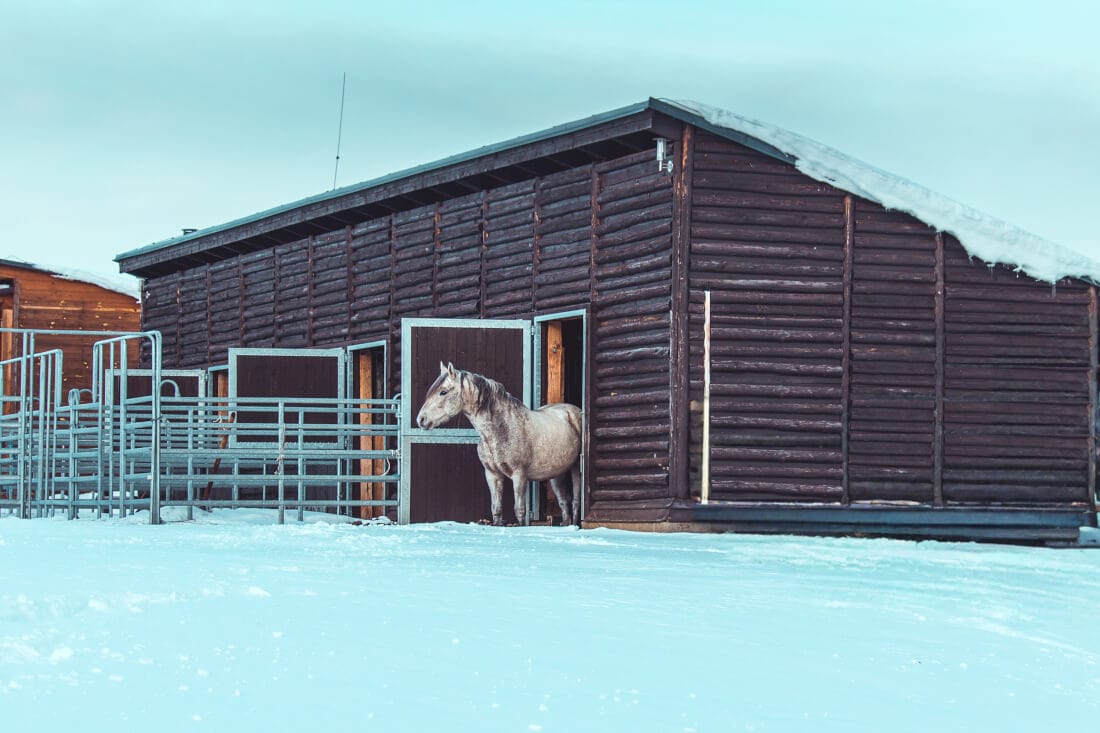
Winter brings its own set of challenges for horse ownership. During cold weather, owners and caretakers of boarded horses must navigate additional considerations related to facility management, turnout, and daily care.
Boarded horses rely on barn staff, shared facilities, and set management routines to stay safe and healthy. Cold temperatures, icy footing, limited turnout, and changes in forage and water availability can all influence a horse’s comfort, health, and behavior during the winter months.
As the season sets in, thoughtful planning and proactive communication with your boarding barn are essential to keeping your horse safe, warm, and thriving. Read on to learn how to support your boarded horse through the winter, including important topics to discuss with your facility manager regarding winter care.
With a proactive approach and a clear understanding of winter management challenges, you can help ensure your boarded horse stays healthy, comfortable, and well-cared-for all season long.
Winter Safety for Boarded Horses
Winter conditions can significantly affect a boarded horse’s health, influencing everything from hydration and digestion to hoof comfort and respiratory function. Understanding these seasonal challenges helps you ask the right questions and make informed decisions about your horse’s care.
Regular movement is especially important during winter, as it helps reduce the risk of colic and behavioral problems. However, many boarding facilities limit turnout during cold, icy, or muddy conditions to protect both horses and staff.
Because boarded horses live within a shared management system, you may not control every detail of daily care. Still, working proactively with your facility manager to develop a winter turnout and management plan allows you to advocate for your horse’s individual needs while respecting barn-wide safety considerations.
What's your top priority with your horse's health?

What's your top priority with your horse's health?
Turnout Footing in Winter Conditions
Footing plays a major role in how boarding facilities decide when and where to turn horses out. Frozen, icy, or muddy ground can raise the risk of slips and soft tissue injuries.
These conditions can also be hard on pastures themselves, as repeated traffic may churn up the soil and pull out grass roots.
Mud
Muddy footing is common in regions with rainy winters or during the thaw that follows snowmelt in early spring.
Deep mud can be challenging for horses to move through and may lead to slipping, missteps, or even pulled shoes. These issues can increase the likelihood of soft tissue injury or hoof problems.
Prolonged exposure to muddy, wet conditions also raises the risk of thrush and scratches (pastern dermatitis). [1]
Unfortunately, mud is often unavoidable during the winter, and mitigation strategies are expensive to install.
Speak with your facility manager about their plan for handling muddy conditions. If you notice your horse’s turnout area is extremely muddy, you can request an alternative turnout area if space is available.
If alternatives are not available, consider strategies like:
- Removing the horse’s shoes or using bell boots, to reduce the risk of hoof damage from tearing off a shoe
- Using temporary fencing to section off the muddiest areas and prevent them from getting worse
- Cleaning your horse’s legs and hooves regularly to reduce the risk of thrush and scratches
- Clipping feathers or excess hair on the legs to keep the skin cleaner and drier
Horses that are highly prone to scratches or thrush may require limited turnout during the muddy season. In this case, daily ridden or in-hand exercise is critical to maintain condition and mental well being.
You can also ask your facility manager about turning out in the indoor arena or other riding space in lieu of paddock turnout.
Ice
Ice is extremely dangerous for horses. Slip-and-fall incidents can lead to: [2]
- Limb nerve damage
- Pulled groin muscles
- Pelvic fractures
- Rupture of the peroneus tertius tendon
- Bruising, scrapes, or cuts
- Head injuries
Ask how your facility determines when footing is too icy for turnout, and what alternative turnout options may be available. Some facilities use their indoor arena or dedicated dry lots for turnout during icy weather.
Other strategies to help your boarded horse deal with icy conditions include:
- Having your farrier apply traction options like borium or studs to your horse’s shoes
- Lead horses slowly and avoid icy areas whenever possible
- Offer to help apply sand on icy patches (with barn approval)
- Check your horse daily for lameness, swelling, or bruising
Snow
Most horses handle deep snow well, although navigating it can burn additional calories. After a snowfall, horses tend to make compact walking trails in the snow, reducing the amount of effort it takes to move between feed and water sources. Given this, there are minimal turnout changes necessary due to snowy conditions.
In snowy conditions, many horses develop snowballs packed into their hooves. Standing on these snowballs can strain their tendons and ligaments or cause hoof bruising.
Snowballs are most common in horses that wear shoes. If your horse is shod, consider having your farrier apply snow pads, which help pop snowballs out of the shoe as the horse walks. [3]
Other options to help reduce snow accumulation in the hooves include: [3]
- Petroleum jelly
- Cooking spray
- Hoof boots
You should also remove snowballs regularly using a hoof pick or claw hammer.
Managing Horses in Cold Temperatures & Wind Chill
People outside of the equestrian community are often surprised to learn how well horses tolerate cold temperatures.
Horses have a relatively low thermoneutral zone, the temperature range in which they can maintain body heat without expending extra energy. In winter-acclimated horses, the lower end of this range is estimated to be about -15°C (5°F). [4]
In comparison, clothed humans feel comfortable at temperatures closer to 15°C (60°F). [5] As a result, owners may feel chilly long before their horses do, and a horse that looks cold to us is often well within their comfort range.
As temperatures drop below -15°C (5°F), including wind chill, the horse’s body activates heat production mechanisms to help raise their body temperature.
The horse’s internal mechanisms for generating heat include: [6]
- Shivering to generate heat through involuntary muscle contractions
- Increasing forage intake to boost heat production through digestion in the gastrointestinal tract
- Increasing metabolic rate to burn more calories and generate internal heat
- Raising the coat hairs (piloerection) to improve insulation by trapping warm air close to the skin
Strategies to help your horse maintain their body temperature include: [6]
- Blanketing to increase the horse’s insulation
- Providing a windbreak or shelter, which reduces the effect of wind chill
- Providing suitable bedding, which helps insulate the horse from the ground when lying down
Shelter and bedding options for boarded horses are usually determined by the facility manager. Asking about the availability of shelter and bedding can help you determine a blanketing plan for your horse.
Horses prone to weight loss or who are clipped typically require blankets to maintain body temperature during the winter.
Horses at highest risk of cold stress include:
- Foals
- Underweight horses
- Seniors
- Hard keepers
Unclipped, healthy horses who are adapted to winter typically do not require blanketing if adequate shelter is provided.
It’s important for owners to recognize that horses acclimatized to milder climates who move north shortly before or during winter will not have a sufficient winter coat for colder conditions. These horses may take one to two winters to fully adapt to the new climate and may require blanketing during this transition period. [7]
Coordinating blanketing in a boarding scenario can be very challenging, as different horses have different blanketing needs.
Tips to help your barn staff organize blanketing include:
- Creating a temperature chart for your horse with the appropriate blanket for each temperature indicated
- Labelling blankets clearly with the horse’s name, weight of blanket, and temperature range for use
- Providing bins or shelving for your horse’s blankets and ensure that the blankets are easy for staff members to access
- Taking home or putting away unused blankets as the temperatures change to help keep storage areas clear
Monitoring Horses for Hypothermia
Hypothermia occurs when a horse’s core body temperature drops below normal, most often after prolonged exposure to cold, wind, or wet conditions. While horses are generally well-adapted to winter weather, factors such as limited shelter, poor body condition, or a wet coat can reduce their ability to stay warm.
For horses kept at boarding facilities, hypothermia monitoring should be part of routine winter health checks performed by barn staff. Understanding what staff are looking for can help owners recognize potential concerns and communicate effectively if issues arise.
Signs of hypothermia in horses include: [8]
- Shivering stops despite continued cold exposure
- Cold extremities, such as the feet and ears
- Slow heart rate
- Slow breathing
- Collapse
Assessing Breathing Rate
At boarding barns, respiratory rate is commonly assessed by trained staff using a stethoscope placed either over the lungs or along the trachea. If a stethoscope is not available, breathing may also be estimated by visually observing the movement of the horse’s flanks as they expand and contract.
When listening over the trachea, the stethoscope is placed on the windpipe about halfway down the neck. [9] Sounds transmitted through the trachea are typically louder than those heard over the lungs, which makes this location easier for detecting breaths.
 Breathing Check over Trachea
To assess lung sounds, the stethoscope is positioned between adjacent ribs, near the midpoint of the ribcage both vertically and lengthwise. [9] Because normal equine lung sounds can be subtle, careful listening is required during this portion of the exam.
 Breathing Check over Lung
Table 1. Healthy equine breathing guidelines
| Urgency | Observation |
|---|---|
| Safe Healthy Horse |
|
| Caution Seek Veterinary Care ASAP |
|
| Urgent Seek Emergency Veterinary Care |
|
Heart Rate
Heart rate checks at boarding facilities are usually performed by barn staff using a stethoscope placed on the left side of the chest, just behind the elbow in the area often referred to as the armpit. [9] Slight adjustments to the stethoscope’s angle can help ensure the diaphragm sits flat for clearer heart sounds.
In horses with a deep chest or higher body condition, staff may ask the horse to step forward or gently move the front leg ahead to improve access and make the heartbeat easier to locate.
 Heart Rate Check with Stethoscope
When listening with a stethoscope, several sounds may be heard during each heartbeat. Only the loudest beat is counted when determining heart rate.
Table 2. Healthy equine heart rate guidelines
| Urgency | Observation |
|---|---|
| Safe Healthy Horse |
|
| Caution Seek Veterinary Care ASAP |
|
| Urgent Seek Emergency Veterinary Care |
|
Water Access in Cold Weather
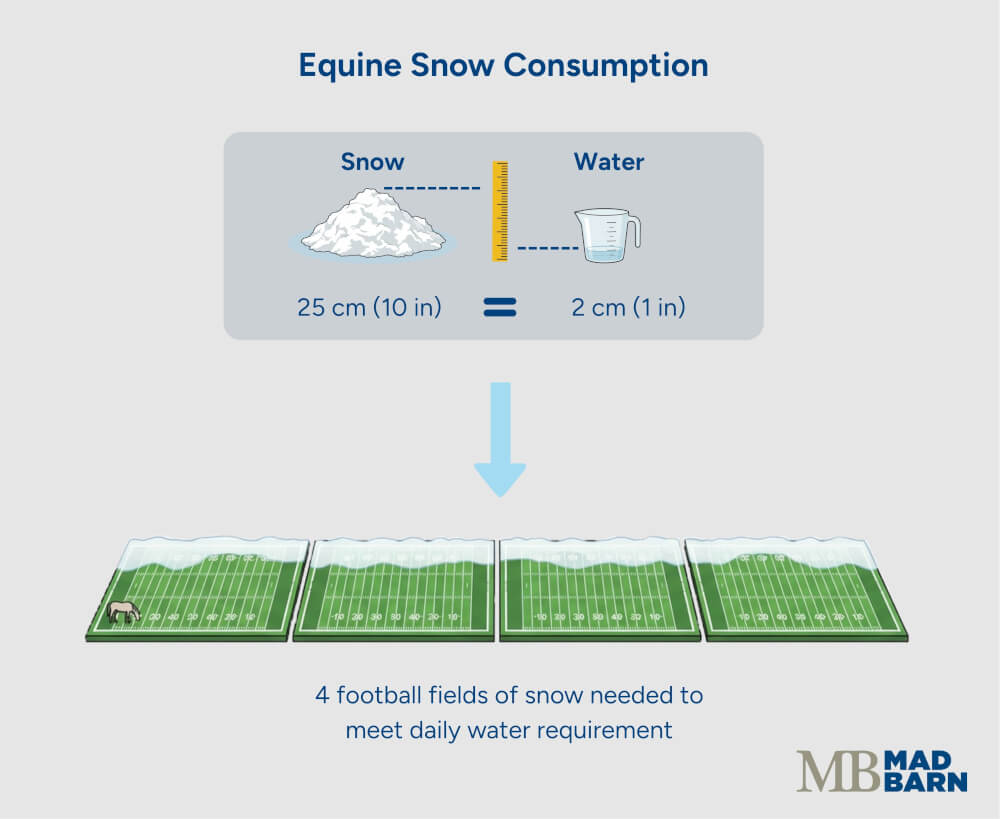
Horses require fresh water year-round to help maintain hydration, and the average horse requires between 37 – 45 L (10 – 12 gal) of water per day. Snow is not considered a suitable substitute for fresh water, as roughly 10 in (25 cm) of snow is equal to 1 in (2 cm) of liquid water. [10]
This means a horse would have to consume over four football fields’ worth of snow after a 2-inch snowfall to meet their daily water requirement. [10] The horse would also burn additional calories warming up their body after consuming frozen snow.
Ask your boarding facility about their plan for providing fresh water during the winter.
Common strategies include:
- Adding a water heater to the water trough
- Insulating the water trough to help maintain water temperature after filling
- Breaking ice frequently to ensure access to liquid water
You should also ask about how frequently water sources are checked for freezing over.
If your horse is prone to dehydration, work with your facility manager to develop a plan for increasing water intake through the winter.
Strategies may include:
- Providing salt in the horse’s grain to encourage water consumption
- Feeding soaked grain, hay pellets, or mashes to increase water intake
- Stalling the horse overnight or putting them in an individual paddock so their water intake can be monitored closely

Feed Availability for Horses
Heat is produced as a byproduct of fermentation in the horse’s large intestine. Increasing access to fiber sources, such as hay, increases fermentative activity in the digestive tract, which helps raise body temperature.
Exposure to cold temperatures also increases the horse’s metabolic rate to support heat production, which in turn raises caloric requirements. Estimates suggest that daily metabolic energy needs increase by 1534 kJ for every 1°C below −15°C (5°F). [4]
For these reasons, access to good quality forage is an important component of a cold weather care plan for horses. Not only does additional forage boost fermentation, it also provides additional calories to support the horse’s increased metabolic rate.
Ideally, horses turned out during cold weather should have free-choice access to hay. Ask your boarding facility what their policies are surrounding forage access during cold temperatures.
If your horse is prone to weight gain, free-choice forage may not be suitable for them. Speak with your veterinarian or equine nutritionist about how much additional forage to provide your horse during cold weather.
You can also consider alternative strategies to restrict feed intake while still providing a consistent source of fiber for fermentation.
Strategies include:
- Using hay nets to slow access to feed
- Using a lower quality hay with less digestible energy
- Feeding frequent, small meals to prolong access to fiber
Extension guidelines suggest a horse at maintenance may require an additional 2 lb (1 kg) of hay for every 5°C drop below -15°C (5°F), depending on forage quality and individual factors. [11] You can use this as a rough guideline when planning your horse’s diet for cold temperatures.
For horses prone to weight loss, additional calories are even more important during cold weather to prevent weight loss. Work with your veterinarian or equine nutritionist to ensure your horse is receiving adequate calories in their diet.
This may involve changing the type of hay offered or providing concentrates such as high-fat feeds to increase caloric intake.
Ask your facility manager what is feasible in terms of accommodating dietary changes. For example, feeding additional hay or concentrates may require the horse to be stalled or in individual turnout.
As with all special needs in a boarding environment, proactive communication and thoughtful planning are the best ways to ensure your horse is healthy and well-cared for all year long.
Frequently Asked Questions
Here are some frequently asked questions about winter care for boarded horses:
Blanketing depends on your horse's coat, age, body condition, workload, and the weather. Many barns follow a blanketing chart based on temperature and precipitation. Talk with your barn manager to develop a blanketing plan for your horse's individual needs.
Cold weather can reduce water intake, increasing the risk of impaction colic. Ask whether your barn uses heated waterers or offers warm water. Adding soaked hay cubes or a small amount of salt (with barn approval) can also encourage drinking.
Absolutely. Regular turnout supports circulation, digestion, and mental well-being. Even limited winter turnout is beneficial as long as footing is safe and horses are properly blanketed if needed.
Look for signs of weight loss, rubbing from blankets, skin issues, changes in behavior, and hydration levels. Run your hands under blankets to assess body condition rather than relying on appearance alone.
Many boarding facilities change blankets based on weather forecasts or temperature thresholds. Some require owners to provide labeled blankets and written instructions. Clarify expectations early to avoid miscommunication.
Before winter begins, make sure blankets fit properly, labels are clear, and feeding instructions are documented. Open communication with barn staff is key to a smooth winter season.
Summary
Asking your boarding facility about their plans for winter turnout is an important part of supporting your horse's health and comfort.
- Ensure your horse has access to wind- and weather-protected shelter, or develop a blanketing plan
- Ask your barn manager about forage and water access, which help support heat production and hydration
- Monitor blanket fit, body condition, and behavior regularly, especially for seniors, clipped, or thin horses
- Watch for red flags such as shivering, decreased appetite, lethargy, or sudden weight loss, and contact your veterinarian when concerns arise
References
- Jaqueth. A. Managing Mud on Horse Farms. University of Minnesota Extension. 2024.
- Freckleton. M. and Barakat. C. Slip and Fall Injuries in Horses. Equus Magazine. 2018.
- Kauffmann. S. Preventing Snowballs. Horse Canada. 2018.
- McBride. G. E. et al. Metabolic Rate and Plasma Thyroid Hormone Concentrations of Mature Horses in Response to Changes in Ambient Temperature. Canadian Journal of Animal Science. 1985.
- Kingma. B. R. et al. Beyond the Classic Thermoneutral Zone. Temperature: Multidisciplinary Biomedical Journal. 2014.
- Mejdell. C. M. et al. Caring for the Horse in a Cold Climate—Reviewing Principles for Thermoregulation and Horse Preferences. Applied Animal Behaviour Science. 2020.
- White. R. Bulletin #1038, Winter Blanketing Guide for Equines in Maine. University of Maine Cooperative Extension. 2025.
- Orsini. J. A. and Divers. T. J. Eds. Equine Emergencies: Treatment and Procedures. Fourth edition. Elsevier/Saunders, St. Louis, MO. 2014.
- Costa. L. R. R. and Paradis. M. R. Manual of Clinical Procedures in the Horse. Wiley Blackwell, Hoboken. 2018.
- Bellamy-Zions. J. Horses and H20: The Importance of Winter Water. Horse Canada. 2021.
- Feeding Horses During Winter. Government of Saskatchewan.