English
![Working Equitation: History, Competition & Rules – [Discipline Guide]](/wp-content/uploads/2024/07/working-equitation-discipline-guide.jpeg)
Working Equitation is a dynamic equestrian discipline that tests the versatility and skills of horse and rider combinations in ranch work.
This discipline places special focus on developing horses according to the classical horsemanship tradition specific to the competing team’s country of origin.
While the sport officially emerged relatively recently, it has ancient roots based on traditional horse-riding practices from the Mediterranean basin.
Today, the sport combines modern elements with traditional farming, herding, and riding techniques to showcase and preserve different countries’ traditions. The competition is divided into four distinct sections: dressage, ease of handling, speed, and cattle trials.
Modern working equitation prides itself on its inclusiveness, welcoming riders from all disciplines and horses of all breeds. By maintaining close ties to its traditional roots, this sport has brought old-world horsemanship values to modern riders across the globe.
Working Equitation
Combining traditional techniques with modern competition elements, Working Equitation (WE) is a well-rounded discipline that tests various aspects of horsemanship. Competitions also challenge the dexterity, responsiveness, agility, cooperation, and versatility of both horse and rider. [1][2][3]
The sport includes four distinct phases: [1][2][3]
- Dressage
- Ease of Handling trial (a.k.a. Maneability or EoH)
- Speed test
- Cattle or cow trial
Each phase assesses different skills, from precision and grace in Dressage to agility and speed in Maneability and Speed trials, culminating in teamwork during the Cattle or cow trial.
The requirement to exhibit wide-ranging skills makes Working Equitation a comprehensive test of equestrian ability, emphasizing both individual and team performances.
One aim of the discipline is promoting and preserving traditional riding practices through their adaptation to contemporary competition. [1][2][3]
History
The codification of Working Equitation as a competitive discipline is relatively new, dating back to 1996 when it was formalized by Spain, Italy, and France. It stems from the close-knit collaboration between riders and their horses developed in southern Europe, where equids were central to rural practices.
Prior to the invention and production of machinery and cars, horses were the primary means of transportation and were extremely important in farming activities, such as herding and plowing. [4]
Over time, various countries in Europe each developed their own individual styles of horse riding. Specific countries and traditions that have influenced modern working equitation include: [4][5]
- Spain: brings its Doma Vaquera tradition and the vaqueros working with their Pure Spanish Horses (Pura Raza Española)
- France: with the Gardians managing their Camargue horses
- Italy: where the Butteri expertly handle their Murgesen horses
- Portugal: known for its skilled riders and Lusitano horses, bred over the centuries as war horses
Traditions
European working riding styles originated through the utilization of horses for agricultural and cattle work. The differences in practices reflect the different geographical and social aspects that characterize each style.
For example, the Vaquera tradition in Spain and Portugal is deeply rooted in the skills required for cattle herding and management, generally on vast estates. The vaqueros, referred to as Spanish cowboys, are renowned for their ability to maneuver horses with precision and grace, performing tasks that require close cooperation between horse and rider. [4][5]
The Portuguese working riding style emphasizes fluidity, control, and the ability to perform intricate movements. This characterizes the country’s long-standing equestrian traditions, the high standards of its riders, and their ability to work with the Lusitano horse. [4][5]
In France, the Gardians are the traditional horsemen of the Camargue region. They work with the hardy and versatile Camargue horses, which are well-adapted to the challenging wetland terrain. The Gardians’ riding style is characterized by practical skills for managing semi-wild cattle in the river delta region. [4][5]
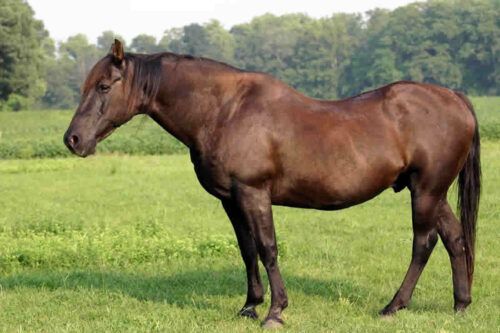
Italy’s Butteri are known for their work with Murgese horses, a breed suited to the rugged landscapes of the Maremma region in Tuscany. The Murgese horse originates on the plateau of Le Murge in southern Italy.
The Butteri riding style, developed over centuries of cattle herding, emphasizes strength, endurance, and herd management. [4][5]
Competition
In 1996, Italy, Spain, and France held the first international Working Equitation competition. They aimed to advance the sport by building on the rich history of horse-human relationships and traditional practices in the Mediterranean region, while also preserving traditional Southern European herding and riding styles. [1]
Over the years, the sport has grown in popularity, expanding beyond Europe to become a global discipline. [1]
Sport Organizations
In 2004, the World Association for Working Equitation (WAWE) was created as the governing body of the discipline. WAWE was established with the goal of promoting and regulating the sport on the global stage. This organization sets the standards for competitions, ensuring uniformity and fairness. [1]
WAWE is responsible for developing the rules and guidelines that govern all stages of the competition. [1]
USA Working Equitation
Working equitation in the United States was originally governed by two organizations: WE United and the Confederation for Working Equitation. In 2020, these two organizations merged and are known currently as USA Working Equitation. [2]
USA WE is a non-profit organization committed to promoting and preserving traditional riding through WE sport. In 2022 the organization was recognized as a member nation of WAWE. [2]
Working Equitation Canada
In Canada, Working Equitation is governed and promoted by WE Canada. This organization is also a non-profit committed to advancing WE sport and preserving classical horsemanship and equine welfare. [3]
WE Canada sets the rules for WE in Canadian competition and aims to develop national horses and riders for international competition as representatives in WAWE. [3]
Levels
Working equitation is divided into several levels, with each increasing in difficulty. Levels recognized by WAWE include: [6]
- Introductory
- Novice A
- Novice B
- Intermediate A
- Intermediate B
- Advanced
- Master
Competitions are also divided according to rider age and experience as: [6]
- Juniors: under age 16
- Young riders: under age 21
- Seniors: over age 21
A relevant distinction in working equitation is the advanced levels do not allow two-handed reining, regardless of the competitor’s national riding traditions. The junior levels are developed with the goal of completing the tests using exclusively single-handed reining, and advanced competitors may not change rein hands during the test. [6]
Once a competitor moves up an age group, they are not allowed to move back to a previous age group in subsequent competitions. [6]
Competition Phases
Working Equitation competitions consist of four phases:
- Dressage
- Maneability
- Speed
- Cow trials
These phases test the versatility of both horse and rider and skills across different aspects of equestrian performance. [1]
Dressage
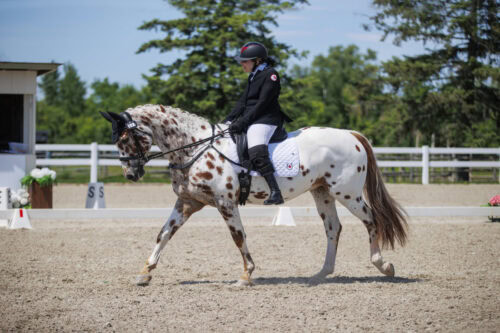
The first phase of a working equestrian competition is Dressage. In WE, the competition takes place in a 40 x 20 m schooling area, known as a “short” dressage arena.
The trial is scored on a zero to ten rating scale for each movement and additional collective marks addressing submission, the rider, presentation, gait, and impulsion. The dressage test varies in accordance with the level of the competitor. [6][7][8]
Table 1. Summary of Working Equitation Dressage Levels and Tests
| Test Level | Movements Required | Rein Handling | Trot Work |
|---|---|---|---|
| Introductory | Walk, trot, halt, rein back | One or two hands | Rising or sitting |
| Novice A | Walk, free walk, trot, canter, halt, rein back | One or two hands | Rising or sitting |
| Novice B | Walk, free walk, leg yield at walk, half turn on haunches at walk, trot, canter, change of lead through trot, halt, rein back | One or two hands | Rising or sitting |
| Intermediate A | Walk, trot, canter, halt, rein back, collected gaits, lateral movements in trot, half turn on haunches at walk, change of lead through walk (simple changes) | One or two hands | Sitting |
| Intermediate B | Walk, trot, canter, halt, rein back, collected and extended gaits, lateral movements in walk (half pass) and trot (leg yield), half pirouettes at walk, flying lead changes in canter | One or two hands | Sitting |
| Advanced | Walk, trot, canter, halt, rein back, collected and extended gaits, lateral movements, half pirouettes at walk, flying lead changes in canter | One hand | Sitting |
| Masters | Walk, trot, canter, halt, rein back, extended gaits, pirouettes, lateral movements, flying lead changes in canter | One hand | Sitting |
In addition, at the master level, competitors are required to complete all the movements in a precise and predetermined order. The tests are set to music and must be performed in under 8 minutes.
Rules
In all levels, both horse and rider are held to strict standards to ensure integrity and fairness of the competition. Competitors in a dressage trial can be disqualified for a number of reasons, including: [6][7]
- Delayed entry or premature exit from the area: The horse and rider must enter the arena promptly upon the judge ringing the bell. Failure to do so within 60 seconds leads to disqualification. The horse must remain within the arena until the dressage test concludes. If the horse exits the arena before the test is completed, the combination is disqualified.
- Pattern Deviation: Deviating from the designated test pattern three times in a single test results in disqualification
- Health and Welfare Concerns: Working equitation places horse health and safety at the forefront of the sport. Any signs of lameness or the presence of blood on the horse results in disqualification. If the rider is found at fault for drawing equine blood, directly or indirectly, the rider is eliminated from the entire competition.
These rules have been put in place to maintain the highest standards of equestrian sportsmanship and to protect the well-being of the horses participating in dressage trials.
What's your top priority with your horse's health?

What's your top priority with your horse's health?
Ease of Handling
The second phase in a Working Equitation competition is the Maneability, or Ease of Handling, trial. Similar to Dressage, this phase is mandatory for all performance levels and is evaluated on a ten-point scale.
At the conclusion of the test, the judge also awards Collective Marks for the following aspects: [6][7][9]
- Transitions and navigation
- Gaits
- Impulsion
- Submission
- Rider’s performance
- Overall presentation
Table 2. Summary of Working Equitation Ease of Handling Levels and Tests
| Level | Required Gaits Between Obstacles | Required Gaits for Obstacles |
|---|---|---|
| Introductory | Must trot between obstacles | Must perform all obstacles at either walk or trot |
| Novice A | Canter is required between obstacles, and changes of lead are through the trot | Obstacles must be trotted unless required or allowed to be walked |
| Novice B | Canter is required between obstacles, and changes of lead through the trot are required | Obstacles must be cantered unless required or allowed to be walked or trotted |
| Intermediate A | Canter is required in and between obstacles, and changes of lead through the walk are required | Obstacles must be cantered unless required or allowed to be walked |
| Intermediate B | Canter is required in and between obstacles, and flying changes of lead are required | Obstacles must be cantered unless required or allowed to be walked |
| Advanced and Masters | Canter is required in and between obstacles, and flying changes of lead are required. One hand must be used on the reins exclusively | Obstacles must be cantered unless required or allowed to be walked |
Speed Trial
The third phase in a Working Equitation competition is the Speed trial. It involves navigating the same course as the Ease of handling trial, but with a different objective. The layout and sequence of the obstacles might be the same as the EoH trial or they may be rearranged for the speed trial.
In the speed trial, the focus is not on the quality of movements but on completing the course as fast as possible. Placings are determined by the final time, which takes into consideration the actual time taken to complete the course, plus or minus bonuses and penalties. [10]
Penalties include time additions for mistakes such as failing to latch a gate (+30 seconds), knocking over obstacles (+10 seconds), and placing a pole incorrectly (+5 seconds). In courses that include the spear ring obstacle, participants can earn a bonus of -10 seconds if they are successful in spearing the ring and depositing it in the barrel. [10]
As with the Dressage and EoH trials, the combination can be disqualified for a number of reasons, including: [6][7][10]
- Three refusals at an obstacle
- Entering or exiting the court through the incorrect gate
- Changing hands during the performance of an obstacle
- Horse presenting lameness
Obstacles
Horses and riders may be required to navigate any of the following obstacles during the Ease of Handling and/or Speed trials: [9]
- Bridge: Riders guide their horse over a raised platform to demonstrate the horse’s trust and sure-footedness
- Figure 8: Riders navigate their horse through a figure-eight pattern to showcase precision and control
- Pen: This involves guiding the horse into a small enclosure, requiring accuracy and calmness
- Jug: Riders lift a jug from one pedestal and place it on another, demonstrating the horse’s steadiness and the rider’s coordination
- Remove the pole: This task involves picking up a pole from a drum, testing the horse’s training and the rider’s dexterity
- Spear ring: Riders must spear a ring with a lance while moving, which tests the accuracy and agility of both horse and rider
- Replace pole: The rider places the pole into another drum, showing control and precision
- Switch Cup: This requires the rider to switch cups between poles, demonstrating the horse’s patience and the rider’s steadiness
- Bell Corridor: Riders enter an alleyway, ring a bell, and then back out, showcasing the horse’s responsiveness and the rider’s control
- Reinback ‘L’: This obstacle involves backing the horse through an L-shaped path, testing the horse’s obedience and the rider’s precision
- Rounding Posts: Riders maneuver their horse around a series of posts, demonstrating agility and tight turning ability
- Single Slalom: This requires weaving through a series of cones or poles in a straight line, highlighting the horse’s flexibility and the rider’s guidance
- Double Slalom: Similar to the single slalom but with two rows of poles, requiring advanced maneuvering skills
- Gate: Riders open, pass through, and close a gate while mounted, testing the horse’s patience and the rider’s coordination
- Jump: This obstacle involves clearing a small jump, showing the horse’s ability to leap and the rider’s control
- Sidepass Rail: Riders guide their horse to move sideways along a rail, demonstrating lateral movement skills
- Water: The horse must cross a water obstacle, testing its willingness and confidence
- Bank: This involves ascending and descending a bank, showcasing the horse’s balance and the rider’s skill in navigating varied terrain

Cow or Cattle trial
The fourth and final phase in WE is the cattle trial. Unlike the first three phases, the cow trial is optional and is judged as a team contest.
Three or four riders participate in the trial with the objective of sorting and penning designated cows; each rider is required to complete the task within three minutes. The fourth phase takes place in a separate arena from the dressage, EoH and speed tests.
Disqualifications can occur on the cow trial for the following reasons: [6][7][11]
- Crossing the foul line before the judge gives permission
- Exceeding three-minute time limit
- Roughness
- Causing injury to cattle
- Intentionally touching the cows with hands, boots, and any kind of equipment
- Endangering team members
Attire and Equipment
Working equitation is a celebration of each participating nation’s classical horsemanship and the contribution horses have made to culture and society. Competitors wear the official working equitation attire of their nation, as defined by their national sports organization. [6]
Horses are harnessed and dressed according to their country’s national traditions and inspected for overall compliance with WAWE rules for tack and equipment. [6]
Helmets are mandatory for Junior and Young riders and strongly recommended for Seniors. [6]
Working Equitation Horses
Working Equitation horses have a diverse skill set including speed work and agility. To learn and perform all of the specialized tasks asked of them, WE horses often have demanding training schedules, resulting in higher energy and protein requirements.
Like all horses, those competing in working equitation also need a diet that supports the digestive system to manage the gut health risks associated with competition and travel. A forage-based diet balanced to meet your horse’s nutritional needs is the best way to ensure your horse maintains a healthy gastrointestinal tract.
The optimal diet for your performance horse depends on their breed, age, competition schedule, training program, and health history. Work with a qualified equine nutritionist to ensure your horse gets everything they need all year long.
Want to know if your performance horse’s diet is missing anything? Submit their information online for a free evaluation and consult with our equine nutritionists to develop the best feeding plan for your working equitation horse.
Frequently Asked Questions
Here are some frequently asked questions about Working Equitation:
Working Equitation is unique because it combines elements of traditional ranch work and classical horsemanship into a modern competition format. Unlike many equestrian sports that focus on a single discipline, Working Equitation challenges horse and rider across multiple phases, from dressage to obstacle courses, speed trials, and even cattle handling.
Working Equitation is overseen internationally by the World Association for Working Equitation (WAWE), which sets the rules and standards for competitions. In North America, it is governed by organizations such as USA Working Equitation and WE Canada, both of which promote the sport and prepare riders for international events.
To prepare a horse for Working Equitation, riders focus on developing agility, responsiveness, and calmness in a variety of settings. Training often includes practicing dressage movements, working through obstacle patterns, and gradually introducing speed elements. Exposure to new environments and situations helps the horse stay confident and focused during competitions.
In Working Equitation, horses are expected to adapt to very different demands within the same competition. They must remain calm and accurate when negotiating obstacles, then transition into energetic, forward movement when speed is required, all while staying attentive to the rider’s cues.
Summary
Working Equitation is a multi phase equestrian sport rooted in traditional Mediterranean ranch work. It tests versatility, cooperation, and skill while preserving classical horsemanship.
- The sport includes four phases: dressage, ease of handling, speed, and an optional team cattle trial.
- Working Equitation was formalized in 1996 by Spain, Italy, and France, and reflects historic herding and working riding traditions.
- Competitions are governed internationally by WAWE, with national organizations in the United States and Canada.
- Levels range from introductory to master, with increasing difficulty and one handed reining at advanced levels.
- Horses must demonstrate precision, agility, speed, and calmness, supported by appropriate training and conditioning.
References
- Home. WAWE - World Association for Working Equitation. 2024.
- USA Working Equitation - About Us. USA Working Equitation. 2024.
- Home. WECan - Working Equitation Canada. 2024.
- Clutton-Brock, J. Horse Power: A History of the Horse and the Donkey in Human Societies. London: Natural History Museum Publications. 1992.
- Festival of the gardians (herdsmen). camargue en provence.
- WAWE Regulations 2024. WAWE. 2024.
- United States Rules for Working Equitation. USA Working Equitation. 2024.
- Dressage Trial. USA Working Equitation. 2024.
- EOH Trial. USA Working Equitation. 2024.
- Speed Trial. USA Working Equitation. 2024.
- Cattle Trial. USA Working Equitation. 2024.