English







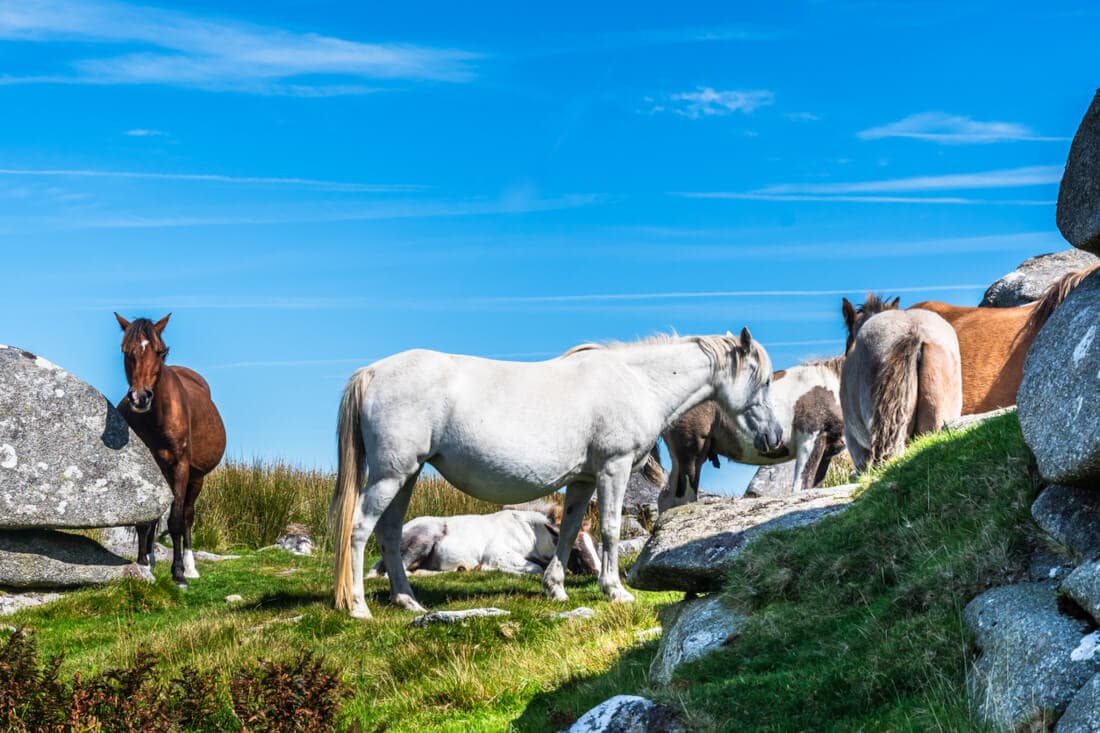
Adopting a wild horse requires careful planning, long-term commitment, and respect for horses’ natural instincts. For experienced equestrians looking for a unique partnership, adopting a wild horse offers the chance to participate in preserving rare breeds and improve welfare outcomes for horses removed from the range.
Each year, government agencies such as the U.S. Bureau of Land Management (BLM) conduct population gathers to manage feral horse herds and limit strain on rangelands. Adoption programs place these horses into approved homes where adequate care, training, and long-term management can be provided.
While gentling a wild horse is a demanding process, successful adoption can result in a cherished equine partner capable of participating in trail riding, working disciplines, and select competitive sports with appropriate training.
Keep reading to learn everything you need to know about feral horse adoption. From preparation to the adoption process and early training stages, this guide will help you ensure the long-term welfare of feral horses in your care.
Adopting a Wild Horse
Horses living freely on public lands are often described using different terms depending on context. In scientific and management settings, these horses are typically classified as feral because they descend from domesticated animals that returned to free-ranging life.
In everyday language, however, “wild horse” remains widely used by the general public, adoption programs, and popular media.
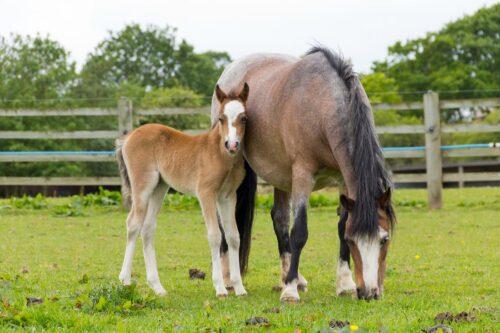
Wild horses in North America descend from domestic horses who escaped or were released into the environment. Over generations, they adapted to free-range conditions, developing strong herd structures and resistance to environmental stress.
Most adoptable wild horses in North America originate from Bureau of Land Management Herd Management Areas in western states such as Nevada, Wyoming, and Utah. Other horses may come through state-managed programs, tribal lands, or private conservation initiatives. [1][2]
These horses are unaccustomed to human touch, confinement, routine care or medical intervention. Feral horses interpret the world through a lens shaped by predator avoidance, natural herd dynamics, and environmental pressures rather than training, management routines, or barn life.
While many wild horses adapt to domestic life with skilled handling, the transition takes time and patience. Building trust is central to success and cannot be rushed, so it’s important for owners considering adoption to have realistic expectations before making a commitment.
Key Terms in Wild Horse Adoption
Discussions around wild horse adoption often involve overlapping terminology that can be confusing for prospective adopters. The following glossary defines key terms used in management programs, training, and adoption contexts.
- Wild horse: A free-roaming horse managed on public or protected lands that has not been handled or domesticated. The term is commonly used in the context of government or conservation management programs.
- Feral horse: A free-roaming horse descended from domesticated ancestors that now lives without routine human care or handling.
- Mustang: A commonly used term for free-roaming horses in North America, often referring to horses managed through U.S. Bureau of Land Management (BLM) programs.
- Burro: A free-roaming donkey, primarily found in the southwestern United States, managed under similar protection and adoption programs as wild horses.
- Ungentled horse: A horse that has not yet been trained to accept routine human handling, such as haltering, leading, hoof handling, or basic husbandry.
- Gentling: The process of gradually acclimating a wild or feral horse to human handling using low-stress training methods.
What's your top priority with your horse's health?
Benefits of Adopting a Wild Horse
There are many reasons to adopt a wild horse. Some adoptive homes focus on preserving horses’ genetic heritage and supporting population management programs for rare or endangered breeds. Others seek a working relationship with a horse who retains a strong sense of self, independence, and resilience.
Adopters often describe working with a formerly wild horse as especially meaningful, shaped by time, patience, and developing trust. Additional benefits of adopting a feral horse include: [1][2]
- Affordability: Adoption fees for wild horses are typically low, ranging from $25 to $125 USD, with incentive programs available for qualified adopters
- Hardiness: Wild horses tend to be physically robust, with strong hooves, natural movement, and reliable instincts for navigating difficult terrain
- Diversity: The absence of selective breeding programs in the wild results in horses with varied colors, ages, and conformations
Challenges of Adopting a Wild Horse
While rewarding, adopting a wild horse is more challenging than working with horses raised in domestic management.
Wild or feral horses grow up without routine human handling, developing social structures, movement patterns, and survival behaviors shaped by open-range conditions rather than domestic pasture settings. Transitioning into confinement, regular handling, and structured training represents a major change that many horses struggle with.
These horses also have not received routine veterinary care, farrier services, or managed nutrition programs. Many have never been haltered, led, trimmed, vaccinated, or transported, and their physical conditioning and health histories may be largely unknown at the time of adoption.
As a result, early handling, acclimation, and training often progress more slowly than with domestically raised horses. Successful outcomes rely on consistency, patience, and, in some cases, collaboration with experienced trainers familiar with feral horse behavior.
Owners interested in adopting a wild horse should be aware of the challenges of taming, training, and providing lifelong care for an animal that may never respond like a domestic-bred horse.
Transitioning these horses into domestic management requires experience, preparation, and a clear understanding of the challenges involved. Handlers must remain patient, consistent, and adaptable through a process that may be ongoing for months or years.
Successful adopters often have experience working with untrained or reactive horses and are familiar with groundwork-based handling. Access to professional guidance when needed helps support progress during the gentling process.
Access to the right facilities is also critical. Many wild horses respond poorly to confinement and benefit from gradual introduction to enclosed spaces. Secure fencing, well-designed pens, and reliable loading areas reduce risk during handling and transport.
Requirements for Adopting Wild Horses
Bringing a newly adopted horse home marks the beginning of a significant adjustment period. Whether the horse is arriving from a rescue facility, foster placement, or holding site, their first days in a new environment play a crucial role in shaping future training outcomes.
Preparation, predictable routines, and a calm, low-pressure approach support developing trust and long-term well being.
Wild horse adoptions in the United States are primarily overseen by the Bureau of Land Management (BLM). Horses are made available through online listings, in-person adoption events, and placements from long-term holding facilities.
Adoption through the BLM requires: [1][2]
- A facility check: Photos and measurements of fencing, pens, and shelter areas are reviewed to confirm suitability
- An adoption agreement: A signed document outlining animal care standards and training guidelines
- A one-year holding period: Legal title transfer becomes available after a minimum holding period of one year
Some programs include trainer incentive placements. Under these programs, professional horse trainers adopt and complete early handling and training before matching horses with new owners. This offers an alternative for people who do not have the experience to gentle a feral horse themselves. [3]
Facilities & Equipment
A secure, well-prepared environment is essential when bringing a wild horse home. These horses are not accustomed to confinement or domestic facilities, and any gaps in safety or shelter can lead to injury or stress.
The Bureau of Land Management (BLM) requires that all adopters meet minimum standards for fencing, shelter, and water access before a horse is released. [2][4]
Fencing
A wild horse’s initial holding pen should be compact, secure, and designed to reduce injury or escape risk. A round pen or rectangular corral with rounded corners supports early observation and handling while reducing the risk of injury.
Wild horses may panic in unfamiliar environments, which increases the importance of solid, horse-safe fencing. According to BLM regulations, minimum fencing height depends on the horse’s age and level of handling. [4]
The BLM fencing guidelines are as follows: [4]
- Ungentled horses two years and older: Minimum fencing height of 6 ft (1.8 m)
- Yearlings or gentled horses of any age: Minimum fencing height of 5 ft (1.5 m)
- Burros: Minimum fencing height of 4.5 ft (1.4 m)
Acceptable fencing materials under BLM guidelines include: [4]
- Pipe panels: Solid, smooth-sided panels designed for livestock containment
- Wood posts: Posts measuring at least 1.5 in (3.8 cm) in thickness
- Woven horse fencing: Non-climbable mesh designed for equine use
Barbed wire, climbable fencing, and exposed T-posts do not meet BLM requirements. Corral size standards also apply, with a minimum of 400 square feet (37 square metres) per animal (such as a 20′ × 20′ enclosure for one horse). [4]
Shelter Requirements by State
BLM requirements vary by geographic location and climate. These requirements are in addition to any applicable local animal welfare laws and must be met before a horse is delivered. [5]
Table 1. Summary of BLM state-specific shelter requirements
| Climate type | Applicable states | BLM requirements |
|---|---|---|
| Arid and Variable Climates |
|
|
| Wind-Prone Areas |
|
|
| Hot and Humid Regions |
|
|
| Mild Coastal Areas |
|
|
| Northern and Cold-Weather States |
|
|
Water Access & Feeding Infrastructure
Fresh, clean water must be available at all times. In colder climates, heated water sources or bucket warmers may be needed to maintain access when water freezes.
Feed systems such as hay racks, slow feeders, or ground mats help limit waste and reduce sand or soil ingestion, particularly in arid environments. [4]
Experience & Horsemanship
In addition to meeting facility and fencing requirements, adoption programs place strong emphasis on the adopter’s level of experience.
The Bureau of Land Management prioritizes applicants who demonstrate advanced horse handling skills and a clear understanding of the challenges involved in working with feral horses. [5]
These horses require patience, consistency, and the ability to recognize and manage fear-based responses without escalating stress or risk. Adopters are expected to be prepared for slow progress, unpredictable reactions, and the need to adjust handling approaches as the horse adapts to domestic care.

Gentling a Wild Horse
Gentling describes the process of helping a horse become comfortable with human presence, handling, and domestic routines through gradual, low-pressure exposure. Trust, rather than obedience, forms the foundation of training a wild horse. [6]
Early stages of gentling may involve: [6]
- Consistent presence: Spending quiet, predictable time near the horse’s pen to encourage familiarity
- Gradual desensitization: Introducing human touch, grooming tools, and basic care items at a pace the horse tolerates
- Halter introduction: Using low-pressure methods that allow the horse to investigate and accept equipment
- Yielding and leading: Teaching the horse to yield to pressure and follow a lead rope
The rate of progress varies widely among individual animals. Some horses adjust quickly, while others remain cautious or defensive weeks or more. Consistency and careful observation of body language supports development, while rushed or forceful handling can increase fear responses and slow adjustment. [6]
Wild horses take time to learn even the most basic domestic skills, such as haltering, hoof handling, and leading. Early gentling commonly involves fear-based responses such as flight, freezing, or defensive posturing. [6]
Professional trainers who specialize in wild horse gentling often use round pens, flag work, positive reinforcement, and liberty techniques to develop curiosity and reduce fear. Collaboration with these trainers is often recommended, especially for adopters new to working with feral horses. [6]
Ongoing Training & Socialization
Formal training begins once a wild horse accepts a halter and remains comfortable with routine handling.
Early training includes:
- Leading: Moving calmly alongside a handler with light guidance
- Yielding body parts: Responding to pressure by moving shoulders or hindquarters as asked
- Hoof handling: Allowing their feet to be picked up and held for routine care
- Ground driving: Learning to respond to rein cues during long-lining
- Tack acceptance: Becoming comfortable with a saddle and bridle
- First rides: Introducing weight in controlled spaces such as round pens or enclosed arenas
Many wild horses respond well to groundwork and body cues once expectations are established, though some individuals may test boundaries or show temporary regression as training advances. Clear and consistent communication is essential.
All horses are social animals that rely on herd interaction, but wild horses are especially herd-oriented. Isolation can cause significant stress, so gradual introduction to one or two calm, well-socialized horses can help support adjustment and reinforce appropriate domestic behavior.
Nutrition for Adopted Horses
Wild horses are adapted to low-calorie, high-fiber forages suited to limited environments. Their digestive systems rely on near-constant grazing, and sudden exposure to calorie-dense concentrates, rich hay, or lush pasture can pose a significant health risk.
A gradual transition reduces the risk of digestive upset, colic, or metabolic imbalances. [1]
Forage-First Feeding
Wild horses benefit from a diet based on good-quality forages. Grass hay or pasture aligns most closely with the coarse, fibrous plants feral horses are used to.
Suitable forage options for feral horses include:
- Orchardgrass
- Timothy
- Bermudagrass
- Bromegrass
Legume hays such as alfalfa contain higher protein and energy levels than many wild horses are accustomed to. [7] Excess intake can contribute to loose manure, weight gain, and other health concerns, particularly in mature horses with light workloads.
Conversely, horses with higher energy requirements, like those who are growing, lactating, or hard keepers may benefit from a legume-grass blend. An equine nutritionist can help determine if your feral horse’s hay is appropriate for their weight and lifestyle.
Most adult wild horses maintain condition on grass hay or pasture, with daily intake generally ranging from 2–2.5% of body weight. For a 500 kg (1,000 lb) horse, this equals roughly 10 – 12 kg (20 – 25 lb) of hay per day. [8]
Hay quality plays a key role in dietary intake. Feed should be dry and green, remain free of dust and mold, and contain minimal weeds.
Supplements
When forage intake is adequate, many horses can meet their basic protein and energy requirements on hay or pasture alone. However, forage-based diets often fall short in key vitamins and minerals, including copper, zinc, and vitamin E.
These nutritional gaps vary widely depending on soil conditions, forage type, and storage practices. A forage analysis is the only way to determine exactly what nutrients your feral horse might be missing.
A ration balancer or vitamin and mineral supplement can fill these gaps without adding excess calories or starch.
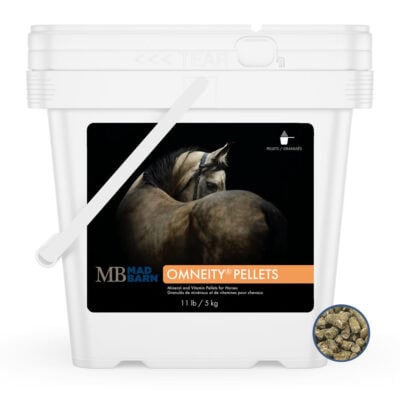
Mad Barn’s Omneity® provides essential vitamins, trace minerals, and amino acids to complement hay and pasture-based diets. Adequate intake of these nutrients supports normal hoof growth, coat quality, immune function, and muscle maintenance, which are important for newly adopted horses transitioning to domestic management.
Because Omneity® does not add sugar or starch, it can be included in low-calorie feeding programs commonly used during early adoption and training.
Hydration
Wild horses are accustomed to continuous access to water rather than scheduled provision. Clean, fresh water should remain readily available, and it may be necessary to customize hydration options for adopted horses. Some feral horses hesitate to lower their heads into buckets, and larger troughs may encourage more comfortable water intake.
During winter, water sources must remain unfrozen, as snow does not provide enough hydration.
Adding 2 tablespoons of salt to your horse’s daily ration as well as free-choice access to loose salt helps ensure they meet their sodium requirement while also encouraging adequate water intake.
Health Management for Adopted Horses
Feral horses require routine veterinary care just like any other horse, but providing medical attention is challenging until they are accustomed to human handling.
Many feral horses have had little to no prior contact with people, which can make basic procedures such as examinations, vaccinations, and hoof care challenging or unsafe without additional support.
Rescue and foster facilities typically address the first round of medical needs shortly after intake. These initial interventions often require sedation to allow veterinarians to work safely and effectively.
After adoption, feral horses may need significant time to adjust to their new environment before they are ready for routine handling or medical care.
New owners should be prepared for the possibility that sedation and physical restraint during medical handling may be required in the long-term until the horse is comfortable with human interaction.
Weight & Condition Monitoring
Wild horses are often underweight upon arrival then become easy keepers once they have transitioned to a domestic setting. Monitoring body condition helps guide feeding adjustments and supports healthy weight gain and maintenance.
Ideal body weight typically aligns with a moderate body condition score of 4–5 on the Henneke scale, where the horse’s ribs remain easy to feel without appearing prominent.
Thin horses often respond to free-choice access to good-quality grass hay. If their body condition does not improve within two weeks, a gradual transition to a grass-alfalfa mix or higher-alfalfa ration may be appropriate under veterinary guidance.
Parasite Control
Wild horses may arrive with high parasite loads that need to be addressed. Veterinary-guided deworming programs and fecal testing support targeted treatment soon after adoption. Follow-up testing helps assess treatment effectiveness and determine whether additional dosing is needed.
It’s important to work with a veterinarian to establish an appropriate deworming program, which minimizes the risk of anthelmintic resistance for the entire herd.
Dental & Hoof Care
Dental health influences feed efficiency and comfort, even in younger horses. For newly adopted feral horses, an initial oral exam helps identify sharp points or uneven wear that may affect chewing and intake. Ongoing care includes routine floating on an annual basis.
Hoof care also requires early attention. Although many wild horses arrive with strong, naturally worn feet, softer footing and reduced movement in captivity can lead to overgrowth or imbalance. Regular barefoot trimming or corrective farriery, when indicated, supports long-term soundness.
Behavior of Adopted Horses
Adopting a wild horse requires dedicated training and management, and often brings meaningful personal change for handlers. Gentling requires patience, consistency, and self-awareness as horses learn to navigate domestic environments and human interaction.
Working with a wild horse encourages slower pacing, careful observation, and clear communication without reliance on force. This process often reshapes handling habits and expectations, particularly for adopters accustomed to domesticated horses.
Progress rarely follows a straight line. Periods of hesitation or regression commonly occur after apparent advances and are a normal part of transition for these horses. Calm, consistent handling supports continued development over time.
Horses allowed to progress at an individual pace, supported by predictable routines and steady interaction, frequently develop reliable responses and strong working partnerships grounded in familiarity and trust.
Making an Informed Commitment
Adopting a wild horse requires a long-term commitment and a clear understanding of what these horses need to succeed in domestic care. Their resilience, awareness, and strong survival instincts reflect life on the range, and management approaches must account for that background.
With appropriate facilities, robust nutrition, and patient, low-stress training, many feral horses adjust well and develop reliable working relationships over time.
For adopters prepared to meet these demands, wild horse adoption supports responsible herd management while offering a challenging and deeply rewarding ownership experience built on trust and consistency.
Frequently Asked Questions
Here are some frequently asked questions about adopting a wild horse:
Wild horses differ from domestic horses primarily due to their lived experience rather than genetics. Growing up without routine human handling shapes how they respond to confinement, equipment, and close contact. Heightened awareness, strong flight instincts, and reliance on herd structure influence behavior during early training and adjustment to domestic care.
Facilities required before adopting a wild horse focus on safety and containment. Secure fencing, appropriate shelter, and adequate space for controlled movement are essential. Adoption programs require enclosures that reduce escape risk and injury, with fencing height and materials meeting established standards for ungentled horses.
Challenges when bringing a wild horse home often involve stress responses tied to unfamiliar environments and routines. Common difficulties include hesitation around confinement, resistance to haltering or handling, and slower progress with basic skills. Adjustment tends to occur gradually and depends on consistency, patience, and low-pressure handling.
Time required to gentle and train a wild horse varies widely between individuals. Some horses accept basic handling within weeks, while others need many months to feel comfortable with routine care and early training. Progress depends on prior exposure, temperament, facilities, and the handler's experience and consistency.
Adopting a wild horse typically begins by applying through an approved program such as the U.S. Bureau of Land Management (BLM) Wild Horse and Burro Adoption Program. Prospective adopters must first prepare suitable facilities, including secure fencing and shelter designed for ungentled horses. The BLM requires an application, verification that facility standards are met, and in some cases a site inspection. Once approved, adopters select a horse through an online or in-person adoption event and commit to providing daily care, veterinary and farrier access, and long-term management after adoption.
Adoption fees for wild horses are typically low, often ranging from $25 to $125 USD depending on the program. However, ongoing costs such as fencing, veterinary care, farrier services, feed, training, and facility upgrades should be considered, as long-term care expenses are similar to or greater than those for domestically raised horses.
Summary
Adopting a wild or feral horse requires commitment, patience, and an understanding of feral behavior within a domestic setting. Outcomes depend on preparation, realistic expectations, and long-term management rather than speed of training.
- Adoption demands appropriate facilities, foundational handling skills, and a secure environment that allows for gradual acclimation without unnecessary pressure
- Training approaches must respect natural survival instincts, emphasizing calm, low-stress learning rather than forceful or accelerated methods
- The time investment is substantial, with meaningful progress often measured in months rather than weeks, particularly during early handling stages
- Successful placements rely on consistent daily care, careful observation of behavior, and the adopter’s ability to adjust expectations as the horse develops
- Long-term success reflects trust built through patience, routine, and informed management that supports both physical and behavioral well-being
References
- Caring for Your New Wild Horse or Burro. Bureau of Land Management. 2020.
- Leigh. L. Adoption, AIP, Sales (Title Transfer). Wild Horse Education. 2022.
- Programs: Wild Horse and Burro: Adoptions and Sales: Adoption Incentive Program. Bureau of Land Management. 2025.
- Adoption Requirements. Bureau of Land Management. 2025.
- APPLICATION FOR ADOPTION OF WILD HORSE(S) OR BURRO(S). UNITED STATES DEPARTMENT OF THE INTERIOR BUREAU OF LAND MANAGEMENT. 2025.
- Gentling Wild Horses. Wild Horse Outreach & Advocacy. 2025.
- Heuze. V. et al. Alfalfa (Medicago sativa). Feedipedia. 2016.
- Nutrient Requirements of Horses: Sixth Revised Edition. National Academies Press, Washington, D.C. 2007.