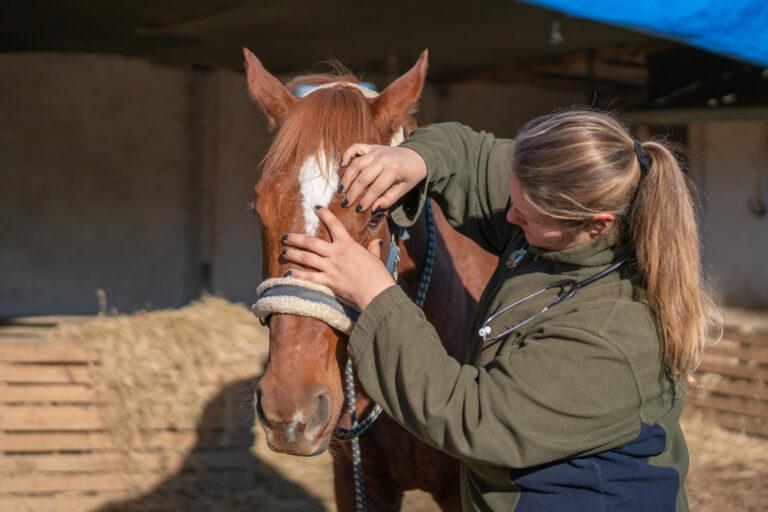
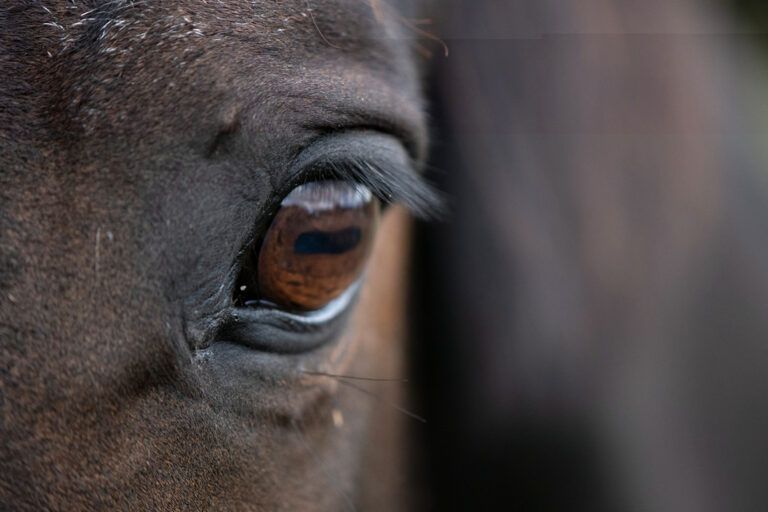
It’s not uncommon for horses to experience eye problems. Several conditions and diseases can affect vision and eye health in horses, including uveitis, cataracts, and conjunctivitis. Horses experiencing eye issues may have symptoms such as swelling, tearing, drainage, discoloration, cloudiness,...

Of the many skin conditions horses can develop, sarcoids are the most common. The term "sarcoid" was first used in 1936 in South Africa as a way to distinguish this skin lesion from other tumors. Sarcoids are benign (nonmetastatic) skin...
Horses are prone to a number of different skin conditions and diseases. Some are minor and resolve on their own, while others can be much more serious. Skin conditions may affect localized areas on the horse, such as the legs...
Pain is something that all horses deal with at some point in their lives. Horses can experience pain for many different reasons, including injury, illness, or a result of surgery. For example, castration is the most common surgical procedure performed...
Are you considering setting up a track system such as the Paddock Paradise for your horse? In recent decades, many horse owners have shown interest in natural equine management and care practices. These practices seek to mimic the lifestyle of...
Stagnation edema, also known as stocking up, is a common cause of leg swelling in stabled horses. It occurs due to impaired circulation from periods of reduced activity. This short-lasting form of edema typically affects both hind limbs and causes...
Horses can experience a number of different dental issues over their lifetime, impacting their ability to chew and digest their feed. Unaddressed dental issues can affect your horse's health, condition, behaviour and performance. This is why it’s important to have...
Equine pneumonia is a common respiratory illness that can be life-threatening. It can affect different parts of the horse’s lungs and may cause varied symptoms. Pneumonia refers to inflammation of the lung tissue. Upper airways and lining of the lungs...
Equine sinusitis is the most common disease affecting the paranasal sinuses in horses. Sinusitis is an inflammatory condition that often involves excessive nasal discharge. Horses with sinus diseases can also experience swelling in the face or reduced appetite. The causes...
Strangles, also known as equine distemper, is a highly contagious disease caused by the bacteria Streptococcus equi. Young horses are most susceptible to developing strangles disease. This condition most commonly occurs in horses under the age of two. The name...
Dehydration is a serious problem in competing and working horses, especially during hot weather. Horses competing in endurance racing or engaging in sustained or strenuous activities are at the highest risk of dehydration. Dehydration occurs when a horse loses excessive...
Roaring is a condition that causes some horses to make a whistling or roaring sound during exercise. It can affect a horse’s performance during high-intensity exercises, such as racing. This condition is also referred to as recurrent laryngeal neuropathy (RLN)...
Uveitis in horses is a condition in which the uvea layer of the eye becomes inflamed. It is the most common cause of blindness in horses. It is estimated that as many as 25% of horses worldwide are affected by...
Sweet Itch is a common skin condition in horses that is caused by an allergic reaction to insect bites. It is also known by the names Queensland itch, summer dermatitis, insect-bite hypersensitivity, summer eczema, recurrent seasonal pruritus, and equine Culicoides...
Nutritional Secondary Hyperparathyroidism (NSH) - also known as Big Head Disease - is an uncommon problem in horses that stems from a mineral imbalance. This skeletal condition develops due to a calcium deficiency or an imbalanced ratio of dietary calcium...
Bartonella is a type of bacteria that can infect humans as well as other mammals, including horses and donkeys. The resulting infection, known as bartonellosis, has been documented in many regions throughout the world.
Equine Protozoal Myeloencephalitis (EPM) is an infectious disease of the horse’s central nervous system. It is one of the most difficult diseases for veterinarians to diagnose because it often mimics other conditions and has a wide range of symptoms that...
Physitis is the most common developmental disease that affects the bones of growing horses. This condition involves swelling around the growth plates (physes) of long bones in a young horse’s legs. It can lead to pain, stiffness in the joints,...
Osteochondritis Dissecans (OCD) is a common developmental disease involving the joints and cartilage of horses. OCD typically develops during the first year of life and can lead to ongoing joint health issues. It is the leading cause of lameness and...
Hot hooves, a sawhorse stance, severe lameness; these are all signs of laminitis - one of the most dreaded equine conditions for good reason. In severe instances, laminitis can lead to euthanasia of the horse. Laminitis occurs when there is...
An overabundance of fat along the top of the neckline, otherwise known as cresty neck, is an indicator of metabolic problems in your horse. In fact, researchers believe this type of regional fat deposit (nuchal crest adiposity) is a strong...
Arthritis is defined as inflammation in one or more joints, which leads to pain and stiffness. The condition is degenerative, meaning it cannot be reversed in most cases and tends to worsen over time. However, there are steps that horse...
What is the best way to support a horse affected by a ligament injury? Unfortunately, due to the nature of many equine disciplines, a horse’s ligaments are prone to injury. In fact, ligament sprains (along with tendon injuries) are the...
Equine Heaves is a condition that is characterized by inflamed airways in the lungs. This can lead to a number of associated symptoms such as chronic coughing, excess mucous, poor performance and weight loss. This condition also goes by several...
Internal parasites, also known colloquially as worms, are a common concern for many horse owners. Parasites are organisms that live on the horse’s skin or infiltrate the intestinal tract to gain nutrients. They can cause inflammation, immune problems, ulcers, and,...
Non-steroidal anti-inflammatories (NSAIDs) are some of the most commonly used equine medications. They come in several forms, including tablets, powder, paste, or as an injectable. As their name implies, NSAIDs help to control inflammation in the body. Therefore, they are...
Colic is a painful, sometimes fatal, condition that strikes fear in the heart of any horse owner. Many cases of colic are mild and can be resolved with veterinary intervention. Others are severe enough to necessitate surgery. The term 'colic'...
Equine gastric ulcers are extremely common, especially in performance horses. But ulcers can also occur in the horse's hindgut and have negative consequences for digestive health. Hindgut ulcers are also known as colonic ulcers. Veterinarians often refer to the condition...
What are some of the common signs that your horse is affected by ulcers? If your horse is losing weight, not eating well, or has developed a coarse coat they may be affected by ulcers. But these are not the...