English

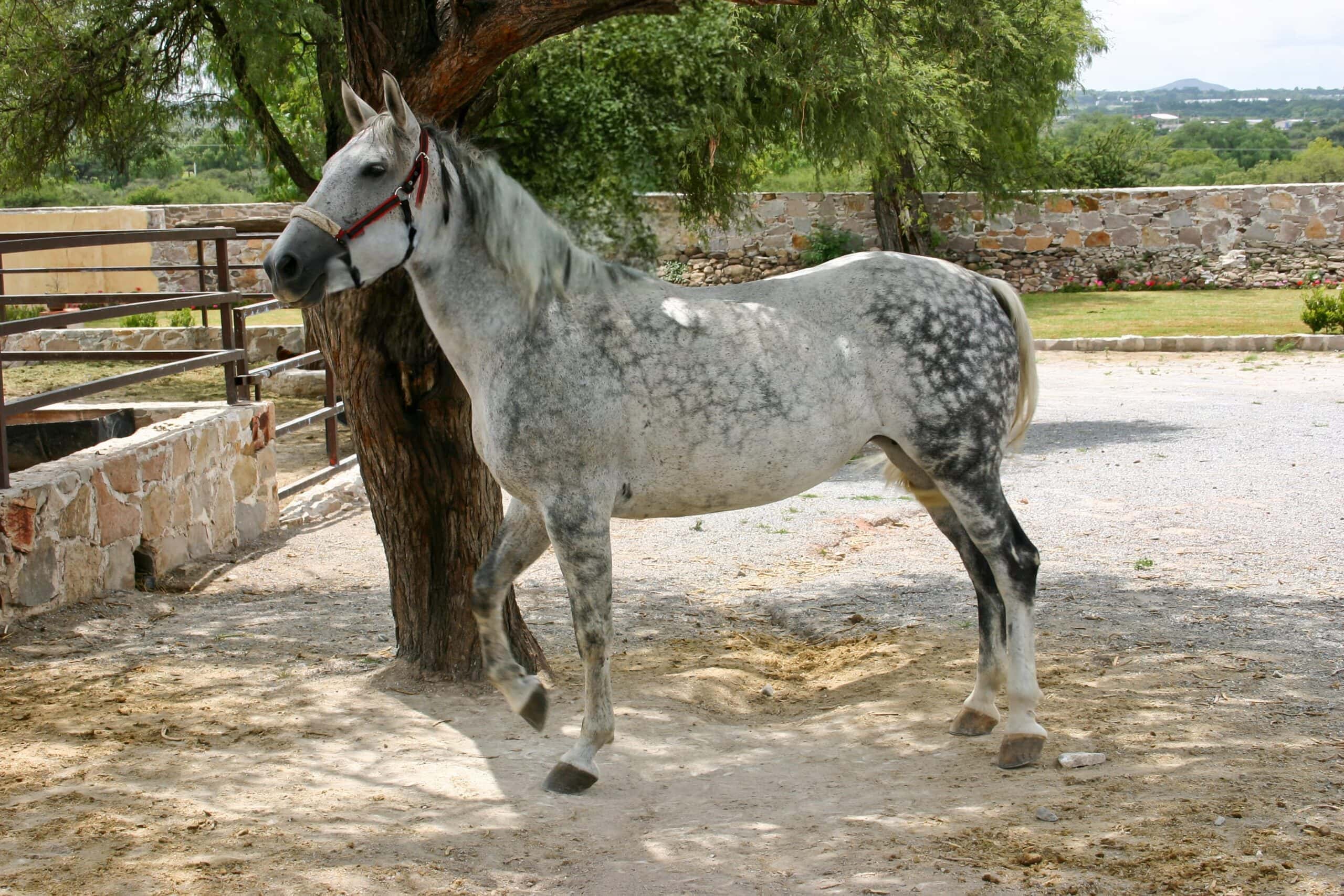
The Azteca horse is a striking breed known for its grace, power, and versatility. Also known as the National Horse of Mexico, the Azteca combines the proud Iberian heritage of the Andalusian with the rugged utility of the Quarter Horse and the Mexican Criollo.
This modern breed was developed in the 1970s with the aim of creating the ideal horse for both working ranch life and traditional charro competitions. The result is a noble and elegant equine athlete, equally capable of performing complex dressage movements, roping cattle, and navigating mountain trails.
As a more recent breed, the Azteca embodies a revival of Mexico’s equestrian spirit, rooted in centuries of horsemanship and ranching tradition. With registries now active in Mexico, the United States, and Canada, the Azteca is gaining recognition for its beauty, temperament, and versatility.
Read on to learn more about the Azteca horse’s history, characteristics, uses across disciplines, and day-to-day care.
Azteca Horse History
The Azteca was developed in the early 1970s to re-establish a Mexican horse breed that combined agility, intelligence, stamina, and beauty.
At the heart of this effort was Don Antonio Ariza Cañadilla, a Spanish businessman, philanthropist, and passionate horseman. [1][2]
Origin
Mexico has a long equestrian tradition, and for generations the Mexican Criollo was the standing icon of the nation’s horses. Despite this, by the end of the Mexican revolution, the Criollo was nearly extinct, creating a new demand for Mexico to have its own national horse. [1][2]
With urging and support from the “gentlemen cowboys” or charros, Don Antonio Cañadilla took the lead in this initiative, importing horses from Spain to establish the new breed. [1][2]
The first official Azteca foal, Casarejo, was born in 1972 from a cross between an Andalusian stallion (Ocultado) and a Quarter Horse mare (Americana), bred at Rancho San Antonio near Texcoco, Mexico.
Recognizing the need for consistency in type and ability, the Azteca Horse Research Center was established at Lake Texcoco, and a national breeding program was developed in collaboration with Mexico’s top horsemen and scientists. [1][2][3]
In 1982, the breed was formally recognized by the Mexican Department of Agriculture, and the Mexican Azteca Horse Breeders Association (AMCCRA) became the official registry. The Azteca was declared Mexico’s national horse, a symbol of the country’s rural identity and cultural pride. [1]
What's your top priority with your horse's health?

Enter your email to receive your store credit
Breed Registries
The AMCCRA carefully controls the Mexican Azteca bloodline to maintain the ideal balance of cross breeding within pedigrees. To meet registration requirements, foals come from strictly defined proportions of Andalusian, Quarter Horse, and Criollo blood.
The registry provides a comprehensive breeding chart that shows all of the accepted combinations of dam and sire bloodlines. Foals are classified into registration categories (A–F) based on their parentage, with only those meeting phenotype and bloodline criteria eligible for registration. [4]
The American Azteca International Association, while closely related to the AMCCRA, allows greater flexibility in breeding stock. North American Aztecs are allowed to have registered American Paint Horse lineage, as long as the APH parent is not more than 25% Thoroughbred within five generations. [5]
In both registries, animals must undergo DNA verification and meet specific conformation and genetic disease screening standards to qualify for registration. In Mexico, Aztecas are also subject to strict conformation inspections before they are approved as breeding stock, whereas the American registry primarily relies on documented bloodlines and registration rules. [4][5]
Despite regional differences in registry rules, both Mexican and American Azteca horses are bred with the same goal: to produce a horse that embodies the refined beauty, expressive movement, and noble bearing of its Iberian heritage combined with the speed, agility, and cow sense of its Western ancestors. [2][5][6]
Mexican Registry (AMCCRA)
The Asociación Mexicana de Criadores de Caballos de Raza Azteca (AMCCRA) serves as the original and official registry for the Azteca horse breed in Mexico. Established in conjunction with the breed’s formal recognition in 1982, AMCCRA functions as the international authority on breed standards, registration eligibility, and phenotype verification. [1]
AMCCRA enforces strict regulations regarding bloodline composition, limiting the influence of any one foundation breed and closely monitoring the Criollo lineage. Each foal must meet both conformation and pedigree requirements to be eligible. [4]
Today, AMCCRA registers around 1,000 Azteca horses annually, with most of the breed’s population and breeding programs still concentrated within Mexico. [7]
American Registry (AAHIA)
The American Azteca Horse International Association (AAHIA) was formed in 1999 to serve as a dedicated registry for Azteca horses within the United States. Its founding members aimed to create an organization that reflected the structure and governance priorities of the American equestrian community. [5][8]
Central to this mission was the belief that breeders and owners should have a democratic voice in decisions affecting the future of the breed. As such, AAHIA operates with voting membership, allowing stakeholders to influence registry policies and long-term development goals. [5][8]
While maintaining a strong connection to the breed’s roots in Mexico, AAHIA recognizes that the American horse market often has different demands, including preferences for diverse disciplines, recreational riding, and specific esthetic traits. The association works to support those interests while remaining faithful to the Azteca’s core identity. [5][8]
AAHIA also serves as a point of contact for breeders navigating the complexities of bloodline verification, DNA testing, and multi-registry documentation. By offering educational resources, clear registration processes, and outreach to new owners, the AAHIA promotes responsible breeding and wider awareness of the Azteca’s qualities.
Its long-term aim is to foster a thriving, sustainable population of Aztecas suited to the evolving needs of American riders and horse professionals. [5][8]
| Breed Summary | |
|---|---|
| Breed Name | Azteca |
| Also Known As | National Horse of Mexico |
| Breed Type | Sport horse |
| Origin | Mexico |
| Breed Registry | Asociación Mexicana de Criadores de Caballos de Raza Azteca (AMCCRA); American Azteca Horse International Association (AAHIA) |
| Population Status | Growing; around 1,000 registered annually in Mexico |
| Average Height | 14.1 – 16 hh |
| Common Coat Colors | All solid colors; overo, tobiano, sabino |
| Conformation | Medium-sized, compact, powerfully muscled, lean expressive head, straight or slightly convex profile, arched neck, prominent withers, long sloping shoulder, broad deep chest, short strong back, rounded muscular hindquarters, straight legs, strong hooves |
| Common Uses | Charreada, ranch work, dressage, working equitation, parade riding, jumping, trail riding, light driving |
| Temperament | Intelligent, sensitive, eager, bold, courageous, loyal |
| Best For | Experienced riders |
| Common Health Concerns | GBED, HERDA, HYPP, MH, PSSM, joint and soft tissue injuries, lameness, gastric ulcers |
Azteca Horse Characteristics
Like other hybrid breeds, the Azteca embodies many of the best traits of its parent lines. The Criollo brings resilience and essential Spanish conformation traits, the Andalusian contributes to a docile and energetic temperament, and the American Quarter or Paint horse contribute cow sense and quickness.
The result is a versatile horse capable of ranch work, pleasure riding, and classical equestrian disciplines.
Conformation
Azteca horses are medium-sized, compact, and powerfully muscled. Their conformation reflects the fusion of Andalusian elegance with Quarter Horse strength and agility. [1][2]
From the front, many Aztecs resemble Iberian horses, with a lean, expressive head and slightly convex or straight profile. The eyes are large and full of expression, the ears are medium-sized and alert, and the nostrils are broad and mobile. The neck is arched, well-set, and wide at the base, transitioning into prominent withers and a long, sloping shoulder. [1][2]
The chest is broad and deep, with a well-sprung rib cage and a short, strong back. Hindquarters are rounded, muscular, and powerful, giving the Azteca excellent impulsion and balance. The legs are straight, with clean joints, strong tendons, and well-formed hooves. [1][2]
Height is a defining factor in classifying Azteca foals, especially in Mexico where the horse must remain agile enough for charro work.
The ideal height for Mexican-registered Aztecas is 14.1 – 15.3 hands, with male horses standing slightly taller than mares. In the American Azteca registry, the range is slightly higher, from 14.2 to 16 hands. [1]
Colors
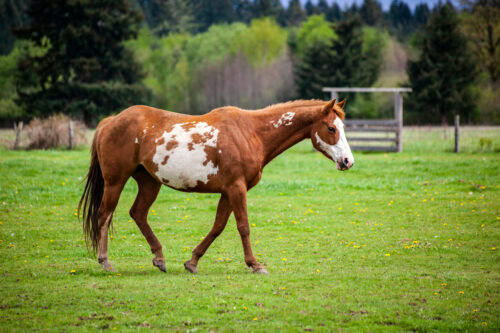
Aztecas have silky coats, luxurious manes, and thick, flowing tails reminiscent of their Andalusian ancestry. All solid colors are accepted by both registries, and white markings on the face and legs are permitted. [1]
The American Azteca accepts a wider range of coat patterns, including overo, tobiano, and sabino, provided they stem from Paint Horse lines. Appaloosa patterns, albinos, and excessive white are not accepted in either registry. [1]
Temperament
The Azteca’s temperament is one of its most prized attributes. These horses are known for being intelligent, sensitive, and eager to learn. They are typically bold, courageous, and forward-moving, with a strong sense of loyalty to their handlers. [3]
This is a spirited breed that benefits from confident, experienced training. While Aztecas can be gentle and well-mannered, they are also athletic and alert, particularly in their younger years. Riders with a calm, consistent approach will find the Azteca highly responsive, versatile, and deeply rewarding.
Their intelligence and trainability make them suitable for both classical disciplines and demanding working environments. [3]
Whether used in charreada, working ranch events, classical dressage, or recreational trail riding, the Azteca is expected to demonstrate courage, stamina, intelligence, and a willing temperament. [2][5][6]
Disciplines
Aztecas excel in several different events thanks to their agility, quickness, and composure. Their versatility makes them well-suited to a range of tasks, including traditional ranch work and classical disciplines.
Charrería
Charrería is Mexico’s national equestrian sport and a vibrant expression of the country’s rural heritage. Rooted in the practical skills of cattle herding, Charrería developed in the 16th and 17th centuries as landowners and ranch workers refined techniques for managing livestock across vast estates.
Over time, these working methods evolved into competitive events, ceremonial displays, and community celebrations that showcase horsemanship, discipline, and tradition. [9]
Today, Charrería is practiced across Mexico and in Mexican-American communities abroad. Events are organized into competitions called charreadas, where skilled horsemen (charros) and horsewomen (charras) perform a series of timed and scored tasks. These may include reining patterns, cow roping, bull tailing, and trick riding, among others. [9]
Competitors wear ornate traditional attire, including wide-brimmed sombreros, embroidered jackets, and silver-adorned saddles, all crafted by regional artisans. [9]
The Azteca horse plays a central role in this tradition. Bred specifically to combine the Iberian horse’s natural collection and agility with the Quarter Horse’s speed and cow sense, the Azteca meets the athletic and esthetic demands of Charrería.
Its balance, responsiveness, and endurance make it ideal for the sport’s fast-paced, precision-based events. The Azteca is not just a mount in Charrería, it is a cultural symbol, representing pride in Mexican horsemanship and rural identity.
In 2016, UNESCO recognized Charrería as Intangible Cultural Heritage of Humanity, acknowledging its role in transmitting social values, skills, and artistry across generations. [10]
Classical Disciplines
The influence of the Andalusian makes the Azteca particularly well-suited for dressage and classical Spanish riding. The breed is naturally collected, with expressive movement and high knee action.
Other disciplines Aztecas excel at include:
- Working Equitation
- Parade and exhibition riding
- Jumping
- Trail riding
- Light driving
Although not bred for upper-level show jumping, Aztecas are capable and reliable over low fences and technical courses. [3]
Azteca Horse Health
The Azteca Horse is generally known for its strength, stamina, and sound constitution, reflecting the influence of its Andalusian, Quarter Horse, and Criollo ancestry.
Like other breeds with diverse foundations, Aztecas may inherit certain genetic traits or health vulnerabilities from their parent lines.
Genetic Conditions
As a crossbred type, Azteca Horses may benefit from hybrid vigor, especially in first-generation crosses. Over time, this effect can lessen in subsequent generations, and inherited traits or health issues from the founding breeds may still occur.
Of all the parent breeds permitted within Azteca bloodlines, the American Quarter Horse has the highest incidence of genetic conditions that could pass to Azteca offspring.
Genetic conditions identified within Quarter Horse bloodlines include:
- Glycogen branching enzyme deficiency
- Hereditary equine regional dermal asthenia
- Hyperkalemic periodic paralysis
- Malignant hyperthermia
- Polysaccharide storage myopathy
Glycogen Branching Enzyme Deficiency
Glycogen Branching Enzyme Deficiency (GBED) is an autosomal recessive disorder caused by a mutation in the GBE1 gene. This mutation reduces the activity of an enzyme responsible for forming and mobilizing glycogen in the brain, liver, and muscle tissues. [11]
Because glycogen is a critical energy source for muscles and other organs, impaired glycogen formation leads to severe energy deficits and, ultimately, death. GBED commonly results in late-term abortions or stillbirths, and foals born alive typically die within the first few weeks of life. The condition is fatal. [11]
Hereditary Equine Regional Dermal Asthenia
Hereditary Equine Regional Dermal Asthenia (HERDA) is an autosomal recessive disorder caused by a mutation in the PPIB gene, which disrupts normal collagen production. Collagen is a key structural protein found in the skin, tendons, bones, and cartilage. [12]
Defective collagen weakens the attachment between skin layers, causing the outer layer to separate from the underlying tissue. Affected horses may develop open wounds or areas where the skin sloughs off entirely, leaving raw, slow-healing lesions. [12]
Clinical signs often appear in young horses as unusual cuts or tears on the skin, especially along the back where tack is placed. Because the skin is fragile and injuries heal poorly, most horses with HERDA are eventually euthanized. [12]
Hyperkalemic Periodic Paralysis (HYPP)
Hyperkalemic Periodic Paralysis (HYPP) is an autosomal dominant disorder caused by a mutation in the SCN4A gene, which affects sodium ion channels in muscle cells. These channels regulate electrical impulses that control muscle contraction. [13]
The mutation disrupts normal ion flow, leading to episodes of muscle tremors, weakness, and, in some cases, abnormal respiratory sounds. Severe attacks can result in collapse or sudden death. [13]
Elevated potassium levels can trigger episodes, so affected horses require careful dietary management to control potassium intake and reduce the risk of clinical signs. [13]
Malignant Hyperthermia
Malignant Hyperthermia (MH) is an autosomal dominant disorder caused by a mutation in the RYR1 gene, which regulates calcium release from the sarcoplasmic reticulum in skeletal muscle. The mutation causes the calcium channels to malfunction, resulting in excessive calcium release into the muscle cells. [14]
Uncontrolled calcium release leads to intense, sustained muscle contractions and a dangerous rise in body temperature (hyperthermia). The condition can be life-threatening if not promptly addressed. [14]
Episodes are typically triggered by stress, the anesthetic halothane, or the muscle relaxant succinylcholine. Affected horses may show signs such as profuse sweating, rapid or irregular heartbeat, shallow breathing, high blood pressure, muscle rigidity, and fevers often exceeding 109°F (43°C). [14]
MH can also present as recurrent episodes of exertional rhabdomyolysis (tying-up) during exercise. [14]
Polysaccharide Storage Myopathy
Polysaccharide Storage Myopathy (PSSM) is an autosomal dominant condition caused by a mutation in the GYS1 gene, which plays a key role in glycogen synthesis. [15]
The mutation leads to abnormal formation and accumulation of glycogen within muscle cells, resulting in muscle stiffness, pain, weakness, sweating, and reluctance to move, similar to tying-up episodes. [15]
While the GYS1 mutation accounts for PSSM1, horses with PSSM type 2 (PSSM2) do not carry this mutation. Research is ongoing to identify the underlying cause of PSSM2 and its relationship to similar muscle disorders. [15]
While it is possible for genetic diseases of the Quarter Horse to appear in Azteca lines, there is currently no significant occurrence of breed-specific health conditions in this breed. Rigorous genetic testing by Azteca horse registries is essential to maintain the overall health and vigor of the breed.
Health Problems
Azteca Horses are generally healthy and resilient, reflecting their blend of Andalusian, Quarter Horse, and Criollo bloodlines. They are athletic and versatile, but like other sport and working breeds, they may develop health issues related to musculoskeletal strain and management practices.
Joint and soft tissue injuries are potential concerns for Aztecas used in demanding disciplines such as reining, dressage, and working equitation. This breed’s agility and collected movement place repetitive stress on the hocks, stifles, and suspensory ligaments. Proper conditioning, balanced farriery, and regular veterinary evaluations are key to minimizing long-term wear and lameness.
Digestive issues such as gastric ulcers are also common in performance horses subjected to stress, frequent travel, or high-concentrate diets. Early recognition of subtle behavioral changes such as irritability, reduced appetite, or girthiness can help identify ulcers before they worsen. A forage-rich diet and consistent management routine support digestive stability in Azteca Horses.
Care and Management
Compared to heavier or more specialized breeds, Azteca Horses are prized for their versatility and resilience. With attentive care and thoughtful management, these horses can maintain soundness and perform successfully across many disciplines.
Work with your veterinarian and other equine professionals to develop a wellness plan that supports your Azteca’s long-term health and performance.
A well-rounded basic care program should include:
- Veterinary Exams: Schedule regular wellness exams with your veterinarian to ensure early detection and management of health issues.
- Vaccinations: Follow a vaccination schedule recommended by your veterinarian to maintain immunity against common diseases.
- Dental Care: Ensure routine dental exams and floating to support oral comfort and efficient chewing.
- Hoof Care: Maintain consistent farrier care to preserve proper hoof balance and prevent lameness.
- Parasite Management: Implement a parasite control program under veterinary supervision to protect against internal parasites.
- Joint Support: Promote healthy joints through conditioning, adequate rest, and veterinary-guided maintenance programs.
If your Azteca lives in a stall, providing daily turnout can help manage stress levels by offering opportunities for free exercise, grazing, and socialization.
Like other athletic breeds, Aztecas thrive on consistency and balanced workloads that incorporate adequate mental stimulation and exercise. Make sure your horse’s training program is appropriate for their age, health, and level of fitness.
Nutrition
Proper nutrition is essential to overall health and performance in the Azteca horse, particularly for horses used in athletic disciplines such as reining, working equitation, or dressage.
A balanced diet provides the nutrients required to support muscle development, maintain joint health, and promote mobility and long-term soundness.
Weight Management
Azteca horses may inherit easy-keeper traits from their Andalusian and Quarter Horse lineage and typically maintain condition well on a forage-based diet.
However, their athletic build and variable workloads mean that individual needs can differ widely. High-energy horses or those in intense training may actually be hard keepers who require additional calories to sustain muscle condition and performance.
Maintaining an appropriate body condition score (BCS) is essential for supporting soundness and metabolic health. [16] Both weight loss and over-conditioning can compromise performance and long-term wellbeing.
Adjust energy intake according to the horse’s workload, age, and fitness goals. Forage should form the foundation of the diet, with concentrate feeds or ration balancers introduced only as needed to meet additional energy or nutrient requirements.
Sample Diet
The table below outlines an example diet for a mature 1,100 lb (500 kg) Azteca in light work with normal body condition.
| Feed | Maintenance Diet |
|---|---|
| (Amount / Day) | |
| Mid-Quality hay (10% crude protein) | 11.5 kg (25 lb) |
| Salt | 30 g (2 tbsp) |
| Omneity® Pellets | 200 g (2 scoops) |
| Diet Analysis | |
| Digestible Energy (% of Req) | 101% |
| Protein (% of Req) | 145% |
| NSC (% Diet) | 8.9% |
Most Azteca Horses can meet their energy and protein needs on a high-quality forage-based diet. However, hay alone will not supply all vitamins and minerals required in the equine diet. [17]
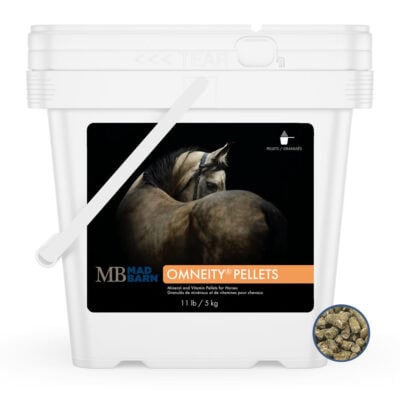
To ensure all nutritional requirements are met, provide a comprehensive vitamin and mineral supplement that fills dietary gaps without contributing excess sugars or starches. Mad Barn’s Omneity® is formulated to balance a forage-based diet and support key aspects of health, including hoof health, coat quality, energy metabolism, and immune function.
All horses should have continuous access to clean, fresh water. Hydration is especially important for Aztecas involved in strenuous work, as athletic horses have higher water losses through sweat.
While a salt block can help encourage water consumption, many horses do not consume enough to meet their sodium requirements from a salt block alone. Adding approximately two tablespoons of loose salt directly to the daily ration supports electrolyte balance and hydration.
Forage
Forage should form the foundation of every Azteca’s diet. Horses typically consume about 2% of their body weight in feed and forage per day. An 1,100 lb (500 kg) Azteca would consume roughly 25 lb (11.5 kg) of hay daily. [18]
The ideal forage type depends on workload and condition. Moderate to high-quality grass hay works well for most Aztecas, while those in heavy work may benefit from including some alfalfa to increase protein and calorie density. When protein needs are already met, fiber-based energy sources such as beet pulp can provide additional calories without excessive starch.
Free-choice forage supports digestive health and stable energy levels, but horses prone to weight gain may need controlled hay access. Slow feeders can help slow consumption and extend feeding time to support healthy gut function.
Pasture access should also be managed carefully during periods when grass sugar levels are high, such as spring and fall. Limiting turnout duration, using a grazing muzzle, or rotating to lower-sugar paddocks can help prevent unwanted weight gain and reduce the risk of pasture-related laminitis.
A forage analysis is a valuable tool for determining whether your hay meets your Azteca’s nutrient needs and identifying any deficiencies that require targeted supplementation.
Feeding Recommendations
A balanced diet provides the nutrients required to maintain sound joints, strong hooves, optimal digestion, and consistent performance in Azteca horses.
Most Aztecas do not require large quantities of commercial grain or high-starch feeds, as these can contribute to digestive upset and metabolic imbalance. Instead, opt for fiber- and fat-based calorie sources to provide steady energy and maintain body condition. [19][20]
For senior horses or those with dental issues, soaked hay pellets, beet pulp, or chopped forage are alternatives to long-stem hay. Horses that drop feed or struggle to chew may benefit from softer, easy-to-digest forage options to maintain condition.
If additional calories are needed to support workload or body condition, choose a fat supplement rather than increasing grain. Fat sources rich in omega-3 fatty acids promote coat shine, joint comfort, and overall health. [21][22]
All Aztecas should have access to fresh water and plain loose salt daily to support hydration, nerve function, and electrolyte balance.

Nutritional Supplements
A balanced, forage-first diet is the foundation of good health for the Azteca Horse. Once the base diet is properly balanced, additional supplements can be introduced to provide targeted support for the horse’s individual needs and workload.
Consider incorporating science-backed options that help promote overall wellness in athletic breeds:
- w-3 Oil: A premium omega supplement for horses, enriched with DHA and vitamin E to support joint health, immune function, and a shiny coat
- MSM: An available form of sulfur that supports connective tissue health such as joints, ligaments, and tendons
- Natural Vitamin E: For Aztecas in heavy workloads, ensuring vitamin E requirements are met is key to supporting muscle health and performance
- Performance XL Electrolytes: Designed to quickly replenish your horse’s electrolytes after intense sweating, Performance XL contains the electrolytes lost in sweat as well as vitamins C and E to support post-exercise recovery
Frequently Asked Questions
Here are some frequently asked questions about Azteca horses:
The Azteca horse is a modern breed developed in Mexico in the early 1970s for ranch work and traditional charro competition. Azteca horses combine the elegance of the Andalusian with the athleticism and utility of the Quarter Horse and the Mexican Criollo. They are known for their versatility, trainability, power, and grace. The Azteca horse is also recognized as the National Horse of Mexico and is closely tied to the country’s equestrian heritage.
Azteca horses are medium-sized horses that usually stand about 14.1 to 16 hands high and weigh roughly 990 to 1,190 pounds. They are compact, muscular horses with enough substance for ranch work and enough refinement for sport. Mexican-registered Azteca horses are typically on the smaller end of that range, while American Azteca horses may be slightly taller. Their balanced build supports both agility and stamina.
Azteca horses are generally calm and intelligent with a spirited, athletic nature. They can feel especially energetic when they are young or in active training. They do best with confident handling, regular work, and a consistent routine. In the right program, they are willing and cooperative partners.
Azteca horse prices vary widely based on pedigree, training, age, and location. Azteca horses with strong bloodlines, advanced training, or proven performance records in disciplines like charreada, dressage, or working equitation usually cost more than young prospects or recreational mounts. Availability can also affect price, especially outside of Mexico where the breed is less common. Buyers should also budget for ongoing costs such as feed, farriery, veterinary care, and training.
Azteca horses are used for ranch work, charreada, and a wide range of riding sports. They are especially valued in traditional Mexican horsemanship because of their agility, responsiveness, and cow sense. Azteca horses also perform well in dressage, working equitation, parade and exhibition riding, trail riding, jumping, and light driving. Their balance, stamina, and expressive movement make them versatile horses for both work and sport.
The temperament of Azteca horses is typically intelligent, sensitive, and eager to learn. Azteca horses tend to be bold, loyal, and highly responsive, with the energy and willingness needed for both demanding work and refined performance. They respond best to calm, confident training and a consistent routine, as they are naturally alert and athletic horses. In experienced hands, they are versatile and rewarding horse breed that often form strong bonds with their handlers.
Azteca horses are medium-sized, compact, and powerfully muscled horses that blend Andalusian elegance with Quarter Horse strength. They typically have an expressive head with a straight or slightly convex profile, large eyes, alert ears, and broad nostrils. Their neck is usually arched and well set, leading into prominent withers, a long sloping shoulder, a broad deep chest, and a short strong back. Rounded hindquarters, straight legs, strong tendons, and well-formed hooves support the breed’s balance, impulsion, and agility.
Azteca horses come in a wide range of coat colors. Most registries accept all solid colors, and white markings on the face and legs are allowed. The American Azteca registry also permits overo, tobiano, and sabino patterns when they come from approved Paint Horse lines. Azteca horses often have silky coats, full manes, and thick tails that reflect their Iberian influence.
Azteca horses generally stand between 14.1 and 15.3 hands high in the Mexican registry, while American Azteca horses often range from 14.2 to 16 hands high. This moderate height helps preserve the agility, athleticism, and versatility that Azteca horses are known for. Although they are not especially tall compared to some sport horse breeds, they are strong, balanced horses with an impressive presence.
Azteca horses are usually not the best choice for complete beginners. They are sensitive and athletic horses that benefit from confident, consistent riding and training. Inexperienced riders may find their responsiveness and energy challenging, especially in younger or less experienced horses. With knowledgeable handling, however, Azteca horses can become willing and dependable partners.
Azteca horses are generally healthy, but they can be affected by inherited and performance-related health problems. Because of Quarter Horse influence, some Azteca horses may carry genetic conditions such as glycogen branching enzyme deficiency, hyperkalemic periodic paralysis, and polysaccharide storage myopathy. As athletic horses, they may also be prone to joint strain, soft tissue injuries, lameness, and gastric ulcers related to training intensity, travel, or management. Responsible breeding, genetic testing, proper conditioning, and regular veterinary care help reduce these risks.
Summary
The Azteca horse is Mexico's national breed, combining Andalusian elegance, Quarter Horse strength, and Criollo resilience. Developed in the 1970s, it represents the harmony of tradition, athleticism, and versatility.
- The Azteca originated in Mexico under the direction of Don Antonio Ariza Cañadilla, who sought to revive a national equine symbol.
- The breed combines Iberian grace with Western agility, making it versatile for both ranch work and classical riding disciplines.
- Azteca horses are registered through AMCCRA in Mexico and AAHIA in the United States, following strict genetic and conformation standards.
- They are known for their expressive movement, balanced conformation, and intelligent, cooperative temperament.
References
- Salem. P., Breed Profile: Azteca Horse. FEI.org. 2022.
- Azteca Horses. Oklahoma State University. 2021.
- American Azteca Breed Information. American Azteca Horse International Association. 2025.
- Technical Development of the Azteca Horse Breed. AMCCRA. 1996.
- Registration. American Azteca Horse International Association. 2025.
- Azteca. Horse Canada.
- Gudino. F. C. Los Poderosos Caballos de Raza Azteca. RED ECUESTRE.
- The AAHIA. American Azteca Horse International Association. 2025.
- Charrería's History. Museo del Charrieria. 2023.
- Jarman. J. Charrería, Equestrian Tradition in Mexico . UNESCO Intangible Cultural Heritage. 2016.
- Wagner. M. et al. Allele Frequency and Likely Impact of the Glycogen Branching Enzyme Deficiency Gene in Quarter Horse and Paint Horse Populations. J Vet Intern Med. 2008. View Summary
- Rashmir-Raven. A. et al. Hereditary equine regional dermal asthenia (HERDA) in Quarter Horses: A review of clinical signs, genetics and research. Equine Vet Ed. 2015.
- Rudolph. J. et al. Periodic paralysis in Quarter Horses: a sodium channel mutation disseminated by selective breeding. Nature Genet. 1992.
- Aleman. M. et al. Malignant Hyperthermia Associated with Ryanodine Receptor 1 (C7360G) Mutation in Quarter Horses. J Vet Intern Med. 2009.View Summary
- Firshman. A. et al. Epidemiologic characteristics and management of polysaccharide storage myopathy in Quarter Horses. Am J Vet Res. 2003. View Summary
- Durham. A. E. et al. ECEIM Consensus Statement on Equine Metabolic Syndrome. Journal of Veterinary Internal Medicine. 2019. View Summary
- Richards. N. et al. Nutritional and Non-Nutritional Aspects of Forage. Veterinary Clinics of North America: Equine Practice. 2021. View Summary
- Nutrient Requirements of Horses: Sixth Revised Edition. National Academies Press, Washington, D.C. 2007.
- Cipriano-Salazar. M. et al. The Dietary Components and Feeding Management as Options to Offset Digestive Disturbances in Horses. J Equine Vet Sci. 2019.
- Geor. R. J. Metabolic Predispositions to Laminitis in Horses and Ponies: Obesity, Insulin Resistance and Metabolic Syndromes. Journal of Equine Veterinary Science. 2008.
- Manhart. D. R. et al. Markers of Inflammation in Arthritic Horses Fed Omega-3 Fatty Acids. The Professional Animal Scientist. 2009.
- Richards. T. et al. Effects of Dietary Camelina, Flaxseed, and Canola Oil Supplementation on Transepidermal Water Loss, Skin and Coat Health Parameters, and Plasma Prostaglandin E2, Glycosaminoglycan, and Nitric Oxide Concentrations in Healthy Adult Horses. Journal of Animal Science. 2023.