English
Strong, healthy hooves are essential for your horse’s soundness, comfort, and performance, but choosing the right hoof supplement is not always straightforward. With so many products on the market, it can be difficult to know which ones actually improve hoof quality and are worth the investment.
Ask any equine nutritionist and they’ll tell you the best hoof supplement for your horse is one that corrects the nutritional deficiencies and imbalances limiting hoof development. In many horses, this means improving intake of the nutrients needed to produce strong, resilient hoof horn.
In practice, the most effective way to support hoof health is usually to start with a complete vitamin and mineral supplement that helps balance the entire diet. Because hoof horn is formed continuously over time, long-term hoof quality depends on consistent nutritional support for normal keratin production and hoof growth.
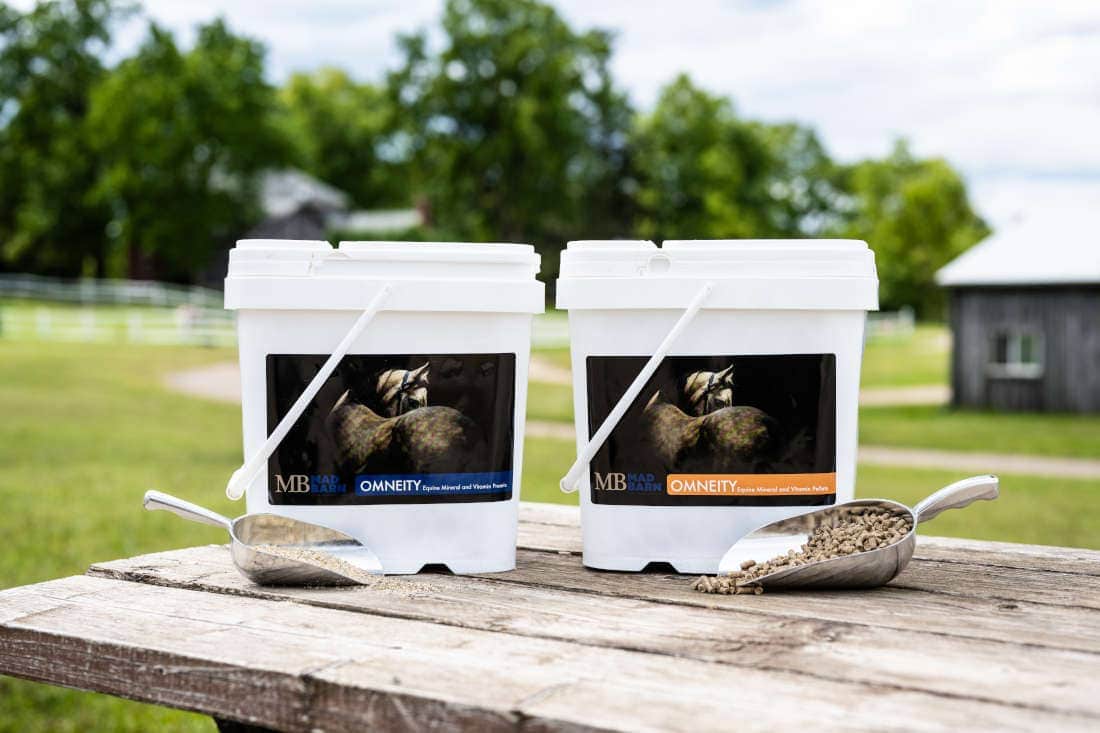
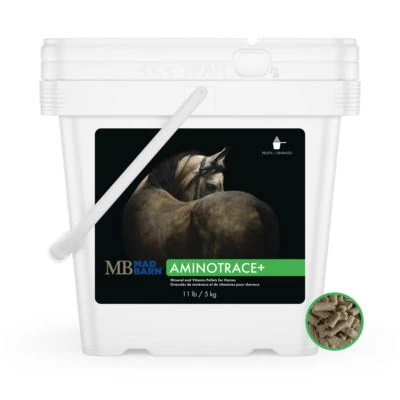
For most horses, Mad Barn’s Omneity® is the best overall hoof supplement, providing comprehensive nutritional support to improve hoof quality from the inside out. For horses with more complex needs, such as metabolic concerns, high-iron forage, or persistent hoof issues, AminoTrace+ offers a more advanced approach with higher levels of key nutrients.
Does My Horse Need a Hoof Supplement?
Many horses need nutritional support for hoof health, but that does not always mean adding a standalone hoof supplement. The priority is to make sure your horse’s overall diet provides the vitamins, minerals, and amino acids required for normal hoof horn growth.
This is especially important for horses on forage-based diets or horses receiving fortified feeds below the recommended feeding rate, since these programs often leave gaps in key nutrients needed to build strong hoof horn.
Strong, healthy hooves are built from the inside out. Hoof quality reflects the nutrients available to support keratin production, connective tissue integrity, and hoof growth over time. When the diet is not properly balanced, poor hoof quality, slow growth, cracks, and weak hoof horn are more likely to develop.
Although targeted hoof supplements can help in some situations, the first step is usually to correct underlying deficiencies and imbalances in the diet rather than adding a single-purpose supplement on top of an already unbalanced feeding program.
For most horses, that starts with feeding a comprehensive vitamin and mineral balancer that supplies the nutrients needed for normal hoof growth and hoof horn formation.
More targeted support may be useful for horses with persistent hoof issues or more complex nutritional needs. This is the approach equine nutritionists typically take when evaluating and supporting hoof health in their clients’ horses.
What Causes Hoof Problems in Horses?
Hoof quality is influenced by both internal and external factors, but nutrition is one of the most important.
The hoof wall is made of keratin, a structural protein that requires adequate amino acids, trace minerals, and vitamins to form properly.
When any of these nutrients are lacking or imbalanced, the result is often poor hoof integrity, slow growth, cracks, or weak horn quality. [1][2]
Nutritional shortfalls can also reduce hoof resilience, making horses more vulnerable to problems that may only become apparent under challenging conditions such as wet or muddy ground, dry hard footing, or repeated concussion.
Many common hoof issues are linked to dietary imbalances rather than a deficiency of a single nutrient. For example: [3][4][5][6]
- Low intake of copper and zinc can impair hoof horn formation and reduce hoof strength
- Low biotin intake can limit keratin production needed for normal hoof growth
- Excess iron can interfere with copper and zinc absorption, worsening underlying mineral imbalances
- Inadequate amino acid intake can limit production of the structural proteins that make up hoof horn
- Low antioxidant status may compromise hoof tissue quality and resilience
Forage variability and underfeeding of fortified feeds mean many horses do not consistently receive these nutrients in adequate amounts. Subclinical deficiencies can affect hoof growth and quality before obvious structural issues appear.
Even when diets appear adequate on paper, they may still fall short of providing the nutrients required to support optimal hoof health. Nutrient content in forage varies widely depending on soil conditions, plant maturity, harvest conditions, and storage. [6][7][8]
Commercial feeds can also leave gaps, especially when fed below the recommended rate, because horses then consume less than the intended vitamin and mineral fortification. In addition, many complete feeds are not formulated to provide the levels of biotin, trace minerals, and amino acids needed to fully support hoof horn growth and quality.
Metabolic dysfunction also plays a role. Horses with insulin resistance, Equine Metabolic Syndrome (EMS), or a history of laminitis often have compromised hoof quality due to inflammation, altered circulation, and changes in nutrient utilization. [9][10]
Other factors are also important for maintaining hoof health. Regular farrier care, appropriate trimming, and good environmental management, including moisture control and suitable footing, all play essential roles. However, these measures cannot fully compensate for poor nutrition. [11]
Common Signs of Poor Hoof Quality
Changes in hoof quality can be one of the most noticeable signs that something in the diet is not fully balanced. While these issues can have multiple contributing factors, they often point to underlying nutritional gaps.
Common concerns include: [2][12][13][14]
- Cracks and splitting: Vertical cracks, flares, and areas of wall separation may indicate weaker hoof horn that is less able to withstand normal loading and environmental stress
- Slow hoof growth: Hooves that grow slowly may take longer to recover from wear, trimming, or damage, making it harder to maintain proper hoof balance over time
- Brittle or crumbly hooves: Weak, dry, or easily broken horn can reflect poor hoof integrity and may be more likely to chip or fray at the bearing surface
- Thin soles or sensitivity: Horses with poor sole depth or tenderness on hard ground may have reduced protection within the hoof capsule, increasing sensitivity to concussion and bruising
- Frequent chipping or difficulty holding shoes: Hooves that chip easily or do not hold nails well may indicate weaker wall quality and reduced structural strength
These signs usually develop gradually because they reflect the quality of new hoof horn being produced over time. Because hoof growth is slow, visible improvement also takes time.
Correcting nutritional gaps supports stronger new growth, which is why improving hoof health requires a consistent, long-term approach rather than a quick fix.
What's your top priority with your horse's health?

What's your top priority with your horse's health?
Key Nutrients for Hoof Health
Hoof tissue is continuously produced and requires a steady supply of nutrients to form properly. Because the hoof wall is composed primarily of keratinized tissue, hoof growth depends on adequate intake of the nutrients involved in protein synthesis, keratin formation, connective tissue integrity, and normal cellular turnover.
The most important nutritional contributors to hoof health include trace minerals, amino acids, and vitamins.
These nutrients work together, not in isolation. If one is undersupplied, it can limit normal hoof formation even when other nutrients are present in adequate amounts.
This is why a balanced overall diet is more effective for supporting hoof quality than supplementing individual ingredients without addressing the rest of the ration. [11][13]
Trace Minerals
Copper and zinc are two of the most important trace minerals for hoof health because they help support the processes involved in forming strong hoof horn.
Zinc is required for normal keratinocyte proliferation and keratin formation, while copper supports enzymes involved in cross-linking keratin and connective tissue proteins, which helps strengthen the hoof wall and surrounding structures. [1][6][15][16][17]
These minerals are commonly low or imbalanced in forage-based diets. In particular, when dietary iron intake is high the excess iron can interfere with copper and zinc absorption. This means the horse may consume enough zinc and copper but still not have enough in their bodies.
When copper and zinc status is inadequate, the hoof may produce horn that is weaker, slower growing, and less resilient under mechanical or environmental stress.
Amino Acids
Because hoof horn is made primarily of protein, adequate amino acid intake is essential for normal hoof growth. Lysine, methionine, and threonine are the primary limiting amino acids in the equine diet and are required for protein synthesis, including the production of keratin and other structural proteins within the hoof. [18]
These amino acids provide the building blocks needed to produce new hoof horn at the coronary band. If they are undersupplied, keratin synthesis may be limited, slowing hoof growth and reducing the strength and resilience of the resulting horn.
Methionine is especially important because it is a precursor to the sulphur-containing amino acid cysteine. Cysteine is critical for providing the mechanical strength to the hoof wall by forming strong disulphide bonds within the keratin protein. [19]
Biotin & Other Vitamins
Biotin is a B-vitamin that acts as a cofactor for enzymes involved in metabolism and the formation of keratinized tissues.
In the hoof, it helps support normal keratin formation, which is why adequate biotin intake is associated with improved hoof horn quality. Research suggests that feeding 20 mg of biotin per day can improve hoof horn quality in horses when supplemented consistently over time. [20][21]
Other vitamins also support hoof tissue health. Vitamin A is involved in normal cell growth and differentiation, while vitamin E helps protect tissues from oxidative damage and supports overall cellular function. [6]
However, biotin does not work in isolation. Its benefits are greatest when the rest of the diet provides adequate trace minerals, amino acids, and overall nutritional balance.
This is why targeted hoof supplements often fall short: adding biotin alone may help support hoof growth, but it will not correct broader nutritional problems such as low copper and zinc intake, inadequate amino acid supply, or an unbalanced forage-based diet.
Hoof Growth is Slow & Requires Consistency
Improving hoof quality takes time because the hoof wall grows slowly. On average, the hoof wall grows approximately 5 – 10 mm per month, so it may take several months to see visible improvement and close to a year for an entirely new hoof wall to grow out. [22][23][24]
This slow growth rate helps explain why nutrition must be consistent. Hoof quality reflects the nutrients available during the formation of new hoof horn, not just what the horse was fed in the last few days or weeks. Short-term supplementation is therefore unlikely to produce meaningful results.
The goal of nutritional support is not to change the existing hoof wall immediately, but to improve the quality, strength, and resilience of new hoof horn as it grows in over time. This is why diet balancing, long-term feeding consistency, and patience are all essential when addressing hoof problems in horses.
What to Look for in a Hoof Supplement
When choosing a hoof supplement for your horse, it is important to look beyond products that add just one or two nutrients. The best hoof supplements support hoof health by improving the overall nutritional balance required for keratin production, connective tissue integrity, and hoof strength.
For many horses, poor hoof quality does not reflect a deficiency of one nutrient alone. More often, it reflects an overall diet that is not fully balanced for optimal hoof growth. [25][26]
This is why the most effective hoof supplement is usually one that helps correct broader nutritional gaps, rather than simply adding extra biotin on top of an already unbalanced feeding program.
An effective hoof supplement should provide:
- Physiologically effective levels of key nutrients, rather than small amounts that look good on the label but do not meaningfully support hoof growth
- Comprehensive nutritional support to address common gaps in forage-based diets and underfortified grain feeding programs
- Organic trace minerals, especially copper and zinc, to support hoof horn formation, connective tissue integrity, and improved absorption
- Limiting amino acids such as lysine, methionine, and threonine to support keratin synthesis and hoof growth
- Added biotin at nutritionally relevant levels to promote normal hoof horn quality and keratin strength
- A balanced formulation that works at the recommended feeding rate without requiring multiple overlapping supplements
- Limited fillers so the horse receives the nutrients they need without unnecessary starch, sugar, or extra calories
- No added iron, since excess iron can interfere with copper and zinc utilization
Single-ingredient supplements can still be useful in some cases, especially when a specific deficiency or imbalance has been identified through diet analysis or when you are working with an equine nutritionist. However, they are usually most effective after the foundation of the diet has been addressed.
Omneity®: Best Overall Hoof Supplement
For most horses, Mad Barn’s Omneity® is the best overall hoof supplement because it helps correct the nutritional imbalances that commonly limit hoof growth, hoof horn quality, and overall hoof strength.
Rather than supplying just one isolated hoof ingredient, Omneity® is formulated as an all-in-one vitamin and mineral balancer with added support for hoof development. This is important because poor hoof quality is usually linked to multiple dietary gaps, not a deficiency of biotin or any other single nutrient alone.
Omneity® helps support hoof health by providing:
- 100% organic trace minerals, including copper and zinc, to support keratin formation, connective tissue integrity, and stronger hoof horn
- Essential amino acids, including lysine, methionine, and threonine, to provide the building blocks required for normal hoof growth
- Biotin at nutritionally effective levels to support hoof horn quality as new hoof grows in
- No added iron, which is important because excess iron can interfere with copper and zinc utilization
- A concentrated, low-inclusion formula that helps balance the diet without adding unnecessary starch, sugar, or excess calories
In a field study, horses fed Omneity® showed a 22% increase in hoof growth rate, supporting its use as a complete nutritional approach for improving hoof development.
Because it addresses multiple nutritional gaps at once, Omneity® can often reduce the need for separate hoof, coat, or amino acid supplements.
Customer reviews commonly report faster hoof growth, stronger feet, better shoe retention, shinier coats, and improved overall condition after switching to Omneity®. Some also describe being able to simplify their feeding program by replacing multiple individual supplements with one balanced formula.
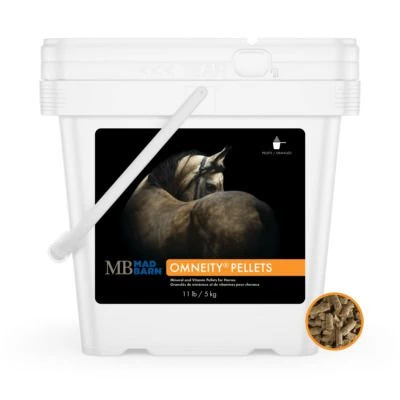
Omneity® is available in both pelleted and powdered formats, allowing horse owners to choose the option that best fits their feeding routine, budget, and their horse’s preferences.
Omneity® Pellets is a convenient, more palatable option that can be fed on their own, making them ideal for picky horses or those not receiving another carrier feed.
Omneity® Premix provides the same nutritional foundation in a more concentrated, economical powder with a lower feeding rate and no added oat hulls or other pelleting ingredients.

“Omneity® is designed to be an all-in-one solution for balancing vitamins and minerals in the diet. Because it's formulated with high-quality essential nutrients, Omneity® helps support all aspects of your horse’s health — hooves, immune system, and everything in between.”
— Dr. Fran Rowe DVM, PASMad Barn Veterinary Nutritionist
AminoTrace+: Best Supplement for Hoof Problems
Some horses with a history of hoof problems require more targeted nutritional support than a standard hoof supplement or vitamin and mineral balancer can provide.
Mad Barn’s AminoTrace+ is the better choice in horses with persistent hoof issues or where when hoof problems are linked to insulin resistance, Equine Metabolic Syndrome (EMS), PPID, a history of laminitis, or if they are consuming high-iron forage.
In these situations, the diet needs to provide higher levels of trace minerals, antioxidants, and metabolic support without adding extra iron, sugar, starch, or unnecessary calories. That is where AminoTrace+ is the best choice for a hoof supplement.
AminoTrace+ is especially well suited to horses with:
- Insulin resistance, EMS, PPID, or a history of laminitis
- High-iron hay or water that can interfere with copper and zinc balance
- Persistent hoof problems that have not improved on a standard balancer
- Easy-keeper metabolism requiring a very low-NSC vitamin and mineral source
- Poor hoof quality combined with dull coat, weak topline, or other signs of broader nutritional imbalance
Compared to Omneity®, AminoTrace+ provides a more concentrated nutrient profile at the recommended feeding rate. Each 200 g serving supplies 750 mg zinc, 300 mg copper, 11 g magnesium, 5 mg chromium, 20 mg biotin, 1,250 IU natural vitamin E, 10 g lysine, 6 g methionine, and 5 g threonine.
AminoTrace+ also contains no added iron, and is carefully formulated with ingredients selected for having low intrinsic iron.
The elevated copper and zinc help correct mineral balance and support keratin formation, connective tissue integrity, and stronger hoof horn. Magnesium and chromium help support normal insulin sensitivity and glucose metabolism, which is especially relevant in horses with metabolic dysfunction.
Natural vitamin E, selenium, copper, zinc, and manganese support antioxidant defenses, while added yeast, mannan oligosaccharides (MOS), and yucca schidigera extract help support hindgut health, nutrient absorption, immune function, and normal inflammatory balance.
Its very low-NSC formula contains less than 8% combined sugar and starch, with no molasses, no grain, and no added sugars, allowing horse owners to improve nutrient intake without relying on higher-calorie fortified feeds or ration balancers.
One of the most consistent themes in AminoTrace+ reviews is improved farrier feedback. Owners commonly report that their farrier notices stronger feet, healthier new hoof growth, and better frog development after the switch to AminoTrace+.
Reviewers also describe improved energy and overall condition, healthier hoof growth during laminitis recovery, easier management of IR, PPID, and laminitis-prone horses, and being able to replace several separate supplements with one low-NSC balancer.
“AminoTrace+ is a great addition for horses receiving a forage-focused diet. Its science-backed formulation means it will optimally balance vitamins and minerals in the diet.”
— Dr. Fran Rowe DVM, PASMad Barn Veterinary Nutritionist
Hoof Supplement Comparison: Omneity® vs. AminoTrace+
Not sure which hoof supplement is the right fit for your horse? The comparison below highlights the key differences between Omneity® and AminoTrace+.
| Feature | Omneity® | AminoTrace+ |
|---|---|---|
| Primary Role | Balances the entire diet to support overall hoof health and growth | Balances the diet with advanced nutritional support for complex hoof and metabolic issues |
| Best For | Most horses on forage-based diets or grain feeding programs | Horses with a history of hoof issues, metabolic concerns, or high-iron forage |
| Trace Mineral Support | Provides organic copper and zinc to address common deficiencies | Higher organic copper and zinc levels to correct mineral imbalances |
| Amino Acids | Includes lysine, methionine, and threonine for keratin production | Higher levels of amino acids for advanced hoof support |
| Biotin | Provides a physiologically effective dose to support hoof growth | Provides a physiologically effective dose to support hoof growth |
| Metabolic Support | Low-NSC formula suitable for general use, including healthy horses and easy keepers | Low-NSC formula specifically formulated for horses with EMS, PPID, insulin dysregulation, or a history of laminitis |
| Iron Content | No added iron | No added iron; helps balance high-iron diets |

Targeted Supplements for Specific Hoof Concerns
Targeted hoof supplements can be useful when a specific deficiency, mineral imbalance, or higher nutrient requirement has been identified through diet analysis.
Because these products address only one part of the diet, they are best used with guidance from an equine nutritionist and as part of a fully balanced feeding program.
Zinc & Copper
Additional copper and zinc may be helpful for horses consuming high-iron forage or with known mineral imbalances. Excess iron can interfere with the absorption of copper and zinc, which are both required for keratin formation and connective tissue integrity within the hoof.
When these trace minerals are not supplied in adequate amounts or proper ratios, hoof structure can weaken over time, leading to cracks, poor horn quality, or reduced resilience.
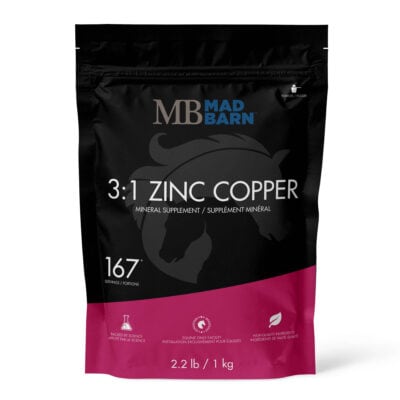
A targeted mineral supplement such as Mad Barn’s 3:1 Zinc Copper can help restore proper mineral balance and support hoof strength when these imbalances are identified.
Biotin
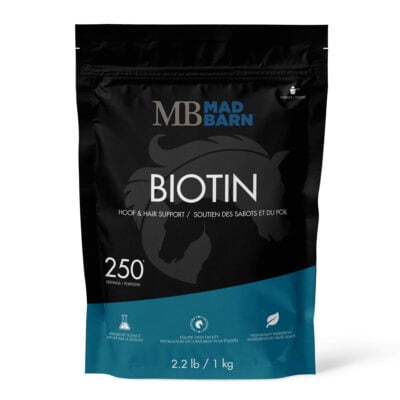
Biotin can support hoof growth in horses with slow-growing or brittle hooves, as it plays a role in keratin production and hoof horn quality.
However, biotin is most effective when the rest of the diet already provides adequate amino acids, trace minerals, and overall nutritional support. If these nutrients are lacking, adding biotin alone will not significantly improve hoof structure.
A standalone biotin supplement may be useful once the diet is balanced, particularly in horses where growth rate is the primary concern rather than overall hoof integrity.
Amino Acids
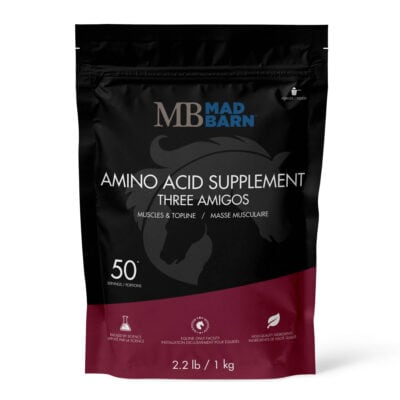
Supplementing lysine, methionine, and threonine may be beneficial when hoof quality is linked to low protein intake or poor forage quality. These amino acids are required for keratin synthesis and the development of strong hoof tissue.
When protein quality is insufficient, hoof growth may be slow and the resulting hoof horn weaker, even if mineral intake is adequate.
Products such as Mad Barn’s Three Amigos can help provide these limiting amino acids, but they are most effective when used alongside a balanced diet that already supplies the necessary trace minerals and vitamins for hoof formation.
Jiaogulan
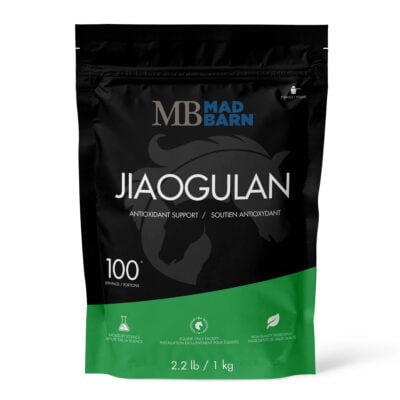
Jiaogulan is an herbal supplement that may support hoof health indirectly in horses whose hoof quality is affected by metabolic dysfunction or a history of laminitis.
In these horses, hoof growth and integrity may be compromised by altered circulation, metabolic stress, and inflammation within the tissues that support the hoof. Jiaogulan may help by supporting normal nitric oxide production, vascular function, and circulation to peripheral tissues, including the feet. [27][28][29]
By helping maintain blood flow and nutrient delivery to the hoof, Jiaogulan may improve the environment for healthy hoof growth, particularly in horses with insulin resistance, EMS, PPID, or chronic laminitis risk.
Jiaogulan should be used as part of a broader management plan that includes diet balancing, metabolic support, appropriate farrier care, and veterinary oversight. It is best viewed as an adjunct for horses with circulation-related hoof concerns, not a primary solution for poor hoof structure caused by nutritional deficiencies.
How to Choose the Right Hoof Supplement
Poor hoof quality is usually not caused by the lack of a specific “hoof supplement.” More often, it reflects a diet that does not provide the full range of nutrients required for normal hoof horn formation.
Horses require adequate trace minerals, amino acids, and vitamins to produce strong, resilient hoof horn. If the diet is low in nutrients such as copper, zinc, biotin, or key amino acids, it is often lacking in other areas as well. This is why poor hoof quality is usually a sign of a broader nutritional imbalance rather than a deficiency of one isolated ingredient.
For this reason, the best hoof supplement is usually one that helps balance the entire diet. For most horses, that means starting with a comprehensive vitamin and mineral supplement such as Omneity®, which supplies the nutrients commonly needed to support hoof growth and quality in one balanced formula.
Horses with persistent hoof problems or more complex nutritional needs may require a more concentrated approach. In these cases, AminoTrace+ is often the better choice because it provides higher levels of key trace minerals, amino acids, antioxidants, and metabolic support without added iron and with very low sugar and starch. [9][10]
Targeted single-ingredient supplements can still be useful in some situations, but they are best used when a specific deficiency or imbalance has been identified through diet analysis. In practice, the most effective way to support hoof health is usually to correct the broader diet first rather than adding a few isolated nutrients on top of an unbalanced feeding program.
Choose a complete vitamin and mineral supplement like Omneity® when:
- Your horse is on a forage-based diet or underfortified feeding program
- Hoof issues are mild to moderate, such as slow growth, cracks, or brittle hoof quality
- You want to address multiple nutritional gaps at once
- Your horse is otherwise healthy without significant metabolic concerns
Choose enhanced vitamin and mineral support like AminoTrace+ when:
- Your horse has insulin resistance, EMS, PPID, or a history of laminitis
- Hoof quality issues are persistent or more concerning
- Your horse is consuming high-iron forage or water
- You need higher levels of copper, zinc, amino acids, or magnesium to correct dietary imbalances
Consider targeted supplements such as biotin, zinc, or copper when:
- A specific deficiency has been identified through diet analysis
- Your horse is on high-iron hay and required copper and zinc supplementation
- You are addressing a defined issue such as low amino acid intake or mineral imbalance
- You are adding support alongside a balanced diet, not replacing it
Use the table below to choose the best hoof supplement to buy for your horse based on hoof quality, diet balance, and whether more targeted nutritional support is needed.
| Horse Profile | Best Fit | Why |
|---|---|---|
| Horse with general hoof issues such as cracks, slow growth, or brittle hooves | Omneity® | Provides balanced trace minerals, amino acids, and vitamins to address common nutritional gaps affecting hoof formation |
| Horse on hay or pasture that is not receiving full vitamin and mineral fortification | Omneity® | Balances forage-based diets and supports consistent hoof growth from the inside out |
| Horse with persistent hoof problems despite a balanced diet | AminoTrace+ | Provides higher levels of key nutrients to support more complex or resistant hoof issues |
| Horse with insulin resistance, EMS, PPID, or a history of laminitis | AminoTrace+ | Formulated to support metabolic health and hoof quality in horses with underlying metabolic dysfunction |
| Horse consuming high-iron forage or water | AminoTrace+ | Higher copper and zinc levels help correct mineral imbalances caused by excess iron |
| Horse with suspected mineral imbalance affecting hoof quality | AminoTrace+ | Provides a more concentrated supply of copper and zinc when higher intake is needed to correct mineral imbalances |
| Horse with a balanced diet but a specific deficiency (e.g., low protein or mineral imbalance) | Individual Nutrients | Used to address specific gaps once the overall diet is already balanced |
Final Recommendations
The best hoof supplement for your horse is the one that corrects the underlying nutritional imbalances affecting hoof growth and quality.
For most horses, this starts with a comprehensive vitamin and mineral supplement that provides the trace minerals, amino acids, and vitamins required for proper hoof formation. Omneity® is the best overall choice for balancing the diet and supporting consistent hoof growth from the inside out.
Horses with more complex needs, such as metabolic dysfunction, high-iron forage, or persistent hoof issues, may benefit from an enhanced formulation. In these cases, AminoTrace+ provides higher levels of key nutrients to support hoof quality and overall metabolic health.
Targeted supplements can be useful when a specific deficiency or condition has been identified, but they should be used to complement a balanced diet rather than replace it.
Frequently Asked Questions
Here are some frequently asked questions about hoof supplements for horses:
A hoof supplement for horses typically takes several months to show visible results because hoof growth is slow. Most horses will begin to show improved new growth within 8 to 12 weeks, but it can take 6 to 12 months for the entire hoof wall to grow out. The effectiveness of a hoof supplement depends on consistent daily feeding and whether the product is properly balancing the diet rather than just adding a single nutrient.
Biotin alone is usually not enough as a hoof supplement for horses because hoof health depends on multiple nutrients working together. While biotin supports keratin production, hoof formation also requires adequate amino acids, copper, zinc, and overall vitamin support. If the diet is not balanced, adding biotin alone will not correct underlying nutritional gaps affecting hoof quality.
The best hoof supplement for horses is one that addresses the underlying nutritional imbalances in the diet rather than focusing on a single ingredient. For most horses, this means using a comprehensive vitamin and mineral supplement that provides trace minerals, amino acids, and vitamins required for proper hoof formation. Mad Barn's Omneity® is the best overall option for most horses, while AminoTrace+ is better suited to horses with more complex needs such as metabolic concerns or high-iron forage.
In many cases, yes. A well-formulated vitamin and mineral supplement can provide the nutrients most important for hoof health, including biotin, copper, zinc, and limiting amino acids needed for keratin production. If the diet is properly balanced, this may eliminate the need for a separate hoof supplement. Products such as Omneity® and AminoTrace+ are designed to support both overall nutrition and hoof quality.
Not all horses need a hoof supplement if their diet is already properly balanced. Many horses can maintain healthy hoof growth and strength through a complete vitamin and mineral program that meets their nutritional requirements. A hoof supplement is most beneficial when the existing diet has gaps or imbalances that affect hoof quality.
A hoof supplement can sometimes be fed alongside a ration balancer, but this depends on the total nutrient intake. Many hoof supplements overlap with nutrients already provided in fortified feeds, which can lead to unnecessary duplication or imbalances. In most cases, it is more effective to use a single product that fully balances the diet rather than combining multiple supplements without evaluating the full ration.
Some hoof supplements do not work because they focus on one or two ingredients, such as biotin, without addressing the full range of nutrients required for hoof formation. Hoof health depends on balanced intake of trace minerals, amino acids, and vitamins working together. If underlying nutritional imbalances are not corrected, adding a single ingredient will have limited impact.
The most important nutrients for hoof health include trace minerals such as copper and zinc, limiting amino acids such as lysine, methionine, and threonine, and vitamins such as biotin, vitamin A, and vitamin E. These nutrients support keratin production, connective tissue integrity, and overall hoof strength. Because they work together, a balanced approach is more effective than supplementing individual nutrients in isolation.
AminoTrace+ is a better choice when hoof issues are linked to more complex nutritional or metabolic factors. This includes horses with insulin resistance, EMS, PPID, a history of laminitis, or diets high in iron. AminoTrace+ provides higher levels of key nutrients such as copper, zinc, magnesium, and amino acids to support hoof quality in these situations.
Hoof supplements do not repair existing hoof damage, but they can improve the quality of new hoof growth over time. Because the hoof grows slowly, it may take several months to see improvement and up to a year for a full hoof wall to grow out. Consistent nutrition is essential for producing stronger, healthier hoof horn.
Summary
Hoof health reflects long-term nutritional balance, making diet correction the most effective strategy for improving hoof strength and growth.
- Most hoof problems are linked to imbalances in trace minerals, amino acids, and vitamins rather than a single deficiency
- Hoof growth is slow, requiring consistent nutrition over several months to see meaningful improvement
- Comprehensive vitamin and mineral supplements are more effective than single-ingredient hoof products
- Omneity® supports foundational hoof health by balancing the entire diet
- AminoTrace+ provides targeted support for horses with metabolic issues or more complex hoof concerns
- Targeted supplements should only be used after the diet is fully balanced
References
- Noormohammady. Z. et al. EFFECT OF ZINC ON INTEGRITY OF HORSE HOOF. Agricultural & Veterinary Sciences. 2018.
- Kasapi. M. A. and Gosline. J. M. Micromechanics of the Equine Hoof Wall: Optimizing Crack Control and Material Stiffness through Modulation of the Properties of Keratin. Journal of Experimental Biology. 1999. View Summary
- Humann-Ziehank. E. Selenium, Copper and Iron in Veterinary Medicine—From Clinical Implications to Scientific Models. Journal of Trace Elements in Medicine and Biology. 2016.
- Solomons. N. W. Competitive Interaction of Iron and Zinc in the Diet: Consequences for Human Nutrition. The Journal of Nutrition. 1986.
- Johnson. M. and Murphy. C. Adverse Effects of High Dietary Iron and Ascorbic Acid on Copper Status in Copper-Deficient and Copper-Adequate Rats. The American Journal of Clinical Nutrition. 1988.
- Nutrient Requirements of Horses: Sixth Revised Edition. National Academies Press, Washington, D.C. 2007. View Summary
- Moore. K. J. et al. Forages. John Wiley & Sons, Ltd. 2020.
- Longland. A. C. Forages and grazing in horse nutrition. Academic Publishers, Wageningen. 2012.
- Johnson. P. J. et al. Diabetes, Insulin Resistance, and Metabolic Syndrome in Horses. Journal of Diabetes Science and Technology. 2012. View Summary
- Morgan. R. et al. Equine Metabolic Syndrome. The Veterinary Record. 2015. View Summary
- Burns. T. A. "Feeding the Foot": Nutritional Influences on Equine Hoof Health. Veterinary Clinics: Equine Practice. 2021. View Summary
- Higami. A. Occurrence of White Line Disease in Performance Horses Fed on Low-Zinc and Low-Copper Diets. Journal of Equine Science. 1999.
- Kempson. S. A. Nutritional Management of Horses with Hoof Diseases. Brill. 2005.
- Suchorski-Tremblay. A. and Thomason. R. Modelling Horse Hoof Cracking with Artificial Neural Networks. 2001.
- Glade. M. J. and Salzman. R. A. Effects of Toe Angle on Hoof Growth and Contraction in the Horse. Journal of Equine Veterinary Science. 1985.
- Halsberghe. B. T. Effect of Two Months Whole Body Vibration on Hoof Growth Rate in the Horse: A Pilot Study. Research in Veterinary Science. 2018. View Summary
- Butler. D. The Principles of Horseshoeing II : An Illustrated Textbook of Farrier Science and Craftmanship. University of Arkansas Fayetteville. 1985.
- Ott. E. A. and Johnson. E. L. Effect of Trace Mineral Proteinates on Growth and Skeletal and Hoof Development in Yearling Horses. Journal of Equine Veterinary Science. 2001.
- Stanek. M. et al. Comparison of the Level of Mineral Components in the Hoof Wall of Pure-Breed Arabian Horses and Polish Sport Horses. Biological Trace Element Research. 2025. View Summary
- Hoyt. J. K. et al. Copper Balance in Miniature Horses Fed Varying Amounts of Zinc. Journal of Equine Veterinary Science. 1995.
- Mok. C. H. and Urschel. K. L. Amino Acid Requirements in Horses. Asian-Australasian Journal of Animal Sciences. 2020. View Summary
- Pagan. J. D. and Geor. R. J. Advances in Equine Nutrition III. Nottingham University Press. 2005.
- Josseck. H. et al. Hoof Horn Abnormalities in Lipizzaner Horses and the Effect of Dietary Biotin on Macroscopic Aspects of Hoof Horn Quality. Equine Veterinary Journal. 1995. View Summary
- Reilly. J. D. et al. Effect of Supplementary Dietary Biotin on Hoof Growth and Hoof Growth Rate in Ponies: A Controlled Trial. Equine Veterinary Journal. 1998. View Summary
- Hintz. H. F. and Kallfelz. F. A. Some Nutritional Problems of Horses. Equine Veterinary Journal. 1981. View Summary
- Cunha. T. J. Horse Feeding and Nutrition. Academic Press. 2012.
- Saleeby. J. P. Wonder Herbs: A Guide to Three Adaptogens. Xlibris Corporation. 2006.
- Kellon. E. Diseases Leading to Laminitis and the Medical Management of the Laminitic Horse. Equine Podiatry. 2007.
- Orsini. J. A. et al. Home Care for Horses with Chronic Laminitis. Veterinary Clinics: Equine Practice. Elsevier. 2010. View Summary