English



In July of 2022, a diet evaluation was requested for a 16-year old, slightly underweight Thoroughbred mare named Epona. She weighed approximately 1,000 lb (454 kg) and was located in Arkansas, USA. Initial reported concerns included weight issues and topline health.
The owner’s primary concern was to support weight gain and return Epona to a normal body condition.
Presentation Prior to Diet Intervention
In her initial submission, Epona was noted as being slightly underweight. Her condition worsened during a temporary stay at a boarding facility, where she experienced substantial weight loss.
She presented with the following special care needs:
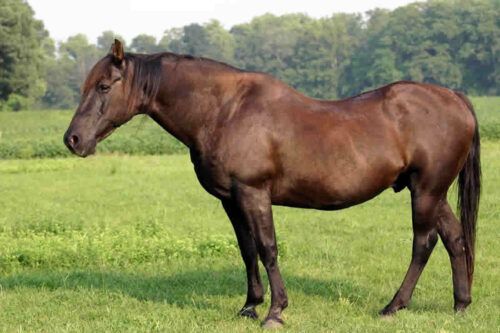
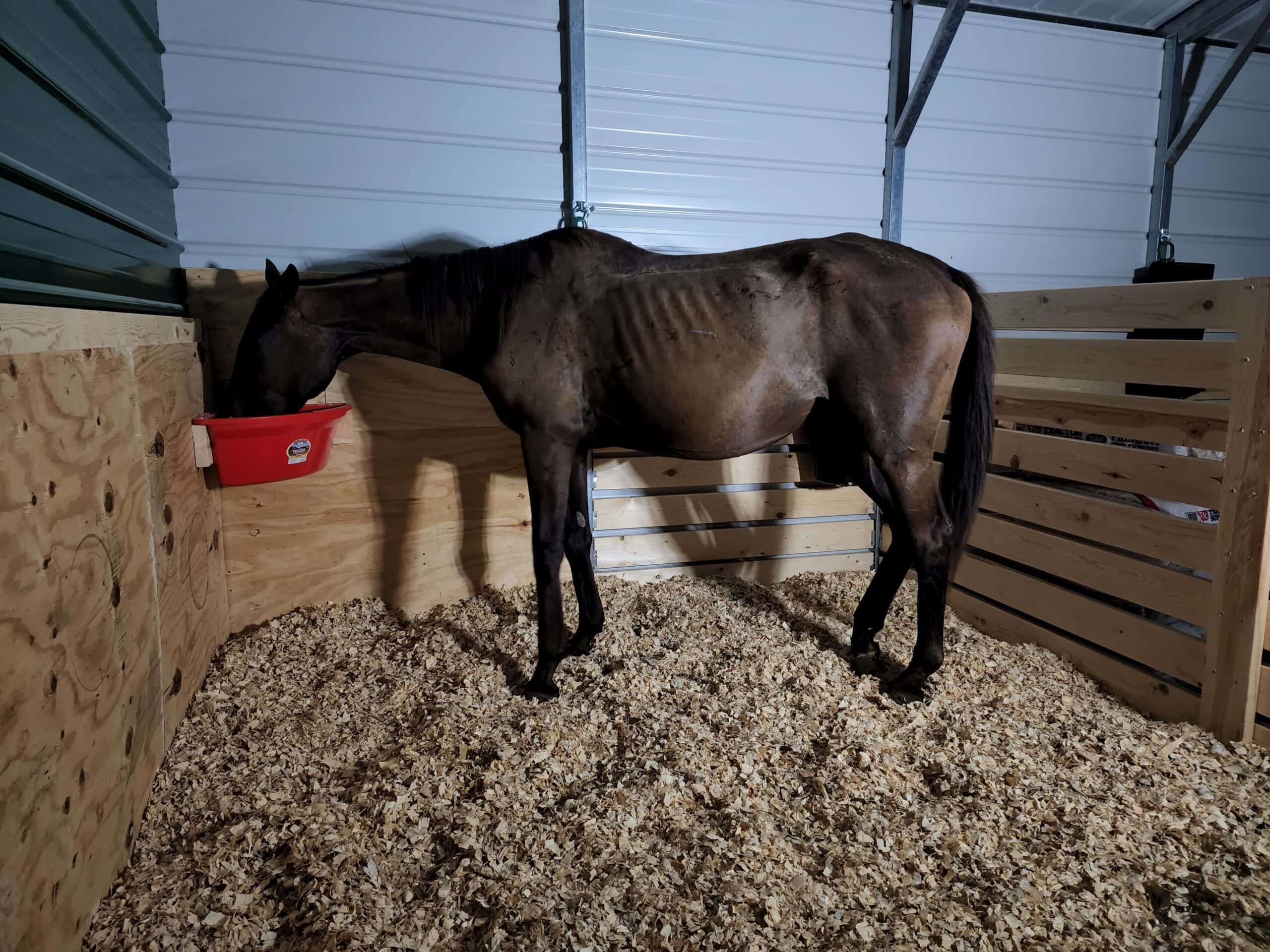
The following photos show Epona in August 2022, after she returned to her owner’s care:
 Epona, Aug 2022
 Epona, Aug 2022
Based on these photos, our nutritionists estimated that her body condition score was 2 on the 9-point Henneke scale.
Horse History
While preparing to bring Epona home, her owner temporarily boarded her at a full-care facility. Once home, the plan was to transition her onto a new diet aimed at stabilizing her weight and building topline muscle.
During her stay at the boarding facility, however, Epona experienced significant weight loss. Although she had always been a hard keeper, her poor body condition upon returning home raised immediate concern and required prompt dietary intervention.
Feeding Underweight Horses
The first step in managing a hard keeper is to identify any dietary, health, or environmental factors contributing to difficulty maintaining body weight. Some of the most common factors include: [1]
- Low caloric intake and/or lack of forage availability
- Poor forage quality
- Digestive disorders (e.g., ulcers, hindgut imbalances)
- Underlying medical conditions (e.g., metabolic disorders, dental issues, parasites)
- Herd dynamics (e.g., competition for food, stress)
- Environmental factors that increase caloric demand (e.g., cold weather, difficult terrain, high activity levels)
In cases of sudden weight loss, multiple factors may be at play. That’s why it’s important to work with a veterinarian and equine nutritionist to identify the underlying causes and develop a feeding plan that supports healthy weight gain.
Since horses are continuous grazers, increasing the quality or quantity of forage is often the most effective way to encourage weight gain. [2] Forages with higher energy density, such as alfalfa, can help boost calorie intake when grass hay intake is already maximized. [3][4]
Additionally, incorporating highly digestible fiber sources like beet pulp provides additional calories while promoting gut health. [5][6]
If calorie intake from forage is insufficient, additional energy-dense feeds may be necessary. Complete feeds provide calories from various sources, including sugar, starch, fat, and protein.
However, when selecting grain-based feeds, it is important to consider the impact of hydrolyzable carbohydrates (HCs; sugar + starch) on digestive health. Excessive HC intake can contribute to digestive disorders, potentially hindering weight gain rather than supporting it. [7][8][9]
In Epona’s case, a transition to an energy-dense diet with low hydrolyzable carbohydrates was recommended to support healthy weight gain while reducing the risk of digestive upset.
What's your top priority with your horse's health?

Enter your email to receive your store credit
Topline Health
Building and maintaining a strong topline is a common goal for horse owners. However, many horses struggle to develop or retain muscle along the neck, back, and hindquarters, even with consistent work.
For hard keepers, maintaining topline muscle is especially difficult because available calories are often used to support weight maintenance rather than muscle development. [10]
When calorie intake is not sufficient to meet both energy demands and muscle-building requirements, horses may struggle to maintain muscle mass, leading to a weak or underdeveloped topline.
Factors such as poor digestion, insufficient protein intake, limited exercise, and vitamin or mineral deficiencies can also inhibit topline development. [11][12][13]
In addition to adequate energy and high-quality protein, horses need a balanced diet that supplies the essential nutrients for muscle growth and maintenance. These include: [14][15][16][17]
- Amino acids: The building blocks of protein required for muscle repair, growth, and maintenance. The most critical are the limiting amino acids lysine, methionine, and threonine.
- Trace minerals: Zinc, copper, manganese, and selenium support muscle function, collagen synthesis, and antioxidant defenses, protecting muscle cells and connective tissues.
- Vitamin E: A key antioxidant that helps prevent oxidative stress and free radical damage in muscle tissue.
- Calcium and magnesium: Essential minerals for proper muscle contraction, relaxation, and overall neuromuscular health.
Topline issues can be linked to digestive dysfunction, because poor gut health reduces the absorption of nutrients needed for muscle development.
In Epona’s case, it was essential that her diet both supplied the nutrients required for muscle growth and supported optimal digestive function.
Digestive Health
While digestive health was not an initial concern for Epona, it became important to address potential issues that could have impacted her weight loss.
Weight loss can occur due to digestive issues, and compromised digestive health can reduce the ability to absorb and utilize nutrients effectively. Conditions such as gastric ulcers are often associated with pain and reduced appetite that affect weight maintenance. [18][19][20]
Although digestive issues were not formally diagnosed in Epona’s case, a digestive support supplement had previously been recommended to help maintain gut function and promote healthy weight gain.
Initial Diet:
At the time of the nutrition consultation, Epona’s daily ration consisted of:
- Free-choice access to pasture and hay
- 8 lbs of Buckeye Nutrition Safe ‘N Easy™ Performance
- Gut X
- A feed-through insect repellent
Overall, Epona’s diet appeared to provide adequate energy and protein to support weight maintenance, based on regional averages for hay and pasture. It was sufficient in most vitamins and minerals, with the exception of sodium, iodine, and B vitamins.
The estimated hydrolyzable carbohydrate (sugar and starch) content was 11% on a dry matter basis.

Intervention
As part of the consultation, an updated diet plan was proposed to address the specific concerns of the horse.
The primary goals of the diet intervention were to:
- Promote weight gain
- Support topline muscling
- Improve digestive health
Table 1. Summary of Diet Intervention
| Horse Issue | Nutrition Goal | Intervention | Notes |
|---|---|---|---|
| Topline Muscle Health | Increase protein and meet micronutrient requirements | Add alfalfa and Omneity® Premix | Increase intake of limiting amino acids (lysine, methionine, and threonine), along with vitamins and minerals that aid muscle development |
| Underweight | Increase calorie intake | Add alfalfa and w-3 Oil | Supports weight gain by providing calories from fat, fiber, and protein |
| Ongoing Weight Issues | Reduce hydrolyzable carbohydrate (HC) intake | Reduced grain and added alfalfa, beet pulp, timothy pellets, and oil | Decreasing HC intake supports digestive health and improves nutrient absorption to stabilize weight |
| Vitamin & Mineral Deficiencies | Balance the overall diet | Add Omneity® Premix and plain salt | Provide organic trace minerals and vitamin E; meet sodium requirement to encourage hydration |
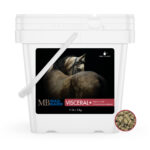
| Digestive Health | Support stomach function and nutrient utilization | Add Visceral+ | Targeted support for gastric and hindgut health |
Since Epona was significantly underweight, it was important to increase her calorie intake strategically while reducing the hydrolyzable carbohydrate (HC) content to support topline and digestive health.
Balancing the Diet
Horses consuming the manufacturer’s recommended amount of fortified grain generally meet their vitamin and mineral requirements.
However, many commercial grains are high in sugar and starch (HC), which can impair digestion and nutrient absorption. Poor digestive health can result in difficulty maintaining body condition and poor topline muscling.
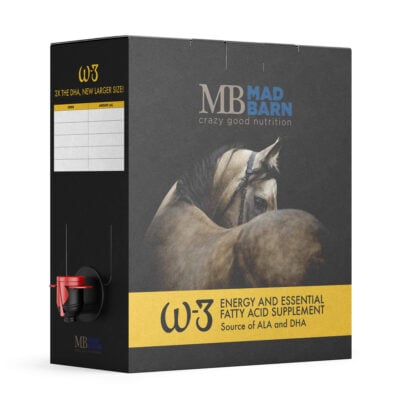
Increasing calorie intake while reducing HC intake can support both weight gain and digestive health. To achieve this, beet pulp, alfalfa hay, timothy pellets, and Mad Barn’s w-3 Oil were added to improve the calorie density of the diet with gut-friendly feeds.
In addition to being a rich source of cool calories, w-3 oil provides the omega-3 fatty acid DHA and natural vitamin E for anti-inflammatory and antioxidant support.
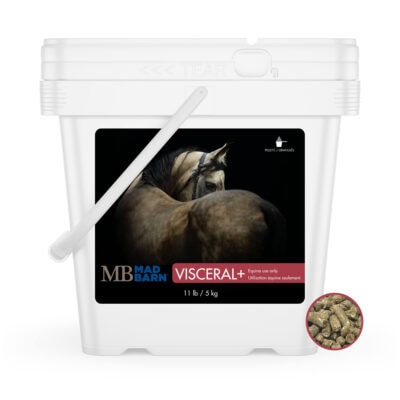
Feeding Mad Barn’s Visceral+ helps support Epona’s gastric and hindgut health, promoting nutrient absorption and overall digestive function.
Updated Diet
After the consultation, and once Epona returned to her owner’s care, the recommended dietary adjustments were implemented.
Epona’s updated daily diet consisted of:
- Free-choice alfalfa grass hay mix and pasture
- 2 lb of soaked Standlee Smart Beet Pellets
- 4 lb of soaked Standlee Timothy Pellets
- 6 lb of Triple Crown Senior
- 120 g of Omneity® Premix
- 2 tsp of salt
- 80 g of Visceral+
- 2 oz of w-3 Oil
Overall, the updated diet reduced Epona’s sugar and starch (HC) intake while increasing caloric density and fortifying protein, vitamin, and mineral content.
Outcome
The dietary adjustments led to a significant improvement in Epona’s body condition. Her owner noted improvements after just a couple of weeks on the updated diet.
“Mad Barn nutritionists and products literally saved my horse.... A year later she looked like a completely different horse.”
— Feedback From OwnerAccording to Epona’s owners, “We’re almost 2 years into this new diet and she’s the healthiest she’s ever been. Her coat is deeply dark and glossy, even at the end of summer, her hooves are so good my farrier is impressed and has asked what we feed. I give all credit to our nutritionist and Mad Barn.”
The following photo shows Epona’s progress over the course of the first month on the recommended diet:
 Epona, Sept 2022
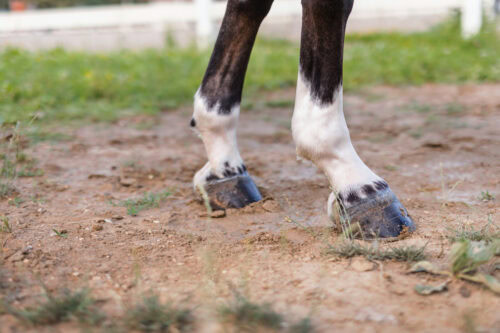
Two years later, her owner reports that Epona is the healthiest she has ever been and continues to maintain her weight. As a result of the changes, her topline, hoof, and coat health have also improved:
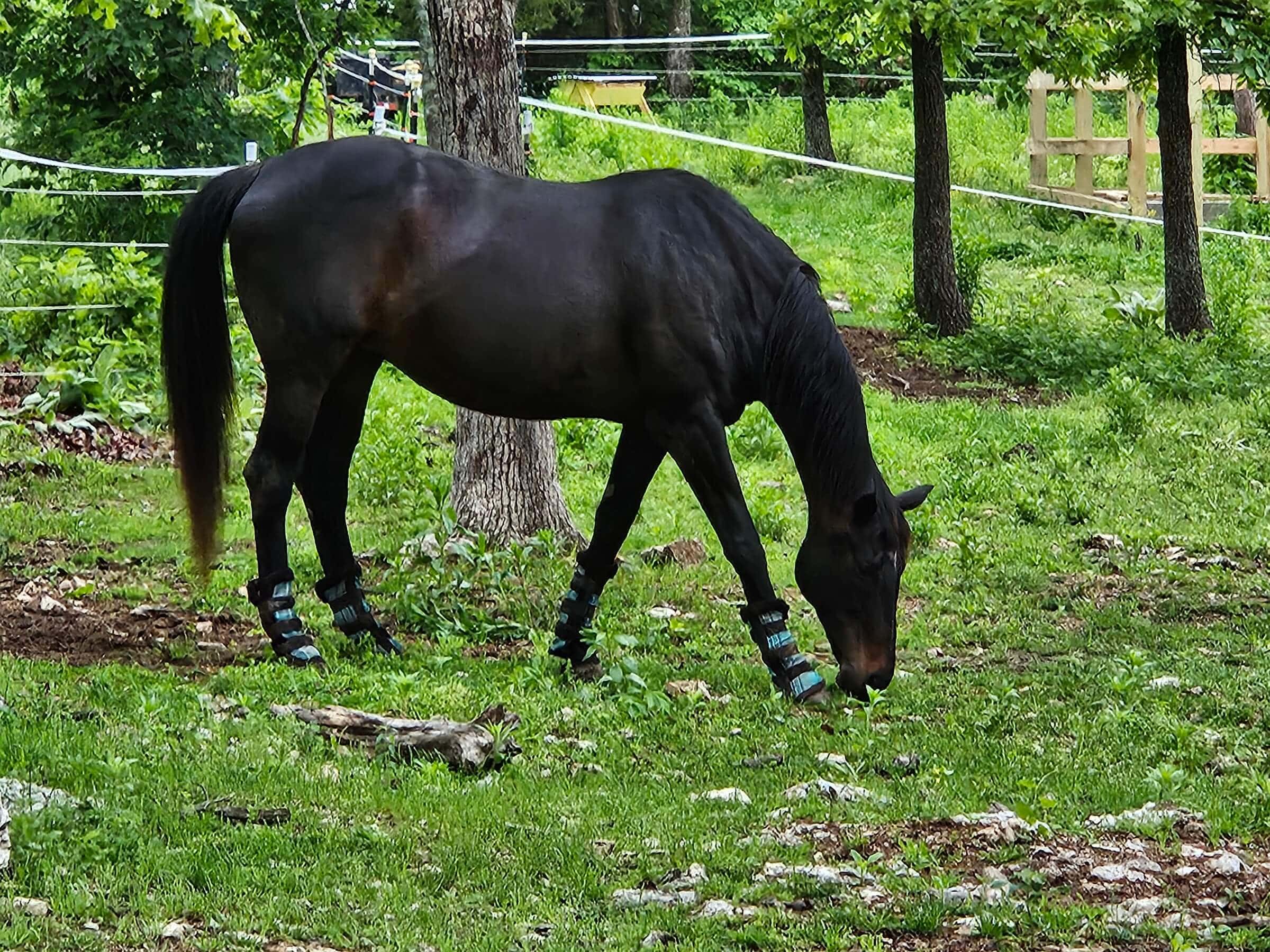 Epona, May 2024
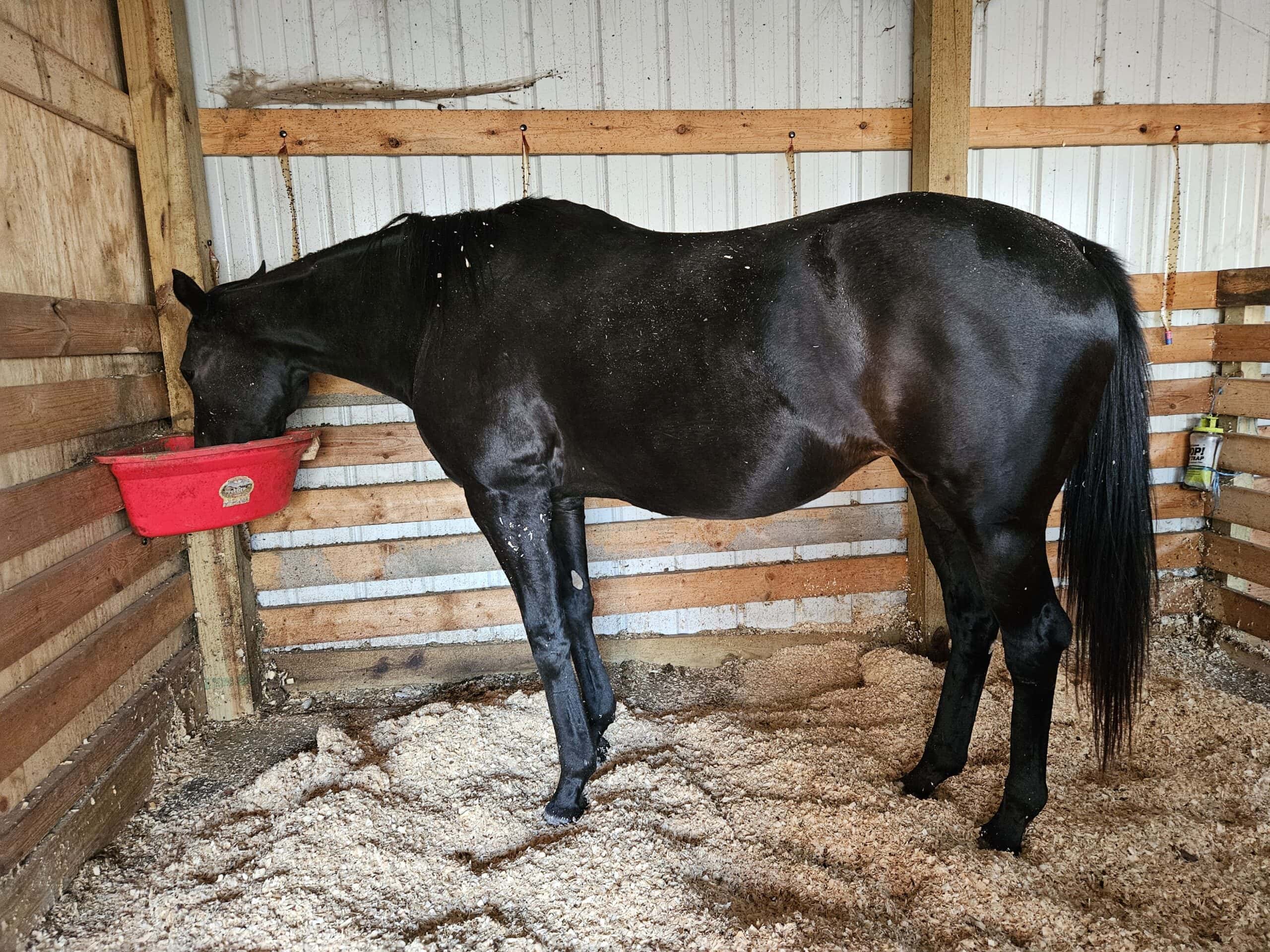 Epona, Oct 2024
Discussion
Maintaining a healthy body condition can be particularly challenging for breeds like Thoroughbreds, which are commonly classified as hard keepers.
In Epona’s case, both weight maintenance and topline development were ongoing concerns, which worsened after experiencing significant weight loss while outside her owner’s care.
To support her recovery, Epona’s dietary plan focused on a high-calorie, low-HC diet to promote weight gain without compromising digestive health.
High-quality forage sources were prioritized, along with targeted digestive support, to enhance nutrient absorption and overall gut function.
With these adjustments, Epona successfully regained a healthy body condition and continues to maintain her weight.
References
- Jarvis N. and McKenzie H.C. Nutritional Considerations When Dealing with an Underweight Adult or Senior Horse. Veterinary Clinics of North America: Equine Practice. 2021. View Summary
- Ermers C. et al. The Fibre Requirements of Horses and the Consequences and Causes of Failure to Meet Them. Animals. 2023. View Summary
- Crozier J.A. et al. Digestibility, Apparent Mineral Absorption, and Voluntary Intake by Horses Fed Alfalfa, Tall Fescue, and Caucasian Bluestem. Journal of Animal Science. 1997.
- National Research Council, Nutrient requirements of horses. 6. rev. ed. 3. printing. National Academies Press. 2009.
- Ochonski P. et al. Caecal Fermentation Characteristics of Commonly Used Feed Ingredients. Equine Veterinary Journal. 2020. View Summary
- Grimm P. et al. Partial Substitution of Cereals with Sugar Beet Pulp and Hindgut Health in Horses. Journal of Equine Veterinary Science. 2021.
- Raspa F. et al. A High-Starch vs. High-Fibre Diet: Effects on the Gut Environment of the Different Intestinal Compartments of the Horse Digestive Tract. BMC Vet Res. 2022.
- Raspa F. et al. Microbiota Characterization throughout the Digestive Tract of Horses Fed a High-Fiber vs. a High-Starch Diet. Front. Vet. Sci. 2024.
- Colombino E. et al. Gut Health of Horses: Effects of High Fibre vs High Starch Diet on Histological and Morphometrical Parameters. BMC Vet Res. 2022.
- Stull. C. Nutrition for Rehabilitating the Starved Horse. UC Davis Veterinary Medicine. 2012.
- Sykes B.W. et al. European College of Equine Internal Medicine Consensus Statement—Equine Gastric Ulcer Syndrome in Adult Horses. Veterinary Internal Medicine. 2015.
- Mok C.H. and Urschel K.L. — Invited Review — Amino Acid Requirements in Horses. Asian-Australas J Anim Sci. 2020.
- Castejon-Riber C. et al. Objectives, Principles, and Methods of Strength Training for Horses. Journal of Equine Veterinary Science. 2017.
- Latham C.M. et al. Complexed Trace Mineral Supplementation Alters Antioxidant Activities and Expression in Response to Trailer Stress in Yearling Horses in Training. Sci Rep. 2021. View Summary
- Chung E. et al. Potential Roles of Vitamin E in Age-Related Changes in Skeletal Muscle Health. Nutrition Research. 2018.
- Berchtold M.W. et al. Calcium Ion in Skeletal Muscle: Its Crucial Role for Muscle Function, Plasticity, and Disease. Physiological Reviews. 2000.
- Carvil P. and Cronin J. Magnesium and Implications on Muscle Function. Strength & Conditioning Journal. 2010.
- Nieto J.E. et al. Prevalence of Gastric Ulcers in Endurance Horses - a Preliminary Report. The Veterinary Journal. 2024. View Summary
- Murray M.J. Equine Model of Inducing Ulceration in Alimentary Squamous Epithelial Mucosa. Digestive Diseases and Sciences. 1994. View Summary
- Galinelli N. et al. High Intake of Sugars and Starch, Low Number of Meals and Low Roughage Intake Are Associated with Equine Gastric Ulcer Syndrome in a Belgian Cohort. Animal Physiology Nutrition. 2021.