Analyze Diet
the-horses-digestive-system
The Horse’s Digestive System: Anatomy, Physiology & Feeding Strategies Dr. Christine Latham, Ph.D. | July 24, 2026

The horse's digestive system is both large and sensitive. It has evolved over millennia to absorb nutrients from grazing pastures and meet the unique energy needs of a free-roaming, incredibly athletic animal. As the horse evolved on the Steppes of...
mosquito-borne-illness-in-horses
Mosquito-Borne Illness in Horses: Risk Factors, Transmission & Prevention Sara Rice, MSc. | July 24, 2026

As with other parasites that feed on blood, mosquitoes can transmit diseases between hosts. In horses, Eastern, Western, and Venezuelan Equine Encephalitis (EEE, WEE, and VEE, respectively) and West Nile Virus are mosquito-borne illnesses. Equine encephalitis and West Nile viruses...

lice-in-horses
Lice (Pediculosis) in Horses: Risk Factors, Transmission & Treatment Sara Rice, MSc. | July 24, 2026

Lice are an external parasite found on the hair or fur of mammalian hosts, including horses. A lice infestation is also referred to as pediculosis. There are different species of these small, wingless insects, and horses are usually infested with...

cataracts-in-horses
Cataracts in Horses: Symptoms, Causes & Treatment Dr. Madison Ricard, DVM, PhD, DACVP | July 24, 2026

Cataracts are cloudy areas within the horse's lens, the structure within the eye that directs light to the retina. [ref n="1"] The lens must be clear to allow light to pass through correctly, meaning that cataracts can cause blindness in...

glaucoma-in-horses
Glaucoma in Horses: Causes, Treatment & Prognosis Dr. Eleanor Kellon, VMD | July 24, 2026

Glaucoma refers to increased intraocular pressure, the fluid pressure within the eyeball that gives the eye its shape. [ref n="1"] Glaucoma in horses develops when there is an imbalance in fluid drainage at the front of the eye, leading to...

equine-herpesvirus-myeloencephalopathy
Equine Herpesvirus-1 Myeloencephalopathy (EHM) in Horses: The Importance of Biosecurity in Equestrian Sport Dr. Madison Ricard, DVM, PhD, DACVP | August 20, 2026

Equine herpesvirus-1 myeloencephalopathy (EHM) is a potentially fatal consequence of equine herpesvirus-1 (EHV-1) infection in horses. EHV-1 spreads through contact with an infected horse or surfaces contaminated with the virus. Affected horses develop incoordination, weakness, and paralysis 6-10 days after...

horse-manure-and-equine-health
What Does Your Horse’s Manure Say About Their Health? Casie Bazay, BS, NBCAAM | July 24, 2026

When you have horses, dealing with manure is simply a fact of life. After all, an average-sized horse poops anywhere from 4 to 13 times each day. Other than cleaning stalls and paddocks, horse owners may not pay too much...

degenerative-joint-disease-in-horses
Degenerative Joint Disease in Horses: Types, Development, Prevalence & Management Dr. Madison Ricard, DVM, PhD, DACVP | July 24, 2026

Degenerative joint disease (also called arthritis) refers to degeneration and loss of the articular cartilage, cartilage within a joint space that protects the bones on either side of a joint. As the articular cartilage degenerates, the bones contact each other,...

Equine degenerative myeloencephalopathy
Equine Degenerative Myeloencephalopathy (EDM): Causes, Diagnosis & Prevention Dr. Madison Ricard, DVM, PhD, DACVP | July 24, 2026

Equine degenerative myeloencephalopathy (EDM) is a degenerative neurologic disease affecting the brain and spinal cord in horses. [ref n="1"] The precise cause of EDM is unknown, but it may be related to a combination of vitamin E deficiency in the...

neurectomy-in-horses
Neurectomy in Horses: Uses, Procedures & Complications Dr. Eleanor Kellon, VMD | July 24, 2026

Neurectomy refers to the surgical cutting and removal of a nerve to prevent pain sensation. In horses, neurectomy is considered a salvage procedure, meaning it is a last resort only performed if no other treatments were effective. Veterinarians may recommend...

blister beetle poisoning in horses
Blister Beetle Poisoning (Cantharidin Toxicity) in Horses: Causes, Treatment & Prevention Lucia K Ryan, MA. | July 14, 2026

Blister beetles, also known as oil beetles, secrete a blistering agent called cantharidin as a natural defense against predators. Beetles in this family feed on flower blossoms, particularly in alfalfa plants, which makes them a common contaminant in alfalfa hay....

alsike-clover-poisoning-in-horses
Alsike Clover Poisoning in Horses: Big Liver Disease & Dew Poisoning Lucia K Ryan, MA. | July 14, 2026

Alsike clover toxicosis is a potentially life-threatening condition in horses caused by ingesting large quantities of the Trifolium hybridum plant, commonly referred to as Alsike clover. To date, neither the precise mechanism of action nor the specific toxin from Alsike...

snake-envenomation-in-horses
Venomous Snake Bites (Snake Envenomation) in Horses: Causes, Symptoms & Treatment Lucia K Ryan, MA. | July 24, 2026

Poisonous snake bites (snake envenomation) in horses, while not common, are a medical emergency. Without prompt veterinary attention, snake envenomation can result in severe injury and, in some cases, death. In North America, venomous snakes belong to either the Elapid...

Guttural pouch disease in horses
Guttural Pouch Disease in Horses: Causes, Treatment, & Prognosis Dr. Madison Ricard, DVM, PhD, DACVP | August 25, 2026

The guttural pouches are large, air-filled structures within the horse's skull, in the throatlatch region. These pouches can develop bacterial infections, fungal infections, or tympany, the excessive accumulation of air. Most diseases of the guttural pouches are not life-threatening. However,...

progresive-ethmoidal-hematomas-in-horses
Progressive Ethmoidal Hematomas (PEHs) in Horses: Causes, Treatments, & Surgical Complications Dr. Madison Ricard, DVM, PhD, DACVP | July 24, 2026

Progressive ethmoidal hematomas (PEHs) in horses are non-cancerous masses that develop from the ethmoidal labyrinth. This is a structure with a high concentration of blood vessels within the horse’s nasal [...]

Immune Mediated Myositis (IMM) and Nonexertional Rhabdomyolysis
Immune Mediated Myositis (IMM) in Horses: Causes, Symptoms & Treatment Dr. Madison Ricard, DVM, PhD, DACVP | July 24, 2026

Immune-mediated myositis (IMM) is a muscle disorder in horses where the immune system mistakenly attacks its own muscle fibers, resulting in severe muscle atrophy. IMM is one of the two disorders classified under Myosin Heavy Chain Myopathy (MYHM) in horses....

Flexion test in horses
Flexion Tests in Horses for Lameness & Pre-Purchase Evaluations: Uses & Limitations Dr. Madison Ricard, DVM, PhD, DACVP | July 24, 2026

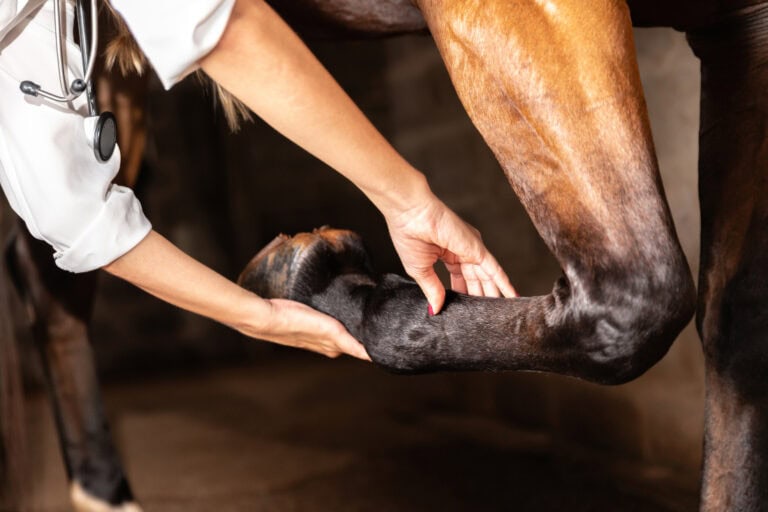
Flexion tests are a component of the diagnostic work-up for lameness in horses. These tests exacerbate pre-existing soreness or irritation in the limbs to make subtle lameness more obvious. Veterinarians most commonly use flexion tests during lameness examinations or pre-purchase...

Feeding Psyllium to Horses
Psyllium for Horses: Benefits, Risks & Feeding Guide Dr. Christine Latham, Ph.D. | July 24, 2026

Psyllium is a rich source of soluble fiber that can be incorporated into equine diets. Soluble fiber remains undigested by enzymes in the stomach (gastric juices), but passes into the hindgut where it may be partially digested by microbes. Psyllium...

Equine Underwater Treadmill
Equine Underwater Treadmills: Low-Impact Exercise for Performance & Rehabilitation Dr. Eleanor Kellon, VMD | August 20, 2026

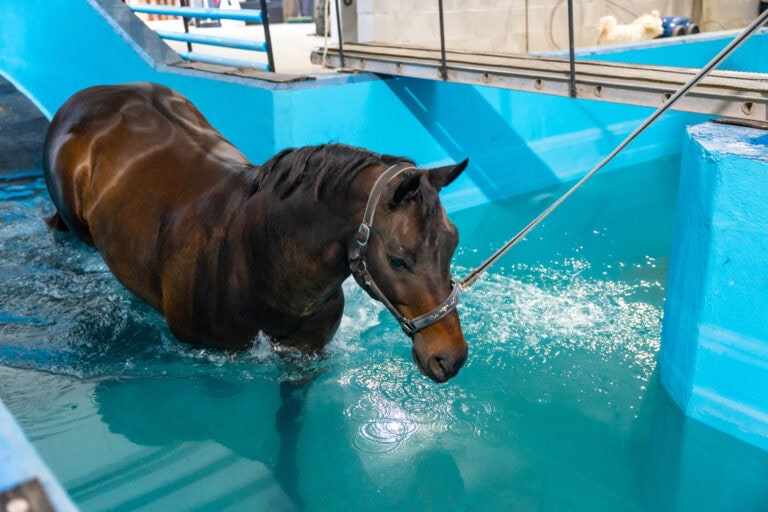
A water treadmill is a piece of exercise equipment used in equine training and rehabilitation. This type of treadmill is submerged in water so the horse is chest-deep while they are moving. Exercising in water is increasing in popularity as...

Oxalate Toxicity in Horses
Oxalate Toxicity in Horses: Causes, Signs, Prevention & Treatment Linaya Pot, MSc, PAS | July 23, 2026

Oxalates are naturally occurring compounds that bind calcium in the equine diet, preventing absorption of this mineral from the horse’s gut. When horses consume plants with high levels of these [...]

equine nebulizer
Equine Nebulizer Guide: Types, Uses, & Related Medications Dr. Eleanor Kellon, VMD | July 23, 2026

Respiratory (lung) function is critical to ensure equine performance and overall health. Equine asthma, pneumonia, and lung capacity during exercise are all common health concerns for riders and trainers. One strategy to treat respiratory inflammation is delivering medication directly into...

Overo Lethal White Syndrome in Horses
Overo Lethal White Syndrome (OLWS) in Horses: Causes, Signs & Genetic Testing Camryn McNeill, B.B.R.M. (Honours) | July 23, 2026

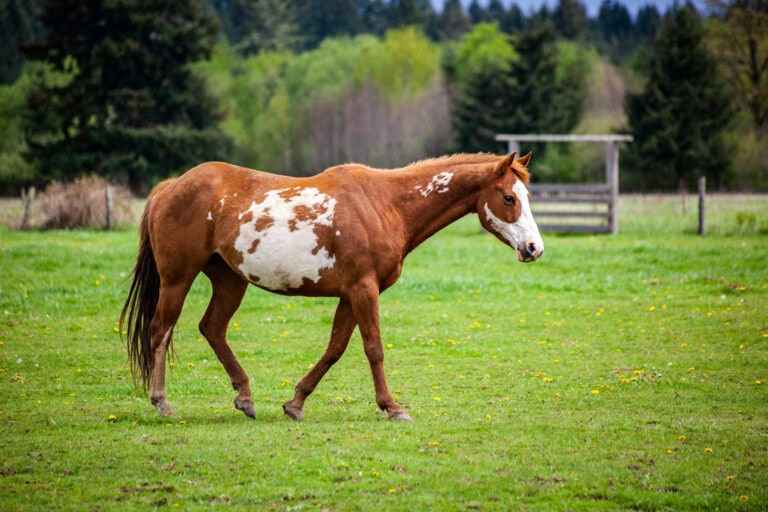
The overo pattern is one of three coat patterns in American Paint Horses (APHs) recognized by the American Paint Horse Association (APHA), along with Tobiano and Tovero. Among Overo variations, the frame overo subtype stands out for its distinctive markings....

wolf teeth in horses
Do Wolf Teeth in Horses Need to be Removed? Sara Rice, MSc. | July 23, 2026

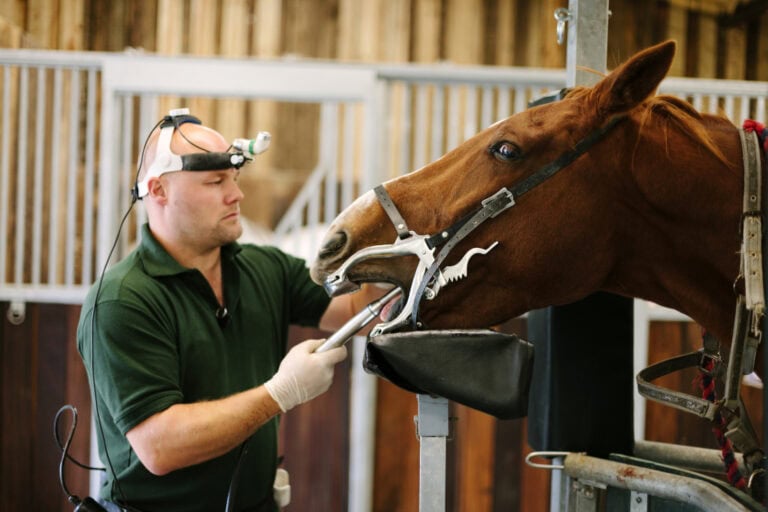
Wolf teeth in horses are short teeth sometimes found in the space between the front and cheek teeth on both sides of the upper jaw. Wolf teeth are normal, but have no particular function for horses. Wolf teeth have traditionally...

Platelet-Rich Plasma for Horses
Platelet-Rich Plasma (PRP) in Horses: Uses, Benefits & Side Effects Dr. Eleanor Kellon, VMD | July 23, 2026

Platelet-Rich Plasma (PRP) is a regenerative therapy used to treat horses with tendon and ligament injuries. PRP is a blood preparation where plasma, the water and protein component of blood containing no cells, is mixed with highly concentrated platelets and...

Bisphosphonates in Horses
Bisphosphonates in Horses: Benefits, Uses and Side Effects Dr. Eleanor Kellon, VMD | July 23, 2026

Bisphosphonates are drugs used to treat bone conditions in horses. The two main bisphosphonates used in horses are clodronate (OsPhos®) and tiludronate (Tildren®). These medications are used to treat conditions associated with increased bone turnover (removal of old bone). By...

pemf in horses
PEMF (Pulsed Electro Magnetic Therapy) in Horses: Benefits, Uses & Research Dr. Madison Ricard, DVM, PhD, DACVP | July 23, 2026

Pulsed electromagnetic field (PEMF) therapy is a treatment modality for horses where a machine produces pulses of electromagnetic fields directed at a specific part of the body. Research suggests that PEMF can improve bone healing rates, regenerate and protect cartilage...

steroid joint injection in horses
Corticosteroid Joint Injections in Horses: Uses, Side Effects, & Evidence Dr. Madison Ricard, DVM, PhD, DACVP | July 23, 2026

Corticosteroids are a class of medication used to treat inflammation and pain. Corticosteroid joint injections are a common treatment for arthritis in horses. When injected directly into a joint, corticosteroids produce an anti-inflammatory effect that reduces pain associated with arthritis...

stretching in horses1
Stretching in Horses: Benefits, Uses & Techniques Dr. Madison Ricard, DVM, PhD, DACVP | July 23, 2026

Wondering about the best stretching exercises for your horse? Stretching is the process of extending a muscle to its maximum extension to release muscle tightness, improve flexibility and reduce pain.

Summer Sores in Horses
Summer Sores (Habronema) in Horses: Causes, Treatment & Prevention Casie Bazay, BS, NBCAAM | July 23, 2026

Habronematidosis or habronemosis, more commonly known as summer sores, is a parasitic skin infection that can occur in horses. As the name implies, summer sores usually occur during the summer months.

Chiropractic Care for Horses
Chiropractic Care in Horses: Benefits of Joint Mobilization & Manipulation Dr. Madison Ricard, DVM, PhD, DACVP | August 20, 2026

Chiropractic care for horses is a form of manual therapy commonly used in veterinary treatment protocols for lameness. Chiropractic treatment focuses on joint mobilization and manipulation to reduce pain, improve symmetry, and increase range of motion.