Analyze Diet
sorghum-and-sudan-grass-poisoning-in-horses
Sorghum & Sudan Grass Poisoning in Horses (Cyanide Toxicity): Risk Factors, Toxicology & Prevention Lucia K Ryan, MA. | February 26, 2026

Cyanide toxicosis is a potentially fatal condition in horses which is caused by the ingestion of plants containing cyanogenic glycosides. Understanding cyanide toxicosis is essential for anyone involved in horse care. Over 3,000 plants worldwide are known to produce cyanogenic...
guide to equine pain assessment
Is My Horse In Pain? – Complete Guide to Equine Pain Assessment Camryn McNeill, B.B.R.M. | March 4, 2026

Pain in horses, like in other animals, is an unpleasant sensory and emotional experience associated with actual or potential tissue damage. It can result from various sources, including injuries, diseases, or surgical procedures. Recognizing signs of pain in horses is...

intussusception-in-horses
Intussusception in Horses: Risk Factors, Treatment & Prognosis Sara Rice, MSc. | February 12, 2026

Intussusception in horses describes a condition where a segment of the intestine folds inward on itself, like closing a telescope. This condition primarily affects younger horses, particularly foals, but is occasionally seen in mature horses. Intussusception can lead to severe...

conjunctivitis in horses
Conjunctivitis (Pink Eye) in Horses: Causes, Treatment & Prevention Camryn McNeill, B.B.R.M. | February 12, 2026

Conjunctivitis, also known as "pink eye", is an inflammation of the conjunctiva, the mucous membrane that covers the front of the eye and lines the inside of the eyelids. This condition is the most common acquired eye disease in animals....

locking-stifle-in-horses
Locking Stifle (Upward Fixation of the Patella) in Horses: Causes, Treatment & Prognosis Camryn McNeill, B.B.R.M. | February 12, 2026

The stifle is a complex joint in the horse's leg, comparable to the human knee. It comprises bones, ligaments, cartilage, and muscles that work together to enable movement and provide stability. This joint plays a crucial role in the overall...

dewormer-anthelminitic-resistance-in-horses
Parasite Dewormer (Anthelmintic) Resistance in Horses: Causes & Prevention Strategies Dr. Madison Ricard, DVM, PhD, DACVP | March 4, 2026

Anthelmintic (parasitic dewormer) resistance is one of the most pressing concerns in the world of equine health. In this phenomenon, internal parasites affecting horses are becoming resistant to the medications veterinarians use to treat parasitic infection. Without effective deworming medications,...

nitrate-and-nitrite-toxicity-in-horses
Nitrate & Nitrite Poisoning in Horses (Brown Blood Disease): Causes, Risk Factors & Prevention Lucia K Ryan, MA. | January 28, 2026

Nitrogen compounds, crucial for fertilizers, have revolutionized agriculture, ensuring food security but they pose environmental risks such as water pollution and algae blooms. Horses, while less susceptible than ruminants to nitrate poisoning due to their digestive system, can suffer severe...

hindlimb conformation faults
Common Hind Limb Conformation Faults in Horses – [Guide] Dr. Madison Ricard, DVM, PhD, DACVP | January 28, 2026

The conformation of a horse directly impacts their overall performance capacity, long-term soundness, and their potential in different disciplines of equestrian sport. The conformation of the hindlimbs is particularly important, as the hind legs provide the horse’s power, speed, and...

ryegrass-staggers-in-horses
Staggers in Horses: Ryegrass Contamination Poisoning – Toxicology, Treatment & Prevention Lucia K Ryan, MA. | March 4, 2026

Ryegrass is a popular forage choice worldwide, and is a nutritious source of protein and energy for horses and other grazing animals. Although both species of ryegrass are good sources of nutrition and are not toxic in and of themselves,...

30-most-common-equine-diseases
Top 30 Most Common Equine Diseases: [Guide] Dr. Madison Ricard, DVM, PhD, DACVP | April 7, 2026

Horse owners have a vested interest in their horse's health, as health conditions can directly impact their horse's wellbeing, performance, and longevity. Understanding common horse diseases is crucial for anyone involved in equine care, as early recognition of the symptoms...

capped-hock-in-horses
Capped Hock (Calcaneal Bursitis) in Horses: Risk Factors, Treatment & Prevention Sara Rice, MSc. | February 20, 2026

Capped hock refers to inflammation and swelling over the bony point of a horse's hock. The "cap" may be squishy or firm and is usually the result of trauma or repeated rubbing. Alongside the characteristic swelling, the horse may have...

foaming-at-the-mouth-in-horses
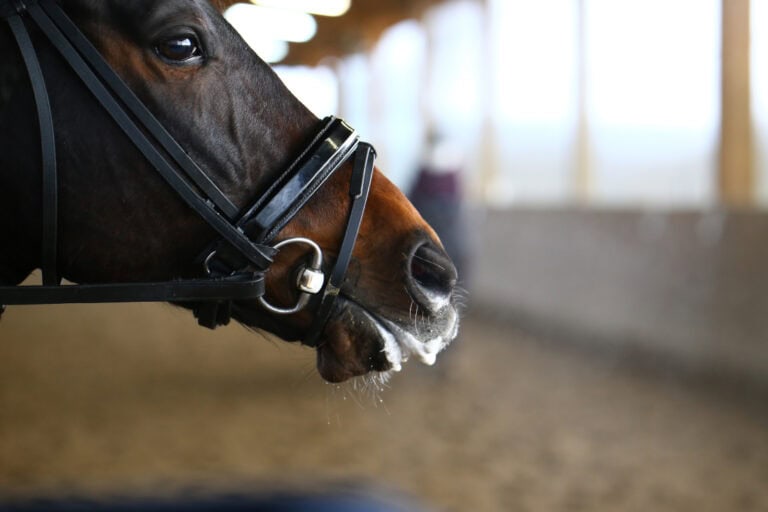
Foaming at the Mouth in Horses: Guide to Equine Hypersalivation (Ptyalism) Lucia K Ryan, MA. | February 20, 2026

Horses produce between five and ten gallons (20 to 40 litres) of saliva each day. Unlike many other animals, horses only produce saliva during mastication (chewing). Saliva is vital for moistening and lubricating food, facilitating easier swallowing, and neutralizing stomach...

equine blood types
Equine Blood Types: Biochemistry, Typing & Related Medical Conditions – [Guide] Dr. Madison Ricard, DVM, PhD, DACVP | March 4, 2026

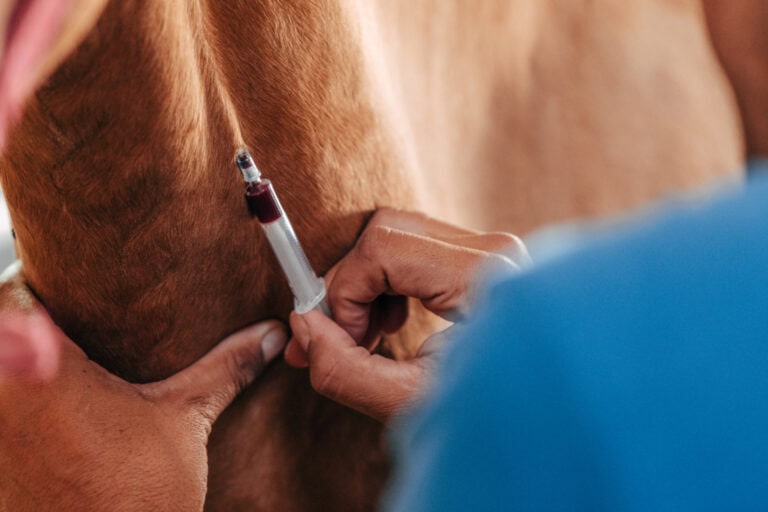
Red blood cells express different surface molecules (factors) depending on the animal's specific genetic code. Horses have over 30 major blood factors, compared to the 8 major blood factors in humans. Blood types are important because immune system recognizes these...

stallion-behavior
Stallion Behavior and Handling: From Management to Ground Manners Chloe Campbell, BSc. (Honours) | February 20, 2026

Keeping stallions happy, healthy, and appropriately managed requires an understanding of their unique behavior compared to mares and geldings. Stallions often exhibit instinctive behaviors shaped by evolutionary pressures and social dynamics in the wild. Contrary to their natural environment with...

fibrotic-myopathy-in-horses
Fibrotic Myopathy in Horses: Causes, Treatment & Prognosis Camryn McNeill, B.B.R.M. | February 14, 2026

Fibrotic myopathy is a rare condition in horses characterized by the development of fibrous (scar) tissue within the muscles, typically affecting the inner thigh muscles of one or both hindlimbs. Affected horses develop hindlimb stiffness, a distinctive hoof-slapping gait, mechanical,...

sidewinder-syndrome-in-horses
Sidewinder Syndrome (Crab Walking) in Horses: Causes, Risk Factors & Severity Sara Rice, MSc. | January 27, 2026

Sidewinder Syndrome, also known as sidewinder gait or crab walking, is one of the more perplexing and challenging equine health conditions for horse owners and veterinarians alike. This syndrome is characterized by a distinct sideways drift of the horse's trunk...

seizures-in-horses
Seizures & Epilepsy in Horses: Types, Management & Prognosis Camryn McNeill, B.B.R.M. | February 12, 2026

Seizures, while relatively rare in horses compared to dogs and humans, pose significant challenges for both horse owners and veterinarians. These neurological episodes, characterized by abnormal electrical activity in the brain, can manifest in various forms. During a seizure, a...

tyzzers-disease-in-foals
Tyzzer’s Disease (C. piliforme) in Foals: Transmission, Risk Factors & Prognosis Lucia K Ryan, MA. | February 26, 2026

Tyzzer's disease, while rare, is a highly fatal hepatic condition that can affect all foals, including those which are healthy and well-nourished. The disease is not believed to be contagious, but the presence of bacteria in a contaminated environment can...

wry-nose-in-horses
Wry Nose (Facial Deviation) in Horses: Anatomy, Risk Factors & Treatment Sara Rice, MSc. | February 12, 2026

Wry nose is a congenital condition in foals where the nose appears twisted or crooked due to malformations that develop during gestation. This condition involves significant changes in the shape and direction of the upper jaw, nasal bones, incisive bones,...

sesamoid-injuries-in-horses
Sesamoid Injuries in Horses: Types, Treatment & Prevention Camryn McNeill, B.B.R.M. | February 12, 2026

Sesamoid injuries are a common and often serious equine injury. The small sesamoid bones play a large role in reducing tension on the muscles and tendons of the body. The proximal sesamoid bones (PSBs), located in the fetlock joint, play...

common equine sports injuries - racehorses
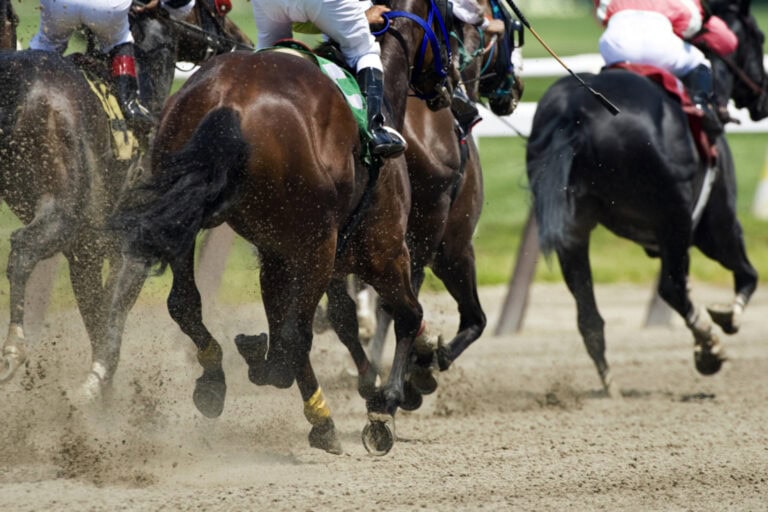
12 Most Common Injuries in Racehorses: Risk Factors, Treatment & Prevention Dr. Madison Ricard, DVM, PhD, DACVP | February 3, 2026

Horse racing is a thrilling sport, demonstrating the power and speed of equine athletes performing at their absolute best. From the raw speed and acceleration of Quarter Horses, to the impressive staying power of Thoroughbreds, to the jumping ability of...

parrot-mouth-in-horses
Parrot Mouth (Rostral Malocclusion) in Horses: Symptoms, Risk Factors & Treatment Sara Rice, MSc. | February 14, 2026

Parrot mouth is a common equine dental condition typically identified at birth or shortly after. It is characterized by a pronounced overbite where the upper front teeth protrude beyond the lower row of teeth, causing the upper lip to overlap...

equine-urinary-symptoms
What Your Horse’s Urine Is Telling You: [Urinary Symptom Guide] Camryn McNeill, B.B.R.M. | March 4, 2026

A properly functioning urinary system plays a vital role in maintaining the overall health and well-being of a horse. It acts as a filter, removing waste and toxins from the bloodstream and preventing harmful substances from accumulating in the body....

equine-nsaids-guide
NSAIDs for Horses: Bute vs. Fluxinin vs. Firocoxib Casie Bazay, BS, NBCAAM | March 4, 2026

Non-steroidal anti-inflammatories, or NSAIDs, for short, are a type of medication commonly administered to horses for a variety of conditions. Veterinarians most often prescribe NSAIDs for soft tissue and musculoskeletal injuries, as well as for abdominal inflammation and pain. [ref...

quittor-in-horses
Quittor (Collateral Hoof Cartilage Infection) in Horses: Risk Factors, Treatment & Prevention Sara Rice, MSc. | February 6, 2026

Hoof health is one of the pillars of overall horse health and well being. There are numerous conditions that can impact the horse's hooves, including quittor. Quittor is an infection in the collateral cartilage of the hoof often resulting from...

atypical-and-seasonal-pasture-myopathies-in-horses
Box Elder & Sycamore Poisoning (Atypical & Seasonal Pasture Myopathies) in Horses: Risk Factors, Symptoms & Prevention Lucia K Ryan, MA. | February 12, 2026

Atypical Myopathy (AM) and Seasonal Pasture Myopathy (SPM) are highly fatal muscle disorders in horses caused by the ingestion of seeds of the box elder or sycamore trees. Seeds of these species contain a compound called hypoglycin A that converts...

glanders-in-horses
Glanders (Farcy) in Horses: Transmission, Symptoms, & Prevention Camryn McNeill, B.B.R.M. | February 14, 2026

Glanders is one of the oldest diseases known to affect horses. It is a highly contagious and fatal disease that affects horses, donkeys, and mules, caused by the bacterium Burkholderia mallei. It poses a significant zoonotic threat, as it can...

equine serum hepatitis
Theiler’s Disease in Horses (Equine Serum Hepatitis): Causes, Treatment & Prognosis Dr. Madison Ricard, DVM, PhD, DACVP | February 12, 2026

Theiler's disease, also known as equine serum hepatitis, is a viral infection likely caused by equine parvovirus-hepatitis. Horses most commonly develop Theiler's disease after administration of an equine-origin biologic product, such as serum or blood. Theiler's disease causes rapid onset...

monensin poisoning in horses
Monensin Poisoning in Horses: Risk Factors, Symptoms & Prevention Lucia K Ryan, MA. | February 26, 2026

Monensin is a type of antibiotic commonly found in livestock and poultry feed that is highly toxic to horses. Monensin belongs to a medication class called ionophore antibiotics. These antibiotics are frequently used in feed as parasite control and to...

salmonella-poisoning-in-horses
Salmonella Infection in Horses: Risk Factors, Symptoms & Prevention Dr. Madison Ricard, DVM, PhD, DACVP | January 28, 2026

Salmonellosis refers to infection with Salmonella, a bacterium that primarily causes intestinal infections and diarrhea. Salmonella can affect numerous species, including horses and humans. Horses typically acquire the bacteria through the ingestion of contaminated feed or water. Common symptoms of...