English
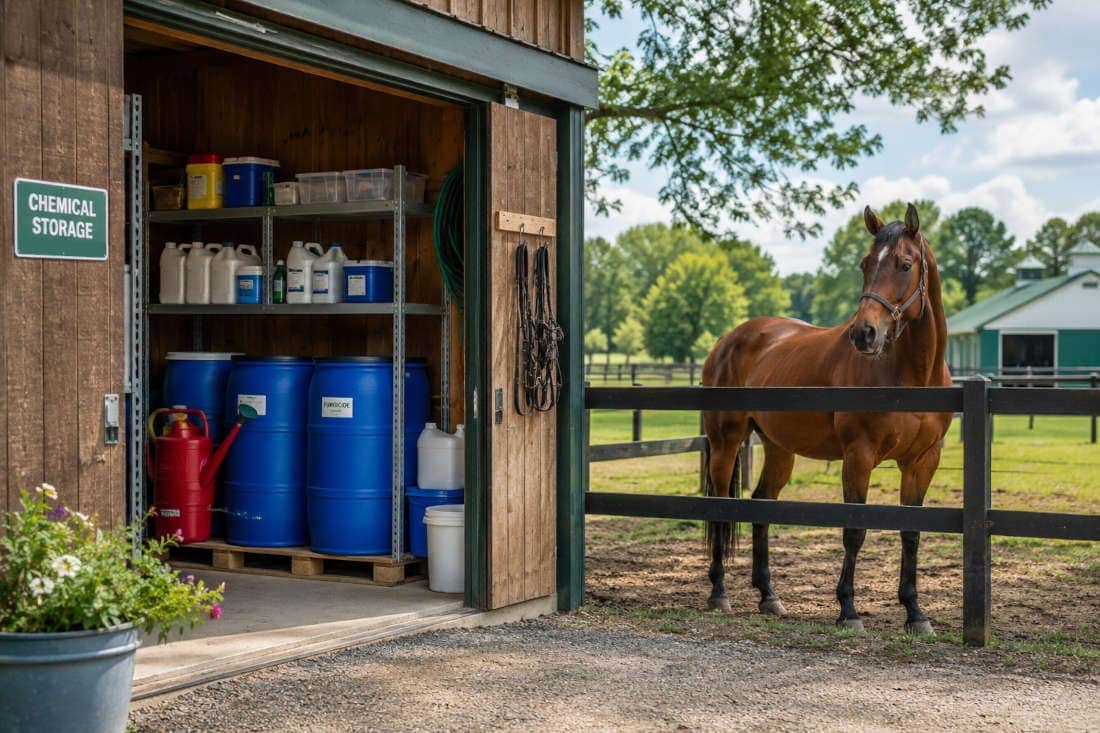
Chemical safety in barns is an important part of protecting horses and the people who work with them. Disinfectants, pesticides, fuels, medications, and other potentially hazardous products are all common in modern equine facilities, but routine use can make their risks easy to underestimate.
Improper storage, poor ventilation, unmarked containers, and lack of protective equipment can increase the risk of health concerns in barn workers. Health issues related to chemicals can affect horses, humans, and other livestock.
Barn chemicals can also contribute to fires, spills, or dangerous reactions when incompatible products are stored or mixed incorrectly.
The good news is, dangerous chemical exposures are preventable. By ensuring all staff and personnel are following good chemical handling practices, owners and barn managers can ensure a safe environment for everyone.
Keep reading to learn about common barn chemicals, their associated risks, safe storage, best handling practices, and regulatory considerations for equestrian facilities.
Chemical Hazards in Horse Barns
Modern horse barns rely on a wide range of chemical products for cleaning, pest control, equine care, and maintenance.
While necessary for effective operations, these substances can pose significant health risks when they are mishandled, improperly stored, or used without appropriate protective measures.
Understanding which chemicals are present in the barn and how they can affect people and horses is the first step toward a safer facility.
Cleaning Agents & Disinfectants
Disinfectants and detergents are used routinely to clean stalls, tack, grooming equipment, and veterinary tools.
These products may contain strong oxidizers, bleach, or quaternary ammonium compounds, all of which can irritate the skin, eyes, and respiratory tract if mishandled. [1]
Although they are important for disease control and equine biosecurity, improper dilution, poor ventilation, or failure to use appropriate personal protective equipment can significantly increase the risk of accidental exposure. [1]
Pest & Rodent Control
Rodents and insects can spread disease, contaminate feed, and damage electrical wiring and structures. To manage these hazards, many barns rely on pesticides and rodenticides. [2]
Fly sprays often contain pyrethroids or organophosphates, which are applied daily during warmer months. Repeated use, especially without gloves or respiratory protection, can lead to cumulative exposure and may contribute to skin irritation, dizziness, or respiratory symptoms. [2][3]
Rodenticides, can cause serious poisoning if ingested, with specific hazards depending on the active ingredient and formulation. Secondary poisoning is also a concern if pets, other livestock, or barn cats consume contaminated rodent carcasses. Open baits or poorly stored products increase the risk of accidental exposure. [2][3]
Veterinary Medications & Hormones
Topical and systemic medications are another chemical category frequently encountered in equine care. Injectable antibiotics, wound treatments, and dewormers may contain ingredients that irritate or sensitize human skin.
Hormone-based products, such as altrenogest (Regu-Mate®), a progestin used for reproductive management in mares, can disrupt the human endocrine system if absorbed.
Female staff members who are pregnant or may be pregnant should not handle altronogest products. [4]
Grooming & Farrier Products
Hoof hardeners, sealants, liniments, and detangling sprays often contain volatile and potentially harmful chemicals. Substances such as formaldehyde, toluene, acetone, menthol, and camphor are easily inhaled or absorbed through the skin.
While widely used in horse grooming and farrier care, these products should be treated with caution. Liniments can cause allergic reactions or respiratory irritation, especially in poorly ventilated areas.
Hoof hardeners may contain formaldehyde, volatile solvents, or other potentially hazardous ingredients, and repeated use without appropriate personal protective equipment (PPE) may increase the risk of both acute and long-term health effects. [5]
Maintenance Chemicals & Fuels
Chemicals used in barn construction and maintenance, including diesel, gasoline, oil, grease, adhesives, and paint thinners, pose some of the most serious hazards.
These substances are often highly flammable and can release fumes that affect the central nervous system, causing symptoms such as dizziness, headaches, or nausea.
Even in storage, these materials can release vapors or leak, degrading air quality and increasing fire risk. Proper storage in fire-safe, well-ventilated areas and the appropriate personal protective equipment (PPE) during use are essential. [6]
Table 1. Common barn chemicals and safety risks
| Barn chemical | Common examples | Main safety risks | Safer handling tips |
|---|---|---|---|
| Cleaning agents and disinfectants |
|
|
|
| Pest and rodent control products |
|
|
|
| Veterinary medications and hormones |
|
|
|
| Grooming and farrier products |
|
|
|
| Maintenance chemicals and fuels |
|
|
|
Chemical Toxicity
Not all chemical exposure causes immediate harm. However, repeated exposure to some chemicals can contribute to long-term health effects, even when individual exposures do not cause obvious acute symptoms. [7]
Acute Toxicity
Acute toxicity refers to the effects of a single high-level exposure. For example, inhaling a large volume of paint thinner fumes in an unventilated space may lead to nausea, dizziness, or respiratory distress.
Similarly, spilling bleach or a caustic cleaner on bare skin may result in burns or blistering. [7]
Chronic Toxicity
Chronic toxicity results from repeated low-level exposure over weeks, months, or years. Stable workers who regularly handle pesticides, fuels, solvents, or other hazardous products without appropriate protection may be at increased risk of dermatitis, respiratory irritation, or systemic toxicity, depending on the chemical and level of exposure.
These effects are often harder to diagnose because they develop gradually and may be mistaken for unrelated health issues. [7]
What's your top priority with your horse's health?

What's your top priority with your horse's health?
Routes of Exposure
Exposure route is another key consideration because the way a chemical enters the body can affect how quickly symptoms appear and which tissues are most affected.
In barns, exposure often occurs during routine tasks such as spraying horses, mixing disinfectants, applying hoof products, handling medications, cleaning spills, or working in poorly ventilated areas.
Possible exposure routes include: [7][8]
- Dermal contact: The most common route and often underestimated. Brief contact with products such as liniment may seem harmless, but some chemicals can be absorbed through the skin and enter the bloodstream.
- Inhalation: Common in barns where ventilation may be limited and staff may not wear respiratory protection. Aerosolized sprays, fuel vapors, and cleaning fumes can affect the lungs and nervous system.
- Ingestion: Less common, but may occur if food is stored near chemicals, drinks are kept in work areas, or hands are not washed after handling products.
- Injection: Possible when chemicals or contaminated material enter the body through a puncture wound. This may occur from accidental needle sticks while handling injectable medications, or from sharp objects such as nails, wire, glass, or metal fragments that are contaminated with chemical residues.
Chemical risks to humans range widely, from minor skin irritation to severe, life-threatening organ damage. Eye exposure is particularly concerning because many barn chemicals can damage the cornea or contribute to long-term vision problems.
Hormone-based products pose an additional risk to women and children, potentially interfering with reproductive health. [4]
Horses and other animals on the farm are also vulnerable to chemical exposure. Accidental ingestion of pesticides, licking spilled liquids from the legs, or walking through a recently disinfected area can all lead to toxicity. Good chemical safety protects both horses and humans.
The Risk of Routine Chemical Use
Many chemical substances are so common in barn life that their risks are often overlooked. Fly sprays, liniments, and hoof products may be applied dozens of times per day, yet casual handling without gloves, masks, or ventilation remains widespread.
This familiarity can lead to complacency, with barn workers underestimating the health effects of repeated low-dose exposure. Chronic contact with these substances, especially in warm, enclosed environments, can contribute to cumulative toxicity, allergic sensitization, or long-term illness. [1][3][5]
Even when they are not actively in use, stored chemicals can still pose hazards. Leaking containers, unlabeled bottles, or products left in grooming areas contribute to accidental contact and inhalation. [1][2][3]
Controlling the risk of chemical exposure requires secure storage, clear labeling, and staff training on best handling practices.
Storage Basics: Keeping People & Animals Safe
Proper storage is the cornerstone of chemical safety. Without clear organization, secure containment, and an appropriate location, even low-risk products can become hazardous.
Choosing & Organizing a Storage Area
Chemical storage areas should be well-ventilated, well-lit, and physically separated from feed rooms, tack storage, and animal living areas. Ideally, they should be located in a detached or fire-resistant structure, or in a room with fire suppression capabilities.
Dedicated cabinets or closets with lockable doors and ventilation grilles are usually sufficient in smaller barns. [9]
Shelving and containers should be non-reactive and easy to clean. Avoid storing chemicals on wooden shelves or in cardboard boxes because these materials can absorb spilled product.
Use heavy-duty plastic or metal shelves, with each product placed upright and clearly labeled. Heavier containers should be stored on lower shelves to reduce injury risk if they fall. [9]
Separating & Securing Chemicals
Separation of incompatible chemicals is a frequently overlooked detail in barns. Workers should make sure to never store bleach near ammonia because the two can create deadly chloramine gas.
Acids and bases should also be kept apart because their interaction can cause violent reactions. Color-coding or signage can help maintain clear chemical separation. [9]
Access control is another important safety measure. All chemical storage areas should be secured against unauthorized entry, especially by children, pets, or visitors.
Lockable cabinets and “NO ENTRY” signage help reinforce boundaries. In multi-use areas, such as grooming bays or wash stalls, chemical-filled containers should never be left unattended. [9]
Spill Prevention, Labeling & Inventory
To prevent spills, use containment trays or spill pallets under liquid containers. Regularly inspect for cracked lids, bulging cans, or leaking bottles, and dispose of compromised products according to local hazardous waste regulations.
Ensure all containers are labeled with product name, hazard classification, and expiration date. [10] Workers should never store homemade mixtures or transferred substances in unmarked containers.
Maintaining an up-to-date chemical inventory list allows staff to track what is onsite, avoid duplication, and identify expired or unused products for safe disposal. This record should be reviewed at least annually and updated whenever new products are introduced. [9][11]
Safe Handling Procedures
Even with ideal storage practices, chemical accidents remain possible without consistent and careful handling.
Barns are busy places, and shortcuts such as skipping gloves or transferring liquids into unmarked spray bottles are common. Safe handling requires not only the right tools but also the right habits.
Personal Protective Equipment
Personal protective equipment (PPE) is the first line of defense. The specific PPE required depends on the chemical, but workers should generally wear gloves when handling any concentrated solution, spray, or topical treatment.
Nitrile gloves are preferable to latex or cloth varieties because they offer better resistance to solvents and oils. For chemical applications that involve splashing or misting, such as disinfectant sprayers or liniment use, goggles or safety glasses are critical to prevent eye exposure. [12][13]
An apron or coverall can protect clothing and skin. When respiratory protection is required, an appropriately selected respirator with filters or cartridges suitable for the specific hazard should be used. [12][13]
Mixing & Transferring Chemicals
Workers must use extreme caution when mixing, diluting, and transferring chemicals. Always read the manufacturer’s instructions before use and follow specified dilution ratios. Never mix products unless the label explicitly permits it.
Combining incompatible substances can release dangerous gases, alter effectiveness, or create corrosive mixtures. Even when mixing permitted substances, it is best to use separate, clearly labeled containers and measuring tools. [12][13][14]
Ventilation & Air Quality
Ventilation is an important but often overlooked part of safe chemical handling. Barns frequently have poor airflow, especially in winter or during rainy seasons when doors and windows stay closed.
Whenever possible, workers should carry out chemical applications outdoors or in open-air settings. If indoor use is unavoidable, provide ventilation that removes contaminated air and introduces clean air and avoid standing directly in the path of fumes. Never apply sprays or paints in enclosed tack rooms or near feed and hay.
Maintaining practices to promote barn air quality helps support both human safety and equine respiratory health. [13]
One common misconception is that “natural” products are inherently safe. Essential oils, herbal sprays, and vinegar-based solutions may still cause skin irritation, respiratory sensitivity, or allergic reactions.
Natural products may also be reactive with other products. Plant-derived products should not be mixed freely with other products or used without gloves and ventilation. [15]
Staff Training & Safe Work Habits
Human error remains the most common cause of chemical-related injuries, which makes training essential. All staff, including seasonal help and working students, should receive basic instruction in chemical safety.
Posters or laminated cards near storage areas outlining PPE use, mixing instructions, and emergency numbers can serve as daily reminders. One-time training is not enough. Ongoing reinforcement is key to building safe learned habits. [16][17]
Employment Regulations & Chemical Safety
Understanding the legal framework of chemical safety is essential for both regulatory compliance and day-to-day risk management. In many countries, barns with employed staff must follow occupational safety regulations that cover the handling, labeling, and documentation of hazardous substances.
Regulatory compliance is more than a bureaucratic requirement. It provides the foundation for a safer, more professional barn environment while also helping protect barn owners and managers from employer liability.
Clear labeling, accessible documentation, staff training, and written safety procedures help demonstrate that reasonable steps were taken to identify hazards, reduce risk, and prepare workers to handle chemicals safely.
These practices can reduce accidents and improve the timing and quality of any necessary emergency response. They also create a documented safety framework that may be important if an exposure, spill, injury, or workplace complaint occurs. [18]
Safety Regulations in the United States
In the United States, the Occupational Safety and Health Administration (OSHA) requires workplaces, including equine facilities with hired staff, to comply with the Hazard Communication Standard.
This regulation requires employers to: [19][20]
- Maintain a list of hazardous chemicals onsite
- Provide access to Safety Data Sheets (SDS)
- Ensure proper labeling of chemicals, including secondary containers and mixtures
- Train workers on chemical risks and handling procedures
Safety Data Sheets are standardized documents that provide detailed information about individual products and chemicals. These documents are produced directly by product manufacturers and are publicly available online.
Each SDS contains sections on chemical composition, hazards, first-aid measures, storage guidelines, disposal instructions, and exposure controls. All staff should know where SDS documents are kept and be trained to read and interpret them. Ideally, SDS sheets should be stored in a waterproof binder in the tack room or office, with digital copies available as backup. [20]
Safety Regulations in Canada
Canadian employers must also maintain appropriate information and documentation for hazardous products used, handled, or stored in the workplace. WHMIS requirements include proper labeling, access to current Safety Data Sheets, and worker education and training on hazardous products. [21][22]
In Canada, the Workplace Hazardous Materials Information System (WHMIS) applies to barn workers. WHMIS is aligned with the Globally Harmonized System of Classification and Labeling of Chemicals (GHS), which uses standardized symbols and terminology to communicate risk. Even private barns without paid staff can benefit from understanding these label conventions. [21][22]
Label Literacy for Employees
Hazard pictograms are a key feature of GHS labels. Symbols such as a flame for flammable substances, a skull and crossbones for acute toxicity, or a corrosion symbol for corrosive substances offer quick visual cues about the type of danger a product presents.
Labels also include signal words such as “Danger” for more severe hazards or “Warning” for less severe hazards, along with precautionary statements that instruct users how to store, handle, and dispose of the product and empty containers. [6][22][23]
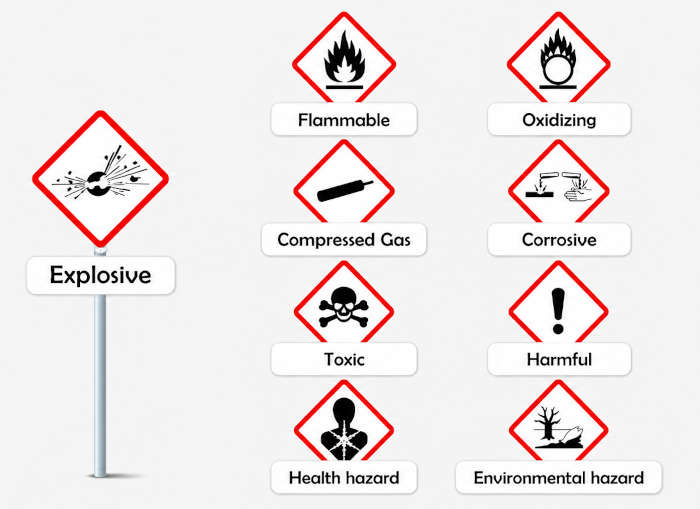
Understanding common label terminology is also crucial. Words such as “flammable,” “corrosive,” and “toxic” are not interchangeable and indicate specific handling and PPE requirements. Users should know how to read beyond marketing language and focus on hazard statements so they can make informed, safe decisions.
Safe Use of Chemicals in Barn Environments
Chemicals should be approached with the same care and planning as any other high-risk barn task. Whether disinfecting a stall, spraying a horse with fly repellent, or applying a hoof sealant, clear procedures before, during, and after use can prevent accidents and unintended exposures.
Before Using Any Chemical Product
Read both the label and the Safety Data Sheet to understand the hazards and how to mitigate them. Identify whether gloves, goggles, ventilation, or other protective measures are required, and ensure the appropriate resources are available. [13][14][18][19]
Prepare the work area by removing horses not involved in the procedure, along with tack, hay, feed, other animals, and unnecessary tools. Inform others nearby that chemicals are being applied and restrict access to the area during application. [13][14][18][19]
During Use
Avoid improvisation. Do not mix chemicals unless explicitly instructed by the manufacturer. Apply only the amount needed. Using more product than necessary does not increase effectiveness and often increases the risk of contamination. [1][13][14]
Keep the nozzle or container close to the treatment surface to avoid overspray, and avoid applying chemicals in windy conditions or from a height that allows drift.
Whenever possible, apply sprays directly to cloths or brushes to reduce airborne particles. This is especially important for products used during grooming, bathing, or topical care, where horses and handlers are often in close contact. [3][8][14]
After Use
Tightly seal all containers and return them to their proper storage area. Never leave chemicals sitting out in grooming areas, aisles, or wash stalls. Clean any applicators, measuring tools, or mixing containers immediately using appropriate methods. Do not clean them in feed buckets or water troughs. [9]
Wash hands and exposed skin thoroughly, even if gloves were worn. Wait the recommended time before reintroducing horses, equipment, or people into the treated area. [13][14]
These simple but consistent practices help ensure that chemical use supports health and hygiene without undermining them through carelessness.
Emergency Planning & Spill Response
No matter how prepared a barn may be, emergencies involving chemicals can and do happen. Having a clearly defined response plan in place, backed by training, signage, and supplies, is essential for protecting health and minimizing damage.
Every barn should have an emergency chemical protocol posted in key locations. This should include: [10][24][25][26]
- Contact information for local fire services
- Contact information for emergency medical responders
- Contact information for Poison Control
- Instructions for chemical spills
- Instructions for chemical exposures
- Instructions for fires
Staff should know who to notify first, how to isolate the area, and where to find emergency supplies. [10][24][25][26]
Spills
Workers should have access to spill kits anywhere chemicals are stored or frequently used. A well-stocked spill kit contains: [10][24]
- Absorbent materials such as kitty litter or spill pads
- Disposable gloves
- Protective eyewear
- Neutralizing agents for acids or bases if needed
- Heavy-duty disposal bags
Some barns also include disposable coveralls or masks for larger incidents. [10][24]
Staff must be trained to use all these supplies. For small spills, the area should be isolated and ventilated. Absorbent materials should be applied carefully, and contaminated waste should be sealed in labeled bags for disposal according to local hazardous waste regulations. [10][24]
Water should not be used for cleanup unless it is appropriate for the specific product because some chemicals react violently with water. If flushed into drains, chemicals can also cause wider contamination. [10][24]
Large spills may require evacuation. If fumes become overwhelming or the spill involves flammable substances near ignition sources, emergency services should be called immediately. Do not attempt to clean large chemical spills without proper respiratory protection and training. [10][24]
Fire
Fire is another major concern for barns managing hazardous chemicals. Many barn chemicals, such as liniments, aerosols, fuels, and solvents, are flammable or combustible.
These substances should be stored away from ignition sources such as heaters, welding tools, smoking areas, or equipment that produces sparks. [25][26]
Fire extinguishers for chemical fires, including Class B for flammable liquids and Class C for electrical equipment, are best placed near chemical storage areas and clearly marked. [26]
To reduce fire risk, use spark-proof lighting in storage rooms and never store oily rags in open containers, where spontaneous combustion can occur. Oily rags should be placed in a sealed metal bin and disposed of regularly. [25][26]

First Aid for Chemical Exposure
Accidents happen even in carefully managed barns, so every handler should be familiar with basic first aid. If a chemical contacts the skin, follow the product label or Safety Data Sheet for decontamination instructions. For many exposures, immediate flushing with clean water for at least 15 minutes is recommended. Contaminated clothing should be removed immediately.
For eye exposure, use a saline rinse or eyewash solution to flush thoroughly, and seek medical attention if discomfort persists. [16][17]
Workers who have inhaled strong fumes should be moved outside immediately to breathe fresh air. If symptoms such as dizziness, coughing, or disorientation persist, emergency services should be contacted. For ingestion, do not induce vomiting. Call Poison Control and follow their guidance. [17]
If a horse, dog, cat, or other barn animal has a known or suspected chemical exposure, move the animal away from the source if it is safe to do so. Prevent further licking, eating, or walking through the product, and keep the container or label available for review.
Do not attempt nasogastric intubation, give home remedies, administer laxatives, emetics, enemas or activated charcoal, or attempt to neutralize the chemical unless instructed by a veterinarian.
For skin or coat exposure, a veterinarian may recommend rinsing the animal with water or washing with a mild soap, depending on the product involved. For eye exposure, respiratory signs, collapse, tremors, seizures, burns, or ingestion of any pesticide, rodenticide, medication, fuel, solvent, or caustic product, contact a veterinarian immediately.
Building a Culture of Safety
Proactive planning, staff training, and consistent routines help make chemical safety easier to follow in day-to-day barn work. A culture of chemical safety does not require making every task complicated. Instead, it means building practical habits that help workers, volunteers, horses, and visitors avoid unnecessary exposure. [27]
Useful ways to build chemical safety into everyday barn management include:
- Review chemical storage regularly: Every few months, check the chemical inventory for expired products, damaged containers, poorly labeled mixtures, or products that are no longer needed. Confirm that spill kits are stocked, PPE is available, and signage remains visible. Address gaps as they are found and record any updates. [27]
- Refresh staff training: Staff and volunteers may benefit from periodic reminders, especially at the start of high-use seasons such as spring cleaning or summer fly control. Printed resources, short demonstration videos, and hands-on walkthroughs can be effective.
- Make instructions easy to find: Laminated “cheat sheets” near chemical areas can show correct PPE, emergency numbers, first-aid steps, and basic mixing or storage reminders. These resources are most useful when they are simple, visible, and specific to the products used in the barn.
- Keep safe supplies accessible: Gloves, eye protection, handwashing supplies, spill materials, and clearly labeled containers should be easy to locate. Safe habits are easier to follow when the right tools are close at hand.
- Lead by example: Wearing gloves, using eye protection, washing hands, or rinsing equipment after use should feel like a normal part of barn work rather than an excessive precaution. Managers can support this by modeling the same practices they expect from staff.
- Encourage early reporting: Staff should feel comfortable reporting a leaking bottle, an empty spill kit, a confusing label, or a damaged container. Clear communication makes it easier to correct problems quickly and helps everyone understand their role in maintaining a safer workspace.
- Protect visitors and riders: Chemical containers should not be left in open areas where non-staff might handle them accidentally. Boarders or clients should be informed when treatments are applied that may affect their horses or tack, such as stall disinfectants or heavy fly spray use in a grooming bay, along with the expected timeline for safe re-entry.
Chemical safety depends on clear routines, shared responsibility, and open communication. Barn owners, managers, workers, and volunteers all play a role in keeping hazardous products properly stored, labeled, handled, and reported when something seems unsafe.
When these practices become part of everyday barn management, they help reduce accidents, protect workers and riders, and create a healthier environment for both people and horses.
Frequently Asked Questions
Here are some frequently asked questions about chemical safety in barns:
Chemical hazards in a barn can come from disinfectants, pesticides, rodenticides, veterinary medications, hormones, grooming products, hoof treatments, fuels, solvents, adhesives, and paint thinners. These products can cause skin irritation, respiratory symptoms, eye injuries, chemical burns, neurological effects, fires, spills, or dangerous reactions if they are handled or stored incorrectly. Common risk factors include poor ventilation, unmarked containers, leaking bottles, improper dilution, and lack of personal protective equipment. Identifying what chemicals are onsite is the first step in reducing risk for workers, visitors, and horses.
Personal protective equipment for handling barn chemicals should match the product label and Safety Data Sheet. In many cases, this includes chemical-resistant gloves, safety goggles or glasses, long sleeves, and an apron or coverall to protect skin and clothing. A mask or respirator rated for chemical vapors may be needed when working with fumes, aerosols, sprays, or solvents in enclosed areas. Nitrile gloves are generally preferred over latex or cloth gloves because they provide better resistance to solvents and oils.
Chemical exposure can affect horses if they inhale fumes, ingest a product, lick residue from their skin, walk through a treated area too soon, or contact contaminated feed, water, bedding, or equipment. Possible concerns include respiratory irritation, skin irritation, toxicity, or accidental poisoning depending on the product and route of exposure. Chemicals should be stored away from stalls, feed rooms, haylofts, tack rooms, and areas where ventilation could carry vapors toward horses. Horses should also be kept out of treated areas until the recommended re-entry time has passed.
Chemicals should be stored in a well-ventilated, well-lit, secure area that is separate from feed, hay, tack, bedding, and animal areas. Products should be kept upright in their original labeled containers whenever possible, with heavier containers placed on lower shelves to reduce injury and spill risk. Lockable cabinets, containment trays, and regular inspections help prevent unauthorized access, leaks, and accidental exposure. Incompatible products, such as bleach and ammonia, must be stored separately because mixing them can release dangerous gases.
Chemicals on a farm should be disposed of according to the product label and local hazardous waste regulations. They should never be poured down drains, into water troughs, onto soil, or into manure piles unless the label specifically allows that disposal method. Expired, leaking, unlabeled, or unused products should be separated and taken to an approved hazardous waste collection site or handled through an appropriate pickup service. Empty containers may also require special disposal instructions, so staff should check the label before discarding them.
Labels and Safety Data Sheets are important for barn chemical safety because they explain the product's hazards, required precautions, first-aid steps, storage needs, and disposal instructions. Labels may include signal words such as "Danger" or "Warning," as well as hazard symbols for risks such as flammability, corrosion, or acute toxicity. Safety Data Sheets provide more detailed information that staff can use during routine handling or emergencies. All staff should know where these documents are kept and how to use them.
Before using a chemical product in the barn, read the label and Safety Data Sheet to understand the hazards, required protection, dilution instructions, and ventilation needs. Remove horses, feed, hay, tack, and unnecessary tools from the work area before application. Make sure the correct gloves, eye protection, respirator, or other protective equipment is available before opening the container. Others nearby should be told that chemicals are being used, and access to the area should be restricted during application.
Mixing barn chemicals is not safe unless the product label specifically says the products can be mixed. Some combinations can release dangerous gases, reduce effectiveness, or create corrosive mixtures. Bleach and ammonia are a particularly dangerous combination because they can produce toxic chloramine gas. Even when dilution or mixing is allowed, separate clearly labeled containers and measuring tools should be used.
Barns can reduce chemical exposure from sprays and fumes by using products outdoors or in open-air areas whenever possible. If a chemical must be used indoors, doors and windows should be opened and fans can help improve airflow, as long as fumes are not blown toward people, horses, feed, or stalls. Sprays should be applied close to the surface to reduce drift, and products can often be applied to a cloth or brush instead of sprayed into the air. Sprays, paints, and solvents should not be used in enclosed tack rooms or near hay and feed.
If a chemical spill happens in the barn, isolate the area, improve ventilation, and keep people and animals away from the spill. Small spills may be managed with a spill kit containing absorbent material, gloves, eye protection, disposal bags, and any neutralizing agents required for the product. Water should not be used unless the product instructions say it is appropriate, because some chemicals react with water or can spread contamination into drains. Large spills, strong fumes, flammable products, or spills near ignition sources require emergency services and should not be handled without proper training and respiratory protection.
First aid after chemical exposure depends on how the exposure occurred, but immediate action is important. .For skin exposure, follow the product label or Safety Data Sheet for decontamination instructions. For many chemical exposures, immediate flushing with clean water for at least 15 minutes is recommended, and contaminated clothing should be removed. For eye exposure, immediately flush with clean water or eyewash solution according to product-specific first-aid instructions. If you are unsure, call Poison Control or emergency services.
Natural barn products are not always safer than conventional chemicals. Essential oils, herbal sprays, vinegar-based solutions, and other plant-derived products can still irritate skin, trigger respiratory sensitivity, cause allergic reactions, or interact poorly with other products. These products should still be handled with gloves, ventilation, and label-based precautions. A product should not be considered risk-free simply because it is described as natural.
Barns can prevent chemical-related fires by storing flammable and combustible products away from heaters, welding equipment, smoking areas, sparks, and other ignition sources. Liniments, aerosols, fuels, solvents, and oily rags all require careful storage because they can increase fire risk. Fire extinguishers rated for flammable liquids and electrical equipment should be placed near chemical storage areas and clearly marked. Oily rags should be kept in sealed metal containers and disposed of regularly to reduce the risk of spontaneous combustion.
Barn chemical safety practices should be reviewed regularly, especially before high-use seasons such as spring cleaning or summer fly control. Chemical inventories should be checked for expired products, damaged containers, leaking lids, missing labels, and unnecessary duplicates. Spill kits, personal protective equipment, signage, emergency numbers, and eyewash supplies should also be inspected and restocked as needed. Ongoing training helps make safe handling a routine part of barn work rather than a one-time reminder.
Summary
Chemical safety in barns involves proper storage, labeling, handling, PPE, ventilation, emergency planning, and staff training. Safe routines reduce the risk of chemical exposure, fires, spills, and accidental toxicity in people and horses.
- Common barn chemicals include disinfectants, pesticides, medications, grooming products, fuels, and solvents.
- Workers may be exposed through skin contact, inhalation, ingestion, or eye contact.
- Hazardous products should be labeled, inventoried, secured, and stored away from animals and feed.
- PPE, ventilation, and careful mixing practices reduce the risk of chemical injury.
- Spill kits, fire planning, and first-aid protocols help barns respond quickly to emergencies.
References
- Protecting Workers Who Use Cleaning Chemicals. OSHA. 2012.
- Human Health Issues Related to Pesticides. United States Environmental Protection Agency. 2025.
- Isackson. B. and Irizarry. L. Rodenticide Toxicity. StatPearls. 2026.
- Lust. E. B. et al. Human Health Hazards of Veterinary Medications: Information for Emergency Departments. The Journal of Emergency Medicine. 2011.
- Soothing Liniment Side Effects: Common, Severe, Long Term. Drugs.com. 2026.
- Chemical Hazards and Toxic Substances - Overview. OSHA. 2026.
- Klaassen. C. D. Ed. Casarett and Doull's Toxicology: The Basic Science of Poisons. McGraw-Hill Education. 2013.
- How Workplace Chemicals Enter the Body. Canadian Centre for Occupational Health and Safety. 2025.
- Chemical Storage. University of Wisconsin-Madison.
- Spill/Emergency Planning. Iowa Environmental Health and Safety.
- Hazardous Chemical Inventory Reporting. United States Environmental Protection Agency. 2025.
- Personal Protective Equipment - Overview. OSHA.
- Chemicals - Safe Use and Handling. Health and Safety Executive. 2025.
- Ensuring the Safe Handling of Chemicals. WHO. 2022.
- Sindle. A. and Martin. K. Art of Prevention: Essential Oils - Natural Products Not Necessarily Safe. International Journal of Women's Dermatology. 2020.
- Emergency Showers and Eyewash Stations. Canadian Centre for Occupational Health and Safety. 2025.
- First Aid for Chemical Exposures. Canadian Centre for Occupational Health and Safety. 2025.
- How to Differentiate Hazardous vs Dangerous Materials in Industry. Canada Safety Training Centre.
- Hazard Communication. OSHA. 2026.
- Safety Data Sheet Search. Chemical Safety.
- Workplace Hazardous Materials Information System. Government of Canada. 2025.
- Globally Harmonized System of Classification and Labelling of Chemicals. Government of Canada. 2023.
- WHMIS - Hazard Classes and Categories. Canadian Centre for Occupational Health and Safety. 2025.
- Spill Response - Chemicals. Canadian Centre for Occupational Health and Safety. 2025.
- Preparing for a Barn Disaster. University of Minnesota Extension. 2024.
- Classes of Fires & Fire Extinguishers. UCLA Health.
- Hazardous Chemicals Audit. GCG.