English











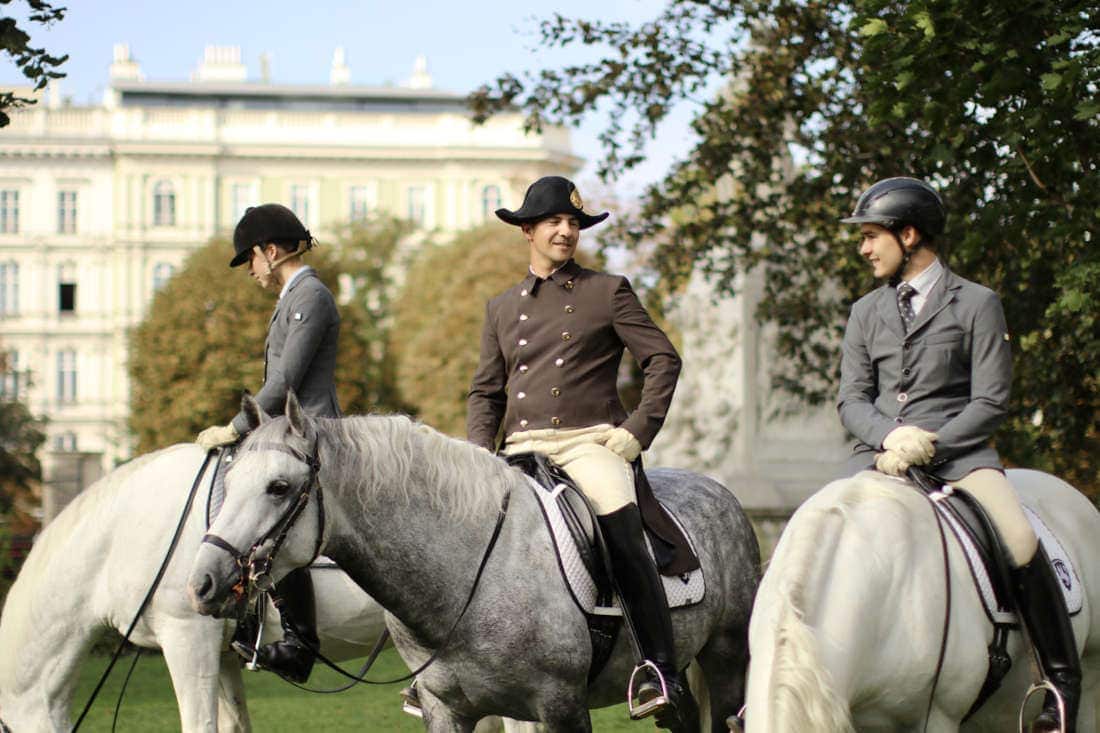
Classical dressage is a traditional method of training horses rooted in the principles of old masters and historical riding schools. At advanced levels, classical dressage resembles equestrian art, but its foundation lies in systematic gymnastic development designed to help the horse carry a rider with balance, strength, and longevity.
Often used to describe riding that prioritizes strong fundamentals over competitive success, classical dressage emphasizes progressive training that allows the horse to develop self-carriage, responsiveness, and harmony.
While classical methods originated centuries ago, many of their core principles are supported by modern research in equine biomechanics and welfare.
This guide explores the history of classical dressage, its foundational training principles, and the methods that continue to influence modern riding practice.
What Is Classical Dressage?
Classical dressage prioritizes a structured approach to training that develops the horse’s body and mind so the horse moves with balance, elasticity, and responsiveness while carrying a rider. [1]
Although beautiful to watch, classical dressage aims to create functional movement, not just pretty gaits. The ultimate goal is a horse that can work comfortably, stay sound, and remain willing over time.
While competitive dressage is one expression of that goal, classical training typically signals a deliberate commitment to correct basics, lightness, and harmony. Other hallmarks of classical dressage include an emphasis on rhythm, relaxation, straightness, elastic contact, and self-carriage.
Classical Dressage vs. Competitive Dressage
The modern competitive sport of dressage still shares similarities with its classical roots. While these training systems have slightly different approaches, both are grounded in principles intended to support soundness and long-term performance.
Similarities
The dressage pyramid of training referenced today by many modern dressage resources originated from the classical training system. [2] This scale outlines the progression from correct basics to collection, the state of balance that allows dressage horses to perform more advanced movements.
Careful development of this balance is necessary to compete successfully at the international level in modern dressage and to perform the high school of classical dressage. In addition to following a stepwise progression, the dressage training process should always prioritize horse welfare.
The principles of harmony in classical dressage also align with judging guidelines for modern dressage. The FEI judging manual describes the goal of dressage sport as developing the horse into a “happy athlete” through harmonious education. [3]
Differences
The major differences between classical and modern dressage largely revolve around the types of horses and competitive goals.
As a sport, success in competitive dressage is significantly influenced by the athletic ability of the horse. Modern dressage breeding has produced more sensitive, powerful, and expressive horses than those ridden in the old classical schools.
These big-moving warmbloods and sport horses dominate the top levels of competitive dressage. But advanced classical dressage is typically performed by Lipizzaners and Iberian horses.
While classical breeds often have a talent for high-level collection, they may lack the natural impulsion and elasticity that help warmbloods excel at the athletic demands of Grand Prix. The differences among these horses often require slightly different training approaches. [4]
However, your horse doesn’t have to be a fancy mover to benefit from classical principles. Correct dressage basics help every horse improve, regardless of breed or talent.
Comparison
Table 1. Comparison of Classical Dressage vs. Competitive Dressage
| Category | Classical Dressage | Competitive Dressage |
|---|---|---|
| Primary Aim | Long-term balance, collection, and harmony | Performance success in judged competition |
| Training Focus | Collection and self-carriage developed progressively | Elasticity, power, and test execution |
| Horse Type | Iberian breeds and Lipizzaners suited to high collection | Warmbloods bred for scope and expressive movement |
| Movement Style | Elevated, highly collected work | Big, ground-covering gaits with extension |
| Advanced Work | High school movements, airs above the ground | Grand Prix test movements (piaffe, passage, tempi changes) |
| Evaluation | Adherence to classical ideals and harmony | Numerical scoring under FEI guidelines |
| Foundation | Both follow a stepwise progression (dressage pyramid), prioritize balance, and emphasize horse welfare. | |
Classical Dressage History
Classical dressage did not begin as a competitive sport. It evolved as a practical system for developing a rideable, athletic horse. Masters first trained horses for war and court riding before the classical schools evolved to preserve and refine their proven principles.
Origins
Early written foundations of classical principles are often linked to Xenophon, whose ancient treatise On Horsemanship emphasizes thoughtful handling, careful horse selection, and training that improves the horse rather than relying on force. [5]
During the Renaissance, European riding academies developed systematic schooling methods for cavalry and court life, shaping many training theories that modern riders associate with classical dressage. [1]
These theories included progressive gymnastic training, refined aids, and the gradual development of collection. Over time, the term “classical dressage” became shorthand for training aligned with the foundational principles of progression, lightness, and longevity.
Relevance of Xenophon in Modern Dressage
Xenophon’s writing is frequently cited because it captures two ideas that remain central to classical horse training today:
- Good training should make the horse easier to ride and better in its body, not simply more controlled
- Humane, consistent handling improves learning and cooperation, reducing fear and resistance
Together, these principles reflect a philosophy of education rather than domination. Xenophon emphasized that training should enhance the horse’s natural balance, willingness, and physical well being, laying the groundwork for the progressive, gymnastic approach later formalized in European riding academies.
Modern scholarship has revisited Xenophon through a contemporary welfare lens, noting that his recommendations often align with what we now recognize as lower-stress handling, learning theory, and biomechanically informed training practices. [5]
Classical Dressage Schools
The classical dressage schools are institutions that maintain historical training traditions and public demonstrations of advanced work. Several well-known institutions promote classical training and share performances that showcase the high school movements.
The most famous classical dressage schools include:
- Spanish Riding School (Austria): The Spanish Riding School in Vienna is perhaps the most famous classical riding school in the world, known for its rich history and iconic Lipizzaners.
- Cadre Noir (France): Originating from the Saumur cavalry school established in 1815, the Cadre Noir is closely associated with the French equestrian tradition.
- Portuguese School of Equestrian Art (Portugal): The Portuguese School of Equestrian Art is a modern institution modeled on the tradition of court riding academies, preserving classical baroque horsemanship and historical presentation.
- Royal Andalusian School of Equestrian Art (Spain): This riding school is known for showcasing Andalusian horses and work rooted in classical dressage traditions through the institution’s training and public programs.
Practicing Classical Dressage in North America
While the most historic classical riding schools are based in Europe, riders in North America can study and apply classical principles through private instruction, clinics, and educational programs influenced by these traditions.
Many trainers incorporate elements of baroque horsemanship, in-hand work, and systematic gymnastic development into modern dressage programs.
Some riders pursue classical training through independent instructors who emphasize lightness, progressive strength building, and historical methods. Others integrate classical foundations into competitive dressage training, using traditional principles to support soundness and long-term development.
In this way, classical dressage functions less as a formal institution and more as a philosophy of training. Riders do not need to attend a European riding academy to adopt its principles; thoughtful instruction and systematic practice can bring classical methods into everyday riding environments.
Classical Training Principles
Classical dressage is best understood as a system of priorities and principles, with each training stage naturally building on the others.
1) Rhythm & Relaxation
A correct rhythm with a steady tempo is a foundation of classical training rooted in biomechanics.
Tension alters movement patterns, reduces the horse’s ability to swing through the back, and can lead to compensation. Classical training promotes rhythm and relaxation, allowing the horse to develop strength without bracing. [6]
2) Impulsion & Suppleness
Once rhythm and relaxation are dependable, classical training uses gymnastic exercises to improve impulsion and suppleness. In classical terms, impulsion is not rushing. It is energetic movement with elasticity and balance.
Energy should travel through a supple body rather than being lost in tension. This is why classical systems rely heavily on frequent transitions that teach the horse to respond, rebalance, and carry without accelerating.
3) Elastic Contact
Contact is often misunderstood as holding the horse in a fixed position. In classical dressage, contact is treated as a dynamic conversation between rider and horse rather than a restraint.
Correct contact involves the rider offering a steady, sympathetic feel, and the horse voluntarily seeking the hand while maintaining self-carriage. When contact is elastic, the horse can stretch and rebound through the topline, allowing the natural mechanics of gait to continue without interruption.
Biomechanical research measuring rein tension supports this approach. In one study, researchers found that rein tension fluctuates in a regular, cyclical pattern that corresponds to the natural head-and-neck movements of the horse during different gaits. [7]
Rather than showing constant, rigid pressure, these oscillations reflect a give-and-take rhythm that follows the horse’s motion.
These findings align with the classical ideal of elastic contact: rein tension should adjust in harmony with the horse’s biomechanics, allowing the rider’s hand to follow movement rather than impose a static frame. Elastic contact supports relaxation, encourages the horse to reach into the bit, and preserves freedom through the topline.
4) Straightness & Positioning
Horses are naturally asymmetrical. When a horse is crooked, the body cannot distribute forces evenly. Proper alignment, bending, and flexion are essential for dressage training.
Classical ideals typically describe a posture in which the horse is balanced with the poll elevated and the nose on or slightly in front of vertical. This ideal positioning results from a high level of self-carriage.
Depending on the horse’s conformation and stage of training, slightly different head and neck positions may better support balance and development. Young or developing horses may temporarily travel slightly behind the vertical as they build strength and coordination, but true self-carriage develops progressively through systematic training.
While some horses tend to move behind the vertical, it’s important to note research shows that deliberately enforced head-neck postures, especially prolonged hyperflexion, may compromise welfare. [8]
5) Collection & Advanced Work
Classical training is a systematic progression. Focusing on correct basics helps riders avoid asking for advanced movements before the horse has adequate strength and understanding.
Advanced movements require collection. This ultimate expression of balance increases carrying capacity behind and lifts the forehand, allowing horses to execute more challenging movements.
Movements such as pirouettes, piaffe, and passage are highly demanding. Biomechanical descriptions of collected trot, passage, and piaffe highlight how these gaits involve distinct mechanics and increased demands on the horse’s body. [9]
A classical approach treats advanced work as the natural extension of a strong foundation, not as a shortcut to competitive goals.
6) In-Hand Work & Long Lining
Many classical traditions use groundwork to improve clarity, strength, and communication before or alongside work under saddle.
By removing the rider’s weight, in-hand work and long lining allow the horse to focus on posture, coordination, and understanding the aids without additional physical demands.
These methods can help build foundational skills that later support collection and advanced movements.
In-hand sessions can reinforce:
- Straightness and alignment: Working from the ground allows the trainer to clearly observe the horse’s body position and correct crookedness, helping the horse distribute weight evenly and move in better balance.
- Responsiveness to light aids: In-hand exercises encourage the horse to respond promptly to subtle cues, refining communication and reducing the need for stronger aids under saddle.
- Balance without rider interference: Without the added variable of rider weight, the horse can develop postural strength and coordination more independently.
- Introduction of piaffe and advanced movements: Trainers often use in-hand work to introduce collected steps gradually, helping the horse understand the mechanics before performing them under saddle.
Long lining can develop:
- Rhythm and contact without rider weight: Long lines allow the handler to establish steady tempo and elastic contact while the horse moves freely through the back.
- Transitions and balance on curved lines: Circles, serpentines, and transitions can be practiced from the ground to improve coordination, straightness, and engagement.
- Early gymnastic patterns: Introducing structured exercises from the ground helps the horse build strength progressively while minimizing mental and physical strain.
Groundwork does not replace riding, but it can complement under-saddle training by clarifying communication and supporting progressive strength development. When integrated thoughtfully, in-hand work and long lining contribute to the systematic foundation that defines classical dressage.
Welfare Research & Classical Dressage
Classical dressage is often associated with horse welfare because it emphasizes progressive strengthening and harmonious partnership.
Using research to inform training practices can help further improve welfare outcomes.
Rein Tension
Research examining rein tension provides insight into how contact may influence horse comfort and biomechanics. A pilot study comparing unridden and ridden horses found that rein tension increased substantially under saddle compared to voluntary tension while in side reins.
Horses in side reins set in a dressage frame maintained a rein tension of approximately 1 kg (2 lb) in all gaits, compared to approximately 3 kg (6 lb) with a rider. [10] These findings suggest that rider influence can significantly alter the mechanical forces applied through the reins.
Additional rein tension measurements demonstrate that contact is not static, but fluctuates in rhythm with gait mechanics and rider technique. [7] Rein tension oscillates in a cyclical pattern corresponding to the horse’s natural head-and-neck movement during locomotion.
Together, these findings highlight the importance of maintaining dynamic, elastic contact rather than a fixed or restrictive hold. Classical dressage emphasizes lightness and responsiveness in the aids, encouraging the rider’s hand to follow the horse’s movement rather than impose a rigid frame.
By aligning contact with natural biomechanics, this approach supports comfort, relaxation, and clearer communication between horse and rider.
Poll Flexion
Head and neck position has been studied for its effects on respiratory function, stress indicators, and behavioral responses in ridden horses. One study evaluating poll flexion angles reported measurable changes in respiratory variables and behavior when horses were ridden for 40 minutes at 10° behind the vertical compared to 5° in front of the vertical. [11]
These findings suggest sustained positioning behind the vertical may influence physiological parameters during exercise.
Additional research comparing stress responses in dressage horses ridden in a loose frame, a competition frame, and a hyperflexed frame found significant increases in salivary cortisol following hyperflexion. [12] Elevated cortisol is commonly interpreted as a marker of physiological stress, indicating that extreme head–neck positions may have measurable welfare implications.
This research highlights the importance of avoiding prolonged or restrictive head–neck postures. Classical dressage principles emphasize progressive development of self-carriage and discourage forced hyperflexion, instead encouraging variation in frame and a posture that supports balance, airflow, and relaxation during work.
Rider Impact
The rider’s influence plays a central role in both learning outcomes and physical performance. Evidence-based dressage training emphasizes clear cues, appropriate reinforcement, and precise timing of pressure and release.
Studies examining equine learning indicate that inconsistent pressure, unclear signals, and poorly timed release can impair learning and increase behavioral signs of stress. [13]
Because horses rely on the timely removal of pressure to understand expectations, subtle and consistent aids are critical for maintaining relaxation and cooperation during training.
Biomechanical research further demonstrates that rider symmetry, balance, and posture significantly affect movement patterns. [14] Forces transmitted through the rider’s seat, hands, and saddle influence spinal motion, limb loading, and overall coordination.
These findings reinforce the importance of developing rider stability and independent aids to avoid inadvertently disrupting the horse’s balance.
Classical dressage places strong emphasis on refinement of the rider’s position and timing, aiming to minimize unnecessary interference while guiding the horse toward greater self-carriage. By improving clarity and reducing conflicting signals, this approach supports both effective learning and physical comfort under saddle.
Classical Dressage Horses
Classical dressage is often associated with specific breeds that were historically developed for collection and movement. Lipizzaners, Andalusians, Lusitanos, and other Iberian or baroque-type horses are frequently linked to classical traditions because of their natural ability to sit, elevate the forehand, and perform collected work.
In modern practice, however, classical dressage principles are not limited to any one breed. Warmblood sport horses, Thoroughbreds, ponies, and stock-type horses can all benefit from systematic gymnastic training that improves balance, straightness, and self-carriage.
While conformation and movement mechanics may influence how easily a horse develops collection, they do not determine whether classical methods are appropriate.
At its core, classical dressage is a training philosophy rather than a breed-specific discipline. With patient progression and attention to individual strengths and limitations, horses of many types can develop greater coordination, strength, and willingness through classical training.
Classical Dressage in Modern Practice
Classical dressage remains a foundational system of horsemanship built on progressive gymnastic development, lightness, and longevity. Rooted in historical riding traditions, its principles continue to influence modern training across disciplines.
By prioritizing correct basics, systematic strengthening, and harmonious communication, classical dressage aims to develop a horse that moves with balance, elasticity, and willingness under saddle.
When training remains patient, structured, and horse-centered, the result is not simply expressive movement, but a sound and confident partner capable of long-term performance.
In contemporary equestrian sport, these principles serve as a reminder that performance is built over time. Whether applied within competitive arenas or recreational riding, classical dressage emphasizes thoughtful progression, physical preparation, and respect for the horse’s mental and biomechanical limits.
Its continued relevance lies in its ability to balance tradition with modern understanding of training and welfare.
Frequently Asked Questions
Here are some frequently asked questions about classical dressage:
Classical and competitive dressage are similar, but not always the same. FEI materials describe dressage objectives as harmonious education, which overlaps with classical ideals. However, classical dressage is also used to describe specific traditions and training approaches beyond competitive sport.
Classical dressage and the training scale are related but distinct. The training scale is a framework used in modern dressage that guides progression through goals based on the classical principles of rhythm, relaxation, connection, impulsion, straightness, and collection. It was developed based on classical dressage principles.
Classical tradition typically regards behind-the-vertical positioning as undesirable when sustained for prolonged periods or forced through restrictive aids. However, some horses may take time to develop the strength needed to carry themselves in a classical frame.
Yes, any type of horse can learn classical dressage. Breeding can influence a horse's talent for dressage, but the classical principles can help riders improve the training and rideability of every horse.
Collection is a long-term physical adaptation. Timelines vary widely based on age, conformation, workload, and management. A classical approach prioritizes progressive strengthening over rushing to advanced demands.
In-hand work and long reining are not strictly required for classical dressage training, but they are commonly used to develop strength, improve balance, and refine communication without the added weight or influence of a rider. These groundwork methods help build collection, straightness, and self-carriage in a progressive horse training program.
Summary
Classical dressage is a systematic horse training approach rooted in historical principles that prioritize balance, self-carriage, and progressive gymnastic development. Modern biomechanics and welfare research increasingly support its emphasis on lightness, harmony, and correct basics.
- Classical dressage focuses on progressive training that builds strength, balance, and responsiveness in the horse
- This training system developed from historical riding schools and military horsemanship traditions
- The training scale reflects classical priorities such as rhythm, relaxation, straightness, and collection
- Self-carriage and elastic contact are central to developing a sustainable, functional frame
- Modern research on rein tension, poll flexion, and rider impact supports classical welfare principles
References
- West. D. Classical Dressage: A Systemic Analysis. Int J Syst Soc. 2015.
- Health. M. The New Pyramid of Training. USDF Connection. 2019.
- FEI Dressage Judging Manual. Fédération Equestre Internationale. 2025.
- Barrey. E. et al. Early evaluation of dressage ability in different breeds. Equine Vet J. 2010. View Summary
- Boot. M. and McGreevy. P. The X files: Xenophon re-examined through the lens of equitation science. J Vet Behav. 2013.
- Clayton. H. and Hobbs. S.J. The role of biomechanical analysis of horse and rider in equitation science. Appl Anim Behav Sci. 2017.
- Clayton. H. et al. Guidelines for the Measurement of Rein Tension in Equestrian Sport. Animals. 2021.
- Konig von Borstel. U. et al. Hyperflexing the horse's neck: a systematic review and meta-analysis. Scientific Reports. 2024. View Summary
- Clayton. H. and Hobbs. S. A Review of Biomechanical Gait Classification with Reference to Collected Trot, Passage and Piaffe in Dressage Horses. Animals. 2019. View Summary
- Piccolo. L. and Kienapfel. K. Voluntary Rein Tension in Horses When Moving Unridden in a Dressage Frame Compared with Ridden Tests of the Same Horses—A Pilot Study. Animals. 2019. View Summary
- Tilley. P. et al. Effects of a 15° Variation in Poll Flexion during Riding on the Respiratory Systems and Behaviour of High-Level Dressage and Show-Jumping Horses. Animals. 2023. View Summary