English
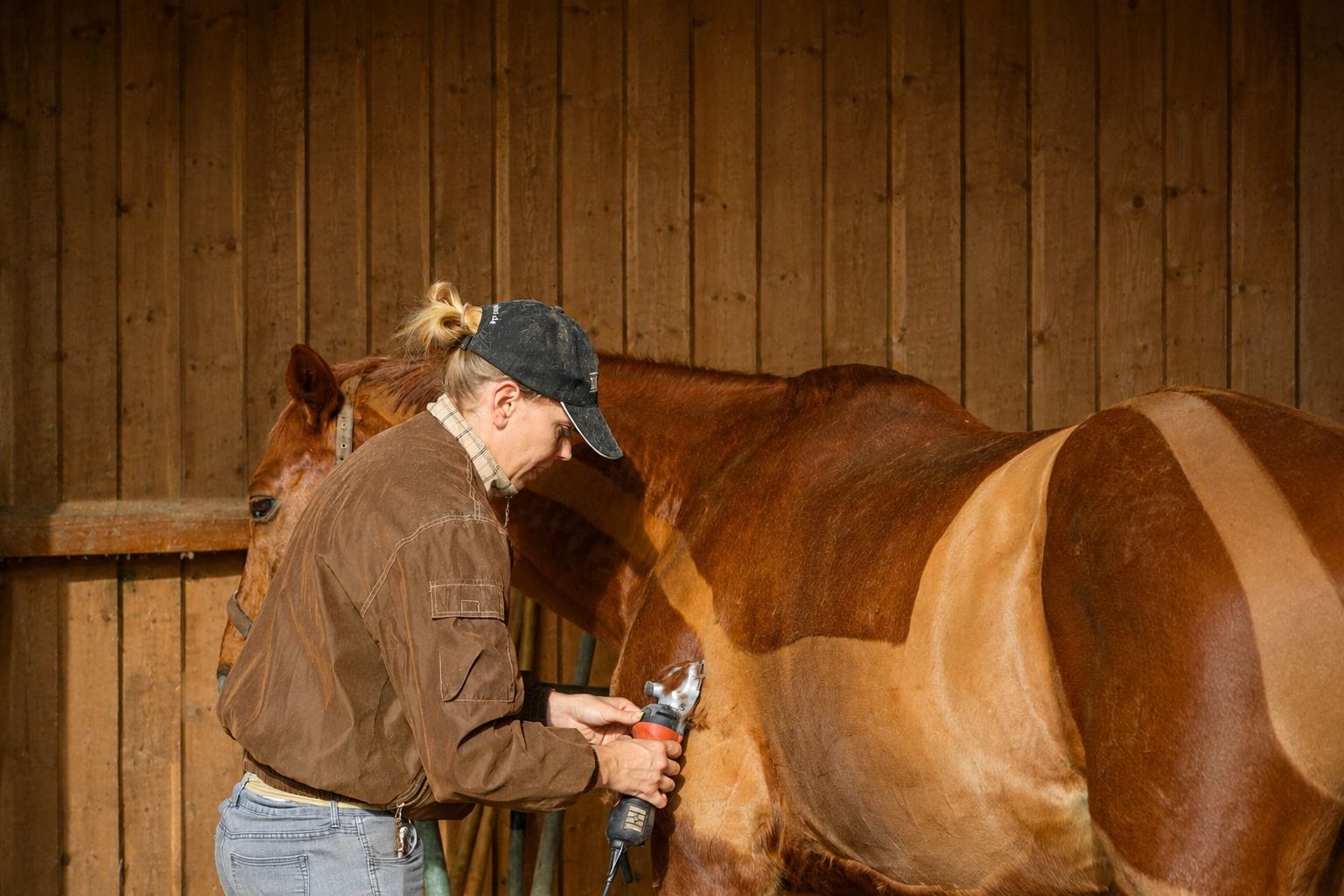
Horse clipping patterns determine which areas of a horse’s winter coat are removed and which are left intact to balance cooling needs with natural protection. [1][2]
Many clipping patterns target areas where horses sweat most during exercise while retaining hair where warmth or protection may still be beneficial. More extensive clips may suit horses in demanding work but require careful blanketing and management in cold weather. [1][3]
Choosing the right pattern depends on the horse’s workload, living environment, coat type, and access to shelter. Matching the clip to these factors can help a horse cool and dry more efficiently without removing more hair than necessary. [1][3]
Keep reading to learn how to choose the best clipping pattern for your horse and what research shows about the effects of clipping on thermoregulation.
What Are Horse Clipping Patterns?
A clipping pattern refers to the specific shape and boundary lines used when removing a horse’s winter coat. Patterns exist on a spectrum. Some remove very little hair, while others trim nearly the entire coat. [1][2]
Owners select a pattern based on how much natural insulation a horse still needs after clipping. A horse in light work that lives outdoors typically needs to retain more coat than a competition horse in full training. [1][3]
Veterinary reviews describe clipping as an effective tool for managing a working horse’s winter coat, provided the pattern matches the horse’s routine. [1]
Understanding the range of available patterns makes it easier to match the clip to the horse’s workload and environment.
What's your top priority with your horse's health?

What's your top priority with your horse's health?
Horse Clipping Pattern Guide
The common clipping patterns used by owners and professional clippers each remove hair from different areas. Several also have regional variations with slightly different names. [4][1]
Table 1. Horse clipping patterns by workload and coverage
| Clipping pattern | Hair removed | Best suited for | Protection retained | Blanketing needs |
|---|---|---|---|---|
| Full clip | Entire body, legs, and head | Horses in intense daily work | Almost no natural insulation | Dependable winter blanketing required |
| Hunter clip | Most of the body and head | Horses hunting or competing intensively | Leg hair and a saddle patch protect against cold, mud, scrapes, and tack rubs | Substantial blanketing typically required |
| Blanket clip | Neck, chest, belly, and flanks | Moderate to fairly intense work | Coat remains over the back, hindquarters, legs, and usually part of the face | Depends on weather, housing, and turnout |
| Chaser clip | Major sweating areas, extending higher up the neck than a blanket clip | Fast or sustained work | More protection from cold than a hunter clip | Usually required according to conditions |
| Trace clip | Underside of the neck, chest, belly, and varying portions of the sides | Light to sustained work, depending on clip height | Significant body coverage remains for warmth | Depends on clip height, weather, and turnout |
| Irish clip | Front of the neck and armpit area | Light to moderate work and considerable turnout | Most of the body coat remains intact | Often requires less blanketing than more extensive clips |
| Bib clip | Small area on the front of the neck and chest | Light work and horses living mostly outdoors | Nearly all natural coat coverage | Minimal clipping-related adjustment |
| Strip or belly clip | Underside of the body from the neck or girth area toward the flank | Light work with more sweating than a bib clip can manage | Most of the coat remains for warmth and weather protection | Depends on weather, housing, and turnout |
Full Clip
A full clip removes the horse’s coat from the body, legs, and head. Because this pattern removes nearly all of the insulation provided by the coat, a fully clipped horse needs a dependable blanketing routine throughout the winter. [1][3]
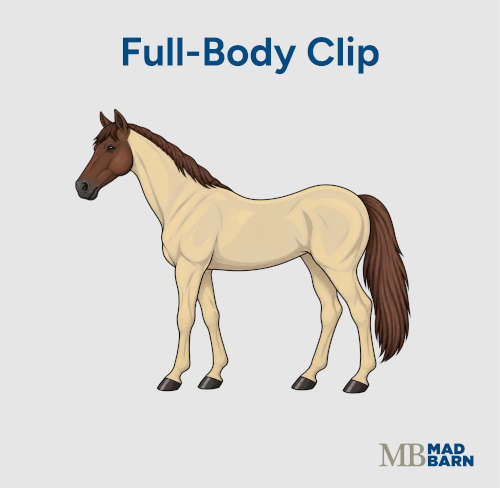
This pattern is best suited to horses in intense daily work because it supports rapid drying after exercise. [1][5]
Hunter Clip
The hunter clip removes nearly as much hair as the full clip but leaves the legs and a saddle patch on the back untouched. The retained leg hair offers some protection from mud, cold, and minor scrapes during turnout, while the saddle patch may help prevent rubbing under tack. [1][2]
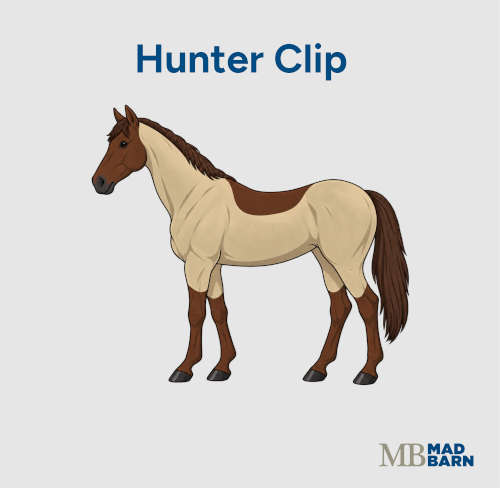
This pattern is common among horses that hunt or compete through the winter. [1][2]
Blanket Clip
The blanket clip takes its name from the blanket-shaped section of coat left over the back and hindquarters. The neck, chest, belly, and flanks are clipped, while the legs and part of the face are usually left untouched. [1][2]
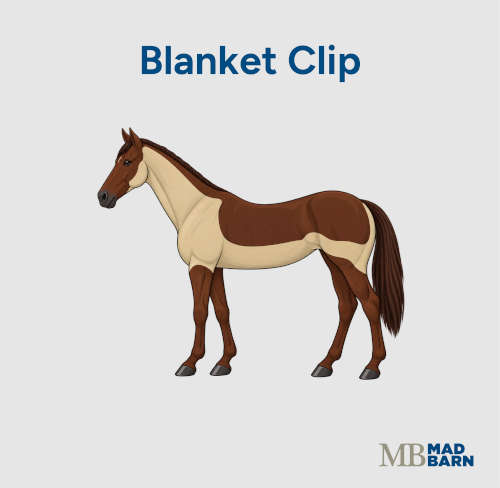
It works well for horses in moderate to fairly intense work that still need warmth over the topline in colder weather. [1][2]
Chaser Clip
The chaser clip falls between the blanket and hunter clips in terms of coverage. It removes hair from the same high-sweat areas as the blanket clip but often extends farther up the neck and may include part or all of the head. [1][2]
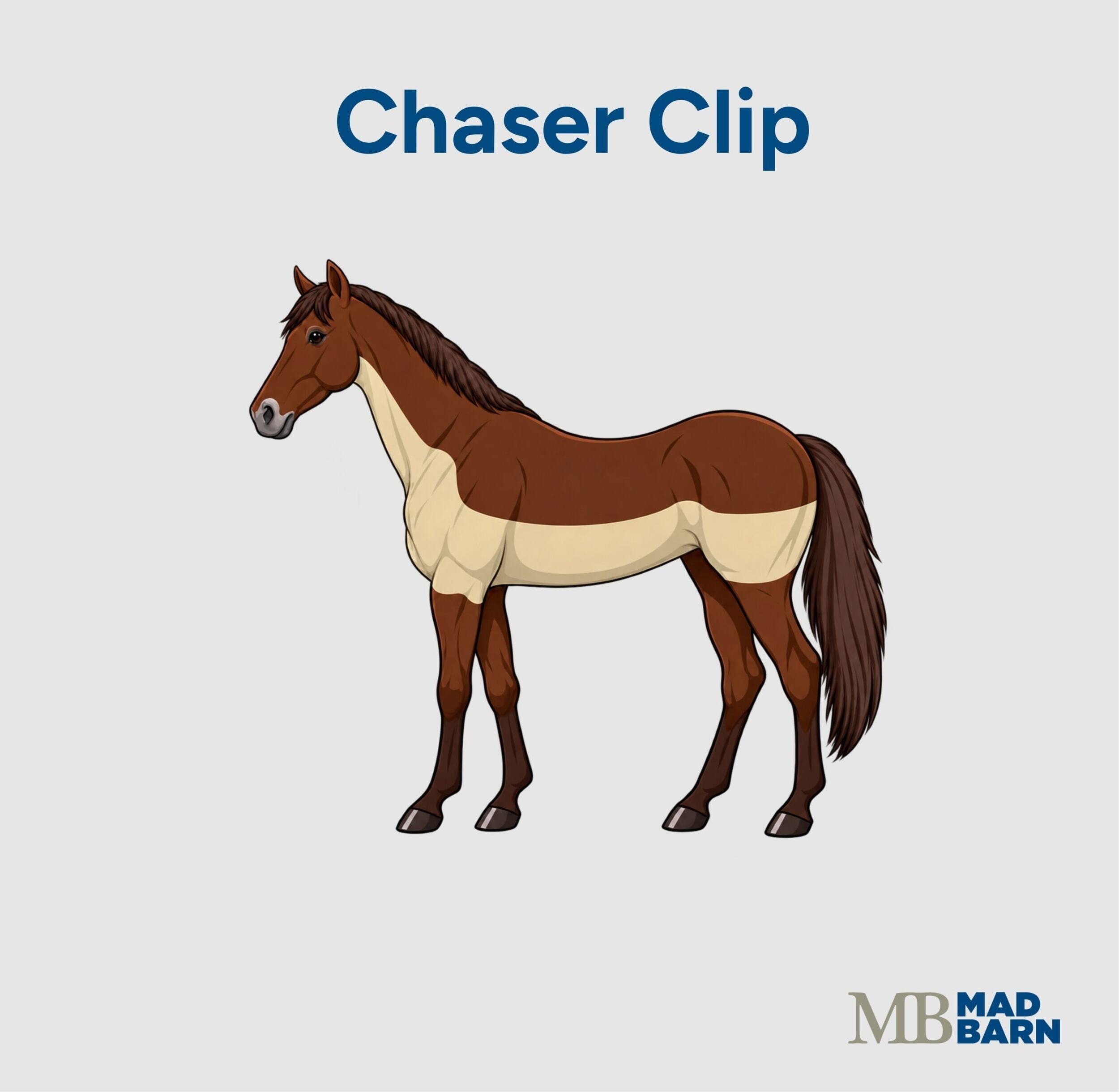
By leaving hair over the back, hindquarters, and upper neck, this pattern provides more natural warmth and weather protection than a hunter or full clip. It is generally suited to horses in fast or sustained work, particularly those that spend regular time outdoors. [1][2]
Trace Clip
The trace clip removes hair along the underside of the neck, chest, and belly. Its roughly horizontal boundary follows the path of traditional carriage harness lines, which gives the pattern its name. [1][2]
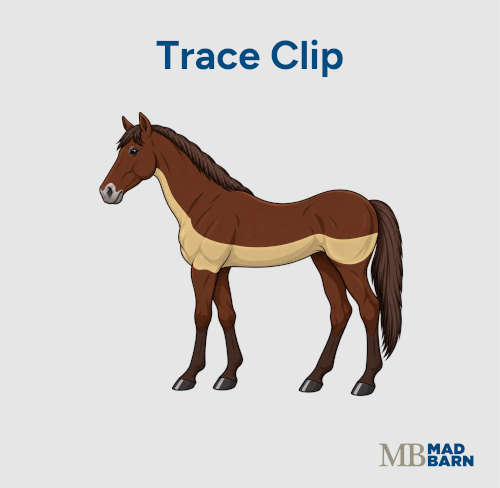
Trace clips come in low, medium, and high variations based on how far the clipped area extends up the sides and neck. A low trace clip suits horses in light work, while a high trace clip, which may include part of the face, is better suited to horses performing more sustained exercise. [1][2]
Irish Clip
The Irish clip is a lighter pattern that removes hair from the front of the neck and the armpit area, which are common sites of sweating and chafing under tack.
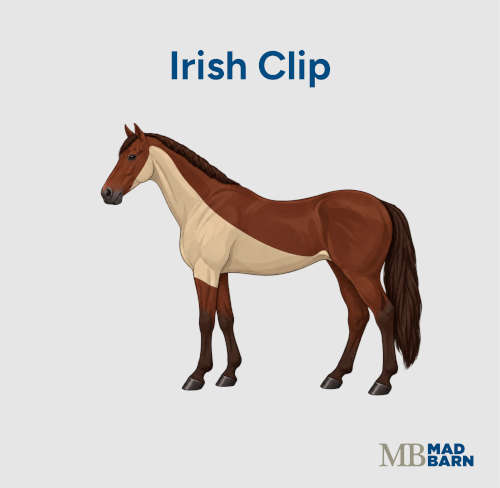
This pattern leaves most of the body coat intact, making it a practical choice for horses in light to moderate work that spend considerable time outdoors. [1]
Bib Clip
The bib clip is one of the most minimal patterns available. It removes only a small area of hair from the front of the neck and chest.
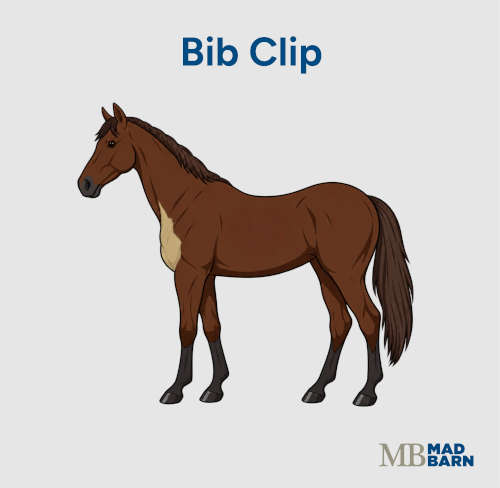
This pattern suits horses that live outdoors for most of the winter or perform only light work because it preserves most of the coat’s natural coverage. [1][2]
Strip Clip & Belly Clip
A strip clip, sometimes called a neck-and-belly clip, extends the bib clip by removing hair along the underside of the body from the girth area toward the flank.
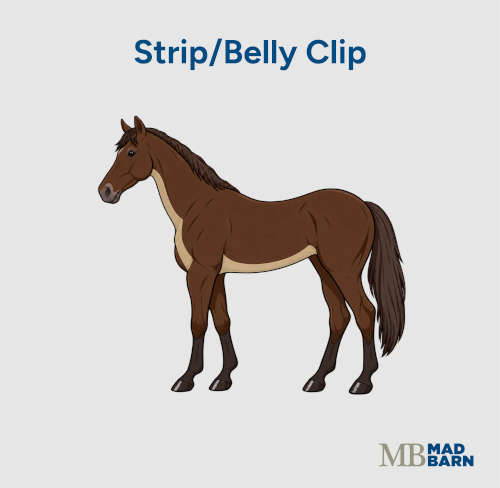
This pattern provides more relief from sweating during exercise while preserving most of the horse’s natural coat for warmth and weather protection. [2]
Custom & Combination Patterns
Many clippers adjust the boundary lines of standard patterns to fit an individual horse, such as extending a trace clip slightly higher or leaving extra hair around a sensitive area. For horses with sensitive skin on their sides, leaving hair beneath the rider’s leg and heel may help prevent irritation.
Some riders also add decorative shapes to a clipped coat for competition. These details are purely cosmetic and do not change the function of the underlying clip.
Finding the Right Clipping Pattern
The right clipping pattern depends on how much hair your horse needs removed to stay comfortable during work while retaining enough natural protection for their living conditions. Consider your horse’s discipline, workload, climate, turnout schedule, and individual coat characteristics when deciding which pattern offers the best balance.
Discipline & Workload
Workload is one of the most important factors in choosing a clipping pattern. Different disciplines also tend to favor particular patterns based on how horses train and compete through the winter. [4][1][6][2]
Sport Horses in Regular Training
Horses in disciplines such as dressage, show jumping, and eventing often train indoors through the winter and need to dry quickly after each session.
Full and hunter clips are common in this group because both support rapid heat dissipation during intense work. Riders competing through the colder months may also prefer the tidy appearance of these clips. [1][5][7]
Some sport horses spend the winter competing in warmer climates, where a full clip may be appropriate to help manage heat during work. [5][8]
Endurance & Distance Horses
Endurance horses cover long distances at sustained effort, placing a premium on efficient sweating and cooling. [8]
A blanket or high trace clip often works well for these sport horses because it removes hair from the major sweating zones while preserving coat over the back for warmth during rest stops.
Driving & Harness Racing Horses
Harness horses face heat-management demands similar to those of ridden sport horses. A study of Standardbred trotters found that clipped horses showed less strain on the thermoregulatory system during intense treadmill exercise than unclipped horses with full winter coats. [5]
Trace and chaser clips are common choices for this group because they remove hair from the chest and shoulders where harness contact is greatest.
Western Performance & Ranch Horses
High-performance Western horses, including those used for reining or cutting, are also commonly clipped for competition. Full clips may be used to support cooling and create a polished appearance.
Ranch horses often spend long hours working and living outdoors, typically without blankets. These horses are frequently left unclipped to preserve their natural protection from the elements.
Polo Horses
Polo ponies work in short, intense bursts that demand quick recovery between chukkers.
Full or hunter clips are common in polo because a fast-drying coat helps prevent horses from remaining damp and cold on the sidelines between periods of play.
Trail & Pleasure Horses
Horses used mainly for trail riding or occasional pleasure work rarely need substantial clipping.
A bib clip or light Irish clip is usually enough to manage sweating around the neck without significantly compromising the coat these horses rely on during long periods outdoors. [1][3]
Climate, Coat Type & Individual Factors
Beyond discipline, climate, turnout schedule, and coat characteristics all shape which clipping pattern is appropriate for an individual horse.
Climate & Turnout Schedule
Horses that spend significant time outdoors need to retain more coat than those kept mostly stabled, regardless of workload. Research on cold-weather care for horses highlights the hair coat’s important role in insulation and limiting radiant heat loss, particularly for horses exposed to wind and precipitation. [3]
Because clipping reduces this natural insulation, owners may need to provide appropriate blanketing based on the amount of hair removed, the horse’s living conditions, and the weather.
In one behavioral study, horses seemed to prefer wearing a blanket when wind speed and precipitation increased, demonstrating how changing conditions can influence individual blanketing needs. [9]
Coat Type & Hair Growth
Not every horse grows the same amount of winter coat. These differences affect how often a horse may need clipping and how much hair a pattern should remove.
Seasonal coat growth responds primarily to changes in day length, with temperature acting as a secondary influence. As daylight hours shorten, changes in melatonin and prolactin signaling help trigger the growth of a longer, heavier winter coat. Increasing daylight in spring contributes to the hormonal changes associated with shedding. [10]
Artificial lighting can alter this natural cycle, but its effects depend on when the owner begins providing artificial light. In one study, extending daily light exposure helped maintain a shorter summer coat when started soon after the summer solstice and accelerated shedding in some horses when introduced before the winter solstice. [10]
However, extended light did not reverse winter coat growth once it was already underway, and responses varied between horses and ponies. These findings help explain why horses managed under artificial lighting may develop coats differently and require a different clipping schedule than horses exposed only to natural daylight. [10]
Breed also plays a role. Some hardy breeds grow heavier winter coats and may need a more extensive clip if they work hard through the winter.

How Clipping Impacts Equine Thermoregulation
Clipping patterns are not simply a matter of appearance or tradition. Research suggests that removing hair from key sweating areas can have a measurable effect on heat management during and after exercise.
Research on Coat, Heat Dissipation & Recovery
One controlled study exercised horses in a cool outdoor environment under several conditions, including unclipped, clipped, and clipped with a blanket. The unclipped horses showed signs of heat stress during exercise, including a higher respiratory rate and elevated rectal temperature during recovery. The clipped horses did not show the same response. [7]
A separate study of Standardbred trotters found that clipped horses experienced less strain on their thermoregulatory systems, with a smaller rise in internal body temperature and a shorter recovery time after intense treadmill work. [5]
Broader reviews of heat stress in horses identify a heavy hair coat as one of several factors, alongside humidity and exertion level, that can increase the risk of dangerous overheating in a working horse. [8]
Evaporative Cooling & Coat Depth
A thick winter coat interferes with both evaporative and radiant heat loss by trapping warm, damp air close to the skin instead of allowing it to escape. [9]
Research on hair-coat characteristics has found a direct relationship between coat depth and radiant surface temperature. This finding suggests that a longer coat retains more heat near the horse’s body, even at rest. [11]
This effect helps explain why a clipped horse may cool down after exercise faster than an unclipped horse: less hair stands between the skin and the surrounding air. [11]
Survey Evidence on Clipping & Welfare Practices
Beyond controlled exercise studies, survey research shows how owners use clipping in practice.
A survey of horse owners in Sweden and Norway found that clipping decisions were closely tied to blanketing habits, with most clipped horses receiving some form of rug after their natural insulation was removed. [6]
Another survey focused specifically on clipping practices found that hunter and blanket clips were among the most common patterns. Owners typically based their clipping schedules on hair length, sweat production, and drying time rather than a fixed calendar date. [4]
Choosing the Best Horse Clipping Pattern
The best horse clipping pattern is the one that balances efficient cooling with the natural protection your horse still needs.
Workload provides a useful starting point, but discipline alone should not determine how much hair to remove. Climate, turnout, shelter, coat thickness, sweating, and drying time all influence which style is appropriate.
In general, remove only as much hair as necessary to keep your horse comfortable during and after exercise. Horses in light work or those living primarily outdoors often benefit from retaining most of their winter coat. Horses training or competing intensively may need more extensive clipping to release heat and dry efficiently.
Any reduction in the winter coat should be matched by attentive cold-weather care. Consider the horse’s access to shelter, exposure to wind and precipitation, body condition, and ability to stay warm when resting.
When clipping and blanketing decisions are tailored to the individual, they can support effective thermoregulation while preserving the warmth and protection required for overall comfort and well being.
Frequently Asked Questions
Here are some frequently asked questions about horse clipping patterns:
Horse clipping patterns are specific shapes used to remove selected areas of a horse's winter coat. They range from minimal clips that uncover only the neck and chest to full clips that remove hair from the body, legs, and head. Each pattern balances heat dissipation during exercise with the horse's need for natural warmth and weather protection.
Choosing the best clipping pattern depends on the horse's workload, living environment, coat type, and available blanketing. Horses in intense daily work generally benefit from more extensive clipping, while horses in light work or regular outdoor turnout usually need to retain more coat. The goal is to remove enough hair to help the horse cool and dry without taking away more natural insulation than necessary.
The hunter and blanket clips are among the most common horse clipping patterns. A hunter clip suits many horses that hunt or compete through winter, while a blanket clip provides more warmth over the back and hindquarters for horses in moderate to fairly intense work. Survey research indicates that owners commonly choose patterns according to hair length, sweating, and drying time. [1]
The best clipping pattern for a horse in light work is usually a bib, Irish, or low trace clip. These patterns remove hair from common sweating areas around the neck, chest, and underside while preserving most of the winter coat. A bib clip is particularly suitable for horses that live outdoors or exercise only lightly, while an Irish clip can accommodate light to moderate work.
The difference between a full clip and a hunter clip is the amount of hair left on the legs and back. A full clip removes the coat from the body, legs, and head, whereas a hunter clip leaves the legs and a saddle-shaped patch of hair unclipped. The retained hair provides some protection during turnout and may help reduce rubbing beneath the saddle.
A trace clip is not the same as a chaser clip, although both remove hair from major sweating areas. A trace clip follows a roughly horizontal line along the underside of the neck, chest, and belly, with low, medium, and high variations. A chaser clip generally extends farther up the neck, may include the head, and removes more coat to accommodate faster or more sustained work.
A suitable clipping pattern for a horse that lives outdoors should preserve most of the coat's natural insulation. Bib, Irish, and strip clips can reduce sweating around the neck, chest, and underside without exposing most of the body. Horses that work outdoors for long periods without dependable blanketing may be better left unclipped, particularly in cold, windy, or wet conditions.
Most clipped horses need some form of blanket because clipping removes part of their natural insulation. The required coverage depends on how much hair was removed, the weather, and whether the horse is stabled or turned out. Horses with full or hunter clips generally need a more dependable blanketing routine than horses with minimal clips, especially during wind and precipitation. [10]
Some clipping patterns leave the legs unclipped to preserve protection from cold, mud, and minor scrapes. Leg hair is retained in patterns such as the hunter and blanket clips even when large areas of the body are clipped. This can be particularly useful for horses that continue to receive regular turnout during winter.
A horse's discipline can affect which clipping pattern is best because different activities involve different workloads and recovery needs. Full and hunter clips are common for sport horses and polo ponies performing intense work, while blanket and high trace clips often suit endurance horses. Trace and chaser clips are common for driving horses, whereas trail and pleasure horses generally need only a bib or light Irish clip.
Clipping can help a horse cool down after exercise by allowing heat and moisture to escape more efficiently. A thick winter coat traps warm, damp air near the skin, which can interfere with evaporative and radiant heat loss. Studies have found that clipped horses experienced smaller increases in internal body temperature and shorter recovery times than horses exercising with full winter coats. [3][4]
How often a horse should be clipped during winter depends on hair regrowth, sweat production, and drying time rather than a fixed schedule. Coat growth varies between individual horses and is influenced largely by changing day length. Owners can reassess the clip when regrowth begins to interfere with cooling or leaves the horse slow to dry after exercise.
The clipping pattern does not determine how quickly a horse's coat grows back. Regrowth is influenced more by the individual horse, breed, coat characteristics, season, and day length. A more extensive pattern can make new growth appear more noticeable because a larger area of short hair is visible.
Horse clipping patterns can be customized to suit an individual horse's workload, coat, environment, and skin sensitivity. A clipper might extend a trace line higher to uncover more sweating areas or leave extra hair beneath the rider's leg and heel to reduce irritation. Decorative shapes can also be added, but these are cosmetic and do not change the clip's function.
Summary
Horse clipping patterns help working horses cool and dry more efficiently by removing hair from areas prone to sweating. The right pattern depends on workload, environment, coat type, and the natural protection the horse needs.
- Full and hunter clips remove most of the winter coat and suit horses in intense work with dependable blanketing
- Blanket, chaser, and trace clips target major sweating areas while retaining coat for warmth and protection
- Irish, bib, and belly clips preserve more natural insulation for horses in light work or regular turnout
- Climate, turnout, shelter, coat type, and access to blankets affect how much hair can be safely removed
- Research suggests clipping can limit increases in body temperature and support faster recovery after exercise
References
- Gough. M. R. Clipping horses. Equine Vet Educ. 1997.
- Clark. A. Different types of clips for horses explained, including diagrams. Your Horse. 2025.
- Mejdell. C. M. et al. Caring for the horse in a cold climate—Reviewing principles for thermoregulation and horse preferences. Appl Anim Behav Sci. 2020.
- Steinhoff-Wagner. J. Coat Clipping of Horses: A Survey. J Appl Anim Welf Sci. 2019.
- Morgan. K. et al. The effect of a coat clipping on thermoregulation during intense exercise in trotters. Equine Vet J Suppl. 2002.
- Hartmann. E. et al. Management of horses with focus on blanketing and clipping practices reported by members of the Swedish and Norwegian equestrian community. J Anim Sci. 2017.
- Wallsten. H. et al. Temperature regulation in horses during exercise and recovery in a cool environment. Acta Vet Scand. 2012.
- Kang. H. et al. Heat stress in horses: a literature review. Int J Biometeorol. 2023.
- Mejdell. C. M. et al. The effect of weather conditions on the preference in horses for wearing blankets. Appl Anim Behav Sci. 2019.
- O'Brien. C. et al. The effects of extended photoperiod and warmth on hair growth in ponies and horses at different times of year. PLoS One. 2020.
- Meisfjord Jørgensen. G. H. et al. Effects of hair coat characteristics on radiant surface temperature in horses. J Therm Biol. 2020.