English

The Kustanai horse is a rare light riding breed from Kazakhstan known for its speed, stamina, and hardiness. Developed from native Kazakh steppe horses crossed with imported riding breeds, the Kustanai was bred to travel long distances, perform practical work, and withstand the demanding climate of the Central Asian plains.
Although the breed is not widely known outside its home region, the Kustanai reflects a careful balance between refinement and resilience. These horses were shaped by the needs of riders who wanted more size and athletic ability without losing the durability of local steppe stock.
For owners and caretakers, understanding the Kustanai’s background can help guide appropriate care, feeding, and management. Keep reading to learn more about the Kustanai horse’s history, characteristics, health considerations, and nutritional needs.
Kustanai History
The Kustanai horse was developed to meet the needs of riders and breeders in Kazakhstan’s steppe regions. Like many traditional utility breeds, the breed reflects both the environment from which it originated and the goals of selective breeding programs.
Origin
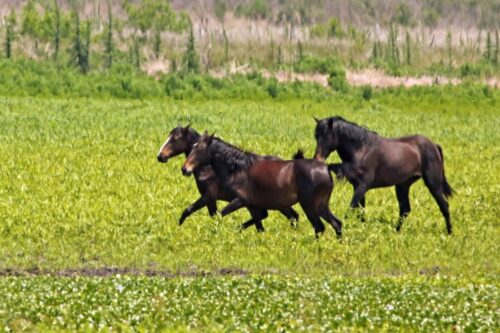
The Kustanai originated in northern and western Kazakhstan, especially the Kostanay region. Breed development began in the late nineteenth century and continued into the Soviet period through organized breeding work at major studs and breeding farms. The breed was officially recognized in the mid-twentieth century. [1]
To create the Kustanai, breeders crossed native Kazakh steppe mares with stallions from imported riding breeds, including Thoroughbreds and Russian Dons. The goal was to produce a horse that kept the hardiness of the local stock while gaining more size, speed, and quality. [2]
Over time, the breed came to include both more refined saddle types and tougher steppe types.
What's your top priority with your horse's health?

What's your top priority with your horse's health?
Historic Use
The Kustanai was bred for practical performance. They served as a saddle horse for transportation, herding, and daily work across open country. They also had value as a riding horse that could travel efficiently over long distances while coping with variable weather and limited feed. [1]
Kustanai horses were also expected to show speed and stamina. Some lines were used in racing and other performance testing, while others remained closer to the traditional all-purpose type. This combination of utility and athleticism still defines the breed today.
Recent breeding observations from Kazakhstan suggest that some modern selection has favored horses suited for baiga, a traditional long-distance race. This selection encouraged a leaner, more endurance-oriented type in some breeding programs. [1]
Breed Registry
The Kustanai was historically maintained through state breeding systems and official studbooks. In modern Kazakhstan, breeding stock has continued to be recorded through national livestock and breed oversight programs. [2][3]
The breed’s biggest challenge today is preservation. Recent monitoring work has described low numbers and a need for coordinated conservation to protect the Kustanai as an important genetic resource. [1]
Kustanai horses can be difficult to find outside Kazakhstan and may not be widely represented in international registries.
| Breed Summary | |
|---|---|
| Breed Name | |
| Also Known As | Kostanay horse |
| Breed Type | Light riding horse |
| Origin | Kostanay region, northern and western Kazakhstan |
| Breed Registry | National livestock and breed oversight programs in Kazakhstan |
| Population Status | Rare breed; conservation efforts ongoing due to declining numbers |
| Average Height | 15.1 – 16.1 hh |
| Average Weight | 900 – 1,100 lb (410 – 500 kg) |
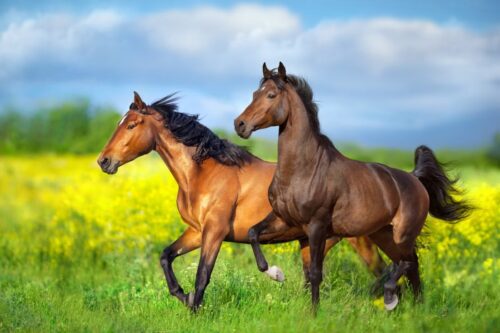
| Common Coat Colors | Chestnut and bay |
| Conformation | Balanced build, medium-sized head, strong neck, defined withers, broad chest, relatively short back, sturdy limbs |
| Lifespan | 25 – 30 years |
| Price Range | Rare breed, prices not readily available |
| Common Uses | Trail riding, pleasure riding, long-distance riding, ranch-style work, endurance riding |
| Temperament | Sensible, hardy, willing |
| Best For | Riders seeking a hardy, versatile horse for long-distance riding, trail riding, or practical utility work |
| Common Health Concerns | Obesity, insulin dysregulation, laminitis, gastric ulcers, poor hoof quality associated with nutritional imbalance, respiratory irritation |
Breed Characteristics
The Kustanai is a medium-sized riding horse with an athletic frame. Most descriptions emphasize soundness, efficiency, and durability over flashy movement.
Conformation
The Kustanai typically has a balanced build with a medium-sized head, a strong neck, defined withers, a broad chest, a relatively short back, and sturdy limbs. [2][3]
This kind of conformation suits a horse expected to travel, work, and remain serviceable over time. Kustanai horses typically range in height from 15.1 to 16.1 hh and weigh between 410 to 500 kg (900 – 1,100 lb). [2][3]
Many Kustanai horses appear efficient rather than heavy. They have enough body depth to support stamina, but they are not usually coarse or overly massive. Their conformation reflects the demands of open-country riding and long practical use.
Colors
Bay and chestnut appear to be the most common colors in the modern Kustanai population. In one report, chestnut horses accounted for about 60% of the observed population, and bay horses accounted for the remaining 40%. [1]
Other solid colors may occur, but color has never been the defining focus of the breed. Selection has centered much more on utility, performance, and resilience than on appearance.
Temperament
The Kustanai is generally described as sensible, hardy, and willing. [2][3] A useful horse for long-distance travel and daily work needs to be calm enough to handle routine demands, but forward enough to stay responsive under saddle.
Kustanai horses may be a little sharper than heavier steppe-type horses, but the breed overall is better known for function and steadiness than excess energy.
As with any breed, temperament depends on both genetics and management. Horses handled consistently from a young age and given regular turnout are more likely to develop into reliable riding partners.
Disciplines
The Kustanai is best suited to practical riding and utility disciplines. Trail riding, pleasure riding, long-distance riding, light harness work, and endurance-type activities are likely among its strongest uses.
Its history also supports its role as a versatile all-around horse. While it is not a specialized sport breed, the Kustanai may appeal to riders who value stamina, adaptability, and efficient movement.
Kustanai Horse Health
The Kustanai horse is a hardy breed. However, hardy horses remain vulnerable to common problems seen in domestic equine populations, especially when modern feeding and management practices do not align with their natural adaptations.
Genetic Diseases
No well-documented inherited disease appears to be strongly associated with the Kustanai in the available literature. Still, rare breeds can face challenges related to smaller breeding populations, reduced diversity, and uneven selection pressure. [4]
That makes careful breeding decisions important. Breeders should focus on soundness, fertility, temperament, and overall health when selecting breeding stock.
Health Problems
Most Kustanai horses are likely to face the same common health issues seen in other hardy riding breeds. One of the most important is excess body condition.
Horses that maintain weight easily can become overweight when fed rich pasture or energy-dense diets, especially without regular exercise. Obesity in horses is linked to insulin resistance, Equine Metabolic Syndrome and increased risk of laminitis. [5]
Hardy breeds often have efficient metabolisms. A horse that evolved to maintain condition on limited resources may gain weight quickly under modern management. Insulin dysregulation is now recognized as a major concern in easy-keeping horses and ponies. [6]
Gastric ulcers are another possible issue. Equine gastric ulcer syndrome is common in domestic horses and often reflects a combination of management and feeding factors. [7] Diet plays a direct role in ulcer risk. Long fasting periods, low forage intake, and heavy use of concentrate feeds can increase risk. [8]
Nutrition also affects hoof quality. Poor horn growth, weak walls, or cracking may be linked to unbalanced diet, inadequate protein quality, trace mineral deficiencies, or inconsistent hoof care. [9]
Respiratory irritation is another concern in any horse kept indoors or fed dusty hay. Dust, mold, and poor ventilation can strain the airways, particularly during seasons when horses spend more time in enclosed housing. [10]
Care and Management
Kustanai horses do best with regular turnout, steady movement, and straightforward management. These horses were shaped by an environment that favored motion, grazing, and outdoor living. Long periods of confinement may not suit them as well.
- Hoof care: Routine trimming and balanced hoof care support soundness for horses used in long-distance riding and daily work.
- Veterinary exams: Schedule regular checkups to monitor body condition, hydration, and soundness, especially when workload, diet, or climate changes.
- Parasite control: Following a veterinarian-recommended schedule based on fecal counts helps limit parasite resistance and protect the whole herd.
- Dental care: Routine dental care supports efficient chewing on high-forage diets.
- Exercise and turnout: Daily movement supports digestive health, behavior, and fitness. Outdoor living aligns with the breed’s steppe heritage.
Owners should also monitor body condition closely, as an easy-keeping horse can gradually become overweight. The Henneke body condition scoring system remains one of the most useful practical tools for tracking changes in fat cover over time. [11]
Forage access matters for both welfare and digestive health. Horses are adapted to spend much of the day grazing, and low forage intake can affect behavior, gut function, and ulcer risk. [12]
Nutrition
Most Kustanai horses thrive on a forage-first diet with moderate energy intake and balanced vitamin and mineral support. Since this breed was developed for efficiency and resilience, maintaining balanced energy intake is important to avoid unwanted weight gain.
Weight Maintenance
Many Kustanai horses can maintain body condition well on hay or pasture alone. That can simplify feeding programs, but it also means owners should monitor body weight carefully.
Using a body condition score helps identify subtle weight gain before it becomes a larger issue. For most horses, a 5 – 6 on the Henneke scale is ideal. [11]
If a Kustanai is in moderate to heavy work, calorie needs will rise. Energy demands may also increase in cold weather, during growth, and in mares supporting reproduction. The goal is to match the diet to actual workload and condition rather than adding grain out of habit.
Sample Diet
The following sample diet is intended for a mature 1,000 lb (455 kg) Kustanai with normal body condition at maintenance (not exercising). Amounts are illustrative; adjust for actual weight, hay quality, workload, and veterinary guidance.
| Feed | Amount per day |
|---|---|
| Hay (mid quality; 8% crude protein) | 20 lb (9.1 kg) |
| Salt (plain) | 1 tbsp |
| Omneity® Pellets | 150 g |
| Diet Analysis | |
| Digestible energy (% of req) | 105% |
| Protein (% of req) | 113% |
| HC (ESC + starch; % diet) | 8.8% |
Most Kustanai horses can meet their energy and protein requirements on a high-quality forage-based diet when intake is matched to body weight, workload, and body condition. This hardy riding breed often maintains weight efficiently, so feeding programs should avoid unnecessary grain and excess calories in horses doing light work. [12]
Even when hay or pasture supplies enough calories and protein, forage-only diets are commonly low in essential vitamins and minerals. [13] Nutritional deficiencies can affect hoof quality, muscle function, immune health, and overall resilience over time.
A comprehensive vitamin and mineral supplement helps correct common deficiencies without adding extra starch, sugar, or calories. This is especially useful for efficient-keeping Kustanai horses that do not need commercial grain to hold condition.
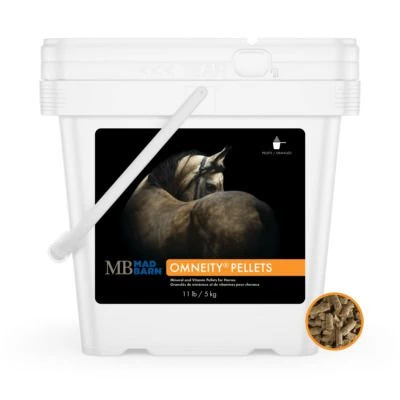
Mad Barn’s Omneity® is a complete vitamin and mineral supplement designed to balance forage-based diets. It provides essential nutrients that support hoof strength, muscle function, metabolic health, immune function, and coat quality, with no added sugars or unnecessary fillers.
Provide unlimited access to clean, fresh water and offer plain loose salt daily to encourage drinking and replace sodium losses.
Kustanai horses working in hot weather, traveling long distances, or sweating heavily may need additional electrolyte support to balance fluid losses.
Forage
Forage should form the foundation of the Kustanai diet. Most mature horses do well when fed around 1.5 – 2% of body weight per day in forage dry matter, adjusted for body condition, turnout, workload, and forage quality. For a 1,000 lb (455 kg) Kustanai, this equals approximately 15 – 20 lb (6.8 – 9.1 kg) of hay dry matter daily. [13]
For easy-keeping Kustanai horses, choose mature grass or mixed grass hay that provides adequate protein without excessive calories or hydrolyzable carbohydrates (sugar and starch). Rich pasture, high-sugar hay, and large grain meals can promote weight gain and may increase the risk of insulin dysregulation and laminitis in at-risk horses.
For horses who need controlled intake, consider using a grazing muzzle, slow feeders, or dry lot turnout with measured hay. These strategies help extend eating time while limiting excess calorie intake, which supports both digestive health and weight management.
Kustanai horses in heavier work may benefit from higher-quality forage, including some alfalfa or mixed hay, to support protein and calcium intake. When extra calories are needed, increasing forage quality or adding fiber-based feeds is generally preferable to relying on high-starch concentrates.
A forage analysis is the best way to identify calorie, protein, sugar, starch, vitamin, and mineral levels in hay or pasture. Testing forage allows for accurate ration balancing tailored to the individual horse instead of relying on guesswork.
Feeding Recommendations
Most Kustanai horses at maintenance or in light work do not need commercial grain or high-calorie concentrates. A well-planned forage-based diet with adequate protein, balanced minerals, and daily salt is usually sufficient for maintaining condition.
For Kustanai horses that gain weight easily, avoid sweet feeds, cereal grains, and large meals high in starch and sugar. These feeds can add calories quickly and increase the risk of obesity, insulin dysregulation, and laminitis. [14]
To minimize sugar, starch, and calorie intake, use a concentrated vitamin and mineral supplement in place of grain. If a carrier is needed for supplements, use a small amount of soaked beet pulp, chopped forage, or low-starch hay pellets. These options add fiber without the starch load of many grain-based feeds.
Kustanai horses in moderate or heavy work may require additional calories to maintain topline and stamina. Start by selecting a higher-quality forage or adding digestible fiber from forage cubes or pellets. If more energy is needed, consider adding a fat supplement, while monitoring body condition and performance.
Senior Kustanai horses or horses with poor dentition may struggle to chew long-stem hay efficiently. In these cases, soaked hay cubes, hay pellets, beet pulp, or chopped feed can help maintain forage intake and reduce the risk of weight loss. Regular dental care remains important for horses on high-forage diets.
For horses with a history of gastric ulcers, avoid long gaps without forage and keep concentrate meals small. Providing frequent access to hay, using slow feeders, and maintaining steady turnout can help support normal digestive function. [15]
All horses should have access to abundant clean water and plain loose salt at all times. Horses in endurance work, hot climates, or transport may need additional electrolytes to replace sweat losses and support hydration.

Nutritional Supplements
Most Kustanai horses do best on good-quality forage with balanced vitamin and mineral intake. Additional supplements can be useful when they address a specific need, such as exercise recovery, hoof quality, joint comfort, digestive health, coat condition, or overall wellness.
The right feeding program depends on your horse’s forage quality, training demands, age, physiological status, and individual health needs.
Recommended Mad Barn supplements for Kustanai horses may include:
- Omneity® Premix: A concentrated vitamin and mineral premix that helps balance forage-based diets without adding extra calories.
- AminoTrace+: Provides amino acids, vitamins, and trace minerals to support topline, hoof quality, and metabolic health.
- Visceral+: Supports gastric and hindgut health in horses exposed to stress, travel, intermittent feeding, or other digestive challenges.
- w-3 Oil: A calorie-dense fat source with omega-3s that can help support body condition without adding starch or sugar.
- Jiaogulan: Commonly used to support circulation and hoof comfort in horses that need additional metabolic or vascular support.
- OmegaPrime+: An extra-strength omega-3 oil that delivers high levels of DHA and EPA to support joint health, skin health, respiratory function, cardiovascular health, reproductive health, and normal inflammatory balance.
Frequently Asked Questions
Here are some frequently asked questions about Kustanai horses:
The Kustanai horse is a rare light riding breed from Kazakhstan known for speed, stamina, and hardiness. It was developed by crossing native Kazakh steppe mares with imported riding breeds, including Thoroughbreds and Russian Dons. The goal was to produce a horse with more size, refinement, and performance ability while preserving the resilience of local steppe horses. Today, the breed is valued for practical riding, long-distance work, and adaptability. [1][2]
The Kustanai horse originated in northern and western Kazakhstan, especially the Kostanay region. Breed development began in the late nineteenth century and continued through organized Soviet-era breeding programs. The breed was shaped by the needs of riders and breeders working in open steppe conditions where endurance, soundness, and climate tolerance were essential. Kustanai horses remain closely associated with Kazakhstan and are uncommon outside their home region. [1]
The Kustanai horse was bred for transportation, herding, daily riding, and long-distance travel across open country. Breeders wanted a practical saddle horse that could work efficiently in demanding weather and limited-feed conditions. Some lines were also selected for racing and performance testing, including endurance-oriented baiga racing. This history explains the breed's mix of utility, stamina, speed, and toughness. [1]
The Kustanai horse is considered a rare breed, with conservation concerns linked to low numbers and the need for coordinated preservation. Modern monitoring in Kazakhstan has identified the breed as an important genetic resource that requires ongoing protection. Kustanai horses are difficult to find outside Kazakhstan and are not widely represented in international registries. Their rarity makes responsible breeding and accurate breed recording especially important. [1]
Kustanai horses typically stand between 15 and 16 hands high. They are medium-sized riding horses rather than heavy draft types or very small steppe ponies. Their size reflects the influence of both native Kazakh horses and imported riding breeds used during development. This height range suits their traditional role as versatile saddle horses for distance, work, and practical riding.
A Kustanai horse typically weighs between 900 and 1,100 lb, or about 410 to 500 kg. Individual weight depends on height, body condition, workload, age, and feeding management. Because many Kustanai horses are efficient keepers, owners should monitor weight carefully rather than relying on appearance alone. Body condition scoring is a practical way to track changes in fat cover over time. [9]
Kustanai horses are most commonly bay or chestnut. In one recent report, chestnut horses made up about 60% of the observed population, while bay horses accounted for about 40%. Other solid colors may occur, but coat color is not the main focus of the breed. Selection has historically emphasized utility, performance, resilience, and soundness more than appearance. [1]
The Kustanai horse is generally described as sensible, hardy, and willing. A practical riding horse needs enough calmness for daily work and enough responsiveness to travel efficiently under saddle. Some Kustanai horses may be sharper than heavier steppe types because of their riding-breed influence, but the breed is better known for usefulness and steadiness than excessive energy. As with any horse, training, handling, turnout, and management strongly affect temperament.
Kustanai horses are best suited for trail riding, pleasure riding, long-distance riding, ranch-style work, and endurance-type activities. Their history as practical saddle horses makes them a good fit for riders who value stamina, adaptability, and efficient movement. They are not primarily a specialized international sport breed, but they can be useful all-around horses. Their strongest roles are those that reward soundness, durability, and steady work ethic.
Kustanai horses may suit some beginners when the individual horse is well-trained, calm, and matched to the rider's experience. The breed is generally described as sensible and willing, but it was also developed for stamina and forward riding ability. A more athletic or sharper Kustanai may be better suited to an intermediate rider, especially for long-distance or working use. As with any breed, suitability for a beginner depends more on the individual horse's training, temperament, and management history than breed label alone.
Many Kustanai horses are likely to be easy keepers because the breed was shaped by steppe conditions and efficient use of limited resources. This hardiness can be an advantage, but it also means some individuals may gain weight quickly on rich pasture or energy-dense feeds. Excess body condition can increase the risk of insulin dysregulation and laminitis in susceptible horses. Regular body condition scoring, appropriate forage, and consistent exercise help manage this risk. [3][4][9]
Kustanai horses can be prone to the same common health issues seen in many hardy domestic riding breeds. Important concerns include obesity, insulin dysregulation, laminitis risk, gastric ulcers, poor hoof quality related to nutritional imbalance, and respiratory irritation from dust or poor ventilation. These issues are often linked more to modern feeding and housing practices than to the breed itself. Good management, regular veterinary care, balanced nutrition, and daily movement help reduce risk. [3][4][5][8]
No well-documented inherited disease is strongly associated with the Kustanai horse in the available literature. However, rare breeds can face challenges related to small population size, reduced genetic diversity, and uneven selection pressure. Careful breeding decisions are important to preserve soundness, fertility, temperament, and overall health. Conservation-focused breeding can help protect the breed without narrowing the gene pool further. [2]
Kustanai horses generally do best on a forage-first diet with moderate energy intake and balanced vitamin and mineral support. Many can maintain condition on hay or pasture when intake matches body weight, workload, and body condition. Because efficient keepers may not need grain, unnecessary concentrates can add excess calories and increase metabolic risk. A forage analysis is the best way to balance the diet accurately for the individual horse.
A Kustanai horse typically needs forage as the foundation of the diet, with intake adjusted for body weight, body condition, workload, and forage quality. For many mature horses, forage intake around 1.5 - 2% of body weight per day in dry matter is a practical starting point. For a 1,000 lb Kustanai, this equals roughly 15 - 20 lb of hay dry matter daily. Easy-keeping horses may need mature grass hay, controlled grazing, slow feeders, or dry lot turnout to manage calorie intake.
Most Kustanai horses at maintenance or in light work do not need grain if they receive enough forage, protein, minerals, salt, and water. Grain can add calories quickly and may not be appropriate for horses that gain weight easily or have metabolic risk. Horses in heavier work may need additional energy, but increasing forage quality or adding fiber-based feeds is often preferable to large high-starch meals. Feeding should be based on body condition, workload, forage quality, and individual needs.
The most useful supplement for many Kustanai horses is a comprehensive vitamin and mineral supplement that balances a forage-based diet without adding unnecessary calories. Forage-only diets can meet energy and protein needs but may still be low or imbalanced in key nutrients that support hoof quality, muscle function, immune health, and overall resilience. Additional supplements may be useful for specific needs, such as metabolic support, digestive support, hoof comfort, or extra calories for horses in harder work. Supplement choices should be based on forage quality, body condition, workload, and the horse's overall health.
Kustanai horses should be managed with regular turnout, daily movement, routine hoof care, dental care, veterinary checkups, vaccinations, and parasite control. The breed's steppe heritage suggests that long periods of confinement may not suit them as well as outdoor living with steady movement. Owners should also monitor body condition closely, especially when pasture is rich or workload decreases. Clean forage, good barn ventilation, and consistent care support long-term health and soundness.
Kustanai horses typically have a lifespan of about 25 to 30 years. Longevity depends on genetics, nutrition, workload, preventive care, dental health, hoof care, and management. Because the breed is hardy, many individuals may remain useful riding horses for years when kept sound and in appropriate body condition. Regular veterinary and farrier care become especially important as horses age.
Summary
The Kustanai horse is a rare Kazakh riding breed developed for speed, stamina, and practical work across demanding steppe environments. This hardy breed does best with regular turnout, careful weight management, and a forage-first diet balanced with essential vitamins and minerals.
- The Kustanai was developed in Kazakhstan by crossing native steppe mares with imported riding breeds
- These horses are valued for endurance, soundness, resilience, and practical riding ability
- Common health concerns include obesity, insulin dysregulation, laminitis risk, gastric ulcers, hoof quality issues, and respiratory irritation
- Most Kustanai horses do well on hay or pasture with controlled calories and balanced mineral support
- Easy keepers should avoid excess grain, rich pasture, and large high-starch meals
References
- Amandykova. A. B. et al. Monitoring the Condition of the Horses of the Kostanay Breeds in Northern Kazakhstan. Herald Sci Seifullin Kazakh Agrotechnical Univ. 2022.
- Animal Genetic Resources of the USSR - KUSTANAI (Kustanaiskaya). FAO. 2026.
- State Stud Book of Breeding Horses of the Kustanai Breed, Volume IV. Ministry of Agriculture of the Republic of Kazakhstan. 2009. Auto-translated from Russian for Mad Barn
- Kabylbekova. D. et al. Genetic Studies and Breed Diversity of Kazakh Native Horses: A Comprehensive Review. Adv Life Sci. 2024.
- Frank. N. et al. Equine Metabolic Syndrome. J Vet Intern Med. 2010. View Summary
- Frank. N. Tadros E. M. Insulin dysregulation. Equine Vet J. 2014. View Summary
- van den Boom. R. Equine gastric ulcer syndrome in adult horses. Vet J. 2022.
- Reese. R. E. and Andrews F. M. Nutrition and dietary management of equine gastric ulcer syndrome. Vet Clin North Am Equine Pract. 2009. View Summary
- Buffa. E. A. et al. Effect of dietary biotin supplement on equine hoof horn growth rate and hardness. Equine Vet J. 1992. View Summary
- Moore-Coyler. M. J. S. et al. The Effect of Steaming and Soaking on the Respirable Particle, Bacteria, Mould, and Nutrient Content in Hay for Horses. J Equine Vet Sci. 2016.
- Henneke D.R. et al. Relationship between condition score, physical measurements and body fat percentage in mares. Equine Vet J. 1983. View Summary
- Richards. N. et al. Nutritional and Non-Nutritional Aspects of Forage. Veterinary Clinics of North America: Equine Practice. 2021. View Summary
- Nutrient Requirements of Horses: Sixth Revised Edition. National Academies Press, Washington, D.C. 2007. View Summary
- Geor. R. J. Metabolic Predispositions to Laminitis in Horses and Ponies: Obesity, Insulin Resistance and Metabolic Syndromes. Journal of Equine Veterinary Science. 2008.
- Cipriano-Salazar. M. et al. The Dietary Components and Feeding Management as Options to Offset Digestive Disturbances in Horses. J Equine Vet Sci. 2019.