English

Dexamethasone is a widely used corticosteroid in equine medicine, valued for its anti-inflammatory and immunosuppressive properties.
Dexamethasone works by dampening the body’s inflammatory response, providing rapid relief of clinical signs and improving overall comfort and function. Because of its strength and fast-acting nature, it is a common go-to medication in emergency situations and for management of chronic disease.
Despite its effectiveness, dexamethasone use carries some risk in horses. Like all glucocorticoids, it can have significant side effects, particularly when used at high doses or over extended periods. Because of these considerations, dexamethasone should always be used under veterinary supervision, with careful attention to dosing, duration, and monitoring.
Understanding its benefits and limitations is essential for horse owners and caretakers aiming to make informed decisions about their horse’s health. By combining informed veterinary guidance with diligent day-to-day monitoring, dexamethasone can be used safely and effectively as part of a comprehensive approach to equine health management.
Dexamethasone for Horses
Dexamethasone is a glucocorticoid medication primarily used as an anti-inflammatory in horses. It also has immunosuppressive effects, making it useful for the treatment of immune-mediated diseases.
In equine practice, dexamethasone is commonly used to manage conditions involving excessive inflammation or immune activity, including allergic reactions, allergic respiratory disease, and musculoskeletal pain.
Its potency and rapid onset make it effective for controlling clinical signs, particularly in acute cases. However, its strong effects also require careful dosing and veterinary oversight to minimize the risk of complications.
Available Forms
Dexamethasone is used in intravenous (into a vein), intramuscular (into a muscle), intrarticular and oral forms for horses.
Brand names of dexamethasone include: [1]
- Azium®
- Dexasone®
- Decadron®
- Intensol®
- Hexadrol®
What's your top priority with your horse's health?

What's your top priority with your horse's health?
Drug Class: Glucocorticoids
Glucocorticoids are steroid hormones naturally produced by the horse’s adrenal cortex. [2] The adrenal cortex produces many steroid hormones, collectively known as corticosteroids.
The main glucocorticoid produced by the body is cortisol, often referred to as the “stress hormone”. Glucocorticoid medications have a similar structure and function to cortisol, increasing glucocorticoid activity throughout the body.
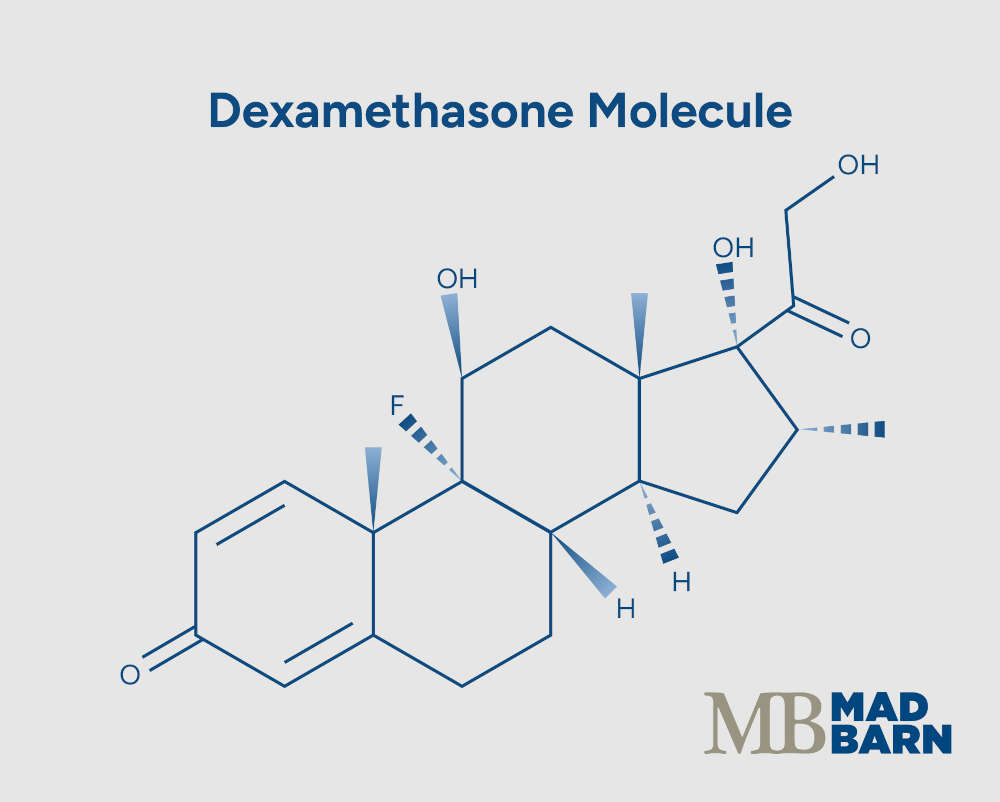
There are several glucocorticoid medications used in veterinary medicine. All glucocorticoids are based on the structure of cortisol, with modifications made by chemists to increase the duration of effect and potency of the medication. [3]
Dexamethasone is a long-acting glucocorticoid with a potency approximately 25 times greater than cortisol. [3]
Other commonly used glucocorticoids in veterinary medicine include: [3]
- Prednisone and prednisolone
- Fludrocortisone
- Triamcinolone
- Isoflupredone
- Betamethasone
- Flumethasone
Mechanism of Action
Glucocorticoids replicate the activity of cortisol within the body. As the “stress hormone”, cortisol has effects on nearly every tissue.
Typically, cortisol acts to increase the animal’s ability to fight or flee while diminishing body functions associated with resting, such as digestion or wound healing. [2][3]
Notable effects include: [1][2][3]
- Increasing blood pressure
- Inhibiting the release of white blood cells and reducing their function
- Inhibiting cytokines, compounds released during inflammation to activate the immune system
- Reducing proliferation of cells for tissue healing
- Increasing overall metabolism
- Stimulating glucose production by the liver
- Burning fat and protein stores to increase blood sugar levels
- Inhibiting bone growth and remodelling
Veterinarians typically prescribe glucocorticoids for their immunosuppressive and anti-inflammatory effects, which can help manage clinical signs of disease. However, the potential effects of elevated glucocorticoids elsewhere in the body must be considered when developing a treatment plan.
Uses in Horses
Dexamethasone is currently labelled for use as an anti-inflammatory agent in horses by the FDA and Health Canada. [4] This means veterinarians can use the medication to manage conditions specifically mentioned on the product label. [4]
In horses, these conditions include: [4]
- Bursitis
- Carpitis (knee inflammation)
- Osselets
- Tendonitis
- Myositis (muscle inflammation)
- Sprains
- Fatigue
- Heat exhaustion
- Influenza
- Skin and allergic diseases that are responsive to corticosteroids
While all of these indications are listed on the approved equine label, dexamethasone is most commonly used in horses to target musculoskeletal pain. Veterinarians can also use it to treat chronic allergic skin reactions, such as hives. [1]
Off-label Uses
“Off-label” use refers to administration of medication for a condition or species that is not included on the approved drug label.
This practice is common in veterinary medicine, as many drugs have not been validated by the drug companies for every species or disease they could potentially treat.
For horses, common off-label uses of dexamethasone include treatment of equine asthma and other immune-mediated diseases. [1]
Equine Asthma
Equine asthma is an inflammatory disease affecting the horse’s lower airways, including the lungs. [5] Inflammation occurs when the horse’s airways overreact to common allergens in their environment, such as hay dust or mold spores. This results in immune system activation within the lung tissue.
Research shows glucocorticoids can benefit horses with equine asthma by reducing the inflammatory response to allergens and improving lung function. [5] Horses treated with dexamethasone have lower white blood cell counts on respiratory samples, indicating reduced inflammation. [5]
Intravenous and oral options, such as dexamethasone, are often preferred for initial management as they have a faster effect compared to inhaled glucocorticoids. [6]
Most veterinarians start horses with asthma on a short course of oral or intravenous dexamethasone at the time of diagnosis. This allows time for management changes to reduce the exposure to dust and other allergens while providing symptomatic relief for the horse. [1]
Immunosuppression
Autoimmune and immune-mediated diseases occur when the horse’s immune system reacts to an antigen (a protein) it identifies as foreign. In these diseases, the targeted antigens are typically normal components of the horse’s tissues or environment. The immune system targets those normal tissues and causes significant damage. [5]
Dexamethasone is used to manage these diseases in horses by giving the medication at an immunosuppressive dose. By downregulating the immune system, the horse’s tissues are no longer targeted and are given a chance to heal. [5]
Dexamethasone may be recommended for immune-mediated diseases in horses such as: [5]
- Vasculitis
- Atopic dermatitis
- Pemphigus foliaceus
- Inflammatory bowel syndrome
- Recurrent uveitis
- Immune-mediated thrombocytopenia (low blood platelets)
Administration Routes
Dexamethasone is available in oral, intramuscular, and intravenous (IV) forms for horses.
Veterinarians or qualified veterinary personnel usually administer the intravenous formulations. Oral formulations are usually prescribed for ongoing administration by horse owners.
Some veterinarians may train their clients to administer the medication into the muscle if the horse is unwilling to consume the oral formulations.
Dosage
The dose of dexamethasone administered depends on the reason for giving the drug. Typically, anti-inflammatory doses are lower than immunosuppressive doses. [1]
The FDA-approved anti-inflammatory dose for oral dexamethasone for horses is 5 – 10 mg per horse on the first day, then 5 mg per horse daily as required. [1]
There is no specific immunosuppressive dose approved for horses. [1] Some veterinarians may use doses up to 50 mg per horse daily for immunosuppression in an off-label (also referred to as extra-label) manner. [1]
Extra-label use is common in veterinary medicine as many medications are not available for animals, or have not been tested by the drug manufacturer for treating certain conditions.
In these cases, veterinarians use scientific research and previous experience to determine an appropriate dose of the medication. However, the drug manufacturer is unlikely to warranty the product if an adverse event occurs while using the medication extra-label.
Tapering
Administering dexamethasone continuously for more than 2 weeks can reduce or stop the adrenal gland’s normal production of cortisol. Stopping dexamethasone suddenly can leave the horse without adequate cortisol in their bloodstream. [7][8]
This leads to signs of hypoadrenocorticism (low blood cortisol) which may include: [7][8]
This condition is rare in horses, but is well-recognized in dogs and people. [1][7]
To mitigate the risk of low blood cortisol, horses receiving dexamethasone for more than 2 weeks must be tapered off the medication. [1]
Storage
Dexamethasone is sensitive to temperature changes and should be stored at room temperature unless otherwise indicated on the label. [1]
Store in air-tight containers. Intravenous formulations containing sodium phosphate should be protected from light. [1]
Safety Warnings & Precautions
Glucocorticoids are naturally produced by the horse’s body and have roles in several body functions, such as: [2]
- Blood sugar metabolism
- Regulation of the immune system
- Regulation of inflammation
- Neuron (nerve cell) excitation
- Stress responses
Administering additional glucocorticoids may affect the horse’s body functions beyond the desired treatment effect. For this reason, veterinarians use glucocorticoids judiciously to prevent side effects.
General principles veterinarians follow when creating a treatment plan include: [1]
- Identifying a therapeutic end-point (signs the treatment was effective) prior to beginning treatment
- Using the least potent glucocorticoid at the lowest dose for the shortest amount of time
- Avoiding use when there is active infection, pre-existing glucose metabolism conditions, or other underlying issues that may worsen with prolonged corticosteroid use
Monitoring
The monitoring required for dexamethasone treatment may vary depending on the reason for use of the medication, the animal’s age, and any pre-existing conditions they have.
Monitoring may include: [1]
- Body weight
- Appetite
- Electrolytes in the blood or urine
- Blood protein levels
- Blood glucose
- Gastrointestinal disturbances such as diarrhea
- Growth and development in young animals
- Signs of laminitis
Contraindications
Contraindications refer to circumstances where a drug should be avoided or used with caution.
As glucocorticoids can affect numerous body systems, there are several contraindications for use: [1]
- Infections: Glucocorticoids should be carefully used in animals with bacterial, viral, or fungal infections due to its immunosuppressive effect. This can prevent infection healing and resolution. Typically, antimicrobial therapy should be administered simultaneously to prevent worsening of infection.
- Hypersensitivity: Glucocorticoids should not be administered to animals who have had a previous hypersensitivity reaction to the medication.
- Kidney disease: Animals with chronic nephritis may have an increased risk of electrolyte loss when receiving glucocorticoids.
- Endocrine diseases: Animals with hyperadrenocorticism should not receive glucocorticoids.
- Congestive heart failure: Glucocorticoids may increase blood pressure, which can worsen existing congestive heart failure or cause heart failure in at-risk animals.
- Osteoporosis: Glucocorticoids reduce bone remodeling and mineralization and may worsen osteoporosis.
- Laminitis: Laminitis may be triggered by corticosteroid administration. These medications should be given cautiously to horses with a previous history of laminitis.
- Pregnancy: Corticosteroid therapy may induce labor in pregnant animals during the later stages of pregnancy. It has also been shown to affect foal pancreatic function when administered to pregnant mares.
In horses, glucocorticoid administration may trigger laminitis as a side effect. This is thought to be a rare occurrence in healthy, adult horses. [1][10] However, horses who have pre-existing risk factors for laminitis such as equine metabolic syndrome or obesity may have a higher risk of developing this side effect. [10] Caution is recommended when using corticosteroids in horses with these risk factors.
Glucocorticoids may also increase the risk of gastric ulcers. These medications can increase secretion of gastric acid and alter the structure of the protective mucin that coats the stomach lining to prevent acid damage. [1] Dexamethasone should be used cautiously in horses with a history of gastric ulcers.
Side Effects
Side effects refer to known effects of a drug that are not directly related to their intended effects.
The most common side effects associated with glucocorticoid use are excessive urination and increased thirst. [1] Some animals may also develop increased hunger due to their increased metabolic rate.
When given long-term, glucocorticoids may cause side effects such as: [1]
- Elevated liver enzymes
- Dull or dry coat
- Weight gain
- Muscle wasting
- Skin thinning or calcification
- Behavioral changes
- Delayed growth in young animals
- Bleeding disorders

Adverse Reactions
Adverse reactions refer to responses to a drug that are not typically expected under normal administration.
Although glucocorticoids have numerous potential side effects and contraindications, adverse reactions are relatively uncommon. Some horses may develop an allergic reaction to the medication, known as a hypersensitivity reaction. This may present as: [9]
- Hives
- Rashes
- Excessive itching
- Difficulty breathing
- Rapid breathing
- Swelling of the face and neck
- Collapse
If these reactions are noted, discontinue administration of the medication and contact your veterinarian immediately.
Overdose
A single administration of excessive dexamethasone is unlikely to cause significant harm. [1] Horses are likely to develop increased urination and increased thirst in the short-term. [1]
Horses should be carefully monitored for signs of laminitis, such as:
- Lameness
- Standing rocked back onto their haunches with their front legs extended forwards (“sawhorse” stance)
- Heat in the hoof capsule
- Increased pulses in the lower limbs
Drug Interactions
Due to its numerous effects on the horse’s body, there are several potential drug interactions for dexamethasone. Many of these drug interactions are related to the effect of glucocorticoids on the liver’s metabolism of drugs. Glucocorticoids can also decrease concentrations of certain medications in the bloodstream. [1]
The most significant drug interaction for glucocorticoids is non-steroidal anti-inflammatory medications (NSAIDs) due to compounding effects. Corticosteroids and NSAIDs both inhibit the production of prostaglandins. [1]
Prostaglandins stimulate synthesis of mucins and bicarbonate in the stomach, which help form a protective barrier against the damaging effects of stomach acid. When NSAID and corticosteroid treatments are combined, the suppression of stomach prostaglandins is even higher. The resulting lack of protection significantly increases the animal’s risk of developing gastric ulcers. [1]
Common NSAIDs used in horses include: [11]
- Phenylbutazone (Bute)
- Flunixin meglumine (Banamine®)
- Firocoxib (Equioxx®)
- Meloxicam (Metacam®)
Modified live vaccines should also be used cautiously in horses on dexamethasone at immunosuppressive doses. Modified live vaccines use a live virus that has been modified in a laboratory to reduce its infectivity. In horses on immunosuppressive medications, these vaccine viruses may replicate more than expected, which can lead to infection. [1]
Horses on high dosages of dexamethasone also have reduced immune responses to vaccines overall, due to downregulation of their immune system. [1]
Drugs that may decrease in concentration or require other dosage adjustments when given at the same time as dexamethasone include: [1]
- Cyclophosphamide
- Diazepam
- Doxorubicin
- Opioid medications such as buprenorphine or tramadol
- Praziquantel
- Vincristine
Drugs that may increase concentrations or activity of dexamethasone when given concurrently include: [1]
- Azole antifungals, such as ketoconazole
- Cyclosporine
- Macrolide antibiotics, such as erythromycin or clarithromycin
Other potential interactions include: [1]
- Amphotericin B: May increase the risk of low blood potassium when given at the same time as dexamethasone
- Diuretics: Combining potassium-depleting diuretics such as furosemide or thiazides with dexamethasone increases the risk of low blood potassium
- Ephedrine: May reduce dexamethasone blood levels
- Fluoroquinolone antibiotics: Animals given medications like enrofloxacin or marbofloxacin alongside dexamethasone may have a higher risk of tendon rupture
- Phenobarbital: Concurrent use may decrease the efficacy of dexamethasone
- Rifampin: May decrease blood concentrations of dexamethasone
Regulatory Status & Legal Considerations
There are FDA and Health Canada-approved versions of intravenous and oral dexamethasone available for veterinarians to prescribe for horses. These products can be used for diseases and conditions in an “on-label” manner. This means the drug company has validated the medication for treating these conditions, and in most cases warranties the product for use in these circumstances.
However, many of the diseases that dexamethasone can treat have not been validated by the drug companies. Veterinarians can still use the drugs for these purposes in an “off-label” manner.
In these cases, they use dosages and treatment protocols identified in scientific research to make their treatment plan. However, the drug company may not warrant the medication in the event of an adverse reaction if the drug is being used off-label.
Status in Competition
Dexamethasone is classified as a controlled medication in most equestrian sport governing bodies, meaning it is permitted for legitimate therapeutic use but prohibited at the time of competition if detectable in the horse’s system. [12]
Organizations such as the Fédération Équestre Internationale (FEI) and national bodies like Equestrian Canada regulate its use through strict medication control rules, detection times, and withdrawal guidelines.
FEI guidance suggests detection times of approximately 48 hours for a standard intravenous dose, though veterinarians are expected to apply an additional safety margin when determining withdrawal periods. [12]
In some cases, the administering veterinarian may need to report the use of the medication to competition officials to ensure appropriate dosage and withdrawal times have been met.
Because testing is sensitive and individual drug clearance varies between horses, competitors must work closely with their veterinarian to ensure compliance. Failure to observe appropriate withdrawal times can result in positive drug tests, penalties, or disqualification, making careful medication management essential in competitive horses.
Frequently Asked Questions
Here are some frequently asked questions about dexamethasone use in horses:
Dexamethasone is a potent glucocorticoid used in horses to reduce inflammation and suppress immune responses. It is commonly prescribed for allergic reactions, respiratory disease such as equine asthma, musculoskeletal inflammation, and certain immune-mediated conditions. Its strong anti-inflammatory effects make it useful in both acute and chronic conditions. Treatment protocols depend on the condition and are determined by a veterinarian.
Dexamethasone is administered to horses by injection or orally, depending on the condition being treated. Common routes include intravenous (IV), intramuscular (IM), and oral formulations. The choice of route, dose, and duration is based on the severity of the condition and the horse’s response to treatment. Veterinary guidance is required to ensure appropriate use.
Dexamethasone typically begins working within a few hours in horses, with noticeable reduction in inflammation and clinical signs shortly after administration. The duration of effect depends on the dose and route of administration. In some conditions, repeated dosing may be required to maintain control of symptoms. Response should be monitored to assess effectiveness.
Dexamethasone may cause side effects in horses, most commonly increased thirst and urination. Other potential effects include changes in appetite, behavioral changes, and increased risk of infection due to immune suppression. Long-term use may lead to muscle wasting, skin changes, or hormonal imbalances. Monitoring during treatment helps identify adverse effects early.
Dexamethasone has been associated with laminitis in horses, although the risk varies depending on individual factors. Many studies suggest that the risk is low in otherwise healthy horses when used appropriately. Horses with pre-existing risk factors such as obesity or equine metabolic syndrome may be more susceptible. Careful dosing and veterinary oversight are important to minimize risk.
Dexamethasone is generally not recommended for long-term use in horses due to the risk of significant side effects. When extended treatment is necessary, veterinarians aim to use the lowest effective dose and may gradually taper the medication. Long-term therapy requires close monitoring to manage potential complications. Treatment decisions are based on balancing benefits and risks.
Dexamethasone can be used with other medications in horses, but caution is required due to potential drug interactions. Combining dexamethasone with non-steroidal anti-inflammatory drugs (NSAIDs) can increase the risk of gastrointestinal ulcers. Other interactions may affect immune function or metabolic balance. Veterinary guidance is essential when using combination therapies.
While a horse is receiving dexamethasone, owners should monitor appetite, water intake, urination, and overall behavior. It is also important to watch for signs of hoof pain, lameness, or changes in body condition. Any new or worsening symptoms should be reported to a veterinarian promptly. Regular observation helps detect complications early.
Dexamethasone is classified as a controlled or prohibited substance in many equestrian competitions. It must not be present in a horse's system during competition unless permitted under specific regulations. Withdrawal times vary depending on the governing body and treatment protocol. Always check current competition rules before use.
Summary
Dexamethasone is a potent corticosteroid used in horses to control inflammation and suppress immune responses in a range of acute and chronic conditions.
- Mimics the effects of cortisol, influencing immune function, metabolism, and inflammatory pathways across multiple body systems
- Commonly prescribed for allergic reactions, equine asthma, and musculoskeletal conditions involving pain and inflammation
- Available in oral, intramuscular, and intravenous forms, allowing flexibility based on severity and treatment duration
- Dosing depends on therapeutic intent, with higher doses required for immunosuppressive effects compared to anti-inflammatory use
- Prolonged use suppresses natural cortisol production, making gradual tapering essential to avoid endocrine disruption
- Use carries risks such as laminitis, gastric ulcers, and metabolic disturbances, particularly in horses with underlying risk factors
References
- Plumb. D. C. Plumb's Veterinary Drug Handbook: Desk. John Wiley & Sons. 2018.
- Chourpiliadis. C. and Aeddula. N. R. Physiology, Glucocorticoids. StatPearls. StatPearls Publishing, Treasure Island (FL). 2026.
- Edwards. S. H. Corticosteroids in Animals. Merck Veterinary Manual. 2025.
- DEXAMETHASONE INJECTION 2 Mg/mL DEXAMETHASONE STERILE INJECTION. DailyMed Database.
- Leclere. M. Corticosteroids and Immune Suppressive Therapies in Horses. Veterinary Clinics of North America: Equine Practice. 2017.
- Calzetta. L. et al. Clinical Effect of Corticosteroids in Asthma-Affected Horses: A Quantitative Synthesis. Equine Veterinary Journal. 2018.
- Hart. K. A. and Barton. M. H. Adrenocortical Insufficiency in Horses and Foals. The Veterinary clinics of North America. Equine practice. 2011.
- Van Vertloo. L. Addison Disease (Hypoadrenocorticism) in Animals. Merck Veterinary Manual. 2024.
- Kritchevsky. J. S. Adverse Drug Reactions in Horses (Proceedings). DVM360. 2026.
- Knowles. E. J. What Is the Risk That Corticosteroid Treatment Will Cause Laminitis?. Equine Veterinary Education. 2019.
- Jacobs. C. C. et al. Non‐steroidal Anti‐inflammatory Drugs in Equine Orthopaedics. Equine Veterinary Journal. 2022.
- 2026 Prohibited Substances List. FEI. 2026.