English











Congenital stationary night blindness (CSNB) is an inherited vision disorder that affects a horse’s ability to see in low-light conditions. Horses with this condition typically have normal vision during the day but may struggle to navigate safely at dusk, in dim barns, or at night.
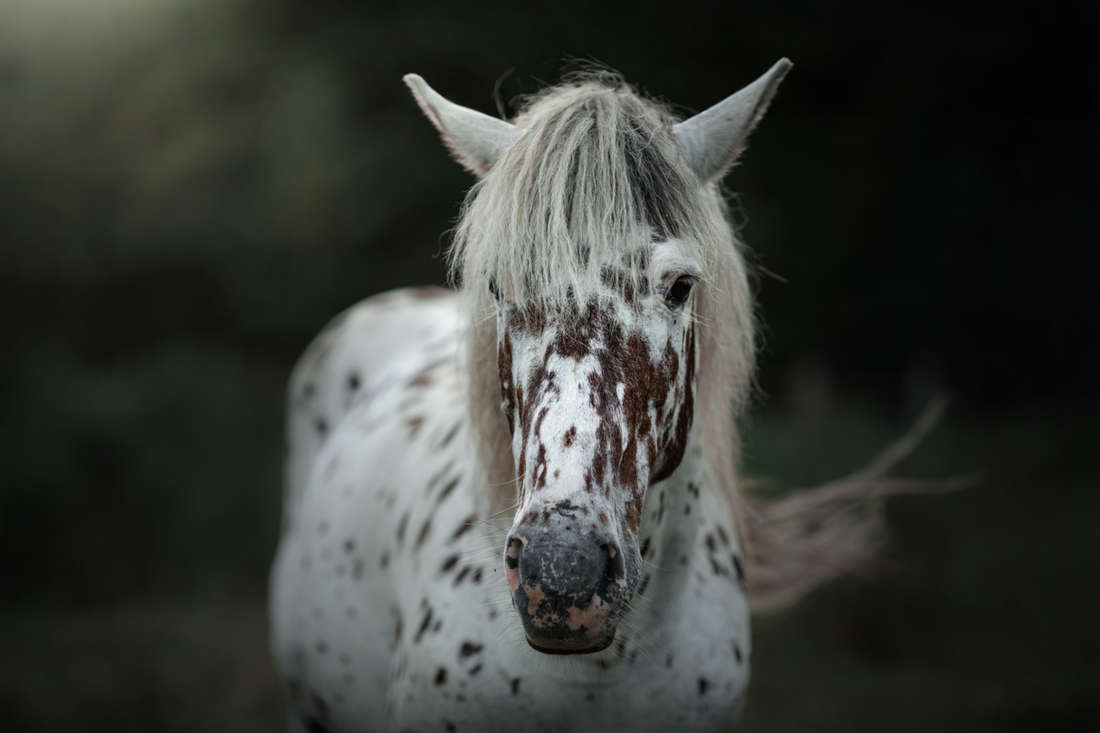
CSNB is most commonly seen in Appaloosas and other breeds with leopard spotting patterns, due to a genetic mutation linked to coat color.
While the condition cannot be cured, it is non-progressive, meaning it does not worsen over time. With appropriate management, affected horses can live comfortable, functional lives. [1][2]
Understanding the causes, signs, and practical management strategies for CSNB can help horse owners support their horse’s safety and well being.
What is Congenital Stationary Night Blindness in Horses?
Congenital stationary night blindness (CSNB) is a genetic condition that affects how the retina processes light in low-light environments. It primarily involves dysfunction of the rod photoreceptors, which are responsible for vision in dim or dark conditions. [1][2]
The term congenital means the condition is present from birth, while stationary indicates that it does not progressively worsen over time. Horses with CSNB are born with impaired night vision, but their condition remains stable throughout their lives.
Importantly, CSNB does not affect daylight (photopic) vision. Most affected horses see normally in well-lit conditions, which can make the condition difficult to recognize unless the horse is observed in dim lighting.
Because the condition is linked to coat pattern genetics, particularly in Appaloosas, it is often associated with horses that carry the leopard complex (LP) gene. However, not all horses with this gene show clinical signs; they must inherit the condition according to a specific genetic combination.
Complete vs. Incomplete CSNB
CSNB may sometimes be described as complete or incomplete, depending on how much night vision is affected.
Complete CSNB (CSNB1) results in little to no vision in low-light conditions, while incomplete forms (CSNB2) may allow for some limited vision in dim environments.
These distinctions are mainly used in research and diagnostics and do not typically change how the condition is managed. [3]
Table 1. Congenital stationary night blindness at-a-glance
| Congenital Stationary Night Blindness (CSNB) | |
|---|---|
| Condition Type | Inherited vision disorder affecting low-light vision |
| Onset | Present from birth (congenital) |
| Progression | Non-progressive (does not worsen over time) |
| Vision Impact | Impaired night vision; normal daytime vision |
| Primary Cause | TRPM1 gene mutation affecting retinal function |
| Common Breeds | Appaloosa, Knabstrupper, Noriker |
| Diagnosis | Electroretinography (ERG) and genetic testing |
| Treatment | No cure; managed through environmental adjustments |
| Prognosis | Good with appropriate management |
What's your top priority with your horse's health?

What's your top priority with your horse's health?
Clinical Signs of CSNB in Horses
The most common sign of CSNB in horses is difficulty seeing in low-light conditions despite having adequate daytime vision.
Horses with congenital stationary night blindness (CSNB) typically behave normally during the day but struggle to see in dim environments.
Signs are most noticeable in low light, particularly:
- At dusk
- In poorly lit barns
- At night
Common signs include: [2][3][4]
- Raising or tilting the head, sometimes appearing to “stare” toward light
- Hesitation or refusal to enter dark spaces (e.g., barns, trailers)
- Increased spooking or anxiety in low-light conditions
- Difficulty navigating unfamiliar areas at night
- Bumping into objects or misjudging distances in dim lighting
- Reluctance to move forward in poorly lit environments
- Clumsiness, especially in foals
These behaviors are not related to temperament or training. Horses with CSNB may appear cautious or reactive in the dark because they are unable to see clearly. In familiar, well-lit environments, most affected horses behave normally, which can make the condition easy to overlook.
How to Tell if Your Horse Has CSNB
The biggest indicator of CSNB is that associated behavior changes are lighting-dependent. The guide below can help owners narrow down what may be happening, but changes in vision should always be treated as a medical emergency.
Table 2. Lighting conditions and behavioral signs of congenital stationary night blindness in horses
| Lighting Condition | Typical Behavior |
|---|---|
| Daylight / Well-lit Areas | Normal vision and behavior |
| Dusk or Dim Barns | Hesitation, head raising, reluctance to move forward |
| Dark or Unfamiliar Areas | Spooking, anxiety, bumping into objects |
When to Call the Veterinarian
Any change in vision in horses should be treated as a medical emergency. While congenital stationary night blindness (CSNB) is a non-progressive condition, similar signs such as hesitation, spooking, or difficulty navigating can also be caused by acute or progressive eye diseases that require immediate veterinary attention.
Contact your veterinarian promptly if your horse shows:
- Sudden onset of vision changes or disorientation
- New or worsening difficulty navigating familiar spaces
- Increased anxiety, spooking, or refusal to move forward, especially in low light
- Bumping into objects or misjudging distances
- Any signs of eye pain, such as squinting, tearing, or swelling
What Causes CSNB in Horses?
Congenital stationary night blindness in horses is caused by a genetic mutation that affects how the retina processes light in low-light conditions.
CSNB is linked to a mutation in the TRPM1 gene, which plays an important role in how the retina responds to light. In affected horses, this mutation prevents the eye from properly adjusting to dim or dark environments. [3][5][6]
This condition is inherited and follows an autosomal recessive pattern, meaning a horse must inherit the mutation from both parents to be affected. Horses that carry only one copy of the gene typically do not show any signs, but they are carriers who can pass the gene on to offspring.
This highlights the importance of genetic testing before breeding, which helps identify carriers to prevent high-risk breed pairings.
The mutation is closely associated with the leopard complex (LP) gene, which is responsible for spotted coat patterns. Horses that inherit two copies of the LP gene (LP/LP) have the highest risk of developing CSNB. [1][7]
Risk Factors
CSNB is most commonly seen in breeds that carry leopard spotting patterns, including, but not limited to: [1][6][7][8]
- Appaloosas
- Knabstruppers
- Norikers
Not all horses in these breeds are affected. Genetic testing can help identify affected horses and carriers, which is especially important for breeding decisions. [5]
The leopard complex (LP) gene produces a range of spotted coat patterns that vary in the amount of white and spotting. [3][5][6][8]
In addition to snowflake or frosted patterns, common leopard complex phenotypes include:
- Leopard: white coat with dark spots
- Few-spot leopard: mostly white with very few spots
- Blanket or snowcap: white over the hips, sometimes with spots
- Varnish roan: progressive roaning with mottled appearance
While spotted breeds are associated with CSNB due to their coat color genetics, the condition has also been identified in other breeds, including Tennessee Walking Horses and Standardbreds. [9][10]
Diagnosis of CSNB in Horses
Diagnosing congenital stationary night blindness (CSNB) typically involves a combination of clinical observation, history, and specialized testing.
Clinical Evaluation
Veterinarians assess the horse’s behavior and history, including reports of normal vision during the day and difficulty in low-light conditions. Coat pattern, particularly in Appaloosas and other spotted breeds, may also raise suspicion of CSNB. [2]
Because the condition is present from birth and does not worsen over time, signs are typically consistent rather than progressive.
Electroretinography (ERG)
Electroretinography (ERG) is the gold standard test for diagnosing CSNB. This test measures how the retina responds to flashes of light by recording electrical activity in the eye. [1][2][4][6]
During the procedure, the horse’s eye is exposed to controlled light stimuli under both light- and dark-adapted conditions. This allows veterinarians to evaluate how well different types of photoreceptor cells are functioning.
In horses with CSNB, ERG results typically show a reduced or absent response from rod cells, which are responsible for vision in low-light conditions. This pattern confirms impaired night vision, while cone cell responses (daylight vision) are usually normal.
Genetic Testing
Genetic testing can identify mutations associated with CSNB, including those linked to the TRPM1 and leopard complex (LP) genes. [5] This type of testing can help identify affected horses, detect carriers, and support informed breeding decisions.
A definitive diagnosis is typically based on clinical signs and ERG findings, with genetic testing providing additional supporting information.
Treatment of CSNB in Horses
There is currently no cure for congenital stationary night blindness (CSNB) in horses. [2]
Because the condition is genetic, it cannot be reversed or treated with medication or supplements. CSNB is also non-progressive, meaning the horse’s vision does not deteriorate over time.
It’s important to understand that CSNB is not related to nutritional deficiencies, such as low vitamin A levels. As a result, dietary changes or supplementation will not improve night vision in affected horses. [12]
For this reason, long-term care focuses on management strategies that help horses safely navigate their environment.
Management Strategies
Although CSNB cannot be treated, most horses adapt well with appropriate management. Adjustments to the horse’s environment and routine can significantly reduce stress and lower the risk of injury.
Environmental Management
Providing consistent, adequate lighting is one of the most effective ways to support horses with CSNB. Well-lit barns, paddocks, and handling areas help minimize situations where the horse may feel uncertain or unable to see clearly.
Gradual transitions between light and dark areas are also important. Sudden changes in lighting can be disorienting, so allowing time for adjustment can improve confidence and safety. [2]
Handling & Training
Horses with CSNB benefit from predictable routines and clear communication. Using consistent handling practices and verbal cues can help the horse feel more secure, especially in lower-light conditions.
Extra time may be needed when moving between environments, such as entering a barn or trailer. Avoid forcing the horse forward if they hesitate, as this may increase anxiety.
Turnout & Safety Considerations
Turnout should be managed with safety in mind. Horses with CSNB may be best suited to daytime turnout or familiar environments where obstacles are limited.
Removing hazards such as sharp objects, uneven footing, or clutter can help reduce the risk of injury. Monitoring behavior during changes in lighting—such as at dusk—can help identify situations where additional support may be needed.
With appropriate management, CSNB is a manageable condition, and most affected horses can continue normal routines and activities in well-lit environments.

Prognosis for Horses with CSNB
The prognosis for horses with CSNB varies depending on the severity of vision impairment.
Horses with mild forms of CSNB typically have normal daytime vision and can be used for riding and other activities, provided they are managed appropriately. These horses are best suited to work in well-lit conditions, with the understanding that riding should be limited to daylight hours.
In more severely affected horses, vision may be significantly impaired in low-light environments and, in some cases, across all lighting conditions. These horses may require more careful management and may be less suitable for riding or performance activities. [2]
Because CSNB is non-progressive, the condition does not worsen over time. With appropriate care and environmental adjustments, many horses can live comfortable lives.
Frequently Asked Questions
Here are some frequently asked questions about congenital stationary night blindness in horses:
Night blindness in horses is most commonly caused by a genetic mutation that affects how the retina processes light in low-light conditions. In congenital stationary night blindness (CSNB), this mutation disrupts normal signaling between photoreceptors and retinal cells, impairing vision in dim environments. The condition is strongly associated with certain coat pattern genes, particularly in Appaloosas and other leopard complex horses.
Congenital stationary night blindness cannot be cured because it is a genetic condition present from birth. CSNB does not progress or worsen over time, but the underlying defect in retinal function cannot be reversed. Management focuses on adapting the horse's environment and routine to support safe movement and reduce stress in low-light conditions.
Horses with CSNB can often be ridden safely in appropriate conditions, particularly during daylight hours when vision is not impaired. Because congenital stationary night blindness affects low-light vision, riding in dim environments, at dusk, or in poorly lit indoor arenas may increase the risk of spooking or hesitation. Careful management and consistent routines help improve safety.
You may suspect night blindness in horses if they show hesitation, anxiety, or reluctance to move in dark or dimly lit areas. Horses with congenital stationary night blindness often appear normal during the day but may spook, stop, or refuse to enter shadows or poorly lit spaces. A veterinarian can confirm the diagnosis using specialized tests such as electroretinography (ERG).
Not all Appaloosas have night blindness, although congenital stationary night blindness is strongly associated with the leopard complex gene found in this breed. Only horses that inherit two copies of the TPRM1 mutation exhibit night blindness. Horses with one copy of the gene are carriers who can pass the condition onto offspring, even though they are not affected themselves.
Congenital stationary night blindness is not painful for horses because it affects visual function rather than causing tissue damage or inflammation. However, horses with CSNB may appear anxious or cautious in low-light conditions due to reduced visibility, which can influence behavior even though there is no physical discomfort.
Congenital stationary night blindness is not progressive in horses, meaning the condition does not worsen over time. Horses are born with impaired night vision, but their visual function remains stable throughout life, allowing them to adapt to their environment with consistent management.
Congenital stationary night blindness can be prevented through selective breeding practices that avoid pairing horses carrying the genetic mutation. Because CSNB is inherited, genetic testing and responsible breeding decisions are the most effective way to reduce the incidence of the condition in at-risk breeds.
Horses with congenital stationary night blindness can live normal lives with appropriate management. Since vision is typically normal in daylight, many horses can perform regular activities as long as they are not exposed to low-light conditions that impair their ability to see.
Congenital stationary night blindness is diagnosed in horses using electroretinography (ERG), which measures the electrical activity of the retina in response to light. This test helps confirm impaired rod function, which is characteristic of CSNB, and distinguishes it from other causes of vision problems.
Summary
Congenital stationary night blindness (CSNB) is a genetic vision disorder that affects a horse's ability to see in low-light conditions
- Affected horses typically have normal daytime vision but impaired night vision
- CSNB is most common in Appaloosas and other spotted breeds, but can occur in other breeds
- The condition is non-progressive, meaning it does not worsen over time
- There is no cure, but management strategies can help horses remain safe and functional
- With appropriate care, many horses with CSNB can live normal lives and be used for riding in daylight
References
- Sandmeyer. L. S. et al. Clinical and Electroretinographic Characteristics of Congenital Stationary Night Blindness in the Appaloosa and the Association with the Leopard Complex. Veterinary Ophthalmology. 2007.
- Clode. A. et al. Eye: Night Blindness in Horses (Equis). Vetlexicon.
- Ludwig. A. et al. Twenty-Five Thousand Years of Fluctuating Selection on Leopard Complex Spotting and Congenital Night Blindness in Horses. Philosophical Transactions of the Royal Society B: Biological Sciences. 2015. View Summary
- Gilger. B. C. Equine Ophthalmology. ScienceDirect.
- Stefaniuk-Szmukier. M. et al. Genetic Testing as a Tool for Diagnosis of Congenital Stationary Night Blindness (CSNB) in White Spotted Breeds in Poland. Journal of Equine Veterinary Science. 2025. View Summary
- Bellone. R. R. et al. Evidence for a Retroviral Insertion in TRPM1 as the Cause of Congenital Stationary Night Blindness and Leopard Complex Spotting in the Horse. PLoS ONE. 2013. View Summary
- Sandmeyer. L. S. et al. Congenital Stationary Night Blindness Is Associated with the Leopard Complex in the Miniature Horse. Veterinary Ophthalmology. 2012. View Summary
- Sponenberg. D. et al. The Inheritance of the Leopard Complex of Spotting Patterns in Horses. The Journal of heredity. 1990. View Summary
- Esdaile. E. et al. Additional Evidence Supports GRM6 p.Thr178Met as a Cause of Congenital Stationary Night Blindness in Three Horse Breeds. Veterinary Ophthalmology. 2024. View Summary
- Nunnery. C. et al. Congenital Stationary Night Blindness in a Thoroughbred and a Paso Fino. Veterinary Ophthalmology. 2005. View Summary
- Sandmeyer. L. S. et al. Diagnostic Ophthalmology. The Canadian Veterinary Journal. 2006.