English








![Why Do Horses Wear Shoes And Do They Need Them? [Barefoot vs. Shod]](/wp-content/uploads/2023/05/Why-Do-Horses-Need-Shoes.jpg)
Does my horse need shoes? This is a question frequently asked by horse owners, and the answer varies depending on several factors.
Horses wear shoes for various reasons, including providing protection and traction, supporting hoof structure, and improving performance. Some specialized shoes are used for corrective purposes to address hoof or gait issues.
But not all horses require shoes, and many horses can thrive barefoot with regular hoof care and maintenance. Barefoot trimming is becoming increasingly popular, even among high-end performance horses.
Barefoot hoof practitioners aim to replicate the natural wear of hooves, providing support to the horse without the need for shoes. However, there are cases where horses benefit from shoes and are not able to go barefoot.
Determining whether your horse requires shoes depends on the health of their hooves, their workload, and the surface or terrain your horse is worked on. [1]
In this article, we will discuss the reasons behind shoeing horses and explore why, in certain cases, barefoot trimming is favored.
Why Do Horses Wear Shoes?
The origin of horseshoeing is unclear, however many scholars believe this practice became commonplace during the Greek and Roman Empires, over 1,000 years ago. [27]
While feral horses are often seen as having ideal hoof conformation, it is not always realistic to expect the same for modern domesticated horses.
Although some feral and semi-feral horse populations can maintain balanced hoof structure through natural movement and abrasion, there have been instances of hoof abnormalities in semi-feral horses. These abnormalities include conditions that could be helped by shoeing, including flared hoof walls and chronic laminitis. [28][29][30][31][32]
The main factors that determine whether a wild horse can maintain balanced hoof structure without shoeing are the distance commonly traveled, the type of ground traversed, and genetic determinants of hoof conformation.
Horses that walk less or walk on soft ground will experience less natural abrasion, which can lead to hoof abnormalities similar to those observed in untrimmed domestic horses. [31][32]
Benefits of Shoes
Many horses can benefit from wearing shoes to protect their hooves from excessive wear and maintain proper balance in the foot and lower limbs.
The following list provides some of the most common reasons your farrier may recommend shoeing your horse: [2][3][4]
- Increased Traction: Shoes can improve grip, particularly for performance or working horses that operate on poor ground conditions or rough terrains. Enhanced traction helps prevent slips and provides better stability.
- Reduced Hoof Wear: Shoeing is beneficial when a horse’s hoof wears down faster than it grows naturally. Shoes help prevent abrasion and minimize excessive wear.
- Enhanced Comfort: Working police horses and carriage horses benefit from the additional support and cushioning provided by shoes, especially during long hours of work on paved surfaces.
- Prevention of Hoof Flaring: Shoes help prevent hoof flaring, a condition in which the hoof wall weakens and expands outward.
- Protection against Damage: Horseshoes act as a protective barrier, shielding the hooves from splitting, cracking, or bruising. They minimize the risk of external trauma and help maintain the overall health of the hoof.
- Correction of Hoof Irregularities: Corrective shoeing can address issues such as uneven hoof wear, poor conformation, or imbalances. Specialized shoeing techniques help to address these irregularities, promoting proper gait and minimizing the risk of lameness.
- Protection from Moisture: Excessive moisture exposure can lead to accelerated hoof wear and heightened susceptibility to bacterial infections. Shoes help to limit exposure to excess moisture, keeping the hooves from becoming soft and susceptible to damage or infection.
- Improved Symmetry and Balance: Shoeing can improve hoof balance to ensure balanced weight distribution and absorption of concussive forces. This helps to reduce the risk of strain or injury and is important for maintaining soundness.
- Therapeutic Purposes: Horseshoes are used therapeutically to address diseases, movement abnormalities, orthopedic injuries or hoof conditions. Customized therapeutic shoes can provide necessary support, alleviate pain, and aid in the healing process.
Does Your Horse Need Shoes?
The decision to shoe or not to shoe your horse should be made in consultation with your farrier and veterinarian. [38] Several factors should be considered, including your horse’s: [2]
- Workload
- Surface they are worked on
- Breed
- Hoof conformation
- Athletic discipline
- Health status
What's your top priority with your horse's health?

What's your top priority with your horse's health?
Shoeing Practices
Shoeing is common across many equestrian disciplines and management conditions. The classic steel shoe attached by nails into the hoof wall continues to be the mainstay of horseshoeing.
More recently, new materials have been tested including glue-on synthetic shoes made of plastic or rubber. These do not require nails and can be used when the hoof wall is compromised. Glued-on shoes can reduce vibration through the foot during exercise and offer greater traction on some surfaces. [33]
However, the benefit of alternative materials should be weighed against potential drawbacks, including limited natural heel expansion during exercise. [34]
Instead of using fully synthetic shoes, your farrier may opt to add pads or composite material to steel shoes to provide additional support for the frog and sole. These materials conform to the shape of the bottom of the hoof, evenly distributing pressure on the hoof. [9]
Regardless of the type of horseshoe used or whether you keep your horse barefoot, a 4 – 6 week trim cycle is recommended to rebalance the hoof and maintain symmetry. [14][21]
Research shows that longer trim cycles, in shod or barefoot horses, can cause the horse to alter their gait to compensate for changes in hoof morphology. This can put greater strain on joints and tendons, increasing the risk of tendon injury and impacting performance. [35]
Both barefoot and shod horses need consistent, high-quality farrier care that is individualized to their lifestyle, environment and health status.
Shoeing for Performance Horses
The decision to shoe a performance horse or ride barefoot needs to be made on an individual basis taking into account the discipline, performance goals and rider comfort.
Skilled farriers will adjust the trim and shoeing procedures by athletic discipline. For example, a shorter toe and light shoe can help barrel racing horses accelerate and turn quickly. For endurance horses, a tight fit and pads that increase shock absorption are emphasized. [36]
Certain disciplines are more amenable to keeping horses barefoot. Dressage horses, who are worked on an ideal surface to maintain steady footing, can benefit from barefoot riding or shoeing only the fore feet. [36]
Other disciplines, such as eventing, use shoes to help improve traction and reduce the risk of hoof bruises. [36] Equestrians participating in these disciplines may be less likely to experiment with barefoot trimming.
Shoes for Racehorses
Because shoes add weight to the foot, it is generally thought that going barefoot could help racehorses run faster and with better gait quality. [37] However, the benefits of going barefoot must be weighed against possible risks.
A study on Standardbred trotters found that barefoot horses had faster speeds than fully shod horses on certain tracks. But shod horses were less likely to break gait into a canter or gallop and had a lower risk of disqualification. [5]
Despite the potential speed benefits, jockeys in Thoroughbred racing perceive barefoot riding as less smooth or unsafe. [39]
Interestingly, racehorses that wore shoes solely on their hind hooves experienced improved performance compared to fully-shod horses, while avoiding the risks associated with being completely barefoot. [5] Shoeing the hind hooves may be an effective compromise between keeping horses fully shod and barefoot.
Therapeutic Shoeing in Horses
Shoes can correct for hoof abnormalities caused by conformation or movement patterns. Shoes can also support horses affected by certain injuries or hoof disorders, alleviating symptoms and allowing the hoof to recover.
Some equine conditions that may benefit from therapeutic shoeing include: [7]
- Laminitis
- Navicular syndrome
- White line disease
- Canker
- Hoof bruises
- Hoof abscesses
- Thrush
- Keratomas
- Hoof cracks
If your horse exhibits signs of pain, lameness or hoof-related disease, seek veterinary advice to determine the underlying cause. Your veterinarian should collaborate with your farrier to assess the condition of the hooves, devise a trimming plan, and determine whether shoeing is necessary.
What's your top priority with your horse's health?
Laminitis
Shoes and farriery techniques can be employed as part of a holistic treatment approach for laminitis. Individual cases of laminitis can vary, and the specific type of shoe required will depend on the specific needs of the affected hoof.
Therapeutic shoeing for laminitis aims to alleviate tension on the deep digital flexor tendon and minimize stress on the lamellae, which connect the coffin bone to the hoof wall. [8]
Egg-bar shoes, heart-bar shoes, reverse shoes, wide web aluminum rail shoes, and wooden shoes are options for addressing laminitis. [9] These shoes have features to elevate the heel, support the frog and sole, and/or adjust the breakover point. [8][9]
The breakover point, which is situated on the bottom of the hoof, is where the hoof pivots as it leaves the ground. Normally positioned slightly behind the toe, it undergoes significant pressure during lift-off. [8][9]
For horses with laminitis, raising the heel shortens the breakover phase to alleviate pressure on the toe and decrease stress on the inflamed lamellae. [40]
Navicular syndrome
Corrective shoes are typically used in the treatment of navicular syndrome. These shoes provide support to the navicular region so that tissues in the heel can recover.
Egg-bar shoes are commonly used to redistribute pressure away from the navicular area of the hoof. Additionally, wedge pads or wedge shoes can be incorporated to improve the hoof angle and provide support. [10][11]
One study demonstrated successful treatment of navicular syndrome using modified Z-bar shoes. The original Z-bar shoe resembled an egg-bar shoe, but with a bar removed from the sensitive hoof area and placed across the frog.
Although the initial design caused bruising to the frog, subsequent adjustments were made to preserve the positive effects without bruising, resulting in the modified Z-bar shoe. [10]
The modified Z-bar shoe effectively reduce lameness in the two tested horses. However, further research is necessary to validate its effectiveness. [10]
White Line Disease
White line disease involves a bacterial or fungal infection that develops after hoof wall separation in the horse.
Treatment for white line disease involves debriding the affected area, filling deep cavities in the hoof, and shoeing. [12]
Shoeing the hoof plays a crucial role in protecting the affected area and redistributing the load away from the diseased tissue, facilitating the healing process. [12]
The best type of shoe depends on the severity of hoof damage. Mild cases may be adequately managed with a traditional shoe.
In more severe cases, specialized shoes such as heart-bar shoes, heel-plate shoes, rail shoes, or wooden shoes are often necessary. Your farrier may need to customize the shoe to accommodate the damaged portion of the hoof and potentially incorporate a heel wedge. [7][12]
Canker
Canker is a relatively rare hoof disease characterized by a bacterial infection in the horn tissue. Canker is associated with anaerobic bacteria, primarily Fusobacterium necrophorum.
The infection causes an overgrowth of horn tissue accompanied by spongy, wet, grey or white material on and around the frog. [13]
Hooves with canker should be debrided and kept in a dry environment. Your veterinarian will likely prescribe antibiotics to fight the bacterial infection.
Bandages or shoes with treatment plates should also be applied. Some veterinarians prefer to bandage the hoof because they find the shod hoof is harder to keep dry. [7][13]
Barefoot Trimming for Horses
Although shoeing can have therapeutic benefits and support performance horses, there are drawbacks that can impact hoof health. Most notably, shoes restrict the natural, dynamic movement of the hoof during locomotion.
For this reason, barefoot trimming is recommended for horses that do not require shoes. Maintaining horses barefoot has numerous potential benefits for locomotion and hoof health, including:
- Improved circulation
- Tougher, healthier structures in the hoof
- Improved hoof angles
- Improved shock-absorption
- Better traction on certain surfaces
Keeping horses barefoot mimics the natural wear of the hoof. However, the hooves should still be trimmed at least every 6 weeks to maintain healthy hoof angles and to prevent excessive stress on hoof structures. [14]
Transitioning a previously shod horse to barefoot can be challenging, as it may take several weeks for the hooves to harden and adapt during the transition process. Work with your farrier to make a successful transition and modify your horse’s training schedule, if needed.

Hoof Boots
Hoof boots offer a removable alternative to shoes, mitigating some of the downsides associated with shoes while still providing some of the upside.
Hoof boots are protective coverings that are worn over a horse’s barefoot hooves. They provide temporary support and protection, but do not impede the natural shock-absorbing function of the hoof.
These boots are frequently used by riders who want to keep their horses barefoot, but want to reduce hoof wear and maintain comfort on rough terrain. Hoof boots support the sole of the hoof, provide traction, and elevate the heel. Some veterinarians recommend hoof boots to treat pain or hoof diseases. [23]
Benefits of Keeping Horses Barefoot
In the following section, we delve into more detail regarding the various benefits of keeping horses barefoot.
Improved Circulation
The pressure exerted by the ground on the structures within the horse’s hoof plays a crucial role in promoting circulation throughout the hoof and lower leg.
For blood to circulate effectively in a horse’s hoof and leg, it must flow through arteries in the digital cushion towards a network of veins in the hoof, and then travel through veins to return up the horse’s leg.
The pressure applied by the ground onto the digital cushion, frog, and sole while the hoof is weight-bearing helps pump the blood through the hoof and facilitates its return up the leg. [15]
Research shows that keeping horses barefoot enhances circulation through the legs. Because shoes prevent the hoof from expanding, less ground force is exerted on the frog, sole, and digital cushion. [16]
Ground pressure also stimulates the frog to grow stronger and larger, further helping pump blood through the lower leg. [3]
Improved Hoof Health
Barefoot trimming supports the development of a thicker, healthier digital cushion. This is a tough hoof structure located above the frog, consisting of collagen, elastic fibrous material, and fat. [17]
The digital cushion is important for circulation and shock-absorption during locomotion. [15][17] A poorly developed digital cushion can increase the risk of lameness because it hampers blood flow and is less effective at dampening forces on the leg. [15]
When horses step on their hooves, the hoof changes shape and expands to enable the frog and sole to make contact with the ground. This disperses weight-bearing forces through the hoof.
Shoeing inhibits hoof expansion, which limits the contact between the frog, sole, and the ground. Consequently, the force exerted on the digital cushion is lessened, resulting in a thinner, weaker, and softer digital cushion. [15][18]
Adequate ground interaction is important for the development of a robust digital cushion. [15] Keeping horses barefoot improves the transfer of force through the hoof to the digital cushion, encouraging its growth and strengthening the tissue. [15]
The stronger digital cushion found in barefoot horses is less fatty and more fibrous, making it more resilient and shock-absorbing. This enables the digital cushion to provide better support to the horse during movement and weight-bearing. [19]
Ground forces on barefoot hooves also stimulate growth, resulting in larger frogs and heels than in shod horses. The increased surface area of these structures reduces stress during weight-bearing, while also contributing to improved blood flow, shock absorption, and proprioception. [3][19][20]
Better Hoof Angles
Shod hooves are more likely to become underrun, in which the heel angle is abnormally shallow and the heel grows forward and under the hoof rather than growing further downward. This is because shoes prevent the hoof from flaring out as it grows. [3]
Barefoot horses are more likely to have steeper heels and are less prone to underrun heels. A steeper heel angle gives the hoof better support by reducing stress on structures within the hoof, especially the navicular bone. [3]
Underrun heels in horses can lead to several negative implications: [3][21]
- Increases stress on structures in the hoof, especially the navicular bone
- Reduces shock-absorption by preventing the hoof from deforming when loaded (during weight-bearing)
- Increases strain on the deep digital flexor tendon and navicular bone by causing the fetlock and pastern joints to hyperextend
- Increases risk of lameness for racehorses
Protection from Impact
The horse’s hooves are flexible and change shape upon impact. When a hoof bears weight, the heel expands, the frog makes contact with the ground, and the digital cushion absorbs and dissipates the shock from impact.
Shoes prevent the hoof from changing shape and increase the vibrations that travel up the horse’s leg upon impact with the ground. [1]
Excess vibrational forces can be harmful, potentially leading to injury to the superficial digital flexor tendon, joint swelling, or even bone damage. [15][22]
Additionally, shoes can contribute to the thinning of the digital cushion, leading to increased impact on the bones and ligaments within the hoof. [15]
Nutrition for Hoof Health
Horses need a balanced diet that supplies adequate amounts of key nutrients to grow and maintain strong hooves. Important nutrients for maintaining hoof health include biotin, which is a B-vitamin, as well as amino acids and trace minerals such as copper, selenium, and zinc.
Keratin is an important protein that forms the structural framework of the hoof. Cells within the hoof continuously synthesize and deposit keratin, contributing to the growth and maintenance of healthy hooves.
Keratin is abundant in sulfur-rich amino acids, and the horse’s diet needs adequate levels of lysine, methionine and threonine to ensure proper keratin synthesis. Keratin synthesis also requires certain vitamins and minerals to support the function of enzymes involved in making this protein. [24][25][26]
For a typical 500 kg (1100 lb) adult horse at maintenance, make sure their diet provides these recommended amounts of the following nutrients: [6]
- Biotin: 20mg per day
- Zinc: 400mg per day
- Copper: 100 mg per day
- Selenium: 2mg per day
To support optimal hoof growth, choose a vitamin and mineral supplement that uses organic trace minerals, which are better absorbed and used by your horse’s body.
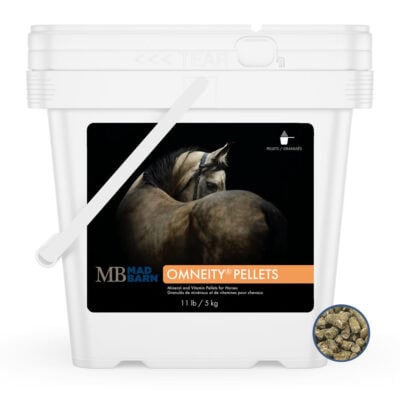
Mad Barn’s Omneity® is a balanced vitamin and mineral formula that provides all of the nutrients required to grow robust, healthy hooves. Designed with 100% organic trace minerals, Omneity® corrects for the most common nutrient deficiencies that can impair hoof growth.
Management Tips
Whether your horse is shod or barefoot, you can also support healthy hooves with the following nutrition and management strategies:
- Minimize high-starch grains in the diet to support insulin sensitivity and mitigate the risk of laminitis.
- Submit a forage sample for analysis to determine the levels of starch and sugars present in your horse’s hay. This analysis will also help you balance your horse’s diet.
- Maintain your horse at a healthy body condition to support metabolic health and reduce excessive weight bearing on the hooves.
- Provide ample turnout for your horse to encourage natural movement. Turnout helps promote circulation in the hooves and lower limbs.
It’s also important to maintain a regular farrier schedule and avoid going too long between trimmings. Having shorter intervals between farrier sessions is preferable to longer ones as it increases the likelihood of early detection of hoof issues.
Is your horse experiencing hoof problems? Submit their diet online for a free analysis by our qualified equine nutritionists to identify imbalances in the diet that may be negatively affecting hoof health.
Frequently Asked Questions
Not all horses need to wear shoes. Some horses do well barefoot with regular trimming, particularly if their workload is light and footing is forgiving. Shoes are used when a horse needs additional protection, traction, structural support, or therapeutic intervention that cannot be achieved through trimming alone.
Horseshoes are used to protect hooves from excessive wear, improve traction on slippery or hard surfaces, maintain proper hoof balance, and support soundness. In some cases, specialized shoes are applied for corrective or therapeutic purposes to address hoof or limb problems.
Whether a horse needs shoes depends on factors such as workload, terrain, hoof quality, rate of hoof wear, conformation, and soundness. Horses that work on hard or abrasive surfaces, wear their hooves faster than they grow, or require additional traction or support often benefit from shoes. Horses with strong hooves, lighter workloads, and suitable footing may remain barefoot. A farrier and veterinarian can help determine the best option for an individual horse.
Horseshoes do not hurt when applied correctly. Nails are placed into the hoof wall, which is made of keratin and does not contain nerves or blood vessels. Pain during or after shoeing suggests an underlying hoof problem, poor hoof health, or an improperly fitted shoe and should be addressed promptly.
Most horses should be trimmed or reshod every 4 to 6 weeks to maintain proper hoof balance and prevent excessive changes in hoof shape. The ideal schedule varies depending on hoof growth rate, workload, and environmental conditions.
Shoeing can provide protection from excessive hoof wear, improve traction, support proper balance, and help horses remain comfortable when working on challenging terrain. Therapeutic shoeing may also be used to manage hoof diseases, injuries, or conformational issues that affect movement and soundness.
Keeping a horse barefoot allows the hoof to function more naturally, supporting normal expansion, circulation, and shock absorption. With appropriate trimming and management, barefoot horses may develop stronger soles, frogs, and hoof structures over time.
Summary
Whether a horse needs to wear shoes depends on hoof health, workload, and the surfaces the horse is worked on. Shoes can provide protection, traction, and therapeutic support, while many horses can remain barefoot with appropriate trimming and management.
- Shoeing is used to protect hooves from excessive wear, improve traction, and help maintain balance in the foot and lower limbs
- Corrective or therapeutic horseshoes may be recommended for certain hoof disorders, lameness issues, or conformation-related imbalances
- Many horses can thrive barefoot when trims are regular and aligned with the horse’s environment, movement, and hoof conformation
- Trim intervals of roughly 4–6 weeks help maintain symmetry and reduce gait changes that can increase strain on joints and tendons
- Hoof boots can be a removable alternative for barefoot horses needing temporary protection or comfort on rough terrain
- Long-term hoof quality is supported by consistent farrier care, appropriate footing and turnout, and a balanced diet supplying key amino acids, biotin, and trace minerals such as zinc, copper, and selenium
References
- Allen, K. J. et al. Evaluation of heart rate and rhythm during exercise. Equine Vet Educ. 2015.
- Cunningham, S. M. Blood Vessel Disorders of Horses. Merck Veterinary Manual. 2019.
- Reef, V. B. Recommendations for Management of Equine Athletes with Cardiovascular Abnormalities. J Vet Intern Med. 2014. View Summary
- Young, L. E. Recent Advances in Diagnosing Cardiac Abnormalitlies With an EKG During Exercise: A Review. American Association of Equine Practitioners (AAEP). 2007.
- McGurrin, M. K. J. The diagnosis and management of atrial fibrillation in the horse. Vet Med (Auckl). 2015.
- Alberti, E. et al. Evaluation of Cardiac Arrhythmias before, during, and after Treadmill Exercise Testing in Poorly Performing Standardbred Racehorses. Animals (Basel).2021. View Summary
- King, A. Ecker, G. The Horse Health Check: A Systematic Method of Examination. Equine Guelph. Accessed At 2023-06-14.
- Ellis, K. L. et al. Poor performance in the horse: Diagnosing the non-orthopaedic causes. Equine Vet Educ. 2022.
- Rezakhani, A. et al. Sinus Bradycardia in a Horse. Pakistan Vet J. 2005.
- Singh, R. K., et al., A Comprehensive Review on Equine Influenza Virus: Etiology, Epidemiology, Pathobiology, Advances in Developing Diagnostics, Vaccines, and Control Strategies. Front. Microbiol. 2018.
- Code of Practice for the Care and Handling of Equines. National Farm Animal Care Council (NFACC). 2013.
- Nissen, S. D. Electrocardiographic characteristics of trained and untrained standardbred recehorses. J Vet Intern Med. 2022.View Summary
- House, A. M. & Giguère, S. How to Diagnose and Treat Ventricular Tachycardia. American Association of Equine Practitioners (AAEP). 2009.
- Hesselkilde, E.Z. et al. Cardiac arrhythmias and electrolyte disturbances in colic horse. Acta Vet Scand. 2014. View Summary
- Pratt, S.L. et al. Resolution of sustained ventricular tachycardia in a horse presenting with colic with magnesium sulfate. Equine Vet Educ. 2023.
- de Solis, C. N. Ventricular arrhythmias in horses: Diagnosis, prognosis and treatment. The Vet J. 2020. View Summary
- Equis - Heart: ventricular fibrillation. Vetlexicon.
- Patteson, M. W. & Cripps, P. J. A survey of cardiac auscultatory findings in horses. Equine Vet J. 1993. View Summary
- de Mare, L. et al. Standardized exercise tests in horses: current situation and futureperspectives. Vlaams Diergeneeskundig Tijdschrift. 2017.
- Reef, V. B. Treatment of atrial fibrillation in horses: new perspectives. J Vet Intern Med. 1995. View Summary
- Bentz, G. B. et al. Atrial Fibrillation in Horses: Treatment and Prognosis. Vet Practices Issues. 2002.
- Estrada, A. Atrial Fibrillation in Horses. University of Florida Large Animal Hospital.