English







Air quality in your barn has a direct impact on your horse’s health and performance. Horses have sensitive respiratory systems that take in high volumes of oxygen, especially during exertion, making them vulnerable to airborne irritants.
In enclosed spaces like barns and arenas, dust and gases, especially ammonia, can build up quickly. Without proper ventilation, these contaminants can harm the lungs and lead to chronic respiratory issues. [1]
Respiratory diseases are among the most common health issues affecting horses today. Conditions like Inflammatory Airway Disease (IAD) and Recurrent Airway Obstruction (RAO) are often linked to poor air quality. Long-term exposure to airway irritants can reduce performance, cause lasting lung damage, and raise veterinary costs. [2][3]
Improving air quality starts with identifying sources of dust and noxious odors in your horse’s environment. Managing these airborne irritants is one of the most effective ways to protect your horse’s lungs and overall well-being.
Air Quality in Horse Barns
Poor air quality in barns, stables, and indoor arenas can seriously affect your horse’s health. Because of how the equine respiratory system is built and how much air it moves, horses are especially sensitive to dust, ammonia, and other airborne irritants.
Understanding how their lungs function helps explain why these contaminants are such a serious concern.
Equine Respiratory System
The horse’s respiratory system is uniquely adapted to support intense physical exertion. Horses are obligate nasal breathers, meaning they can only breathe through their noses, and not their mouths. This makes them more vulnerable to respiratory problems. [4]
When horses inhale, air enters through the nostrils and passes through the nasal passages, pharynx, and nasopharynx before reaching the lungs. There, oxygen is exchanged for carbon dioxide in tiny air sacs called alveoli. This exchange is highly efficient, particularly during exercise, when oxygen demand can rise up to 20 times above resting levels. [3]
While this efficiency supports athletic performance, it also increases the lungs’ exposure to airborne irritants. Horses continuously draw in large volumes of air through their nasal passages, allowing dust, mold spores, bacteria, and ammonia to bypass natural defenses and reach the sensitive lower airways. [3][5]
In dusty or poorly ventilated environments, horses can inhale significant amounts of these particles. Over time, this exposure may lead to respiratory issues such as inflammatory airway disease or heaves. Even mild inflammation or narrowing of the airways can reduce oxygen intake and limit performance.
Airborne Irritants in Horse Facilities
Airborne irritants in barns and indoor arenas come from a variety of materials and activities. Without adequate control, these sources can create an unhealthy environment that compromises equine respiratory health.
Dust
Horse barns are often dusty environments, and that dust can contain harmful substances such as mold spores, bacteria, plant debris, and microscopic mites. Both horses and stable workers inhale these irritants, which can cause or worsen respiratory problems over time. [6]
A major source of dust in horse facilities comes from dry hay and bedding materials. These fibrous products release fine particulate matter, especially when disturbed by forking, sweeping, or horse movement. [7]
Improper hay storage can lead to mold and fungal growth, releasing spores that harm air quality and irritate the lungs. Dust mites in bedding can also cause allergic reactions and airway inflammation. [1]
Limited airflow makes the problem worse by allowing dust and allergens to linger in the air. Without proper ventilation, these particles stay suspended, raising the risk of inhalation for both horses and humans.
Noxious Odors
Strong odors in barns can also contribute to respiratory problems in horses.
The most potent and harmful odor is ammonia, a gas produced when bacteria break down urea in urine found in soiled bedding. Ammonia irritates mucous membranes and weakens the respiratory system’s natural defenses. [8]
Manure piles and dirty stalls also release gases like methane and hydrogen sulfide through microbial fermentation. If not properly managed, these can build up to unsafe levels, especially when manure is stored too close to living areas. [9]
Cleaning products and pest control chemicals can also release strong fumes. Disinfectants, fly sprays, and rodenticides often contain volatile organic compounds (VOCs) that irritate the respiratory tract, especially when used in confined, poorly ventilated spaces.
Pollution & Particulate Matter
Airborne pollution, especially from wildfire smoke, can pose serious risks to horses housed in barns and indoor arenas.
Smoke contains fine particulate matter (PM2.5) that can penetrate deep into the lungs, causing inflammation and reducing oxygen exchange. Horses exposed to smoky conditions may show signs of coughing, nasal discharge, labored breathing, or decreased performance.
Because barns can trap these particles, especially when ventilation is limited, it’s important to monitor local air quality and reduce exposure during periods of high pollution.
What's your top priority with your horse's health?

Enter your email to receive your store credit
Effects of Dust & Odors on Horse Health
Airborne irritants are major contributors to chronic respiratory conditions in horses, collectively known as equine asthma. These disorders vary in severity and can affect horses of all ages, but they share common environmental triggers — especially exposure to dust, mold, and ammonia in stable air. [10]
Dust in barns varies in particle size. The smallest particles, known as respirable particles, pose the greatest risk because they can reach deep into the lungs.

“By removing manure promptly, sweeping during cooler, damp conditions, and integrating ventilation or air‐filtration systems, barn managers can dramatically reduce airborne particulates and ammonia levels, which protects both equine respiratory health and the wellbeing of barn staff.”
— Dr. Jennifer Skaggs, DVMEquine Veterinarian
These fine particles are strongly linked to airway inflammation and are believed to play a central role in the development of equine asthma. [11]
Studies show that horses exposed to high levels of airborne dust are more likely to develop signs of airway irritation, including mucus accumulation, coughing, and reduced athletic performance.
This is particularly evident in performance horses, such as racehorses, jumpers, and dressage horses. [12]
Equine Asthma
Equine asthma refers to chronic, non-infectious airway inflammation caused by environmental irritants like dust and ammonia. Signs range from mild coughing to labored breathing.
While this condition is not curable, it can be managed through improved air quality and medical treatment. [2][10][13]
Recurrent Airway Obstruction (RAO)
RAO, or “heaves,” is a severe form of equine asthma often seen in older horses. Triggered by inhaled particles from hay and bedding, it causes persistent coughing, breathing difficulty, and reduced performance.
Management involves minimizing irritant exposure and using medications when necessary. [14][15]
Inflammatory Airway Disease
Inflammatory Airway Disease (IAD) is a milder form of equine asthma often affecting young performance horses. Symptoms, such as coughing during exercise and poor performance, are subtle and linked to dust and stable air quality.
Early detection and environmental control are key to preventing progression. [16]
Effects on Human Handlers
While barn air quality is often considered in relation to horses, humans — such as staff, riders, and frequent visitors — are also at risk. Studies show that long-term exposure to barn dust and gases can cause serious health issues in people. [17][18][19]
Respiratory Effects
Air inside barns often contains a mix of harmful particles and gases, such as dust, mold spores, bacteria, ammonia from urine, and hydrogen sulfide from manure. These contaminants pose a greater risk in enclosed or poorly ventilated spaces. [18][20]
People regularly exposed to barn air may experience: [18][19][20]
- Chronic coughing, wheezing, or shortness of breath
- Worsening of asthma or allergies
- Greater risk of respiratory infections
Over time, exposure can contribute to more serious conditions like: [21][22]
- Chronic bronchitis
- Hypersensitivity pneumonitis (also known as “farmer’s lung”)
- Ongoing airway inflammation linked to ammonia exposure
People working during high-dust activities such as feeding, mucking out, or changing bedding are at the greatest risk. [23]
Skin & Eye Irritation
Airborne irritants commonly found in horse barns can also affect skin and eye health in human caretakers.
Prolonged or repeated exposure may lead to symptoms such as: [24]
- Burning, watery, or itchy eyes
- Skin rashes or dermatitis
- Sneezing, nasal congestion, and allergy-like symptoms
- Headaches, fatigue, and reduced concentration
These effects are more pronounced in individuals with allergies or pre-existing sensitivities, but even low-level exposure can impact comfort and productivity over time.

Top 6 Strategies for Dust Control
Minimizing dust exposure in horse environments requires a combination of careful material selection, routine maintenance, and attention to airflow. Reducing airborne particles at the source is the most effective approach.
Here are our top six expert tips to help control dust at your equine facility.
1) Choose Low-Dust Bedding & Hay
Dust-extracted or pelleted bedding, such as wood shavings, produces less airborne dust than traditional straw. Dust-free shavings are processed to remove fine particles and allergens, making them ideal for horses with respiratory issues. They’re also highly absorbent, help reduce skin and hoof problems, and can save time on stall cleaning. [10][25]
Although more expensive than straw, quality shavings last longer and improve stable air quality. Since bedding quality varies, it’s important to choose a reliable product to avoid issues like high ammonia levels.
2) Soak or Steam Hay
Feeding releases a high amount of dust right at nose level, so many owners soak or steam hay to reduce airborne particles and protect the horse’s respiratory system.
While soaking hay helps reduce dust, it also leaches out important nutrients like minerals and sugars. Soaking also increases bacterial growth — by 1.5 to 5 times within just 10 minutes — which can raise exposure to harmful endotoxins and worsen lung inflammation.
To limit these risks, feed soaked hay immediately and remove any leftovers between meals. [6][26]
Steaming hay at high heat (over 100°C) is another option. It significantly reduces dust and kills mold and bacteria but may lower protein levels.
For the best results, consult a qualified equine nutritionist to design a balanced plan for feeding soaked or steamed hay.
3) Keep Arenas & Footing Moist
Dry arena footing releases fine dust particles during use, which can remain suspended in the air and be inhaled by horses and riders. Watering the arena regularly helps bind these particles and keeps them from becoming airborne. [27][28]
Dust-control additives like salts or binders improve moisture retention and reduce how often watering is needed. Keeping footing properly hydrated not only supports respiratory health but also improves traction and lowers the risk of injury, especially in enclosed arenas where dust builds up more easily. [29]
4) Store & Handle Feed Properly
Feeding activities can stir up a considerable amount of dust, especially when large amounts of hay or grain are handled indoors. Fine particles, dust, and mold spores can accumulate in poorly maintained storage areas and become airborne during feeding. [23][30]
Keeping feed bins tightly closed, promptly cleaning up spills, and avoiding handling dusty materials in confined areas can significantly reduce this exposure.
When possible, feeding should be done outdoors or in well-ventilated spaces to prevent airborne irritants from building up in stable air.
5) Improve Ventilation
Effective ventilation is crucial for maintaining healthy air quality in horse barns. Both natural ventilation — through open doors, windows, and ridge vents — and mechanical systems like fans or exhaust vents are important for keeping fresh air moving. [31][32]
Good ventilation helps carry away airborne contaminants while also reducing humidity, which in turn discourages mold growth and bacterial activity.
6) Provide More Outdoor Turnout
Increasing outdoor turnout is one of the most effective ways to reduce a horse’s exposure to dust and poor air quality in the barn.
Fresh air and open space help limit inhalation of dust, ammonia, and other airborne irritants commonly found in enclosed environments.
To make outdoor turnout a safe and sustainable option year-round, it’s important to provide adequate shelter that protects horses from rain, wind, and extreme temperatures. A well-designed shelter encourages horses to spend more time outside, supporting both respiratory health and overall well-being.
Top 5 Strategies for Noxious Odor Control
Odors in horse facilities are more than a nuisance; they’re a sign of poor air quality and can indicate the presence of harmful gases like ammonia. Controlling these odors involves improving hygiene, airflow, and waste handling practices. [10]
1) Clean Stalls Regularly
The primary source of odor in horse barns is decomposing organic material, such as urine and manure. When urine breaks down, it releases ammonia gas, which is corrosive to respiratory tissue and contributes to chronic airway inflammation in horses and barn workers alike.
Removing manure and wet bedding at least once daily significantly reduces ammonia buildup. More frequent cleaning may be necessary in densely populated barns or during warm, humid weather when microbial activity increases.
2) Use Absorbent, Ammonia-Neutralizing Bedding
Bedding plays a key role in the development and management of barn odors. Materials like hemp, peat moss, and treated wood shavings are more effective than traditional straw at absorbing moisture and binding ammonia.
For example, peat has a naturally low pH, which helps inhibit ammonia volatilization (the release of ionized gas from its liquid form). Studies have shown that horses bedded on high-absorbency substrates exhibit lower levels of ammonia-related respiratory stress. [5][10]
3) Manage Manure Effectively
Odor control doesn’t stop at the stall. How you handle and store manure also matters.
Manure piles should be located away from barns and water sources, and turned regularly to promote aerobic decomposition, which reduces the production of foul-smelling gases.
Avoid piling manure near barn ventilation inlets, as this can carry noxious gases back into the stable environment. [9][33][34]
4) Ventilate Enclosed Spaces
Ammonia gas is heavier than air and tends to accumulate near the floor. Effective ventilation counters this by ensuring fresh air circulation at both high and low levels within the barn.
Natural ventilation via ridge vents, eaves, and open doors should be supplemented with fans in barns that lack consistent airflow. Continuous air exchange helps dilute and remove odors before contaminants reach harmful concentrations. [35][36]
5) Use Cleaning Products Safely
While disinfectants are important for farm hygiene, some chemical cleaners can contribute to poor air quality if misused. [19]
Use horse-safe products and apply them in well-ventilated conditions. Avoid combining products that release strong fumes or reactive gases, especially in enclosed spaces.
Monitoring & Maintaining Air Quality in Horse Barns
Even with good management, air quality in horse facilities can fluctuate due to weather, season, or workload. Regular monitoring ensures that conditions remain safe for horses and humans alike.
Observe Signs of Irritation
Coughing, nasal discharge, or reluctance to work may signal a problem with your horse’s lung health. Even subtle changes in behavior or performance can indicate poor air quality.
Research has shown that over 80% of stabled horses show signs of airway inflammation, even when overt clinical signs are absent. [2]
Early indicators such as exercise intolerance, coughing during or after work, or increased respiratory effort can reflect poor ventilation and high levels of dust or ammonia in the barn environment.
Evaluate Ventilation
Use simple tools like smoke sticks, airflow ribbons, or carbon dioxide (CO₂) meters to check if air is moving effectively through the space.
Smoke tests are commonly used in research and extension programs to visualize airflow patterns and identify stagnant areas. [23][37]
Adjust Management Seasonally
In colder months, barns may be closed up to conserve heat, making good ventilation especially critical. Seasonal studies show that airborne contaminants rise significantly during fall and winter due to reduced airflow and increased moisture retention. [32]
Best practices include keeping ridge vents and eaves open year-round, using mechanical fans to maintain airflow, and increasing ventilation rates during periods of high occupancy or after stall cleaning. Maintaining continuous air exchange helps dilute and remove odors before they reach harmful concentrations. [36]
Consider Nutritional Support
Proper nutrition can help support your horse’s respiratory health, especially when environmental challenges like dust or ammonia exposure can’t be fully eliminated. Nutrients such as antioxidants, omega-3 fatty acids, and some herbs may help support normal lung function and homeostatic regulation of inflammation.
Supplements like Mad Barn’s w-3 Oil provide beneficial omega-3s, while spirulina supports comfortable breathing in horses with occasional sensitivities.
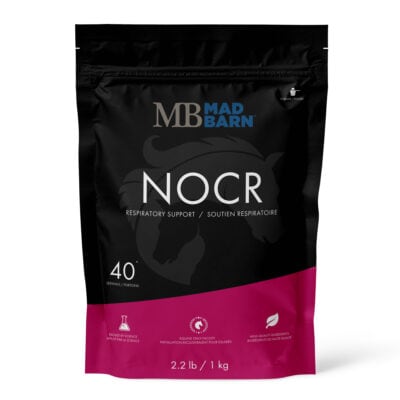
For additional respiratory support, consider Mad Barn’s NOCR. This science-backed formula combines natural ingredients, including adaptogenic herbs, to help maintain clear airways, support immune function, and maintain efficient oxygen use.
NOCR is ideal for performance horses or those exposed to dusty environments, helping them breathe more comfortably and maintain normal defenses against respiratory stress.
Frequently Asked Questions
Here are some frequently asked questions about dust and odor control in equine environments:
Horses are obligate nasal breathers with highly sensitive respiratory systems. Poor air quality increases their risk of developing respiratory diseases like asthma and heaves.
Dust from hay and bedding, ammonia from urine, and gases from manure decomposition are the main contributors to poor air quality in horse facilities.
Use low-dust bedding, soak or steam hay, maintain arena moisture, and improve ventilation to reduce airborne particulate matter in horse environments.
Ammonia irritates the respiratory tract, weakens natural defenses, and contributes to chronic airway inflammation, especially in poorly ventilated barns.
Yes, barn air quality poses a risk to human health. Riders and barn workers exposed to dust and noxious gases may experience coughing, allergies, eye irritation, and long-term respiratory issues.
Maintain open ridge vents and eaves, install fans to circulate fresh air, and avoid storing manure near air intakes to promote continuous air exchange.
Summary
Horses have sensitive lungs, so clean barn air is essential for their health and performance.
- Respiratory issues like inflammatory airway disease and heaves often result from poor air quality caused by dust, mold, and ammonia
- Dust in barns comes from mold spores, bacteria, plant debris, and mites, mostly from dry hay and bedding
- Ammonia, produced from urine in dirty bedding, is a strong irritant that damages horses' airways. Manure and cleaning chemicals also release harmful gases
- Controlling dust and odors requires using low-dust bedding and hay, soaking or steaming hay, cleaning stalls frequently, managing manure properly, and maintaining good ventilation
- Monitoring signs like coughing or poor performance, along with simple tools like smoke tests or carbon dioxide meters, helps ensure barn air stays healthy
References
- Mańkowska. A. and Witkowska. D., The Most Common Environmental Risk Factors for Equine Asthma—A Narrative Review. Animals. Multidisciplinary Digital Publishing Institute. 2024.
- Couetil. L. et al., Equine Asthma: Current Understanding and Future Directions. Frontiers in Veterinary Science. 2020. View Summary
- Narang. A. et al., Common Respiratory Disorders and Their Management in Equines: An Overview. EBSCOhost. 2024.
- Sheats. M. K. et al., Comparative Review of Asthma in Farmers and Horses. Current allergy and asthma reports. 2019. View Summary
- Vandenput. S. et al., Airborne Dust and Aeroallergen Concentrations in Different Sources of Feed and Bedding for Horses. Veterinary Quarterly. 1997. View Summary
- Auger. E.-J. and Moore-Colyer. M. J. S., The Effect of Management Regime on Airborne Respirable Dust Concentrations in Two Different Types of Horse Stable Design. Journal of Equine Veterinary Science. 2017.
- Olave. C. J. et al., Dust Exposure and Pulmonary Inflammation in Standardbred Racehorses Fed Dry Hay or Haylage: A Pilot Study. The Veterinary Journal. 2021. View Summary
- Fleming. K. et al., Evaluation of Factors Influencing the Generation of Ammonia in Different Bedding Materials Used for Horse Keeping. Journal of Equine Veterinary Science. 2008.
- Horse Stable Manure Management.
- Rodzyń. I. et al., Exposure to Chemical Pollutants and Biological Aerosol in Indoor Facilities for Recreational and Sport Horses. BMC veterinary research. 2024.
- Siegers. E. W. et al., Effect of Ionization, Bedding, and Feeding on Air Quality in a Horse Stable. Journal of Veterinary Internal Medicine. 2018. View Summary
- Gerber. V. et al., Airway Inflammation and Mucus in Two Age Groups of Asymptomatic Well-Performing Sport Horses. Equine Veterinary Journal. 2003.
- Lascola. K. M. and Boone. L., Asthma in Horses. Merck Veterinary Manual. 2024.
- Saastamoinen. M. et al., Reducing Respiratory Health Risks to Horses and Workers: A Comparison of Two Stall Bedding Materials. Animals. MDPI AG. 2015.
- Woods. P. S. A. et al., Airborne Dust and Aeroallergen Concentration in a Horse Stable under Two Different Management Systems. Equine Veterinary Journal. Wiley. 1993.
- Couëtil. L. L. et al., Inflammatory Airway Disease of Horses—Revised Consensus Statement. Journal of Veterinary Internal Medicine. 2016. View Summary
- Samadi. S. et al., Exposure to Inhalable Dust, Endotoxins, β(1→3)-Glucans, and Airborne Microorganisms in Horse Stables. The Annals of Occupational Hygiene. 2009. View Summary
- Elfman. L. et al., Influence of Horse Stable Environment on Human Airways. Journal of Occupational Medicine and Toxicology. 2009. View Summary
- Mazzeo. N., Ed., Chemistry, Emission Control, Radioactive Pollution and Indoor Air Quality. IntechOpen, Erscheinungsort nicht ermittelbar. 2011.
- (PDF) Particulate Matter Concentrations and Fungal Aerosol in Horse Stables as Potential Causal Agents in Recurrent Airway Disease in Horses and Human Asthma and Allergies. ResearchGate. 2025.
- Dales. R. E. and Munt. P. W., Farmer's Lung Disease. Canadian Family Physician Medecin De Famille Canadien. 1982.
- Eduard. W. et al., Chronic Bronchitis, COPD, and Lung Function in Farmers: The Role of Biological Agents. Chest. 2009.
- Wålinder. R. et al., Installation of Mechanical Ventilation in a Horse Stable: Effects on Air Quality and Human and Equine Airways. Environmental Health and Preventive Medicine. BioMed Central. 2011. View Summary
- Melbostad. E. and Eduard. W., Organic Dust-Related Respiratory and Eye Irritation in Norwegian Farmers. American Journal of Industrial Medicine. 2001.
- Masebo. N. T. et al., A Literature Review on Equine Bedding: Impacts on Horse and Human Welfare, Health, and the Environment. Animals. 2025.
- Westerfeld. R. et al., Effects of Soaked Hay on Lung Function and Airway Inflammation in Horses with Severe Asthma. Journal of Veterinary Internal Medicine. 2024. View Summary
- Lühe. T. et al., Factors Associated with Dust Dispersed in the Air of Indoor Riding Arenas. Equine Veterinary Journal. 2017.. View Summary
- Claußen. G. et al., Determination of the Moisture Content and the Generation of Airborne Particulate Matter From Various Types of Footing From Indoor Riding Arenas Considered to Have Optimal Rideability. Journal of Equine Veterinary Science. 2019.View Summary
- Fabian. E. E., Riding Arena Footing Material Selection and Management. PennState Extension. 2016.
- Hessel. E. F. et al., Generation of Airborne Particles from Horse Feeds Depending on Type and Processing. Journal of Equine Veterinary Science. 2009.
- Horse Barn Ventilation. Government of Ontario. 2025.
- Kic. P. et al., Effects on the Indoor Environment in a Stable for Horses in Winter: A Case Study. Agriculture. Multidisciplinary Digital Publishing Institute. 2024.
- Composting Animal Manures: A Guide to the Process and Management of Animal Manure Compost. NDSU Agriculture. 2016.
- Farm Practices Guidelines for Livestock Producers in Manitoba: Odours. Government of Manitoba. 2020.
- Janke. D. et al., Calculation of Ventilation Rates and Ammonia Emissions: Comparison of Sampling Strategies for a Naturally Ventilated Dairy Barn. Biosystems Engineering. 2020.
- Fabian. E. E., Horse Stable Ventilation. PennState Extension. 2016.
- Fabian. E. E., Evaluating Air Quality in Livestock Housing Environments. PennState Extension. 2023.