English



Understanding your horse’s energy requirement is important for formulating a balanced diet that supports athletic performance, weight maintenance and overall function.
Horses, like all animals, rely on energy from their diet to fuel their everyday activities. Energy is required for growth, reproduction, basic cellular functions, and general maintenance of good health.
In horses, energy needs vary widely based on factors such as age, workload, metabolism, and even climate. A horse’s body condition also affects its energy needs: underweight horses require more calories to gain weight, while overweight horses need fewer calories to lose or maintain weight.
Horses obtain most of their dietary energy by fermenting fiber from forage, like hay and pasture grass. They can also derive energy from hydrolyzable carbohydrates (i.e. sugar and starch), fat and protein. Each energy source has different implications for the function and performance of the horse.
This article reviews how to determine energy requirements for horses, guides you in selecting the best calorie sources for your horse, and examines the effects of energy excesses or deficiencies in the equine diet.
Energy in the Equine Diet
Metabolism is the process by which a horse’s body converts food into energy. This energy fuels everything from digestion and cellular repair to movement and heat production.
Horses get energy from several components of the diet. On a forage-based diet, the majority of energy is supplied by fiber, which is fermented by microbes in the hindgut to produce volatile fatty acids (VFAs).
VFAs are absorbed into the bloodstream and provide steady, slow-release energy that is optimal for the horse’s metabolic health and physiological function. For most horses at low to moderate activity levels, forage alone can supply all of their energy needs.
Some horses need higher energy diets to support intense exercise, weight gain, or reproductive function. In addition to fiber, horses can obtain energy from other dietary components:
- Fats: A high-calorie nutrient found in oils and whole grains like roasted soybeans, providing concentrated energy
- Simple Carbohydrates: Sugars like glucose, fructose, and sucrose that are found in grains and quickly absorbed in the small intestine; however, excessive intake can lead to health issues
- Complex Carbohydrates (Starch): A type of carbohydrate found in grains that is digested and absorbed in the small intestine, supplying steady energy
- Protein: Supplies amino acids essential for building proteins in the horse’s body; some amino acids also contribute to energy production when metabolized
Energy Balance
Energy balance in a horse’s diet describes the relationship between the energy consumed and the energy used by the horse’s body. Achieving an optimal energy balance ensures your horse’s diet aligns with its weight maintenance and activity needs.
The energy supplied in your horse’s diet can be adjusted to achieve one of the three following types of energy balance:
- Positive Energy Balance: When the diet provides more energy than the horse needs for maintenance, the horse has extra calories available for weight gain, growth, or recovery from intense exercise. This is beneficial for underweight horses or those needing to increase body condition.
- Net Zero Energy Balance: When the diet provides exactly the same amount of energy required for daily activity, the horse maintains its current weight and body condition. This balance is ideal for horses at a healthy weight and in steady work or maintenance.
- Negative Energy Balance: When the diet provides fewer calories than the horse needs, it will draw on stored body fat for energy, resulting in weight loss. This is beneficial for overweight horses or those needing to reduce body condition. A slight negative balance may also help manage the growth rate in young horses.
To adjust your horse’s energy balance, you can modify:
- Energy Density: Increase or decrease calorie-dense feeds like grains or fat supplements. For weight gain, add more concentrated energy sources; for weight loss, limit high-calorie feeds while still ensuring a balanced diet.
- Dry Matter Intake: Adjust the total amount of forage or feed (dry matter) to meet energy needs. Increasing intake, like providing free-choice hay, supplies more calories, while limiting intake, such as by rationing hay, helps control weight by reducing calories without altering nutrient balance.
- Energy Expenditure: Increase or decrease exercise levels. Higher activity levels help burn calories and can shift the energy balance toward weight loss, while reducing workload or stress levels can help conserve energy.
Adjusting the energy balance of your horse’s diet allows you to manage body weight and condition effectively, supporting your horse’s health and performance needs.
What's your top priority with your horse's health?

What's your top priority with your horse's health?
How is Energy Measured?
The energy content of your horse’s diet is typically measured in two units: calories (common in North America) and joules (used in Europe).
The definition of a calorie is it represents the energy needed to raise the temperature of one liter of water by one degree Celsius. Joules, commonly used in physics, represent the measure of energy required to move a 1 kg object by one meter with one Newton of force.
For simplicity, we use calories as our unit of measurement in this guide. However, it’s important to note that the term “calorie” actually refers to kilocalories (kcal) in nutritional contexts.
- Calorie: A single calorie (cal) is the amount of energy required to raise the temperature of one gram of water by one degree Celsius. However, this unit is very small, so it’s not commonly used to measure food energy.
- Kilocalorie (kcal or Cal): One kilocalorie equals 1,000 calories and is the standard unit for measuring dietary energy. When we refer to “calories” on food labels or in nutrition, we’re actually talking about kilocalories. For example, a “500-Calorie” meal contains 500 kilocalories. Human food labels list kcal with a capital C as “Cal,” but it is a subtle distinction many consumers are unaware of.
For clarity, we’ll continue to follow the convention of using “calories” to mean kilocalories in this discussion.
In equine nutrition, energy needs are often expressed in megacalories (mcal), where 1 mcal equals 1,000 kilocalories.
As an illustration, the average maintenance energy requirement for a mature horse is approximately 16,700 kilocalories per day, which is typically stated as 16.7 mcal per day.
To provide additional context, here are the typical energy contents of various feeds in the equine diet per 1 kg (2.2 lb), expressed in megacalories (mcal):
- Grass Hay: Approximately 2.0 – 2.4 mcal
- Pasture Grass: Approximately 2.5 mcal
- Alfalfa Hay: Approximately 2.2 – 2.6 mcal
- Beet Pulp: Approximately 2.8 mcal
- Oats: Approximately 3.3 mcal
- Barley: Approximately 3.5 – 3.7 mcal
- Corn: Approximately 3.8 – 4.0 mcal
- Commercial Feeds: Varies, generally around 3.0 – 3.5 mcal
- Vegetable Oil: Approximately 9.5 mcal
Digestible Energy (DE)
Biologically, the energy horses derive from feed can be described in four ways: [1]
- Gross energy: This represents the total amount of energy contained in a feed. Gross energy is measured by burning a feed to determine the total calorie content.
- Digestible energy: This represents the total amount of energy in a feed (gross energy) minus the amount of energy lost in feces when digested by the horse.
- Metabolizable energy: This measures digestible energy minus the energy of a feed that is lost in urine and gas produced during digestion.
- Net energy: The portion of metabolizable energy that remains after accounting for the energy expended during digestion, absorption, and nutrient metabolism. This is the actual energy available for the horse’s bodily functions.
The National Research Council’s (NRC) Nutrient Requirements of Horses (2007) uses digestible energy (DE) as the standard measure for evaluating the energy content of feeds and determining a horse’s energy needs.
Throughout this article, we also refer to digestible energy (DE) when discussing the energy content of feeds and the energy requirements of horses.
Energy Requirements for Horses
Equine energy requirements are established by the NRC’s Nutrient Requirements of Horses (2007). This comprehensive reference establishes the baseline nutritional requirements for horses at various life stages, activity levels, and physiological conditions.
In general, a horse’s energy requirements consist of the energy needed to maintain its current condition (maintenance requirement), plus the energy cost of production or work, such as growth or exercise.
The NRC recognizes six broad classes of horses with distinct energy requirements:
- Horses at maintenance (not exercising)
- Exercising horses
- Pregnant mares
- Lactating mares
- Growing horses
- Stallions
Maintenance
Maintenance horses are defined as any mature horse that is not pregnant, lactating, or involved in work, which includes breeding for stallions or participating in an exercise program for performance horses. [15]
In this context, mature refers to horses that have reached full physical development, typically around 4-5 years of age, depending on the breed. Mature horses are no longer growing and have stable energy needs compared to younger, developing horses.
These horses are at a life stage where their primary nutritional focus is on maintaining body condition and health. Maintenance horses typically engage in low-intensity activities, including natural movement and grazing during turnout, occasional light handling, and other leisure activities.
The maintenance requirements of horses are calculated based on body weight and the level of voluntary activity — that is, activity a horse performs on its own without being directed.
Voluntary activity levels can be influenced by factors such as housing, age, temperament, and breed. For example, a young, active horse in a pasture is likely to engage in more voluntary movement than an older, sedentary horse kept in a stall.
Typical Requirements
The energy requirements for a typical 500 kg (1,100 lb) horse at three different maintenance levels are as follows: [15]
- Minimum maintenance requirement: 15.2 mcal per day, suited for horses that are more sedentary than average, which is approximately 10% below the average maintenance requirement.
- Average maintenance requirement: 16.7 mcal per day, based on pooled data from multiple research studies on maintenance needs.
- Elevated maintenance requirement: 18.2 mcal per day, intended for horses with a “hot” temperament or those that are naturally more active.
For most horses at maintenance, moderate-quality forage combined with a vitamin and mineral supplement generally supplies sufficient energy and nutrients to maintain a healthy body condition.
Factors Influencing Requirements
Keep in mind that the above estimates are general guidelines, and individual horses may have unique needs that don’t align with standard recommendations. In addition to voluntary activity, several other factors may impact maintenance requirements in horses, such as: [15]
- Diet Composition: The nutrient balance of the diet, including fiber, fat, and protein levels, can influence how efficiently a horse metabolizes energy
- Age: Younger and older horses may have different energy needs due to changes associated with aging
- Breed: Certain breeds are predisposed to higher or lower metabolic rates, affecting their baseline energy requirements
- Genetics: Some genetic traits influence metabolism, energy utilization, and fat deposition
- Lean Body Mass: Horses with more muscle mass may require more energy to maintain this tissue compared to those with higher body fat
- Environmental Factors: Cold climates or extreme weather conditions increase energy demands as horses expend more energy to regulate body temperature
- Individual Variation: Each horse has unique behavioral traits and health needs that may alter its specific energy requirements
More research is needed to fully characterize how these factors impact energy requirements of maintenance horses.
Stallions
Stallions are mature, uncastrated male horses, often kept for breeding purposes.
The maintenance requirement for stallions is presumed to be higher than for geldings or mares due to differences in body composition and naturally higher voluntary activity levels (i.e., a “hot” temperament).
Therefore, the maintenance requirement for stallions is calculated based on the “elevated maintenance” category used for mature, non-exercising horses. [15][16][17]
In addition to their basic maintenance needs, breeding stallions may have increased energy requirements due to breeding activities. The requirement for stallions in busy breeding programs is estimated to be 20% higher than non-breeding stallions. [15]
For an average 500 kg (1,100 lb) stallion, the energy requirements are calculated as follows: [15]
- Non-breeding stallions: 18.2 mcal per day
- Breeding stallions: 21.8 mcal per day
While non-breeding stallions can typically meet their energy needs on a moderate quality grass hay alone, stallions that are bred frequently may require additional feeds to maintain their condition and meet protein requirements. Energy-dense feeds that can be added to the diet include:
For more on feeding stallions, visit our guide on Feeding and Management of Stallions or consult with an equine nutritionist to help balance your horse’s diet.
Pregnancy
Pregnant mares have higher nutrient requirements to support the developing fetus and maintain a healthy pregnancy. The energy requirement for pregnant mares is calculated as the sum of energy needed for: [15]
- Maintenance of the dam
- Growth of the fetus and placenta
- Growth of the uterus
- Development of mammary tissue
- Maintenance of additional pregnancy-related tissues
Mares’ energy needs generally remain stable until the fifth month of pregnancy, when increased fetal and placental growth heightens their demands. [15] Energy needs rise significantly in late pregnancy, as the fetus will reach around 9.7% of the mare’s weight by birth.
Ideally, mares should begin pregnancy with a body condition score (BCS) between 5 and 6 to meet the demands of pregnancy without excessive depletion of body reserves. If a mare has a lower body condition score at conception, her energy intake should be gradually increased to reach a BCS of 5 or higher by the ninth month of pregnancy. [15]
The energy requirements of an average 500 kg (1,100 lb) pregnant mare are as follows: [15]
- < 5 months pregnant: 16.7 mcal per day
- 5 months pregnant: 17.1 mcal per day
- 6 months pregnant: 17.4 mcal per day
- 7 months pregnant: 17.9 mcal per day
- 8 months pregnant: 18.5 mcal per day
- 9 months pregnant: 19.2 mcal per day
- 10 months pregnant: 20.2 mcal per day
- 11 months pregnant: 21.4 mcal per day
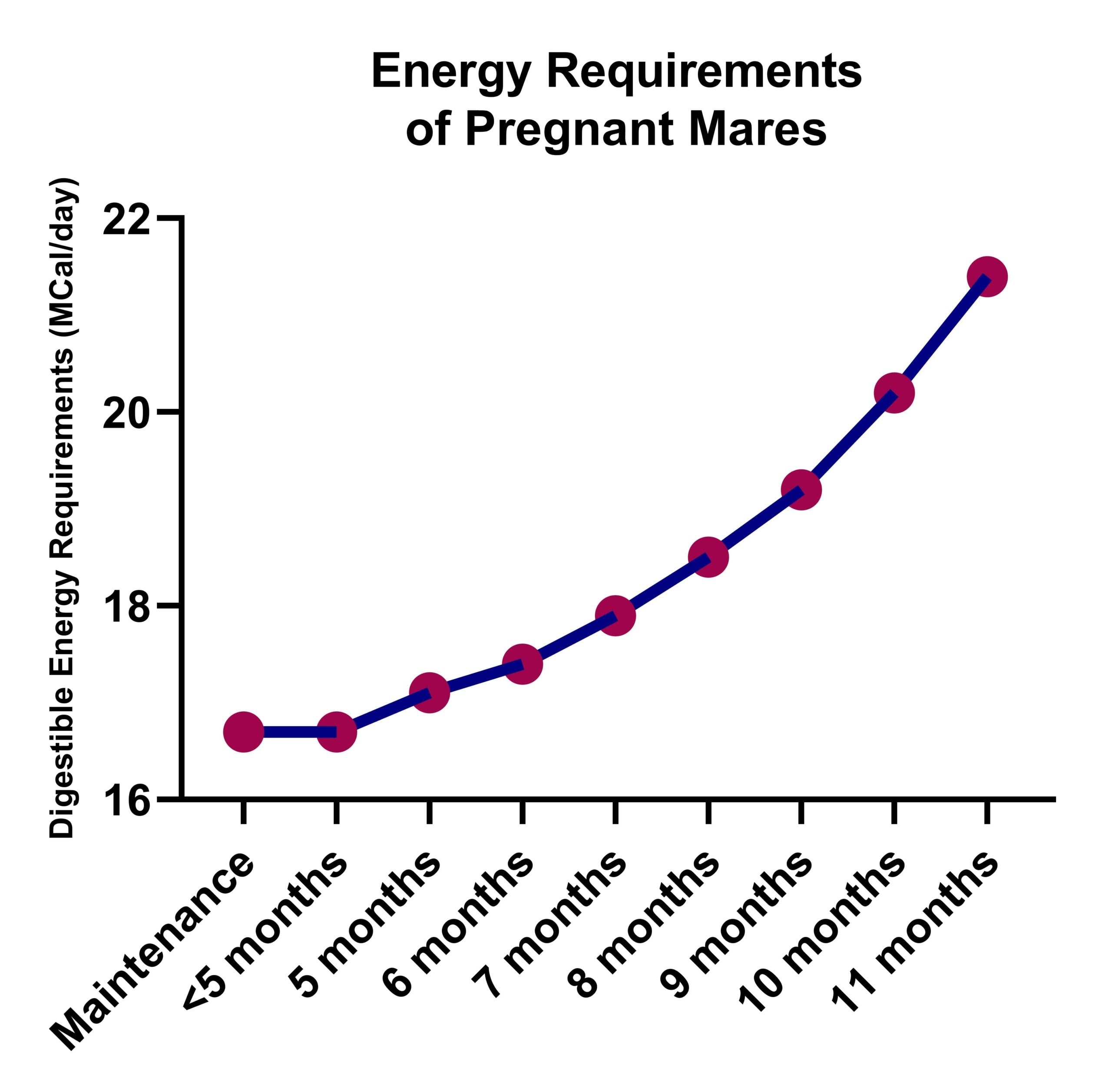
In early to mid-pregnancy, moderate- or high-quality hay alone can typically meet the energy needs of mares. However, during late pregnancy (10 months and beyond), additional energy supplementation may be required to maintain body condition, depending on the quality and type of forage available.
For these horses, you can increase their energy intake by adding one or more high-energy feeds, such as:
- Alfalfa hay, cubes, or pellets
- Beet pulp
- Fat supplements
For more information on feeding pregnant mares, visit our article on How to Feed a Pregnant Mare or submit a free diet evaluation to our equine nutritionists for help formulating a balanced diet.
Lactation
Lactating mares have higher energy requirements because producing milk for the foal demands significant energy, nutrients, and fluids. This increased requirement supports milk production to nourish the foal’s growth and development while maintaining the mare’s own health.
The calorie requirement for lactating mares is calculated as the sum of their maintenance needs and the additional energy required for milk production. This requirement depends on the amount of milk a mare produces and the energy density of that milk.
Currently, milk production estimates are based on the number of days since foaling and the mare’s non-pregnant body weight. However, milk output can vary due to several factors, which require further research, including: [15]
- Breed of the mare
- Diet composition
- Frequency of foal suckling
- Energy density of the mare’s diet
Typically, both the energy density and the volume of milk decrease as lactation progresses.
For an average 500 kg (1,100 lb) lactating mare, the estimated daily energy needs at different stages of lactation are as follows: [15]
- 1 month lactation: 31.7 mcal per day
- 2 months lactation: 31.7 mcal per day
- 3 months lactation: 30.6 mcal per day
- 4 months lactation: 29.4 mcal per day
- 5 months lactation: 28.3 mcal per day
- 6 months lactation: 27.2 mcal per day
In early lactation, when milk is the foal’s sole source of nutrition, both energy and protein should be supplemented in the mare’s diet to support milk production demands.
However, in the later stages of lactation (5 – 6 months), high-quality grass hay alone may be sufficient to meet the nutritional needs of a lactating mare.
Mares in early lactation may benefit from supplementation with energy-dense feeds such as:
- Alfalfa hay, cubes, or pellets
- Beet pulp
- Fat supplements
- Soybean meal
- Cottonseed meal
For more information on feeding mares during lactation, read our article on How to Feed the Lactating Mare or consult with one of our equine nutritionists to help balance your mare’s diet.
Growth
Growing horses are those in the developmental stage from birth until they reach physical maturity, typically around four to five years old. During this period, growing horses have elevated nutrient requirements to support skeletal development, muscle formation, and weight gain.
The energy requirements of growing horses are calculated based on the energy needed to maintain their current body weight and the additional energy required to support growth toward their expected mature body weight.
While the maintenance energy needs of growing horses can be influenced by several factors, the NRC’s equation for calculating energy requirements specifically considers the horse’s age (in months) and mature weight as variables.
This information is used to estimate the horse’s average daily weight gain, which determines the amount of energy required to support growth. In addition to these base calculations, the energy requirement is influenced by several specific factors: [15]
- Composition of gain: The types of tissues being developed (e.g., bone, muscle, or fat) influence energy needs. Muscle and bone development, for example, require higher levels of protein and specific minerals, while fat deposition has a different energy profile.
- Rate of gain: Monitoring how quickly a young horse gains weight is critical for its health. Rapid growth rates may increase energy requirements, but these must be balanced to avoid developmental orthopedic disease.
- Diet composition: The types of feed included in the diet – such as milk replacers, concentrates, and forage — impacts the energy needed for digestion, as well as the metabolizable energy available to the horse.
The NRC estimates energy requirements for growing horses based on age and body weight, accounting for changes in growth rate and gain composition.
For a growing horse with a predicted mature weight of 500 kg (1,100 lb), the energy requirements are as follows: [15]
- 4 months old: 13.3 mcal per day
- 6 months old: 15.5 mcal per day
- 12 months old: 18.8 mcal per day
- 18 months old: 19.2 mcal per day
- 24 months old: 18.7 mcal per day
Growing horses should be fed high-quality forage to ensure their energy and protein needs are met. However, weaned horses under one year of age typically require extra energy and protein in their diet beyond what forage alone can provide.
Weanlings and yearlings may benefit from additional supplementation with feeds such as:
- Alfalfa hay, cubes, or pellets
- Beet pulp
- Fat supplements
- Soybean meal
- Cottonseed meal
It’s important to avoid oversupplying energy in young horses’ diets, as excess energy intake can cause rapid growth and increase the risk of developmental orthopedic diseases (DODs). [15]
For more information on feeding growing horses, visit our article on How to Feed a Growing Foal or consult with our equine nutritionists to balance your growing horse’s diet.
Exercise
Horses involved in regular exercise for leisure or competition have increased energy requirements, which vary based on the frequency, intensity, duration, and type of activity.
The energy requirements for working horses are determined by adding their maintenance calorie needs with the additional calories required for their specific level of exercise.
For horses in light to heavy work, the maintenance requirement is assumed to be average. However, horses in very heavy work are assumed to have elevated maintenance to support increased energy demands for muscle function and recovery. [15]
The energy expended during exercise depends on various factors, including: [15]
- Individual variation between horses
- Level of training and fitness
- Type of exercise
- Rider weight
- Rider experience
- Climate
- Ground conditions/resistance
In addition, other activities associated with exercise, such as traveling to and from competitions in a trailer, may also increase a horse’s energy requirement. [18]
Experimentally, researchers use oxygen consumption to estimate energy requirements during exercise. Since there is a strong relationship between oxygen consumption and heart rate, a heart rate monitor is commonly used by horse owners to estimate energy expenditures in the field. [15][19]
The NRC estimates how heart rate and weekly workload correlate with different levels of exercise intensity.
Table 1. Classification of workloads, heart rates, and energy expenditures [15]
| Exercise Category | Average Heart Rate During Activity |
Description of Work |
Example Disciplines |
|---|---|---|---|
| Light | 80 beats per minute |
|
|
| Moderate | 90 beats per minute |
|
|
| Heavy | 110 beats per minute |
|
|
| Very Heavy | 110 – 150 beats per minute |
|
|
To estimate your horse’s workload using heart rate, it is important to measure heart rate during exercise, as it will decrease quickly afterward. A continuous heart rate monitor is crucial for accuracy. Additionally, ensure your horse is calm during measurements to avoid artificially high readings. [15]
For a better understanding of your horse’s exercise level, measure heart rate across multiple workouts that represent the full spectrum of activities your horse performs on a regular basis. This provides more accurate results than relying on a single workout. [15]
Once you determine your horse’s workload on the NRC classification system, you can calculate their energy expenditure.
For an average 500 kg (1,100 lb) horse, energy requirements at different exercise levels are: [15]
- Light Exercise: 20 mcal per day
- Moderate Exercise: 23.3 mcal per day
- Heavy Exercise: 26.6 mcal per day
- Very Heavy Exercise: 34.5 mcal per day
While horses in light to heavy exercise can typically maintain their body condition on moderate to high-quality hay alone, horses in very heavy work often need energy and protein supplementation. Working horses that have difficulty maintaining their body condition may benefit from supplementation with energy-dense feeds such as:
- Alfalfa hay, cubes, or pellets
- Beet pulp
- Fat supplements
For more information on feeding exercising horses, read our guide on Feeding Horses in Work or contact a nutritionist for help balancing your horse’s diet.
Energy Digestion & Absorption
Horses obtain energy from three primary macronutrients: carbohydrates (including fiber), fats, and proteins. These sources differ in the amount of energy they provide and how readily the horse can use them. Understanding these distinctions is key for optimizing your horse’s diet to meet their specific needs.
Each of these macronutrients has unique characteristics and composition, so they are all digested and absorbed by the horse’s body in their own way.
Carbohydrates
Carbohydrates are the main source of energy in the equine diet. Carbohydrates are made up of carbon, hydrogen, and oxygen molecules and can be broadly classified into three groups:
- Hydrolyzable Carbohydrates: Sugars and starches that are broken down in the small intestine for quick energy
- Rapidly Fermentable Carbohydrates: Carbohydrates such as soluble fiber in beet pulp, which are easily fermented in the hindgut to produce energy
- Structural Carbohydrates: Fiber components like cellulose, fermented slowly in the hindgut to support energy needs
Hydrolyzable Carbohydrates (HC)
Hydrolyzable carbohydrates (HC) are easily digestible carbohydrates found in forage and feed. They are broken down and absorbed in the small intestine, leading to a rise in blood glucose levels after a meal. This glucose spike triggers the pancreas to release insulin, a hormone that regulates blood sugar.
On a feed tag or forage analysis, hydrolyzable carbohydrates (HC) are the sum of starch and ethanol-soluble carbohydrates (ESC). ESC is made up of simple sugars and oligosaccharides (complex sugars): [2]
- Monosaccharides: Contain one simple sugar unit (e.g. glucose). Monosaccharides are present in low concentrations in plants and make up more complex carbohydrates such as di-, oligo-, and polysaccharides.
- Disaccharides: Contain two simple sugar units. Lactose and maltose are important disaccharides in equine nutrition.
- Oligosaccharides: Contain between three and ten simple sugar units. Horse feeds and forages may contain oligosaccharides such as raffinose, stachyose, fructo-oligosaccharides.
Monosaccharides are directly absorbed into the bloodstream through intestinal cells. Disaccharides, oligosaccharides, and starch are first digested by enzymes in the small intestine to release monosaccharides for absorption. Specific enzymes used to digest sugars include lactase, which splits lactose into galactose and glucose, and amylase, which breaks down starch into smaller fragments. [4]
The straightforward digestion and absorption of sugars without the need for fermentation means hydrolyzable carbohydrates provide an immediate source of energy for horses, making them beneficial for meeting the energy demands of performance horses. However, excessive HC intake can lead to spikes in blood sugar and insulin, potentially exacerbating metabolic disorders like insulin resistance or laminitis.
HC levels in the diet should be carefully managed to avoid health issues, especially in horses with metabolic concerns. Grains like oats, barley, and corn are high in starch, while commercial feeds with added sugar or molasses often have elevated ethanol-soluble carbohydrate (ESC) levels. In addition, excessive sugars and starch increase the risk of gastric ulcers in horses.
Rapidly Fermentable Carbohydrates
Unlike Hydrolyzable carbohydrates, fermentable carbohydrates are not broken down by the horse’s own digestive enzymes. Instead, they are broken down by microbes in the hindgut. These microbes ferment the carbohydrates, producing compounds like volatile fatty acids (VFAs) that the horse can absorb and use as an energy source.
There are three main volatile fatty acids produced by microbes in the horse’s hindgut: [2][7][8][9][10]
- Acetate: Utilized immediately by tissues, including muscles, or converted into fatty acids for energy storage
- Propionate: Converted by the liver into glucose, providing a key energy source for the horse
- Butyrate: Serves as an energy source for cells in the gastrointestinal tract, supporting gut health
A subset of fermentable carbohydrates, rapidly fermentable carbohydrates are those that microbes in the hindgut can quickly break down due to their simple, easily accessible structure.
Examples include pectins, gums, and mucilages, which are soluble fibers found in the cell wall of fruits, beets, grasses and legumes. Beet pulp is particularly abundant in pectins, making it a great option for supporting hindgut function.
Recent attention has focused on rapidly fermentable fiber, particularly fructans. Fructans are carbohydrates composed of multiple fructose units. They may be present in feeds and hays as oligosaccharides or polysaccharides, making up 5 – 40% of the dry matter in some hays. [2][4][11]
Although fructans contain beta-carbohydrate linkages that cannot be digested by the horse’s enzymes in the small intestine, resident microbes in the small intestine may partially break them down. [4][12]
This may cause some concern for horses with metabolic issues, because concentrated doses of fructan have been shown to induce laminitis at very high intakes. [4][13] Thus, it is recommended that fructan intake, which can be assessed by monitoring the water soluble carbohydrate content (WSC) of hays and feeds, be monitored for horses with metabolic concerns.
Structural Carbohydrates
Fiber is a type of carbohydrate found in plants such as grasses and legumes (e.g., alfalfa). It is classified as a structural carbohydrate because it forms the framework of plant cell walls, providing plants with strength and support.
Structural carbohydrates are complex molecules containing beta-linkages, which cannot be broken down by the horse’s digestive enzymes. Instead, they are fermented by microbes in the hindgut, producing energy in the form of volatile fatty acids.
On a forage analysis, structural carbohydrates are measured as Neutral Detergent Fiber (NDF). NDF represents the slowly fermentable fiber fraction in feeds and forages, including: [6]
- Cellulose
- Hemicellulose
- Lignin
Of these components, cellulose and hemicellulose can be fermented by hindgut microbes, providing a source of energy for the horse. However, lignin is indigestible and cannot be broken down by either the horse’s enzymes or microbial fermentation.
Fats
Fat is a concentrated energy source that provides approximately 2.25 times more calories per gram than carbohydrates. Adding fat to the diet can significantly increase energy density without the need to increase feed volume.
The horse’s diet is naturally low in fat, with less than 5% of the caloric energy in forage supplied by fat. However, horses can efficiently digest and utilize dietary fat when gradually introduced to the diet.
Beyond serving as an energy supplement, fat offers additional health benefits, including improved skin and coat condition, enhanced endurance for equine athletes, support for gut health, and an alternative energy source for horses sensitive to starch and sugar.
Fat Sources
The most common fat sources in equine diets include oils, high-fat feeds, and pelleted fat supplements. These options provide flexibility and can be tailored to suit the needs of individual horses.
Oils provide 100% of their calories from fat, making them the most concentrated energy source available for horses. Popular vegetable and seed oils for horses include:
- soybean
- canola
- corn
- sunflower
- flax
- camelina
- coconut
Other popular options include marine-based oils such as fish oil or microalgal oil.
Oils are typically added to the diet in amounts ranging from 30 to 300 mL per day, depending on the horse’s specific needs, including body condition and energy demands.
High-fat feeds that can be incorporated into a horse’s diet include ground flaxseed (linseed), rice bran, and roasted soybeans. Other options include pelleted or powdered dry fat supplements, such as stabilized rice bran.
These ingredients can be added to the diet individually, allowing for more precise control over the total nutritional composition of the diet. They can also be found in complete feeds intended for performance horses or lactating mares to increase energy density.
Small amounts of fats and oils are also added to horse feeds to reduce dust, improve palatability, and minimize respiratory irritation. They help bind feed particles, ensuring a uniform mixture and consistent nutrient intake, while also enhancing the pelleting process. [14]
Types of Fat
Most fats in a horse’s diet are in the form of triacylglycerols, composed of three fatty acid chains bound to a glycerol backbone. [14]
Beyond serving as an energy source, fats play essential roles in the body. Fatty acids are integral to cell membrane structures, influencing membrane fluidity and how cells respond to external signals.
They also serve as precursors to important signaling molecules, such as eicosanoids, which regulate inflammation, immune response, and other physiological processes.
The structure of fatty acids determines how they are used by the body and their effects on a horse’s health and performance. The biological functions of fatty acids are determined by: [14]
- The length of the fatty acid chains
- The degree of unsaturation (number of double bonds)
- The position of double bonds along the molecule
Certain types of fatty acids, such as omega-3s and omega-6s, have specialized roles in the body.
- Omega-3 Fatty Acids: These unsaturated fats, characterized by a double bond at the third-to-last carbon, include specific omega-3 fatty acids such as DHA and EPA. Found abundantly in marine sources, DHA and EPA are known to support normal inflammatory responses in the body, promoting joint function, maintaining respiratory health, and supporting cardiovascular function.
- Omega-6 Fatty Acids: With a double bond at the sixth-to-last carbon, omega-6s play a pro-inflammatory role, aiding in wound healing and stimulating the immune response.
Both omega-3s and omega-6s are necessary to support your horse’s health, but a higher intake of omega-3s is considered favorable.
Fat Digestion
Fat is a highly digestible energy source, meaning it is efficiently processed and absorbed by the horse’s digestive system.
Like other mammals, horses digest fats in three distinct phases: [14]
- Mechanical Disruption: Chewing in the mouth and churning in the stomach break dietary fats into smaller, emulsified particles, making them easier to digest.
- Enzymatic Breakdown: Digestion begins with gastric lipase in the stomach and continues in the small intestine with bile, pancreatic fluid, lipase, and colipase. These enzymes further break down fats into absorbable components.
- Micelle Formation: The products of enzymatic breakdown in the small intestine are organized into mixed micelles, which transport fatty acids to the intestinal wall for absorption.
At the intestinal wall, micelles deliver fatty acids into intestinal cells either through protein-facilitated transport or by diffusion. Within these cells, long-chain fatty acids are reassembled into chylomicrons, which are large lipid-protein complexes. Chylomicrons are then exported to the lymphatic system and eventually reach the bloodstream. [14]
Shorter-chain fatty acids (less than 12 carbons long) bypass this process. They are absorbed directly into the bloodstream without the need for reassembly into chylomicrons.
Gradual Adaptation to High-Fat Diets
Horses are not naturally adapted to process large, fat-based meals because their digestive systems are adapted primarily for digesting fiber from a forage-based diet. When a horse is suddenly introduced to a high-fat diet, its digestive system may struggle to efficiently digest and absorb the fats due to insufficient production of the necessary enzymes and bile acids.
However, when fats are introduced gradually over several weeks, the horse’s digestive system can adapt by:
- Increasing Lipase Production: Lipase, the enzyme responsible for breaking down fats, becomes more abundant in the digestive tract
- Enhanced Bile Secretion: Horses do not have a gallbladder, so bile is secreted continuously in small amounts. Gradual introduction allows the liver to adjust bile output to aid in fat emulsification
- Improved Absorption: Over time, the small intestine becomes more efficient at forming micelles and transporting fatty acids across the intestinal wall for absorption
By gradually increasing fat in the diet, horses can better utilize fats as an energy source. This adaptation enables horses to safely and efficiently digest fats to meet their energy requirements.
Horses can obtain up to 20% of their digestible energy from fat, depending on their overall diet and individual needs.
Protein
Protein is an essential nutrient in the equine diet, primarily used for building and repairing tissues, supporting muscle development, and maintaining healthy skin, hair, and hooves.
Although protein’s primary role is not energy production, it can be used as an energy source when a horse’s diet lacks sufficient energy from carbohydrates and fat.
Protein digestion produces free amino acids, which can be broken down and used as an energy source. This involves removing the nitrogen component from the amino acid, which leaves behind a carbon skeleton that enters the tricarboxylic acid (TCA) cycle.
In the TCA cycle, amino acids can be converted into energy substrates such as glucose or fatty acids, or directly burned to produce ATP, the cell’s energy currency.
However, using protein for energy is inefficient because the process of breaking down amino acids and removing the nitrogen requires significant energy. This high metabolic cost makes protein an impractical primary energy source compared to carbohydrates or fats.

Energy Sources
Horses rely on various dietary components to meet their energy needs. Common energy sources in the equine diet include hay, pasture, grains, beet pulp and oils.
Each of these calorie sources provides unique benefits and considerations for maintaining the health and performance of your horse. Understanding these options is key to designing a balanced diet tailored to your horse’s specific needs.
In this section, we explore popular energy sources for horses, including their nutrient profile, digestibility, and practical feeding considerations.
Grass Hay
Grass hay is a staple of equine diets, especially during winter months or in areas where fresh pasture is unavailable. Types of grass hay commonly fed to horses include:
- Timothy Hay: A popular choice known for its balanced nutrient profile and palatability
- Orchard Grass Hay: Soft, leafy hay with moderate protein and energy levels, often preferred for its low dust content
- Bermudagrass Hay: Common in warmer climates, it provides adequate fiber but tends to have lower protein and energy than other grass hays
- Ryegrass Hay: High in palatability and nutrients, but sugar content can be high, requiring caution for metabolic horses
- Fescue Hay: Widely available and hardy, though it may require testing for endophyte contamination, especially for pregnant mares
The energy density of grass hay depends on its maturity at the time of cutting as well as factors like the time of day it is harvested and weather conditions. As grasses mature, they develop more fiber and lose energy and protein content, resulting in hay that is less nutrient-dense overall.
Grass hays, including timothy, orchard grass, bermudagrass, and ryegrass, should make up the majority of equine diets when pasture is unavailable. For horses at maintenance or engaged in light to moderate work, free-choice access to grass hay is usually sufficient to meet their energy needs.
Mid-maturity cool-season grass hays typically have the following nutritional profile: [20][21]
- 2.18 mcal per kg dry matter
- 58% neutral detergent fiber
- 7.0% simple sugars (ESC)
- 1.4% starch
- 2.5% fat
- 13% crude protein
As grass hay matures, its nutrient content changes. More mature grass hays may contain: [20][21]
- 2.04 mcal per kg dry matter
- 69% neutral detergent fiber
- 7.0% simple sugars (ESC)
- 1.4%
- 2.0% fat
- 11% crude protein
Immature grass hays may contain: [20][21]
- 2.36 mcal per kg dry matter
- 50% neutral detergent fiber
- 7.0% simple sugars (ESC)
- 1.4% starch
- 3.3% fat
- 18% crude protein
The energy and nutrient content of hay varies significantly depending on its maturity and other factors. The most accurate way to determine its nutritional value is to submit a forage sample for analysis. A hay analysis provides detailed information on protein, fiber, starch, sugar, fat, and mineral content, with energy content calculated from protein and fiber levels.
Legume Hay
Legume hays, such as alfalfa and peanut hay, are generally lower in fiber and higher in protein compared to grass hays, resulting in a greater energy density. Legume hay can be added to equine diets in the form of long-stem hay, pellets, or cubes.
While legume hays should not constitute the entirety of a horse’s forage intake, they can be incorporated into the diet to meet elevated energy requirements. Their higher protein and energy content make them particularly beneficial for horses with greater nutritional demands, such as lactating mares, growing horses, or those in heavy work.
Mid-maturity legume hays typically contain: [20][21]
- 2.43 mcal per kg dry matter
- 43% neutral detergent fiber
- 6.8% simple sugars (ESC)
- 1.3% starch
- 2.0% fat
- 21% crude protein
More mature legume hays may contain: [20][21]
- 2.21 mcal per kg dry matter
- 51% neutral detergent fiber
- 6.8% simple sugars (ESC)
- 1.3% starch
- 1.6% fat
- 18% crude protein
Immature legume hays may contain: [20][21]
- 2.62 mcal per kg dry matter
- 36% neutral detergent fiber
- 6.8% simple sugars (ESC)
- 1.3% starch
- 2.1% fat
- 20.5% crude protein
Pasture
Fresh grass pasture is a rich energy source, providing ample calories while supporting a horse’s natural grazing behavior and promoting overall well-being.
In regions where pasture is accessible, increasing pasture turnout is often the most cost-effective way to provide energy for horses requiring more calories than hay alone can supply.
However, the sugar content of pasture grass can vary greatly depending on time of day and maturity of the forage. Lush pasture might not be suitable for horses with metabolic syndrome who are prone to laminitis.
Grass pasture typically provides the following nutrient profile: [20][21]
- 2.39 mcal per kg dry matter
- 46 – 61% neutral detergent fiber
- 6.8% simple sugars (ESC)
- 1.9% starch
- 2.7 – 3.4% fat
- 16 – 27% crude protein
Grass is a living organism, and its nutrient content fluctuates with season, weather, and time of day. As a result, sampling pasture for energy and nutrient levels at a single point in time may not accurately reflect the nutrients a horse will consume over an extended period.
Beet Pulp
Beet pulp is a readily fermentable fiber that is commonly used in equine feeds as an energy source. Beet pulp is a by-product of the extraction of sugar from sugar beets.
Beet pulp is rich in soluble fibers that are readily fermented in the hindgut, providing a steady energy source without significantly increasing sugar and starch levels in the diet. So long as it is fed in an unmolassed (molasses-free) form, it is an excellent option for horses that cannot tolerate high hydrolyzable carbohydrate intakes.
The nutritional profile of beet pulp varies depending on how it is processed, but it typically contains: [20][21]
- 2.8 mcal per kg dry matter
- 40 – 46% neutral detergent fiber
- 10.2% simple sugars (ESC)
- 1.1% starch
- 1.1% fat
- 10% crude protein
Oats
Oats are another common source of energy in horse feeds. This grain provides high calorie content, with much of that energy coming from starch stored in the oat seed.
Due to their high starch content, oats are generally not recommended for horses with metabolic conditions like equine metabolic syndrome. However, they can be a valuable addition to the diet of some heavily exercising horses.
Depending on how they are processed, oats typically provide the following nutrient composition: [20][21]
- 3.3 mcal per kg dry matter
- 30% neutral detergent fiber
- 2.18% simple sugars (ESC)
- 43% starch
- 5.2% fat
- 14% crude protein
Oils
Oils are highly calorie-dense, making them ideal for horses with elevated energy requirements, such as lactating mares, performance horses and underweight horses. Oils provide cool calories that help to maintain steady energy levels and improve temperamental regulation in reactive horses.
In smaller amounts, fat supplements are also suitable for other horses by providing calories while reducing the reliance on grain-based feeds.
Pure oils typically contain: [20][21]
- 9.5 mcal per kg dry matter
- 0% neutral detergent fiber
- 0% simple sugars (ESC)
- 0% starch
- 100% fat
- 0% crude protein
All oils have the same calorie density, but they can differ in their fatty acid composition. Some plant-based oils such as flaxseed and camelina are rich in alpha-linolenic acid (ALA), an omega-3 fatty acid. In contrast, other oils such as soybean oil and corn oil are high in linoleic acid (LA) – an omega-6 fatty acid.
Horses need both omega-3 and omega-6 fatty acids in their diet to support normal regulation of inflammation. Omega-3 fatty acids help maintain a balanced inflammatory response, while omega-6 fatty acids contribute to healthy immune system function and tissue repair.
Horses with joint discomfort, respiratory issues, or poor skin and coat quality benefit from oils with high omega-3 fatty acid content. In particular, the omega-3 fatty acids DHA and EPA help maintain joint health, respiratory function, a shiny coat and cardiovascular function.
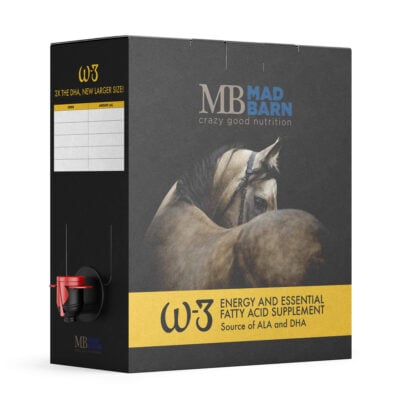
Mad Barn’s w-3 Oil is a palatable fat supplement enriched with the omega-3 fatty acid DHA as well as natural vitamin E. Feeding w-3 Oil supports horses with elevated energy needs while supplying beneficial omega-3 fatty acids to maintain overall well being and performance.
Energy Deficiency & Excess
Achieving the right energy balance in a horse’s diet is critical for maintaining optimal health, performance, and body condition.
If your horse consumes less energy than they need, they may lose weight and muscle tone, feel fatigued, and struggle to perform. On the other hand, consuming too much energy or excess amounts of certain energy sources can lead to weight gain, behavioral issues, and metabolic issues.
You can track your horse’s body condition score (BCS) to check if they’re getting the right amount of energy from their diet. A decrease in BCS indicates an energy deficiency, while an increase indicates excess energy in the diet.
Most horses should aim for a body condition score of 5 on the Henneke scale. However, certain classes of horses, such as mares in breeding programs or exercising horses, may be kept at higher or lower body condition scores to optimize performance goals. [15]
To influence a horse’s body condition score, owners and caretakers can modify the horse’s energy balance by adjusting energy intake and/or energy expenditure. For an average 500 kg (1,100 lb) horse, it is estimated that a gain or loss of 16 – 20 kg (35 – 44 lb) of body weight is needed to achieve a one-point change in BCS. [15]
Underweight Horses
Underweight horses should always be evaluated by a veterinarian to diagnose any underlying medical concerns that could be contributing to their poor body condition. Common diagnoses associated with weight loss include:
If advised by your veterinarian and equine nutritionist, you can increase the calorie density of the diet to support gradual weight gain. Regularly monitor and record your horse’s weight and body condition to track progress and make any necessary adjustments.
The energy required to promote weight gain in your horse can vary based on several factors [15]
- Composition of Gain: Whether the weight gained is primarily muscle or fat
- Diet Composition: The type of energy sources in the diet, such as fat versus fiber
- Initial Body Condition: Horses with lower starting body condition score may require more energy to restore condition
Required Calorie Increase
The estimated dietary energy and time required to achieve a one-point change in body condition score (e.g., from 4 to 5) are as follows: [15]
- 60 days: Increase by 5.3 – 6.7 mcal per day
- 90 days: Increase by 3.6 – 4.4 mcal per day
- 120 days: Increase by 2.7 – 3.3 mcal per day
- 150 days: Increase by 2.1 – 2.7 mcal per day
- 180 days: Increase by 1.8 – 2.2 mcal per day
Weight Gain Feeds
For a 500 kg (1,100 lb) mature horse at maintenance on free-choice grass hay, adding any of the following can provide approximately 3 mcal/day of additional calories:
- 1 kg (2 lb) alfalfa cubes (dry weight)
- 1.5 kg (3.3 lb) beet pulp (dry weight)
- 200 mL (7 oz) oil
Including these feeds in a diet with free-choice hay access should result in a one-point increase in body condition over approximately 120 days (3 months).
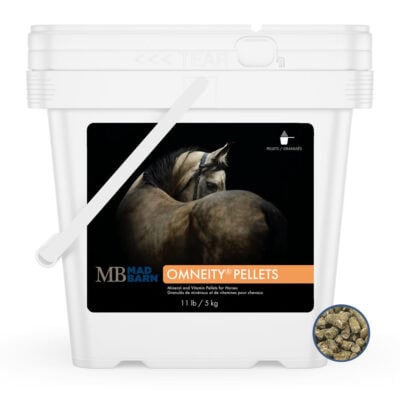
Note that this diet alone does not meet all nutrient requirements, particularly for vitamins and minerals. To fully balance this diet, add Mad Barn’s Omneity®, which contains 100% organic trace minerals, a high level of vitamin E, and a full B-vitamin profile, including a nutritionally effective level of biotin for hoof health.
Overweight Horses
Overweight horses need to achieve a calorie deficit to reduce body fat and return to a healthy condition. This involves reducing calories while ensuring the diet remains balanced and meets the horse’s nutritional needs.
Horses on a weight loss program will likely lose both muscle and fat tissue, even with efforts to target fat loss specifically. [15] To minimize muscle loss and support faster, healthier weight reduction, a weight loss program should include both exercise and dietary changes. Incorporating exercise helps maintain muscle mass while increasing energy expenditure.
Weight loss programs should target a gradual reduction of 1% of body weight per week. For a 550 kg (1,210 lb) horse, this equates to losing approximately 22 kg (48 lb) over the course of one month. This controlled approach helps ensure safe and sustainable weight loss while minimizing the risk of health complications.
Some equids such as ponies and donkeys are susceptible to hyperlipidemia, a condition that can occur during prolonged or severe calorie restriction. To prevent this, it is important to avoid significant or extended reductions in calorie intake for these animals. Consult an equine nutritionist to devise a safe weight loss program for donkeys and ponies.
For overweight horses, grains and high-fat feeds should be gradually reduced while ensuring sufficient access to forage to support gut health and mental well being. Ample turnout is beneficial to encourage free movement, but it may need to be managed using a dry lot or on pasture with a grazing muzzle to restrict grass intake.
High-calorie hay may need to be rationed to no less than 1.5% of the horse’s body weight on a dry matter basis to ensure adequate fiber intake. Alternatively, it can be diluted by mixing with a lower-calorie forage or straw. Soaking hay can also reduce calorie content.
For more strategies to promote safe weight loss in overconditioned horses, read our guide on How to Feed an Overweight Horse for Weight Loss.
Frequently Asked Questions
Here are answers to common questions horse owners ask about energy requirements and calorie sources:
The number of calories a horse eats per day depends on body weight, workload, and life stage. As a general reference, a 500 kg (1,100 lb) horse at maintenance typically requires about 16–18 megacalories (mcal) of digestible energy per day. Horses in light, moderate, heavy, or very heavy work may require approximately 20, 23, 27, or 35 mcal per day, respectively. Individual needs vary, so body condition and performance should guide adjustments.
A horse’s energy requirements are influenced by several factors, including body weight, age, workload, fitness level, temperament, and environmental conditions such as cold weather or heat. Physiological states like growth, pregnancy, lactation, and breeding activity also increase energy needs. Management factors such as housing, turnout, and travel can further raise daily calorie requirements.
Digestible energy (DE) is the portion of energy in a feed that is absorbed by the horse after digestion, calculated as total energy minus energy lost in manure. DE is the standard unit used in equine nutrition to describe calorie intake and requirements, and it allows comparison of energy supplied by different feeds such as hay, pasture, grains, and oils.
Horses metabolize energy from hay primarily through hindgut fermentation. Fiber in hay is broken down by microbes in the cecum and colon, producing volatile fatty acids (VFAs) such as acetate, propionate, and butyrate. These VFAs are absorbed into the bloodstream and provide a steady, slow-release source of energy that supports normal metabolism, gut health, and most daily activity.
Body condition score and weight trends are the most practical indicators of calorie adequacy in a horse’s diet. Weight loss, muscle loss, poor performance, or low stamina can indicate insufficient energy intake, while weight gain and fat deposition indicate excess energy. Regularly tracking body condition helps identify whether the diet needs adjustment. [15]
For most horses, the primary source of calories is fiber from hay and pasture. Horses are adapted to extract energy from plant fiber through hindgut fermentation, where microbes break fiber down into volatile fatty acids (VFAs). These VFAs are absorbed and used as a steady, long-lasting energy source that supports basic metabolism, movement, temperature regulation, and overall gut health. Because this process delivers slow, consistent energy, forage-based diets are well suited to the horse’s natural physiology and daily needs.
The best calorie sources for weight gain are those that increase energy density without causing digestive upset. Common options include adding higher-energy forage (such as some alfalfa), highly fermentable fiber (such as beet pulp), and fat sources (such as oil). These feeds provide calories without requiring large grain meals, which increase the risk of gut issues. [15]
Cold temperatures can increase calorie needs because horses expend more energy to maintain body temperature. Horses living outdoors, clipped horses, and horses exposed to wind and rain often require more dietary energy than the same horses kept in sheltered conditions.
Summary
Energy requirements for horses are calculated based on their body weight, physiological status, and exercise level. Additional factors such as age, genetics, climate, diet composition, and individual metabolism also influence a horse's energy needs.
- Energy in equine diets is measured in megacalories (mcal). A typical mature horse at maintenance needs 16.7 mcal per day, equivalent to 16,700 calories.
- Life stages and activities such as exercise, pregnancy, lactation, and growth increase a horse’s energy requirements beyond maintenance levels.
- Horses derive energy from different nutrients in their diet, including fiber (forage), hydrolyzable carbohydrates (sugar and starch), fats, and proteins. Forage should form the bulk of the diet, with other sources added to meet specific needs.
- Different energy sources are digested, absorbed, and metabolized differently by horses, making certain sources more suitable for specific classes of horses, such as those in heavy work or with metabolic sensitivities.
- Monitoring body condition score (BCS) helps assess energy balance. Horses with a BCS below 5 may require increased calorie intake to achieve a healthy weight, while those with a BCS above 6 may benefit from a calorie reduction to promote weight loss.
References
- Geor, R.J. et al. Chapter 5: Energy Systems and Requirements. Equine Applied and Clinical Nutrition: Health, Welfare and Performance. 2013.
- National Research Council Chapter 2: Carbohydrates. Nutrient Requirements of Horses. 2007.
- Hoffman, R.M., et. al.Hydrolyzable carbohydrates in pasture, hay, and horse feeds: direct assay and seasonal variation. JAS. 2001.
- Geor, R.J. et al. Chapter 8: Carbohydrates. Equine Applied and Clinical Nutrition: Health, Welfare and Performance. 2013.
- Hall, M.B. Challenges with nonfiber carbohydrate methods. JAS. 2003.
- National Research Council Chapter 10: Feed Analysis. Nutrient Requirements of Horses. 2007.
- Pratt, S.E., et al. The effect of exercise on the clearance of infused acetate in the horse. JEVS. 2005.
- Argenzio, R.A. and H.F. Hintz. Glucose Tolerance and Effect of Volatile Fatty Acid on Plasma Glucose Concentration in Ponies. JAS. 1970. View Summary
- Simmons, H.A. and E.J.H. Ford. Gluconeogenesis from propionate produced in the colon of the horse. British Veterinary Journal. 1991. View Summary
- Wambacq, W.A., et al. Dietary supplementation of micro-encapsulated sodium butyrate in healthy horses: effect on gut histology and immunohistochemistry parameters. BMC Veterinary Research. 2020.
- Longland, A.C., et.al. Seasonal and diurnal changes in fructan concentration in Lolium perenne: implications for the grazing management of equines predisposed to laminitis. Proceedings: 16th Equine Nutritional Physiology Society, Raleigh, NC. 1999.
- Coenen, M., et al. Fermentative Gases in Breath Indicate that Inulin and Starch Start to Be Degraded by Microbial Fermentation in the Stomach and Small Intestine of the Horse in Contrast to Pectin and Cellulose. The Journal of Nutrition. 2006. View Summary
- Kalck, K.A., et al. Effects of low-dose oligofructose treatment administered via nasogastric intubation on induction of laminitis and associated alterations in glucose and insulin dynamics in horses. AVMA. 2009.
- Geor, R.J. et al. Chapter 7: Fats and Fatty Acids. Equine Applied and Clinical Nutrition: Health, Welfare and Performance. 2013.
- National Research Council Chapter 1: Energy. Nutrient Requirements of Horses. 2007.
- Cuddeford, D., et al. A comparison of energy feeding systems for horses. Publication-European Association for Animal Production. 2004.
- Martin-Rossett, W. and M. Vermorel. Evaluation and expression of energy allowances and energy value of feeds in the UFC system for the performance horse. Publication-European Association for Animal Production. 2004.
- Doherty, O., et al. Study of the heart rate and energy expenditure of ponies during transport. Veterinary Record. 1997. View Summary
- Eaton, M.D., et al. Effect of treadmill incline and speed on metabolic rate during exercise in thoroughbred horses. Journal of Applied Physiology. 1995. View Summary
- National Research Council Chapter 16: Nutrient Requirements, Feedstuff Composition, and Other Tables. Nutrient Requirements of Horses. 2007.
- Equi-Analytical – Feed Composition Library. Accessed Oct 18, 2023.
- Geor, R.J. et al. Chapter 28: Obesity. Equine Applied and Clinical Nutrition: Health, Welfare and Performance. 2013.