English




Equine degenerative myeloencephalopathy (EDM) is a degenerative neurologic disease affecting the brain and spinal cord in horses. [1] The precise cause of EDM is unknown, but it may be related to a combination of vitamin E deficiency in the diet and genetic predisposition.
Horses with EDM usually develop symptoms within the first year of life. Symptoms include uncoordinated movement, weakness, and behavioral changes. Veterinarians examining the horse must rule out other diseases that can cause similar symptoms before diagnosing EDM.
There is no known treatment for EDM, and many horses are euthanized due to a poor prognosis. As symptoms of EDM worsen, horses may become difficult or dangerous to handle, even on the ground.
Since there is no treatment available and the disease is poorly understood, prevention of EDM focuses on providing adequate vitamin E levels for broodmares and foals. Dietary sources of vitamin E include lush pasture or supplementation with a natural vitamin E product.
Causes of Equine Degenerative Myeloencephalopathy
The exact cause of Equine Degenerative Myeloencephalopathy is unknown, however studies suggest that it is likely a multifactorial disease, meaning it develops for multiple reasons concurrently. [1]
One research study examined 56 horses affected by EDM and identified the following risk factors: [1]
- Exposure to insecticides or wood preservatives
- Spending long periods on a dirt lot
- Having a dam whose other foals also developed EDM
In the same study, access to green pastures appeared to prevent EDM development, potentially due to higher vitamin E levels from grazing fresh grass. [1]
From this study, researchers concluded EDM likely develops in horses who are genetically predisposed and have a lack of antioxidants in the diet or a high exposure to oxidants in the environment. [1]
Genetic Predisposition
Studies that compare EDM-affected foals and normal foals on the same farm provide insights into the causation of the disease. Since these foals are raised in similar environmental conditions, significant differences in health outcomes may be attributed to genetic factors. [1]
In one study, foals who did not have a parent with EDM were fed the same diet and exposed to the same environment as those whose sire had a history of EDM. Foals with no parental history of EDM had normal vitamin E levels in their bloodstream and did not develop EDM, while those whose sire had been diagnosed with EDM showed lower vitamin E levels and signs of neurological issues. [2]
Another study showed that foals from a parent with EDM were 25 times more likely to develop the condition themselves. [3]
From a study in Quarter horses, the EDM gene appears to be dominant, meaning that any foal from an affected parent carries the gene. [3]
However, the effect of the gene likely has incomplete penetration, meaning that carrying the gene does not cause disease in all horses. [3] Dietary levels of vitamin E early in life likely determine whether EDM develops in horses carrying the gene. [3]
Breeds thought to carry the EDM risk gene include: [3][4][5][6][7]
However, there are cases of EDM affecting numerous breeds, including crossbred horses. [3]
Oxidants
Oxidants are molecules that generate reactive oxygen species (ROS) within cells, which cause damage to cell membranes. [1]
Insecticides and wood preservatives are potential environmental oxidants that could trigger increased ROS production in the horse’s body. [1] The brain and spinal cord are highly vulnerable to damage caused by reactive oxygen species. [1]
Exposure to these compounds may increase the risk of EDM development, particularly in horses with a genetic predisposition or those with low levels of antioxidants in the bloodstream. [3]
Research suggests these environmental factors may contribute to development of EDM later in life. [3] Over time, elevated levels of oxidants in the bloodstream after prolonged exposure may disturb the precarious balance of oxidants and antioxidants in older, genetically predisposed horses. [3]
Antioxidants
Antioxidants bind to reactive oxygen species, preventing them from causing damage. [1] One of the main antioxidants in the horse’s body is vitamin E. [1] Research suggests that vitamin E deficiency is a major contributor to the development of EDM. [1]
Previous research suggested that horses with EDM may have a dietary deficiency, causing symptoms to develop. One study showed that dietary vitamin E supplementation reduced the incidence of EDM in a highly affected farm from 40% to 10%. [8]
However, a recent study examining horses with a genetic predisposition showed that horses with EDM metabolize vitamin E faster than unaffected horses. [9] This finding indicates at-risk horses with adequate dietary vitamin E may still develop EDM due to their rapid metabolism. [9]
Therefore, genetically predisposed horses require even higher levels of vitamin E supplementation to prevent disease development. [9]
What's your top priority with your horse's health?

Enter your email to receive your store credit
Symptoms
Most horses develop symptoms of EDM within the first year of life. [1] However, horses of any age can develop disease. [1]
Symptoms are usually mild when they first develop and worsen over time, including: [1]
- Uncoordinated movement
- Weakness
- Spastic gait, particularly in the hind limbs
- Dragging or scuffing the toes when moving
- Interference between the hind limbs when walking
- Difficulty backing up
- Falling down
Some horses that develop EDM later in life tend to present with behavioral symptoms under saddle, including: [3]
- Excessive spookiness
- Bucking
- Bolting
- Rearing
- Refusing to jump
Horses may also show behavioral changes such as increased anxiety, increased aggression or reduced interest in social interaction with other horses. [3] There are occasional reports of horses losing their fight or flight response as their EDM progresses. [6]
Ocular Disease
There are several reports of horses with EDM developing pigment retinopathy, a disease of the retina at the back of the eye. [10] The retina is highly susceptible to oxidative damage, which may make it susceptible to injury in horses with EDM. [10]
Horses presenting with pigmented retinopathy show accumulation of lipofuscin, a protein associated with degeneration of neurons. [10] Lipofuscin has a brown appearance that can be detected when a veterinarian examines the eye using an ophthalmoscope. [10]
Diagnosis
Definitive diagnosis of EDM requires an autopsy, which allows for examination of the spinal cord and brain under a microscope. [3] There is no antemortem test (performed while the horse is alive) available to confirm EDM. [3]
Due to the lack of an antemortem test, most cases of EDM in living horses are a presumptive diagnosis based on interpretation of symptoms and ruling out of other diseases. [3]
Diagnostic tests may include: [3]
- X-rays
- CT scanning
- Infectious disease testing on the blood or cerebrospinal fluid (i.e. a ‘spinal tap’)
Differential Diagnosis
Other diagnoses that need to be ruled out include: [6]
- Cervical vertebral compressive myelopathy (Equine wobblers syndrome)
- Equine protozoal myeloencephalitis (EPM)
- Equine herpesvirus-1 myeloencephalopathy (EHM)
- Equine motor neuron disease (EMND)
The diagnosis may be further complicated by horses having multiple neurologic diseases at the same time. For example, there are reports of horses with both EDM and equine motor neuron disease. [6]
Vitamin E Testing
Bloodwork to measure vitamin E levels can support a diagnosis, however it does not confirm EDM. [1] Vitamin E levels in the blood can vary up to 12% normally, so a single vitamin E test may not show deficiency in truly deficient horses. [1]
Additionally, some studies report normal vitamin E level testing in affected horses. [3] These horses were likely deficient in vitamin E during early life, triggering the development of EDM, but now test as normal for vitamin E due to changes in diet or environment. [3]
Therefore, bloodwork for vitamin E is not a definitive diagnostic test for EDM, as there may be false negatives (negative test from an affected horse). [3]
New Research
Recent research evaluated the use of phosphorylated neurofilament heavy chain protein (pNfH) testing on blood and cerebrospinal fluid from EDM horses. [11][12]
Elevated levels of this protein indicate damage to axons, the branching ends of nerve cells. [12] pNfH is frequently higher in horses with EDM, suggesting that this protein test may be useful for antemortem diagnosis of EDM in the future. [11]

Treatment
Currently, there are no known effective therapies for EDM. [3]
Some veterinarians recommend dietary supplementation of vitamin E, however this typically shows no or poor results. [3] Studies show that even supplementing high doses of vitamin E, such as 6000 IU per 450 kg (1000 lb) of body weight per day does not significantly improve symptoms. [13]
Prognosis
The overall prognosis for EDM is poor, as affected horses are usually unfit for athletic performance and riding. [3]
As the disease progresses, horses may be unsafe – even in retirement – due to their unpredictable behavior and poor coordination. [3] Many horses with EDM are euthanized due to their poor prognosis and the safety risk to handlers. [3]
Horses diagnosed at a young age may show stabilization of their symptoms at around 2-3 years old. [3] Although these horses are unfit for riding, they may be safe enough to handle as a companion for other horses. [3] A thorough evaluation by a veterinarian is necessary to determine the safety of handling these horses. [3]
Prevention
Since there is no effective treatment for EDM, prevention is the only way to avoid horses developing the condition.
While there are some preventive actions horse owners can take, the poorly understood pathophysiology of EDM means some horses may still be at risk even with robust prevention strategies in place.
Vitamin E Supplementation
Affected farms breeding potential carriers should supplement their broodmares and foals with vitamin E as a preventive measure. [3] Broodmares should be supplemented during their last trimester, while foals should receive supplementation for their first 2 years of life. [3]
Recommended doses of vitamin E for preventing neurologic disease vary widely depending on the study. [13] Most recommendations for EDM prevention are between 1000-2000 IU per day for a typical 450 kg (1,000 lb) horse. [13]
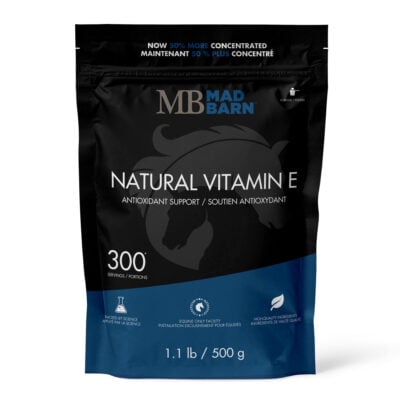
The source of vitamin E is important, as some products have poor bioavailability (ability to be absorbed and utilized) in horses. [6] The most bioavailable form of vitamin E is RRR-α-tocopherol, or “natural” vitamin E in a water soluble format. [6] Water soluble formulations of natural vitamin E are often used in these cases to rapidly increase vitamin E levels. [6]
For breeding herds of unknown EDM risk status, vitamin E supplementation may be valuable depending on the horses’ environment. [6] Horses kept on dry lots and primarily fed hay have a higher risk of vitamin E deficiency and typically require vitamin E supplementation. [6]
Mares and foals that have free-choice access to lush pasture may not require vitamin E supplementation, as grazing pasture can contain between 30-100 IU of vitamin E per kilogram. [14] However, the vitamin E content of pasture varies seasonally, making it difficult to ensure adequate vitamin E consumption. Thus, for horses with a risk of EDM, vitamin E supplementation may be beneficial even for horses with pasture access.
Selective Breeding
Although these supplementation strategies can reduce the risk of EDM, susceptible foals may still develop mild EDM symptoms. [3]
Since research suggests that even horses with one copy of the EDM risk gene can develop disease, replacing the genetic lines in the herd is the only method to completely prevent new EDM cases. [3]
Consequently, selective breeding is important to exclude carriers of the EDM gene from future breeding.
Veterinary Monitoring in Early Life
Studies show that mild symptoms of EDM may be present as early as 1 – 2 months of age in affected foals. [6]
Given this, veterinary neurologic examination of foals at 1 and 6 months of age may be a valuable screening test to identify foals that are showing early signs of EDM. [6] By identifying affected foals early, a nutrition program to slow or prevent the progression of disease can be implemented, potentially reducing long term effects. [6]
Vitamin E testing during the first four months of life may also identify foals at risk of developing EDM. [6] Studies show that low vitamin E levels during this period are the likely trigger for EDM development. [6]
Foals identified as having low vitamin E during this critical period may be prevented from developing advanced EDM through appropriate supplementation. [6]
Frequently Asked Questions
Here are some frequently asked questions about equine degenerative myeloencephalopathy in horses:
Most horses start showing signs of equine degenerative myeloencephalopathy within their first year of life. Foals as young as a few months old may begin to stumble, drag their toes, or show weakness in the hind end. While equine degenerative myeloencephalopathy can appear at any age, the majority of cases are recognized in young horses, often before they are ever started under saddle.
Horse breeds that are thought to carry the equine degenerative myeloencephalopathy risk gene include Morgans, Quarter Horses, Appaloosas, Standardbreds, and Lusitanos. Research suggests the gene has a dominant effect, meaning even one affected parent can pass it to offspring. However, equine degenerative myeloencephalopathy has also been diagnosed in many other breeds, including crossbreds, so owners of any horse should be aware of the condition.
A horse with equine degenerative myeloencephalopathy can sometimes live as a companion animal if its symptoms stabilize and handling remains safe. Some horses diagnosed at a young age show mild deficits that stop progressing by two or three years old, making them manageable as pasture companions. However, equine degenerative myeloencephalopathy often worsens, and affected horses may become dangerous due to poor coordination or unpredictable behavior, which is why a veterinarian’s assessment is critical before keeping a horse only as a companion.
Vitamin E plays a central role in preventing equine degenerative myeloencephalopathy because it is a key antioxidant that protects nerve cells from oxidative damage. Horses with low vitamin E during early life are much more likely to develop equine degenerative myeloencephalopathy, especially if they are genetically predisposed. Providing broodmares and foals with natural, bioavailable vitamin E supplementation or ensuring access to lush pasture can significantly reduce the risk of this disease developing.
Summary
Equine degenerative myeloencephalopathy (EDM) is a multifactorial disease affecting the spinal cord and brain in horses.
- The exact cause is unknown, but horses may be genetically predisposed and develop the disease when fed vitamin E deficient diets
- Symptoms include uncoordinated movement, weakness, and behavioural changes
- There is no known treatment for the condition
- Prevention involves ensuring adequate dietary vitamin E levels for foals and broodmares
References
- Reed, S. M. et al. Equine internal medicine. 3rd ed. St. Louis, Mo: Saunders Elsevier, 2010.
- Blythe, L. et al. Serially Determined Plasma A-Tocopherol Concentrations and Results of the Oral Vitamin E Absorption Test in Clinically Normal Horses and in Horses with Degenerative Myeloencephalopathy. Am J Vet Res. 1991. View Summary
- Finno, C. J. and Johnson, A. L. Equine Neuroaxonal Dystrophy and Degenerative Myeloencephalopathy. Veterinary Clinics of North America: Equine Practice. 2022. doi: 10.1016/j.cveq.2022.04.003.View Summary
- Hales, E. N. et al. Postmortem Diagnoses of Spinal Ataxia in 316 Horses in California. J Am Vet Med Assoc. 2021. doi: 10.2460/javma.258.12.1386. View Summary
- Edwards, L. and Finno, C. J. Genetics of Equine Neurologic Disease. Veterinary Clinics of North America: Equine Practice. 2020. doi: 10.1016/j.cveq.2020.03.006. View Summary
- Burns, E. N. and Finno, C. J. Equine Degenerative Myeloencephalopathy: Prevalence, Impact, and Management. Veterinary Medicine: Research and Reports. 2018. doi: 10.2147/VMRR.S148542.
- Finno, C. J. et al. Equine Degenerative Myeloencephalopathy in Lusitano Horses. Journal of Veterinary Internal Medicine. 2011. doi: 10.1111/j.1939-1676.2011.00817.x. [mb ref="https://madbarn.com/research/equine-degenerative-myeloencephalopathy-in-lusitano-horses/"]
- Mayhew, I. et al. Equine Degenerative Myeloencephalopathy: A Vitamin E Deficiency That May Be Familial. Journal of Veterinary Internal Medicine. 1987. doi: 10.1111/j.1939-1676.1987.tb01985.x. View Summary
- Hales, E. N. et al. Increased Α‐tocopherol Metabolism in Horses with Equine Neuroaxonal Dystrophy. Veterinary Internal Medicine. 2021. doi: 10.1111/jvim.16233.
- Finno, C. J. et al. Pigment Retinopathy in Warmblood Horses with Equine Degenerative Myeloencephalopathy and Equine Motor Neuron Disease. Veterinary Ophthalmology. 2017. doi: 10.1111/vop.12417. View Summary
- Edwards, L. A. et al. Serum and Cerebrospinal Fluid Phosphorylated Neurofilament Heavy Protein Concentrations in Equine Neurodegenerative Diseases. Equine Veterinary Journal. 2022. doi: 10.1111/evj.13452. View Summary
- Donnelly, C. G. and Finno, C. J. Vitamin E Depletion Is Associated with Subclinical Axonal Degeneration in Juvenile Horses. Equine Veterinary Journal. 2023. doi: 10.1111/evj.13907. View Summary
- Finno, C. J. and Valberg, S. J. A Comparative Review of Vitamin E and Associated Equine Disorders. Journal of Veterinary Internal Medicine. 2012. doi: 10.1111/j.1939-1676.2012.00994.x. View Summary
- Geor, R. J., et. al. Equine Applied and Clinical Nutrition. Elsevier. 2013.