English

Proper feed storage is an important component of horse care and farm management. Horses need consistent, high-quality nutrition to maintain their health, performance, and overall well-being.
Poor storage practices can lead to spoilage, contamination, and pest infestations, which waste valuable resources and pose health risks to horses.
Whether managing a small backyard stable or a large commercial operation, a well-organized and secure feed storage system is key. By protecting hay and grain from environmental factors and pests, proper storage practices help maintain the nutritional quality of feed, saving time, money, and unnecessary stress for owners and barn managers.
Effective storage solutions simplify inventory management, helping track feed usage and maintain adequate supply levels. Read on to learn more about the importance of feed storage and strategies to help keep your feed room tidy and efficient.
Feed Storage for Horse Farms
The health of your horse is directly impacted by the quality of their feed. Proper feed storage keeps feed safe, uncontaminated, and nutrient‑rich, directly supporting your horse’s performance and overall condition.
Proper storage practices protect feed safety and quality by: [1][2][3]
- Preventing contamination: Improper storage exposes feed to contaminants such as mold, dust, bacteria, and pests like rodents and insects. These contaminants can lead to a range of health problems, including digestive disturbances, respiratory issues, and poisoning.
- Maintaining nutritional integrity: Feed and supplements can lose their nutritional value when exposed to air, moisture, or excessive heat. For example, vitamins A and E degrade when exposed to sunlight or high temperatures. Proper storage preserves the nutritional content, ensuring maximum nutrient availability for horses.
- Preventing spoilage and decomposition: Concentrates and grain-based supplements are especially prone to spoilage in humid or damp environments. Moisture can lead to mold growth, making feed unsafe to consume and introducing harmful mycotoxins that can affect a horse’s health.
- Maintaining shelf life: Proper storage ensures feeds, concentrates, and supplements sustain their expected shelf life, helping to reduce waste and lower overall costs.
- Preserving palatability: Horses can be selective about their food. Improperly stored feed may develop unpleasant smells or flavors, which horses may refuse. Proper storage ensures feed remains palatable, promoting sufficient intake by horses.
Ensuring Feed Safety With Proper Storage
The basic principles of safe storage apply to all types of feed, including:
- Hay and forage products
- Grain and commercial feeds
- Concentrates and commodities
- Supplements and oils
- Treats
Horse feeds need to be protected from the elements and pests with adequate ventilation to prevent mold growth and potential barn fires. [4]
Climate Control
Maintaining consistent environmental conditions is key to preserving feed quality and preventing spoilage. Excessive heat and humidity promote mold and bacterial growth, as well as nutrient degradation. [5]
Store feed in a location with stable temperatures, and away from heat sources such as space heaters or direct sunlight, which accelerate spoilage. Keep humidity low to reduce the risk of mold and mycotoxins. [6]
Dehumidifiers or fans can assist in humid environments, while proper ventilation helps maintain airflow and prevents moisture buildup.
Cleanliness & Hygiene
A clean storage environment is essential for protecting feed from contamination. Regular cleaning of storage areas, such as sweeping floors and removing any old feed residue, helps reduce the risk of mold, dust, and bacteria. [6]
Feed bins should be sanitized regularly, particularly between refills, to help prevent contamination. Additionally, do not place feed directly on the ground, as this exposes it to dirt, moisture, and potential contaminants. [5][6]
Pest Control
Pests such as rodents, insects, and birds can introduce harmful contaminants, including droppings and urine, which may carry disease-causing pathogens like Salmonella spp. and Leptospira spp..
Ingesting contaminated feed can result in serious health issues, including: [7][8]
- Gastrointestinal infections
- Colic
- Poisoning
- Leptospirosis
- Diarrhea
To prevent rodent infestations in the barn, seal all openings larger than 0.6 cm (0.25 in.) around foundations, water pipes, and conduits with caulk, concrete, or metal. Ensure windows and doors fit tightly with metal frames to discourage gnawing, and keep stable doors closed or use Dutch doors with the top open. [9]
Feed should be stored in clean, sealed, rodent-proof containers made from durable materials like metal or heavy-duty plastic. A clean feed room is also important; regularly sweep and sanitize the area to remove spilled feed that could attract pests. [9]
Inspecting feed before use is another essential practice. Signs of contamination, such as droppings, holes in bags, or unusual odors, indicate feed should be discarded immediately. By combining these preventive measures, horse owners can protect their animals from the risks of contaminated feed and maintain their health and well-being.
Appropriate Containers
Store feed in airtight, moisture-proof containers made from food-safe materials to protect it from air, moisture, and pests. Prominent labeling helps track inventory and ensures that feed is used in a timely manner, keeping it fresh for longer.
As previously mentioned, choosing containers with secure, tight-fitting lids also helps preserve feed quality and prevents access by rodents or curious horses. Depending on the size of your operation, clear containers may be an effective option to help facilitate efficient inventory management.
What's your top priority with your horse's health?

Enter your email to receive your store credit
Rotation of Feed
Implement a “first in, first out” (FIFO) system to ensure older feed is used before newer stock. This practice helps minimize waste and ensures horses are fed fresh, high-quality feed at all times. [11]
Order only feed in quantities that you can use before the manufacturer’s stated shelf life expires, whether that’s a few months or a year.
Regular inspection of feed is necessary to detect signs of spoilage, such as discoloration, mold, or unpleasant odors. Expired or compromised feed should be discarded promptly to prevent any health risks.
Secure Feed Rooms
Feed rooms should be kept securely closed to prevent horses from accessing concentrates like grains, complete feeds, or pellets. Overeating poses serious health risks for horses, including colic, laminitis, and other metabolic problems. [4]
Secure storage also deters rodents and pests, reduces the risk of contamination, and helps maintain a clean, organized environment.
Hay Quality & Hygiene
Hay is a cornerstone of equine nutrition, providing the bulk of forage necessary for a horse’s digestive health, gut motility, and overall well-being. Its fiber content plays a key role in stimulating proper digestion and preventing gastrointestinal issues such as colic. [12][13]
The hygienic and nutritional quality of hay is influenced by several key variables, including: [14][15]
- Field and pasture management: Fertilization, mowing, and weed control affect hay quality; poorly maintained pastures increase contamination risks
- Harvesting techniques: Timing and cutting methods influence hay nutrition; cutting too late or in wet conditions increases the risk of mold
- Conservation methods: Hay must be fully dried before baling; improper storage in damp conditions leads to spoilage and mold
- Forage mix (sward composition): High-quality grasses like timothy and orchardgrass contribute to better hay, while weeds or toxic plants can pose health risks
- Environmental factors: Humidity and rainfall during harvest and storage can lead to poor-quality hay, promoting mold growth and nutrient degradation
After harvesting, hay quality can deteriorate rapidly if not dried adequately and stored correctly. Proper storage is key to maintaining its quality and preventing hay waste.

Safe Hay Storage
An effective hay storage system protects horse health by maintaining the quality, safety, and nutritional value of feed. Proper storage prevents contamination and reduces risks associated with mold, dust, fungi, and harmful particulates such as insect fragments.
Moldy or contaminated hay may contain mycotoxins, which can disrupt bodily functions, causing colic, neurological damage, or even pregnancy loss in mares. [16]
Poor-quality hay also increases horses’ exposure to endotoxins, bacterial toxins commonly inhaled from contaminated feed. Studies indicate that horses eating low-quality hay inhale more endotoxins than those fed pelleted feeds. [17]
Endotoxins trigger respiratory inflammation, leading to issues such as equine asthma. Repeated exposure can worsen airway inflammation and reduce lung function, particularly in sensitive or performance horses. [18]
If endotoxins enter the bloodstream, they can cause endotoxemia, resulting in fever, shock, organ failure, or death. [19][20]
Proper hay storage practices significantly reduce these risks, safeguarding both feed quality and horse health.

“Exposure to moisture, pests, and fluctuating temperatures can quickly compromise feed quality, increasing the risk of mold growth and nutrient degradation. Airtight containers, regular inspections, and temperature-controlled storage areas go a long way in preventing feed contamination.”
— Dr. Madison Ricard, DVMMad Barn Veterinary Educator
Ventilation for Stored Hay
Store hay in locations with good airflow, such as barns with open eaves, sheds with fans, or facilities equipped with ventilation ducts. Proper ventilation reduces the buildup of harmful particles like dust, mold, and endotoxins, decreasing the risk of respiratory issues in horses.
Avoid storing hay directly on the ground, as moisture absorption can lead to mold and spoilage. Instead, elevate hay bales off the ground on pallets or shelves to improve airflow underneath, reduce humidity, and prevent contamination. This straightforward practice preserves feed quality, especially in humid or rainy conditions. [5]
Regularly monitor humidity levels in storage spaces and use dehumidifiers as needed. If hay is stored in bags or containers, select breathable materials that allow continuous airflow.
Prevention of Hay Fires
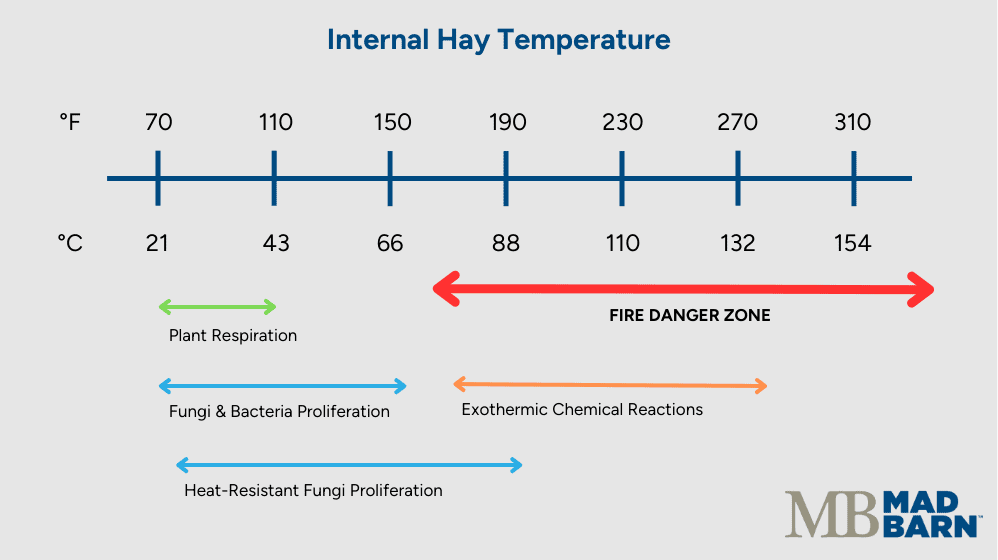
Hay fires are primarily caused by excess moisture in hay. When hay is baled or stacked with a high internal moisture content, normal bacterial metabolism within the bale produces heat. If this heat cannot escape, it builds up and may lead to spontaneous combustion, typically at temperatures around 130°F. [5][21]
Figure 1. Baled hay temperatures, internal biological processes, and fire hazards [22]
Hay can catch fire in loose, baled, or stacked forms, whether stored indoors or outdoors. Factors such as bale size, density, moisture content, and storage conditions significantly influence the heating process. [23]
To help prevent hay fires, consider these steps:
- Monitor hay stacks: Check for signs of heating, such as discoloration or musty odors. Use a temperature probe to measure internal bale temperatures and act promptly if temperatures exceed 150°F.
- Ventilate hay storage: Store hay in well-ventilated areas to promote airflow and prevent heat buildup. Space stacks apart to allow air circulation.
- Consider hay preservatives: For hay baled at slightly higher moisture levels, apply preservatives to inhibit bacterial and mold growth.
- Be prepared for emergencies: Keep fire extinguishers or water sources nearby, and train staff on fire response protocols.
A hay fire in a barn that houses horses or other livestock can escalate rapidly, trapping animals and creating life-threatening conditions due to heat, smoke, and structural collapse. To minimize these risks, keep hay and livestock in separate buildings or areas whenever possible. [24]
Frequently Asked Questions
Here are some frequently asked questions about feed storage and organization for horse farms:
Feed should be stored in airtight, moisture-proof containers made from durable, food-safe materials such as heavy-duty plastic or metal to protect it from air, moisture, and pests.
The shelf life of horse feed and supplements varies by manufacturer and storage conditions. Always check product labels for specific expiration dates and storage instructions. If in doubt, contact the feed manufacturer for guidance on the shelf life and proper storage of your feed.
Hay should be stored in a cool, dry, and well-ventilated area, elevated off the ground to prevent moisture buildup. It should be kept away from direct sunlight and humidity to reduce the risk of mold and spoilage.
Organize a feed room by creating designated areas for different types of feed and supplies, labeling containers clearly, using a "first in, first out" (FIFO) system for feed rotation, and keeping the space clean and free from pests.
Summary
Proper feed storage preserves nutritional value, prevents spoilage, and protects against contamination from pests, mold, and bacteria, which can harm horse health.
- Hay quality is crucial for equine digestive health and helps prevent colic and respiratory issues
- Climate control and proper ventilation reduce mold growth and nutrient degradation in feed
- Regular cleaning of storage areas and bins is essential to avoid contamination from dust, mold, and pests, ensuring feed remains safe
- Rodents, insects, and birds can contaminate feed with harmful pathogens; sealing openings, using rodent-proof containers, and applying safe pest control are key preventive measures
- Implementing a "first in, first out" (FIFO) system and regularly inspecting feed for signs of spoilage ensures fresh, safe feed while minimizing waste
References
- Harris. P. A. et al., Review: Feeding Conserved Forage to Horses: Recent Advances and Recommendations. Animal. 2017.
- Galli. G. M. et al., Stability of Vitamin A at Critical Points in Pet-Feed Manufacturing and during Premix Storage. Frontiers in Veterinary Science. 2024.
- Allwood. M. C. and Martin. H. J., The Photodegradation of Vitamins A and E in Parenteral Nutrition Mixtures during Infusion. Clinical Nutrition (Edinburgh, Scotland). 2000.
- Beadle, S. et al., 10 Ways to Reduce the Risk of Barn Fire . Ontario Ministry of Agriculture, Food and Agribusiness. 2024.
- Selecting and Storing Hay. University of Minnesota Extension.
- Equine - Codes of Practice for the Care and Handling of Horses. National Farm Care Council. 2013.
- Beneficial Management Practices: Environmental Manual for Alberta Cow/Calf Producers. Alberta Agriculture, Food, and Rural Development (1992 -2006). 2004.
- Witmer. G., Rodents in Agriculture: A Broad Perspective. Agronomy. Multidisciplinary Digital Publishing Institute. 2022.
- Lang, B. et al., Rodent Control in Livestock and Poultry Facilities. Ontario Ministry of Agriculture, Food and Agribusiness. 2021.
- Meerburg. B. G. et al., Towards Sustainable Management of Rodents in Organic Animal Husbandry. NJAS - Wageningen Journal of Life Sciences. 2004.
- Sembiring. A. C. et al., Improvement of Inventory System Using First In First Out (FIFO) Method. Journal of Physics Conference Series. 2019.
- Holzer. S. et al., Hay Preferences in Horses versus Selection by Their Owners. Livestock Science. 2022.
- Intemann. S. et al., The Hygienic Status of Different Forage Types for Horses—A Retrospective Study on Influencing Factors and Associations with Anamnestic Reports. Veterinary Sciences. 2022. View Summary
- Daniels. S. et al., The Haybiome: Characterising the Viable Bacterial Community Profile of Four Different Hays for Horses Following Different Pre-Feeding Regimens. PLoS ONE. 2020. View Summary
- Borreani. G. et al., Comparison of Hay and Haylage from Permanent Alpine Meadows in Winter Dairy Cow Diets. Journal of Dairy Science. 2007.
- Hintz. H. F., Molds, Mycotoxins, and Mycotoxicosis. Veterinary Clinics of North America: Equine Practice. 1990. View Summary
- Siegel. P. D. et al., Histamine and Endotoxin Contamination of Hay and Respirable Hay Dust. Scandinavian Journal of Work, Environment & Health. 1991.
- Olave. C. J. et al., Dust Exposure and Pulmonary Inflammation in Standardbred Racehorses Fed Dry Hay or Haylage: A Pilot Study. The Veterinary Journal. 2021. View Summary
- Ivester. K. M. et al., Investigating the Link between Particulate Exposure and Airway Inflammation in the Horse. Journal of Veterinary Internal Medicine. 2014. View Summary
- Diez de Castro. E. and Fernandez-Molina. J. M., Environmental Management of Equine Asthma. Animals : an Open Access Journal from MDPI. 2024. View Summary
- Preventing Hay Fires. NDSU Agriculture. 2021.
- Lemus, R. Hay Storage: Dry Matter Losses and Quality Changes. Mississippi State University Extension. 2023.
- Rothbaum. H. P., Spontaneous Combustion of Hay. Journal of Applied Chemistry. 1963.
- Chowdhury. I. F. et al., Haystack Fires in Australia: Causes and Considerations for Preventative Management. Agriculture. Multidisciplinary Digital Publishing Institute. 2023.