English




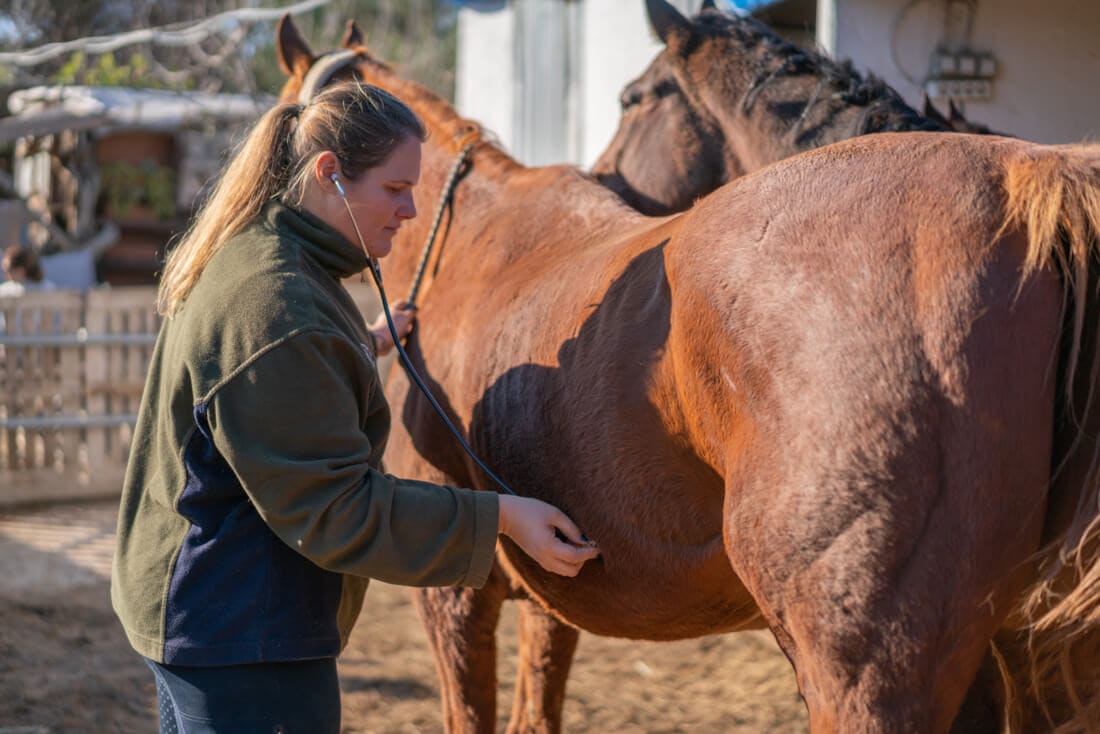
Gut sounds in horses are more than just background noise — they provide valuable clues about digestive function. These gastrointestinal sounds, known as borborygmi, reflect the activity of the digestive tract and can help caretakers detect early signs of gastrointestinal dysfunction.
Consistent gut noise generally indicates a healthy digestive system, while significant changes or a complete absence of sound can signal serious concerns such as colic, ileus, or abnormal gut motility.
By listening to your horse’s borborygmi, you can assess gastrointestinal motility, the movement of food, gas, and fluids through the gut, and recognize early warning signs before a problem escalates.
In this guide, you’ll learn how to assess your horse’s gut sounds, interpret different types of borborygmi, and understand when changes may require veterinary attention to protect your horse’s digestive health and overall well-being.
Gastrointestinal Motility in Horses
Gastrointestinal motility refers to the coordinated movement of food, fluids, gas and waste, through an animal’s digestive tract. [1][2]
Motility is essential for proper digestion and nutrient absorption. It involves three main physiological parameters: [1][2]
- Myoelectric activity: The generation and propagation of electrical waves by the smooth muscle fibers of the tract coordinate gut contractions
- Mechanical activity: The physical contractions and relaxations of circular and longitudinal smooth muscle that mix feed and drive it along the tract
- Transit of intraluminal contents: The net movement and passage time of digesta, fluids, and gas through the gastrointestinal tract, measured as the time taken for material to traverse segments such as the stomach, small intestine, or colon
Borborygmi are the audible sounds produced by the movement of gas and fluid through the intestines, and they serve as a valuable indicator of gut motility in horses. While the frequency and intensity of these sounds can vary, recognizing healthy patterns is essential for identifying early signs of gastrointestinal disturbance. [3][4]
Abdominal Auscultation: Listening to the Horse’s Gut Sounds
Abdominal auscultation is a key technique in veterinary practice used to assess digestive function by listening to the sounds produced by intestinal activity.
Horse owners can monitor their horse’s borborygmi using either their ear or a stethoscope to become familiar with what normal gut sounds should sound like.
This non-invasive diagnostic method should be performed when the horse is calm and standing quietly in a safe environment.
When conducting abdominal auscultation, there are four primary regions to assess for gut sounds: [3][5]
- Right and left paralumbar regions: The region between the horse’s hip and the start of the ribs, high up on the horse’s abdomen
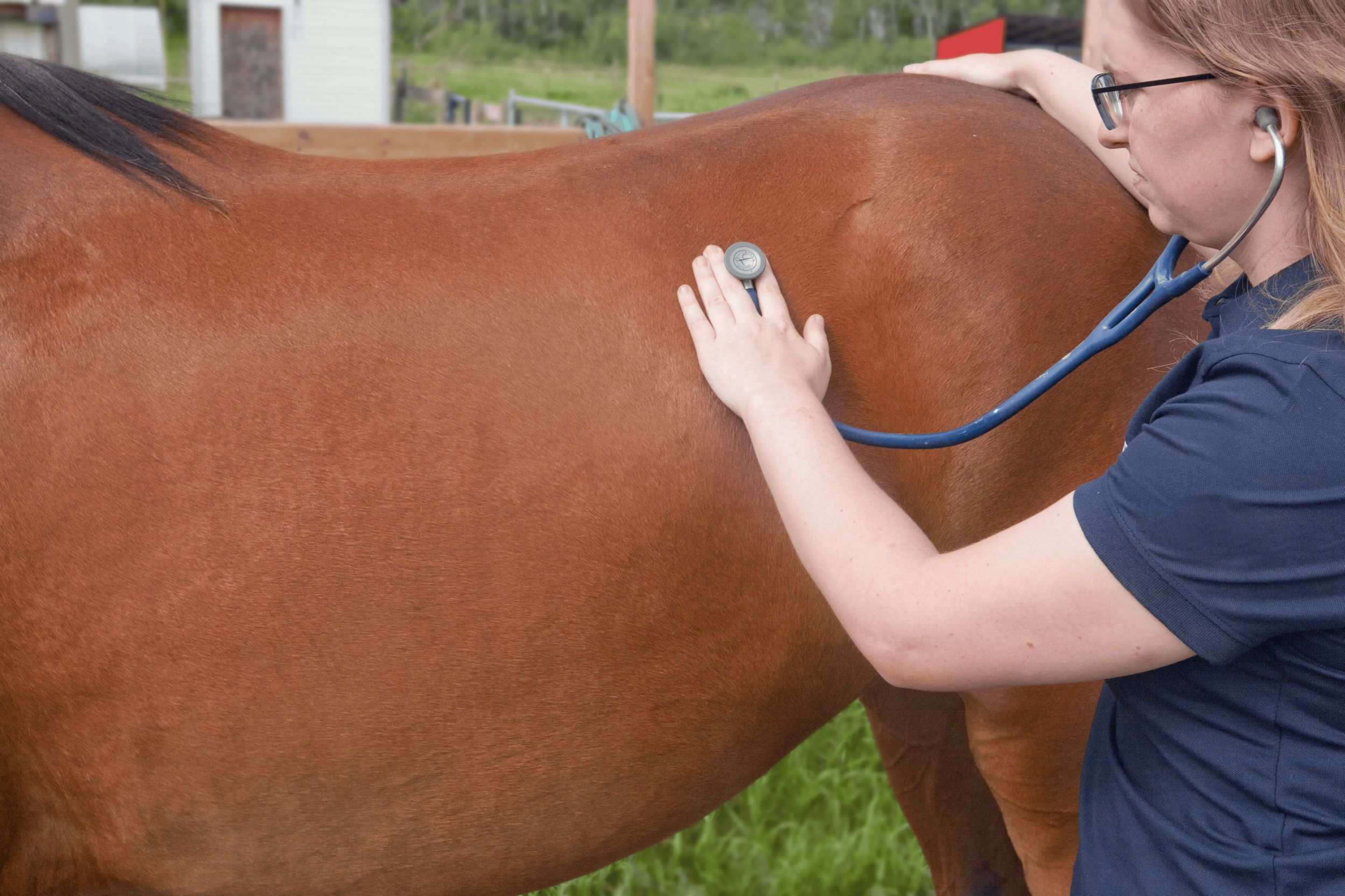 Gut Sounds Check over Paralumbar Region
- Right and left flanks: The main portion of the horse’s abdomen, just in front of the stifles
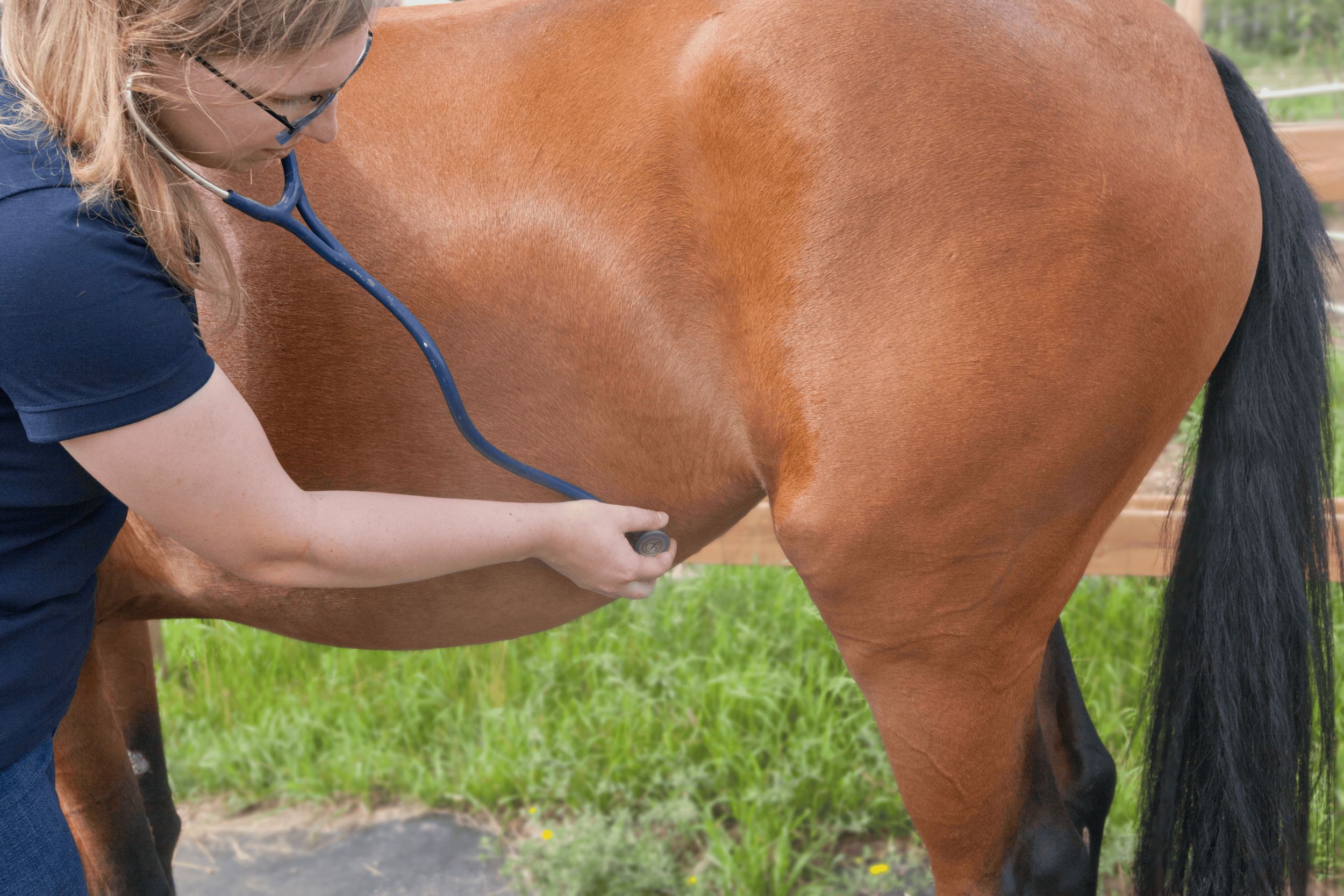 Gut Sounds Check over Flank
Listen to each of the four abdominal quadrants for 1–2 minutes. Borborygmi are the low, rumbling or bubbling sounds made by your horse’s intestines—pay attention to how often you hear them and how loud they are. By noting your horse’s normal gut‐sound pattern, you’ll establish a baseline for future comparison. [6]
Next, focus on the right paralumbar region to identify the cecal “flush.” This distinct, high‐pitched rumble, similar to water draining through a pipe, originates at the junction of the small intestine, cecum, and large colon. Veterinarians refer to this characteristic noise as the ileocecocolic flush. [6]
Table 1. Healthy equine gut sounds reference guide
| Urgency | Observation |
|---|---|
| Safe Healthy Horse |
|
| Caution Seek Veterinary Care ASAP |
|
| Urgent Seek Emergency Veterinary Care |
|
Healthy Borborygmi
While gut sounds vary among horses, there are recognizable patterns in their frequency and rhythm depending on their anatomical origin. A healthy equine digestive tract produces a range of sounds resulting from the movement of fluids, gas, and digesta through the gastrointestinal system.
The amplitude (volume) of borborygmi can differ significantly between horses, but the frequency is typically consistent. Shortly after eating, mixing sounds occur two to four times per minute and gradually taper off to once every two to four minutes over the following hours. These sounds often last six to ten seconds and can be heard on both sides of the abdomen. [5]
Common characteristics of healthy gut sounds include: [5]
- Cecal Flush: A distinct rushing or “flush” sound produced by the cecum, a large fermentation chamber located on the right side of the abdomen
- Small Intestine and Colon Sounds: A combination of low-pitched gurgles, high-pitched tinkling, and occasional swooshing noises, typically heard in the lower right quadrant
Unhealthy Borborygmi & Related Conditions
Gut sounds that are too faint, absent, or excessively loud often signal gastrointestinal issues. These abnormal sounds can be caused by various conditions that affect the horse’s gut motility.
Ileus
Ileus refers to a reduction or absence of gut motility, which can lead to a dangerous buildup of gas and ingesta in the intestines. If the intestines are not moving properly, the horse may experience discomfort, colic, and potentially life-threatening complications such as impaction.
Ileus is associated with surgical interventions, particularly following colic surgery in cases where the intestines have been manipulated or disturbed. [3]
Other common causes include: [3][4][7]
- Electrolyte imbalances: Low potassium, calcium, or magnesium
- Severe inflammation: Conditions such as enteritis or peritonitis can slow or stop gut movement
- Medications: Opioid analgesics and certain anesthetics can decrease gut motility
- Dehydration: Inadequate fluid volume diminishes blood flow to the gut and impairs normal contractions
- Ingestion of sand: Accumulated sand in the colon can physically obstruct or abrade the intestinal lining, leading to stasis
- Grass sickness: Also known as equine dysautonomia, this neurodegenerative disorder damages the autonomic nerves that control gut motility, causing intestinal paralysis
What's your top priority with your horse's health?

What's your top priority with your horse's health?
Excessive Gut Sounds
When gut sounds exceed four per minute, it may indicate gut hypermotility, an abnormally rapid movement of contents through the digestive tract. Several factors can contribute to hypermotility in horses, including: [4][8]
- Spasmodic Colic: Among the most common forms of colic in horses and generally associated with tapeworm infections
- Diarrhea: Increased gut sounds often accompany bouts of diarrhea as inflammation of the horse’s intestines leads to rapid transit of fluids and gasses
- Dysbiosis: An imbalance of the gut microbiome, often associated with antibiotics, dietary changes, stress, or the presence of intestinal parasites
Risk factors for hypermotility in horses include: [4][8]
- Dietary Indiscretion: Horses that eat inappropriate or toxic feeds are at higher risk for developing diarrhea, enteritis, and hypermotility
- Age: Younger horses, particularly foals, are more prone to enteritis and other gastrointestinal disturbances such as foal heat diarrhea
- Parasites: Horses that are not regularly dewormed are more likely to develop gut hypermotility as a result of intestinal irritation
- Changes in Environment: Sudden changes in a horse’s environment can lead to disturbances in the composition of its gut microbiome
Diagnosing Abnormal Gut Sounds
When a horse presents with abnormal gut sounds, veterinarians can use a range of diagnostic tools to determine the cause and subsequent treatment plan. Veterinarians may use a combination of approaches, including: [3][9][10]
- Physical examination
- Medical and dietary history
- Nasogastric intubation
- Diagnostic imaging
- Abdominocentesis (fluid sample from the abdomen)
- Rectal palpation
Treatment & Management
Treatment protocols for horses with abnormal gut sounds vary widely based on the underlying cause. If you notice changes in your horse’s gut sounds, whether reduced, absent, or excessively frequent, consult your veterinarian promptly to determine the appropriate course of action.
Ileus
Ileus is a severe and potentially life-threatening condition that requires prompt and aggressive treatment, especially in post-operative cases. The main goals of treatment are restoring the horse’s normal gut motility, reducing pain, and preventing further complications such as intestinal impaction. [3][11]
Treatment options may include: [3][11]
- Intravenous Fluid Therapy: To restore electrolyte balance and hydration status
- Prokinetic Drugs: Medications like lidocaine are used to stimulate intestinal movement
- Pain Medication: Non-steroidal anti-inflammatory drugs (NSAIDs) may be prescribed to manage pain
- Nasogastric Intubation: This procedure is both diagnostic and therapeutic, as it can relieve any built-up gas or fluid in the stomach
- Nutritional Support: Depending on the severity of the ileus, it may be necessary to withhold feed for some horses or place them on a restricted, easily digestible diet to avoid further strain on the digestive system
Hypermotility
In cases of hypermotility, the goal is to slow down the horse’s gut movement, manage associated symptoms such as diarrhea, and ultimately address the root cause of the disorder. [3][12]
Treatment options can include: [3][12]
- Anti-Diarrheal Medications: Horses with severe diarrhea may require medications such as bismuth subsalicylate to slow down fecal movement and protect the gastrointestinal mucosa
- Anti-inflammatory Drugs: Non-steroidal anti-inflammatory drugs can reduce inflammation in the intestinal lining
- Fluid and Electrolyte Therapy: Horses with hypermotility, especially those experiencing severe diarrhea, are at a high risk of dehydration and electrolyte imbalances
- Anti-Parasitic Treatment: If hypermotility is due to a parasitic infection, deworming treatments targeting specific parasites might be administered
- Dietary Adjustments: Gradually reintroducing a balanced diet can help normalize gut motility. Horses may also be fed small, frequent meals to avoid overwhelming the digestive system

Prevention
While ileus and hypermotility are not always preventable, several steps can be taken to reduce the chances of disorders of the horse’s gut motility. Preventative strategies include:
- Transitioning Diet Gradually: Sudden changes in diet are associated with digestive disturbances. By introducing new feed gradually, your horse’s gut microflora has time to adjust. Try using our diet transition calculator for planning feed changes if you are unsure how to make a safe transition yourself.
- Feeding Consistently: A consistent feeding schedule is helpful in maintaining the horse’s gut function.
- Providing Adequate Hydration: All horses require constant access to clean, abundant, fresh water. Adequate hydration helps prevent constipation and hard stools, which can disrupt gut motility.
- Deworming Regularly: Gastrointestinal parasites in horses can lead to inflammation, hypermotility, changes in the gastrointestinal microbiota, and other issues. Staying up-to-date with a veterinarian-recommended deworming schedule is the best way to control your herd’s parasite burden.
- Reducing Stress: Like humans, horses suffering from stress can experience gut issues. Minimizing environmental changes, providing regular exercise and turnout, as well as ensuring that the animal has adequate socialization, are all helpful in reducing stress.
- Post-Operative Monitoring: Horses that undergo abdominal surgery are at a higher risk for postoperative ileus. Attentive monitoring of gut sounds, hydration status, and comfort levels are key in the days following surgery.
Frequently Asked Questions
Borborygmi are the gurgling sounds made by gas and fluid moving through a horse’s intestines. They indicate healthy gastrointestinal motility and can help owners detect digestive issues early. [1][3][4]
A healthy horse typically produces mixing sounds two to four times per minute soon after eating, diminishing to once every two to four minutes several hours later. Sounds usually last 6–10 seconds on both sides of the abdomen. [6]
Absent or very faint borborygmi can signal ileus or decreased gut motility, which may lead to colic, impaction, or distension. Immediate veterinary evaluation is recommended if you notice no gut sounds. [4][7][8]
Find a quiet area, ensure your horse is calm and restrained, then use a stethoscope or your ear to auscultate all four abdominal quadrants: upper left, lower left, upper right, and lower right. [6]
Hypermotility, indicated by gut sounds more than four times per minute, can be caused by spasmodic colic, diarrhea, dysbiosis, sudden dietary changes, stress, or parasitic infections. [6]
Contact your vet if you observe absent, excessively loud, or irregular gut sounds, especially when accompanied by colic signs, severe discomfort, diarrhea, or other abnormal behaviors. [6]
Summary
Gut sounds are an important indicator of healthy gut motility in horses. It's possible for owners and caretakers to better identify gastrointestinal issues early by learning how to track equine gut sounds.
- Borborygmi is the scientific term for gut sounds produced by the movement of gas and fluid through a horse’s intestines
- Abdominal auscultation involves listening to the horse's gut sound with a stethoscope
- Gut sounds should be assessed from four abdominal quadrants; it's helpful to establish a baseline by checking your horse's gut sounds regularly when they are in good health
- Faint, absent, or constant sounds are indicators of gastrointestinal issues such as ileus (lack of motility) or hypermotility (excessive gut movement)
References
- Koenig. J. and Cote. N., Equine Gastrointestinal Motility — Ileus and Pharmacological Modification. The Canadian Veterinary Journal. 2006. View Summary
- Hudson. N. P. H. and Merritt. A. M., Equine Gastrointestinal Motility Research: Where We Are and Where We Need to Go. Equine Veterinary Journal. 2008.
- Blikslager. A. T. et al., Eds., The Equine Acute Abdomen. 1st ed. Wiley. 2017.
- Reed. S. M. et al., Equine Internal Medicine. Third Edition. Saunders Elsevier, St. Louis, Mo. 2010.
- Greene. E. A. and Mastellar. S. L., Knowing What Is Normal for Your Horse. University of Arizona Cooperative Extension. 2022.
- Costa. L. R. R. and Paradis. M. R., Manual of Clinical Procedures in the Horse. Wiley Blackwell, Hoboken. 2018.
- Rood. K. A. and Tebeau. C., Sand Colic: Risk Factors, Detection, Treatment, and Prevention. Utah State University Cooperative Extension. 2011.
- Proudman. C. J. et al., Tapeworm Infection Is a Significant Risk Factor for Spasmodic Colic and Ileal Impaction Colic in the Horse. Equine Veterinary Journal. 1998. View Summary
- Manso‐Díaz. G., Ultrasound Examination of the Equine Acute Abdomen. In Practice. 2021.
- Sasaki. N. et al., Evaluation of Equine Cecal Motility by Ausculation, Ultrasonography and Electrointestinography after Jejunocecostomy. Research in Veterinary Science. 2008. View Summary
- Delesalle. C., Ileus in the Colic Horse: Prognostic Factors and the Role of Serotonin and Serotonergic Receptors. Universiteit Gent. 2008.
- Hines. M. T., Equine Diarrhea - an Overview. Equine Internal Medicine. Fourth Edition. 2018.