Analyze Diet
signs-of-neurological-issues-in-horses
Signs of Neurological Abnormalities in Horses: Symptoms & Associated Conditions Dr. Emily Gilbert, PhD | August 28, 2026

Neurological signs in horses are observable changes that suggest the brain, spinal cord, or nerves are no longer coordinating normal movement, sensation, behavior, or awareness. These signs can range from subtle changes in performance to a sudden loss of strength...

chronic-inflammation-in-horses
Chronic Inflammation in Horses: Signs, Causes & Treatment Camryn McNeill, B.B.R.M. (Honours) | August 27, 2026

Chronic inflammation in horses is a prolonged immune response that can accompany disorders affecting the joints, airways, digestive tract, metabolism, and other body systems. When inflammatory activity continues beyond its useful role in healing, it may contribute to tissue damage...

winter-diarrhea-in-horses
Winter Diarrhea in Horses: Causes, Symptoms & Treatment Sara Rice, MSc. | August 3, 2026

Winter diarrhea in horses is a common concern, as seasonal changes in feeding, management, and daily routines can affect a horse's digestive health during the colder months. Although diarrhea can occur at any time of year, it may become more...

teeth-grinding-in-horses
Grinding Teeth (Bruxism) in Horses: Causes, Signs & Treatment Sara Rice, MSc. | August 26, 2026

Teeth grinding in horses, also known as bruxism, is an abnormal behavior that often indicates pain, discomfort, or an underlying medical condition. Although the sound may be most noticeable while a horse is eating or resting, persistent grinding is a...

jaundice-in-horses
Jaundice (Icterus) in Horses: Understanding Causes of Yellow Eyes & Gums Sara Rice, MSc. | August 26, 2026

Jaundice in horses is a yellow discoloration of the eyes, gums, or skin that develops when bilirubin builds up in the body. Bilirubin is a pigment produced during the normal breakdown of red blood cells, and it is typically processed...

swollen-umbilicus-in-foals
Swollen Umbilicus in Foals: Causes, Signs & Treatment Sara Rice, MSc. | August 3, 2026

A swollen umbilicus in a foal is a common abnormality that may involve the external navel, deeper umbilical structures within the abdomen, or both. While some cases are relatively minor, others can indicate infection, persistent fetal structures, an umbilical hernia,...

hot hoof in horses
Hot Hoof in Horses: Causes, Diagnosis & Treatment Sara Rice, MSc. | August 3, 2026

A hot hoof in horses is a common symptom that owners may find during routine grooming, hoof cleaning, or after exercise. While warmth can be a normal response to increased blood flow, work, or hot weather, it can also be...

the-equine-stress-response
Stress Response in Horses: Physiology, Signs & Management Sara Rice, MSc. | August 3, 2026

The equine stress response is a normal part of how horses recognize and react to challenges in their environment. Sudden noises, travel, social changes, unfamiliar surroundings, physical demands, pain, illness, and changes in routine can all activate biological systems that...

ataxia-in-horses
Incoordination (Ataxia) in Horses: Related Signs, Causes & Management Sara Rice, MSc. | August 3, 2026

Ataxia refers to a loss of normal coordination and is one of the most common signs of neurological disease in horses.  Because normal movement depends on the coordinated function of the brain, spinal cord, peripheral nerves, and balance systems, many...

elbow-anatomy-and-lameness-in-horses
Elbow Lameness in Horses: Anatomy, Disorders, Causes & Treatment Sara Rice, MSc. | August 5, 2026

Elbow lameness in horses refers to pain or dysfunction arising from the elbow joint or nearby soft tissues. Although the elbow is not a common source of forelimb lameness in horses, problems in this region can have a major impact...

drooling-in-horses
Drooling in Horses: Causes, Signs & Prevention of Excess Saliva Dr. Ana Mesa, Ph.D. | August 5, 2026

Drooling in horses can be a normal response to eating, but excessive salivation may also signal irritation, dental disease, swallowing difficulty, toxic plant exposure, or another underlying health concern. Because saliva supports chewing, swallowing, and digestion, changes in how much...

respiratory-noises-in-horses
Respiratory Noises in Horses: How to Identify Early Signs of Abnormal Breathing Sara Rice, MSc. | August 26, 2026

Respiratory noises in horses can signal a problem with airflow through their nose, throat, or lungs. While some breathing sounds are subtle, persistent or unusual noises may suggest irritation, inflammation, mucus buildup, airway narrowing, or another respiratory concern that needs...

halitosis-in-horses
Bad Breath (Halitosis) in Horses: Causes, Related Symptoms & Treatment Dr. Ana Mesa, Ph.D. | August 26, 2026

Halitosis, or bad breath, in horses is an unpleasant odor coming from a horse’s mouth or nostrils. While occasional odor associated with horse feed is normal, persistent foul-smelling breath in your horse is often a sign of an underlying health...

most-common-allergies-in-horses
Most Common Allergies in Horses: Signs, Types & Management Lucia K Ryan, MA. | August 25, 2026

Allergies are a common yet often misunderstood source of skin and respiratory problems in horses. Many owners recognize issues such as colic or lameness, while allergic reactions receive less attention despite causing significant disruption when symptoms become chronic, recurring, or...

cloudy-eye-in-horses
Cloudy Eye (Corneal Edema) in Horses: Causes, Risk Factors & Management Lucia K Ryan, MA. | August 2, 2026

A horse’s eyes are highly specialized organs that play an essential role in survival, communication, and performance. The equine eye is large and laterally placed, offering a wide field of vision that allows horses to detect threats in their environment....

gum-color-changes-in-horses
Gum Color Changes in Horses: What Red, Yellow, White and Blue Gums Mean Lucia K Ryan, MA. | August 2, 2026

Mucous membranes play a critical role in assessing equine health. The most familiar mucous membranes are the gums, but these thin, moist tissues line various body cavities, including the eyes and genitals. In clinical settings and daily management, evaluating mucous...

signs-a-horse-is-too-cold
Is My Horse Too Cold? Hypothermia Signs, Risks & Cold Weather Care Tips Lucia K Ryan, MA. | August 2, 2026

While horses are naturally well-adapted to colder climates, not all individuals cope equally well, and domestic management often interferes with their ability to maintain their internal body temperature. Clipping, restricted forage, inadequate shelter, chronic conditions, and other health factors all...

signs-of-respiratory-issues-in-horses
Respiratory Dysfunction in Horses: Symptoms, Anatomy & Related Conditions Sara Rice, MSc. | August 11, 2026

Respiratory dysfunction is a common and often overlooked issue in horses, with a variety of causes including infections, allergies, environmental irritants, and anatomical abnormalities. Horses depend on efficient lung function to meet the high oxygen demands of their large, athletic...

nasal-discharge-in-horses
Nasal Discharge in Horses: Causes, Risks & Related Conditions Lucia K Ryan, MA. | August 2, 2026

It's not unusual to see a small amount of clear, watery discharge coming from your horse's nose—especially after exercise, during cold weather, or when they've been around dust or pollen. Mild discharge is part of the body's natural defense system,...

understanding-horse-gut-sounds
Does My Horse Have Normal Gut Noises? Healthy vs. Overactive Gut Sounds Lucia K Ryan, MA. | August 2, 2026

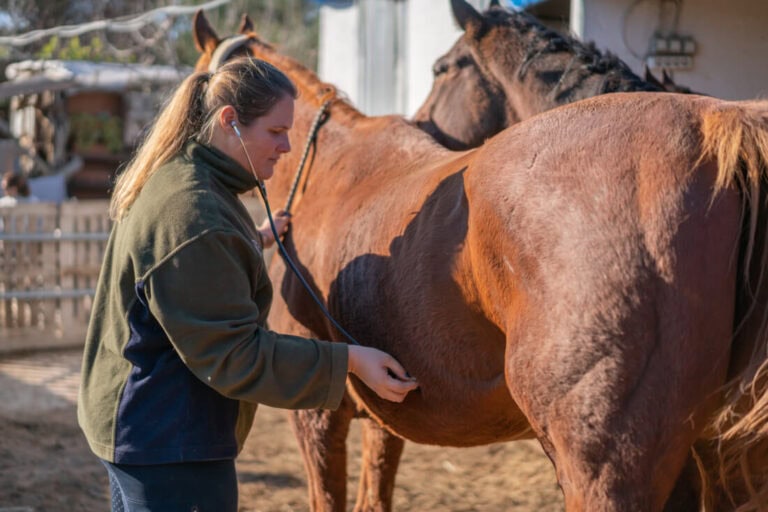
Gut sounds in horses are more than just background noise — they provide valuable clues about digestive function. These gastrointestinal sounds, known as borborygmi, reflect the activity of the digestive tract and can help caretakers detect early signs of gastrointestinal...

flared-nostrils-in-horses
Healthy vs. Abnormal Nostril Flaring in Horses: How to Assess Equine Respiratory Effort Lucia K Ryan, MA. | August 21, 2026

Flaring nostrils in horses are a powerful visual cue that should never be overlooked. Often dismissed as a sign of excitement, exertion, or even just a quirk of a particular horse’s personality, nostril flaring can provide critical insights into a...

back-pain-in-horses
Back Pain in Horses: Signs, Causes, Treatment & Management Dr. Madison Ricard, DVM, PhD, DACVP | August 20, 2026

Back pain is a common yet often overlooked issue in horses, affecting their performance, behavior, and overall well-being. Studies show that up to 54% of sport horses and 90% of racehorses show signs of back disease. Whether they are elite...

headshaking in horses
Headshaking in Horses: Causes, Risk Factors & Treatment Casie Bazay, BS, NBCAAM | August 20, 2026

Headshaking in horses describes repeated, uncontrollable, usually vertical movements of the head and neck. This behavior can be concerning for owners and caretakers, as some forms are a source of significant distress for horses. Headshaking may appear gradually or suddenly,...

inappropriate-lactation-in-mares
Inappropriate Lactation in Mares: Causes, Treatment & Prevention Lucia K Ryan, MA. | August 20, 2026

Lactation is a vital process for broodmares, ensuring the survival and growth of foals by providing essential nutrients and immune protection. However, some mares experience abnormal or inappropriate lactation, producing milk outside the expected timeline—either too early, too late, or...

colic-in-horses
Colic in Horses: Treatment, Management & Prevention [Guide] Dr. Madison Ricard, DVM, PhD, DACVP | August 18, 2026

Colic in horses is one of the most common and serious health conditions affecting equines, and it can strike suddenly, regardless of age, breed, or discipline. Colic refers to abdominal pain, which can arise from a variety of causes, ranging...

exercise intolerance in horses
Exercise Intolerance in Horses: Signs, Causes & Treatment of Poor Performance Lucia K Ryan, MA. | August 20, 2026

Riders and trainers often encounter challenges that affect the performance and well being of their equine partners. Among these are exercise intolerance and poor performance, sometimes referred to as "ring sour." While ring sour can be frustrating for owners and...

lethargy-in-horses
Lethargy in Horses: Signs, Causes & Treatment Lucia K Ryan, MA. | August 20, 2026

Lethargy in horses is a significant concern for equine owners and veterinarians alike, as it can often indicate a severe underlying health issue requiring medical attention. Lethargy is characterized as a decrease in typical energy levels, activity, and enthusiasm. It...

jaw-swelling-in-horses
Jaw Swelling in Horses: Causes, Risk Factors & Treatment Lucia K Ryan, MA. | July 18, 2026

Swollen jaws are a common concern in equine medicine; they can be a symptom of several underlying health issues and conditions that range from mild to potentially life-threatening. Jaw swelling in horses can be caused by a number of underlying...

itching-in-horses
Why is My Horse Itchy? Pruritis Causes, Management & Related Conditions Lucia K Ryan, MA. | July 18, 2026

Itching, or pruritus, is a common issue that affects all horses, with various potential causes ranging from insect bites and parasite infestations to bacterial and fungal infections, as well as allergic reactions. Horses typically exhibit signs of itchiness by biting,...

quidding-in-horses
Why is My Horse Dropping Feed or Hay? Quidding Causes, Symptoms & Treatment Lucia K Ryan, MA. | July 24, 2026

Quidding is a term used to describe a horse dropping food from its mouth while eating. This can be a sign of dental problems as well as a number of other conditions. Regular dental care is of utmost importance to...