English
Muscle cramps occur when a horse’s muscles contract involuntarily for an abnormally extended period of time.
Cramps can happen during or after exercise and cause visible muscle tightening, stiffness, pain, or reluctance to move. Some cramps are accompanied by muscle twitching, but twitching does not always indicate cramping.
Several factors can contribute to occasional muscle cramping in horses, especially in those worked for prolonged periods or in hot or humid conditions. However, in horses with recurrent episodes of cramping, the symptoms may be associated with tying-up or another condition affecting the muscles.
Understanding the different causes of muscle cramps is important for managing the condition and supporting normal muscle function. Severe, persistent, or recurring episodes of cramping in horses require veterinary assessment to determine the underlying cause and appropriate treatment.
What Are Muscle Cramps in Horses?
Muscle cramps in horses are sudden, involuntary, and often painful contractions of a muscle or group of muscles. They occur when the nerves controlling a muscle repeatedly signal the muscle fibers to contract, causing the muscle to tighten and remain contracted for an extended period of time. [1][2]
Common causes of muscle cramping in horses include: [1][2]
- Exercise
- Fatigue
- Dehydration
- Electrolyte imbalances
Other underlying causes include metabolic, neurologic, or muscle disorders. [1][2]
Muscle cramps are often accompanied by fasciculations, which are small, visible muscle twitches caused by involuntary contractions of groups of muscle fibers. [1]
What's your top priority with your horse's health?

What's your top priority with your horse's health?
Muscle Cramps, Spasms & Twitching
The terms “muscle cramp,” “muscle spasm,” and “muscle twitch” are sometimes used interchangeably, but they do not always describe the same type of muscle activity. [1]
A muscle cramp is generally a painful, sustained contraction, while muscle twitching or fasciculation involves smaller contractions that can often be seen beneath the skin. In contrast, “muscle spasm” is a broader term for involuntary muscle contraction and can include painful cramping. [1]
Visible muscle twitching does not necessarily mean that a muscle is cramping. Horses often twitch the skin in response to external stimuli such as flies or touch through the cutaneus trunci, or skin-twitch, reflex.
Muscle twitching can also occur with fatigue, electrolyte imbalances, pain, or certain neurologic and muscle disorders. [1][3][4][5]
Muscle Cramps vs. Tying-Up
Muscle cramps are distinct from tying-up in horses, a condition also known as exertional rhabdomyolysis.
During a true muscle cramp, repeated nerve activity causes the muscle to contract without necessarily damaging the muscle fibers. Serum creatine kinase (CK), an enzyme that increases with muscle damage, generally remains within the normal range during muscle cramping. [1][2][5]
Tying-up involves muscle cell damage and typically causes increased CK activity in the blood. Although muscle cramps and tying-up can appear similar, their underlying causes and management differ. [1][5][6]
Table 1. Muscle cramps vs. twitching vs. tying-up in horses
| Condition | Typical Appearance | Pain and Movement | Muscle Damage and CK | Recommended Response |
|---|---|---|---|---|
| Muscle cramp |
|
|
|
|
| Muscle twitching or fasciculation |
|
|
|
|
| Tying-up |
|
|
|
|
What to Do When a Horse Cramps During Exercise
If a horse develops signs of muscle cramping during exercise, stop strenuous work and assess the horse before continuing. Mild exercise-associated cramps may resolve with rest or light movement, but the appropriate response depends on how severe the episode is and whether other signs are present. [1][2]
If the horse is comfortable moving, gentle walking may help while the affected muscle relaxes. Water should be available, and horses that have been sweating heavily may also need replacement of fluid and electrolyte losses. Horses that are hot should be cooled appropriately during recovery. [1][7][8]
Do not assume that severe stiffness or pain is a straightforward cramp. Tying-up can initially look similar, but continued exercise may worsen muscle damage.
Discontinue exercise and contact a veterinarian if the horse has severe or persistent pain, marked stiffness, weakness, collapse, dark urine, significant dehydration, or other concerning signs. [1][5]
Causes of Muscle Cramps in Horses
Normal muscle contraction depends on coordinated signals between the nerves and muscle fibers. When a motor nerve is activated, electrical signals travel along the muscle cell membrane and trigger the release of calcium within the muscle fiber. Calcium allows actin and myosin filaments in the muscle to interact, producing contraction. The muscle then relaxes as calcium is moved back into storage within the cell. [9]
This process depends on maintaining appropriate concentrations of electrically charged minerals, or ions, inside and outside nerve and muscle cells.
Sodium and potassium are particularly important for generating and transmitting electrical signals across cell membranes, while calcium plays a central role in initiating contraction. Magnesium and chloride also contribute to normal neuromuscular and fluid balance. [7][10]
When fluid and electrolyte balance is disrupted, normal nerve and muscle activity can also be affected. Significant ion deficits alter neuromuscular function and contribute to abnormal contractions, including muscle cramping and spasms. [11][7]
Exercise & Muscle Fatigue
Muscle cramps and spasms can occur during or after exercise, particularly during endurance exercise. [1]
As exercise continues, working muscles cannot maintain the same force of contraction. Fatigue is associated with changes in ion regulation and calcium handling within muscle fibers, including reduced enzyme activity and impaired calcium release and uptake. [12] These changes can contribute to reduced muscle excitability and contractile function.
Fatigue may also affect the neuromuscular control of contraction. One proposed mechanism is that fatigue shifts the balance between excitatory and inhibitory signals. Reduced inhibitory input combined with continued excitatory input can increase motor neuron activity, allowing the muscle to continue contracting involuntarily. [13][14]
Cramping may also be more easily triggered when a muscle contracts forcefully from an already shortened position. In this position, reduced tension through the tendon may decrease inhibitory feedback, further favoring motor neuron excitation. [15]
Dehydration & Electrolyte Imbalances
Horses lose water and electrolytes, including sodium, chloride, potassium, calcium, and magnesium, through sweat. [11][7]
Substantial losses can disrupt normal nerve and muscle function and contribute to cramping, twitching, and other abnormal muscle contractions. [1][7] Hot and humid conditions may contribute to exercise-associated cramping by increasing sweat and electrolyte losses. [1][11]
Other Causes of Muscle Cramps
Muscle cramping, spasms, or twitching can also occur with muscle injuries, metabolic imbalances, neurologic conditions, and inherited muscle disorders. [1][5]
Other potential causes include:
- Muscle trauma: Injuries that cause pain, inflammation, or damage to muscle tissue
- Hypocalcemia: Low blood calcium levels that affect normal muscle contraction and relaxation
- Hyperkalemic periodic paralysis (HYPP): An inherited disorder that causes episodes of muscle twitching, weakness, and trembling
- Ear tick infestations: Ticks within the ear canal that can uncommonly cause painful muscle spasms
Symptoms of Muscle Cramps & Spasms in Horses
Muscle cramps can range from mild, localized contractions to severe episodes that interfere with movement and are accompanied by considerable pain. Muscle twitching or fasciculations may occur with cramping or appear on their own. [1][2]
Symptoms of muscle cramps and spasms in horses may include: [1][5]
- Visible muscle twitching or rippling
- Tight or firm muscles
- Muscle pain or sensitivity
- Stiffness or an abnormal gait
- Reluctance to move
- Sweating
- Weakness
- Sudden episodes of severe pain
Severe muscle cramping can sometimes resemble colic, and affected horses may even collapse because of the pain. Weakness, widespread fasciculations, or repeated episodes can occur with underlying disorders such as electrolyte abnormalities or HYPP. [1][5]
When to Call the Veterinarian
Veterinary attention is appropriate when cramping is severe, does not resolve in a timely manner, or occurs repeatedly. [1][5]
Prompt veterinary assessment is also warranted when muscle cramping or twitching occurs in horses with: [1][5]
- Severe pain
- Weakness
- Collapse
- Incoordination
- Dark urine
These signs can indicate tying-up or another underlying disorder. [1][5]
Diagnosing Muscle Cramps in Horses
Diagnosis focuses on determining whether the horse has a true muscle cramp or whether another condition, such as tying-up, an electrolyte imbalance, or an underlying medical condition is responsible for the symptoms. [1][2][5]
Blood tests can help identify electrolyte abnormalities and measure muscle enzymes such as creatine kinase (CK), which typically remains normal with muscle cramping but increases when muscle cells are damaged. [1][5][16]
Other diagnostic tests may include: [1][5]
- Genetic testing
- Electromyography
- Muscle biopsy
The tests selected depend on the horse’s symptoms, history, and whether episodes are persistent or recurring. [1][5]

Treatment of Muscle Cramps in Horses
Treatment depends on the cause and severity of the cramping. [1][5]
Mild exercise-associated cramps may resolve with rest or gentle movement, while horses with significant dehydration or electrolyte imbalances may require fluid and electrolyte replacement. [1][2]
Pain management may be required when cramping is severe, while treatment of recurring episodes focuses on identifying and managing the underlying disorder. [1][5]
When muscle cramping occurs during exercise, strenuous activity should be stopped and the horse allowed to recover. [1] Mild cramps may resolve with rest or gentle walking, and massage, stretching, or topical heat may help relax affected muscles. [1]
Water should be available, and fluid and electrolyte losses may need to be replaced following substantial sweating. [7] Horses showing significant dehydration, exhaustion, or electrolyte abnormalities may require supportive care under veterinary supervision. [1][8]
Recovery & Return to Exercise
A horse should not immediately return to strenuous work simply because a muscle cramp has released. Allow time for the horse to recover from the exercise and any associated circumstances that may have contributed to the episode. [1][11][7]
Before resuming exercise, the horse should be moving comfortably without recurrent cramping or significant stiffness. Hydration and recovery from strenuous exercise should also be considered, particularly after prolonged work or exercise in hot and humid conditions. [1][7]
After an isolated mild episode, exercise can generally be reintroduced gradually once the horse has recovered and is comfortable. The workload should reflect the horse’s current level of conditioning rather than immediately returning to the intensity or duration of exercise associated with the cramp.
Repeated episodes require a different treatment approach. A horse that cramps consistently during or after exercise should receive veterinary assessment before the problem is treated simply as fatigue or inadequate electrolyte supplementation. Recurring signs may indicate an underlying electrolyte, metabolic, neurologic, or muscle disorder that requires specific management. [1][5]
Preventing Muscle Cramps in Horses
Preventing muscle cramps involves reducing factors that contribute to muscle fatigue, dehydration, and electrolyte imbalances while addressing any underlying conditions associated with recurring episodes. [1][5]
Conditioning & Exercise Management
Appropriate conditioning helps prepare horses for the intensity and duration of their workload. Exercise demands may need to be adjusted during hot and humid weather, when sweating and associated fluid and electrolyte losses increase. [1][11]
Adequate rest between periods of strenuous exercise is also crucial for a horse’s recovery, particularly for horses performing prolonged endurance work. [1]
Hydration & Heat Management
Maintaining access to water and replacing fluids lost through sweating help support normal hydration during exercise and recovery. [7] Cooling horses during and after strenuous exercise can also help limit heat stress. [8]
Owners should seek veterinary evaluation for horses with recurring cramps, spasms, or muscle twitching to determine underlying causes rather than relying on changes in exercise or electrolyte supplementation alone. [1][5]
Nutrition & Electrolytes for Muscle Health
A balanced diet provides the nutrients required for normal muscle contractions, nerve signaling, and muscle protein synthesis. Ensure your horse’s diet provides sufficient: [5]
Inadequate nutrient intake or substantial electrolyte losses can contribute to abnormal muscle function in susceptible horses, although muscle cramps can have other causes. [5][8]
Electrolytes are minerals that help maintain fluid balance and the electrical gradients that allow nerves to send signals and muscles to contract and relax. Key electrolytes include sodium, chloride, potassium, calcium, and magnesium. [5][7]
Salt & Water Requirements
Horses need consistent access to clean, fresh water and an adequate source of salt to maintain normal hydration and fluid balance. Sodium and chloride are supplied primarily through salt and are the electrolytes lost in the greatest quantities in equine sweat. [17]
Water requirements vary depending on a horse’s body weight, diet, environmental conditions, and workload. A 500 kg (1,100 lb) adult horse in minimal work typically consumes approximately 21 to 29 L (5.5 to 7.7 gal) of water per day.
However, requirements increase substantially with exercise, hot weather, and sweating. Horses on fresh pasture can obtain moisture from grass, but those primarily receiving dry hay or grain feeds need to consume more water. [17]
Salt requirements also increase with sweating because horses lose sodium and chloride through their sweat. Always provide free-choice access to loose salt and add two tablespoons of salt to the daily ration, with additional salt as needed during heavy work or hot weather. [17]
Electrolyte Requirements
In addition to sodium and chloride, horse sweat contains the mineral potassium and smaller amounts of calcium and magnesium. [7][11]
Horses performing prolonged or strenuous exercise, particularly in hot or humid conditions, can lose substantial amounts of electrolytes through sweat. Electrolyte supplementation is recommended to replace these losses and support normal muscle function. Adequate water must also be available whenever electrolytes are provided. [7][11][18]
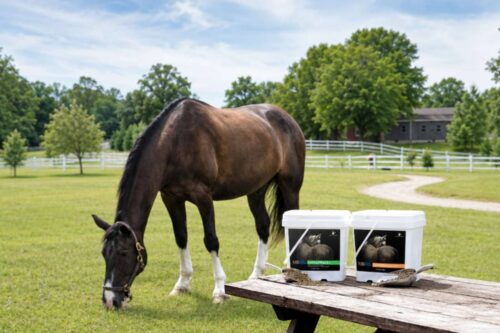
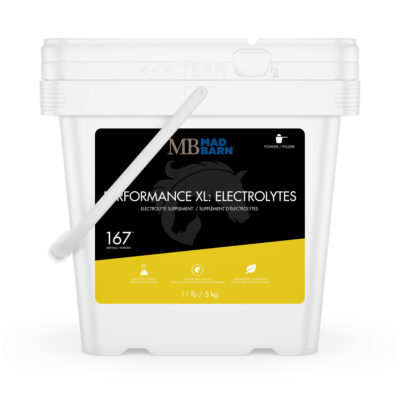
Mad Barn’s Performance XL: Electrolytes is a scientifically balanced formula that provides sodium, chloride, potassium, calcium, and magnesium to support hydration, fluid balance, and normal muscle function in exercising horses. This supplement also provides vitamins E and C to support antioxidant defenses and muscle recovery following exercise.
Electrolyte supplements are not a general treatment for muscle cramps or twitching. Recurrent symptoms can have causes unrelated to electrolyte imbalance and should be evaluated by a veterinarian to identify any underlying conditions. [1][5]
Frequently Asked Questions
Here are some frequently asked questions about muscle cramps in horses:
Muscle cramps in horses can be caused by exercise, muscle fatigue, dehydration, electrolyte imbalances, trauma, or an underlying health condition. They are more likely to occur during prolonged exercise or in hot and humid conditions that increase sweating and electrolyte losses. Metabolic, neurologic, muscle, and inherited disorders can also cause cramping or similar symptoms.
Signs of muscle cramps in horses can include visible muscle tightening, twitching, pain, stiffness, sweating, an abnormal gait, and reluctance to move. Affected muscles may feel firm or sensitive to the touch. Severe cramping can cause intense pain, resemble colic, or even lead to collapse.
The difference between muscle cramps, spasms, and twitching in horses is the type and extent of the muscle contraction. A cramp is generally a painful, sustained contraction, while a spasm is a broader term for any involuntary muscle contraction. Muscle twitching involves smaller contractions that may be visible beneath the skin and does not necessarily mean the horse is cramping.
A horse's skin may twitch as a normal response to flies, touch, or other external stimulation. This skin-twitch reflex contracts muscles beneath the skin and is not usually a sign of cramping. Persistent or widespread twitching can also occur with fatigue, electrolyte imbalances, pain, or certain neurologic and muscle disorders and should be investigated by a veterinarian.
Muscle cramps are not the same as tying-up in horses, although the two conditions can appear similar. A true cramp involves involuntary muscle contraction without necessarily damaging muscle fibers, so blood levels of the muscle enzyme creatine kinase generally remain normal. Tying-up involves muscle cell damage and typically causes increased creatine kinase activity in the blood, requiring different management.
Muscle cramps in horses are diagnosed by considering the horse's symptoms, medical history, and the circumstances surrounding each episode. Blood tests can identify electrolyte abnormalities and measure muscle enzymes that may indicate muscle cell damage. Horses with persistent or recurring symptoms may also require genetic testing, electromyography, or a muscle biopsy.
If a horse develops a muscle cramp during exercise, stop strenuous activity and allow the horse to recover. Mild exercise-associated cramps may improve with rest or gentle walking, while massage, stretching, or topical heat may help relax the affected muscles. Provide access to water and seek veterinary assistance if the cramp is severe, does not resolve, or occurs with other concerning signs.
Dehydration can contribute to muscle cramps in horses, especially when substantial sweating also causes electrolyte losses. Horses lose sodium, chloride, potassium, calcium, and magnesium through sweat. Significant disturbances in fluid and electrolyte balance can interfere with normal nerve and muscle function, leading to cramping, twitching, or other abnormal contractions.
A horse with muscle cramps may benefit from electrolytes when substantial amounts have been lost through sweating. Electrolytes are not an appropriate treatment for every case because cramping and twitching can have causes unrelated to sweat losses. Adequate water must be available when electrolytes are provided, and recurring symptoms should be investigated rather than managed with supplementation alone.
Muscle cramps in horses may be prevented by supporting appropriate conditioning, hydration, recovery, and exercise management. Workload may need to be adjusted during hot and humid weather, when fluid and electrolyte losses increase. Horses with repeated cramps, spasms, or twitching should be evaluated for an underlying condition because routine management changes may not address the actual cause.
A horse's diet can affect the risk of muscle cramps because energy, protein, vitamins, minerals, and electrolytes all support normal nerve and muscle function. Sodium, chloride, potassium, calcium, and magnesium are particularly important for muscle activity and fluid balance. However, a dietary supplement should not be assumed to correct recurring cramps without first identifying whether nutrition or electrolyte loss is contributing to the problem.
A veterinarian should be called when a horse's muscle cramps are severe, persistent, or recurring. Prompt assessment is also warranted if cramping or twitching occurs with severe pain, weakness, collapse, incoordination, dark urine, or widespread muscle contractions. These signs may indicate tying-up, a significant electrolyte disturbance, or another underlying disorder rather than a simple muscle cramp.
Summary
Muscle cramps in horses are painful, involuntary contractions that may occur during or after exercise. Management depends on distinguishing true cramps from tying-up, muscle twitching, and underlying metabolic or neurologic disorders.
- Exercise, fatigue, dehydration, and electrolyte losses are common contributors to muscle cramping.
- Muscle twitching can occur without pain or muscle damage and does not always indicate a true cramp.
- Tying-up involves muscle cell damage and typically causes increased creatine kinase activity in the blood.
- Severe, persistent, or recurring episodes may require bloodwork, genetic testing, electromyography, or muscle biopsy.
- Conditioning, adequate water, heat management, and replacement of sweat losses support normal muscle function.
- Electrolyte supplements should not replace veterinary investigation when cramps or twitching repeatedly occur.
References
- Ross. M. W. and Dyson. S. J. Diagnosis and Management of Lameness in the Horse, 2nd Edition. Saunders. 2011.
- Valberg. S. J. Muscle Cramping in Horses. Merck Veterinary Manual. 2026.
- van Iwaarden. A. et al. Topographical Anatomy of the Equine M. Cutaneus Trunci in Relation to the Position of the Saddle and Girth. Journal of Equine Veterinary Science. 2012.
- Essig. C. M. et al. Localization of the Cutaneus Trunci Muscle Reflex in Horses. American Journal of Veterinary Research. 2013.
- Reed. S. M. et al. Equine Internal Medicine, 3rd Edition. Saunders Elsevier. 2009.
- Wilberger. M. S. et al. Prevalence of Exertional Rhabdomyolysis in Endurance Horses in the Pacific Northwestern United States. Equine Veterinary Journal. 2015.
- Lindinger. M. I. Oral Electrolyte and Water Supplementation in Horses. Veterinary Sciences. 2022.
- Fielding. C. L. and Magdesian. K. G. Clinical and Biochemical Abnormalities in Endurance Horses Eliminated from Competition for Medical Complications and Requiring Emergency Medical Treatment: 30 Cases (2005-2006). Journal of Veterinary Emergency and Critical Care. 2009.
- Stewart. M. Muscle Structure and Function--An Explanation. Equine Veterinary Journal. 1976.
- Maier. I. and Kienzle. E. A Meta-Analysis on Quantitative Sodium, Potassium and Chloride Metabolism in Horses and Ponies. Animals. 2025.
- McCutcheon. L. J. and Geor. R. J. Sweat Fluid and Ion Losses in Horses During Training and Competition in Cool vs. Hot Ambient Conditions: Implications for Ion Supplementation. Equine Veterinary Journal Supplement. 1996.
- Leppik. J. A. et al. Prolonged Exercise to Fatigue in Humans Impairs Skeletal Muscle Na+-K+-ATPase Activity, Sarcoplasmic Reticulum Ca2+ Release, and Ca2+ Uptake. Journal of Applied Physiology. 2004.
- Schwellnus. M. P. Cause of Exercise Associated Muscle Cramps (EAMC) - Altered Neuromuscular Control, Dehydration or Electrolyte Depletion?. British Journal of Sports Medicine. 2009.
- Nelson. N. L. and Churilla. J. R. A Narrative Review of Exercise-Associated Muscle Cramps: Factors That Contribute to Neuromuscular Fatigue and Management Implications. Muscle & Nerve. 2016.
- Maughan. R. J. and Shirreffs. S. M. Muscle Cramping During Exercise: Causes, Solutions, and Questions Remaining. Sports Medicine. 2019.
- Buckley. P. et al. Pre-Race and Race Management Impacts Serum Muscle Enzyme Activity in Australian Endurance Horses. Equine Veterinary Journal. 2022.
- Liburt. N. R. Nutritional Requirements of Horses and Other Equids. Merck Veterinary Manual. 2026.
- Sampieri. F. et al. Effects of Oral Electrolyte Supplementation on Endurance Horses Competing in 80 km Rides. Equine Veterinary Journal. 2006.