English
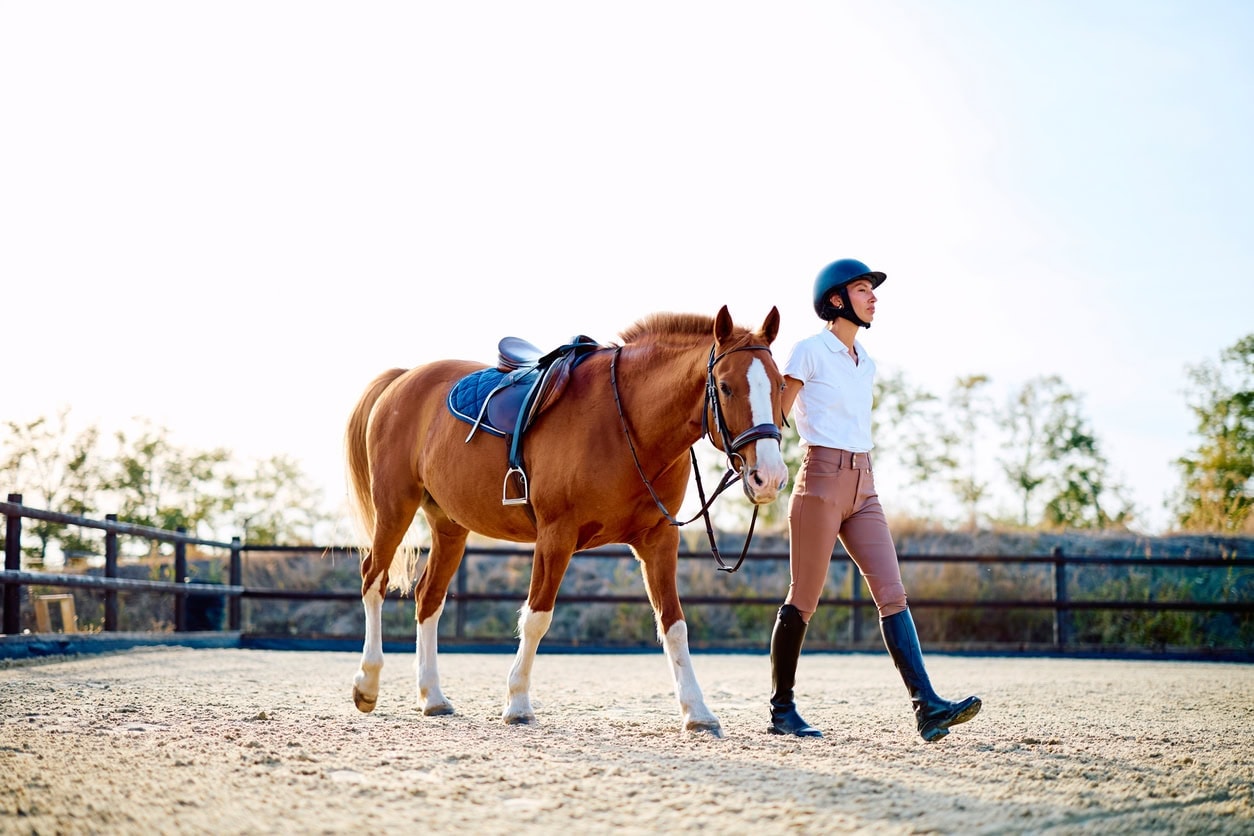
L-carnitine is a compound that plays a key role in energy production in horses by helping fatty acids enter cell mitochondria. In the mitochondria, these fatty acids are metabolized and converted into usable energy. This process occurs continuously, supporting the horse’s everyday metabolic needs as well as the increased demands of physical work.
Horses produce their own carnitine using amino acids such as lysine and methionine. However, some horses, including growing foals, mares, stallions, and those in heavy work, face higher energy demands. In these cases, carnitine production may not keep pace, or existing stores may be used more rapidly during sustained or intense activity.
When additional support is needed, horse owners may consider acetyl-L-carnitine supplementation. This form of carnitine is readily utilized by the body, supporting fatty acid metabolism and improving the efficiency of energy production.
This article explains how carnitine functions in the horse’s body, with a focus on energy metabolism, muscle activity, and overall health. Read on to learn what carnitine is, how it works, and when a little extra might help your horse.
What is Carnitine for Horses?
Carnitine is a naturally occurring compound present in the bodies of horses and other animals. Horses naturally produce carnitine through nutrients provided by a healthy diet, although they can also take in carnitine through dietary supplementation. [1][2]
Carnitine helps convert fat into usable energy by supporting the movement and processing of fatty acids in tissues with high energy demands, such as skeletal and cardiac muscle. Carnitine also has antioxidant and anti-inflammatory effects. [3][4][5]
Carnitine exists in several forms that differ in origin and chemical structure: [6]
- L-carnitine is the naturally occurring form of carnitine synthesized by horses in the liver. It supports the transport of fatty acids into mitochondria, where they can be metabolized for energy. L-carnitine represents about 90% of the body’s carnitine pool.
- Acetyl-L-carnitine (ALCAR) is a modified form of L-carnitine that performs the same basic function, but plays a larger role during heavy work. ALCAR levels rise during exercise and decrease during rest.
- D-carnitine is a synthetic form of carnitine that does not support normal fatty acid metabolism. It can interfere with the absorption and utilization of L-carnitine, potentially reducing the amount available for energy metabolism.
L-carnitine and acetyl-L-carnitine are the forms most commonly used in equine supplements.
What's your top priority with your horse's health?

What's your top priority with your horse's health?
Carnitine Functions
Carnitine influences how cells manage fuel and support energy-dependent processes. It participates in several metabolic pathways that affect how energy is produced, transported, and used throughout the body, particularly in tissues with high energy demands.
Energy Metabolism
Horses rely on fat metabolism to meet a substantial portion of their energy needs. Fatty acids are broken down through a process called beta-oxidation, which occurs primarily in the mitochondria and produces molecules used to generate cellular fuel.
During this process, fatty acids pass through cell membranes into mitochondria, where they are broken down into smaller units called acetyl-CoA molecules. These molecules go through the Krebs cycle to create adenosine triphosphate (ATP), which is then used as energy. [6]
L-carnitine’s primary role is to enable the transport of fatty acids into cell mitochondria, where they can be burned or metabolized to produce energy. [6]
By helping fat move down energy-producing pathways, carnitine supports steady energy availability in horses’ tissues whether at rest or in high-intensity exercise.
Only a small group of fatty acids, including acetate and certain short- or medium-chain fats, can cross mitochondrial membranes on their own. The rest need carnitine to be taken up by mitochondria. [6]
As a result, carnitine availability directly influences whether those energy sources can be accessed by the cell.
Acetyl-L-carnitine also helps the horse handle glucose after meals by activating enzymes that allow glucose to be burned for energy. [7]
In other species, carnitine plays a role in maintaining normal mitochondrial function. Low carnitine status has been associated with reduced metabolic flexibility; higher restored levels are linked to improved cellular energy handling during disease-related stress. [8]
Muscle Function & Exercise Metabolism
During exercise, muscle tissues rely on carnitine to help enable energy supply. Carnitine supports muscles’ ability to access both fatty acid and carbohydrate fuel sources as the horse’s workload and intensity change. [1][9]
As exercise intensity increases, L-carnitine found within muscle cells is converted to acetyl-L-carnitine (ALCAR). This helps energy production run smoothly by allowing more fuel to move into cells’ mitochondria efficiently, recycling carnitine for continued use. [10]
Burning fat naturally produces byproducts such as lactate and reactive oxygen species (ROS) in muscle tissue. If these byproducts build up faster than they can be recycled or cleared, they can strain a horse’s muscles and overall physical function.
ALCAR helps manage these byproducts by limiting excessive ROS generation during metabolic activity. It is also associated with lower lactate accumulation during exercise and with lactate levels returning to baseline more quickly once activity stops. [11][12][13][14]
Carnitine supplementation is also linked to improved blood flow within muscle tissue and reduced reliance on carbohydrates during repeated work. [15]
Carnitine supports how muscles access and manage energy during both light work and demanding exercise, helping maintain efficiency, recovery, and normal metabolic balance as workload and intensity change.
Sperm Motility
Research shows that carnitine plays a role in reproductive function by supporting sperm motility. Like muscle cells, sperm cells use fat as a fuel source, burning fatty acids to fuel their movement. Carnitine facilitates the transfer and use of this fuel within sperm cells. [16]
This activity also supports a more stable internal environment within semen. By limiting excess fat that could otherwise contribute to ROS buildup, carnitine helps reduce strain that may interfere with normal sperm structure and function. [17]
Within semen, carnitine levels have been linked to sperm concentration and the integrity of the acrosomal membrane, which influences the sperm’s ability to fertilize an egg. [16][17][18]
These findings have prompted research into L-carnitine supplementation for breeding stallions. In one study, 60 days of oral L-carnitine supplementation improved progressive sperm motility in stallions with poor initial semen quality. Stallions with normal semen quality showed no measurable improvement. [27]
Sources of Carnitine for Horses
Most horses meet their carnitine needs through synthesizing it internally rather than direct dietary intake. However, the efficiency of endogenous carnitine production can vary with age, health status, and physiological demands.
Understanding how horses naturally obtain carnitine helps clarify when dietary supplementation may be relevant.
Carnitine Synthesis
Horses naturally produce carnitine in their liver by processing the amino acids lysine and methionine. [1] After synthesis, most carnitine is stored in the horse’s skeletal muscle, which holds roughly 80–90% of the body’s total supply. [1]
Carnitine production develops gradually as horses mature. Foals and younger horses produce carnitine at lower rates, with production gradually increasing until they reach about 2-3 years of age. [1][19]
When carnitine production is limited, a horse’s overall energy production can be reduced. As a result, horses with elevated energy demands, such as growing horses, horses in heavy work, or lactating mares, may benefit from additional acetyl-L-carnitine intake to support healthier energy metabolism. [1]
Dietary Sources
Carnitine is most abundant in animal-derived foods such as meat and dairy products. Because horses primarily consume plant-based forages and grains, they receive minimal carnitine through typical feeding practices. One notable exception is mare’s milk, which provides carnitine to foals during early development. [1]
Horses need a well-balanced diet that provides the nutrients required for carnitine synthesis within the body, including:
- Vitamin B6
- Nicotinic acid
- Vitamin C
- Folate
If you are unsure whether your horse’s feeding program meets these needs, working with a qualified equine nutritionist can help evaluate nutrient balance and identify potential gaps.
Carnitine Supplementation
Horses produce their own carnitine, and for many animals this internal supply is enough. Handlers might consider extra supplementation when a horse’s energy demands increase, or when natural production may not keep pace with their physiological needs.
Horses more likely to benefit from added carnitine include: [1]
- Exercising horses
- Growing horses
- Metabolic or obese horses
- Stallions
Exercising Horses
Exercising horses place higher demands on their muscles, especially during prolonged or intense work. In these situations, available carnitine within muscle tissues can influence how efficiently the horse produces energy. If carnitine is limited, energy production from fatty acids can also decrease. [9]
ALCAR supplementation has been linked to training-related changes within muscle tissue, including: [15]
- More muscle fibers oriented toward aerobic energy use
- Increased blood supply surrounding individual muscle fibers
- Greater capacity to store carbohydrates within muscle
ALCAR supplementation has also been associated with changes in how fat is made available and used during exercise, along with lower exercise-related oxidative stress. [13] These findings suggest that supplementation can support metabolic processes during hard work, although results have been inconsistent, and equine-specific data remains limited. [1][11][20]
While ALCAR supplementation may support horses’ muscles during exercise, these effects do not consistently translate into improved performance. Potential benefits appear more closely tied to early training, recovery, and metabolic support rather than measurable performance gains in already trained horses.

Foals
Foals’ blood carnitine levels fall by about 50% within the first few days of life, and young horses naturally produce less carnitine compared to mature adults. [21]
Foals initially rely on glucose as an energy source and gradually transition toward greater use of fat during early development. As they grow, their carnitine synthesis capacity develops, reaching typical adult levels by approximately two to three years of age. [1][19]
Lactating Mares
After foaling, circulating carnitine levels are reduced in lactating mares as carnitine is diverted into milk production. Levels decline soon after birth and remain lower throughout lactation. [21]
Supplemental carnitine can raise carnitine levels in a mare’s blood and may support recovery during lactation. However, increased intake does not consistently result in higher carnitine levels in milk or nursing foals. [1][21]
Growing Horses
In some trials, yearlings receiving extra carnitine showed higher weight gain compared with unsupplemented peers. Similar outcomes have not appeared consistently across other trials, and findings remain variable. [1][22]
Metabolic or Obese Horses
Horses facing metabolic changes may benefit from carnitine supplementation, as it has been associated with lower blood sugar and insulin levels after feeding. [23]
In obese mares, supplemental carnitine has been associated with improved fat use within muscle, greater capacity for energy production, and reduced ROS strain. [24] When combined with chromium, carnitine has also been associated with reduced fat accumulation in overweight horses. [25]
Although carnitine has been linked to lower sugar levels and improved fat use, these effects are not consistent across studies and may not justify supplementation in all cases. [26] A qualified equine nutritionist can help determine whether added carnitine is appropriate for a horse’s specific needs and feeding program.
Stallions
In breeding programs, added carnitine may be considered when semen quality is a limiting factor for successful reproduction. Carnitine supplementation in stallions with reduced semen quality has been associated with improvements in sperm motility and structural integrity. [27]
Carnitine has also been added to cooled semen and semen extenders to help preserve sperm structure and maintain motility during storage. In this context, carnitine supports cell membrane stability during handling, which can help maintain overall quality prior to use. [16][17][18]
Feeding Carnitine
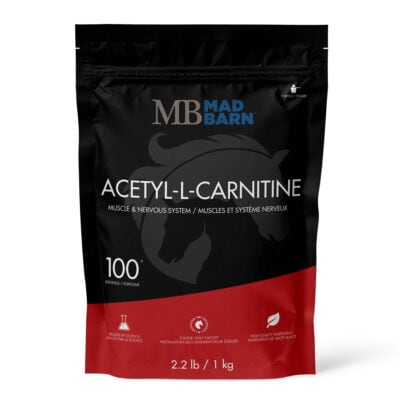
Most equine research on carnitine has focused on L-carnitine supplementation. However, findings from other species suggest that acetyl-L-carnitine can be absorbed and used more easily by body tissues. [2] Mad Barn offers a pure acetyl-L-carnitine powder, which is typically fed at 10 grams per day for a 500 kg (1,100 lb) horse.
Feeding rate recommendations for carnitine supplementation vary depending on a horse’s age, body weight, activity level, and health status. Supplementation programs typically provide 2–10 grams of carnitine per day, although horses in heavy work may benefit from higher amounts.
Carnitine supplementation should be introduced gradually, starting with a lower dose and increasing to the target intake. This approach supports digestive tolerance and allows the horse to adjust to the supplement.
Individual responses vary, so monitor the horse’s appetite, behavior, and overall condition to determine whether adjustments are needed. Consult an equine nutritionist for guidance on appropriate supplementation.
Here are some frequently asked questions about carnitine in horses:
Carnitine is a compound that helps convert fat into usable energy by transporting fatty acids into mitochondria, where they are metabolized for energy production. It plays a critical role in muscle and heart function, as these tissues rely heavily on fat as a fuel source.
Carnitine is the general name for a group of related compounds. L-carnitine is the naturally occurring form that helps transport long-chain fatty acids into mitochondria for energy production. Acetyl-L-carnitine (ALCAR) is an acetylated form of L-carnitine, meaning it has an acetyl group attached. This modification allows ALCAR to transport and temporarily store acetyl groups, helping regulate the balance between acetyl-CoA and free CoA during energy metabolism. ALCAR is particularly involved in managing energy metabolism during exercise, when acetyl-CoA production increases.
Carnitine helps transport fatty acids into the mitochondria of cells, where they are burned for energy. This process supports oxidative metabolism, which is the body's way of producing energy from fat, carbohydrates, and sometimes proteins by using oxygen. Oxidative metabolism is crucial for both everyday movement and strenuous exercise. Carnitine also helps manage metabolic byproducts and reduces oxidative stress during high-energy activity.
Carnitine supplementation can benefit horses by improving energy metabolism, especially during exercise or growth periods. It can help enhance muscle function, improve endurance, support fat utilization for energy, and speed up recovery from physical exertion. Supplementing with carnitine is especially useful for horses in heavy training or those with metabolic challenges.
Carnitine toxicity is rare in horses, as they typically produce sufficient amounts naturally. However, excessive supplementation, particularly through injections, may cause adverse effects such as irritability, weakness, or trembling. It's important to monitor supplementation levels and consult with a veterinarian to avoid potential side effects.
Summary
Carnitine plays a crucial role in energy metabolism for horses by supporting the transport of fatty acids into mitochondria, where they are used for energy production. This process is vital for muscle and heart function.
- Carnitine is produced in the horse's body and can also be supplemented from dietary sources like meat and dairy.
- Acetyl-L-carnitine (ALCAR) is the most relevant form for horses, supporting energy metabolism, muscle function, and nervous system health.
- Carnitine assists in fat metabolism during exercise, reducing oxidative stress and supporting muscle function and recovery.
- Horses with metabolic challenges, growing horses, and those under heavy exercise may benefit from additional carnitine supplementation.
- Carnitine is produced from lysine and methionine, but young, sick, or stressed horses may require supplementation to support energy needs.
References
- Zeyner. A. and Harmeyer. J., Metabolic Functions of L‐Carnitine and Its Effects as Feed Additive in Horses. A Review. Archiv für Tierernaehrung. 1999. doi: 10.1080/17450399909386157.
- Gülçin. I., Antioxidant and Antiradical Activities of L-Carnitine. Life sciences. Elsevier. 2006.
- Calò. L. A. et al., Antioxidant Effect of L-Carnitine and Its Short Chain Esters: Relevance for the Protection from Oxidative Stress Related Cardiovascular Damage. International journal of cardiology. Elsevier. 2006.
- Fathizadeh. H. et al., The Effects of L-Carnitine Supplementation on Indicators of Inflammation and Oxidative Stress: A Systematic Review and Meta-Analysis of Randomized Controlled Trials. Journal of Diabetes & Metabolic Disorders. 2020.
- Rebouche. C. J., Kinetics, Pharmacokinetics, and Regulation of l‐Carnitine and Acetyl‐l‐carnitine Metabolism. Annals of the New York Academy of Sciences. 2004.
- van der Kolk. J.H. et al. Serum acylcarnitine profile in endurance horses with and without metabolic dysfunction. Vet J. 2020.
- Van Weyenberg. S. et al., Increased Plasma Leptin through l ‐carnitine Supplementation Is Associated with an Enhanced Glucose Tolerance in Healthy Ponies. Journal of Animal Physiology and Animal Nutrition. 2009.
- Virmani. M. A. and Cirulli. M., The Role of L-Carnitine in Mitochondria, Prevention of Metabolic Inflexibility and Disease Initiation. International journal of molecular sciences. MDPI. 2022.
- Gnoni. A. et al., Carnitine in Human Muscle Bioenergetics: Can Carnitine Supplementation Improve Physical Exercise?. Molecules. MDPI. 2020.
- Virmani, The Role of l-Carnitine in Mitochondria, Prevention of Metabolic Inflexibility and Disease Initiation International Journal of Molecular Sciences (IJMS). 2022.
- Zeyner. A. and Lengwenat. O., Untersuchungen Zur Oralen Gabe von Mittelkettigen Triglyceriden Und Sojalecithin Sowie von L-Carnitin an Galopprennpferde. Vitamine und weitere Zusatzstoffe in der Ernährung von Mensch und Tier (Hrsg.: R. Schubert, G. Flachowsky, R. Bitsch & G. Jahreis). 1997.
- Iben. C. H. et al., Einfluss von Oralen Carnitingaben Auf Einige Blut-Und Leistungsparameter Beim Pferd. Pferdeheilkunde (Sonderausgabe). 1992.
- Trombetta. M. F. and Falaschini. A., Influence of L-Carnitine on Fitness and Oxidative Stress Parameters in Trotter Horses Subjected to Laval's Test. Italian Journal of Animal Science. 2003.
- Falaschini. A. and Trombetta. M. F., Modifications Induced by Training and Diet in Some Exercise-Related Blood Parameters in Young Trotters. Journal of Equine Veterinary Science. 2001.
- Rivero. J. ‐L. L. et al., Oral L‐carnitine Combined with Training Promotes Changes in Skeletal Muscle. Equine Veterinary Journal. 2002.
- Nery. I. H. A. V. et al., Effects of L-Carnitine on Equine Semen Quality During Liquid Storage. Biopreservation and Biobanking. 2020.
- Palacios. P. et al., L-Carnitine Enhances the Kinematics and Protects the Sperm Membranes of Chilled and Frozen-Thawed Peruvian Paso Horse Spermatozoa. Cryobiology. 2024.
- Lisboa. F. et al., L-Carnitine and Acetyl-L-Carnitine Enhance Stallion Sperm Quality during Semen Storage at 5 C. Clinical Theriogenology. 2022.
- Foster. C. V. et al., Effect of Oral L-Carnitine on Its Concentration in the Plasma of Yearling Thoroughbred Horses.. The Veterinary Record. 1989.
- Falaschini. A. and Trombetta. M. F., Use of Diets Containing Soya Oil and L-Carnitine in Trotting-Horses. Zootecnica e Nutrizione Animale (Italy). 1994.
- Benamou. A. E. and Harris. R. C., Effect of Carnitine Supplement to the Dam on Plasma Carnitine Concentration in the Sucking Foal. Equine Veterinary Journal. 1993.
- Hausenblasz. J., Effect of L-Carnitine on Some Metabolic Parameters of Foals. Allattenyesztes es takarmanyozas. 1996.
- Van Weyenberg. S. et al., Increased Plasma Leptin through l ‐carnitine Supplementation Is Associated with an Enhanced Glucose Tolerance in Healthy Ponies. Journal of Animal Physiology and Animal Nutrition. 2009.
- Fresa. K. et al., Adiposity in Mares Induces Insulin Dysregulation and Mitochondrial Dysfunction Which Can Be Mitigated by Nutritional Intervention. Scientific Reports. Nature Publishing Group UK London. 2024.
- Barcelos. K. et al., Effect of Chelated Chromium and L ‐carnitine on Subcutaneous Fat Deposition in the M Angalarga M Archador Breed after Training. Equine Veterinary Journal. 2014.
- Schmengler. U. et al., Effects of L-Carnitine Supplementation on Body Weight Losses and Metabolic Profile in Obese and Insulin-Resistant Ponies during a 14-Week Body Weight Reduction Programme. Livestock Science. 2013.
- Stradaioli. G. et al., Effect of L-Carnitine Administration on the Seminal Characteristics of Oligoasthenospermic Stallions. Theriogenology. Elsevier. 2004.