English
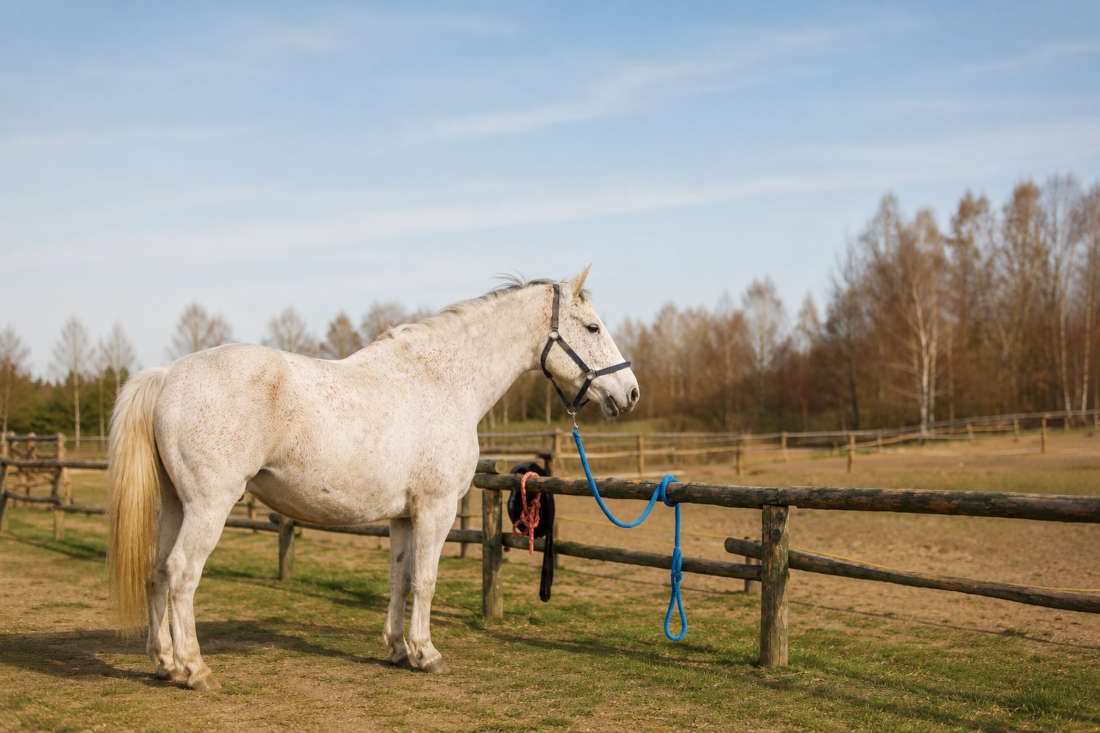
A horse that leans or pulls when tied is reacting to the pressure of being restrained. The behavior can range from mild resistance to sudden, forceful pulling that poses a safety risk for both the horse and nearby handlers.
Standing calmly when tied is an essential skill for every horse. Problems can develop because of fear, incomplete training, physical discomfort, or a previous frightening experience. Identifying the underlying cause is important for addressing the behavior effectively.
Appropriate equipment and a safe tying setup can reduce the risk of injury, but lasting improvement often requires retraining that teaches the horse to yield to pressure and remain calm while tied.
This article explains why horses lean or pull when tied, how to recognize different patterns of behavior, and how training and management can be used to improve tying behavior safely.
Why A Horse Leans or Pulls on the Tie
Horses are commonly tied for grooming, tacking up, farrier care, veterinary procedures, bathing, and other day-to-day tasks. To stand safely while tied, a horse must remain calm and respond appropriately to pressure from the halter and lead rope.
Horses can resist being tied in different ways. Some gradually lean into the halter and maintain steady pressure, while others pull back suddenly and forcefully.
These behaviors can have different causes, including learned behaviors (i.e., when pulling resulted in a release of pressure), fear, discomfort, or panic, and should not be handled in the same way.
Leaning on the Tie
Leaning is a steady, low-grade form of resistance. The horse rests the weight of their head and neck forward into the halter instead of standing with slack in the rope.
Owners often describe this type of horse as heavy to lead or prone to leaning on cross-ties. [1]
This behavioral pattern often traces back to how the horse was taught to respond to pressure. Horses learn to move away from halter pressure through negative reinforcement, and the timing of the release teaches the correct response. [2][3]
When that release comes late or inconsistently, a horse can learn to brace against pressure instead of yielding to it. Over time, this may become the horse’s default or learned response whenever they feel pressure from the halter. [3]
Pulling Back on the Tie
Pulling back on the tie is a different behavior. It is a sudden, forceful attempt to create distance from the tie point, ranging from a quick test of the rope to a severe panic response. [4]
A horse about to pull back may plant their feet and raise their head while showing wide eyes or flared nostrils. These and other facial expressions can signal escalating distress before the horse surges backward. [5][6]
Once the horse pulls, the halter and rope resist their movement. Added resistance can intensify fear in a frightened horse. Some horses stop after one hard pull, while others continue struggling until the equipment gives way or they injure themselves. [5][7]
What's your top priority with your horse's health?

What's your top priority with your horse's health?
Panic Pulling vs. Habitual Pulling or Leaning
Some horses pull back because they have learned that pressure on the halter can be relieved by pulling or leaning against the tie. [2][3]
Others pull back on the tie in panic. In these cases, the horse may react suddenly and forcefully, continue struggling against the restraint, and risk serious injury while trying to escape. [5][8]
The distinction is important because learned pulling and panic pulling require different training and management approaches. [5][7]
Table 1. Leaning vs. pulling back in horses
| Behavior | Description | Causes | Responses |
|---|---|---|---|
| Leaning on the tie |
|
|
|
| Habitual pulling |
|
|
|
| Panic pulling |
|
|
|
Why Horses Lean or Pull When Tied
Horses may lean or pull when tied because they do not understand how to respond to pressure, become frightened when movement is restricted, experience physical discomfort, or have learned to associate tying with a previously stressful event. Several factors may contribute to this behavior in the same horse.
Identifying the main cause helps determine whether the behavior should be addressed through retraining, changes to the tying environment, management of fear, or evaluation for pain. [6][9]
Flight Response
Horses evolved as prey animals, and their default response to a perceived threat is often to create distance from it. [6][10]
Much of horse training, from leading to riding, uses this instinct in a controlled way. Pressure and release influence movement without working against the horse’s natural responses. [10]
Tying removes the horse’s option to flee. For a horse that is already anxious or uncertain, losing that means of escape can trigger a stronger stress response. The horse is not simply choosing to misbehave; they are reacting to a situation in which their usual coping strategy is unavailable. [5][9]
Learned Responses
Horses learn to yield to pressure through negative reinforcement. Pressure is applied through the halter and lead rope, and the horse learns that moving in the requested direction causes that pressure to stop.
The release should occur as soon as the horse offers the correct response. Horses that receive clear, consistently timed releases learn to respond to lighter pressure and become more reliable over repeated sessions. [2]
When the release is delayed, inconsistent, or absent, the connection between the horse’s response and the removal of pressure becomes less clear. [2][3] The horse may continue pushing or pulling because they have not learned which movement produces the release.
Over time, this can develop into a learned pattern of bracing against pressure rather than yielding to it. Some horses become heavy on the lead rope, while others lean into the halter or pull back when they encounter resistance at the tie.
In these cases, the behavior reflects the horse’s previous learning history and how they have been taught to respond when pressure is applied to the halter. [2]
Pain or Physical Discomfort
Sudden resistance to tying, especially in a horse with no history of the behavior, warrants careful evaluation for physical causes before the behavior is assumed to be entirely training-related. [11][12]
Dental pain, soreness behind the ears, neck stiffness, or an ill-fitting halter can make a horse defensive about pressure near their head. A horse that cannot resolve ongoing discomfort may express pain in ways that resemble a training problem. [12][13][14]
If tying resistance develops suddenly, worsens, or is accompanied by other signs of discomfort, consult a veterinarian to investigate possible sources of pain before beginning retraining.
Retraining a pain-driven behavior can delay appropriate treatment and may increase the horse’s negative response to being restrained. [13]
Negative Experience
A horse may begin resisting the tie after a single frightening or painful experience while restrained. Several different scenarios can lead a horses to associate fear with the act of being tied, such as: [5][9]
- A loud noise
- A falling object
- A sudden nearby movement
- A halter breaking unexpectedly
- A rope tangling around a leg
Horses that experiences a frightening, inescapable event while restrained are at risk of developing lasting conflict behavior in similar situations. [9]
This fear response does not always resolve on its own. In many cases, the horse needs a structured retraining approach similar to that used for horses that never learned to tie comfortably. [5][6]
The Risks of Leaning or Pulling on the Tie
Leaning and pulling can endanger both horses and handlers. A horse fighting a tie may move quickly with little awareness of their surroundings, creating a serious risk for everyone nearby. [6][8]
Injuries to the Horse
Horses that pull back forcefully can injure the poll, neck, head, and limbs. The poll is particularly vulnerable because pressure from the halter is concentrated near the junction between the skull and the first cervical vertebra. [15][16]
A sudden backward pull can strain the ligaments and other soft tissues of the neck. More severe incidents may contribute to cervical or spinal injury, especially if the horse continues struggling against a fixed tie point. [16]
Halter pressure can also cause abrasions, swelling, or injury around the nose, cheeks, and poll. Rope burns may occur if the lead rope contacts the horse’s skin during the struggle, and scrambling or falling can result in injuries to the legs or body.
The risk increases when a horse is tied too low because a lower tie point changes the angle of pull and places greater force on the neck. Appropriate tie height and equipment are therefore important for reducing the severity of injuries if a horse pulls back. [15][17][18]
Injuries to Handlers
Pulling episodes can injure handlers and bystanders, especially if they attempt to intervene when the behavior occurs. [6] A horse in severe panic may strike, collide with, or pull away from people nearby. Broken halters, snapped ropes, and moving hardware can also cause injury. [6][19]
Handlers are also at risk of hand injuries if fingers become caught in a lead rope or reins. One trauma center review documented severe injuries from this mechanism, including cases requiring amputation. [19]
Research on equestrian injuries found that occupational and farm-based injuries were more likely to involve being struck by a horse on the ground than falling from a horse. [8] A horse that panics, pulls back, or breaks free while tied can create the same type of sudden ground-handling hazard.
How to Retrain a Horse That Leans or Pulls on the Tie
Retraining a horse that leans or pulls on the tie should be viewed as a process, not a single session. It requires patience, consistent handling, and careful pacing, as moving too quickly through retraining can worsen the horse’s reaction and set back progress. [5][6][9]
During retraining, use equipment that can release or reduce pressure if the horse pulls back forcefully. A breakaway halter includes a component designed to break under excessive force, while a panic snap or blocker tie ring allows the restraint to release or give more gradually.
These systems reduce the risk of a horse continuing to struggle against a fixed tie point. They can help prevent a difficult moment from becoming a serious injury or training setback and reduce the likelihood that the horse becomes more frightened by sustained restraint. [7]
Before behavioral retraining begins, ask a veterinarian to check for dental problems, poll or neck soreness, and other sources of discomfort that could be contributing to the resistance. A dental examination can identify oral discomfort, while an assessment of halter fit can identify equipment that may pinch or rub. [4]
Systematic Desensitization & Counter-Conditioning
Systematic desensitization and counter-conditioning are two research-supported training techniques that can help horses become more comfortable with being tied. [5]
Systematic desensitization involves exposing the horse to mild pressure associated with tying in small, controlled increments. The horse should remain below their stress threshold, and the amount or duration of pressure is increased only after the horse can remain calm at the current level. [5]
Counter-conditioning changes the horse’s emotional response by pairing the sensation of restraint with something positive, such as a scratch or small food reward. Over time, this can help replace a fearful or defensive response with a calmer association.
Short, frequent sessions are generally preferable to longer sessions that risk increasing stress or triggering another pulling episode. [5][6]
In a controlled comparison of training methods, horses trained with desensitization showed fewer flight responses and required fewer sessions to respond calmly than horses trained with habituation alone. [5]
When to Call a Professional
Professional help is recommended for horses with a history of injury, a strong panic response, or repeated pulling episodes that have not improved with basic groundwork and retraining.
An experienced trainer or equine behavior professional can assess the horse’s response to restraint, identify likely triggers, and develop a retraining plan appropriate to the severity of the behavior.
Professional guidance is especially important when there is a significant risk of injury to the horse or handler.
Preventing Leaning or Pulling on the Tie in Young or Untrained Horses
Tying problems are easier to prevent than correct after a horse has learned to panic, lean, or pull against restraint. Before tying becomes part of the horse’s routine, training should focus on creating calm, predictable responses to handling and avoiding situations where the horse feels trapped.
The goal is to make restraint understandable and manageable before the horse is expected to stand quietly on their own.
Pressure & Release Fundamentals
A horse should understand how to yield to halter pressure from a handler before experiencing that pressure from an immovable object. Horses that receive well-timed pressure and release during halter training typically require less force over time. [2]
That foundation develops responsiveness and confidence under pressure, making tying less likely to trigger a struggle. [2]
Introducing Tying Gradually
Once the horse understands pressure and release, introduce tying through short, supervised sessions rather than leaving the outcome to chance. [5][6]
A nearby handler can release the horse if needed, allowing them to build confidence at a manageable pace. Increase the duration gradually and reduce supervision over time. This approach follows the same principle as effective desensitization. [5][6]
Foals & Weanlings
Young horses require extra caution when introducing tying. Early handling can help a foal become more comfortable around people, but research on early training sessions found that calming effects may not persist without continued handling. [20] A young horse still needs consistent handling well beyond their first few weeks of life.
Foals and weanlings should not be expected to stand tied with the patience or reliability of a mature, trained horse. Their responses are still developing, and short delays, sudden pressure, or unfamiliar restriction can escalate quickly if the handler asks for more than the horse is prepared to understand.
The focus at this age is to help the young horse learn that light pressure has a clear answer, standing quietly is comfortable, and the handler will not place them in a situation they cannot manage.
Setting Up a Safe Tying Environment
A safe tying environment is designed to reduce the risk of injury if a horse pulls back, panics, or becomes entangled. The tie point, rope length, surrounding area, and equipment should allow the horse to stand comfortably while limiting the force and consequences of a sudden reaction.
All horses, including experienced horses, should be tied with a quick-release knot that does not tighten under pressure or with breakaway equipment designed to release under excessive force.
Systems that provide a means of release can prevent a horse from continuing to struggle against rigid restraint and are recommended in equitation science for reducing horse-related risk. [6]
The height and length of the tie also affect safety. The tie point should be positioned at or above the horse’s withers to reduce strain on the neck if the horse pulls back. The lead rope should be short enough to prevent entanglement and limit the momentum the horse can build before reaching the end of the rope, generally leaving no more than a couple of feet of slack.
The surrounding area should be clear of objects that could injure or entangle the horse. Tie points should also be located away from heavy traffic, loose horses, and other sources of disturbance that could trigger a sudden reaction.

Helping a Horse Stand Safely When Tied
A horse that leans or pulls when tied may be responding to fear, discomfort, unclear training, or a learned expectation that pressure should be resisted. Identifying the most likely cause is key to an effective response. [9][10]
For horses with gaps in training or a history of frightening experiences, progress depends on rebuilding a calm, predictable response to pressure. Short sessions, well-timed release, systematic desensitization, and appropriate rewards can help the horse learn to yield without becoming overwhelmed.
Training should progress at the individual horse’s pace, with each step becoming reliable before the handler increases the duration or difficulty. [2][5][9]
Safe equipment and a suitable tying area remain important throughout this process. A breakaway halter, panic snap, blocker tie ring, or correctly tied quick-release knot can help reduce the risk of injury if the horse reacts unexpectedly. The tie point should be positioned at a safe height, with enough rope for the horse to stand comfortably but not enough slack to gain substantial momentum or become entangled. [6]
Severe panic pulling, repeated incidents, or any history of injury warrants help from an experienced trainer or equine behavior professional. Because these situations can escalate quickly, safe handling requires careful observation and precise timing.
With physical discomfort addressed, appropriate safeguards in place, and patient retraining, many horses can develop a safer, more confident response to being tied.
Frequently Asked Questions
Here are some frequently asked questions about horses that lean or pull on the tie:
A horse that pulls back makes a sudden, forceful attempt to create distance from the tie point, while a horse that leans applies steady pressure against the halter. Pulling back may be a fear-driven flight response or a learned attempt to escape restraint. Leaning more commonly reflects an incomplete understanding of pressure and release, causing the horse to brace instead of yielding.
Horses may lean or pull back when tied because of fear, training gaps, physical discomfort, or a previous frightening experience. Tying removes the horse's ability to move away, which can trigger panic in an anxious or unsure horse. Other horses learn to resist because pressure was released inconsistently or because pulling previously allowed them to escape.
A horse that is panicking may plant its feet, raise its head, widen its eyes, flare its nostrils, and lose awareness of its surroundings before pulling back. A habitual puller may appear calmer and deliberately test whether pulling will release the pressure or break the equipment. Distinguishing fear from learned behavior is important because a horse in genuine distress requires a slower, carefully managed approach.
Tying a horse that pulls back can be dangerous for the horse, handler, and nearby bystanders. A violent pull may injure the horse's poll, neck, nuchal ligament, or surrounding soft tissues, while the rope or halter can cause burns and pressure injuries. Broken equipment can also strike someone, and a panicking horse may collide with people or objects without recognizing what is around it.
Pain can cause a horse to suddenly resist, lean, or pull back when tied, especially if the behavior is new. Dental pain, poll soreness, neck stiffness, and a pinching or poorly fitted halter can make pressure around the head uncomfortable. A veterinarian should assess a sudden behavioral change before retraining begins so that a physical problem is not mistaken for disobedience.
A horse should not be punished for pulling back, particularly when the behavior is driven by fear. Punishment can increase stress and strengthen the horse's negative association with restraint. Safer progress comes from identifying the cause, keeping the horse below its panic threshold, and teaching a calm response to pressure in gradual steps.
Retraining a horse that leans or pulls back begins with ruling out pain and confirming that the horse understands how to yield to halter pressure. Systematic desensitization can then introduce mild restraint in small, manageable increments while the horse remains calm. Counter-conditioning may also pair restraint with a positive experience, such as a scratch or small food reward, to create a better association. Short, frequent sessions are generally more effective than rushing the horse through a long or stressful lesson.
The time required to retrain a horse that pulls back depends on its history, the cause of the behavior, and the intensity of its response. A horse with a minor training gap may progress more quickly than one with a history of panic, injury, or repeated frightening incidents. Training should advance according to the horse's ability to remain calm rather than according to a fixed timeline.
A horse should not be tied hard with no give while it is learning to tie or being retrained for pulling back. An unyielding setup can intensify panic and increase the risk of injury when the horse feels trapped. A breakaway halter, panic snap, or suitable safety device provides an emergency release if the horse reacts strongly.
A blocker tie ring is a safety device that allows the lead rope to slide through when a horse applies strong pressure. It can reduce the force and intensity of a pulling episode by giving the horse some release instead of holding it completely fast. However, a blocker tie ring does not resolve fear, pain, or an incomplete pressure-and-release foundation, so it should be used as part of a broader retraining plan.
The safest tying setup places the tie point at or above the horse's wither height to reduce strain on the neck if the horse pulls back. The rope should provide only enough slack for comfortable standing, generally no more than a couple of feet, so the horse cannot build substantial momentum before reaching the end. The horse should also be tied away from traffic, other horses, and objects that could cause injury or trigger a fright.
Professional help is appropriate when a horse has a strong panic response, a history of injury, or repeated pulling incidents that have not improved with basic groundwork. An experienced trainer or equine behavior consultant can recognize subtle warning signs and adjust the pace of training before the horse becomes overwhelmed. Veterinary guidance is also important when the behavior begins suddenly or physical discomfort may be involved.
A foal or young horse should be taught to tie only after it consistently leads and yields to halter pressure from a handler. Tying should then be introduced through short, closely supervised sessions with a safe release system. Because young horses have developing bones and ligaments, they should never be tied hard and left to fight against an unyielding rope.
Summary
Horses may lean or pull when tied because of fear, physical discomfort, incomplete training, or a learned expectation that resistance will provide relief. Safe equipment and gradual retraining can reduce injury risk while helping the horse develop a calmer response to restraint.
- Leaning involves steady pressure into the halter, while pulling back is a sudden attempt to escape restraint
- Pain, poor halter fit, fear, training gaps, and previous frightening experiences can contribute to tying problems
- Physical discomfort should be ruled out before resistance is treated solely as a behavioral or training issue
- Gradual desensitization and counter-conditioning can help rebuild calm responses below the horse's stress threshold
- Breakaway equipment, safe tie height, and limited rope slack help reduce the risk of injury and entanglement
- Severe panic, repeated incidents, or previous injuries warrant help from an experienced equine professional
References
- Eisersiö. M. et al. Rein Tension Signals Elicit Different Behavioral Responses When Comparing Bitted Bridle and Halter. Frontiers in Veterinary Science. 2021.
- Ahrendt. L.P. et al. Development of a standard test to assess negative reinforcement learning in horses. Applied Animal Behaviour Science. 2015.
- Eisersiö. M. et al. Rein Tension Signals Elicit Different Behavioral Responses When Comparing Bitted Bridle and Halter. Frontiers in Veterinary Science. 2021.
- Thal. D. Pulls or Sets Back in Hand or When Tied. Horse Side Vet Guide.
- Christensen. J.W. et al. Training methods for horses: habituation to a frightening stimulus. Equine Veterinary Journal. 2006.
- Starling. M. et al. The Contribution of Equitation Science to Minimising Horse-Related Risks to Humans. Animals. 2016.
- Hall. C. et al. Is there evidence of learned helplessness in horses?. Journal of Applied Animal Welfare Science. 2008.
- Samuels. K. et al. Occupational vs. non-occupational equestrians: Differences in demographics and injury patterns. Injury. 2022.
- McGreevy. P. D. and McLean. A. N. Punishment in horse-training and the concept of ethical equitation. Journal of Veterinary Behavior. 2009.
- McGreevy. P. D. and McLean. A. N. Roles of learning theory and ethology in equitation. Journal of Veterinary Behavior. 2007.
- Nout-Lomas. Y. S. and Story. M. R. Clinical Manifestations and Behaviors Associated with Equine Head and Neck Disorders. Veterinary Clinics of North America: Equine Practice. 2026.
- Introduction to Equine Dentistry. American Association of Equine Practitioners. 2025.
- Thal. D. Resists Contact with Face, Ears or Poll, Head Shy. Horse Side Vet Guide.
- Marlin. D. J. et al. An Online Survey of Equestrian Headcollar Use and Safety. Equine Veterinary Education. 2022.
- Marlin. D. J. et al. An Online Survey of Equestrian Headcollar Use and Safety. Equine Veterinary Education. 2022.
- Thal. D. Pulls or Sets Back in Hand or When Tied. Horse Side Vet Guide.
- Thal. D. Rope Burn on Pastern or Lower Limb or Leg. Horse Side Vet Guide.
- Freeman. D. W. Techniques for Safely Handling Horses. Oklahoma Cooperative Extension Service.
- Hoffmann. M. F. et al. Horse-related injury patterns: a single center report. Journal of Orthopaedic Surgery and Research. 2023.
- Williams. J. L. et al. The effects of early training sessions on the reactions of foals at 1, 2, and 3 months of age. Applied Animal Behaviour Science. 2002.