English
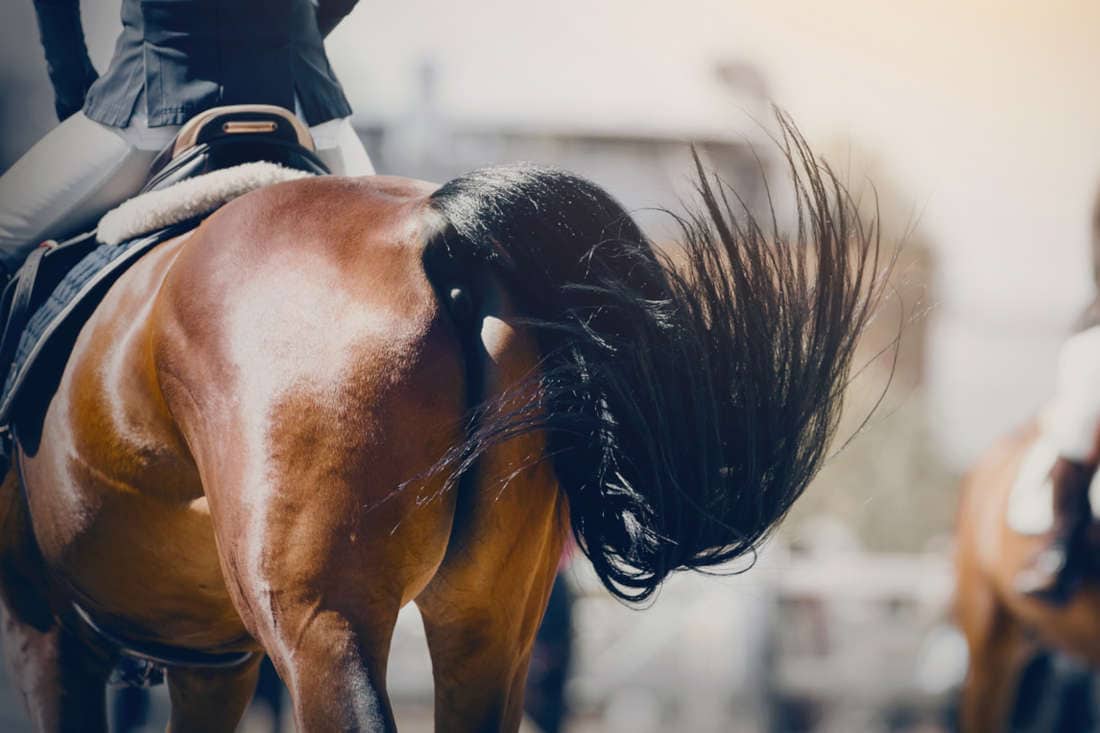
Excessive tail swishing in horses may indicate irritation, discomfort, pain, or another underlying problem. Although horses commonly swish their tails to repel insects or communicate annoyance, persistent, forceful, or unusual tail movement warrants closer attention.
Owners should assess tail swishing relative to the horse’s normal behavior and the situation in which it occurs. Normal tail movement is expected in many situations, especially during warm weather or around biting insects. However, repeated swishing during riding, grooming, handling, or rest may provide an important clue that something is wrong.
Possible causes range from insect irritation and skin conditions to poorly fitting tack, musculoskeletal pain, gastrointestinal discomfort, and reproductive disorders. Because tail swishing is a symptom rather than a diagnosis, identifying when it occurs and whether other signs are present is essential for determining the next steps.
Keep reading to learn how to tell normal tail swishing from excessive tail movement, related conditions, and when to seek veterinary guidance.
Excessive Tail Swishing in Horses
Excessive tail swishing in horses refers to tail movements that are frequent, forceful, prolonged, or occur in unexpected situations. [1][2][3][4] Tail swishing is a normal equine behavior that serves several important functions, including repelling insects, communicating with other horses, and responding to minor environmental stimuli. [1][2][5][6]
Unlike normal tail movement, excessive tail swishing may reflect an underlying problem rather than a typical behavioral response. It may occur when a horse is experiencing pain, irritation, discomfort, stress, or frustration, although the behavior itself is not specific to any one condition. [3][4][7][8][9]
Owners must always interpret excessive tail swishing alongside clinical signs of illness, the horse’s environment, and the circumstances in which the behavior occurs.
For example, frequent tail swishing while grazing in a field full of flies is a normal behavior adaptation, while persistent swishing during riding, grooming, or rest may warrant further investigation. [1][2][4][5][10]
What's your top priority with your horse's health?

What's your top priority with your horse's health?
Tail Swishing in Competition
In some disciplines, frequent or forceful tail swishing may be interpreted as a sign of tension, resistance, discomfort, or conflict during ridden work. This is why competitors are sometimes concerned when a horse swishes the tail during a test, pattern, or judged performance.
It’s important to remember that tail swishing is a normal equine behavior. Horses use the tail to repel insects, respond to touch or irritation, and communicate with other horses.
It’s not realistic to expect a horse to stop all tail movement for competitive reasons, especially when insects, environmental irritation, rider cues, and other horses are involved.
The goal should not be to suppress tail swishing, but to understand when it is normal and when it may indicate a problem. If tail swishing becomes persistent, exaggerated, or linked to specific ridden movements, the response should be to investigate possible discomfort, tack fit, training conflict, or medical causes rather than punish the horse for expressing the behavior.
Practices Used to Alter Tail Movement
Several procedures have been used to alter the appearance, carriage, or movement of a horse’s tail. The American Association of Equine Practitioners (AAEP) and the American Veterinary Medical Association (AVMA) condemn tail alteration for cosmetic or competitive purposes, including docking, nicking, and nerve blocking. [11][12]
These practices include: [11][12]
- Tail docking: Removing part of the tail
- Nicking: Cutting structures associated with tail movement or carriage. This is also described as nerve cutting
- Tail blocking: Interfering with nerve function to reduce control and movement of the tail
Tightly binding the tail with elastic bands or other materials to restrict movement or conceal tail swishing is also considered inappropriate. Restricting the tail can interfere with the horse’s ability to repel insects, communicate discomfort, and express normal behavioral responses.
If a horse is swishing their tail excessively, the response should focus on identifying and addressing the underlying cause. This may include improving insect control, checking tack fit, evaluating rider cues, assessing the skin and tailhead, or arranging a veterinary examination.
Normal Tail Swishing
Tail swishing is a normal equine behavior and does not necessarily indicate a health problem. Horses commonly swish their tails to deter flies and other biting insects, communicate with other horses, and respond to mild irritation or environmental stimuli. [1][2][5][6]
The frequency of normal tail swishing often increases during warm weather when insect activity is greatest. Horses may also seek shade or shelter, group together, or display other insect-repelling behaviors, such as skin shivering, ear flicking, and stamping their feet, to reduce insect annoyance. [5][6]
Tail swishing can also occur briefly during grooming, handling, or exercise in response to touch or momentary irritation. [1][2] These movements are usually short-lived and context-specific, and they occur without other symptoms of discomfort. [1][2]
In contrast, persistent, repetitive, or exaggerated tail swishing that occurs without obvious insect activity or continues during riding, handling, or while the horse is standing quietly is less likely to represent normal behavior. [3][4][10] When tail swishing is accompanied by other symptoms or a change in behavior, it may indicate an underlying problem that requires further investigation. [3][4][8][10]
When to Call the Veterinarian
Excessive tail swishing can indicate pain, illness, skin disease, gastrointestinal discomfort, or reproductive disorders, which all require veterinary assessment. Veterinary evaluation is especially important when tail swishing is persistent, worsening, or occurs with other clinical signs. [3][8][9]
Call your veterinarian if tail swishing is accompanied by:
- Sudden onset of forceful or repetitive tail swishing without an obvious environmental cause
- Lameness, stiffness, reluctance to move forward, or changes in performance
- Colic signs such as pawing, flank-watching, rolling, sweating, restlessness, or reduced manure output
- Skin lesions, swelling, wounds, hair loss, or intense rubbing around the tailhead or hindquarters
- Changes in appetite, attitude, posture, urination, manure output, or general behavior
A veterinarian can help determine whether the behavior is related to musculoskeletal pain, skin disease, gastrointestinal discomfort, reproductive issues, or another cause. Veterinary evaluation is especially important when signs are vague, because tail swishing alone does not identify the underlying problem. [3][8][9]
Prompt veterinary guidance is warranted if the horse shows signs of colic, severe pain, sudden lameness, or rapidly worsening symptoms. Training corrections or management changes are not a substitute for diagnosis and treatment when medical causes are possible. [3][4][7][10]
Common Causes of Excessive Tail Swishing
Excessive tail swishing can occur in response to a wide range of physical, behavioral, and environmental factors, making it important to consider the horse’s overall health and the circumstances in which the behavior occurs. [2][3][8][9]
Common causes of excessive tail swishing include: [1][2][5][8][9][13][14][15]
- Pain, particularly involving the back, hindlimbs, pelvis, or sacroiliac region
- Poorly fitting tack or discomfort associated with riding
- Biting insects, including flies and midges
- Skin irritation, skin allergies, or insect bite hypersensitivity, also called sweet itch
- Wounds, itching, or inflammation affecting the tail or surrounding skin
- Gastrointestinal discomfort, including colic and gastric ulcers
- Reproductive disorders, particularly conditions affecting the ovaries or uterus
- Musculoskeletal disorders that alter movement or cause discomfort
- Stress, frustration, or conflict during handling or ridden work
- Environmental irritants, including persistent insect exposure
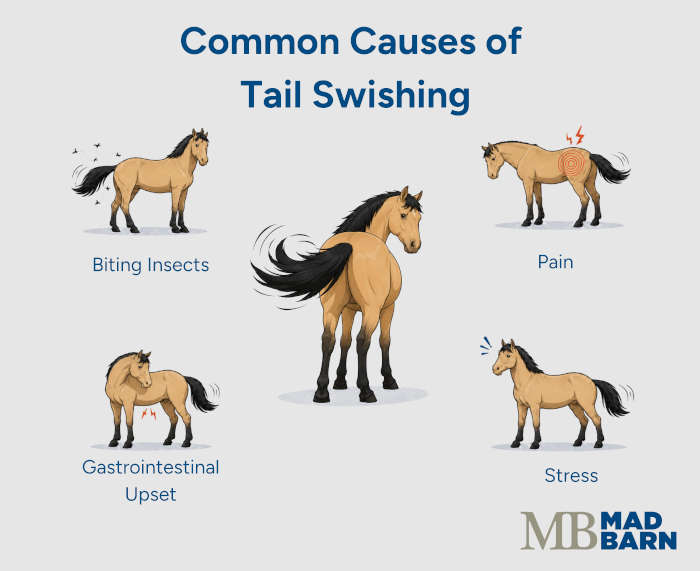
Because the same outward behavior can have many possible causes, the pattern and context of the tail swishing are important. Noting when it occurs, what else is happening at the same time, and whether the behavior is new or worsening can help narrow the most likely source of discomfort or irritation.
Musculoskeletal Pain & Lameness
Musculoskeletal pain is an important consideration when excessive tail swishing occurs during exercise. Discomfort involving the back, pelvis, sacroiliac region, limbs, joints, or supporting soft tissues may alter how a horse moves and responds to the rider. Some affected horses show behavioral changes under saddle before an owner recognizes obvious lameness. [3][4][10]
Repeated tail swishing is included among the behaviors assessed in the Ridden Horse Pain Ethogram. However, tail swishing alone does not confirm that a horse is in pain. Concern is greater when it appears alongside: [3][4][7][10]
- Stiffness
- Gait irregularities
- Reluctance to move forward
- Repeated stumbling
- Changes in canter
- Pinned ears
- Resistance or defensiveness during particular movements
The timing of the behavior may help identify a pattern. For example, tail swishing that consistently develops during transitions, circles, canter, collection, or work in one direction may warrant an evaluation for an underlying musculoskeletal problem.
Poor Tack Fit
An ill-fitting saddle can create uneven pressure, instability, or discomfort over the horse’s back. Saddle fit can also interact with back shape, muscle development, lameness, and the way the horse moves under saddle. [14][15]
Tail swishing associated with tack discomfort may begin during saddling or mounting, or become more noticeable once the horse is ridden. It may occur with other signs such as moving away from the saddle, pinning the ears, dipping or tightening the back, reluctance to move forward, shortened strides, or resistance during transitions. [10][14]
The saddle is not the only possible source of ridden discomfort. The girth, bridle, bit, noseband, rider position, rein pressure, or use of the leg and spurs may also contribute. Tail swishing that repeatedly occurs immediately after a particular rider cue may reflect discomfort, conflicting signals, or a combination of tack, rider, and physical factors. [10][14][15]
Biting Insects
Tail swishing is a normal defense against flies and other biting insects. Horses may swish their tail excessively when insect numbers are high or when they cannot move away from persistent exposure. During warm weather, horses may repeatedly swish the tail to dislodge insects from the hindquarters, abdomen, and surrounding areas. [1][2][5][6]
Tail swishing is one of the most frequently observed responses to insect exposure. Horses may also twitch or shiver the skin, toss the head, stamp their feet, or seek shade and shelter. These behaviors generally increase as insect activity rises, particularly when horses do not have access to an indoor area. [5][6]
Insect-related tail swishing may vary with the season, time of day, pasture location, and availability of shelter. Identifying a clear relationship between insect activity and the horse’s behavior can help distinguish normal pest avoidance from pain or ridden conflict.
Insect Bite Hypersensitivity & Skin Irritation
Some horses develop insect bite hypersensitivity, also called sweet itch. This allergic skin disease most commonly develops in response to bites from Culicoides midges. Affected horses experience much more intense itching and skin inflammation than horses responding to ordinary insect annoyance. [13][16]
Irritation related to sweet itch may cause: [13]
- Frequent tail swishing
- Skin twitching
- Biting at the body
- Scratching
- Rubbing against fences, posts, and stall surfaces
Continued rubbing can damage the hair and skin around the tail and other affected areas, producing broken hairs, thickened skin, sores, or secondary inflammation. [13]
Signs of insect bite hypersensitivity often follow a seasonal pattern that corresponds with insect activity, although the severity varies among individual horses. Genetic risk and environmental exposure both appear to influence which horses develop the condition. Excessive tail swishing accompanied by persistent itching or skin lesions is more suggestive of dermatological disease than simple fly avoidance. [13][16]
Stress, Frustration & Conflicting Cues
Excessive tail swishing can also occur as a behavioral response to stress, frustration, or conflict. During ridden work, conflict behavior may develop when a horse receives simultaneous or inconsistent signals, such as being asked to move forward while also being restrained by the reins. [1][2][10]
In these situations, tail swishing may appear immediately after rein, leg, or spur cues and may occur alongside: [10]
- Mouth opening
- Head tossing
- Pinned ears
- Reluctance to move forward
- Changes in speed
- Kicking out
- Bucking
- Other resistance behaviors
Owners should not automatically interpret tail swishing as disobedience or a training problem, because behavioral conflict and physical pain can look similar and may occur at the same time.
When the behavior is new, persistent, or accompanied by changes in gait or performance, owners should investigate possible pain and tack-related discomfort before choosing to put their horse through further training. [4][10]
Table 1. What excessive tail swishing may mean based on when it occurs
| When tail swishing occurs | Possible meaning | What to check |
|---|---|---|
| While grazing in warm weather |
|
|
| During riding |
|
|
| During grooming or handling |
|
|
| While standing quietly or at rest |
|
|
| With tail rubbing or biting |
|
|
| With lameness or stiffness |
|
|
| With colic signs |
|
|
Related Symptoms
If tail swishing is evidence of discomfort or illness, other clinical signs may help narrow down the cause. Associated symptoms vary depending on the underlying cause. Some horses show only subtle changes in behavior, while others develop obvious signs of pain, irritation, or illness. [3][8][9]
Common accompanying symptoms include: [3][4][7][8][9][10][15]
- Lameness or an abnormal gait
- Stiffness, particularly during exercise
- Resistance during riding, including reluctance to move forward or difficulty bending
- Changes in posture or movement
- Frequent ear pinning or head tossing
- Skin irritation, hair loss, or tail rubbing
- Biting or rubbing the tail, hindquarters, or flanks
- Sensitivity to grooming or touch
- Colic symptoms, such as pawing, looking at the flank, or rolling
- Swelling, wounds, or signs of inflammation around the tail or hindquarters
Since excessive tail swishing has many possible causes, the presence and combination of other symptoms are often more informative than the tail movement itself when determining the underlying problem. [3][8][9]
Diagnosis & Treatment
Diagnosing excessive tail swishing focuses on identifying the underlying cause. A veterinarian will consider the horse’s history, when the tail swishing occurs, whether it is associated with riding or handling, and any accompanying symptoms before selecting additional diagnostic tests. [3][8][9]
Diagnostic tests may include: [8][9]
- Blood tests
- Fecal examinations
- Skin scrapings or other dermatologic tests
- X-rays
- Ultrasounds
- Hoof testers
- Diagnostic nerve blocks
- Gastroscopy
- Reproductive examinations, when indicated

Treatment
If tail swishing is associated with an underlying medical condition, treatment of excessive tail swishing depends on the horse’s diagnosis.
Possible treatments may include: [5][8][9][13][14][16]
- Pain-relieving and anti-inflammatory medications
- Antiparasitic treatments
- Topical medications
- Insect control measures
- Medical management of allergic conditions
- Adjustment or replacement of poorly fitting tack
- Rest and rehabilitation
- Dietary or management changes
Owners should not dismiss their horse’s behavior as a training issue or habit until they are able to properly rule out any pain, discomfort, and medical causes. This may require a veterinary assessment. [3][4][7][10]
Managing Excessive Tail Swishing in Horses
If your horse develops excessive tail swishing, make note of when the behavior first occurred and look for other symptoms that may help identify the underlying cause. Owners should not ignore excessive tail swishing that develops suddenly, becomes more frequent, or is accompanied by signs of pain or illness. [3][8][9]
Practical steps to manage excessive tail swishing include: [5][8][9][13][14]
- Checking the tail, skin, and hindquarters for wounds, swelling, hair loss, insects, or signs of irritation
- Inspecting the saddle, girth, bridle, and other tack for fit and signs of rubbing
- Reducing exposure to flies and biting insects where possible
- Monitoring for additional symptoms, such as lameness, colic, skin lesions, or changes in behavior
- Recording when the tail swishing occurs and whether it is associated with exercise, handling, or particular environments
- Arranging a veterinary examination if the behavior persists, worsens, or is accompanied by other symptoms
A basic health check can help owners organize observations before speaking with a veterinarian, but it does not replace a veterinary examination when signs persist or worsen.
Owners should avoid assuming that excessive tail swishing is simply a behavioral problem or training issue. Since the behavior is also associated with pain, irritation, or underlying disease, identifying and treating the cause is more effective than attempting to suppress the behavior itself. [3][4][7][10]
Prevention
Owners cannot prevent all causes of excessive tail swishing, but good management can reduce the risk of many common underlying problems. Maintaining overall health, minimizing sources of discomfort, and recognizing behavioral changes early may help prevent persistent tail swishing from developing. [1][2][8]
Preventive measures include: [5][8][13][14][15][16]
- Implementing an effective fly and biting insect control program
- Providing access to shelter or shaded areas during periods of high insect activity
- Maintaining regular parasite control and routine veterinary care
- Ensuring saddles, bridles, and other tack fit correctly and are checked regularly
- Addressing skin irritation, wounds, and allergic conditions promptly
- Scheduling routine farriery and dental care
- Monitoring for changes in behavior or movement that may indicate developing pain or illness
Since tail swishing is a normal part of equine behavior, the goal is not to eliminate the behavior completely but to recognize when it becomes excessive or occurs alongside other symptoms. Early investigation of persistent tail swishing can help identify underlying problems before they become more serious. [1][2][3][5][8]
Frequently Asked Questions
Here are some frequently asked questions about excessive tail swishing in horses:
A horse may swish its tail so much because of insects, skin irritation, pain, poorly fitting tack, stress, gastrointestinal discomfort, or reproductive conditions. Occasional tail swishing is normal, especially in warm weather or around biting insects. Persistent, forceful, or unusual tail movement is more concerning when it occurs during riding, grooming, handling, or while the horse is standing quietly. The timing of the behavior and any other signs can help narrow down the cause.
Tail swishing in horses is not always a sign of pain, but pain is one possible cause. Horses commonly swish their tails to repel flies, respond to touch, or communicate minor irritation. Tail swishing is more likely to reflect discomfort when it is repetitive, exaggerated, or associated with resistance, stiffness, lameness, sensitivity to grooming, or a change in behavior. Pain involving the back, hindlimbs, pelvis, or sacroiliac region can all contribute to excessive tail movement.
Tail swishing is normal in horses when it occurs briefly in response to insects, mild irritation, touch, or environmental stimulation. It often increases during warm weather when flies and other biting insects are more active. Normal tail movement is usually short-lived and is not accompanied by signs of illness, pain, or distress. Tail swishing becomes more concerning when it is persistent, intense, or appears without an obvious trigger.
Excessive tail swishing looks like tail movement that is unusually frequent, forceful, prolonged, or out of context for the situation. A horse may repeatedly slap the tail, hold tension through the hindquarters, or swish during specific ridden movements, grooming areas, or handling steps. It is more meaningful when the behavior is new, worsening, or occurs with other signs such as pinned ears, stiffness, skin irritation, or reluctance to move forward. Comparing the behavior to what is normal for that individual horse is important.
Flies can cause excessive tail swishing when they repeatedly bother or bite a horse. Horses may also stamp their feet, twitch their skin, flick their ears, toss their head, seek shade, or group together to reduce insect irritation. Tail swishing linked to flies often worsens during warm weather or in areas with high insect activity. If the horse also has hair loss, rubbing, scabs, or irritated skin, insect bite sensitivity or another skin condition may also be involved.
Sweet itch can cause tail swishing because insect bite hypersensitivity leads to intense itching and skin irritation. Affected horses may rub the tail, bite at the hindquarters, lose hair, or develop inflamed skin. Signs often worsen seasonally when midges and other biting insects are most active. Managing insect exposure and addressing the skin irritation are important parts of reducing discomfort.
Saddle fit can cause tail swishing when tack creates pressure, rubbing, instability, or back discomfort. Tail swishing during ridden work may occur alongside stiffness, resistance, reluctance to move forward, difficulty bending, shortened movement, or sensitivity over the back. The saddle, girth, bridle, bit, noseband, and other tack should be checked when tail swishing appears mainly during exercise. Tack-related discomfort should be corrected rather than treated as a training issue.
A horse may swish its tail when ridden because of pain, poor tack fit, rider cues, stress, frustration, or conflicting signals. The behavior is more concerning if it appears during transitions, circles, canter work, collection, or movement in one direction. Tail swishing that occurs immediately after rein, leg, or spur cues may reflect confusion, discomfort, or conflict. If the behavior is new or persistent, it is important to assess tack fit, rider influence, and possible medical causes before increasing training pressure.
Tail swishing can be a competition concern because frequent or forceful movement may be interpreted as tension, resistance, discomfort, or conflict during a judged performance. However, some tail movement is normal and should be expected, especially around insects, other horses, rider cues, or environmental stimulation. The goal should be to understand why the horse is swishing the tail rather than trying to eliminate all tail movement. Persistent or exaggerated swishing during competition preparation should prompt a review of comfort, tack fit, training clarity, and health.
Tail swishing should not be stopped with tail blocking, nicking, docking, tight binding, or other methods that alter or restrict normal tail function. These practices may change the appearance or movement of the tail, but they do not address pain, insect irritation, skin disease, tack discomfort, or training conflict. The tail is important for fly control, communication, balance of expression, and normal behavioral responses. A better approach is to identify why the horse is swishing the tail and correct the underlying problem whenever possible.
Other symptoms to watch for with excessive tail swishing include lameness, stiffness, abnormal movement, ear pinning, head tossing, resistance under saddle, skin irritation, hair loss, swelling, wounds, or sensitivity to touch. Signs of gastrointestinal discomfort, such as pawing, looking at the flank, rolling, sweating, restlessness, or reduced manure output, are also important. The combination of symptoms is often more useful than the tail movement alone. Any sudden, worsening, or persistent change should be taken seriously.
Colic or gastric ulcers can contribute to tail swishing when gastrointestinal discomfort makes the horse restless, painful, or irritable. Tail swishing alone does not diagnose a digestive problem, but it becomes more concerning when paired with pawing, flank-watching, rolling, sweating, appetite changes, manure changes, or repeated lying down. Gastrointestinal signs can become urgent, especially when they are sudden, severe, or worsening. Veterinary guidance is important if tail swishing occurs with possible colic signs.
Reproductive problems can cause tail swishing in mares when discomfort involves the ovaries, uterus, or surrounding tissues. Tail swishing related to reproductive discomfort may appear with changes in behavior, sensitivity around the flanks or hindquarters, resistance under saddle, or other signs that vary with the mare's cycle. Because these signs can overlap with musculoskeletal pain, tack discomfort, and behavioral conflict, they should not be assumed to have one cause. A veterinary examination can help determine whether reproductive disease is involved.
Excessive tail swishing is diagnosed by identifying the underlying cause rather than treating the tail movement as a condition by itself. A veterinarian may consider the horse's history, when the swishing occurs, whether it is linked to riding or handling, and what other symptoms are present. Depending on the case, evaluation may include a physical exam, lameness assessment, skin testing, fecal testing, bloodwork, imaging, gastroscopy, diagnostic nerve blocks, or reproductive examination. The right diagnostic path depends on the pattern of signs.
You should call a veterinarian about tail swishing if it is sudden, persistent, worsening, or accompanied by signs of pain, illness, lameness, colic, skin lesions, swelling, wounds, or major behavior changes. Veterinary guidance is also important when tail swishing occurs at rest or during normal handling without an obvious cause. Because excessive tail swishing can reflect many different conditions, the goal is to identify the underlying problem. Early evaluation can help prevent discomfort from becoming more severe.
Reducing excessive tail swishing depends on the underlying cause. Management may include improving insect control, treating skin irritation, addressing parasites, checking tack fit, adjusting rider cues, managing pain, or treating gastrointestinal, reproductive, or musculoskeletal conditions. The most effective approach is to correct the source of discomfort rather than trying to stop the tail movement itself. If the cause is unclear or the behavior persists, veterinary assessment is the safest next step.
Excessive tail swishing can sometimes be prevented by reducing common sources of irritation and discomfort. Good management includes effective fly control, access to shelter or shade, regular parasite control, routine veterinary care, properly fitting tack, prompt treatment of skin problems, and consistent farriery and dental care. Not all causes are preventable, especially when pain or disease develops unexpectedly. Monitoring changes in behavior and movement can help problems be identified earlier.
Summary
Excessive tail swishing in horses is a symptom, not a diagnosis, and should be interpreted alongside the horse's environment, behavior, and other clinical signs. Invasive or restrictive methods like tail docking or nicking should never be used to hide tail swishing, because they do not address the underlying cause.
- Normal tail swishing often occurs when horses repel flies, respond to touch, or communicate mild irritation
- Persistent, forceful, or context-specific tail swishing may indicate pain, tack discomfort, stress, or other underlying issues
- Tail swishing during riding should prompt assessment of tack fit, rider cues and possible musculoskeletal pain
- Tail rubbing, itching, hair loss, sores, or seasonal flare-ups may suggest insect bite hypersensitivity or another skin condition
- Veterinary guidance is important when tail swishing is sudden, worsening, or accompanied by lameness, colic signs, skin lesions, appetite changes, or severe pain
References
- McDonnell. S. M. The Equid Ethogram: A Practical Field Guide to Horse Behavior. Eclipse Press. 2003
- McGreevy. P. Equine Behavior: A Guide for Veterinarians and Equine Scientists. Elsevier. 2012.
- Gleerup. K. B. and Lindegaard. C. Recognition and Quantification of Pain in Horses: A Tutorial Review. Equine Veterinary Education. 2016.
- Dyson. S. et al. Development of an Ethogram for a Pain Scoring System in Ridden Horses and Its Application to Determine the Presence of Musculoskeletal Pain. Journal of Veterinary Behavior. 2018.
- Christensen. J. W. et al. Insect-Repelling Behaviour in Horses in Relation to Insect Prevalence and Access to Shelters. Applied Animal Behaviour Science. 2022.
- Keiper. R. R. and Berger. J. Refuge-Seeking and Pest Avoidance by Feral Horses in Desert and Island Environments. Applied Animal Ethology. 1982.
- Gleerup. K. B. et al. An Equine Pain Face. Veterinary Anaesthesia and Analgesia. 2015
- Reed. S. M. et al. Equine Internal Medicine. Elsevier. 2018.
- Auer. J. et al. Equine Surgery. Elsevier. 2019.
- Dyson. S. and Pollard. D. Determination of Equine Behaviour in Subjectively Non-Lame Ridden Sports Horses and Comparison with Lame Sports Horses Evaluated at Competitions. Animals. 2024.
- Position on Tail Alteration in Horses. American Association of Equine Practitioners. 2023.
- Tail alteration in horses. American Veterinary Medical Association.
- Schaffartzik. A. et al. Equine Insect Bite Hypersensitivity: What Do We Know?. Veterinary Immunology and Immunopathology. 2012.
- Dyson. S. et al. Saddle Fitting, Recognising an Ill‐fitting Saddle and the Consequences of an Ill‐fitting Saddle to Horse and Rider. Equine Veterinary Education. 2015.
- Greve. L. and Dyson. S. Saddle Fit and Management: An Investigation of the Association with Equine Thoracolumbar Asymmetries, Horse and Rider Health. Equine Veterinary Journal. 2015.
- Marti. E. et al. On the Genetic Basis of Equine Allergic Diseases: II. Insect Bite Dermal Hypersensitivity. Equine Veterinary Journal. 1992.