English

Halitosis in horses, or persistent bad breath, is often a sign of an underlying problem affecting the mouth, teeth, sinuses, respiratory tract, or digestive system.
While mild feed-related odors can be normal, foul-smelling breath that does not resolve should not be ignored. Dental disease is the most common cause, especially when trapped feed, infected tissue, or abnormal tooth wear allows odor-producing bacteria to build up in the mouth.
Horse owners may also notice related signs such as quidding, slow eating, weight loss, excessive salivation, facial swelling, or nasal discharge. These symptoms can point to dental infection, sinus disease, oral injury, choke, or less common respiratory conditions that require veterinary attention.
Keep reading to learn more about the common causes of bad breath in horses, associated symptoms, how veterinarians diagnose the underlying problem, and treatment and prevention strategies to support your horse’s oral health and comfort.
Bad Breath in Horses
Halitosis describes persistent, abnormal odor coming from a horse’s mouth or nostrils. In horses, this is usually more than a simple freshness issue.
Because horses chew large amounts of forage every day and have continuously erupting teeth, even small problems in the mouth can trap feed, damage soft tissue, and create conditions where odor-producing bacteria thrive.
A horse with healthy breath may smell mildly of hay, grain, or pasture, especially after eating. Concerning halitosis is typically stronger, foul, rotten, or infected-smelling, and may be noticeable when the horse eats, yawns, accepts the bit, or is handled around the muzzle. Odor that returns quickly after eating or persists between meals is more likely to reflect an underlying problem.
The mouth is the most common source of bad breath, but the odor may also come from deeper structures connected to the oral cavity and nasal passages. Sinus disease, infected tooth roots, oral wounds, choke, and respiratory infection can all produce abnormal smells that owners first notice as bad breath.
Because halitosis is a clinical sign rather than a diagnosis, the goal is to identify where the odor is coming from and why it developed. A horse with persistent bad breath should be evaluated for dental disease, oral pain, abnormal chewing, and other signs that point to a more serious underlying condition.
What's your top priority with your horse's health?

What's your top priority with your horse's health?
What Causes Bad Breath in Horses?
Halitosis in horses is usually caused by an underlying condition affecting the mouth, teeth, sinuses, or respiratory tract. In most cases, bad breath develops when bacteria break down trapped feed material, saliva, blood, or infected tissue.
As bacteria digest this organic material, they release odor-producing compounds that can smell rotten, sour, or infected.
Areas with poor airflow, deep pockets, damaged tissue, or packed feed create an ideal environment for these bacteria to multiply. This is why dental disease, oral wounds, tooth root infections, and sinus disease are common causes of persistent bad breath in horses.
Dental Disease
Dental disorders are the leading cause of halitosis in horses. Conditions such as periodontal disease, tooth root infections, and abnormal tooth wear can trap feed material between the teeth, creating an environment where odor-producing bacteria can thrive. [1]
Periodontal disease commonly develops when feed accumulates in gaps between adjacent teeth, known as diastemata. Over time, bacterial growth causes inflammation and infection of the surrounding gum tissue.
Horses with dental disease may have other symptoms including: [2][3]
- Quidding
- Weight loss
- Slow eating
- Resistance to the bit
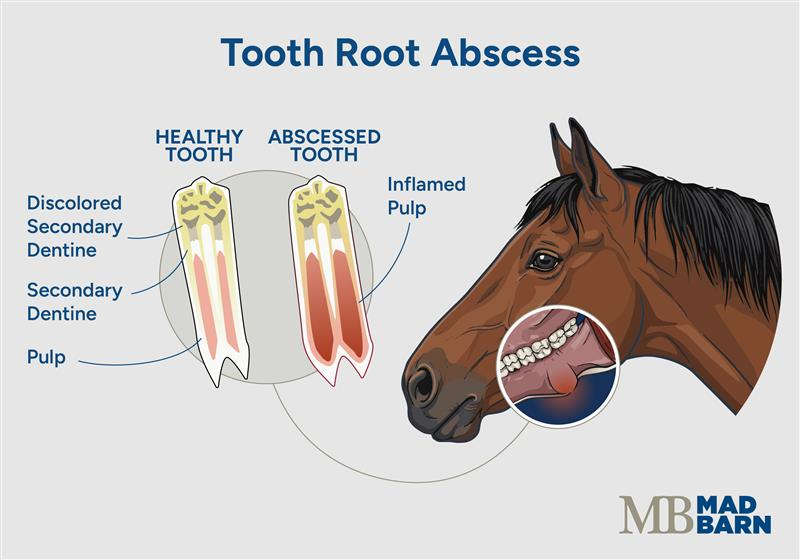
More advanced dental disease can lead to apical tooth infections, also known as tooth root abscesses. Horses with infected cheek teeth may develop severe halitosis alongside facial swelling or, if infection spreads into the sinuses, foul-smelling discharge from one nostril. [4][5]
Oral Injuries
Ulcers, wounds, and infections affecting the soft tissues of the mouth can also contribute to foul odor from the mouth.
Sharp teeth, foreign material in feed, bit trauma, or oral abscesses may damage the lining of the mouth and allow bacteria to multiply. In some cases, infected tissue or pus formation can create a particularly strong odor. [6]
Although uncommon, tumors or abnormal growths affecting the mouth may also cause persistent bad breath if ulceration or infection develops.
Sinus Disease
Sinusitis is another common cause of halitosis, particularly when secondary to dental disease. Because the roots of the upper cheek teeth lie close to the sinus cavities, infection can spread from the teeth into the sinuses. [7][8][9]
Affected horses often develop thick, foul-smelling nasal discharge, facial swelling, reduced appetite, or sensitivity around the face and jaw. [7][8][9]
Gastrointestinal Causes
Digestive disorders are less commonly associated with halitosis than dental disease. Choke may cause sour or foul-smelling breath when feed material becomes lodged in the esophagus and begins to ferment.
Horses with choke often have: [10]
- Excessive salivation
- Difficulty swallowing
- Feed material coming from the nostrils
Although gastric ulcers are sometimes blamed for bad breath, there is currently limited evidence supporting a direct connection between equine gastric ulcer syndrome and halitosis.
Respiratory Disease
Severe respiratory infections, such as pneumonia or lung abscesses, can occasionally produce foul-smelling breath due to bacterial infection and tissue damage within the airways. [11]
Respiratory causes of halitosis are less common than dental disease and are usually accompanied by additional signs including:
- Coughing
- Fever
- Nasal discharge
- Exercise intolerance
Associated Symptoms
Halitosis itself is a clinical sign rather than a disease, and affected horses often show additional signs related to the underlying condition. The severity of symptoms depends on the cause and how long the problem has been present.
Common clinical signs associated with halitosis in horses include: [12]
- Foul-smelling breath or odor from the nostrils
- Difficulty chewing or eating slowly
- Dropping partially chewed feed from the mouth (quidding)
- Excessive salivation or drooling
- Weight loss or poor body condition
- Reduced appetite
- Facial swelling or sensitivity around the jaw
- Nasal discharge, particularly from one nostril
- Resistance to the bit or behavioral changes during riding
Table 1. Signs that may point to different causes of bad breath in horses
| Possible cause | Other Signs | Associated Risks |
|---|---|---|
| Dental disease |
|
|
| Oral injuries or infections |
|
|
| Sinus disease |
|
|
| Choke or gastrointestinal causes |
|
|
| Respiratory disease |
|
|
In horses with dental disease, owners may first notice partially chewed balls of hay on the ground, foul-smelling breath during grooming or bridling, or long strands of undigested fiber in the manure. Horses with sinus disease or apical tooth infections may also develop unilateral nasal discharge with a strong odor.
Some horses show only subtle signs in the early stages of disease, which underscores the importance of staying up to date with routine equine dental examinations to identify problems before they progress.
When to Call the Veterinarian
Persistent foul-smelling breath should be evaluated by a veterinarian, especially if the odor does not improve after eating or is accompanied by other signs of discomfort. Because halitosis can come from the teeth, gums, sinuses, esophagus, or respiratory tract, identifying the underlying cause is important for choosing the right treatment.
Call your veterinarian if your horse has bad breath along with:
- Difficulty chewing, slow eating, or quidding
- Weight loss, poor body condition, or reduced appetite
- Facial swelling, jaw sensitivity, or resistance to the bit
- Thick or foul-smelling nasal discharge, especially from one nostril
- Excessive salivation, difficulty swallowing, or feed material coming from the nostrils
- Coughing, fever, lethargy, or reduced exercise tolerance
Signs of choke, severe facial swelling, fever, or respiratory distress require prompt veterinary attention. Your veterinarian can perform a full oral exam and, when needed, use imaging or endoscopy to determine whether dental disease, sinus infection, oral injury, or another condition is responsible.
Diagnosing Halitosis in Horses
Diagnosing halitosis in horses involves identifying the underlying cause of the abnormal odor. Because dental disease is the most common contributor, a thorough oral examination is typically the first step in the diagnostic process. [13]
Your veterinarian may begin by reviewing your horse’s medical history, including:
- Changes in eating behavior
- Weight loss
- Previous dental problems
- Nasal discharge
- Episodes of choke
They may follow this review with a physical examination to reveal abnormalities involving the mouth, teeth, jaw, or sinuses.
A complete oral exam usually requires sedation and the use of a full-mouth speculum to safely examine the cheek teeth and gums. This allows the veterinarian to identify problems such as periodontal disease, trapped feed material, fractured teeth, sharp enamel points, retained caps, or oral ulcers.

Because many dental abnormalities develop gradually and are not always visible in horses without a detailed oral exam, it’s important to schedule routine dental examinations for your horse to identify problems before they become severe.
If your veterinarian suspects a tooth root infection or sinus disease, they may recommend diagnostic imaging, such as dental radiographs (X-rays), to evaluate the teeth, surrounding bone, and sinus cavities. In some cases, they may also use endoscopy or advanced imaging to investigate respiratory or esophageal causes of halitosis. [1]
Depending on the suspected cause, veterinarians may also recommend bloodwork, bacterial culture and sensitivity testing, sinus fluid analysis, or biopsy of abnormal tissue.
Treatment
Treatment for halitosis in horses depends on the underlying cause. Because dental disease is the most common contributor, many cases improve once oral infections, feed impaction, or abnormal teeth are properly treated.
Dental Care
Dental procedures are often necessary to address the source of bad breath. Routine floating may correct sharp enamel points, uneven wear patterns, or other abnormalities that interfere with normal chewing. [1][2][12][14]
Horses with periodontal disease may require cleaning and flushing of diastemata and periodontal pockets to remove impacted feed material and infected debris. In more advanced cases, severely damaged or infected cheek teeth may require extraction. [1]
Treating Underlying Disease
If bacterial infection is present, veterinarians may recommend antibiotics alongside treatment of the underlying dental or sinus disease. [1]
Horses with sinus infections may require sinus lavage to remove infected material from the sinus cavities. Oral abscesses or infected wounds may also require drainage and cleaning to promote healing. [1]
When halitosis is associated with conditions such as choke or respiratory disease, treatment focuses on resolving the primary disorder. Horses recovering from choke may require dietary modifications and monitoring for complications such as aspiration pneumonia.
Supportive Care
Some horses benefit from temporary dietary adjustments while painful oral conditions heal. Soaked feeds or softer forage may improve comfort and help maintain feed intake in horses with difficulty chewing.
Prompt treatment generally improves prognosis, particularly when dental disease is identified early before severe infection or tissue damage develops.
Prevention & Dental Health Support
Routine dental care and proper feeding management play an important role in reducing the risk of halitosis in horses. [1][12][14]
Because horses evolved to spend much of the day chewing forage, normal chewing activity helps support natural tooth wear and saliva production. Dental abnormalities that interfere with chewing increase the risk of feed trapping and oral infection.
Regular equine dental examinations allow veterinarians to identify periodontal disease, sharp enamel points, abnormal wear patterns, and other dental abnormalities before they become severe. Most horses benefit from yearly dental evaluations, although senior horses and horses with known dental disease may require more frequent care.
Feeding good-quality forage and maintaining a balanced diet also help support oral and digestive health. Horses with advanced dental disease may struggle to chew long-stem forage effectively and sometimes benefit from soaked feeds or forage alternatives to help maintain body condition and comfort. [15][16]
Horse owners should monitor for changes in eating behavior, quidding, weight loss, excessive salivation, nasal discharge, or persistent foul-smelling breath, as these signs may indicate developing dental disease.
Prognosis
The prognosis for horses with halitosis depends on the underlying cause and how quickly treatment is initiated.
Many horses improve significantly once the source of infection, feed impaction, or dental disease is corrected. Conditions such as periodontal disease, sharp enamel points, and retained caps often carry a good prognosis when identified early and managed appropriately. [2][17]
More advanced conditions, including severe apical tooth infections, chronic sinus disease, or tumors affecting the mouth or sinuses, may require more extensive treatment and carry a more guarded prognosis. [12]
Routine dental care and early veterinary intervention can improve long-term outcomes and help reduce the risk of recurrence.

Oral Health for Long-Term Wellness
Persistent halitosis in horses should not be dismissed as a normal odor from feed or the barn environment. Bad breath is most often a sign that bacteria are breaking down trapped feed, infected tissue, or discharge associated with dental, sinus, oral, respiratory, or digestive disease.
Because dental problems are the most common cause, routine oral examinations are one of the most effective ways to identify issues before they become painful or advanced. Owners can also support early detection by watching for quidding, slow eating, weight loss, excessive salivation, facial swelling, nasal discharge, or changes in behavior under saddle.
The best outcome comes from treating the underlying cause rather than masking the odor. If a horse develops persistent foul-smelling breath, especially with eating difficulty, nasal discharge, fever, facial swelling, or weight loss, veterinary evaluation can help restore comfort and reduce the risk of more serious complications.
Frequently Asked Questions
Here are some frequently asked questions about halitosis in horses:
Your horse may have bad breath because of an underlying problem affecting the teeth, mouth, sinuses, respiratory tract, or less commonly the digestive tract. Dental disease is the most common cause, especially conditions that trap feed material between the teeth and allow odor-producing bacteria to grow. Oral wounds, abscesses, sinus infections, choke, and severe respiratory infections can also cause foul-smelling breath. Persistent bad breath should be evaluated by a veterinarian, especially if it occurs with difficulty eating, nasal discharge, weight loss, or facial swelling.
Bad breath in horses is not considered normal when it is persistent, strong, or foul-smelling. A mild or temporary feed-related odor can happen, but chronic halitosis often points to dental disease, oral infection, sinus disease, or another health problem. Horses may show only subtle signs in the early stages, so ongoing odor should not be dismissed. A veterinary dental examination can help identify the cause before the condition becomes more advanced.
Halitosis in horses is usually caused by bacteria breaking down trapped feed material or infected tissue in the mouth, sinuses, or airways. Dental disease is the leading cause, including periodontal disease, tooth root infections, abnormal tooth wear, and gaps between teeth where feed accumulates. Other possible causes include oral injuries, abscesses, sinusitis, choke, pneumonia, lung abscesses, and infected tissue in the mouth. Digestive causes are less common than dental and sinus problems.
Dental disease can cause bad breath in horses and is the most common reason for persistent halitosis. Periodontal disease, sharp enamel points, tooth root infections, fractured teeth, retained caps, and abnormal tooth wear can all interfere with chewing or trap feed material. As bacteria multiply around impacted feed or infected tissue, a strong odor can develop. Horses with dental disease may also quid, eat slowly, lose weight, salivate excessively, resist the bit, or develop facial swelling.
Horse ulcers are sometimes blamed for bad breath, but there is limited evidence that equine gastric ulcer syndrome directly causes halitosis. Dental disease, oral infection, sinus disease, and feed trapping are much more common explanations for persistent foul-smelling breath. Choke can sometimes cause sour or foul breath if feed material becomes lodged in the esophagus and ferments. If a horse has bad breath along with appetite changes, weight loss, or discomfort, a veterinarian can help determine whether the problem is dental, digestive, or related to another condition.
Signs of dental disease in horses can include bad breath, quidding, slow eating, weight loss, reduced appetite, excessive salivation, and resistance to the bit. Some horses develop facial swelling, sensitivity around the jaw, difficulty chewing forage, or long strands of undigested fiber in the manure. If infection spreads from an upper cheek tooth into the sinuses, the horse may also develop foul-smelling discharge from one nostril. Because some dental problems progress gradually, regular dental examinations are important even when signs are mild.
Foul-smelling nasal discharge in a horse may occur when sinus disease or a tooth root infection is present. The roots of the upper cheek teeth are close to the sinus cavities, so infection can sometimes spread from the teeth into the sinuses. Affected horses often have thick discharge from one nostril, bad breath, facial swelling, reduced appetite, or sensitivity around the face and jaw. Foul nasal discharge should be assessed by a veterinarian because it may indicate a dental or sinus infection that requires treatment.
Halitosis in horses is diagnosed by identifying the underlying cause of the abnormal odor. A veterinarian typically starts with a medical history and physical examination, including questions about eating behavior, weight loss, nasal discharge, previous dental problems, or episodes of choke. A complete oral examination often requires sedation and a full-mouth speculum so the cheek teeth, gums, and soft tissues can be examined safely. Dental radiographs, endoscopy, bloodwork, bacterial culture, sinus fluid analysis, or biopsy may be recommended when tooth root infection, sinus disease, respiratory disease, or abnormal tissue is suspected.
Halitosis in horses is treated by correcting the underlying cause of the odor. Dental treatment may include floating sharp enamel points, cleaning and flushing gaps or periodontal pockets, removing impacted feed, treating infection, or extracting severely damaged teeth. Sinus infections may require antibiotics, sinus lavage, or treatment of an associated tooth root infection. Horses recovering from painful oral conditions, choke, or other illness may also need supportive care such as softer feeds, soaked feeds, or forage alternatives while healing.
Horses should generally have dental examinations at least once yearly, although some horses need more frequent care. Senior horses and horses with known dental disease, abnormal tooth wear, missing teeth, or recurring feed trapping may require closer monitoring. Regular dental exams help identify periodontal disease, sharp enamel points, retained caps, and other abnormalities before they lead to infection or severe halitosis. Consistent dental care is one of the most important ways to reduce the risk of bad breath linked to oral disease.
Bad breath in horses can often be reduced by supporting good dental health and addressing problems early. Routine veterinary dental examinations help detect feed trapping, gum disease, abnormal wear, and tooth infections before they become severe. Good-quality forage, normal chewing activity, and a balanced diet also support oral and digestive health. Horse owners should monitor for quidding, slow eating, weight loss, excessive salivation, nasal discharge, and persistent foul breath so problems can be investigated promptly.
You should call a veterinarian for bad breath in your horse if the odor is persistent, foul, worsening, or accompanied by other signs of illness. Difficulty eating, quidding, weight loss, facial swelling, nasal discharge, fever, excessive salivation, or signs of choke all warrant veterinary evaluation. Severe halitosis can indicate advanced dental disease, sinus infection, respiratory disease, oral abscesses, or other conditions that require treatment. Prompt diagnosis improves comfort and can help prevent more serious complications.
Summary
Halitosis, or bad breath, is usually a symptom of an underlying health condition rather than a disease itself.
- Dental disease is the most common cause of halitosis in horses, particularly periodontal disease and tooth root infections
- Sinus infections, choke, oral injuries, and respiratory disease may also contribute to foul-smelling breath
- Horses with halitosis may show quidding, weight loss, nasal discharge, excessive salivation, or difficulty chewing
- Diagnosis typically involves a thorough oral examination, dental imaging, and evaluation for underlying disease
- Routine equine dental care and early veterinary intervention can help reduce the risk of halitosis and improve long-term oral health
References
- Easley. J. et al. Equine Dentistry and Maxillofacial Surgery. Cambridge Scholars Publishing. 2022.
- Klugh. D. O. Equine Periodontal Disease. Clinical Techniques in Equine Practice. 2005.
- Kennedy. R. S. and Dixon. P. M. The Aetiopathogenesis of Equine Periodontal Disease - a Fresh Perspective. Equine Veterinary Education. 2018.
- Dacre. I. et al. Pathological Studies of Cheek Teeth Apical Infections in the Horse: 5. Aetiopathological Findings in 57 Apically Infected Maxillary Cheek Teeth and Histological and Ultrastructural Findings. Veterinary Journal. 1997. View Summary
- Bühler. M. et al. Computed Tomographic Features of Apical Infection of Equine Maxillary Cheek Teeth: A Retrospective Study of 49 Horses. Equine Veterinary Journal. 2014. View Summary
- Johnson. P. J. et al. Ulcerative Glossitis and Gingivitis Associated with Foxtail Grass Awn Irritation in Two Horses. Equine Veterinary Education. 2012.
- Chapman. S. Case Study: Tooth Root Infection and Subsequent Sinusitis in an Aged Mare. Equine Health. Mark Allen Group. 2014.
- Leps. A. et al. Efficient Primary Surgical Treatment of Equine Infectious Sinusitis Reduces Postoperative Aftercare and Increases Outcome Results: A Retrospective Study of 130 Cases. 2023. View Summary
- Lydiksen. C. V. et al. Equine Dental Sinusitis-A Statistical Analysis of the Effect of Antibiotics on Dental Sinusitis Following Dental Extraction. Equine Veterinary Education. 2024.
- Baxter. R. et al. Esophagus: Obstruction in Horses (Equis). Vetlexicon.
- Lascola. K. M. and Hiebert. S. Pleuropneumonia in Horses. Merck Veterinary Manual. 2024.
- Easley. J. Dental Disorders of Horses. Merck Veterinary Manual. 2024.
- Menzies. R. A. et al. Essential Considerations for Equine Oral Examination, Diagnosis, and Treatment. Journal of Veterinary Dentistry. 2011. View Summary
- Tremaine. H. Dental Care in Horses. In Practice. 1997.
- Jarvis. N. and McKenzie. H. C. Nutritional Considerations When Dealing with an Underweight Adult or Senior Horse. Veterinary Clinics of North America: Equine Practice. 2021. View Summary
- Brown. J. H. et al. Horse and Stable Management. John Wiley & Sons. 2013.
- Baker. G. and Pearce. C. Teeth: Periodontal Disease in Horses (Equis). Vetlexicon.