English
Tooth root abscesses, or apical infections, are a painful and relatively common dental condition in horses that often develop gradually before more obvious signs appear.
Because equine teeth are long and closely connected to surrounding structures like the sinuses, infection at the tooth root can lead to a range of clinical signs, including difficulty eating, facial swelling, and one-sided nasal discharge. [1][2]
Early signs are often subtle and easy to overlook. Many horses continue eating despite discomfort, which can delay detection until the condition has progressed or secondary complications, such as sinus infections, develop. [3]
Prompt veterinary care is important to relieve pain, eliminate infection, and prevent long-term complications. Understanding how tooth root abscesses develop and what signs to watch for can help support early intervention and improve outcomes.
Tooth Root Abscesses in Horses
A tooth root abscess in horses is an infection at the base of a tooth. This condition is also referred to as an apical infection, as it occurs at the root tip (apex). These infections often cause pain, difficulty eating, and, in some cases, one-sided nasal discharge. [2][4][5]
Dental abscesses most commonly affect the cheek teeth (premolars and molars), which are responsible for grinding forage. Horses have hypsodont teeth, meaning they continuously erupt over time to compensate for wear. As a result, a large portion of each tooth sits below the gumline, including a long reserve crown and the root. [1][2]
The root anchors the tooth within the jawbone or skull and contains nerves and blood vessels, making it sensitive to inflammation and infection. If bacteria enter the inner structures of the tooth through damage or disease, infection can develop at the root.
Because this area is enclosed within bone, pressure from inflammation can be painful even when there are no obvious external signs. [6]
The roots of the upper cheek teeth are located close to the sinus cavities, allowing infection to spread into the sinuses, which can lead to unilateral nasal discharge. In contrast, abscesses affecting the lower cheek teeth are more likely to cause swelling along the jaw.
Because much of the tooth lies below the gumline, tooth root abscesses are not always visible during a routine exam and often require imaging to diagnose.
Table 1. Equine tooth root abscesses at-a-glance
| Category | Details |
|---|---|
| Condition |
|
| Definition |
|
| Commonly Affected Teeth |
|
| Causes |
|
| Early Signs |
|
| Advanced Signs |
|
| Treatment |
|
| Prognosis |
|
| Potential Complications |
|
Symptoms of Equine Tooth Root Abscesses
The clinical signs of tooth root abscesses in horses can vary depending on the affected tooth and severity of infection. In many cases, early signs are subtle and may be overlooked until the condition progresses.
Early Signs
Early signs are often related to changes in eating behavior and may be easy to miss. These can include: [1][5][6][7][8]
- Dropping partially chewed feed (quidding)
- Slower eating or reluctance to chew
- Difficulty maintaining body condition
- Unilateral (one-sided) nasal discharge
Advanced Signs
As the condition progresses, more obvious signs of discomfort may develop, including: [1][5][6][7][8]
- Nasal discharge that may be thick or foul-smelling
- Signs of sinus inflammation, such as reduced airflow or mild facial asymmetry
- Bad breath (halitosis)
- Swelling of the face or jaw
- Sensitivity when the head or mouth is touched
- Head shyness
- Resistance to the bit
- Changes in attitude or willingness to work
Because these signs can overlap with other conditions, veterinary evaluation is needed to determine the underlying cause.
What's your top priority with your horse's health?

What's your top priority with your horse's health?
When to Call a Veterinarian
Veterinary evaluation is recommended if a horse shows signs of dental pain or infection, particularly if symptoms persist or worsen.
Signs that warrant attention include: [2][8]
- Unilateral (one-sided) nasal discharge, especially if thick or foul-smelling
- Swelling of the face or jaw
- Dropping feed (quidding) or difficulty chewing
- Reduced appetite or unexplained weight loss
- Bad breath (halitosis)
- Sensitivity around the head or resistance to the bit
Causes of Tooth Root Abscesses in Horses
Tooth root abscesses develop when bacteria gain access to the inner structures of the tooth or surrounding tissues, leading to infection at the root. This most often occurs as a result of underlying dental disease or damage. [2]
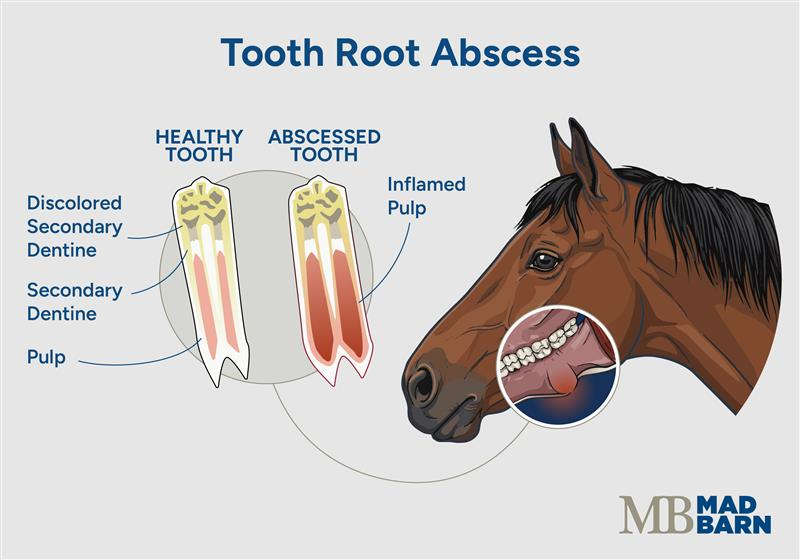
Tooth root abscesses in horses are usually related to one of the following underlying causes: [2][9][10][11][12][13]
- Dental disease: The most common cause of tooth root abscesses. Dental conditions such as periodontal disease, tooth fractures, and infundibular caries can weaken the tooth or supporting tissues, allowing bacteria to enter the pulp and spread to the root.
- Feed packing: Feed material can become trapped between teeth or in damaged areas, creating an environment where bacteria can take hold. This may lead to infection of the surrounding tissues, which can extend into the tooth root over time.
- Pulp exposure: Damage to the outer layers of the tooth can expose the pulp, which contains nerves and blood vessels. Once bacteria reach this area, infection can travel down the root canal system to the apex, resulting in a tooth root abscess.
- Injury: Trauma to the head or mouth can damage teeth or disrupt their attachment within the jaw or skull, creating pathways for bacteria to enter. Injuries such as kicks, falls, or contact with hard surfaces may lead to fractures or internal damage that is not immediately visible, but can still result in infection over time.
- Aging: Older horses are more likely to develop dental disease due to cumulative wear and structural changes in the teeth. These changes can increase the risk of fractures, decay, and bacterial invasion.
Diagnosis of Tooth Root Abscesses in Horses
Diagnosing a tooth root abscess requires a thorough veterinary evaluation, as the affected tooth may appear normal on visual inspection. A combination of oral examination and imaging is typically needed to confirm the diagnosis and assess the extent of infection. [2][7][14][15]
The first step of diagnosis is a detailed oral exam that requires a speculum to fully visualize the cheek teeth. This allows identification of abnormalities such as fractures, feed packing, or signs of periodontal disease.
The head and face may also be palpated to assess for swelling, pain, or asymmetry. In some cases, tapping on the teeth may help identify the affected area.
Imaging
Imaging is usually required to confirm a tooth root abscess and evaluate surrounding structures, particularly because the infection is located below the gumline and within the bone. [2]
Radiographs (x-rays) are commonly used to assess the tooth roots and detect bone changes associated with infection. In some cases, standard x-rays may not fully capture changes around the tooth root, especially when abnormalities extend in multiple directions. [2][8]
In more complex or unclear cases, advanced imaging such as computed tomography (CT) may be recommended to provide a more detailed assessment and help guide treatment. [4][16][17][18][19]
If sinus infection is suspected, additional diagnostics may be performed, such as endoscopy or evaluation of sinus drainage. [20]
Treatment of Tooth Root Abscesses in Horses
Treatment focuses on removing the source of infection, managing complications, and supporting the horse’s comfort during recovery.
Tooth Extraction
Extraction of the affected tooth is the most effective treatment in most cases because it removes the source of infection within the tooth and surrounding bone. Without removing the affected tooth, infection is unlikely to fully resolve. [2][3][5][19]
Depending on the tooth and severity of infection, extraction may be performed under standing sedation using specialized dental instruments or require a surgical approach if the tooth is difficult to access or compromised. [6][21]
In some cases, teeth can be removed orally, while more complex extractions may involve creating access through the bone. The approach depends on factors such as tooth location, degree of damage, and involvement of surrounding tissues. [5]
Extraction can be more challenging in younger horses, as newly erupted teeth are still firmly attached within the jaw or skull. Inflammation around the root may also alter the shape of the tooth, making removal more complex in some cases. [16]
Managing Infection
If the infection has spread beyond the tooth, additional treatment may be needed alongside extraction. This can include flushing the affected area and using antibiotics, particularly in cases involving the sinuses. [2]
Anti-inflammatory medications are commonly used to reduce pain and inflammation, helping maintain comfort and appetite during recovery. [2]

Prognosis of Tooth Root Abscesses in Horses
With appropriate treatment, most horses recover well from tooth root abscesses. Once the affected tooth is removed and infection is controlled, horses typically return to normal eating and behavior. [2]
Aftercare & Recovery
Following extraction, the tooth socket may need to be cleaned regularly to prevent feed accumulation as it heals. Follow-up care is important to monitor healing and ensure the infection has resolved. [2]
Recovery time varies depending on the severity of the infection and whether the sinuses are involved. In straightforward cases, improvement may be seen within days, with full healing over several weeks. More complex cases may require a longer recovery period. [2]
Early diagnosis and treatment are associated with better outcomes and a lower risk of complications.
Potential Complications
In some cases, complications can occur, particularly if the abscess is advanced or treatment is delayed.
- Chronic sinusitis: Ongoing sinus infection may persist even after the tooth is removed
- Incomplete resolution: Infection may not fully resolve if affected tissue remains
- Recurrence: Infection can return, especially if underlying dental issues are not addressed
- Persistent infection of retained root fragments: If part of the tooth root is left behind, it can continue to harbor bacteria and lead to ongoing infection
- Delayed healing: The extraction site may take longer to heal, particularly in older horses or complex cases
Appropriate treatment and follow-up care help reduce the risk of these complications in affected horses.
Prevention of Tooth Root Abscesses in Horses
While not all tooth root abscesses can be prevented, consistent dental care and early intervention can help reduce risk.
Key prevention strategies include: [15][22]
- Routine dental care: Regular dental examinations help identify problems before they progress. Conditions such as periodontal disease, small fractures, or early decay may not cause obvious signs initially but can worsen over time if left unaddressed. Routine floating helps maintain proper tooth alignment and reduces abnormal wear patterns that can contribute to feed trapping and tissue damage.
- Optimized feeding: A forage-based diet supports natural chewing behavior and even tooth wear. Long-stem forage also promotes saliva production, which may help reduce feed accumulation and bacterial growth in the mouth.
- Monitoring: Monitoring for subtle changes in eating behavior or performance can support earlier intervention. Signs such as slower eating, dropping feed, mild weight loss, or resistance to the bit may indicate developing dental issues.
Work with your veterinarian to ensure overall oral health for your horses. Timely treatment of dental abnormalities can reduce the risk of infection spreading to the tooth root. Early management of periodontal disease, fractures, or feed impaction may help prevent progression.
Frequently Asked Questions
Here are some frequently asked questions about tooth root abscesses in horses:
A tooth root abscess in horses does not typically heal on its own. The infection is located within the tooth and surrounding bone, which prevents natural resolution. Without treatment, the infection may persist or worsen over time. Veterinary intervention is required to remove the source of infection and support recovery.
Tooth extraction is the most common treatment for a tooth root abscess in horses because it removes the source of infection. In some cases, treatment plans may vary depending on the tooth involved and severity of the condition. However, extraction is generally considered the most effective and definitive solution. Your veterinarian will determine the best approach based on diagnostic findings.
Recovery from a tooth root abscess in horses varies depending on the severity of infection and whether the sinuses are involved. Many horses show improvement within a few days after treatment, especially once the source of infection is removed. Complete healing, particularly in cases involving sinus drainage or bone changes, may take several weeks. Follow-up care is important to ensure full recovery.
A tooth root abscess is painful for horses, especially during chewing or when pressure is applied to the affected area. However, horses often continue to eat despite discomfort, which can delay recognition of the problem. Subtle signs such as quidding, weight loss, or behavioral changes may be present. Pain management and treatment are important for welfare.
A tooth root abscess can cause nasal discharge in horses, particularly when the upper cheek teeth are affected. These teeth are closely associated with the sinus cavities, allowing infection to drain into the nasal passages. The discharge is often unilateral and may have a foul odor. This is a common and important diagnostic sign.
Tooth root abscesses in horses are usually caused by bacterial infection entering the tooth or surrounding tissues. This may occur due to dental disease, fractures, periodontal disease, or wear-related changes in the tooth. Food material can become trapped and contribute to infection. Identifying the underlying cause helps guide treatment and prevention.
A tooth root abscess is diagnosed through a combination of physical examination and diagnostic imaging. Veterinarians may use oral exams, radiographs, or advanced imaging to evaluate the affected tooth and surrounding structures. Signs such as nasal discharge or swelling can help guide diagnosis. Accurate diagnosis is important for effective treatment planning.
A tooth root abscess can affect a horse's performance by causing discomfort, reduced feed intake, and decreased energy levels. Pain during chewing may lead to weight loss or poor condition over time. Horses may also show changes in behavior or willingness to work. Treating the abscess can help restore normal performance.
Tooth root abscesses in horses cannot always be prevented, but regular dental care can reduce the risk. Routine dental exams and floating help maintain proper tooth function and identify problems early. Managing diet and monitoring for signs of dental disease are also important. Early detection and intervention improve outcomes.
Summary
Tooth root abscesses are a common dental condition in horses that can be difficult to detect early but are highly treatable with appropriate care.
- Tooth root abscesses are commonly caused by fractures, decay, or periodontal disease affecting the tooth structure
- Early signs may be subtle, including changes in eating behavior, while advanced cases can cause facial swelling or one-sided nasal discharge
- Abscesses involving upper cheek teeth are often linked to sinus infections due to their close anatomical connection
- Diagnosis typically requires veterinary examination and imaging, as external signs may not clearly identify the affected tooth
- Tooth extraction is the most effective treatment in most cases because it removes the source of infection
- With prompt treatment and appropriate aftercare, most horses recover well and return to normal function
References
- Pehkonen. J. et al. Behavioral Signs Associated With Equine Periapical Infection in Cheek Teeth. Journal of Equine Veterinary Science. 2019. View Summary
- Baker. G. et al. Teeth: Extraction in Horses (Equis). Vetlexicon.
- Caramello. V. et al.Equine Cheek Tooth Extraction: Comparison of Outcomes for Five Extraction Methods. Equine Veterinary Journal. 2020. View Summary
- Liuti. T. et al. Radiographic, Computed Tomographic, Gross Pathological and Histological Findings with Suspected Apical Infection in 32 Equine Maxillary Cheek Teeth (2012–2015). Equine Veterinary Journal. 2018. View Summary
- Dixon. P. M. et al. Equine Dental Disease Part 4: A Long-Term Study of 400 Cases: Apical Infections of Cheek Teeth. Equine Veterinary Journal. 2000. View Summary
- Lydiksen. C. V. et al. Equine Dental Sinusitis—A Statistical Analysis of the Effect of Antibiotics on Dental Sinusitis Following Dental Extraction. Equine Veterinary Education. 2024.
- Easley. J. Dental Disorders of Horses. Merck Veterinary Manual. 2024.
- Chapman. S. Case Study: Tooth Root Infection and Subsequent Sinusitis in an Aged Mare. Equine Health. Mark Allen Group. 2014.
- Rawlinson. J. E. Equine Dental Caries and Restoration. Equine Veterinary Education. 2023.
- Johnson. T. J. and Porter. C. M. Dental Conditions Affecting the Mature Performance Horse (5-15 Years). IVIS. 2006.
- Dacre. I. et al. Pathological Studies of Cheek Teeth Apical Infections in the Horse: 5. Aetiopathological Findings in 57 Apically Infected Maxillary Cheek Teeth and Histological and Ultrastructural Findings. The Veterinary Journal. 2008. View Summary
- Nicholls. V. M. and Townsend. N. Dental Disease in Aged Horses and Its Management. Veterinary Clinics: Equine Practice. 2016. View Summary
- Liuti. T. et al. Studies on Age-Related Changes in Equine Cheek Teeth Angulation and Dental Drift. Frontiers in Veterinary Science. 2022. View Summary
- Limone. L. Equine Dentistry and Maxillofacial Surgery. Taylor & Francis Group. 2022.
- Henry. T. and Rice. M. Manual of Clinical Procedures in the Horse. John Wiley & Sons, Ltd. 2017.
- Gergeleit. H. and Bienert-Zeit. A. Complications Following Mandibular Cheek Tooth Extraction in 20 Horses. Frontiers in Veterinary Science. 2020. View Summary
- Bühler. M. et al. Computed Tomographic Features of Apical Infection of Equine Maxillary Cheek Teeth: A Retrospective Study of 49 Horses. Equine Veterinary Journal. 2014. View Summary
- Leps. A. et al. Dental Sectioning for Intraoral Equine Cheek Teeth Extractions: 29 Cases. Frontiers in Veterinary Science. 2024. View Summary
- Leps. A. et al. Efficient Primary Surgical Treatment of Equine Infectious Sinusitis Reduces Postoperative Aftercare and Increases Outcome Results: A Retrospective Study of 130 Cases. JAVMA. 2023. View Summary
- Gordon. D. L. and Radtke. C. L. Treatment of Chronic Sinusitis in a Horse with Systemic and Intra-Sinus Antimicrobials. The Canadian Veterinary Journal. 2017.
- Earley. E. T. and Galloway. S. S. Equine Standing Surgical Extraction Techniques. Veterinary Clinics: Equine Practice. 2020. View Summary
- The Equids. Springer. 2023.