English
Curb is a term used to describe swelling or thickening along the plantar aspect of the hock in horses. It is associated with injury to the ligaments, tendons, or other soft tissues located at the back of the hock.
Acute curb may develop suddenly and can be accompanied by heat, tenderness, and hind limb lameness. In chronic cases, the swelling may become firm and painless and can remain visible after the initial injury has healed.
Traditionally, curb was considered an injury of the long plantar ligament, which extends along the back of the hock. However, diagnostic imaging shows that injury to several adjacent structures can produce swelling in the same region. Curb is therefore best regarded as a clinical finding defined by its location instead of a specific injury. [1]
Veterinary examination and diagnostic imaging can help identify the affected structure and determine the severity of the injury. Many horses with curb recover well given appropriate rest and rehabilitation, although recovery depends on the tissues involved and the extent of the damage. [2]
What is Curb in Horses?
Curb is a general term for swelling involving the tissues along the lower back of the hock. Curbs may look similar from the outside, but the underlying injury can vary between horses.
The hock is a complex joint in the horse’s hind limbthat helps the horse push forward. Several tendons and ligaments run along the back of this region, supporting the joint during exercise.
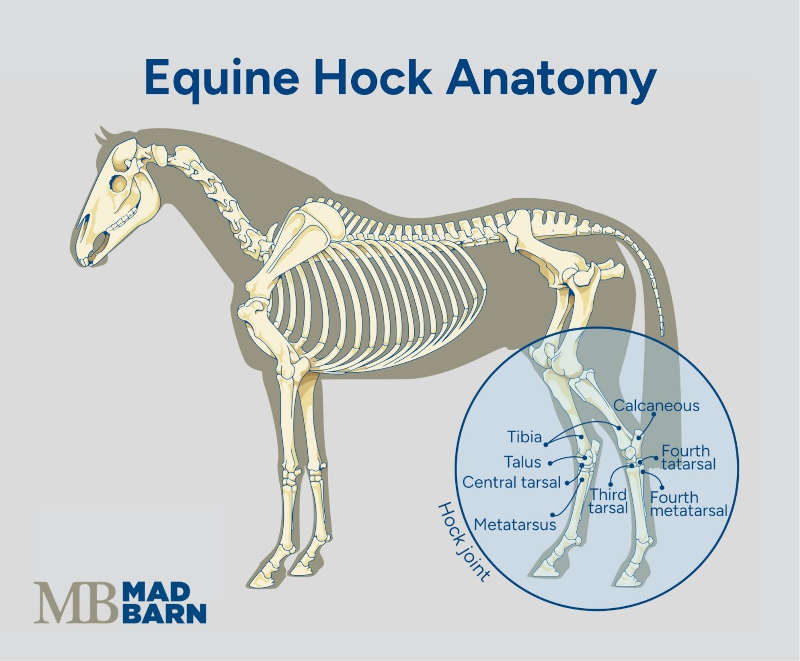
One of these structures is the long plantar ligament. Historically, the term curb was used to refer specifically to inflammation and thickening of this ligament. More recently, injuries involving the long plantar ligament, superficial digital flexor tendon, and tissues surrounding the tendons and ligaments have also been identified in cases of curb. [1]
Because curb describes the general appearance of swelling in a specific location on the limb, the tissues affected can vary between cases. Two horses with similar-looking curbs may have different degrees of lameness, require different treatment plans, and have different recovery times.
Identifying the tissues involved provides a more specific diagnosis than relying on the appearance of the swelling alone.
Table 1. Curb in horses at-a-glance
| Category | Key Information |
|---|---|
| Definition |
|
| Primary Cause |
|
| Common Causes |
|
| Onset |
|
| Symptoms |
|
| Severity |
|
| Diagnosis |
|
| Treatment |
|
| Recovery Time |
|
| Prognosis |
|
| Prevention |
|
Where Does a Curb Develop?
A curb develops along the back of the hock, typically several inches below the point of the hock. Veterinarians refer to this surface of the limb as the plantar aspect. [3]
The point of the hock is formed by the calcaneus, a large bone that creates the prominence you can see and feel at the back of the joint. Several tendons and ligaments pass through this region and continue down the back of the lower limb. [3]
Because these structures lie close together, it is not always possible to identify the affected tissue simply by looking at or feeling the swelling. Ultrasound allows the veterinarian to examine the tissues beneath the skin and identify the structures involved. [1]
What's your top priority with your horse's health?

What's your top priority with your horse's health?
Symptoms of Curb in Horses
The main sign of curb is swelling or a bump along the back of the hock, usually just below the point of the hock. A new curb may also cause heat, tenderness, and hindlimb lameness. [2]
One of the first signs owners may notice is the outline of one hock looks different from the other. Viewed from the side, the back of the affected hock may appear slightly bowed or have a more obvious bulge.
Signs of curb in horses include: [2]
- Swelling or thickening along the back of the hock
- A bump or bowed appearance below the point of the hock
- Heat around the swollen area
- Tenderness when the area is touched
- Hind limb lameness
- A shortened or uneven stride
- Stiffness or reluctance to move forward
- Reduced performance
Some horses develop obvious lameness, while others show only subtle stiffness or a change in performance. Over time, the swelling may harden as the injured tissues heal. Some thickening can remain permanently, so an old curb may still be visible even when the horse is sound and comfortable. [1]
The appearance of a curb on its own doesn’t reveal which tissues are affected or the extent of the injury. Any new swelling accompanied by heat, pain, or lameness warrants veterinary assessment.
Causes of Curb in Horses
The hind limbs provide much of the power needed for forward movement. Activities that require a horse to push strongly from behind place greater demands on the hocks and surrounding tissues.
Curb develops when tissues along the back of the hock are strained or injured. Damage may be a result of a single event or develop gradually through repeated stress. [1]
Curb in horses is often associated with: [1]
- Strenuous or high-speed exercise
- Repeated stress during training
- A sudden or excessive strain on the tissues at the back of the hock
- Direct trauma to the hock
In some horses, the swelling appears after an identifiable injury or episode of strenuous exercise. In others, owners cannot identify a specific incident. [1]
Conformation & Risk Factors
Sickle-hocked conformation has traditionally been associated with curb. Viewed from the side, a sickle-hocked horse has a more pronounced angle through the hock, which may place additional strain on the structures running down the back of the joint. [2][4]
Conformation is a factor, but the horse’s anatomy alone does not determine whether they will develop curb. Some horses with sickle hocks may never develop the curb, and the condition can also occur in horses without noted hock conformation faults. [2]
Training and conditioning can also affect injury risk. Horses returning to work, beginning a new training program, or moving up to higher levels of their discipline need time to adapt to the increased workload. Sudden increases in speed, duration, or intensity can strain tendons and ligaments that are not yet prepared for those demands. [5]
Following a gradual conditioning program and providing suitable footing can help reduce unnecessary strain on the structures at the back of the hock.
Other Causes of Swelling Behind the Hock
Not every swelling at the back of the hock results from the same type of injury. Any of the supporting structures found in the hock area can swell when damaged, including: [1][3]
- Superficial digital flexor tendons
- Deep digital flexor tendons
- Long plantar ligament
- Surrounding tissues
Injury or inflammation affecting any of these tissues can contribute to a curb-like appearance. Direct trauma can also cause localized swelling without a primary tendon or ligament injury. [1]
Table 1. Curb vs. other hock swellings
| Type of swelling | Typical location | Structure involved | Distinguishing clues |
|---|---|---|---|
| Curb |
|
|
|
| Thoroughpin |
|
|
|
| Bog spavin |
|
|
|
| Capped hock |
|
|
|
| False thoroughpin |
|
|
|
When to Call the Veterinarian
Contact your veterinarian if you notice new swelling along the back of your horse’s hock, especially if the area is warm, painful, or increasing in size.
Your horse should also be assessed if they develop: [2]
- Lameness
- Stiffness
- A change in movement
- An unexplained decline in performance
When to Call the Veterinarian
Contact your veterinarian if you notice new swelling along the back of your horse’s hock, especially if the area is warm, painful, or increasing in size.
Your horse should also be assessed if they develop: [2]
- Lameness
- Stiffness
- A change in movement
- An unexplained decline in performance
An old, firm curb in a sound and comfortable horse may actually be a lasting change from a previous injury. Have the area reassessed if it becomes warm, painful, larger, or if the horse develops new lameness.
Diagnosis of Curb in Horses
If your horse develops a new, painful swelling at the back of the hock, stop strenuous exercise and contact your veterinarian. Continuing to work a horse with an active tendon or ligament injury can worsen the damage and prolong recovery.
Diagnosis begins with a physical examination and review of the horse’s recent history. The veterinarian may ask when the swelling first appeared, whether it followed exercise, a slip or another injury, and if the horse has signs of lameness or changes in performance.
During the examination, the veterinarian will feel the area for heat, swelling, tenderness, and signs of abnormalities. They may compare both hocks and assess the horse’s hind limb conformation and movement. [1]
If the horse is lame, a lameness examination can help determine whether the pain comes from the curb region or another part of the limb. This may include observing the horse at different gaits and using diagnostic nerve or joint blocks to localize the source of pain as needed. [1]
Ultrasound
Ultrasound allows the veterinarian to visualize internal structures so they can look for signs of injury. Changes in the size, shape, or fiber pattern of a tendon or ligament can help identify which tissue is affected and how much damage has occurred. [3][6]
The same horse may have more than one affected structure. A thorough ultrasound examination of the region helps the veterinarian identify all involved tissues. These results help guide treatment and determine an appropriate rehabilitation plan. [6]
Other Diagnostic Imaging
If the veterinarian suspects an injury involving the bones of the hock or wants to investigate another possible cause of swelling or lameness, they may recommend a radiograph (X-ray).
In some cases, further imaging is necessary when examination and ultrasound do not provide a clear diagnosis. The most appropriate imaging method depends on the suspected injury and the findings from the initial examination.
Treatment of Curb in Horses
Treatment for curb depends on the affected tissues and the severity of the injury. [1] In some cases, stall rest or restricted activity, along with cold therapy are used to help manage heat and swelling. Anti-inflammatory medication may be prescribed when appropriate. [2][7]
The amount of rest needed depends on the underlying injury. A mild strain may require less time away from work, while more extensive tendon or ligament damage can take considerably longer to heal. [1][7]
Rehabilitation
Once the initial pain and inflammation have settled, controlled exercise is often introduced to help the injured tissues gradually adapt to loading again. [8]
Rehabilitation commonly begins with walking for a set amount of time each day. Exercise duration and intensity is then increased gradually as healing progresses. Trot work and more demanding exercise are introduced later, followed by a gradual return to the horse’s usual training routine. [8]
The rehabilitation timeline for curb varies based on the case. The appropriate timeline depends on which tissues are injured, the extent of the damage, and how well the horse is healing. [6]
A horse may become sound before an injured tendon or ligament has fully regained its strength. Returning to strenuous exercise too quickly can increase the risk of reinjury, even if the horse appears comfortable. [7]
The veterinarian may recommend repeat examinations or ultrasound during an equine rehabilitation program to monitor healing and determine when to increase the workload. [6][9]
Hoof Care & Footing
Regular hoof care and suitable footing make a difference during rehabilitation and return to work. A veterinarian and farrier may assess hoof balance as part of the horse’s overall management, particularly if there are concerns about how the horse loads the hind limbs.
Footing influences how forces are transferred between the ground, hoof, and limb. Surface properties affect loading, impact forces, traction, and limb biomechanics during exercise. [10]
However, deep footing does not uniformly increase or decrease limb loading. Deep sand can reduce peak ground reaction forces while increasing the muscular effort required for propulsion and potentially increasing tension in the superficial digital flexor tendon. [11]
During rehabilitation, follow the treating veterinarian’s recommendations for footing and exercise, which may change as rehabilitation progresses.
Recovery & Prognosis
Many horses with curb can return to their previous level of performance. The outlook depends on the type and location of injured tissues, the extent of the damage, and how well the horse responds to rehabilitation. [2]
A mild soft-tissue injury generally has a better prognosis than significant tendon or ligament damage. Previous injuries, the horse’s activity level, and the demands of their intended work can also influence recovery. In any case, returning to strenuous exercise before the injured tissues are ready can increase the risk of reinjury and extend the overall recovery period. [8]
Even after the injury has healed, the curb may not disappear completely. Thickened or scarred tissue can leave a permanent bump along the back of the hock. This does not necessarily mean the horse is still painful or unsound. Some horses with an old curb remain comfortable and perform normally. [1]
If the area becomes warm, painful, or swollen again, or the horse develops new lameness, veterinary reassessment is recommended.
If you are considering buying a horse with an existing curb, the significance of this finding depends on more than appearance. The horse’s soundness, injury history, and intended use should all be considered. A pre-purchase examination can help determine whether diagnostic imaging is warranted before purchase.

Prevention of Curb in Horses
Curb in horses is not always preventable. Slips, awkward movements, and other unexpected injuries can occur even in well-managed horses.
Maintaining a structured conditioning program is an important injury prevention strategy for horses. Gradually reintroducing higher demands is especially important when bringing a horse back into work after time off. [5][8]
Other ways to support soundness include:
- Maintain regular hoof care
- Provide suitable, consistent footing
- Provide enough time for rest and recovery between work sessions
- Check the limbs regularly for heat, swelling, or tenderness
- Investigate new or unexplained lameness promptly
- Provide a balanced, forage-first diet
- Ensure continuous access to abundant, fresh water
Regularly checking your horse’s legs by sight and touch can help you learn their normal condition. Comparing both hocks can make subtle changes easier to recognize.
You can also take occasional photos from the same angle to create a visual record. If swelling develops, earlier photos may help you identify when the appearance changed and monitor it over time.
Frequently Asked Questions
Here are some frequently asked questions about curb in horses:
A curb in horses is a swelling or thickening that develops along the lower back of the hock. Although it was traditionally considered an injury of the long plantar ligament, the swelling can involve nearby tendons, ligaments and surrounding tissues. Curb is therefore a description of swelling in a particular location rather than a single type of injury.
A curb on a horse usually looks like a bump, thickening or outward bow below the point of the hock. A fresh curb may be warm, tender and more visibly swollen, while an older curb often feels firm and painless. Comparing both hocks from the side can make a subtle change in the affected hindlimb easier to recognize.
A curb is located along the back of the hock, typically several inches below the point of the hock. This area contains several closely positioned tendons, ligaments and supporting tissues. Because these structures are difficult to distinguish from the outside, the location of the swelling alone cannot identify the specific injury.
Signs of curb in horses can include swelling, heat, tenderness and a bowed appearance along the back of the hock. An affected horse may also develop hindlimb lameness, stiffness, a shortened stride, reluctance to move forward or reduced performance. Some horses show only a visible bump, particularly when the curb is old and the original injury has healed.
Curb can cause lameness in horses when the affected tissues are painful or inflamed. Lameness may be obvious, but some horses show only subtle stiffness, an uneven stride or a decline in performance. An old, firm curb may remain visible without causing pain or affecting the horse's movement.
A horse develops a curb when tissues along the back of the hock are strained, inflamed or otherwise injured. Possible causes include strenuous exercise, repeated training stress, sudden excessive strain and direct trauma to the hock. The injury may follow a noticeable incident or develop gradually without an obvious triggering event.
Conformation may make some horses more prone to curb by influencing how forces are distributed through the hindlimbs. Sickle-hocked horses have traditionally been considered at greater risk because their hock angle may place additional strain on the tissues at the back of the joint. However, sickle-hocked horses do not always develop curb, and horses with typical hindlimb conformation can also be affected.
Curb is diagnosed in horses through a veterinary examination that may include assessing the swelling, movement and recent injury or exercise history. The veterinarian may feel the area for heat, tenderness and tissue changes and compare the affected hock with the opposite limb. If the horse is lame, further examination may be needed to confirm whether the pain is coming from the curb region or another part of the hindlimb.
Ultrasound is used to assess curb because several tendons, ligaments and surrounding tissues can produce similar swelling. It allows the veterinarian to examine changes in tissue size, shape and fibre pattern beneath the skin. The findings can identify the affected structures, estimate the extent of the damage and help guide treatment and rehabilitation.
Curb is treated in horses according to the tissues involved and the severity of the injury. Early management commonly includes stopping strenuous exercise, restricting activity and managing pain, heat and inflammation under veterinary guidance. Once the initial inflammation settles, controlled exercise may be introduced gradually to help the injured tissues regain strength.
A horse can often recover from curb and return to regular work. The outlook depends on the affected structures, the extent of the injury, the horse's previous injury history and the demands of their intended activity. Following a gradual rehabilitation program is important because a horse may appear sound before an injured tendon or ligament has fully regained its strength.
How long curb takes to heal depends on the underlying injury and the horse's response to rehabilitation. A mild soft-tissue strain may improve sooner than significant damage involving a tendon or ligament. Veterinary examinations and repeat ultrasound may be used to monitor healing and determine when the horse's workload can safely increase.
Whether you can ride a horse with a curb depends on whether the swelling represents an active injury. A horse with a new, warm, painful or enlarging curb should not perform strenuous exercise until the area has been assessed by a veterinarian. Some horses with an old, stable curb can work normally when they are sound and comfortable.
A curb may become smaller as inflammation resolves, but it does not always go away completely. Thickening or scar tissue can leave a permanent bump along the back of the hock after the original injury has healed. A lasting bump does not necessarily mean the horse remains painful or unsound.
Curb cannot always be prevented, but gradual conditioning can reduce unnecessary strain on the tissues around the hock. Exercise intensity, speed and duration should be increased progressively, especially when a horse is returning to work or beginning more demanding training. Regular hoof care, suitable footing and routine checks for heat, swelling or tenderness can also support early detection and soundness.
A veterinarian should examine a horse with a new curb, especially when the swelling is warm, painful, increasing in size or accompanied by lameness. Stiffness, changes in movement and unexplained reductions in performance can also indicate an active injury. An old curb should be reassessed if it becomes swollen or painful again or if the horse develops new lameness.
Whether you should buy a horse with a curb depends on the horse's soundness, injury history and intended use rather than the appearance of the swelling alone. An old, firm curb may be a harmless lasting change, but a visible bump cannot confirm which tissues were injured or whether an active problem remains. A pre-purchase examination can help determine whether diagnostic imaging is appropriate before making a decision.
Summary
Curb is swelling or thickening along the back of a horse's hock that can involve tendons, ligaments, or surrounding tissues. Diagnosis and recovery depend on the affected structures and severity of the injury.
- A fresh curb may cause heat, tenderness, hindlimb lameness, stiffness, or reduced performance
- Ultrasound helps identify the affected tissues and assess the extent of the damage
- Initial treatment may include rest, cold therapy, and veterinarian-prescribed anti-inflammatory medication
- Exercise should increase gradually because a horse may appear sound before the injured tissues regain full strength
- Many horses return to normal work, but a permanent, painless bump may remain behind the hock
References
- Ross. M. W. et al. Curb: A Collection of Plantar Tarsal Soft Tissue Injuries. Proceedings of the American Association of Equine Practitioners. 2002.
- Paris. A. et al. Plantar Fasciitis in 19 Endurance Horses: Diagnosis, Treatment and Follow-up. Equine Veterinary Education. 2021.
- Dyson. S. et al. Magnetic Resonance Imaging, Gross Postmortem, and Histological Findings for Soft Tissues of the Plantar Aspect of the Tarsus and Proximal Metatarsal Region in Non-lame Horses. Veterinary Radiology & Ultrasound. 2017.
- Ross. M. W. and Dyson. S. J. Eds. Diagnosis and Management of Lameness in the Horse. 2nd ed. Elsevier/Saunders. 2011.
- Smith. R. K. W. and Goodship. A. E. The Effect of Early Training and the Adaptation and Conditioning of Skeletal Tissues. Veterinary Clinics of North America: Equine Practice. 2008.
- Gillis. C. Ultrasonography for Monitoring Healing and Rehabilitation. Clinical Techniques in Equine Practice. 2007.
- Smith. R. K. W. Treatment of Tendinopathies. Equine Veterinary Education. 2024.
- Davidson. E. J. Controlled Exercise in Equine Rehabilitation. Veterinary Clinics of North America: Equine Practice. 2016.
- Dowling. B. A. et al. Superficial Digital Flexor Tendonitis in the Horse. Equine Veterinary Journal. 2000.
- Parkes. R. S. V. and Witte. T. H. The Foot-Surface Interaction and Its Impact on Musculoskeletal Adaptation and Injury Risk in the Horse. Equine Veterinary Journal. 2015.
- Crevier-Denoix. N. et al. Ground Reaction Force and Kinematic Analysis of Limb Loading on Two Different Beach Sand Tracks in Harness Trotters. Equine Veterinary Journal. 2010.