English

The horse’s jaw is a complex structure that plays a central role in eating, chewing, digestion, and overall well being. Every jaw movement relies on coordinated action of bones, teeth, muscles, joints, nerves, and soft tissues working together to process forage efficiently.
As continuous grazers, effective jaw function is highly important to equine health. With every bite, the jaw must move in a controlled side-to-side grinding motion that breaks down fibrous plant material while also wearing down the horse’s continuously erupting teeth evenly.
Precise alignment between the upper and lower teeth is essential for efficient feed processing and normal tooth wear. The jaw is also closely connected to other structures within the head, including the sinuses, blood vessels, and temporomandibular joints. As a result, problems affecting the jaw can influence comfort, feeding behavior, and overall dental health.
Equine Jaw Anatomy
The horse’s jaw is a specialized structure that plays a vital role in eating, chewing, and oral health. Efficient chewing breaks food into smaller particles before it is swallowed and digested. [1]
The relationship between the horse’s jaw and teeth is especially important because both structures must work together for normal chewing and dental wear. [1][2] The jaw is also a common site of dental disease, injury, and joint problems that can affect comfort and feeding ability. [3][4]
Table 1. Key parts of the horse’s jaw and their functions
| Jaw structure | Main role | Why it matters |
|---|---|---|
| Upper jaw |
|
|
| Lower jaw |
|
|
| Teeth |
|
|
| Temporomandibular joint (TMJ) |
|
|
| Jaw muscles |
|
|
| Tongue |
|
|
| Nerves |
|
|
| Blood vessels |
|
|
The Bones of the Equine Jaw
The horse’s jaw consists of the upper jaw and the lower jaw. The lower jaw is the largest movable bone in the skull and provides much of the power needed for chewing. The upper jaw supports the upper cheek teeth and forms part of the nasal passages and sinuses. [1]
The upper jaw is naturally wider than the lower jaw, helping create the side-to-side grinding motion used when chewing forage. [2]
The jaw bones support the teeth and withstand the considerable forces generated during chewing. [1][2] The cheek teeth and incisors extend deep into the jaw, and their structure changes throughout life as the teeth continue to erupt and wear. [5][6]
The close relationship between the upper cheek teeth and the sinuses means disease affecting one area can sometimes affect the other. [3][4] Fractures of the lower jaw are among the more common skull injuries seen in horses. [3]
The Temporomandibular Joint (TMJ)
The temporomandibular joint, or TMJ, connects the lower jaw to the skull. This joint allows the jaw to open, close, and move from side to side during chewing. [1]
The TMJ works closely with the teeth and jaw muscles to produce the grinding motion needed to process forage. [1][2] The TMJ contains a fibrous disc positioned between the bones of the joint, helping create smooth movement during chewing. [7]
 Illustration: Dr. Ana Mesa, PhD
The equine TMJ is adapted to support the side-to-side grinding motion required to process forage efficiently. [7][8] The tissues within the joint are specialized to withstand the repeated forces generated during chewing throughout a horse’s life. [8][9]
Problems affecting the TMJ can alter chewing patterns and may affect how the teeth wear over time. [2] Although TMJ disorders are relatively uncommon, inflammation, injury, infection, and wear-related changes can affect normal function. [3][4]
Muscles & Soft Tissues of the Jaw
Powerful muscles move the jaw during chewing and generate the force needed to break down fibrous feed. [1][2] These muscles work together to move the jaw up, down, and from side to side. [1]
The tongue helps position food between the teeth during chewing. [2] Nerves control jaw movement and provide sensation to the face and mouth. [1][4] Blood vessels supply oxygen and nutrients to the jaw, teeth, and surrounding tissues. [1]
Injury, infection, or inflammation affecting these soft tissues can interfere with normal chewing. [3][4]
What's your top priority with your horse's health?

What's your top priority with your horse's health?
Horse Teeth & the Jaw
The teeth are firmly anchored within the upper and lower jaws. The front teeth, known as incisors, cut forage, while the cheek teeth grind food into smaller particles. [1]
 Illustration: Dr. Ana Mesa, PhD
Horses have hypsodont teeth, meaning their teeth continue to erupt for many years to replace the surface lost through wear. [1][2] The cheek teeth and incisors undergo age-related changes throughout life, and the appearance of the front teeth can provide useful clues about age. [5][6]
The position and alignment of the teeth influence chewing efficiency and long-term oral health. [2] Because the teeth are closely connected to the jaw bones, severe dental disease can sometimes affect surrounding bone and nearby structures. [5][4]
How the Jaw Functions During Eating & Digestion
Eating begins when the front teeth grasp and cut forage. Food is then moved to the cheek teeth, where it is ground into smaller particles. The lower jaw moves in a rhythmic side-to-side pattern while chewing. [1][2]
The teeth, jaw muscles, tongue, and TMJ work together to perform efficient chewing. [1][2] Substantial forces are generated during chewing and distributed across the teeth, supporting tissues, and jaw bones. [10]
Equines use a side-to-side chewing pattern which allows the cheek teeth to process forage efficiently while helping distribute forces across the mouth. [2][10] Saliva mixes with food during chewing and helps form a bolus that can be swallowed. [1]
Proper chewing supports digestion by increasing the surface area of feed available for nutrient absorption and initiating the breakdown of long-chain carbohydrates that make up the bulk of most forages. [1][4] Long-term chewing problems may contribute to poor feed utilization, weight loss, or reduced body condition. [4]
Pain, injury, or dental disease can reduce chewing efficiency and affect feed utilization. Persistent chewing problems may require further assessment to identify the underlying cause. [4]
Common Jaw-Related Conditions & Health Considerations
Common jaw-related conditions, such as dental disease, can affect your horse’s chewing, comfort, oral health, and overall well being. Because the jaw is closely connected to the teeth, sinuses, soft tissues, and temporomandibular joints, problems in one area may lead to signs that appear elsewhere in the head or mouth.
Signs of jaw or dental conditions may include: [4]
- Jaw swelling
- Difficulty chewing
- Dropping feed (quidding)
- Facial asymmetry
- Nasal discharge
- Resistance to bridling
Some jaw-related issues develop gradually and may be difficult to detect until they interfere with eating or cause visible discomfort. Routine dental care and timely veterinary evaluation can help identify problems before they affect feed intake, body condition, or quality of life.
When to Call the Veterinarian
Jaw-related problems can affect a horse’s ability to chew and maintain normal intake. Because signs may overlap between dental disease, injury, infection, sinus disease, or TMJ dysfunction, veterinary evaluation is important when changes are persistent, painful, or worsening.
Contact your veterinarian if you notice:
- Difficulty chewing or a clear change in chewing pattern
- Dropping feed, reduced appetite, or unexplained weight loss
- Facial or jaw swelling, asymmetry, or visible discomfort
- Signs of oral injury, jaw trauma, or suspected fracture
- Persistent nasal discharge
- Feed in the nostrils
Prompt care is especially important if a horse is unable to eat normally, shows significant swelling, or has signs of acute injury.
Tooth Root Abscesses in Horses
Tooth root abscesses, also called apical infections, develop at the base or root tip of a tooth. In horses, these infections most often affect the cheek teeth, which are responsible for grinding forage. [11][12]
The tooth root anchors the tooth and contains nerves and blood vessels, making it sensitive to inflammation and infection. If bacteria enter the inner tooth through damage or disease, infection can develop around the root. Since this area is enclosed within bone, pressure from inflammation can be painful even before obvious external signs appear. [13]
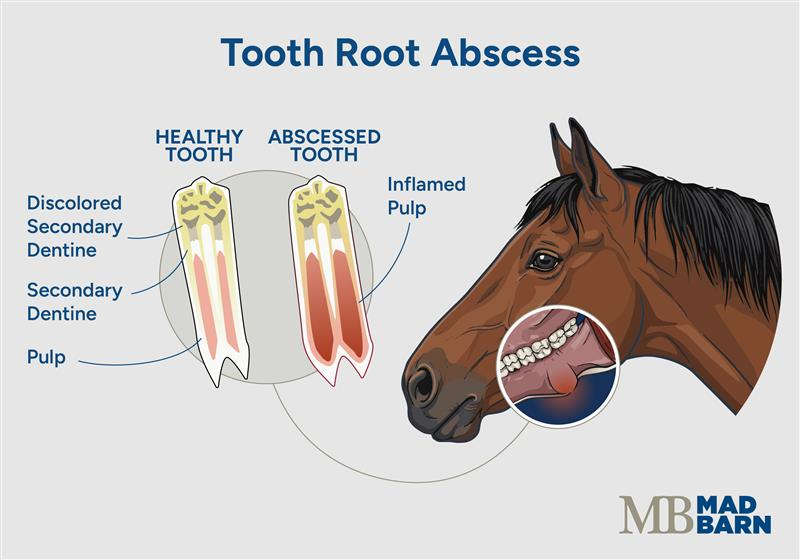
The location of the affected tooth can influence the signs a horse develops. Upper cheek tooth roots sit close to the sinus cavities, so infection may spread into the sinuses and cause one-sided nasal discharge. Abscesses affecting the lower cheek teeth are more likely to cause swelling along the jaw. Other signs can include pain, difficulty eating, and facial swelling. [12][14][15]
Jaw Swelling in Horses
Jaw swelling, while not a condition, is a sign of an underlying condition involving the teeth, jawbone, or soft tissues. Swelling may appear as a lump on one or both sides of the jaw and may feel soft or firm depending on the cause.
When jaw swelling is related to dental disease or an abscess, horses may show discomfort when the area is touched. They may flinch, pull away, shake the head, resist bridling, or become more irritable. If chewing is affected, they may eat slowly, drop feed, refuse feed, or lose weight over time. [16]
Sinusitis in Horses
Sinusitis occurs when the paranasal sinuses become inflamed or infected. It can be primary, often following an upper respiratory infection, or secondary and caused by another health issue. Secondary sinusitis is more common and is often associated with dental disease, especially in horses over four years of age. [17]
Chronic or recurring discharge from one nostril is the most common sign of equine sinusitis. The discharge may be thick, yellow, green, or foul-smelling when dental disease is involved. [17]
Facial distortion can also occur, particularly with secondary or long-standing sinusitis. This reflects how disease involving the teeth, jaw, and sinuses can affect the surrounding facial structures. [17][18]

Temporomandibular Joint Problems in Horses
Problems affecting the TMJ can interfere with jaw function. Pain or dysfunction in the TMJ can make chewing uncomfortable or mechanically limited. TMJ problems may develop after trauma, partial dislocation, fractures, inflammation, infection, arthritis, or muscle-related issues. When the joint is painful or restricted, the horse may have difficulty grinding feed efficiently. [3][4][19]
The risk of oral, dental and jaw issues in horses highlights the importance of routine oral care and prompt attention to changes in chewing, feed intake, facial symmetry, nasal discharge, or jaw movement. [1][2][3][4]
Supporting Healthy Jaw Function in Horses
The horse’s jaw is central to everyday comfort, efficient chewing, and long-term oral health. Because the teeth, jaw bones, TMJ, muscles, nerves, and sinuses are closely connected, even small changes in jaw function can affect how well a horse eats, processes forage, and maintains condition.
Routine dental care is one of the most important ways to support healthy jaw function. Regular examinations help identify abnormal tooth wear, dental disease, swelling, pain, or chewing changes before they progress into more serious problems.
Owners play an important role in maintaining dental health by watching for early signs such as dropping feed, slow eating, facial asymmetry, nasal discharge, resistance to bridling, or unexplained weight loss.
Healthy jaw function is not just a dental issue; it is part of the horse’s overall comfort and welfare. Prompt veterinary evaluation, consistent oral care, and attention to changes in eating behavior help protect health, nutrition, and quality of life so your horse can live happy and healthy for years to come.
Frequently Asked Questions
Here are some frequently asked questions about the horse's jaw:
The horse's jaw helps the horse eat, chew, and prepare feed for digestion. It works with the teeth, jaw muscles, tongue, nerves, blood vessels, and temporomandibular joints to move food through the mouth and grind fibrous forage into smaller particles. Efficient jaw function supports normal chewing, feed utilization, dental wear, comfort, and overall wellbeing. [1][2]
The horse's jaw is made up of the upper jaw and the lower jaw. The lower jaw is the largest movable bone in the skull and provides much of the power needed for chewing. The upper jaw supports the upper cheek teeth and forms part of the nasal passages and sinuses, which is why dental disease in this area can sometimes affect nearby structures. [1][3][4]
The upper jaw is wider than the lower jaw in horses to support the side-to-side grinding motion used during chewing. This jaw shape helps the cheek teeth break down fibrous forage efficiently while distributing chewing forces across the mouth. Proper alignment between the upper and lower teeth is important for normal chewing, even tooth wear, and long-term oral health. [2][10]
The temporomandibular joint in horses, or TMJ, is the joint that connects the lower jaw to the skull. It allows the jaw to open, close, and move from side to side during chewing. The equine TMJ contains a fibrous disc between the bones of the joint, helping create smooth movement as the horse grinds forage. [1][7]
Horses can have temporomandibular joint problems, although these disorders are relatively uncommon. Inflammation, injury, infection, trauma, partial dislocation, fractures, arthritis, and muscle-related issues can affect the joint and interfere with normal chewing. When the TMJ is painful or restricted, the horse may have difficulty grinding feed efficiently, and altered chewing patterns can influence tooth wear over time. [2][3][4][19]
Horse teeth work with the jaw by cutting, grinding, and processing forage before swallowing. The incisors at the front of the mouth grasp and cut forage, while the cheek teeth grind it into smaller particles. Because the teeth are firmly anchored within the upper and lower jaws, tooth alignment, dental health, and jaw function are closely connected. [1][2]
Horse teeth keep erupting for many years to replace the tooth surface lost through chewing and wear. Horses spend many hours chewing fibrous feed, so their teeth are exposed to constant grinding forces throughout life. The cheek teeth and incisors also change with age, and the appearance of the front teeth can provide useful clues about a horse's age. [1][5][6]
The horse's jaw helps with digestion by grinding feed into smaller particles before it is swallowed. Smaller feed particles provide more surface area for digestive processes and nutrient absorption. Chewing also mixes food with saliva and helps form a bolus that can move safely toward swallowing. [1][4]
If a horse cannot chew properly, feed may not be broken down efficiently before swallowing. Long-term chewing problems can contribute to poor feed utilization, weight loss, or reduced body condition. Pain, injury, dental disease, or temporomandibular joint problems can all reduce chewing efficiency and affect comfort, so persistent changes in chewing should be assessed. [3][4]
Signs of jaw or dental problems in horses can include jaw swelling, difficulty chewing, dropping feed, facial asymmetry, nasal discharge, and resistance to bridling. Some horses also eat slowly, show discomfort when the jaw is touched, refuse feed, or lose weight over time. These signs can overlap between dental disease, injury, infection, sinus disease, and TMJ dysfunction, so persistent or worsening changes need veterinary evaluation. [4][16]
You should call a veterinarian about a horse's jaw if the horse has difficulty chewing, a clear change in chewing pattern, dropping feed, reduced appetite, unexplained weight loss, facial or jaw swelling, asymmetry, visible discomfort, nasal discharge, feed in the nostrils, or signs of oral injury or jaw trauma. Prompt care is especially important if the horse cannot eat normally, has significant swelling, or may have a fracture. Because jaw problems can involve the teeth, bones, sinuses, soft tissues, or TMJ, a veterinary exam is important for identifying the underlying cause. [3][4]
Common jaw-related problems in horses include dental disease, uneven tooth wear, tooth root abscesses, jaw swelling, sinusitis related to dental disease, jaw fractures, and temporomandibular joint disorders. Dental disease is one of the most important issues affecting the equine jaw because the teeth are anchored deeply within the jaw bones. Severe dental disease can sometimes affect surrounding bone, soft tissues, and nearby structures such as the sinuses. [2][3][4][5]
Dental disease can affect the horse's jaw because the teeth are anchored deeply within the upper and lower jaw bones. Disease of the teeth or supporting tissues may lead to discomfort, uneven wear, infection, facial swelling, or sinus problems. The close relationship between the upper cheek teeth and the sinuses means disease in one area can sometimes affect the other. [3][4][5]
A tooth root abscess can cause jaw swelling in horses when infection develops around the root or root tip of a tooth. These infections often affect the cheek teeth, which are responsible for grinding forage. Abscesses involving lower cheek teeth are more likely to cause swelling along the jaw, while upper cheek tooth infections may spread toward the sinuses and cause one-sided nasal discharge. [11][12][14][15]
Sinus problems can be related to the horse's jaw because the upper cheek teeth sit close to the sinus cavities. Secondary sinusitis is often associated with dental disease, especially in horses over four years of age. Chronic or recurring discharge from one nostril, especially if thick, yellow, green, or foul-smelling, can occur when dental disease is involved. [17]
Jaw fractures are important in horses because they can interfere with chewing, comfort, and normal feeding ability. Fractures of the lower jaw are among the more common skull injuries seen in horses. Any suspected jaw injury should be assessed by a veterinarian because the jaw contains teeth, bone, nerves, blood vessels, and soft tissues that all contribute to normal function. [1][3][4]
Regular dental care is important for a horse's jaw because tooth alignment, tooth wear, and jaw movement all affect chewing efficiency. Dental disease, uneven wear, or pain can change how the horse chews and may affect feed utilization, body condition, and comfort. Routine dental evaluation helps identify abnormal tooth wear, dental disease, swelling, pain, or chewing changes before they progress into more serious problems. [1][2][4]
Summary
The horse's jaw is a specialized structure that supports chewing, feed processing, digestion, dental health, and overall wellbeing.
- The upper and lower jaws work together with supporting structures to create efficient chewing movements
- Horses rely on a side-to-side grinding motion to break down fibrous forage, which supports normal digestion and nutrient absorption
- Proper alignment between the upper and lower teeth is essential for efficient chewing, normal tooth wear, and long-term oral health
- Jaw-related problems can affect comfort, feeding ability, and performance
- Routine dental care and prompt veterinary evaluation are important when horses show difficulty chewing, dropping feed, weight loss, jaw swelling, facial asymmetry, or signs of injury.=
References
- Singh. B. Dyce, Sack, and Wensing’s Textbook of Veterinary Anatomy. Fifth edition. Elsevier. 2018.
- Easley. J. Equine Dentistry. Elsevier. 2011.
- Auer. J. A. Equine Surgery. 5th edition. Elsevier. 2018.
- Reed. S. M. et al. Equine Internal Medicine. 3rd ed. Saunders Elsevier, St. Louis, Mo. 2010.
- Kopke. S. et al. The Dental Cavities of Equine Cheek Teeth: Three-Dimensional Reconstructions Based on High Resolution Micro-Computed Tomography. BMC Veterinary Research. 2012. View Summary
- Schrock. P. et al. Three-Dimensional Anatomy of Equine Incisors: Tooth Length, Enamel Cover and Age Related Changes. BMC Veterinary Research. 2013. View Summary
- Rodríguez. M. J. et al. Anatomy of the Equine Temporomandibular Joint: Study by Gross Dissection, Vascular Injection and Section. Equine Veterinary Journal. 2006. View Summary
- Adams. K. et al. Collagen Fiber Texture of the Articular Surfaces. The Veterinary Journal. 2016. View Summary
- Adams. K. et al. Histological Characteristics of the Articular Surfaces and Underlining Tissues. The Veterinary Journal. 2018. View Summary
- Cordes. V. et al. Periodontal Biomechanics: Finite Element Simulations of Closing Stroke and Power Stroke in Equine Cheek Teeth. BMC Veterinary Research. 2012. View Summary
- Pehkonen. J. et al. Behavioral Signs Associated With Equine Periapical Infection in Cheek Teeth. Journal of Equine Veterinary Science. 2019. View Summary
- Baker. G. et al. Teeth: Extraction in Horses (Equis). Vetlexicon.
- Lydiksen. C. V. et al. Equine Dental Sinusitis—A Statistical Analysis of the Effect of Antibiotics on Dental Sinusitis Following Dental Extraction. Equine Veterinary Education. 2024.
- Liuti. T. et al. Radiographic, Computed Tomographic, Gross Pathological and Histological Findings with Suspected Apical Infection in 32 Equine Maxillary Cheek Teeth (2012–2015). Equine Veterinary Journal. 2018. View Summary
- Dixon. P. M. et al. Equine Dental Disease Part 4: A Long-Term Study of 400 Cases: Apical Infections of Cheek Teeth. Equine Veterinary Journal. 2000. View Summary
- Dixon. P. M. and Dacre. I. A review of equine dental disorders. Veterinary Journal. 2005. View Summary
- Freeman. D. E. Sinus disease. Vet Clin Equine. 2003. View Summary
- Gergeleit. H. et al. A prospective study on the microbiological examination of secretions from the paranasal sinuses in horses in health and disease. Acta Vet Scand. 2018. View Summary
- Reardon. R. Managing dysmastication in horses: an update. In Practice. 2018.