English

The temporomandibular joint (TMJ) in horses is a paired joint that connects the lower jaw to the skull and helps coordinate the movements needed for chewing. Working together with the teeth, tongue, cheeks, and chewing muscles, the TMJ allows the jaw to open, close, and move side to side as horses grind fibrous feed.
This joint plays an important role in a horse’s comfort, feed processing, and normal oral function. Although TMJ disorders are less common than many other equine dental problems, issues involving the joint can significantly affect health and day-to-day management.
Because signs of TMJ problems can overlap with dental disease and other conditions affecting the head or mouth, veterinary assessment is important when changes in chewing, facial comfort, or jaw mobility are observed. A complete evaluation may include dental examination, observation of jaw movement, imaging, or other diagnostic tools.
Understanding the structure and function of the equine TMJ can help owners recognize potential signs of TMJ disorders and make informed decisions about diagnosis, treatment, and management.
Temporomandibular Joint in Horses
The temporomandibular joint (TMJ) is the joint that connects the lower jaw to the skull and forms an essential part of the horse’s chewing system. [1] A TMJ is located on each side of the head, just below and slightly in front of the base of the ear. The joint is formed where the lower jaw meets the skull. [2]
The TMJ is made up of the lower jaw, part of the skull, and a cushioning disc located between them. [1][3]
This disc helps the joint surfaces fit together smoothly during jaw movement. [4] It also divides the joint into upper and lower compartments, which are surrounded by a membrane containing lubricating joint fluid. [1][2][3]
The disc is held in place by supporting ligaments, while additional ligaments help keep the joint stable during chewing. [4]
 Illustration: Dr. Ana Mesa, PhD
The joint surfaces are covered by a tough protective layer that helps reduce wear during movement. [2] The entire joint is surrounded by a strong capsule of connective tissue and supported by nearby soft tissues, and the shape of the joint is closely linked to the arrangement of the cheek teeth and the way horses grind food. [1][2][4]
The TMJ plays a central role in a horse’s ability to chew, process feed, and maintain normal jaw function. Although relatively small compared with many structures of the head, the TMJ works continuously with the teeth, muscles, tongue, and surrounding tissues to coordinate the complex movements required for chewing.
Normal chewing depends on coordinated movement of both jaw joints, the teeth, and the chewing muscles. [1] The TMJ allows the lower jaw to open, close, and move side to side while food is being chewed. [1][4]
Because the temporomandibular joint works closely with the teeth and surrounding chewing structures, TMJ problems can affect jaw movement, feed processing, and overall oral function. In turn, dental issues may also influence how the joint moves and functions. [1]
What's your top priority with your horse's health?

What's your top priority with your horse's health?
How the TMJ Functions During Chewing
The temporomandibular joints work with the teeth, tongue, cheeks, and chewing muscles to break down food before it is swallowed. [4] They act as pivot points that help transfer the force generated by the chewing muscles to the teeth. [4] The horse’s chewing cycle involves repetitive, coordinated movement of the lower jaw. [1][4]
Jaw movement occurs around both temporomandibular joints and combines opening and closing with slight forward and side-to-side movement of the lower jaw. These movements help horses grind fibrous feed efficiently. [1][4] Different feed types can influence chewing patterns and the extent of jaw movement during mastication. [4]
Alterations in jaw movement may affect both dental wear patterns and chewing efficiency. [1]
TMJ Disorders in Horses
Disorders of the temporomandibular joint are relatively uncommon compared with many other dental problems in horses. [1] However, when TMJ problems do occur, they can affect chewing, jaw movement, comfort, and overall performance because of the joint’s role in healthy chewing function.
Potential equine TMJ conditions include: [1][4][5][6]
- Trauma or injuries
- Inflammation
- Age-related wear and tear
- Infections or infectious diseases
- Developmental abnormalities
- Fractures
- Dislocation of the joint
- Septic arthritis
- Degenerative changes
TMJ disorders can occur on their own or alongside conditions affecting the teeth, mouth, or surrounding structures of the head. [1][4]
Disease vs. Wear & Tear
Not every change in the TMJ indicates an active disease process. Like other joints, the TMJ can show age-related changes over time, and these findings need to be interpreted alongside the horse’s clinical signs, dental health, chewing function, and overall comfort.
The TMJ contains signaling molecules that help coordinate normal joint function and the body’s response to stress or injury. Levels of some of these molecules change with age, which suggests the joint undergoes gradual biological changes throughout life that may influence long-term joint health. [6][7]
Age-related wear within the TMJ involves both physical changes to the joint and ongoing biological processes within its tissues. [6] As a result, some changes identified within the TMJ may reflect normal aging rather than disease or disorder. [7]
The Relationship Between Dental Health & the TMJ
The temporomandibular joint and the teeth function as parts of a single system that enables the horse to chew. Abnormalities affecting the teeth can alter the way the horse chews and the way the jaw moves. Likewise, disorders affecting the temporomandibular joint may influence normal mastication. [1]
Assessment of both the teeth and the TMJ is important when investigating abnormalities of chewing function. Maintaining normal dental function helps support efficient chewing and normal jaw movement. [1]
Signs Associated with TMJ Problems
Pain associated with the temporomandibular joint may cause changes in normal chewing behavior and reduce jaw mobility. [1][5] Changes in appetite, chewing behavior, or feed processing may warrant further investigation of the mouth and associated structures. [8]
Signs a horse is affected by TMJ or dental disease may include: [1][4]
- Showing discomfort when the area is touched or when the jaw is moved
- Resistance to chewing or chewing differently than normal
- Changes in normal jaw movement
- Swelling, heat, or sensitivity around the joint
- Asymmetry of the chewing muscles
- Changes in head carriage
- Alterations in the way food is picked up
- Difficulty accepting a bit or other headgear
- Dropping feed (quidding)
These signs can affect daily management, but they are not specific to TMJ disease. Symptoms may resemble those associated with other dental, oral, or head-related conditions, which underscores the importance of veterinary evaluation when signs of feed intake issues persist. [1][8]
Table 1. Signs and possible causes of TMJ problems in horses
| Sign or concern | What it may indicate | What to do |
|---|---|---|
| Changes in chewing behavior |
|
|
| Pain, heat, swelling, or sensitivity near the joint |
|
|
| Abnormal jaw movement |
|
|
| Difficulty accepting a bit or headgear |
|
|
| Muscle asymmetry or changes in head carriage |
|
|
When to Call the Veterinarian
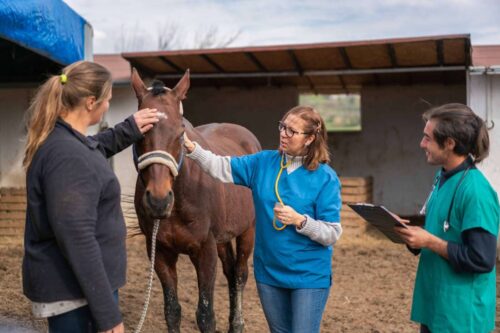
Because TMJ signs often overlap with other dental, oral, and head-related problems, veterinary evaluation is important when changes in chewing, jaw movement, or facial comfort persist or worsen. Early assessment can help identify whether the issue involves the TMJ, the teeth, surrounding soft tissues, or another part of the head.
Contact your veterinarian if your horse shows:
- Reduced appetite or reluctance to chew
- Repeatedly dropped feed, hay, or partially chewed feed
- Pain, heat, swelling, or sensitivity near the jaw joint
- Abnormal jaw movement, facial asymmetry, or changes in head carriage
- New difficulty accepting a bit, bridle, or other headgear
- Signs that appear after trauma to the head or jaw
A veterinarian may assess the teeth, jaw movement, TMJ area, and surrounding structures to determine whether further diagnostics are needed. Prompt care is especially important when swelling, heat, marked pain, trauma, or suspected infection is present.

Diagnosing TMJ Disorders
Horses with suspected TMJ issues require timely veterinary attention. A complete dental examination is an important part of investigating suspected TMJ disorders because dental problems may contribute to similar signs or occur alongside joint disease. [1][4][8] Observation of chewing and jaw movement can also provide useful information about how the joint is functioning. [1][8]
Other tools used for diagnosis include: [1][3][4][5][9][10]
- X-rays
- Ultrasonography
- Joint fluid sampling
- Diagnostic nerve or joint blocks
- Arthroscopy
Advanced imaging techniques, such as computed tomography, can provide detailed information about the bones and structures of the temporomandibular joint. [11] However, structural changes identified on imaging do not always correspond with clinical disease because similar findings may be present in horses without obvious TMJ-related symptoms. [11] For this reason, imaging results are typically interpreted alongside other diagnostic findings. [11]
Treatment & Management
Mild TMJ disorders can often be managed without surgery.
Depending on the underlying cause, treatment may include: [4][10]
- Correction of significant dental abnormalities
- Pain management
- Dietary modifications
- Reduction of dislocations
- Antimicrobial treatment
- Surgical drainage
- Arthroscopy
More severe cases of TMJ disease may occasionally require surgical treatment when conservative management is unsuccessful. [9] Surgical management has been used in cases involving substantial damage to joint structures, including the mandibular condyle and articular disc. [9] Long-term follow-up has shown that many horses can return to comfortable function following treatment of severe unilateral TMJ disease. [9]
Supporting Healthy TMJ Function in Horses
Supporting healthy TMJ function starts with good routine care. Because the temporomandibular joint works closely with the teeth, chewing muscles, jaw, and surrounding soft tissues, changes in any part of the mouth can affect how comfortably and efficiently a horse chews.
Regular dental examinations are one of the most important steps for maintaining normal jaw function. Sharp enamel points, uneven wear, missing teeth, wave mouth, hooks, or other dental abnormalities can alter chewing patterns and place uneven strain on the jaw. Addressing these issues early can help reduce compensatory movement and support more balanced chewing.
Owners should also monitor for subtle changes in eating behavior. Quidding, dropping feed, chewing on one side, resisting the bit, tilting the head, facial sensitivity, or unexplained changes in performance may indicate discomfort in the mouth, teeth, jaw, or TMJ region.
Feed management can also support comfort in horses with dental or jaw concerns. Horses that struggle to chew long-stem forage or hard feeds may benefit from soaked hay cubes, chopped forage, or other texture adjustments recommended by a veterinarian or nutritionist.
Good bit fit, appropriate training, and careful handling are also important. Excessive rein pressure, poorly fitted tack, dental pain, or resistance during riding can all contribute to tension through the jaw and poll. If a horse shows new resistance, head tossing, uneven contact, or difficulty accepting the bit, the mouth and jaw should be evaluated rather than assuming the issue is purely behavioral.
When TMJ disease is suspected, veterinary and dental assessment should guide the next steps. Early evaluation can help distinguish TMJ involvement from more common dental, oral, sinus, neurologic, or soft tissue problems and ensure treatment is matched to the underlying cause.
With consistent dental care, attention to chewing behavior, appropriate feeding adjustments, and prompt veterinary support when problems arise, owners can help maintain healthy jaw function and support long-term comfort in horses.
Frequently Asked Questions
Here are some frequently asked questions about the temporomandibular joint in horses:
The temporomandibular joint in a horse is the joint that connects the lower jaw to the skull. Horses have one temporomandibular joint on each side of the head, just below and slightly in front of the base of the ear. Each joint contains the lower jaw, part of the skull, a cushioning disc, supporting ligaments, joint fluid, and a surrounding capsule of connective tissue. Together, these structures help the jaw move smoothly during chewing.
The temporomandibular joint in horses helps the lower jaw open, close, and move from side to side during chewing. It works with the teeth, tongue, cheeks, and chewing muscles to break down feed before swallowing. The joint also helps transfer chewing force from the muscles to the teeth so fibrous feed can be ground efficiently. Normal TMJ function is important for comfort, feed processing, and overall oral function.
The temporomandibular joint is important for chewing because normal mastication depends on smooth, coordinated jaw movement. Horses do not simply open and close the jaw when they chew; the lower jaw also moves slightly forward and side to side to grind feed. These movements depend on both jaw joints, the teeth, and the chewing muscles working together. If this movement is restricted or painful, chewing efficiency and feed processing may be affected.
Signs of temporomandibular joint problems in horses can include discomfort when the joint area is touched or when the jaw is moved. Affected horses may chew differently, drop feed, show reduced jaw movement, or develop swelling, heat, or sensitivity near the joint. Some horses may also show asymmetry in the chewing muscles, changes in head carriage, altered feed pickup, or new difficulty accepting a bit or headgear. These signs are not specific to TMJ disease, so veterinary evaluation is important when they persist or worsen.
Temporomandibular joint disorders can affect a horse's ability to chew by interfering with normal jaw movement. Pain, inflammation, injury, infection, or structural damage in the joint may make chewing less comfortable and less efficient. A horse may chew unevenly, resist chewing, drop feed, or have difficulty processing hay and other fibrous feeds. Because similar signs can also occur with dental or oral disease, changes in chewing behavior should be assessed by a veterinarian.
Temporomandibular joint disease in horses can be caused by trauma, inflammation, infection, developmental abnormalities, fractures, dislocation, septic arthritis, or degenerative joint changes. Age-related wear can also affect the joint over time. In some horses, TMJ disorders occur alongside dental disease or other conditions affecting the mouth and surrounding structures of the head. Identifying the underlying cause is important because treatment depends on the specific problem.
Temporomandibular joint disorders are not common in horses compared with many other dental problems. However, they can significantly affect comfort, chewing function, and jaw mobility when they occur. Even subtle changes in appetite, chewing behavior, feed processing, or bit acceptance may warrant a closer evaluation. The TMJ should be considered as part of a broader assessment of the mouth, teeth, jaw, and surrounding head structures.
It can be difficult to tell whether a horse has a TMJ problem or a dental problem based on signs alone. Both can cause changes in chewing, dropped feed, facial discomfort, abnormal jaw movement, and difficulty accepting headgear. Dental abnormalities may also change how the jaw moves, while TMJ pain can affect normal mastication. A veterinary dental examination and assessment of jaw movement are needed to determine whether the issue involves the teeth, the TMJ, surrounding soft tissues, or another structure.
You should call a veterinarian about possible TMJ pain if your horse has persistent or worsening changes in chewing, appetite, jaw movement, or facial comfort. Prompt veterinary assessment is especially important if there is swelling, heat, marked pain, sensitivity near the jaw joint, trauma to the head or jaw, or suspected infection. Repeated dropping of feed, reluctance to chew, abnormal head carriage, or new difficulty accepting a bit also warrant evaluation. Early assessment can help identify whether the problem involves the TMJ, teeth, mouth, or another part of the head.
Quidding can be a sign of temporomandibular joint disease, but it is not specific to TMJ problems. Horses may drop partially chewed feed when chewing is painful, inefficient, or mechanically restricted. Dental disease is also a common reason for quidding, so the teeth and mouth should be evaluated along with the jaw joints. A veterinarian can help determine whether the horse is dropping feed because of TMJ discomfort, dental abnormalities, or another oral or head-related condition.
TMJ problems can make a horse resist the bit or bridle if jaw or facial discomfort is present. The TMJ sits close to the base of the ear and is involved in jaw movement, so pain in this area may make pressure from headgear harder for some horses to tolerate. However, bit resistance can also be related to dental disease, oral pain, training factors, tack fit, or other sources of discomfort. New or sudden changes in bit acceptance should be investigated rather than managed by equipment changes alone.
Temporomandibular joint disorders in horses are diagnosed using a combination of physical examination, dental examination, jaw movement assessment, and diagnostic imaging. A veterinarian may observe chewing, examine the teeth and mouth, and assess the joint area for pain, swelling, heat, or restricted motion. Depending on the case, additional tools may include radiography, ultrasonography, joint fluid sampling, diagnostic nerve or joint blocks, arthroscopy, or computed tomography. Diagnosis usually depends on interpreting these findings together rather than relying on one test alone.
Dental problems can affect the temporomandibular joint because the teeth and jaw joints function as part of the same chewing system. Abnormal tooth wear or altered chewing mechanics may change how the jaw moves during mastication. Over time, changes in jaw movement may influence chewing efficiency and how forces are distributed through the mouth and jaw. However, the severity of dental abnormalities does not always directly match the degree of measurable change in the TMJ.
Temporomandibular joint disorders can often be treated without surgery when the problem is mild or moderate. Treatment may involve correcting significant dental abnormalities, managing pain, modifying the diet, treating infection with antimicrobials, or addressing an underlying cause such as dislocation. The best approach depends on the diagnosis, severity of disease, and the horse's response to initial treatment. Veterinary guidance is important because TMJ signs can overlap with other dental, oral, and head-related conditions.
Surgery may be needed for temporomandibular joint disease in horses when there is severe joint damage or when conservative treatment is not successful. Surgical management has been used in selected cases involving serious damage to joint structures, including the lower jaw joint surface and cushioning disc. Other procedures may be considered when infection, drainage, arthroscopy, or structural repair is needed. Some horses can return to comfortable function after treatment for severe one-sided joint disease, but the prognosis depends on the cause and extent of damage.
Age can affect the temporomandibular joint in horses because the joint undergoes natural structural and biological changes over time. Some age-related changes may reflect normal wear rather than active disease. This is one reason veterinarians interpret imaging findings together with clinical signs, dental examination results, and the horse's overall chewing function. Age alone does not confirm TMJ disease, but it may influence how the joint responds to long-term use, stress, or injury.
Horse owners can support healthy TMJ function by monitoring chewing behavior, feed intake, dropped feed, jaw movement, and facial comfort. Routine dental care helps maintain normal chewing mechanics and may reduce problems related to abnormal tooth wear or altered mastication. Owners should avoid forcing jaw movement or bit acceptance when pain, swelling, heat, or sensitivity is present. Veterinary assessment is recommended when changes in chewing, appetite, head carriage, or tack acceptance persist or appear suddenly.
Summary
The temporomandibular joint (TMJ) in horses is a paired joint that connects the lower jaw to the skull. There is one TMJ on each side of the head, located just below and slightly in front of the base of the ear.
- The temporomandibular joint (TMJ) allows the jaw to open, close, and move side to side during chewing
- The TMJ works with the teeth, tongue, cheeks, and chewing muscles to support efficient feed processing and normal oral function
- Although TMJ disorders are less common than many dental problems, they can affect comfort, chewing behavior, jaw movement, appetite, and bit acceptance
- TMJ problems may involve trauma, inflammation, infection, fractures, dislocation, septic arthritis, degenerative changes, or age-related wear
- Signs of TMJ issues can include reduced appetite, abnormal chewing, dropped feed, jaw sensitivity, swelling, facial asymmetry, changes in head carriage, or difficulty accepting headgear
- Veterinary evaluation is important because TMJ signs can overlap with dental, oral, and head-related conditions
References
- Easley. J. Corrective Dental Procedures. Equine Dentistry. Elsevier. 2011.
- Budras. K. D. et al. Anatomy of the Horse. Schluetersche. 2012.
- Rodríguez. M. J. et al. Computed Tomographic Anatomy of the Temporomandibular Joint in the Young Horse. Equine Veterinary Journal. 2008. View Summary
- Baker. G. J. Equine Temporomandibular Joints (TMJ): Morphology, Function, and Clinical Disease. IVIS. 2002.
- Auer. J. A. Equine Surgery. 5th edition. Elsevier. 2018.
- Jasiński. T. et al. Equine Models of Temporomandibular Joint Osteoarthritis: A Review of Feasibility, Biomarkers, and Molecular Signaling. Biomedicines. 2024. View Summary
- Carmalt. J. L. et al. Temporomandibular Joint Cytokine Profiles in the Horse. Journal of Veterinary Dentistry. 2006. View Summary
- Reed. S. M. et al. Equine Internal Medicine. 3rd ed. Saunders Elsevier. 2010.
- White. S. A. et al. Long-Term Outcome of Horses Undergoing Unilateral Mandibular Condylectomy and Meniscectomy for Temporomandibular Joint Disease. Frontiers in Veterinary Science. 2022. View Summary
- Carmalt. J. L. and Pimentel. K. The Equine Temporomandibular Joint: Comparisons Between Standard and Needle Arthroscopic Examination of Cadaver Specimens and Standing Horses. Veterinary Surgery. 2022. View Summary
- Carmalt. J. L. et al. Computed Tomographic Appearance of the Temporomandibular Joint in 1018 Asymptomatic Horses: A Multi-Institution Study. Veterinary Radiology & Ultrasound. 2016. View Summary