English
How far can horses travel in a day? That depends on the type of travel, the horse’s fitness and conditioning, and how the horse is managed during the journey.
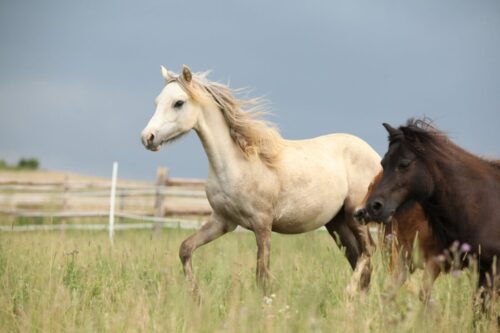
In the wild, horses walk many miles each day while grazing, seeking water, and moving across their home range. This natural movement is usually steady and gradual, not a single continuous effort.
Under saddle, typical pleasure horses can comfortably cover 10 to 20 miles (16 to 32 km) in a day at a relaxed pace. Experienced trail horses may be able to travel farther with appropriate conditioning, terrain, weather, and rest. Well-conditioned endurance horses may complete 50- or 100-mile events at a stretch under carefully managed competitive conditions. [1][2]
Keep reading to learn how far horses travel in the wild, how far they can be ridden in a day, what affects endurance and fatigue, and what to consider when planning a longer ride.
How Far Can A Horse Travel in a Day?
The distance a horse can travel in a day depends on whether the horse is moving freely, being ridden, or competing in an organized endurance event. Each involves different levels of physical effort and different management considerations.
Wild and feral horses may walk many miles each day as part of normal grazing and movement across their home range. This type of travel is usually spread throughout the day and is influenced by access to forage, water, shelter, and seasonal conditions. [3][4]
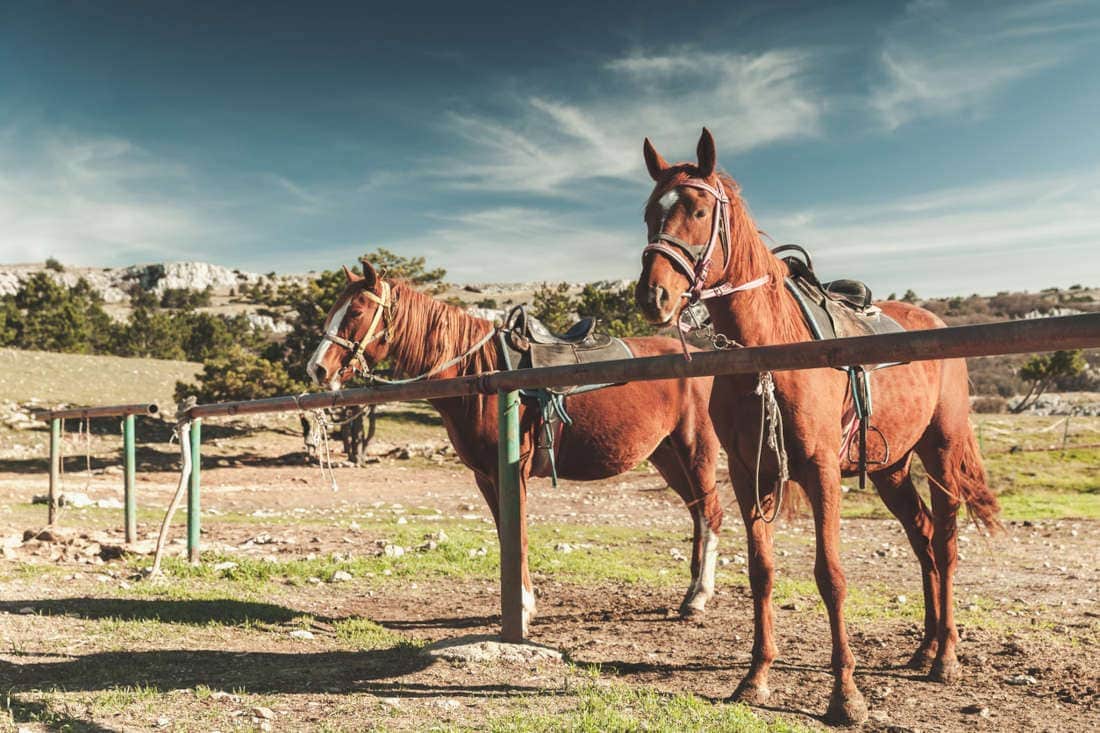
Ridden travel is more demanding because the horse is carrying a rider and tack while working over a planned route. For many healthy pleasure horses, a relaxed trail ride of 10 to 20 miles (16 to 32 km) may be realistic when the horse is fit, the terrain is suitable, and regular rest and water breaks are available.
Longer distances require progressive conditioning and careful attention to fatigue, hydration, dietary energy, hoof health, and recovery. [1][2]
Endurance horses can cover much greater distances, including 50- or 100-mile rides, but these horses have undergone specialized conditioning to participate in this sport. Horses competing at this level are conditioned over time and monitored during competition to help protect their health and welfare. [2][5]
If you are wondering how far a horse can travel by trailer in a day, the distances and limiting factors are different. Trailer transport can move horses hundreds of miles in a day, far beyond what they could safely travel under saddle.
However, the maximum distance that can be covered is not necessarily the distance that is best for the horse. Trailering still places physical demands on the horse, including the continuous effort required to maintain balance in a moving vehicle. Longer journeys also increase exposure to confinement, dehydration, heat, poor ventilation, and other transport-related stressors.
Table 1. How far a horse can travel in a day
| Horse or activity | Typical distance | Important context |
|---|---|---|
| Domestic pasture horse | 4 – 5 miles (7 – 8 km) per day |
|
| Free-ranging horse | 10 – 11 miles (16 – 18 km) per day |
|
| Recreational trail horse | 10 – 20 miles (16 – 32 km) per day |
|
| Experienced, conditioned trail horse | 20 – 30 miles (32 – 48 km) per day |
|
| Endurance competition horse | 50 or 100 miles (80 or 160 km) |
|
| Horse traveling by trailer | Varies by journey length, rest stops, and transport conditions |
|
How Far Do Feral Horses Travel?
Feral and wild horses often travel farther each day than domestic horses, not because they are stronger athletes, but because movement is a natural part of their lives. They may walk many miles in search of forage, water, shelter, and suitable grazing areas, with the distance varying by habitat, season, weather, and resource availability.
Research using GPS tracking shows that daily movement patterns differ considerably among wild horse populations. Horses living in arid environments with widely dispersed water sources often travel much greater distances than those living where food and water are readily available. [4]
Although domestic horses retain the same evolutionary adaptations for endurance, modern management typically provides food, water, and shelter in one location. As a result, most domestic horses have little need to travel the distances routinely covered by their wild counterparts unless they are exercised or ridden. [4]
What's your top priority with your horse's health?

What's your top priority with your horse's health?
How Far Can a Horse Travel Under Saddle in a Day?
How far a healthy horse can travel in a day depends on its fitness, conditioning, pace, and the conditions of the ride. Carrying a rider, tack, or other weight increases the effort required, especially over hills, deep footing, or longer distances.
The same horse may cover 20 miles (32 km) comfortably on one ride but find that distance much harder in heat, over difficult terrain, or while carrying more weight. [1][2]
Free-ranging horses commonly travel approximately 10 to 11 miles (16 to 18 km) per day, while domestic horses kept in pasture cover around 4 to 5 miles (7 to 8 km) per day. These figures represent voluntary daily movement rather than continuous, purposeful walking. [3]
Typical riding distances per day fall into categories based on the horse’s conditioning and the demands of the ride: [2]
- 10 to 20 miles (16 to 32 km): Typical for many recreational trail rides at a relaxed pace with regular breaks
- 20 to 30 miles (32 to 48 km): Possible for experienced, properly conditioned trail horses over suitable terrain
- 50 or 100 miles (80 or 160 km): Distances completed by horses competing in endurance events
Endurance distances are achieved only after months or years of specialized conditioning and careful veterinary supervision. [2]
Distance alone does not determine the physical demands of a ride. Covering 20 miles on flat, well-maintained trails in comfortable weather at a steady walk places very different demands on a horse than traveling the same distance through deep sand, steep mountains, mud, or extreme heat. [2]
Rather than focusing on the greatest distance a horse can travel, experienced riders plan rides that match the horse’s current fitness and allow regular opportunities to rest, graze, and drink. Conditioning develops gradually through repeated exercise, allowing the cardiovascular system, muscles, tendons, ligaments, and hooves to adapt to increasing workloads. [1][7]
Factors for How Far a Horse Can Travel Under Saddle
A horse’s daily travel distance under saddle depends on many factors, including conditioning, environmental factors, rider weight, overall health, nutrition, hydration, and cumulative workload.
These factors often interact. A fit horse may cover many miles comfortably on level ground in mild weather, but fatigue can develop much sooner in heat, deep footing, steep terrain, or rainy weather.
Riders should plan their intended distance based on the horse’s current condition and the demands of the day.
Table 2. Factors that affect how far a horse can travel under saddle
| Factor | Effect on travel distance | Practical adjustment |
|---|---|---|
| Fitness and conditioning | Conditioned horses can sustain longer periods of work and recover more efficiently. | Build distance and intensity gradually over weeks or months. |
| Gait and speed | Faster gaits use more energy, generate more heat, and increase strain on the limbs. | Use a steady walk with controlled periods of trotting when appropriate. |
| Terrain and footing | Hills, deep sand, mud, loose gravel, and rocky ground increase effort and fatigue. | Reduce speed or distance and allow the horse to navigate difficult footing carefully. |
| Weather | Heat, humidity, severe cold, wind, and precipitation can reduce endurance and increase health risks. | Add rest and water breaks, shorten the route, or postpone the ride in unsafe conditions. |
| Rider, tack, and load | Excess weight, poor rider balance, and poorly fitted tack increase effort and discomfort. | Minimize unnecessary gear, balance the load, and confirm saddle fit before long rides. |
| Hoof health | Soreness, excessive wear, cracks, bruising, or loose shoes can quickly limit travel. | Inspect the hooves before and after riding and use suitable hoof protection when needed. |
| Nutrition and hydration | Inadequate energy, water, or electrolyte replacement can contribute to fatigue and delayed recovery. | Provide forage, clean water, salt, and appropriate electrolyte support for demanding rides. |
| Recovery time | Insufficient rest after a demanding ride can affect comfort, soundness, and future performance. | Monitor appetite, hydration, soundness, and attitude for 24 to 48 hours after long rides. |
Fitness & Conditioning
A horse’s fitness is one of the most important factors determining how far they can comfortably travel in a day. Two horses of the same age and breed may have very different endurance depending on their conditioning.
Conditioning improves the body’s ability to perform prolonged exercise by strengthening the cardiovascular and musculoskeletal systems. As fitness increases, the heart pumps blood more efficiently, muscles receive more oxygen, and the body can produce energy aerobically for longer before fatigue develops. [1]
Regular exercise also strengthens: [1]
- Tendons
- Ligaments
- Bones
- Hooves
This can help horses withstand the repeated loading associated with long-distance travel. [1]
Training also produces measurable changes within skeletal muscle. Research shows that endurance conditioning increases the size of oxidative muscle fibers and promotes adaptations that improve the muscles’ ability to use oxygen during prolonged exercise. [7]
These changes help delay fatigue and improve a horse’s capacity for sustained work. [7]
Gait & Speed
The gait a horse uses has a major influence on how far it can comfortably travel in a day. Although faster gaits cover more ground in less time, they also require more energy and place greater demands on the cardiovascular and musculoskeletal systems.
For long-distance riding, maintaining a steady, sustainable pace is generally more important than maximizing speed. [1][8]
Walking is the most energy-efficient gait for prolonged travel and forms the foundation of most trail rides and endurance events. Horses can maintain a walk for many hours with relatively little fatigue, particularly when allowed regular opportunities to rest, graze, and drink.
A typical walking speed is approximately 3 to 4 mph (5 to 6.5 km/h), although terrain and footing can substantially influence this pace. [1][8]
The trot allows horses to cover greater distances in less time while remaining predominantly aerobic in well-conditioned individuals. Many experienced trail and endurance riders incorporate periods of trotting because it provides a good balance between speed and energy efficiency.
However, continuous trotting over long distances without adequate conditioning or rest can increase muscular fatigue and place greater strain on tendons and joints. [1][2]
Cantering and galloping are much more physically demanding and rely increasingly on anaerobic metabolism as speed increases. These gaits generate greater forces on the limbs, produce heat more rapidly, and accelerate fatigue.
While short periods of faster work are appropriate in many riding disciplines, they are generally used sparingly during long-distance rides to conserve energy and reduce the risk of exhaustion or injury. [1]
Terrain & Footing
The terrain a horse is travelling over determines how far it can comfortably ride in a day.
A horse may cover many miles on level, well-maintained trails but become fatigued much sooner on steep hills, deep sand, mud, rocky ground, or other challenging footing. These conditions increase the energy required for movement and place greater demands on muscles, tendons, joints, and hooves. [1]
Traveling uphill requires substantially more muscular effort as the horse works against gravity, using the hindquarters to propel the body forward. Downhill sections present different challenges by increasing the forces on the forelimbs and requiring more balance and coordination.
Frequent changes in elevation can also make a relatively short ride more physically demanding than a much longer route across flat ground. [1]
Uneven or rocky terrain presents additional challenges by increasing the risk of slipping, bruising the hooves, or causing strains if a horse loses its footing. Riders should adjust both speed and route selection over difficult ground, allowing the horse time to place its feet carefully rather than maintaining the same pace used on smoother trails.
Because terrain alters the workload of a ride, experienced riders plan based on time and effort rather than mileage alone. Choosing routes with appropriate rest stops and water access, and setting realistic expectations, help reduce fatigue and lower the risk of injury.
Weather & Environmental Conditions
Weather also affects how far a horse can safely travel in a day. Temperature, humidity, wind, precipitation, and sun exposure all influence how hard the body must work to maintain a normal internal temperature during exercise. Heat stress and severe cold can reduce stamina, even in well-conditioned horses.
Hot, humid weather presents one of the greatest challenges during prolonged exercise. Working muscles generate large amounts of heat that must be dissipated to prevent overheating. Horses rely primarily on sweating to cool themselves, losing both water and electrolytes in the process. [1][2][9]
When temperatures or humidity are high, evaporative cooling becomes less effective, increasing the risk of heat stress, dehydration, and fatigue. Providing frequent opportunities to drink, rest in the shade, and cool down helps reduce these risks. [1][2][9]
Before planning a long ride in warm weather, use Mad Barn’s Heat Index Calculator to assess the combined effects of temperature and humidity. If conditions indicate elevated heat stress risk, shorten the route, ride at a cooler time of day, increase rest and water breaks, or postpone the ride.
Cold weather is generally less limiting for healthy horses performing moderate exercise because muscular activity generates substantial body heat. However, prolonged exposure to freezing temperatures, strong winds, heavy rain, or wet snow increases heat loss and raises the horse’s energy requirements. Cold conditions may also create frozen or slippery footing that requires horses to travel more cautiously.
Environmental conditions can also alter footing and terrain. Heavy rain may make trails muddy and slippery, while dry conditions can create deep, loose footing or increase dust levels. Strong winds may make horses more alert or tense, causing them to expend additional energy during the ride.
In mountainous regions, higher elevations can make exercise more demanding by reducing oxygen availability. [10]
Because weather can change throughout the day, riders should remain flexible about distance and intended route. Reducing the pace, taking more frequent breaks, shortening the route, or postponing a ride may be safest when conditions become unfavorable.
Monitoring the horse for early signs of fatigue, dehydration, or heat stress is especially important during long rides in warm weather. [2]
Rider, Tack & Load
The amount of weight a horse carries influences how much energy it expends during exercise. This includes the rider, saddle, tack, clothing, and any equipment carried during the ride. As the total load increases, horses require more effort to move, which can reduce endurance and increase fatigue over long distances. [1]
The rider’s balance is just as important as the total weight. A balanced rider who moves with the horse allows it to travel more efficiently, while an unbalanced rider may interfere with the horse’s movement and place uneven forces on the back and limbs. Over many miles, these small inefficiencies can increase muscular fatigue and make the ride more physically demanding. [1]
Saddle fit also plays an important role during long rides. A properly fitted saddle distributes pressure evenly across the horse’s back and allows unrestricted shoulder movement. Poorly fitting tack can create pressure points, rubbing, or pain that alters the horse’s gait and reduces its willingness to move comfortably. These problems become more noticeable as the duration of a ride increases. [11][12]
Riders preparing for long-distance rides should also consider what equipment is necessary. Carrying water, emergency supplies, or camping gear may be essential, but unnecessary weight should be avoided whenever possible. Distributing equipment evenly helps maintain the horse’s balance and reduces localized pressure beneath the saddle.
Hoof Health & Shoeing
Healthy hooves are essential for long-distance travel. Regardless of fitness or athletic ability, discomfort or pain in the feet can quickly limit endurance. The hooves absorb concussion, provide traction, and support the horse’s weight with every stride, making their condition a critical factor during prolonged exercise. [1][13][14]
Long rides expose the hooves to repeated loading over many miles. Poor hoof balance, excessive hoof wear, cracks, bruising, or loose shoes can alter a horse’s gait, reduce efficiency, and increase fatigue. Even relatively minor hoof problems may become more apparent as the distance traveled increases. [14][15][16]
The type of terrain also influences hoof wear and the need for protection. Horses traveling regularly over rocky, abrasive, or hard surfaces may benefit from shoes or protective hoof boots, while horses ridden primarily on softer footing may remain comfortable if their hooves are healthy and well maintained. [14][16][17]
Routine farrier care helps prepare horses for longer rides. Regular trimming or farrier visits maintain proper hoof balance and can reduce abnormal stresses on the limbs.
Before an extended ride, riders should ensure: [13][18][19]
- Shoes are secure
- Hooves are free from cracks or foreign objects
- The horse is moving comfortably
Checking the feet again after the ride allows early identification of bruises, loose shoes, or other problems that could affect recovery. [19]
Because hoof health influences comfort and performance, riders should be prepared to adjust or end a ride if a horse develops signs of foot soreness or lameness. Continuing to ride on painful or damaged feet increases the risk of more serious injury and may prolong recovery. [5][15][19]

How Far Can a Horse Travel by Trailer?
Trailer transport allows horses to cover much greater distances in a day than they could safely travel under saddle. However, hauling is not the same as resting.
Horses must balance continuously in a moving vehicle while coping with confinement, unfamiliar surroundings, temperature changes, and disruptions to normal eating and drinking.
Long journeys also increase the risk of transport-related problems such as fatigue, dehydration, respiratory irritation, and gastrointestinal disturbances if horses are not managed appropriately. [6]
Good transport practices focus on minimizing these risks. Horses should: [6]
- Travel in well-maintained vehicles with adequate ventilation
- Receive regular opportunities to rest during longer journeys
- Have access to water and forage
Many countries regulate horse transportation through animal welfare legislation. These rules may specify maximum journey times, rest periods, vehicle standards, and requirements for horses to be fit for transport. These requirements can help guide safer planning for long-distance hauling.
Factors Influencing How Far a Horse Can Travel by Trailer
How far a horse can be hauled in a day depends on more than distance. Trailer design, ventilation, weather, journey length, rest stops, driver skill, hydration, and the horse’s health all affect how well the horse tolerates transport. [20]
Unlike ridden travel, hauling does not require the horse to move forward for miles, but it still requires continuous balance, muscle effort, and stress management.
Table 3. Factors that affect how far a horse can travel by trailer
| Factor | Effect on transport tolerance | Practical adjustment |
|---|---|---|
| Journey length | Longer trips increase the risk of fatigue, dehydration, respiratory disease, gastrointestinal problems, and transport stress. | Plan rest stops, monitor the horse regularly, and consider veterinary input before trips lasting longer than a day. |
| Rest stops | Stops allow the horse to rest, drink, eat, urinate, and recover from the effort of balancing in a moving trailer. | Plan breaks during long journeys and leave the horse in the trailer during stops unless unloading is necessary and safe. |
| Ventilation and air quality | Poor air quality, dust, exhaust, and restricted head position can increase respiratory irritation and the risk of shipping fever. | Use a well-ventilated trailer, reduce dust, and avoid tying the horse in a way that prevents normal airway clearance. |
| Weather and trailer temperature | Heat, humidity, severe cold, wind, rain, and poor road conditions can increase stress and health risks during transport. | Travel during cooler parts of the day when possible and postpone trips during unsafe weather or road conditions. |
| Hydration and forage access | Low water intake and limited forage can contribute to dehydration, colic risk, heat stress, and delayed recovery. | Ensure the horse is well hydrated before travel and provide water and forage when appropriate during longer trips. |
| Driver skill | Rapid braking, sharp turns, and sudden acceleration make it harder for the horse to balance and can increase stress or injury risk. | Drive smoothly, leave extra stopping distance, and practice hauling without a horse before transporting horses. |
| Horse experience and behavior | Horses that are unfamiliar with trailering or have previous transport trauma may resist loading or panic during transit. | Train the horse to load, stand quietly, and unload before planning a long trip. |
| Fitness for transport | Illness, lameness, dehydration, fatigue, or recovery from injury can make transport more stressful and less safe. | Confirm the horse is healthy enough to travel and seek veterinary advice before long trips or when health concerns are present. |
Journey Length & Rest Stops
The longer a horse remains in a trailer, the greater the risk of transport-related stress and health complications. Standing in a moving vehicle requires continuous small adjustments to maintain balance, which can contribute to muscle fatigue even though the horse is not walking forward.
Long journeys are also associated with increased risk of dehydration, gastrointestinal problems, respiratory disease, and delayed recovery after arrival. [20][21][22]
For longer trips, rest stops should be planned before the horse becomes overly tired or stressed. Most guidelines recommend stopping every four hours during travel to give the horse a chance to rest, eat, drink, and urinate. [20][23][24]
Ventilation & Air Quality
Ventilation is a major consideration during long-distance transport. Poor air quality inside the trailer can come from dust in hay or bedding, vehicle exhaust, inadequate airflow, heat, and humidity. These factors can irritate the respiratory tract and increase the risk of transport-related respiratory problems. [20][25]
Head position also matters. Horses normally lower their heads to help clear mucus and debris from the airways. Tying the head too high or too tightly during transport can interfere with this clearance mechanism and may increase the risk of shipping fever, especially on longer trips. [20][26][27][28]
In addition, providing soaked hay or low-hanging hay nets may help reduce dust and encourage a more natural head position, provided they are used safely and do not create an entanglement risk. [20]
Weather & Trailer Temperature
Weather affects how far a horse can be transported safely in one day. Hot, humid conditions can increase the risk of dehydration and heat stress, particularly because temperatures inside a trailer may be higher than outside temperatures. Stress and muscular effort during transport can also raise body temperature, even when the horse is standing still. [20][25][24]
Cold weather, rain, snow, high winds, and poor visibility can also make transport riskier by affecting road conditions and driver safety. Bad weather may increase the chance of sudden braking, slipping, delays, or accidents. If conditions are unsafe, shortening the trip, delaying departure, or choosing a safer time of day may be the best option.
For warm-weather hauling, traveling during cooler parts of the day, ensuring good ventilation, and offering water during stops can help reduce heat-related risks. Horses should be monitored for signs of overheating, dehydration, rapid breathing, excessive sweating, weakness, or lethargy during and after transport. [20][24]
Hydration
Hydration is critical during trailer transport. Horses may drink less while traveling because of stress, unfamiliar water, limited access, or reluctance to drink during stops. Dehydration can increase the risk of heat stress, colic, fatigue, and delayed recovery after arrival. [20][21][24]
Horses should be well-hydrated before departure and offered water during longer trips whenever practical. Some horses are hesitant to drink unfamiliar water, so owners may need to plan ahead by bringing water from home or gradually introducing a flavoring or electrolyte strategy before travel. [24][29]
Forage & Digestive Support
Forage access can help support gut health and reduce travel-related stress during long-distance hauling. Hay may be offered during transport when appropriate, but dust exposure and hay placement should be considered. Soaked hay may help increase water intake and reduce dust, while low, safe hay placement may support a more natural head position. [20]
Long hauls, altered feeding schedules, reduced water intake, and stress can increase the risk of digestive upset after transport. Keeping the horse on a familiar forage-based diet, avoiding sudden feed changes, and monitoring appetite and manure output after arrival can help support digestive function and recovery.
Driver Skill & Road Conditions
The driver has a major influence on how stressful a trip is for the horse. Rapid acceleration, hard braking, sharp turns, and sudden lane changes force the horse to work harder to maintain balance. Over many hours, this can increase fatigue, anxiety, and injury risk. [23][30]
Experienced drivers who understand horse transport are more likely to drive smoothly, leave extra following distance, take turns slowly, and recognize when a horse may be stressed. Anyone learning to haul horses should practice with an empty trailer before transporting a horse. [23][30]
Road conditions also matter. Heavy traffic, rough roads, steep grades, construction zones, and bad weather can all increase the physical demands of transport. When planning a long haul, the safest route is not always the shortest route. A slightly longer route with smoother roads, safer stops, and less stressful driving conditions may be easier on the horse.
Horse Experience, Behavior & Fitness for Transport
A horse’s previous experience with trailering can affect how far it can be hauled comfortably. Horses that are unfamiliar with trailers, isolated from companions, or have had previous transport trauma may be more likely to resist loading, scramble, paw, kick, sweat, or panic during travel. These behaviors can increase the risk of injury and make long-distance hauling unsafe. [20][31][32]
Training should begin well before a long trip. Horses should learn to load, stand quietly, travel calmly, and unload before they are asked to complete a long journey. Short, positive practice sessions can help reduce stress and allow owners to identify problems before travel day. [33]
Fitness for transport is separate from riding fitness. A horse may be athletic enough for work under saddle but still not be fit to haul if it is dehydrated, ill, injured, severely lame, exhausted, or recovering from a medical condition. For trips lasting longer than a day, or when the horse has a health concern, a veterinary assessment before departure can help determine whether transport is appropriate. [20]
Nutrition During Travel
Proper nutrition and hydration are fundamental to a horse’s ability to travel safely, whether the horse is being ridden, competing in endurance, or hauled by trailer. The feeding plan should account for the type of travel, distance, workload, weather, and time available for recovery.
For most horses, forage should make up the majority of the diet. Hay and pasture provide the fiber needed to support hindgut health while supplying a steady source of energy for prolonged, moderate-intensity work.
Horses travelling longer distances or working at higher intensities may also need more energy than forage alone can provide. Highly digestible fiber sources, added fat, and moderate amounts of easily digested grain can help increase calorie intake while meeting the horse’s energy requirements for sustained work.
Clean water and appropriate electrolyte replacement are also important because exercise, heat, stress, and sweating can increase fluid and electrolyte losses. [1][2]
Nutrition should support both the travel itself and recovery afterward. Before a long ride or haul, the horse should be healthy, well-hydrated, and accustomed to its regular diet. Sudden feed changes, long periods without forage, inadequate water intake, and heavy sweating can all increase the risk of fatigue, digestive upset, dehydration, and delayed recovery. [1][2][20][21]
Feeding for Moderate Distance Under Saddle
For moderate trail rides and pleasure riding, most horses do best with a consistent, forage-based diet that matches their workload. A horse covering 10 to 20 miles (16 to 32 km) at a relaxed pace usually does not need a major change in feeding if it is already receiving enough forage, water, salt, and a balanced vitamin and mineral program.
Avoid restricting forage before or after a longer ride. Long-distance riding depends primarily on aerobic metabolism, and consistent fiber intake helps support digestive function, hydration, and recovery. Horses should have access to clean water before departure, during breaks when practical, and after the ride. [1][2]
During warm weather, hilly terrain, or rides that cause heavy sweating, electrolyte replacement may be appropriate. Electrolytes should be introduced before the trip and provided with adequate water, because they cannot compensate for insufficient hydration. [2]
For horses that sweat during longer rides, Performance XL Electrolytes provides a balanced blend of sodium, potassium, calcium, and magnesium to help maintain hydration and electrolyte balance. Introduce electrolytes before the ride, follow the recommended feeding directions, and always provide free access to fresh, clean water.

Feeding for Endurance
Endurance horses have higher nutritional demands because they may travel 50 or 100 miles (80 or 160 km) in a single event. These horses require careful conditioning, consistent energy intake, hydration support, and recovery management before, during, and after competition. [2]
Unlike short, high-intensity exercise, endurance work relies heavily on aerobic metabolism. This makes steady energy availability important, especially during long or multi-day rides. Forage remains important, but some endurance horses may also require additional calories to meet energy requirements. [1][2]
While it is common to top up calories with grain, adding excess starch to the diet may increase the risk of digestive issues and “hot” behavior in some horses. An alternative to feeding grain is supplementing fat in the diet, which provides a concentrated source of calories without increasing sugar or starch intake. Fat should be introduced gradually so the horse’s digestive system has time to adapt.
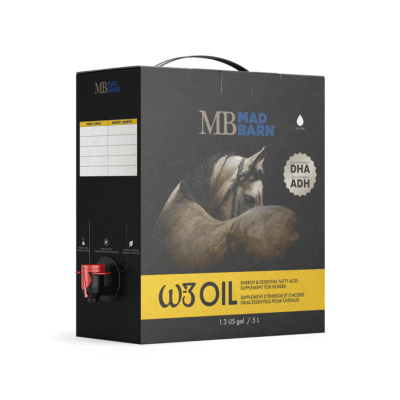
For endurance horses that need more energy to maintain body condition and support their workload, w-3 Oil supplies concentrated calories from fat without adding sugar or starch. This palatable, plant-based oil also provides DHA and natural vitamin E to support performance and post-exercise recovery.
Hydration and electrolyte replacement are especially important in endurance horses because prolonged exercise can result in substantial sweat losses. Horses should be encouraged to drink during rest periods and monitored for signs of dehydration, fatigue, reduced appetite, poor recovery, or changes in attitude. [1][2]
Feeding for Hauling
Feeding for trailer transport is different from feeding for ridden exercise. A horse in a trailer is not using energy to move forward over miles, but hauling still requires continuous balance, muscle activity, stress regulation, and thermoregulation. Long journeys can increase the risk of dehydration, colic, gastric ulcers, shipping fever, heat stress, and delayed recovery if horses are not managed appropriately. [20][21][22]
During longer trips, horses should be offered water at appropriate intervals and monitored for willingness to drink. Some horses drink less during travel because of stress or unfamiliar water, so owners may need to plan ahead by bringing water from home or introducing any flavoring or electrolyte products before the trip. [24][29]
Forage can help support gut health and reduce stress during transport, but hay management should also account for respiratory health. Dusty hay can reduce trailer air quality, while a tightly tied head position can interfere with normal airway clearance. [20] Soaked hay or a safe, low hay placement may help reduce dust exposure and encourage a more natural head position, provided the setup does not create an entanglement risk.
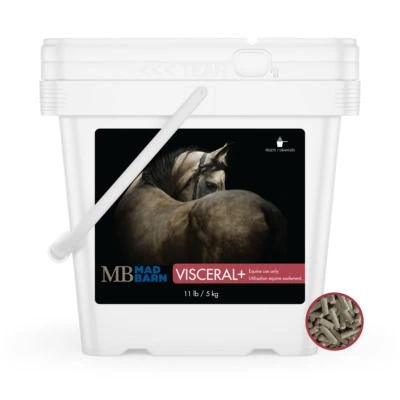
Travel, altered feeding schedules, and changes in routine can challenge both gastric and hindgut function. Visceral+ is a comprehensive digestive formula that supports the stomach lining and provides probiotics and prebiotics to help maintain a healthy hindgut microbiome. It can be incorporated into a consistent feeding program for horses exposed to hauling, competition, and other stressors.
Supporting Horse Recovery After Exercise or Transport
Recovery begins before the horse has fully cooled down or unloaded. Whether the horse has completed a long ride, endurance event, or trailer haul, the body needs time to restore fluid balance, normalize body temperature, recover from muscular effort, and return to normal eating, drinking, and resting patterns. [1][2][20]
After ridden exercise, walking for several minutes before untacking provides a gradual cool-down, allowing heart rate, breathing, and body temperature to return toward resting levels. Abruptly stopping strenuous exercise may delay this process. [1][9]
After transport, recovery should focus on rehydration, appetite, respiratory health, gastrointestinal comfort, and signs of fatigue or injury. Long trailer rides can cause muscle fatigue because the horse must balance continuously in a moving vehicle. Horses should also be monitored for signs of shipping fever, dehydration, colic, heat stress, and transport-related injuries after arrival. [20][21][22][26]
Fresh, clean water should be available as soon as possible. Horses that have sweated heavily during exercise or transport may also require replacement of lost electrolytes as part of an appropriate feeding program. Providing access to forage supports digestive health and helps the horse return to normal feeding behavior. [1][2][24]
After particularly demanding rides or long hauls, horses benefit from adequate rest before returning to strenuous work. The amount of recovery time required depends on the distance traveled, exercise intensity, transport duration, environmental conditions, stress level, and the horse’s fitness and health. Monitoring appetite, hydration, soundness, manure output, attitude, and willingness to move over the following 24 to 48 hours helps confirm that recovery is progressing normally. [1][2][5][9][15][20]
When to Stop Riding or Seek Help After Travel
Long rides and long hauls should challenge planning and management, not the horse’s health. End the ride, stop to assess the horse, or contact a veterinarian if any of the following signs develop during or after exercise or transport:
- Lameness or unwillingness to move forward
- Heat, swelling, or pain in a limb or hoof
- Excessive fatigue or weakness
- Heavy or prolonged breathing that does not improve with rest
- Muscle stiffness, trembling, or signs of tying-up
- Signs of dehydration, including prolonged skin tenting or tacky gums
- Signs of colic, such as pawing, rolling, looking at the flank, reduced appetite, or reduced manure production
- Fever, coughing, nasal discharge, or signs of respiratory infection after transport
- Any sudden change in attitude, coordination, or gait
Contact your veterinarian promptly if these signs are severe, persist despite rest, or suggest injury, dehydration, colic, heat stress, respiratory disease, or another medical emergency. A veterinarian can evaluate vague or overlapping signs and determine whether further diagnosis or treatment is needed.
Management & Conditioning for Safe Equine Travel
A horse’s safe daily travel distance depends on the type of journey and the individual horse.
Many healthy, appropriately conditioned pleasure horses can cover 10 to 20 miles (16 to 32 km) under saddle at a relaxed pace. Experienced trail horses may travel farther, while endurance horses require specialized conditioning and veterinary monitoring to complete 50- or 100-mile events.
Fitness and conditioning, environmental conditions, and the demands of the ride all influence how far a horse can comfortably travel. Riders should adjust the route and pace according to the conditions and the horse’s behavior and performance that day.
Trailer transport allows horses to cover much greater distances, but hauling still places physical and psychological demands on them. Long trips require appropriate ventilation, forage and water access, planned rest stops, smooth driving, and confirmation that the horse is fit for transport.
Careful recovery is just as important as preparation. After riding or hauling, monitor the horse’s appetite, hydration, manure output, soundness, breathing, temperature, and attitude. Allow adequate time for rest, and seek veterinary attention for persistent fatigue, lameness, colic signs, fever, respiratory symptoms, or other concerning changes.
Ultimately, the appropriate distance is one the horse can complete comfortably while remaining healthy and recovering normally afterward. Progressive conditioning, flexible planning, and close observation help riders and handlers make sound decisions while keeping the horse’s welfare at the center of every journey.
Frequently Asked Questions
Here are some frequently asked questions about how far a horse can travel in a day:
How far a horse can travel in one day depends on whether the horse is moving freely, being ridden, competing, or traveling by trailer. Most healthy pleasure horses can cover approximately 10 to 20 miles (16 to 32 km) under saddle at a relaxed pace, while experienced, conditioned trail horses may travel 20 to 30 miles (32 to 48 km). Endurance horses can complete 50- or 100-mile (80- or 160-km) events with specialized conditioning and veterinary monitoring. Trailer transport covers much greater distances but introduces separate concerns involving fatigue, hydration, ventilation, stress, and rest.
A horse can commonly be ridden 10 to 20 miles (16 to 32 km) in a day when the pace is relaxed and the route includes opportunities to rest, drink, and graze. A fit, experienced trail horse may cover 20 to 30 miles (32 to 48 km) under suitable conditions. The appropriate distance depends on the horse's current conditioning, the terrain, footing, weather, carried load, hoof health, and tack fit. Riders should shorten the route when conditions make each mile more physically demanding.
How long a horse can safely be ridden depends on the total workload rather than a fixed number of hours. A conditioned horse may work comfortably for several hours at a moderate pace when given regular opportunities to rest, drink, eat, and cool down. Faster gaits, steep hills, deep footing, heat, humidity, heavy loads, sore feet, or poorly fitted tack can cause fatigue much sooner. The ride should be shortened or stopped if the horse develops lameness, weakness, prolonged heavy breathing, muscle stiffness, poor coordination, or reluctance to continue.
How many miles a horse can walk without stopping varies with fitness, terrain, weather, footing, and the load being carried. Horses typically walk at approximately 3 to 4 mph (5 to 6.5 km/h), and walking is their most energy-efficient gait for prolonged travel. However, the ability to continue walking does not mean a horse should travel for hours without a break. Regular stops allow the horse to drink, graze, cool down, rest its muscles, and be checked for early signs of fatigue or discomfort.
A horse can travel 50 miles (80 km) in one day if it has been progressively conditioned for endurance work. This distance is used in endurance competition, where horses are carefully paced and undergo veterinary inspections during the event. Most recreational horses are not prepared for this workload. Asking an unconditioned horse to cover 50 miles can increase the risk of dehydration, excessive fatigue, muscle soreness, hoof pain, lameness, and injury.
A horse can travel 100 miles (160 km) in one day under carefully managed endurance competition conditions. Completing this distance requires extensive conditioning, appropriate pacing, suitable terrain, careful nutrition and hydration management, and veterinary monitoring. A 100-mile ride represents the upper end of modern endurance competition and is not suitable for the average riding horse. It should only be attempted by experienced teams with a horse specifically prepared for that level of work.
How far wild or feral horses travel each day varies according to habitat, season, weather, and the availability of forage and water. Free-ranging horses commonly travel approximately 10 to 11 miles (16 to 18 km) per day, although populations in arid environments may cover greater distances when resources are widely dispersed. This movement is generally accumulated through steady walking and grazing rather than continuous high-speed exercise. Horses living where food and water are readily available usually have less reason to travel as far.
Domestic horses living in a pasture may walk approximately 4 to 5 miles (7 to 8 km) per day through voluntary grazing and exploration. The actual distance depends on pasture size, terrain, herd behavior, and the locations of forage, water, and shelter. Pasture horses typically travel less than free-ranging horses because their essential resources are concentrated within a smaller area. This everyday movement can support baseline fitness, but it does not replace progressive conditioning for demanding trail or endurance rides.
The factors that limit how far a horse can travel include conditioning, pace, terrain, footing, weather, hoof health, rider balance, tack fit, carried weight, nutrition, hydration, and recovery time. These factors often interact and can make the same distance feel very different from one ride to another. A horse may comfortably cover 20 miles (32 km) on cool, level trails but struggle with a shorter route through heat, mud, deep sand, or steep terrain. Safe planning should account for the complete workload rather than mileage alone.
The best gait for long-distance riding is generally a sustainable combination of walking and controlled trotting. Walking is energy efficient and can be maintained for long periods, while trotting allows a conditioned horse to cover ground more quickly while remaining predominantly aerobic. Cantering and galloping use energy faster, generate more heat, and place greater forces on the limbs. Faster gaits are therefore used sparingly during long rides to conserve energy and reduce fatigue.
Terrain affects the distance a horse can travel by changing the effort required for each mile. Steep hills, deep sand, mud, snow, loose gravel, and rocky ground increase energy use and place greater demands on the muscles, tendons, joints, and hooves. Downhill travel also requires balance and increases loading on the forelimbs. A short mountain ride can therefore be more physically demanding than a much longer ride over flat, well-maintained trails.
Hot weather reduces a horse's endurance by increasing the effort required to control body temperature. Exercising horses rely heavily on sweating to cool themselves, which results in the loss of water and electrolytes. High humidity makes evaporative cooling less effective and further increases the risk of dehydration, heat stress, and fatigue. Riders may need to slow the pace, provide more frequent water and shade breaks, shorten the route, or postpone the ride when conditions are unfavorable.
Rider weight and saddle fit affect travel distance by changing how much effort and discomfort a horse experiences over many miles. The total load includes the rider, saddle, tack, clothing, and any equipment carried during the ride. A balanced rider and properly fitted saddle help distribute weight and pressure more evenly, while an unbalanced rider or poorly fitted tack can interfere with movement and cause rubbing or pain. Unnecessary equipment should be minimized, and essential gear should be distributed evenly.
Whether a horse needs shoes or hoof boots for long-distance riding depends on its hoof health, normal management, terrain, and rate of hoof wear. Horses traveling over rocky, abrasive, or hard surfaces may benefit from additional protection, while some horses remain comfortable barefoot on softer footing. Hooves should be inspected before and after extended rides for cracks, bruising, foreign objects, excessive wear, or loose shoes. A rider should adjust or end the ride if the horse develops foot soreness or lameness.
A horse should be conditioned for longer rides through a gradual program that increases workload over weeks or months. Regular exercise improves cardiovascular fitness, muscle efficiency, and the strength of bones, tendons, ligaments, and hooves. Increasing distance or intensity too quickly can overload tissues before they have adapted and raise the risk of soreness or injury. Training should reflect the horse's current fitness, which may decline after time off even if the horse previously completed longer distances.
How often a horse should rest during a long ride depends on its fitness, pace, terrain, weather, footing, and carried load. Regular breaks allow the horse to lower its heart rate and breathing rate, drink, graze, cool down, and recover from repeated loading on the limbs and hooves. More frequent breaks may be required in hot or humid weather or over hilly, rocky, muddy, or deep footing. Rest stops should be planned before the horse becomes visibly exhausted.
What a horse should eat and drink during a long ride depends on the duration, intensity, weather, sweat losses, and individual needs. Access to clean water and forage helps support hydration, steady energy availability, digestive health, and recovery. Horses that sweat heavily may require appropriate electrolyte replacement, but electrolytes must be provided with adequate water and cannot correct insufficient hydration. Feeding plans should remain consistent with the horse's regular diet and be adjusted with professional guidance when workloads become more demanding.
You should stop riding a tired horse if it develops lameness, weakness, muscle trembling, poor coordination, hoof pain, or unwillingness to move forward. Heavy breathing that does not improve with rest, tacky gums, prolonged skin tenting, limb swelling, reduced appetite, or signs of colic also require prompt assessment. Any sudden change in the horse's attitude, gait, or responsiveness should be taken seriously. Contact a veterinarian promptly if the signs are severe, persistent, or suggest injury, dehydration, heat stress, tying-up, colic, or another medical emergency.
A horse should recover after a long ride with a gradual cool-down, fresh water, forage, and adequate rest before returning to strenuous work. Once the horse's breathing and body temperature begin returning toward normal, check the legs, hooves, back, girth area, and saddle area for heat, swelling, cuts, rubbing, loose shoes, or soreness. Monitor appetite, hydration, manure output, soundness, attitude, and willingness to move over the following 24 to 48 hours. The necessary recovery time depends on the distance, intensity, weather, footing, and the horse's fitness.
How far a horse can be transported by trailer in one day depends on journey length, road conditions, weather, ventilation, rest stops, hydration, and the horse's fitness for travel. A trailer can carry a horse much farther than it could safely travel under saddle, but hauling is not physically passive. Horses must continuously balance in the moving vehicle and may experience fatigue, dehydration, stress, respiratory irritation, or gastrointestinal problems. Long journeys require careful planning and compliance with applicable animal welfare and transport requirements.
When trailering a horse over a long distance, most guidelines recommend stopping approximately every four hours. These stops allow the horse to rest from the effort of balancing and provide opportunities to drink, eat, and urinate. The horse should generally remain in the trailer during roadside stops unless unloading is necessary and can be done in a secure location. Weather, traffic delays, the horse's condition, and applicable transport regulations may require adjustments to the journey plan.
Horses get tired while standing in a trailer because they must make continuous muscular adjustments to balance during acceleration, braking, turns, and movement over uneven roads. Confinement, noise, changing temperatures, disrupted eating and drinking, and unfamiliar surroundings can add psychological and physical stress. Sudden driving maneuvers make balancing more difficult and can increase fatigue or injury risk. Smooth driving, suitable rest stops, and a well-maintained trailer can reduce these demands.
Keeping a horse hydrated during a long trailer trip begins with ensuring it is well-hydrated before departure. Offer water at appropriate intervals during longer journeys and monitor whether the horse is willing to drink. Horses that refuse unfamiliar water may be more likely to drink water brought from home or water with a familiar flavor introduced before the trip. Electrolytes may be appropriate for some horses, but they should always be used with adequate access to fresh water.
Reducing the risk of shipping fever involves maintaining good trailer ventilation, limiting dust, and allowing the horse to hold its head in a position that supports normal airway clearance. Tying the head too high or too tightly can interfere with the horse's ability to clear mucus and debris from the respiratory tract. Dusty hay and bedding can further irritate the airways, while soaked hay or safely positioned low hay may help reduce dust exposure. After arrival, monitor the horse for fever, coughing, nasal discharge, reduced appetite, or lethargy and contact a veterinarian if respiratory signs develop.
A horse is fit for long-distance transport when it is healthy, adequately hydrated, and physically able to load, unload, stand, balance, eat, drink, and tolerate the journey. A horse may not be fit to travel if it is ill, injured, severely lame, dehydrated, exhausted, or recovering from a medical condition. Fitness for transport is separate from athletic fitness, so a horse capable of demanding ridden work may still be unsuitable for a long haul. Veterinary assessment is advisable before trips lasting more than a day or when the horse has an existing health concern.
After a long trailer trip, monitor the horse's temperature, breathing, hydration, appetite, manure output, soundness, attitude, and willingness to move. Watch for fever, coughing, nasal discharge, colic signs, weakness, excessive fatigue, muscle stiffness, injuries, or reduced interest in food and water. Fresh water and familiar forage should be available as soon as practical, followed by adequate time to rest and rehydrate. Contact a veterinarian if concerning signs are severe, persist after rest, or suggest shipping fever, dehydration, colic, heat stress, or injury.
Whether a horse should be ridden or trailered over a very long distance depends on the purpose of the journey, available time, route, and the horse's preparation. Trailering is generally the practical option when a horse must travel hundreds of miles for competition, relocation, breeding, or veterinary care because riding that distance would require extensive conditioning and recovery time. However, transport still exposes the horse to fatigue, dehydration, respiratory problems, gastrointestinal disturbances, and stress. The safer choice is the one that accounts for the horse's health, experience, journey conditions, and opportunities for rest and recovery.
Summary
How far a horse can travel in a day depends on its fitness, the type of journey, environmental conditions, and how carefully its workload and recovery are managed.
- Many healthy, conditioned pleasure horses can travel 10 to 20 miles under saddle at a relaxed pace with regular breaks
- Experienced trail horses may cover 20 to 30 miles, while specialized endurance horses can complete 50- or 100-mile events
- Terrain, footing, gait, weather, rider balance, tack fit, hoof health, hydration, and nutrition influence ridden endurance
- Feral horses accumulate daily mileage through gradual movement while seeking forage, water, shelter, and suitable grazing areas
- Long-distance hauling requires adequate ventilation, water and forage access, planned rest stops, smooth driving, and a horse fit for transport
- After riding or hauling, monitor hydration, appetite, soundness, breathing, manure output, temperature, and attitude during recovery
References
- Hinchcliff. K. W. et al. Eds. Equine Exercise Physiology: The Science of Exercise in the Athletic Horse. Saunders. 2008.
- Schott. H. C. et al. Body Weight, Fluid, Electrolyte, and Hormonal Changes in Horses Competing in 50- and 100-Mile Endurance Rides. American Journal of Veterinary Research. 1997.
- Hampson. B. A. et al. Monitoring Distances Travelled by Horses Using GPS Tracking Collars. Australian Veterinary Journal. 2010.
- Hampson. B. A. et al. Distances Travelled by Feral Horses in 'Outback' Australia. Equine Veterinary Journal. 2010.
- Endurance. Equestrian Canada.
- Coleman. S. Road Trip: Preparing Your Horse for Travel. US Equestrian. 2021.
- Rivero. J. L. L. et al. Effects of a 3 Month Endurance Training Programme on Skeletal Muscle Histochemistry in Andalusian, Arabian and Anglo-Arabian Horses. Equine Veterinary Journal. 1995.
- Cavalry Field Manual: Employment of Cavalry. U.S. Government Printing Office. 1941.
- Kang. H. et al. Heat Stress in Horses: A Literature Review. International Journal of Biometeorology. 2023.
- Anderson. K. P. Winter Care for Horses. University of Nebraska-Lincoln Extension. 2008.
- MacKechnie-Guire. R. et al. The Effect That Induced Rider Asymmetry Has on Equine Locomotion and the Range of Motion of the Thoracolumbar Spine When Ridden in Rising Trot. Journal of Equine Veterinary Science. 2020.
- Harman. J. Tack and Saddle Fit. Veterinary Clinics of North America: Equine Practice. 1999.
- Stewart. A. J. Foot Care of Horses. Merck Veterinary Manual. 2024.
- Turner. J. L. Evaluation of Equine Hoof Care. New Mexico State University. 2023.
- Adams. S. B. Overview of Lameness in Horses. Merck Veterinary Manual. 2025.
- Smith. C. Health Care for Horses. Extension Horses. 2020.
- Jaqueth. A. and Martinson. K. Guidelines for Weight-Carrying Capacity of Horses. University of Minnesota Extension. 2025.
- Martinson. K. et al. Caring for Your Horse's Hooves. University of Minnesota Extension. 2024.
- Nadeau. J. and Greene. B. Safety Guidelines for Horseback Riding on the Trails. Extension Horses. 2019.
- Padalino. B. et al. A Survey on Transport Management Practices Associated with Injuries and Health Problems in Horses. PLOS ONE. 2016. View Summary .
- Padalino. B. et al. Health Problems and Risk Factors Associated with Long Haul Transport of Horses in Australia. Animals. 2015. View Summary .
- Racklyeft. D. J. et al. Towards an Understanding of Equine Pleuropneumonia: Factors Relevant for Control. Australian Veterinary Journal. 2000. View Summary .
- Padalino. B. et al. A Survey-Based Investigation of Human Factors Associated with Transport Related Injuries in Horses. Frontiers in Veterinary Science. 2018. View Summary .
- Weeks. C. A. et al. Welfare Issues Related to Transport and Handling of Both Trained and Unhandled Horses and Ponies. Equine Veterinary Education. 2011.
- Purswell. J. L. et al. Air Exchange Rate in a Horse Trailer During Road Transport. Transactions of the ASABE. 2006.
- Racklyeft. D. J. et al. Influence of Head Posture on the Respiratory Tract of Healthy Horses. Australian Veterinary Journal. 1990. View Summary .
- Raidal. S. L. et al. Inflammation and Increased Numbers of Bacteria in the Lower Respiratory Tract of Horses Within 6 to 12 Hours of Confinement with the Head Elevated. Australian Veterinary Journal. 1995.
- Raidal. S. L. et al. Effect of Transportation on Lower Respiratory Tract Contamination and Peripheral Blood Neutrophil Function. Australian Veterinary Journal. 1997.
- Mars. L. A. et al. Water Acceptance and Intake in Horses Under Shipping Stress. Journal of Equine Veterinary Science. 1992.
- York. A. et al. How to Minimise the Incidence of Transport-Related Problem Behaviours in Horses: A Review. Journal of Equine Science. 2017.
- Kay. R. and Hall. C. A. The Use of a Mirror Reduces Isolation Stress in Horses Being Transported by Trailer. Applied Animal Behaviour Science. 2009.
- Padalino. B. et al. Risk Factors in Equine Transport-Related Health Problems: A Survey of the Australian Equine Industry. Equine Veterinary Journal. 2017.
- Shanahan. S. Trailer Loading Stress in Horses: Behavioral and Physiological Effects of Nonaversive Training (TTEAM). Journal of Applied Animal Welfare Science. 2003.