English

Free-roaming horses still live in North America, and the herds that survive today have a complex history. Although modern horses originally evolved in North America, ancient native horse populations in the region disappeared thousands of years before horses were later reintroduced by humans.
Modern horses were reintroduced through European colonization, but their spread across the continent was shaped by many groups and events. Indigenous peoples also played a central role in acquiring, caring for, breeding, trading, and integrating horses into North American cultures and landscapes.
Over time, some horses escaped, were released, or became otherwise separated from direct human ownership, eventually contributing to self-sustaining free-roaming populations often referred to as “wild” horses. Today, free-roaming horse herds remain an important part of western North American landscapes. They have adapted to rangeland environments and developed the social structures associated with life in the wild.
Their presence also raises ongoing questions about conservation, land use, population management, and horse welfare. Keep reading to learn the history of horses in North America, where free-roaming herds live today, how they survive in the wild, and how conservation efforts are maintained.
Wild Horses in North America
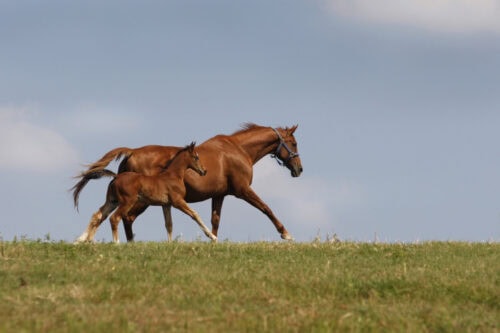
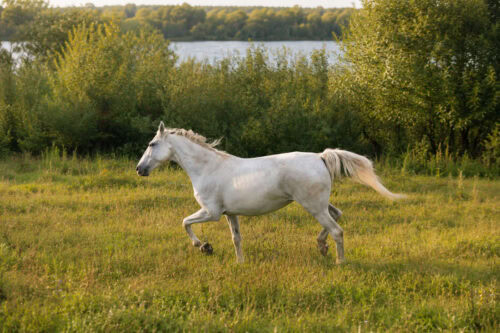
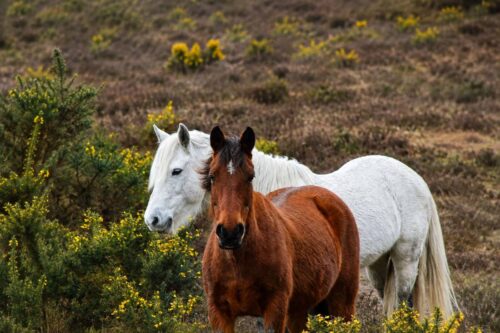
For many equestrians, the image of a wild horse racing across an open landscape is closely linked to the history and identity of the American West. These free-roaming animals have captured the public imagination for generations, appearing in stories, art, films, and photographs that celebrate the spirit of open spaces and frontier life.
Beyond their symbolic role, wild horses are also part of ongoing conversations about how public lands in North America are used and managed.
Their presence intersects with questions about conservation, grazing pressure, water access, wildlife habitat, Indigenous and settler history, and the responsibility humans have toward free-roaming horse populations.
This makes the story of wild horses more complex than a simple image of freedom. They are living animals with social bonds, survival needs, and welfare considerations, while also occupying landscapes shaped by conservation goals, livestock use, drought pressure, and public land policy.
What's your top priority with your horse's health?

What's your top priority with your horse's health?
Meaning of “Wild Horses”
Although commonly called wild horses, most free-roaming horses found in North America today are more precisely described as feral horses in scientific and land-management contexts. This terminology reflects their domestic ancestry, even though they now live independently of daily human care. [1][2]
Because these horses roam freely, reproduce outside direct human management, and maintain established herds on the range, the terms wild, feral, free-roaming, and free-ranging are used in overlapping ways. [1]
The best term to use depends on whether the discussion is focused on biology, legal management, public understanding, or cultural meaning.
In this article, “wild horses” refers broadly to free-roaming horse populations living independently on North American landscapes, while recognizing how their classification can vary by scientific, legal, and cultural context.
History of Horses on the North American Continent
The story of horses in North America stretches back millions of years, as the earliest ancestors of modern horses evolved on the continent. Ancient horse species were once widespread across North America before disappearing near the end of the last Ice Age. [1]
Modern domestic horses returned to North America after being brought to the Americas through European colonization, particularly Spanish exploration and settlement. Indigenous peoples also played a major role in acquiring, caring for, breeding, trading, and moving horses across North American landscapes.
Archaeological, genetic, historical, and Indigenous knowledge indicate that horses were present in parts of the Great Plains and northern Rockies by the early 1600s, earlier than many colonial written records previously suggested. [3]
Horses were rapidly integrated into many Indigenous cultures, transforming transportation, trade, hunting, warfare, ceremony, and relationships with the land.
Over time, some horses became separated from human ownership through escape, release, warfare, trade, or shifting settlement patterns. These animals contributed to free-roaming populations that later became part of the wild horse herds associated with western North America.
How Modern Wild Horse Herds Returned to North America
The free-roaming horse herds seen today developed from domestic horse populations that became separated from direct human ownership over many generations.
This process was shaped by escape, release, trade, warfare, ranching, Indigenous horse cultures, colonial expansion, and the movement of people and animals across western landscapes. [1][3]
Once living independently, these horses adapted to a wide range of environments, from grasslands and shrublands to rugged desert regions. Over generations, many herds developed the behaviors and social structures associated with life in the wild. [1][4][5]
Today, the distinction between wild and domestic horses is often discussed when considering equine behavior, diet, and management. For example, free-roaming horses rely on natural forage patterns, seasonal movement, and herd structure rather than daily human care, which differs from domestic management.
Where Wild Horses Live in North America Today
Most free-roaming horse populations in North America are found in the western United States. Wild horses can be found on public lands across ten western states, where they are managed and protected under federal law. [6]
The largest feral horse populations in North America are found in: [6]
- Nevada
- Wyoming
- Oregon
- Utah
- California
These horses are especially common in arid and semi-arid rangelands, where they have adapted to limited water supplies, changing forage conditions, and extreme weather. Their ability to travel long distances helps them make use of resources across large home ranges. [1][7]
Federal agencies monitor herd populations and habitat conditions to help maintain a balance between horse numbers and available resources. Today, tens of thousands of free-roaming horses continue to live on public lands in the American West, demonstrating that free-ranging horse populations remain a significant presence on the North American landscape. [6][8]
Table 1. Where wild horses live in North America according to the Bureau of Land Management [6]
| State | Estimated Number of Wild Horses | Significance | Typical Habitat |
|---|---|---|---|
| Nevada | 37,426 |
|
|
| Wyoming | 7,165 |
|
|
| Oregon | 5,994 |
|
|
| Utah | 4,611 |
|
|
| California | 3,534 |
|
|
| Colorado | 1,669 |
|
|
| Idaho | 564 |
|
|
| Arizona | 268 |
|
|
| Montana | 195 |
|
|
| New Mexico | 97 |
|
|
| Total | 61,523 |
|
|
How Wild Horses Survive & Behave in the Wild
Free-roaming horses are highly social animals that spend much of their time interacting with other members of their group. Most horses live in stable social units commonly known as bands, which typically consist of one or more adult mares, their offspring, and one dominant stallion. [4][5][9][10]
These bands help provide protection, maintain social bonds, and coordinate daily activities such as grazing, resting, and traveling. Stallions play an important role in maintaining band cohesion and defending mares from competing males. [4][5][9][10]
As grazing animals, horses are naturally adapted to spend many hours each day searching for and consuming forage. [5] Their feeding patterns are closely tied to the availability of natural forage, making wild horse diets different from managed domestic feeding programs.
Grazing occupies a large portion of a wild horse’s day, with horses moving steadily across the landscape in search of forage and water. Wild horses typically spend more time feeding than engaging in any other daily activity. [4][5][7][9][10]
Figure 1. Time budgets of wild horses vs. group housing, stabling with contact, and stabling without contact

Access to reliable water sources is another important factor that influences where wild horses live and move throughout the year. Water availability affects daily movement, seasonal range use, and how herds respond to dry conditions. For domestic horses, similar principles underlie the importance of maintaining hydration. [7]
Adult horses establish social relationships through a combination of cooperative and competitive interactions. Mutual grooming is a common behavior that helps strengthen social relationships between herd members. [4][5][9][10]
Young horses learn important social skills through play, including chasing, mock fighting, and other interactions with members of their age group. Communication within a band relies on a combination of body language, vocalizations, facial expressions, and physical contact. [4][5][9][10]
The strong social organization observed in free-roaming horse populations plays an important role in survival and reproduction in natural environments. [4][5][9] These patterns also help explain why herd structure, movement, and social contact are central considerations in discussions about equine welfare.
Wild Horse Management & Conservation
Wild horse management remains one of the most debated wildlife and land-use issues in western North America. [1][2] Free-roaming horses occupy a unique position because they are free descendants of domestic animals yet receive legal protection in the United States, which is usually reserved for undomesticated wild animals. [1][6]
Supporters of free-roaming horse populations often view these animals as an important part of the region’s cultural heritage and history. At the same time, scientists and land managers have raised concerns about the effects of growing horse populations on native ecosystems. [1][2][8]
Heavy use of grazing areas and water resources can create challenges when horse populations exceed what the landscape can sustainably support. However, some advocates argue that wild horses are unfairly singled out for ecological impacts that are also influenced by livestock grazing, drought, and other land-use pressures. [2][7][8]
Federal management programs use population monitoring, fertility control, and herd removals to help maintain feral horses on healthy rangelands. [6][8] Balancing horse welfare, public opinion, and ecosystem health remains a complex challenge for land managers. [1][2][8]
Adoption programs are also discussed when addressing free-roaming horse management. Horses removed from public lands may be placed with qualified adopters, and long-term success depends on appropriate handling, training, and care. These requirements are especially important for anyone considering adopting a wild horse.
The Future of North America’s Wild Horses
The future of North America’s free-roaming horse populations likely depends on finding effective ways to balance conservation goals with the ecological limits of the land. Maintaining healthy rangelands is necessary for the long-term well being of horses and other species that share the same habitats. [1][2]
As horse populations continue to grow in some areas, discussions about management, conservation, and public policy remain important. The debate surrounding wild horses is also likely to continue, reflecting their unique place in North American history, culture, and landscapes. [1][2]

The Legacy of Free-Roaming Horses in North America
Although the free-roaming horses found in North America today are descended from domestic animals rather than ancient native horse populations, they remain a prominent feature of the continent’s western landscapes.
Large herds continue to live on public lands, where they have adapted to challenging environments and developed the social behaviors associated with life in the wild. Their ability to survive in a variety of habitats has helped these populations persist for generations.
Their presence also raises important questions about conservation, land use, and population management. Supporters view these horses as living symbols of history and freedom, while land managers and researchers continue to evaluate how best to balance horse welfare with the health of shared ecosystems.
As populations change and environmental pressures evolve, discussions about their future are likely to remain an important part of public policy and land management.
Whether described as wild, feral, or free-roaming, there is no question that free horses still exist in North America. Their story is one of adaptation, survival, and enduring cultural meaning.
For many people, they continue to represent a visible link between the continent’s past and present, ensuring their place in North America’s cultural and natural heritage.
Frequently Asked Questions
Here are some frequently asked questions about wild horses in North America:
There are still wild horses in North America, especially in the western United States. Tens of thousands of free-roaming horses live on public lands and other rangeland areas where they survive without daily human care. These herds remain an important part of western landscapes, cultural identity, conservation discussions, and land management policy.
North America's wild horses are usually not considered truly wild in the strict scientific sense because they are descended from domestic horses introduced by Europeans. Many scientists and land managers describe them as feral horses because their ancestors were domesticated animals that later formed self-sustaining herds. They are still commonly called wild, free-roaming, or free-ranging because they live independently, reproduce without daily human management, and have adapted to life on open rangelands.
The difference between wild, feral, free-roaming, and free-ranging horses usually depends on context. "Feral" is often used in scientific or management settings to describe horses descended from domestic animals, while "wild horse" is the familiar public term for horses living independently on the range. "Free-roaming" and "free-ranging" emphasize how these horses move, graze, and reproduce outside daily human care.
Wild horses in North America live primarily in the western United States. They are found on public lands across ten western states, with the largest populations in Nevada, Wyoming, Oregon, Utah, and California. These horses commonly occupy grasslands, shrublands, deserts, sagebrush steppe, foothills, and other arid or semi-arid rangelands.
Nevada has the most wild horses among the western states listed for federally managed herds. The article identifies Nevada as having the largest estimated wild horse population in the United States, with far more horses than any other listed state. This makes Nevada a major focus of wild horse management, population monitoring, and public-land policy discussions.
There are wild horses in North America because modern domestic horses were reintroduced through European colonization, especially Spanish exploration and settlement, after ancient native horse species had disappeared near the end of the last Ice Age. Indigenous peoples also played a major role in acquiring, breeding, trading, moving, and integrating horses into North American cultures after reintroduction. Over time, some horses escaped, were released, were traded, or became separated from direct human ownership, eventually contributing to free-roaming herds across parts of the continent.
Wild horses are culturally important in North America because they are closely linked with the history and identity of the American West. They have appeared for generations in stories, artwork, films, and photographs that connect them with open spaces, frontier life, and freedom. Their cultural significance is one reason public discussions about wild horse management often involve strong emotional, historical, and ethical views.
Wild horses live in open rangeland habitats such as grasslands, shrublands, desert basins, sagebrush steppe, foothills, and rugged western terrain. Many herds live in arid and semi-arid environments where forage and water can be limited or unevenly distributed. Their ability to move across large home ranges helps them make use of seasonal forage, scattered water sources, and changing range conditions.
Wild horses survive in harsh environments by traveling long distances to find forage, water, and suitable resting areas. Many herds live in dry western landscapes where water supplies may be limited, forage quality changes through the year, and weather can be extreme. Their movement patterns, social structure, and grazing behavior help them use available resources across large areas.
Wild horses eat grasses and other available forage found in their rangeland habitats. As grazing animals, they spend much of the day feeding while moving steadily across the landscape. Access to natural forage and reliable water strongly influences where wild horses live, how far they travel, and how they use different parts of their range throughout the year.
Wild horses live in herds that are often organized into smaller social groups called bands. A typical band includes one or more adult mares, their offspring, and a dominant stallion. Living in social groups helps horses maintain bonds, coordinate grazing and travel, protect group members, and support survival and reproduction in open landscapes.
Stallions play an important role in wild horse bands by helping maintain group cohesion and defending mares from competing males. A band is usually centered around adult mares, their offspring, and one dominant stallion, although group structure can vary. Stallion behavior is part of the broader social organization that helps free-roaming horses survive, reproduce, and maintain stable relationships.
Wild horses communicate through body language, vocalizations, facial expressions, and physical contact. Mutual grooming helps strengthen social bonds between herd members, while play helps young horses learn social skills such as chasing, mock fighting, and interacting with peers. These communication patterns support cooperation, hierarchy, movement, and social stability within the herd.
Wild horses are managed by government agencies because free-roaming populations can grow beyond what some rangelands can sustainably support. Management programs aim to balance horse welfare with ecosystem health, water availability, forage, wildlife habitat, and other public-land uses. Common management tools include population monitoring, fertility control, herd removals, and adoption programs.
People should not attempt to ride wild horses living freely on the range. Free-roaming horses are not trained, handled, or accustomed to daily human contact, and approaching or trying to ride them is dangerous for both people and horses. However, wild horses removed through approved management programs may be adopted and later trained by experienced handlers. With proper gentling, care, and training, some adopted wild horses can become riding horses.
People should not touch, feed, chase, or approach wild horses on the range. These horses are free-roaming animals and can become defensive, especially around foals, mares, or stallions. Human contact can also disrupt natural behavior and create safety risks. Wild horses are best viewed from a respectful distance, using binoculars or a camera with a zoom lens when possible.
You can see wild horses by visiting areas where free-roaming herds are known to live, especially on public lands in the western United States. Many herd management areas have viewing opportunities, scenic drives, or local guidance for responsible observation. Plan ahead, stay on designated roads or trails, keep a safe distance, avoid feeding or approaching the horses, and follow all posted rules for the area you are visiting.
Wild horses are protected by federal law in the United States on designated public lands. This legal protection recognizes free-roaming horse populations and shapes how herds are monitored and managed today. Protection does not mean herds are left completely unmanaged, because agencies still track population size, habitat conditions, forage availability, water resources, and horse welfare.
Feeding wild horses should be strictly avoided. Interacting with wild horses this way increases the risk of bites, kicks, vehicle collisions, and aggressive behavior, and disrupts the horse's normal grazing patterns. In addition, many human foods are unsafe for horses. Wild horses should be observed from a respectful distance and left to forage naturally.
Wild horses can be adopted through approved programs in the United States. Adoption programs place some horses removed from public lands into private care while supporting broader efforts to manage herd numbers. Adopted wild horses need appropriate handling, training, housing, and long-term care from experienced or well-prepared owners.
Someone considering adopting a wild horse should be prepared for the handling, training, housing, and long-term care these horses require. Free-roaming horses are not raised with the same daily human contact as domestic horses, so successful adoption depends on patience, suitable facilities, and appropriate experience or support. Adoption can be a valuable part of management, but it is a serious responsibility rather than a simple way to acquire a horse.
Wild horses can affect rangeland ecosystems when population numbers exceed what the landscape can sustainably support. Heavy use of grazing areas and water resources may create pressure on forage, riparian areas, native habitat, and other species that share the same environment. At the same time, discussions about ecological impact often consider other pressures such as livestock grazing, drought, and broader land-use patterns.
Summary
Free-roaming horses still live in North America, mostly in the western United States, where they have adapted to arid and semi-arid rangeland environments.
- Although commonly called wild horses, most modern free-roaming herds are descended from domestic horses brought by European explorers and settlers
- Horses originally evolved in North America, but ancient native horse populations disappeared thousands of years ago before modern horses were later reintroduced
- Wild horses live in social bands made up of mares, offspring, and stallions, relying on herd structure, movement, grazing, and access to water for survival
- Their presence is culturally significant, especially in the American West, where they are often viewed as symbols of freedom, history, and open landscapes
- Wild horse management remains debated because land managers must balance horse welfare, population growth, rangeland health, conservation, public opinion, and adoption programs
References
- Petersen. S. L. et al. Feral Equids. Rangeland Wildlife Ecology and Conservation. Springer International Publishing, Cham. 2023.
- Davies. K. W. and Boyd. C. S. Ecological Effects of Free-Roaming Horses in North American Rangelands. BioScience. 2019.
- Johnson. E. Horses Part of Indigenous Cultures Longer Than Western Historians Thought. National Science Foundation. 2023.
- Ransom. J. and Cade. B. Quantifying Equid Behavior— A Research Ethogram for Free-Roaming Feral Horses. 2009.
- McGreevy. P. Equine Behavior: A Guide for Veterinarians and Equine Scientists. 2nd ed. Elsevier, Edinburgh. 2012.
- Wild Horse and Burro Program. Bureau of Land Management.
- Hall. L. K. et al. Feral Horses Influence Both Spatial and Temporal Patterns of Water Use by Native Ungulates in a Semi‐arid Environment. Ecosphere. 2018.
- Using Science to Improve the BLM Wild Horse and Burro Program: A Way Forward. National Academies Press, Washington, D.C. 2013.
- McCort. W. D. Behavior of Feral Horses and Ponies. Journal of Animal Science. 1984.
- Tyler. S. J. The Behaviour and Social Organization of the New Forest Ponies. Animal Behaviour Monographs. 1972.