English
Hoary alyssum toxicosis in horses is a potentially serious condition caused by eating fresh or dried hoary alyssum (Berteroa incana). Equine exposure often occurs through contaminated hay, where the weed is more difficult to recognize after harvesting and baling.
Affected horses can develop sudden lower-limb swelling, fever, reluctance to move, and signs of laminitis. Responses vary between individuals, but severe cases may involve systemic illness, lasting hoof damage, or death.
Because there is no specific diagnostic test or antidote, prompt removal of the suspected forage and early veterinary care are critical. Keep reading to learn how to identify hoary alyssum, recognize signs of toxicosis, and reduce your horse’s risk of exposure.
Hoary Alyssum Poisoning in Horses
Hoary alyssum (Berteroa incana) is a weed in the mustard family, Brassicaceae. This plant is native to temperate Eurasia and is now established in many parts of northern North America, particularly in the northeastern and north-central United States and Canada. [1][2]
The plant grows readily in: [1][2][3]
- Disturbed sites
- Hay fields
- Meadows
- Pastures
- Roadsides
- Ditches
- Vacant lots
- Other dry, open areas
Hoary alyssum thrives where sandy or gravelly soil and stressed forage stands reduce competition from desirable plants. [1][2][3]
Poisoning may occur when horses graze the fresh plant, but contaminated hay is a common source because dried hoary alyssum is difficult to recognize once it is baled with forage. The plant may retain toxicity in hay for at least nine months after cutting. [2][4]
The toxin in hoary alyssum has not been identified, and no commercial test is available to detect the plant or its compounds in hay. For this reason, diagnosis and prevention depend heavily on recognizing the plant and connecting clinical signs with recent access to contaminated hay or pasture. [2][4][5]
Hoary alyssum poisoning in horses most often causes: [2][4][6]
- Lower limb edema
- Fever
- Reluctance to move
- Laminitis
Clinical signs usually develop within about 12 to 36 hours after exposure, although individual horses vary in their response. Not every horse that eats contaminated hay or pasture develops signs, and the severity depends on a number of different factors. [2][4][6]
Most mildly affected horses recover after owners remove the source of the poisoning and provide supportive care. Severe cases can progress to: [1][2][6]
- Dehydration
- Shock
- Intravascular hemolysis
- Acute kidney injury
- Severe laminitis
- Rotation or sinking of the distal phalanx (founder)
- Long-term lameness
- Death
Common Names of Hoary Alyssum
- False hoary madwort
- Hoary berteroa
- Hoary alison
Table 1. Hoary alyssum poisoning in horses at-a-glance
| Category | Key Information |
|---|---|
| Definition |
|
| Common Causes |
|
| Onset |
|
| Symptoms |
|
| Severity |
|
| Treatment |
|
| Recovery Time |
|
| Prognosis |
|
| Prevention |
|
What's your top priority with your horse's health?

What's your top priority with your horse's health?
Identification
Hoary alyssum is an herbaceous plant in the mustard family. It may grow as an annual, winter annual, biennial, or short-lived perennial, depending on germination timing and local growing conditions. [1][6]
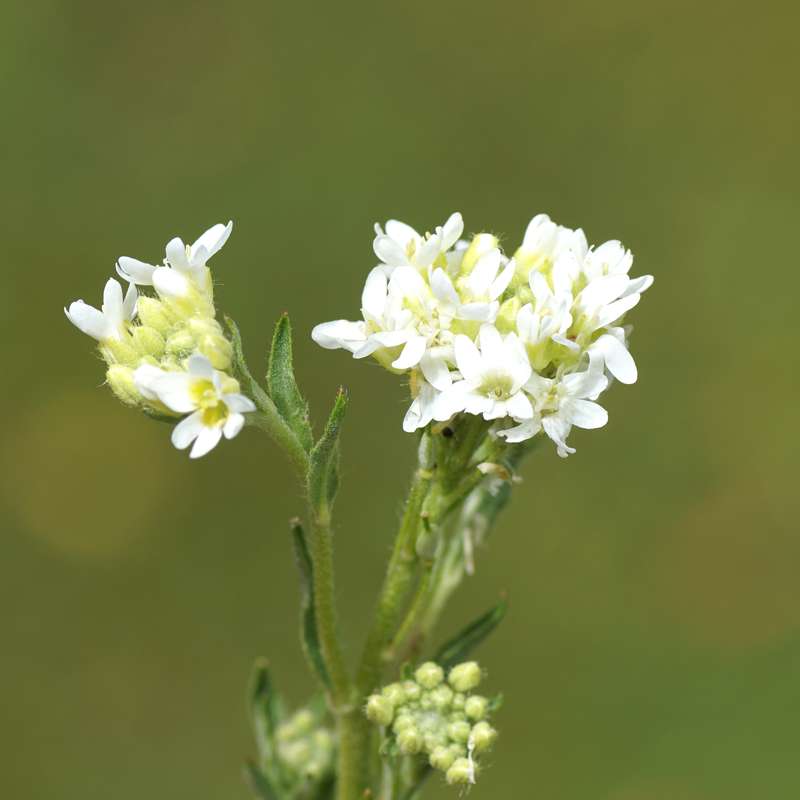 Flowers
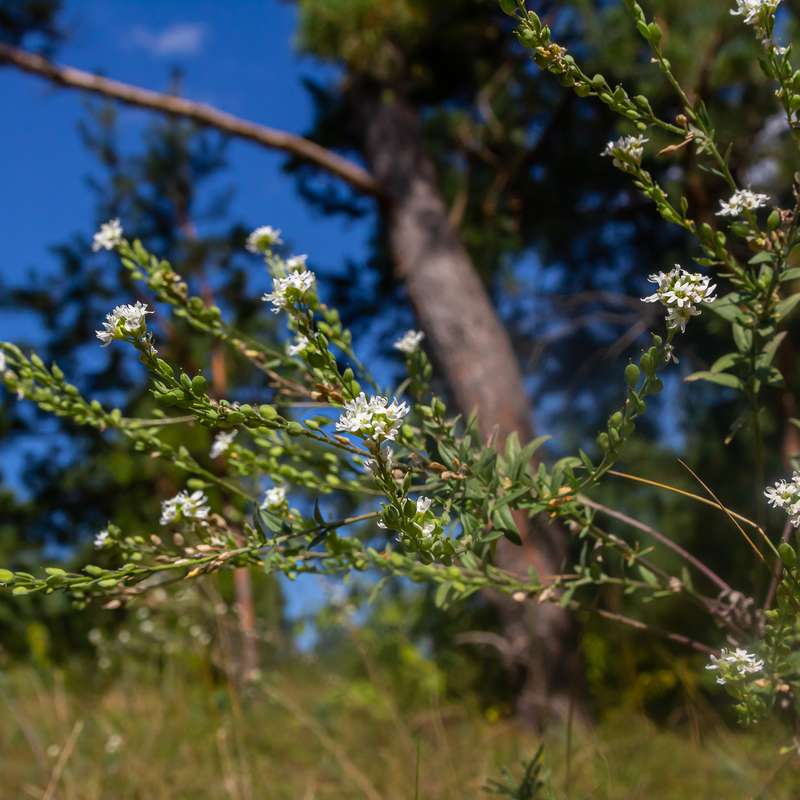 Plant
PlantYoung plants begin as low basal rosettes. As they mature, they produce upright stems that branch mainly near the upper part of the plant. Mature plants are usually about 1 to 3 feet (30.5 to 91.5 cm) tall. [1][6]
The plant has a gray-green or silvery cast because the stems, leaves, flower buds, and seed pods are covered with small star-shaped hairs. [1]
Leaves are simple, narrow to oblong or lance-shaped, and arranged alternately along the stem. Lower leaves may have distinct stalks, while upper leaves become narrower and their stalks shorten or disappear. Leaf margins are generally smooth. The flowers are white, with four deeply notched petals, and develop in clusters at the ends of the branches. [1]
As the flowering cluster elongates, the plant produces small, dry seed pods. These pods are hairy, oval to oblong in shape, and have a short beak at the tip. Seeds may continue to emerge from first flowering until frost. [1][5]
Hoary alyssum can be harder to recognize after cutting and baling. Dried stems may resemble alfalfa stems, especially after leaves, flowers, and seed pods have broken away. Hoary alyssum stems are usually round and fairly uniform in diameter. [1]
Toxicology of Hoary Alyssum
The toxic mechanism of hoary alyssum poisoning in horses is currently unknown. This limits information about the exact toxic dose, target tissues, and mechanism of injury in horses. [1][2]
While the plant belongs to the mustard family, Brassicaceae, the syndrome seen in horses does not fit neatly with the typical digestive irritation associated with other mustard-family plants.
Hoary alyssum poisoning is recognized mainly for: [1][2]
- Lower-limb edema
- Fever
- Laminitis-like disease
Severe cases can involve systemic effects that go beyond limb swelling and laminitis. Reported systemic effects include: [2][4][6]
- Dehydration
- Hypovolemia (low blood volume)
- Intravascular hemolysis (breakdown of red blood cells)
- Red or dark urine
- Abnormal kidney values
- Acute renal failure
These findings suggest that heavy exposure or progressive disease can affect circulation, red blood cells, and kidney function, although the initiating toxin remains unknown. [2][4][6]
Toxic Dosage
Both fresh and dried hoary alyssum are toxic to horses. Exposure often occurs through contaminated hay because the dried plant can be difficult to identify once mixed into forage, especially alfalfa.
The toxic compounds in hoary alyssum remain active in stored hay for at least nine months after cutting. It is not known how long they persist beyond this period, so hay with suspected hoary alyssum contamination should not be fed to horses. [2][4][5]
A minimum toxic dose has not been established for horses, but hay containing more than 30% hoary alyssum is considered high-risk. [2][4]
However, case reports have shown that some flakes within the same bale may contain more plant material than others, and clinical illness can occur with lower concentrations. The 30% figure is best understood as a warning guideline, not a dependable cutoff for safe hay. [2][4]
Individual response to hoary alyssum also varies. Some horses exposed to contaminated hay develop clinical signs while others eating the same or similar hay do not. [2][4]
This variation may reflect: [2]
- The amount consumed
- Plant concentration within individual flakes of hay
- Stage of plant growth
- Palatability
- The horse’s individual metabolism
- Individual sensitivity
Symptoms of Hoary Alyssum Poisoning in Horses
Clinical signs of hoary alyssum poisoning usually develop within about 12 to 36 hours after a horse eats a toxic amount of hoary alyssum.
Not all exposed horses become clinically ill. When signs do occur, the most characteristic finding is sudden swelling of the lower limbs, often with fever and signs of foot pain or laminitis. [2][4]
Clinical signs may include: [2][4][6]
- Lethargy
- Fever, often above 103°F (39.4°C)
- Warm, swollen lower limbs
- Warm hoof walls
- Strong or bounding digital pulses
- Stiffness
- Reluctance to move
- Sawhorse stance
- Foot pain or sensitivity to hoof testers
- Laminitis
- Increased heart rate
- Increased respiratory rate
- Colic
- Diarrhea or bloody diarrhea
- Dehydration
- Red or dark urine
- Abortion or premature foaling in limited reports
Most mild cases involve lower-limb edema, fever, and variable signs of laminitis. Research has also noted reproductive signs in case reports, but the evidence is limited and should not be treated as a predictable outcome for every exposed pregnant mare. [1][6]
Owners should not transport horses showing signs of acute laminitis unless a veterinarian advises that transport is necessary and provides a safe method.
Hoary alyssum cases have worsened when severely affected horses were moved during the acute phase, and laminitis complications can affect long-term soundness even after the initial swelling and fever improve. [3][4]
When to Call the Veterinarian
Veterinary assessment is warranted whenever a horse develops: [2]
- Sudden lower-limb swelling
- Fever
- Reluctance to move
- Warm hooves
- Strong digital pulses
- Diarrhea
- Colic
- Red or dark urine
- Dehydration
- Signs of laminitis
Owners should remove access to contaminated hay or pasture immediately while arranging veterinary care. [2]
Urgent care is especially important when limb swelling is accompanied by: [2][4]
- Lethargy
- High fever
- Severe lameness
- Sawhorse stance
- Bloody diarrhea
- Abnormal mucous membrane color
- Prolonged capillary refill time
- Weakness
- Suspected dehydration
 Sawhorse Stance Illustration: Dr. Ana Mesa, PhD
 Exposure Risk Factors
Hoary alyssum exposure in horses is most often associated with contaminated hay. Horses may graze the fresh plant in pasture, but it has low palatability and is less likely to be eaten when other forage is available.
Once the plant is cut and baled with hay, however, horses have less ability to avoid it. Dried hoary alyssum can also resemble alfalfa, making contamination difficult to detect without close inspection. [2][5]
The risk is higher when hay is harvested from fields, roadsides, overgrazed pastures, or other areas where hoary alyssum grows among forage plants. The weed tolerates dry conditions and is commonly found in: [1][2][3]
- Sandy or gravelly soils
- Low-fertility sites
- Overgrazed pastures
- Stressed meadows
- Roadsides
- Railroad corridors
- Vacant lots
- Waste areas
Hoary alyssum is more likely to establish and spread where forage growth is sparse or pasture condition is poor. [1][2][3]
Season also influences exposure. Cases are reported more often in summer, particularly after recently cut hay is fed, and less often during winter.
Hoary alyssum emerges early in the growing season and may continue flowering and producing seed until frost. Plants that germinate later in the season can overwinter as rosettes and flower the following year, allowing infestations to persist from one growing season to the next. [3][4][5]

Diagnosis
Diagnosis is based on compatible clinical signs, recent access to hoary alyssum, and exclusion of other causes. The toxic mechanism is not currently identified, so there is no specific toxin test for hoary alyssum poisoning. [2][6]
A veterinary workup for a horse suspected of hoary alyssum poisoning may include: [2][4][6]
- Exposure history
- Forage inspection
- Physical examination
- Hoof evaluation
- Bloodwork and urinalysis
Laboratory findings vary with severity. Mild to moderate cases may have normal bloodwork and urinalysis.
More severe cases have shown abnormalities consistent with: [2][4][6]
- Dehydration
- Hypovolemia
- Anemia
- Red blood cell destruction
- Inflammation
- Hematuria Hematuria (blood in the urine)
- Methemoglobinemia (abnormal methemoglobin in the blood)
- Jaundice
- Increased blood urea nitrogen and creatinine
- Changes in phosphorus, muscle enzymes, and liver-associated enzymes
Differential diagnoses include other causes of limb edema, fever, colic, diarrhea, hemolysis, and laminitis. Veterinarians may consider conditions such as: [2]
- Salmonellosis
- Purpura hemorrhagica
- Potomac horse fever
- Equine anaplasmosis
- Lyme disease
- Equine viral arteritis
- Black walnut bedding exposure
- Other causes of laminitis
Treatment & Management
The first step in treatment is removing the source of exposure. Owners should take horses off contaminated hay or move them away from infested pasture as soon as they suspect hoary alyssum exposure.
There is no known antidote, and no treatment reverses the toxic process directly. Care is supportive and based on the horse’s clinical signs, hydration status, degree of pain, and evidence of laminitis or systemic illness. [1][2][6]
Owners can manage mild cases on the farm under veterinary direction when the horse is stable and signs are limited to limb edema, fever, and mild foot discomfort. Supportive management includes: [2]
- Anti-inflammatory medication
- Pain control
- Leg wraps to help manage edema
- Close monitoring of the feet
Horses with more severe symptoms may require hospitalization and intravenous fluids.
Veterinarians may use nonsteroidal anti-inflammatory drugs to help control fever, pain, and inflammation. They should monitor kidney values alongside NSAID use, especially in horses with dehydration or suspected renal compromise. For horses in severe pain, veterinarians may consider butorphanol. [2][6]
Hoof care is an important part of management when laminitis is present or suspected. Affected horses may need: [2]
- Foot radiographs
- Bedding or footing that reduces hoof stress
- Icing or cold-water therapy
- Ongoing monitoring for distal phalanx rotation or sinking
Severe laminitis can continue to affect outcome after fever and limb swelling improve, so hoof management should continue beyond the initial toxic episode when structural damage is suspected. [2]
Activated charcoal may be considered soon after ingestion t help reduce absorption of the unidentified toxin, but its benefit has not been established. Owners should not administer activated charcoal, mineral oil or laxatives unless directed to do so by a veterinarian.
Prognosis
Prognosis is generally good for horses with mild to moderate hoary alyssum poisoning when exposure is stopped promptly and supportive care is provided. Limb edema, fever, and mild laminitis-like signs often improve within 2 to 4 days after contaminated hay or pasture is removed. [2][4][6]
Some reports describe recovery within 1 to 4 days, while more severely affected horses may need longer treatment and monitoring. [6][7]
The outcome depends largely on severity at presentation and whether laminitis develops. Severe cases can progress to founder, or sinking of the distal phalanx.
Complications may include: [2][4][6]
- Penetration of the sole
- Sloughing of the hoof wall
- Persistent lameness
- Permanent loss of athletic function
When laminitis is severe, recovery is prolonged. [4][6]
Prevention
Prevention is the most effective approach to hoary alyssum poisoning because no antidote is available once a horse is exposed. Robust hay and forage management cannot reduce the risk to zero, but it can greatly lower the chance that horses encounter toxic plant material. [2][5]
Prevention focuses on keeping hoary alyssum out of horse hay and reducing plant establishment in pastures and hay fields. Practical measures include: [2][5]
- Hay inspection: Hay intended for horses should be checked for dried hoary alyssum.
- Pasture management: Avoiding overgrazing helps protect desirable forage plants.
- Soil fertility management: Soil testing and correction of fertility or pH levels can help maintain competitive forage growth.
- Harvest planning: Cutting schedules should protect forage vigor and avoid repeatedly weakening perennial forage stands.
- Early control of infestations: Hand pulling or digging can be useful for small patches, especially before flowering. The taproot should be removed where possible.
- Mowing before seed production: Mowing can reduce seed production if done before flowering, although low-growing plants may still flower below mower height.
- Seed-spread reduction: Equipment cleaning can limit seed movement from infested fields to clean fields. If practical, heavily infested areas are best harvested last.
- Selective herbicide use: Herbicide options depend on the forage crop, plant stage, season, and label restrictions.
Hoary alyssum spreads by seed and can persist across seasons once it becomes established. In forage systems, long-term control usually depends on improving the conditions that allowed the weed to invade, not just removing visible plants after they appear. [3][8]
Frequently Asked Questions
Here are some frequently asked questions about hoary alyssum poisoning in horses:
Hoary alyssum poisoning in horses is a potentially serious condition caused by eating fresh or dried hoary alyssum (Berteroa incana). The condition most commonly occurs when the plant contaminates hay, although horses can also be exposed while grazing infested pastures. Typical effects include lower-limb swelling, fever, reluctance to move, and laminitis. [1][2][4]
You can identify hoary alyssum by its gray-green or silvery appearance, narrow alternate leaves, and stiff upright stems that branch near the top. Mature plants are generally 1 to 3 ft tall and produce clusters of small white flowers with four deeply notched petals. Small, hairy seed pods with a short beak develop after flowering. The plant can be much harder to identify in hay because its dried stems may resemble alfalfa stems. [1][5][6]
Signs of hoary alyssum poisoning in horses commonly include sudden swelling of the lower limbs, fever, warm hooves, strong digital pulses, stiffness, and reluctance to move. Affected horses may also show depression, an increased heart or respiratory rate, colic, diarrhea, or a camped-out stance. Severe cases can involve bloody diarrhea, dehydration, red or dark urine, weakness, kidney injury, and serious laminitis. [2][4][6]
Symptoms of hoary alyssum poisoning usually appear within about 12 to 36 hours after exposure. Not every horse eating the same contaminated hay or pasture will become ill, and the severity of signs can vary considerably between individuals. Differences may reflect the amount consumed, the concentration of the plant in individual hay flakes, and the horse's susceptibility. [2][4][6]
Dried hoary alyssum in hay remains toxic to horses and is a common source of exposure. The toxic factor can remain active for at least nine months after the plant is cut and stored. Because longer persistence has not been defined, older contaminated hay should not be assumed to be safe. [2][4][5]
The amount of hoary alyssum in hay that will cause poisoning has not been reliably established. Hay containing more than 30% hoary alyssum is generally considered high risk, but illness has occurred when sampled concentrations were lower. Contamination can also vary between flakes within the same bale, and individual horses respond differently. Any confirmed contamination should therefore be treated as unsafe for horses rather than relying on a percentage as a safe cutoff. [2][4]
If you suspect your horse ate hoary alyssum, immediately remove the potentially contaminated hay or prevent further access to the infested pasture. Contact a veterinarian promptly, especially if the horse has fever, swollen legs, warm hooves, strong digital pulses, lameness, diarrhea, or dark urine. Do not transport a horse showing signs of acute laminitis unless a veterinarian recommends transport and explains how to move the horse safely. [2][3][4]
Hoary alyssum poisoning is a veterinary emergency when a horse develops severe lameness, a camped-out stance, high fever, bloody diarrhea, dehydration, weakness, abnormal mucous membrane color, or red or dark urine. These signs can indicate severe laminitis, circulatory compromise, red blood cell destruction, or kidney injury. Urgent veterinary care is also warranted when lower-limb swelling occurs with depression or rapidly worsening systemic illness. [2][4]
Hoary alyssum poisoning is diagnosed using the horse's clinical signs, recent exposure history, forage inspection, and exclusion of other possible causes. There is no specific diagnostic test because the toxic substance in the plant has not been identified. A veterinarian may perform a physical and hoof examination, bloodwork, and urinalysis to evaluate the severity of illness and look for dehydration, inflammation, red blood cell destruction, or kidney impairment. [2][4][6]
Hoary alyssum poisoning is treated by ending exposure and providing supportive veterinary care because there is no known antidote. Depending on the horse's condition, care may involve pain and inflammation control, management of limb swelling, hydration support, kidney monitoring, and close observation of the feet. Horses with severe symptoms may require hospitalization and intravenous fluids. Activated charcoal may be considered only very early, before clinical signs have developed. [1][2][6]
Laminitis after hoary alyssum exposure requires prompt veterinary assessment and ongoing hoof care. Management may include hoof radiographs, supportive bedding or footing, cold therapy, and monitoring for rotation or sinking of the distal phalanx. Hoof damage can continue to affect the horse after fever and limb swelling improve, so follow-up care is important when structural injury is suspected. [2]
Recovery from mild to moderate hoary alyssum poisoning often begins within 2 to 4 days after exposure stops and supportive care is provided. Limb swelling, fever, and mild laminitis-like signs may resolve relatively quickly in uncomplicated cases. Recovery takes longer when a horse develops systemic illness, severe laminitis, or structural hoof damage. [2][4][6][7]
Hoary alyssum poisoning can be fatal to horses in rare severe cases. Serious complications include shock, red blood cell destruction, acute kidney failure, and severe laminitis with rotation or sinking of the distal phalanx. Some affected horses develop lasting lameness or lose athletic function even after the initial toxic episode resolves. [2][4][6]
You can help prevent hoary alyssum poisoning by inspecting horse hay closely and refusing forage with confirmed contamination. Maintaining healthy, competitive forage stands through appropriate grazing, soil fertility, and harvest management can reduce opportunities for the weed to establish. Small infestations should be controlled before seed production, and equipment should be cleaned to limit seed movement between fields. Selective herbicides may also be appropriate when chosen and applied according to the forage crop, plant stage, season, and label directions. [2][3][5][8]
Summary
Hoary alyssum poisoning is a potentially serious condition caused by horses eating fresh or dried plants, most commonly in contaminated hay. Prompt forage removal and early supportive care improve the prognosis.
- Signs usually appear within 12 to 36 hours and include lower-limb edema, fever, reluctance to move, and laminitis
- Severe cases may cause dehydration, shock, hemolysis, acute kidney injury, and lasting hoof damage
- Diagnosis relies on clinical signs, exposure history, forage inspection, and exclusion of other causes
- Treatment may include pain control, anti-inflammatory medication, intravenous fluids, kidney monitoring, and laminitis care
- Prevention involves inspecting hay, maintaining healthy forage stands, controlling infestations, and limiting seed spread
References
- Burrows. G. and Tyrl. R. Toxic Plants of North America. 2nd ed. Wiley-Blackwell. 2013.
- Hovda. L. et al. Ed. Blackwell's Five-Minute Veterinary Consult Clinical Companion: Equine Toxicology. Wiley-Blackwell. 2022.
- Martinson. K. et al. Hoary Alyssum: The Most Common Poisonous Plant to Horses in Minnesota. University of Minnesota Extension. 2021.
- Geor. R. et al. Toxicosis in Horses after Ingestion of Hoary Alyssum. Journal of the American Veterinary Medical Association. 1992.
- Burns. E. et al. Hoary Alyssum: Small But Hazardous to Horses. Michigan State University Extension. 2025.
- Plumlee. K. Ed. Clinical Veterinary Toxicology. Mosby. 2004.
- Hovda. L. Hey! Hoary Alyssum Can Be Fatal for Horses. dvm360. 2015.
- Hoary Alyssum. Washington State Noxious Weed Control Board.