English

Hoof balance in horses refers to the shape of the hoof capsule and its alignment with the sensitive internal structures of the foot and the bony column of the leg.
When a hoof is correctly balanced, it transmits ground forces evenly through the limb, reducing stress on joints, tendons, and ligaments during movement. When hooves are imbalanced, structural distortions can lead to lameness, musculoskeletal injuries and long-term soundness issues.
Hoof capsule balance is influenced by multiple factors, including biomechanics, conformation, posture, and trimming or shoeing. Nutrition, environment, and metabolic health also affect hoof balance and structural integrity.
In this article, you’ll learn how farriers evaluate hoof balance in the field, and explore the roles that biomechanics, conformation and posture play in maintaining a healthy hoof.
Hoof Balance in Horses
The hoof capsule is the hard, keratinized outer covering of the equine foot. It protects and supports the underlying bones and soft tissues, provides a stable base for weight-bearing, and directs ground forces evenly through the limb.
A balanced hoof capsule supports even weight distribution and proper limb alignment in horses at rest and in motion. A hoof is considered balanced when its external shape and structure align harmoniously with internal anatomical features and the horse’s overall limb conformation. [1]
Characteristics of a balanced hoof include: [1][2][3]
- Correct Hoof-Pastern Alignment: There is a proper hoof-pastern axis (HPA) and suitable palmar or plantar angles (PA), aligning the coffin bone optimally relative to the ground.
- Even Weight Distribution: Weight is distributed evenly both front-to-back and side-to-side (mediolaterally), positioning the center of rotation (COR) centrally within the hoof capsule.
- Minimized Structural Stress: Stress on critical structures, including the coffin joint, navicular bone, ligaments, and tendons, is minimized, ensuring efficient shock absorption, smooth locomotion, and reduced risk of injury.
The hoof capsule is a dynamic elastic structure that continually grows and regenerates, but it’s shape can become distorted or damaged under certain conditions. [2] Such imbalances increase stress on tendons, ligaments, and joints, leading to uneven loading, altered gait mechanics, and, over time, lameness or chronic soundness issues. [1]
While hoof issues impact the musculoskeletal system and posture, pre-existing musculoskeletal or postural problems may also contribute to hoof capsule distortion. [4] For this reason, it’s essential to assess the whole horse when aiming to maintain or restore proper hoof balance and conformation.
Regular farrier care, including trimming, shoeing, and balancing, is critical for maintaining optimal hoof shape and balance. Nutrition, turnout, and environmental management also play key roles in supporting healthy hooves.
Hoof Morphology & Conformation
Hoof balance needs to be considered in the context of two interrelated factors: hoof morphology (the shape of the hoof) and conformation (the alignment of the limbs). These elements determine how the hoof manages the forces acting on it, including the ground reaction force (GRF) and the horse’s body weight. [2][3]
- Hoof morphology describes the three-dimensional external shape of the hoof capsule, including angles, length, width and concavity, and determines how ground forces contact and load the foot.
- Conformation describes the postural alignment of the limb’s bones and joints from shoulder or hip through pastern to hoof and determines how body weight and reaction forces travel through the limb.
Whether standing still or in motion, the hoof must manage two opposing forces: the downward force of the horse’s body weight and the upward ground reaction force (GRF) generated upon impact.
- Body Weight: The load of the horse’s body weight is transmitted downward through its limbs into the hooves and then into the ground.
- Ground Reaction Force (GRF): When the hoof impacts the ground, the ground pushes back with an equal and opposite force. At rest, the GRF equals the body weight, but during movement, this force increases with the speed and momentum of the horse. The center of pressure (COP) is the point on the hoof where the GRF is focused, and it shifts during the horse’s stride and with the body’s postural sway when stationary. [5][6][7][8]
A balanced hoof is critical for absorbing and redistributing these forces, reducing strain on tendons, ligaments, and joints.
Achieving this requires: [1][2]
- A uniform hoof capsule (morphology): Prevents pressure points by distributing ground reaction forces evenly across the sole
- Proper limb alignment (conformation): Enables forces to travel through the bony column of the limb without creating torque or leverage on tendons, ligaments, or joints
By evaluating and addressing both conformation and morphology together, you ensure the hoof functions as an effective interface between the ground and the limb, reducing injury risk and supporting long-term soundness. [2][3]
Hoof Anatomy
Understanding hoof balance requires familiarity with the anatomy of the hoof capsule and its internal structures. The equine hoof is composed of several specialized tissues designed for weight-bearing, shock absorption, and efficient locomotion.
Key anatomical structures include: [2]
- Hoof Wall: The hard, outer keratinized structure that supports weight, protects internal tissues, and transfers ground forces to the limb.
- Sole: The concave underside of the hoof capsule, providing protection and support for internal structures.
- Frog: The triangular, flexible pad beneath the hoof that aids in shock absorption, traction, and blood circulation.
- Coffin Bone (Distal Phalanx or P3): The primary bone within the hoof capsule, essential for proper structural alignment and weight-bearing.
- Navicular Bone (Distal Sesamoid): A small bone located behind the coffin bone that acts as a pulley for tendons, reducing strain during movement.
- Digital Cushion: A fibrocartilaginous pad located above the frog, absorbing impact and protecting the hoof’s internal structures.
- Lateral Cartilages: Flexible cartilage structures on either side of the coffin bone, providing stability and distributing forces during loading.
- Laminae: Sensitive tissue layers connecting the hoof wall securely to the coffin bone, supporting structural alignment and preventing displacement.
- White Line: The junction between the hoof wall and sole, providing an external landmark for internal hoof attachment and integrity.
- Deep Digital Flexor Tendon (DDFT): A tendon attaching beneath the coffin bone, enabling limb flexion and proper hoof biomechanics.
 Illustration: Maia Chaput, APF-I PHCP
Characteristics of a Healthy Hoof
A healthy equine foot is characterized by the following structural features: [9]
- A hoof capsule securely attached to the internal sensitive structures by strong laminae and a tight white line
- A robust sole that that protects internal tissues from ground impact
- A well-developed frog that aids in circulation, proprioception, and shock absorption
Each of these structures play a role in load bearing and protection of the internal foot structures.Efficient shock absorption and energy dissipation within the hoof comes from load sharing between structures. [2] Any individual structure or tissue subjected to an excess share of the total load receives decreased circulation due to compression, and potentially excess wear on the external hoof.Conversely, underloaded structures and those receiving less wear tend to grow longer and deviate away from their ideal position, contributing to distortion and uneven loading. [3]
Hoof Capsule
The hoof capsule is made up of specialized keratin cells with elastic properties that allow it to deform slightly under load and return to its original shape when the load is removed. This creates a natural spring-like effect that aids in shock absorption and energy dissipation. [2]
The shape of the hoof capsule provides exceptional stability across a variety of surfaces and landing positions. Its structure resists torsional forces while effectively absorbing impact, protecting internal structures during movement. [2]
 Illustration: Maia Chaput, APF-I PHCP
Hoof Wall
The hoof wall is primarily made up of cylindrical structures known as tubules. Wall tubules are structurally the strongest when loaded on their ends in a vertical position from the coronet band to the ground surface. [1]
The hoof wall shares part of the load, supporting the weight of the bony column. Excess leverage or compression can result in bending and distortion of the tubules, particularly if the hoof wall becomes too long. [1][11]
This may lead to tubule deviation away from ideal alignment, which can ultimately stretch the white line — the flexible junction between the sole and the wall. [2]
 Illustration: Maia Chaput, APF-I PHCP
Examples of tubule deviation include:
- Flaring: Outward bending of the hoof wall, often due to excessive lateral stress or delayed breakover, weakening the hoof’s structural integrity.
- Dishing: A concave distortion along the hoof wall, typically on the dorsal surface, caused by uneven stress distribution or long-toe, low-heel conformation.
- Under-run heels: A condition where the heel tubules grow forward rather than downward, reducing heel support and altering the hoof’s weight-bearing surface, often associated with chronic overload or improper trimming.
Laminae
The insensitive epidermal lamina of the hoof wall connects to the sensitive dermal lamina on the surface of the coffin bone. These structures play an important role shock absorption and supporting the coffin bone within the hoof capsule. [2]
When the hoof capsule is well-aligned with the coffin bone, the laminae are highly resistant to the normal shearing forces that occur during loading. However, if the hoof capsule becomes distorted or pulled away from the bone due to excess leverage, the laminae become vulnerable to tearing forces. [2]
The health and strength of the laminae are also influenced by systemic factors, particularly metabolic and nutritional status. A hoof with weakened laminae is more susceptible to morphological distortions, such as flaring, while strong laminae contribute to overall hoof integrity. [2]
Whether flaring occurs at the toe or the quarters, a chronically stretched white line can indicate underlying laminar weakening or the early stages of laminitis, prompting further investigation into contributing systemic factors. [2]
Lateral Cartilages and Digital Cushion
When correctly balanced, the structures of the hoof capsule work together with the internal soft tissues at the back of the foot — specifically the lateral cartilages and the digital cushion. When properly developed, these structures can comprise more than half the total volume of the hoof. [12][13][14]
Lateral cartilages are thin, flexible sheets of cartilage that extend from the sides of the coffin bone to form the outer heel bulb. They are important for lateral heel movement, allowing each heel to move independently, particularly when the horse is turning or navigating uneven terrain. This flexibility helps absorb impact and reduces strain on the collateral ligaments higher up in the limb. [2]
 Illustration: Maia Chaput, APF-I PHCP
The digital cushion is located between the lateral cartilages, just above the frog. It covers the attachment point where the deep digital flexor tendon connects to the coffin bone.
This structure is highly vascularized, contributing to circulation within the hoof and acting as a hydraulic shock absorber during movement. The health of this structure also contributes to correct hoof balance. [14]

How Farriers Assess Hoof Balance
Farriers evaluate hoof balance by looking at both the shape and alignment of the hoof while the horse is standing still and during movement.
These two aspects are known as static balance when the horse is stationary and dynamic balance when the horse is in motion. Accurately assessing both is critical to optimal hoof care.
Evaluating hoof balance requires a detailed understanding of how the hoof’s external structures relate to the internal anatomy and how forces are distributed through the limb.
Various methods are used in the field and clinic to assess balance from both a static and dynamic perspective, helping to identify potential areas of stress, distortion, or dysfunction.
Static Balance
- Hoof-Pastern Axis (HPA): Assesses the alignment between the front of the hoof wall and the pastern to check for proper limb alignment.
- Palmar/Plantar Angle (PA): Measures the tilt of the coffin bone relative to the ground, often related to heel height and soft tissue development.
- Center of Rotation (COR): Evaluates the balance between the toe and heel by locating the midpoint of the hoof’s movement mechanics.
- Mediolateral Balance: Looks at side-to-side symmetry and heel height while the horse is standing to detect imbalance or distortion (e.g., sheared heels).
Dynamic Balance
- Landing Pattern: Observes how the hoof contacts the ground at different gaits (e.g., heel-first vs. toe-first landings).
- Mediolateral Landing: Assesses whether one side of the hoof hits the ground first, especially during walking or turning, to identify lateral imbalances.
Assessing Static Balance
Static balance refers to the alignment and symmetry of the hoof when the horse is standing still. It involves evaluating the shape of the hoof capsule in relation to the internal structures of the foot and the alignment of the limb’s bony column with the ground.
Farriers and veterinarians assess static balance using visible landmarks on the hoof and limb, along with specific measurements that reflect how weight is distributed. These include the hoof-pastern axis, palmar/plantar angle, and mediolateral symmetry.
By systematically assessing these features, hoof care professionals can guide trimming and shoeing decisions, and help maintain long-term soundness.
Hoof-Pastern-Axis & Palmar/Plantar Angle
The hoof-pastern axis (HPA) can be estimated by assessing the external alignment of the dorsal (front) wall of the hoof capsule in relation to the angle of the pastern. Ideally, the hoof wall and pastern should follow a straight, continuous line. [1]
The HPA is often correlated with another important measurement called the palmar or plantar angle (PA). “Palmar” refers to the front feet, while “plantar” refers to the hind feet. The PA is the angle formed between the ground and the solar (bottom) border of the coffin bone. [2][15]
Like the HPA, the PA is influenced by the health and development of the soft tissue structures at the back of the foot. [16] A well-developed digital cushion and strong lateral cartilages are typically associated with an ideal palmar angle and a well-aligned HPA. [15][17]
 Illustration: Maia Chaput, APF-I PHCP
 The most accurate way to assess HPA and PA is by using radiographs (X-rays) to examine the alignment of the lower limb bones.
When the HPA is misaligned, there is a mismatch between the angle of the hoof wall and the pastern. If the angle is too steep, it is referred to as a broken forward hoof-pastern axis. If the angle is too shallow, it is known as a broken back hoof-pastern axis. [1][3]
A low PA and broken back HPA often appear as low or under-run heels with a long toe. These hooves may also have weak or compressed digital cushions and lateral cartilages from bearing excessive weight. [3]
A high PA and broken forward HPA typically present as a hoof capsule with high heels, often accompanied by weak structures at the back of the foot, such as an atrophied frog and contracted heels. [1][15]
This conformation often develops when the horse avoids heel-first landings or shifts weight toward the toe while standing. [3] These feet may also show increased wear at the toe due to uneven loading. [18]
Center of Rotation (COR) of the Coffin Joint
The center of rotation (COR) refers to the pivot point around which the coffin joint moves during the stride. It can be estimated by hoof care professionals in the field using external landmarks, or more precisely by a veterinarian using X-rays.
Assessing the COR involves evaluating the hoof from front to back in relation to the limb. In a well-balanced hoof, the distance from the toe (breakover point) to the heel is evenly distributed around the COR, with 50% in front and 50% behind. [3]
This balance allows for a quicker breakover and reduces stress on the coffin joint during movement.
 Illustration: Maia Chaput, APF-I PHCP
Evaluating the COR is also a key way to identify hoof capsule distortion. Since the hoof capsule is a single, solid structure, the heels often become pulled forward when the toe grows too long. This shifts the COR forward, disrupting the hoof’s balance.
Excessive toe length increases stress on several internal structures, all of which are common sites of foot-related lameness: [3]
- Coffin joint
- Navicular bone
- Hoof ligaments
- Deep digital flexor tendon
Mediolateral Static Balance
Mediolateral balance refers to the side-to-side symmetry of the hoof when viewed from the front.
In a well-balanced foot, both heels develop evenly, and the hoof capsule appears centered beneath the bony column of the leg. The hoof wall should have relatively straight quarters, with minimal flare or distortion. [1][18]
In an imbalanced foot, one heel typically bears more weight and becomes worn down or compressed, while the opposite heel, which bears less weight, appears longer and less compressed. [3]
 Illustration: Maia Chaput, APF-I PHCP
 A hoof with poor mediolateral balance is often described as having sheared heels. This condition can also lead to wall flares at the quarters, hoof cracks, under-run heels, and a higher risk of collateral ligament injuries in the limb. [1][5]
Assessing Dynamic Balance
Dynamic balance refers to how the hoof functions during movement. Assessing it is more complex than evaluating static balance, but it’s equally important for understanding how forces are distributed through the foot at different gaits.
Recent research has used hoof conformation studies and pressure plate analysis to examine how weight is loaded across the hoof during motion. [”19″] This method helps identify pressure points and landing patterns during various gaits.
Landing Patterns
A well-developed, balanced hoof typically lands flat or slightly heel-first at the walk, and consistently heel-first at faster gaits such as the trot or canter. [17]
This type of landing keeps the palmar angle aligned with the ground at impact, which promotes proper alignment of the bony column and allows for effective shock absorption. This reduces strain on joints, tendons, and ligaments, ultimately lowering the risk of injury. [17]
 Illustration: Maia Chaput, APF-I PHCP
 A long toe can disrupt this balance, often causing the horse to land toe-first. This increases landing time and delays breakover.
Because the shock-absorbing structures are located in the back of the foot, toe-first landings also reduce shock dissipation and increase mechanical stress. Over time, this can lead to damage in the back of the hoof and create strain on the flexor tendons as the foot leaves the ground. [2][11][14]
Mediolateral Dynamic Balance
Mediolateral dynamic balance refers to the side-to-side symmetry of how the hoof lands during movement; specifically, whether one side of the hoof makes contact with the ground before the other.
It was once commonly believed that both heels should hit the ground at the same time during a stride, creating what’s known as a “flat landing.” However, newer research shows that many horses naturally land on the outside (lateral) heel first, especially at the walk. As the horse moves faster, the landing becomes more centered. [4]
 Illustration: Maia Chaput, APF-I PHCP
Importantly, not all horses are built the same. Some have natural asymmetries in their limb structure that make a perfectly flat landing physically impossible. In these cases, trying to trim the hoof to force symmetry can actually cause harm, putting uneven strain on the joints, tendons, and ligaments, especially at higher speeds when impact forces are greatest. [18]
Instead of aiming for perfect symmetry, hoof care professionals should assess each horse’s natural movement pattern and work to support its individual balance, helping reduce stress on the limb and support long-term soundness.
Factors that Contribute to Hoof Imbalance
When a horse’s foot is unbalanced, it’s important to first understand why. Identifying the underlying cause allows the care team to make informed decisions that support long-term soundness rather than temporary improvement.
Hoof imbalance rarely arises from a single cause. Instead, it typically results from multiple factors that influence how the hoof grows, bears weight, and responds to mechanical forces. Some of these factors are intrinsic — related to the horse’s anatomy or movement — while others are extrinsic, such as environment, management, or farriery technique.
Although it is the hoof care professional’s role to maintain or correct the alignment of the hooves, the horse’s muscle memory and coordination in locomotion are adapted to specific movement patterns. Making sudden or drastic corrections to the hoof can disrupt these patterns, leading to discomfort or even injury. [2]
A competent farrier may make gradual attempts over several trims to realign the hoof capsule to the bony column, allowing the horse to adapt to the changes. If distortion continues after interventions have been made, investigating whether the problem originates elsewhere in the body is required to resolve it fully.
That’s why skilled farriers often take a gradual approach, making subtle adjustments over several trim cycles to realign the hoof capsule to the bony column, allowing the horse to adapt. However, if hoof distortion continues after intervention, this may indicate a problem originating elsewhere in the body.
In these cases, a more comprehensive evaluation is needed to uncover contributing issues such as poor posture, natural asymmetry or limb deformities.
Posture
Healthy posture in a horse is characterized by vertical alignment of all four limbs, a relaxed topline, and a neutral head and neck position. When pain or discomfort is present, horses often shift their posture to compensate, redistributing weight either side to side or front to back in an effort to offload the affected limb or region.
Common examples of compensatory postures include: [20]
- Canted-in stance: Legs positioned too close together, also referred to as the “goat on a rock” posture.
- Canted-out stance: Legs positioned farther apart than vertical, often indicating reluctance to bear full weight.
- Pointing: Extension of a front leg forward to reduce pressure on that limb.
- High head carriage with a stiff neck: Often associated with back or limb discomfort, limiting the horse’s ability to shift weight comfortably.
 Illustration: Maia Chaput, APF-I PHCP
When a horse adopts a compensatory posture, weight distribution in the foot shifts, which places uneven pressure on the hooves. This can cause otherwise healthy hoof structures to become strained, compressed, or distorted. [8]
Research also shows that horses compensating for discomfort exhibit increased postural sway and decreased stability. Over time, these small postural adjustments can lead to asymmetries, abnormal wear patterns, and soft tissue strain throughout the limb.
Strengthening core muscles through exercise has been shown to improve balance and reduce sway. One study found that improving core stability helped horses with induced knee lameness load their limbs more evenly. [21]
Strong core stability also enhances proprioception and neuromotor control, which are important for preventing limb injuries and maintaining proper posture. [22]
Natural Asymmetry
Laterality, or equine handedness, refers to a horse’s natural preference for using one side of its body more than the other. This tendency is often congenital but can be influenced by early-life development, with asymmetries becoming more noticeable as the horse matures. [18]
The underlying cause of laterality may stem from differences in bone structure, muscle development, connective tissue tension, or neuromuscular control. Environmental and management factor can also reinforce these preferences.
An example of laterality is the horse’s grazing stance. Many horses habitually bear more weight on one front limb while grazing. This is typically the horse’s preferred or dominant side. This lateral preference often extends into movement patterns and limb loading during exercise.

Horse Grazing Stance
Laterality also affects the size and shape of the feet. The foot that bears more weight tends to become flatter and more splayed over time, often showing a lower pastern axis and wider heels. [18]
In contrast, the opposite limb, which is held behind the vertical and bears less weight, usually develops a steeper pastern axis and narrower, more upright heels. This uneven weight distribution is commonly referred to as “high-low” hoof conformation. [18]
It’s important to note that the horse’s tendency to bear more weight on the lower, more splayed foot does not necessarily indicate pain. Instead, it reflects a natural preference in posture and movement.
However, over time, this habitual asymmetry can shift the center of pressure (COP), leading to increased mechanical stress on the limb and raising the risk of imbalance-related injury. If unaddressed, this can create a vicious cycle in which uneven loading reinforces further asymmetry and hoof distortion. [2]
Limb Deformities
Angular, flexural, and rotational limb deformities are musculoskeletal conditions that affect limb alignment and directly influence hoof balance. These deformities may be congenital or acquired during early growth.
They result from asymmetrical development of bones, joints, or soft tissues, and most commonly arise before birth or during the first months of life while the skeletal system is still developing. [23]
These structural deviations impact hoof balance by altering how body weight is transferred into the foot. For instance, horses that “toe-in” or “toe-out” typically have underlying rotational deformities in the limb. A club foot is an example of a flexural deformity, while a bow-legged stance reflects an angular deformity.
If identified early, these conditions can often be improved through timely corrective trimming or shoeing. However, the window for effective intervention is limited as the growth plates in the fetlock can begin to close as early as three months of age. [2]
Table 1. Factors that can contribute to hoof imbalance
| Contributing factor | How it can affect hoof balance | Management consideration |
|---|---|---|
| Posture |
|
|
| Natural asymmetry or laterality |
|
|
| Limb deformities |
|
|
| Delayed trimming or shoeing |
|
|
| Sudden or excessive correction |
|
|
| Footing and terrain |
|
|
| Moisture extremes |
|
|
| Metabolic or systemic disease |
|
|
| Nutritional imbalance |
|
|
 Illustration: Dr. Ana Mesa, PhD
Maintaining a Balanced Hoof
Understanding the principles of hoof balance is important, but keeping a horse’s hooves balanced requires more than knowledge. It takes attentive management through regular trimming, observation, and care aligned to the horse’s individual needs.
Because the hoof is a living structure that continuously grows and remodels, achieving balance is not a one-time process. Maintaining a balanced hoof requires collaboration between the horse owner, farrier, and veterinarian, with regular evaluations and adjustments based on the horse’s individual needs.
As a horse owner, you can support hoof balance by:
- Scheduling regular farrier visits for trimming or shoeing as needed
- Monitoring for changes in posture, gait, or hoof wear
- Keeping up with routine veterinary care to catch health issues that affect the feet
- Maintaining clean, well-managed footing and turnout to support natural hoof function
- Feeding a balanced diet that provides the nutrients necessary for hoof strength and growth
Routine Farrier Care
Consistent and skilled farrier care is the cornerstone of maintaining hoof balance. A trim cycle individualized to the horse’s hoof growth rate, hoof quality, and workload helps preserve optimal alignment and prevents distortion from developing between appointments. Most horses benefit from trims every 4 to 6 weeks, though this can vary with age, season, and terrain.
- Regular Trimming: Prevents overgrowth, distortion, and imbalances that can affect landing patterns and load distribution.
- Shoeing (if needed): Provides additional support or protection in cases where hoof wear exceeds growth or where therapeutic support is required.
- Monitoring Growth Patterns: Tracking changes in toe length, heel height, wall flaring, and frog engagement over time helps guide appropriate adjustments.
Monitoring for Changes
Horse owners and caregivers play a key role in identifying early signs of imbalance. Daily observation can reveal subtle changes in posture, gait, or hoof wear that may indicate the need for professional evaluation.
- Watch for uneven wear: Irregular hoof wear, chipped walls, or frog asymmetry may signal side-to-side imbalance.
- Monitor movement: Changes in stride length, landing pattern (e.g., toe-first landings), or willingness to move forward can be early signs of discomfort.
- Note changes in posture: Resting one foot more than the other, pointing a front limb, or shifting weight frequently may indicate underlying hoof issues.
Regular Veterinary Care
Veterinary care is critical to maintaining hoof health and detecting underlying conditions. Veterinary evaluations complement farrier work by identifying systemic, neurological, or musculoskeletal factors contributing to hoof imbalance or pathology.
Regular assessments allow for early intervention and support the development of appropriate therapeutic and management strategies.
- Annual Wellness Exams: Comprehensive wellness exams can uncover early signs of lameness, metabolic disturbances, or conformational changes that affect hoof integrity.
- Diagnostic Imaging: Radiographs, ultrasound, or thermography may be recommended to assess internal structures such as the coffin bone, navicular apparatus, or laminar attachments.
- Metabolic Monitoring: Conditions like insulin dysregulation or PPID can influence hoof growth and laminar strength. Periodic bloodwork helps guide preventive care.
When to Call the Veterinarian
Hoof imbalance often involves farrier care, but some signs indicate that a veterinarian should also be involved. Because hoof balance is closely connected to internal foot structures, limb alignment, posture, and overall soundness, veterinary assessment is important when changes in the hoof are accompanied by pain, lameness, or sudden changes in movement.
Contact your veterinarian if your horse shows any of the following signs:
- New or worsening lameness
- Shortened stride, reluctance to move forward, or changes in landing pattern
- Heat, swelling, strong digital pulses, or signs of hoof pain
- Pointing a limb, frequent weight shifting, or difficulty standing square
- Sudden hoof capsule changes, severe wall flaring, or a stretched white line
- Cracks, drainage, foul odor, or suspected infection
- Signs that may suggest laminitis, such as a rocked-back stance, reluctance to turn, or soreness on hard ground
- Persistent imbalance despite regular trimming or shoeing
A veterinarian may recommend a lameness examination, hoof testers, diagnostic imaging, bloodwork for metabolic disease, or other testing to identify the underlying cause. In many cases, the best outcome comes from collaboration between the veterinarian and farrier, especially when hoof imbalance is linked to pain, laminitis risk, limb deformity, or chronic soundness problems.
Prompt veterinary care is especially important if the horse is acutely lame, reluctant to bear weight, showing signs of laminitis, or rapidly worsening. These situations should not wait for the next farrier appointment.
Table 2. Signs of hoof imbalance and what they may indicate
| What you may notice | Possible concern | Who to contact |
|---|---|---|
| Uneven hoof wear |
|
|
| Wall flaring or stretched white line |
|
|
| Long toe or delayed breakover |
|
|
| Under-run or crushed heels |
|
|
| Sheared heels or uneven heel height |
|
|
| Toe-first landing |
|
|
| Pointing or frequent weight shifting |
|
|
| Shortened stride or reluctance to move forward |
|
|
Environmental Considerations
The footing and terrain a horse lives and works on can influence hoof health and shape. Ideally, horses should be exposed to a variety of surfaces that encourage natural wear and soft tissue development. [24]
Strategies to consider include: [4][25]
- Balanced stimulation: Turnout on varied terrain helps strengthen the frog, digital cushion, and lateral cartilages through natural loading.
- Avoid overexposure to moisture: Prolonged wet conditions can weaken the hoof wall and sole, while overly dry conditions can cause cracking and brittleness.
- Clean, well-managed footing: Reduces risk of infection, sole bruising, and uneven wear.
Nutritional Support
Nutrition directly affects the growth rate, density, and structural quality of the hoof. [26][27] A balanced diet that meets the horse’s requirements for protein, amino acids, vitamins, and minerals supports healthy hoof development.
Key nutrients to support hoof health include: [26][27]
- Biotin: A B-vitamin that plays a key role in keratin synthesis. Supplementation supports the production of strong, resilient hoof horn and may improve hoof growth rate and quality over time.
- Methionine: An essential sulfur-containing amino acid involved in the formation of keratin and connective tissue. It supports hoof wall integrity and elasticity, particularly when paired with adequate levels of cysteine and trace minerals.
- Zinc and Copper: Essential trace minerals that aid in the development of strong hoof horn, support laminar structure, and assist in enzymatic processes vital for tissue repair and structural cohesion.
Vitamin & Mineral Supplementation
While individual nutrients like biotin, methionine, zinc, and copper are important, they must be provided in the correct ratios and supported by a complete nutritional profile to be effective. Deficiencies or imbalances in the overall diet can limit the effectiveness of even well-targeted supplementation.
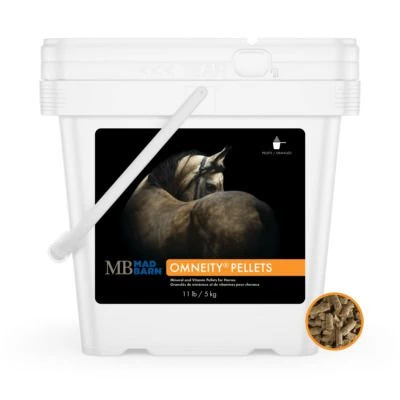
Mad Barn’s Omneity® is recommended as a comprehensive vitamin and mineral supplement formulated to meet the nutritional requirements of all horses. It delivers the full spectrum of nutrients required to support not only hoof growth, but also overall metabolic health, immune function, and performance.
- Complete and balanced: Provides over 20 essential vitamins and minerals in correct ratios to avoid over- or under-supplementation.
- Optimized for hoof health: Contains clinically relevant levels of biotin, methionine, zinc, and copper, along with supporting nutrients like lysine and selenium.
- Formulated for forage-based diets: Designed to fill common gaps in hay or pasture diets without excess calories or unnecessary fillers.
- Backed by science: Developed by equine nutritionists and used by veterinarians and farriers across North America to support hoof integrity and overall well-being.
Frequently Asked Questions
Here are some frequently asked questions about hoof balance in horses:
Hoof balance in horses refers to the alignment of the hoof capsule with the internal structures of the foot and the bony column of the limb. A balanced hoof helps distribute weight and ground forces evenly through the foot, reducing strain on joints, tendons, ligaments, and soft tissues. Balance is not just about how the hoof looks from the outside; it also depends on limb conformation, posture, movement, trimming, shoeing, and internal anatomy.
Hoof balance is important because the hoof is the main interface between the horse's body and the ground. When the hoof is balanced, it absorbs and redirects impact forces more efficiently during standing and movement. When the hoof is imbalanced, uneven loading can contribute to hoof capsule distortion, altered gait mechanics, lameness, and increased stress on structures such as the coffin joint, navicular bone, ligaments, and deep digital flexor tendon.
A balanced hoof usually has good hoof-pastern alignment, appropriate heel support, relatively even side-to-side loading, and a hoof capsule that is centered beneath the limb. The hoof wall should show minimal distortion, flaring, or abnormal wear, and the frog and back of the foot should be well-developed enough to support shock absorption. However, a balanced hoof does not always mean a perfectly symmetrical hoof, because some natural asymmetry in coffin bone shape, limb alignment, and movement can be normal.
Signs of hoof imbalance in horses can include uneven hoof wear, flares, cracks, under-run heels, long toes, sheared heels, toe-first landings, shortened stride length, or changes in posture. Some horses may point a front limb, shift weight frequently, or show reluctance to move forward if the imbalance is associated with discomfort. Because hoof imbalance can also reflect pain or dysfunction elsewhere in the body, persistent or worsening changes should be evaluated by a farrier and veterinarian.
Farriers assess hoof balance by evaluating the hoof while the horse is standing and while the horse is moving. Static assessment looks at features such as hoof-pastern axis, palmar or plantar angle, center of rotation, heel height, toe length, and side-to-side balance. Dynamic assessment considers how the hoof lands, whether the horse lands heel-first or toe-first, and whether one side of the hoof contacts the ground before the other during movement.
Static hoof balance describes the shape, alignment, and symmetry of the hoof when the horse is standing still. Dynamic hoof balance describes how the hoof functions during movement, including landing pattern, breakover, and side-to-side loading through the stride. Both matter because a hoof that appears acceptable at rest may still load unevenly during movement, especially if the horse has conformational asymmetry, pain, or altered posture.
Hoof-pastern axis is the relationship between the angle of the front hoof wall and the angle of the pastern. Ideally, these structures form a straight, continuous line that supports efficient force transfer through the lower limb. A broken-back hoof-pastern axis is often associated with a long toe and low or under-run heels, while a broken-forward hoof-pastern axis is associated with a steeper hoof capsule and higher heels.
Palmar or plantar angle is the angle between the ground and the bottom border of the coffin bone inside the hoof. "Palmar" refers to the front feet, while "plantar" refers to the hind feet. This angle is influenced by heel height, hoof capsule shape, and the development of the digital cushion and lateral cartilages, and radiographs provide the most accurate way to assess it.
A long toe can contribute to hoof imbalance by delaying breakover and shifting mechanical stress through the foot. When the toe becomes too long, the heels may be pulled forward, the center of rotation may shift, and the horse may be more likely to land toe-first. Over time, this can increase strain on internal structures such as the coffin joint, navicular bone, hoof ligaments, and deep digital flexor tendon.
Toe-first landings can be a problem because the main shock-absorbing structures are located at the back of the foot. A horse with a well-developed and balanced hoof typically lands flat or slightly heel-first at the walk and more consistently heel-first at faster gaits. Toe-first landings may increase mechanical stress, reduce shock dissipation, delay breakover, and contribute to strain through the back of the foot and flexor tendons.
Hoof balance does not have to be perfectly symmetrical to be healthy or functional. Some horses naturally have mild asymmetry in limb alignment, coffin bone shape, hoof size, or landing pattern. The goal is to support the horse's individual balance and reduce harmful stress, rather than forcing an idealized hoof shape that does not match the horse's conformation or natural movement.
Posture affects hoof balance because changes in how a horse stands alter how weight is distributed through the feet. Horses may shift weight, point a limb, stand canted-in or canted-out, or carry the head and neck stiffly when compensating for discomfort. Over time, these postural changes can create uneven pressure, abnormal hoof wear, soft tissue strain, and hoof capsule distortion.
Natural asymmetry can contribute to high-low hoof conformation, especially when a horse consistently loads one front limb more than the other. The more heavily loaded foot may become flatter and wider with a lower pastern axis, while the opposite foot may become narrower, steeper, and more upright. This pattern does not always mean the horse is painful, but it can reinforce uneven loading and should be monitored as part of regular hoof care.
Horses commonly benefit from farrier care every 4 to 6 weeks, although the ideal schedule depends on hoof growth rate, age, workload, terrain, season, and hoof quality. Regular trimming helps prevent excessive toe length, heel distortion, flares, uneven wear, and changes in landing pattern. Horses with conformational challenges, therapeutic shoeing needs, or active hoof problems may need a more individualized schedule.
A veterinarian should be involved in hoof balance problems when changes are associated with lameness, persistent discomfort, sudden gait changes, suspected laminitis, hoof capsule distortion that does not improve with farrier care, or signs of systemic disease. Veterinary assessment may include lameness evaluation, radiographs, ultrasound, thermography, or metabolic testing. This helps identify whether the imbalance is primarily mechanical or linked to internal hoof pathology, musculoskeletal pain, neurological issues, or metabolic conditions.
Nutrition can affect hoof balance by influencing hoof growth rate, horn quality, laminar strength, and the structural integrity of the hoof capsule. A balanced diet that supplies adequate protein, amino acids, vitamins, and minerals supports strong hoof growth and helps the hoof respond better to trimming, loading, and environmental stress. Key nutrients for hoof quality include biotin, methionine, zinc, and copper, but they work best as part of a complete and balanced diet rather than in isolation.
Horse owners can help maintain balanced hooves by scheduling regular farrier visits, monitoring hoof wear and gait changes, maintaining clean footing, supporting routine veterinary care, and feeding a balanced diet. Daily observation is important because subtle changes in posture, stride, landing pattern, wall flaring, frog development, or hoof wear may appear before obvious lameness. Hoof balance is an ongoing process that depends on coordinated farrier care, veterinary input, nutrition, environment, and the horse's individual conformation.
Summary
Hoof balance refers to the proper alignment and function of the hoof capsule relative to the horse’s limb and body. Maintaining balance is essential for optimal weight distribution, shock absorption, and movement efficiency, as well as for reducing the risk of injury and long-term wear on joints and soft tissues.
Whether hoof imbalance originates in the foot itself or stems from other areas of the body, consistent hoof care plays a critical role in preserving balance, supporting soundness, and promoting overall health.
- Work with a collaborative care team—including a farrier, veterinarian, and other professionals—to identify and address all factors contributing to hoof imbalance
- Hoof balance often shifts as horses age, change disciplines, or undergo variations in body condition, making regular farriery essential throughout the horse's life
- Assessing hoof balance requires consideration of how the horse places its feet when standing and moving, as well as posture, limb alignment, nutritional status, and metabolic health
- The horse’s comfort and soundness should always guide decisions about whether and how to intervene
References
- O'Grady. S. E. and Poupard. D. A. Proper Physiologic Horseshoeing. Veterinary Clinics: Equine Practice. 2003. View Summary
- Davies. H. Functional Anatomy of the Equine Digit: Determining Function from Structure. Equine Podiatry. Elsevier. 2007.
- Morrison. S. Shoeing Around the Coffin Joint. How to Manage Hoof Lameness II. 2020.
- Wilson. A. et al. Foot Placement of the Equine Forelimb: Relationship between Foot Conformation, Foot Placement and Movement Asymmetry. Equine Veterinary Journal. 2016. View Summary
- Weller. R. How to Evaluate Foot Conformation and Understand the Effect of Shoeing on Load Distribution. AAEP. 2020.
- Porter. S. and Tidy. N. M. Eds. Tidy's Physiotherapy 15th ed. . Elsevier Health Care. 2013.
- Carpenter. M. G. et al. Shifting the Balance: Evidence of an Exploratory Role for Postural Sway. Neuroscience. 2010.
- Ellis. K. L. and King. M. R. Relationship Between Postural Stability and Paraspinal Muscle Adaptation in Lame Horses Undergoing Rehabilitation. Journal of Equine Veterinary Science. 2020. View Summary
- Thomason. J. J. Variation in Surface Strain on the Equine Hoof Wall at the Midstep with Shoeing, Gait, Substrate, Direction of Travel, and Hoof Shape. Equine Veterinary Journal. Supplement. 1998. View Summary
- Craig. M. F. and Malone. S. R. A Review of the Solar Symmetry of the Hoof and Third Phalanx. Journal of Equine Veterinary Science. 2019.
- Merritt. J. et al. Digital Biomechanics Relevant to Laminitis. Equine Laminitis. John Wiley & Sons, Ltd. 2017.
- Taylor. D. D. et al. Evaluation of Displacement of the Digital Cushion in Response to Vertical Loading in Equine Forelimbs. American Journal of Veterinary Research. 2005. View Summary
- Parks. A. Structure and Function of the Equine Digit in Relation to Palmar Foot Pain. AAEP. 2006.
- Bowker. R. M. Contrasting Structural Morphologies of "Good" and "Bad" Footed Horses. AAEP. 2003.
- Schumacher. J. et.al. Localization of Pain in the Equine Foot Emphasizing the Physical Examination and Analgesic Techniques AAEP PROCEEDINGS 2012
- Redden. R. F. Clinical and Radiographic Examination of the Equine Foot. AAEP. 2003.
- Clayton. H. M. The Effect of an Acute Hoof Wall Angulation on the Stride Kinematics of Trotting Horses. Equine Veterinary Journal. 1990. View Summary
- Byström. A. and Clayton. H. M. Equestrian and Biomechanical Perspectives on Laterality in the Horse. Comparative Exercise Physiology. 2024.
- Gomez-Costa. M. et al. The Use of Pressure Plates for Static Center of Pressure Analysis in Horses Journal of Equine Veterinary Science 35 (2015) 315–320 https://doi.org/10.1016/j.jevs.2015.02.002
- Gellman. K. and Ruina. A. Standing Horse Posture: A Longer Stance Is More Stable. Biology Open. 2022. View Summary
- King. M. R. et al. Effect of Underwater Treadmill Exercise on Postural Sway in Horses with Experimentally Induced Carpal Joint Osteoarthritis. American Journal of Veterinary Research. 2013. View Summary
- Clayton. H. M. Core Training and Rehabilitation in Horses. The Veterinary Clinics of North America. Equine Practice. 2016. View Summary
- Floyd. A. E. Equine Podiatry. Elsevier. 2007.
- Bowker. R. The Growth and Adaptive Capabilities of the Hoof Wall and Sole: Functional. 49th Annual Convention of the American Association of Equine Practitioners. 2003.
- Kempson. S. A. and Campbell. E. H., A Permeability Barrier in the Dorsal Wall of the Equine Hoof Capsule. Equine Veterinary Journal. 1998. View Summary
- Josseck. H. et al. Hoof Horn Abnormalities in Lipizzaner Horses and the Effect of Dietary Biotin on Macroscopic Aspects of Hoof Horn Quality. Equine Veterinary Journal. 1995. View Summary
- Higami. Atsuko. Occurrence of white line disease in performance horses fed on low-zinc and low-copper diets. J Equine Sci. 1999.