English
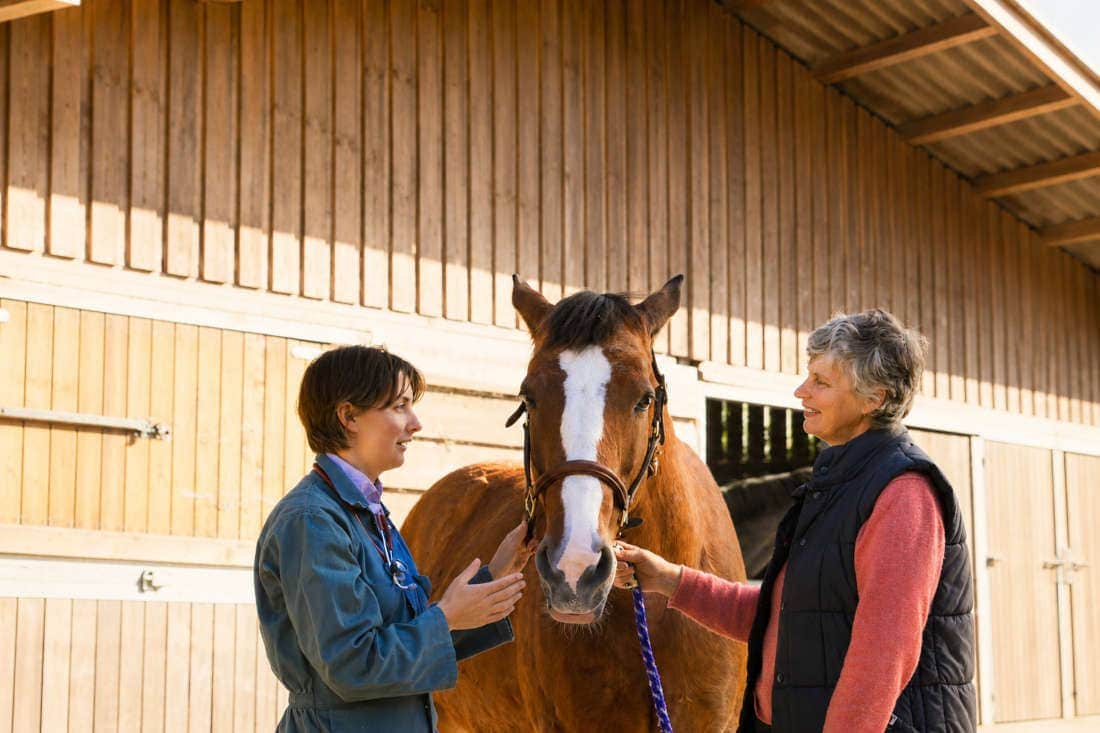
Equine health certificates are often required when horses travel for competition, sale, breeding, relocation, or international export. Issued after a veterinary examination, these official documents confirm that a horse met applicable movement requirements and showed no clinical signs of contagious disease at the time of inspection.
Health certificates are an important part of equine biosecurity. Because horses can carry infectious diseases before showing obvious signs, pre-travel examinations help reduce the risk of illness spreading between farms, events, regions, and countries.
Requirements vary by destination and purpose of travel. Owners may also need testing, vaccination records, import permits, identification documents, or competition-specific paperwork. Always confirm current regulations with a veterinarian and the relevant animal health authorities before departure.
Keep reading to learn when equine health certificates are required, how to obtain one, and how they fit alongside other documents needed for horse travel.
What Is an Equine Health Certificate?
An equine health certificate is an official veterinary document certifying that a horse was examined by an accredited veterinarian and found free of clinical signs of contagious or infectious disease at the time of inspection.
The certificate also records key identifying information and confirms that the horse meets the health requirements established by the destination jurisdiction. [1]
Health certificates are primarily a biosecurity tool, not a guarantee of a horse’s long-term health. The examination reflects the horse’s condition on the day of inspection and not their future health status. [1][2]
A horse that appears healthy during the examination may still be exposed to disease or develop clinical signs of illness after the certificate is issued. For this reason, many jurisdictions limit the validity period of certificates and may require additional testing or documentation before travel. [1][2]
In the United States, interstate health certificates are commonly issued as Certificates of Veterinary Inspection (CVIs). These documents are issued by veterinarians accredited through the United States Department of Agriculture (USDA) after they examine the horse and verify that any required testing is completed.
Most states require a valid CVI before a horse crosses state lines, although exact requirements vary by destination and purpose of travel. [3]
Other countries use different terminology for documents that serve the same purpose. In Canada, veterinarians issue international health certificates certifying that horses meet the importing country’s animal health requirements before export. [4]
Within the European Union, horse movements are regulated under the Animal Health Law and associated legislation. Certification requirements vary depending on whether horses are moving between Member States or entering from outside the EU.
Following the United Kingdom’s departure from the European Union, horses travelling between Great Britain and EU countries generally require export health certificates that comply with both UK and EU import rules. [5][6][4]
Horses competing internationally may also require veterinary documentation from sporting organizations. For example, the Fédération Équestre Internationale (FEI) requires horses attending FEI competitions to: [7]
- Comply with national veterinary import requirements
- Maintain appropriate identification documents
- Satisfy vaccination requirements
- Undergo veterinary examinations and biosecurity screening upon arrival
These measures complement rather than replace official government-issued health certificates. Compliance with national veterinary authorities remains mandatory for all international horse movements. [7]
A health certificate is not proof of ownership, permanent identification, vaccination history, or disease-free status. Instead, it provides evidence that a horse met the applicable health requirements and was considered fit for transport at the time of the veterinary examination.
Passports, import permits, vaccination records, and other documents may still be required depending on the destination.
What's your top priority with your horse's health?

What's your top priority with your horse's health?
Why Are Equine Health Certificates Required?
The primary purpose of an equine health certificate is to reduce the spread of infectious disease as horses move between farms, regions, and countries.
Horses can travel long distances in a short period, allowing diseases that might otherwise remain local to spread quickly if infected animals are transported. Health certification is one of several equine biosecurity measures authorities use to reduce this risk.
A health certificate confirms that an accredited veterinarian examined the horse shortly before travel and found no clinical signs of contagious or reportable disease at the time of inspection. Depending on the destination, the veterinarian may also verify that required laboratory tests, vaccinations, or other health requirements have been completed before issuing the certificate.
Health certificates also improve traceability during disease outbreaks. By recording the horse’s identity, origin, destination, owner, and inspection date, they help animal health authorities trace horse movements, identify exposed animals, and implement movement restrictions when necessary. This supports both national and international biosecurity programs.
These documents protect more than the individual horse being transported. They help safeguard the wider equine population, support safe movement for sport and trade, and reduce the economic impact of infectious disease outbreaks.
When Does a Horse Need a Health Certificate?
Whether a horse requires a health certificate depends on the laws and regulations of the destination jurisdiction. There is no standard rule that applies worldwide, and requirements may vary among countries, states, provinces, and individual events.
Before travelling, owners should confirm current requirements with their veterinarian and the relevant animal health authority. [1][8][7]
Common situations in which a certificate may be required include: [1][8][7]
- Interstate or interprovincial travel: In many countries, horses crossing state or provincial borders require an official health certificate. In the United States, most states require a valid CVI before a horse crosses state lines, although exemptions and additional requirements vary. Some states also require proof of a negative Coggins test for equine infectious anemia (EIA).
- International travel: Transporting a horse internationally almost always requires an official health certificate. Importing countries establish animal health requirements to prevent the introduction of infectious diseases that are absent or controlled within their borders. Horses may also need laboratory testing, vaccination records, import permits, residency declarations, quarantine, or other supporting documentation.
- Competitions and sporting events: Some competitions require health certificates as part of their entry requirements, particularly when horses cross state or national borders. For FEI events, horses must satisfy the host country’s import requirements, undergo veterinary examination upon arrival, meet vaccination requirements, and comply with biosecurity protocols throughout the event. These measures supplement official government health certification.
- Sales and relocation: Health certificates are commonly required when horses are sold and transported across state or international borders. Even when a certificate is not legally required for the sale itself, buyers may request one to confirm that a veterinarian examined the horse shortly before transport. Commercial transport companies may also require appropriate health documentation before accepting a horse for shipment.
- Emergency transport: Emergency veterinary referrals generally receive special consideration because immediate treatment may be necessary. However, emergency movement does not automatically exempt owners from applicable animal health regulations. Once the horse is stable, owners may still need to satisfy outstanding movement or reporting requirements.
Each country establishes its own import conditions, so required documents and testing protocols can differ substantially. Owners planning international horse transport should begin preparing several weeks or even months before departure, particularly if quarantine or multiple laboratory tests are required.
Table 1. When horses may need a health certificate
| Travel situation | Is a health certificate commonly required? | Other possible requirements | Planning guidance |
|---|---|---|---|
| Interstate or interprovincial travel |
|
|
|
| International travel |
|
|
|
| Competitions and sporting events |
|
|
|
| Sales and relocation |
|
|
|
| Emergency veterinary transport |
|
|
|
| Local travel within the same jurisdiction |
|
|
|
Not every journey requires a health certificate. Horses travelling locally within the same jurisdiction may not need one, depending on local regulations. Some states, provinces, or countries also provide exemptions for specific types of movement. Because exemptions vary considerably, owners should never assume that a certificate is unnecessary based on previous travel experiences.
How to Obtain an Equine Health Certificate
Obtaining an equine health certificate begins well before the day of travel. Depending on the destination, owners may need to schedule veterinary examinations, complete laboratory testing, update vaccinations, or obtain import permits several weeks in advance.
Planning ahead is particularly important for international travel, where requirements are often more complex than for domestic movement.
Health certificates are issued by veterinarians authorized to certify animals for transport under the regulations of their country. In many jurisdictions, the veterinarian must be accredited by the national veterinary authority.
Before issuing a certificate, the veterinarian performs a physical examination to determine whether the horse appears healthy and fit for transport. Although the exact examination varies according to the applicable regulations, it typically includes an assessment of:
- General attitude and behaviour
- Body condition
- Temperature
- Heart and respiratory rates
- Eyes, nose, and oral cavity
- Skin and coat
- Limbs and gait
- Evidence of wounds or injuries
- Clinical signs of contagious or infectious disease
If the horse shows signs of illness, fever, or another condition that could affect its health or pose a disease risk, the veterinarian may delay or decline certification until the problem has been resolved.
The veterinarian must also confirm the horse’s identity. Depending on the jurisdiction, this may involve verifying markings, brands, tattoos, passports, registration documents, or microchip information. Accurate identification connects the certificate to the correct horse and supports disease traceability if an outbreak occurs.
Required Testing & Supporting Documents
Many destinations require supporting documentation before issuing a health certificate. Requirements vary considerably but may include: [1][7][9][10]
- A negative equine infectious anemia (EIA/Coggins) test
- Vaccination records
- Laboratory testing for specific diseases
- Residency or travel history declarations
- Export documentation
The veterinarian verifies that all applicable requirements are satisfied before completing the certificate. For international travel, the importing country’s animal health regulations determine which tests and documents are required. Once these requirements are met, the veterinarian completes the certificate using the format specified by the relevant veterinary authority.
Because the document reflects the horse’s health status only at the time of examination, it is usually issued shortly before the planned journey. Owners should avoid scheduling the examination too far in advance, as the certificate may expire before departure.
Other Necessary Travel Documents
An equine health certificate confirms that a horse meets specific health requirements for travel, but it is not the only document owners may need. Destination countries may require some of the same documentation veterinarians need to issue a health certificate, such as laboratory test results or import permits.
Owners may also need to provide other records separate from the health certificate but still important for safe, legal, and organized equine travel. [1][7][11][12][13]
Owners should confirm all documentation requirements well in advance, since missing supporting records can delay certification, transport, or entry at the destination. Some of those documents may include: [1][7][11][12]
- Horse passport: A horse passport is a permanent identification document that remains with the horse throughout its life. Depending on the issuing country or organization, it may include identifying markings, microchip information, ownership or registration details, vaccination history, and medication records. Unlike a health certificate, a passport does not certify that the horse is healthy or fit to travel. Some journeys require both documents.
- Coggins test: A Coggins test is a laboratory test used to detect equine infectious anemia, a viral disease affecting horses worldwide. Many jurisdictions, particularly in North America, require proof of a recent negative result before horses cross state, provincial, or national borders. A Coggins certificate is not a substitute for a health certificate; it is supporting documentation that may be required for certification or entry.
- Vaccination records: These records document which vaccines a horse has received and when they were administered. Certain destinations or competitions require proof of vaccination against diseases such as equine influenza. Although vaccination history may be reviewed during certification, vaccination records remain separate documents. A horse may require both up-to-date vaccination records and a valid health certificate.
- Import permits: Some countries require an import permit before a horse enters the country. Issued by the importing authority, the permit specifies the health requirements that must be met before travel. A health certificate does not replace an import permit. Instead, the veterinarian completes the certificate to demonstrate that the horse satisfies the permit conditions and the importing country’s regulations.
- Transport permits: Some jurisdictions require inspection by a brand inspector before livestock can be transported off property, to auction facilities, or across state or province boundaries. These permits are separate from a health inspection and do not verify the horse’s suitability to travel. Instead, they confirm ownership of the animal and document which animals are found on each trailer or truck load. This helps authorities identify stolen animals on trailers or trucks arriving at sales facilities or pulled over by law enforcement.
- FEI passport and competition documents: Horses competing in international FEI events may require an FEI Passport or FEI Recognition Card, depending on the competition and destination. They must still comply with the veterinary regulations of the host country and complete required biosecurity procedures upon arrival.
Table 2. Comparison of common equine travel documents
| Document | Primary Purpose | Issued By |
|---|---|---|
| Health certificate (CVI or Export Health Certificate) | Certifies that the horse was examined and met movement health requirements before travel | Accredited veterinarian |
| Horse passport | Provides permanent identification and a lifetime record | Breed registry, passport authority, or recognized organization |
| Coggins certificate | Confirms a negative test for equine infectious anemia | Approved diagnostic laboratory and veterinarian |
| Vaccination record | Documents vaccination history | Veterinarian |
| Import permit | Authorizes entry into the destination country | Importing country’s veterinary authority |
| Transport permit | Authorizes transport of designated animals between two locations | Local brand or livestock inspectors |
| FEI Passport or Recognition Card | Identifies horses competing in FEI events and records required information | Fédération Équestre Internationale and National Federation |
Horse owners often need several documents for a single journey. A horse travelling to an international competition, for example, may require a health certificate, passport, negative Coggins test, vaccination records, import permit, and FEI documentation before it can legally enter the destination country and compete.
How Long Is an Equine Health Certificate Valid?
The validity period of an equine health certificate depends on the regulations of the destination jurisdiction. There is no universal expiration period, so owners should always confirm current requirements before arranging travel. [1][3]
In many parts of the United States, a CVI is valid for 30 days from the date of examination, although some states require a shorter validity period or impose additional conditions. Certain states also issue extended or “equine passport” movement permits that allow frequent travel within participating jurisdictions under specific circumstances.
Because state regulations change periodically, owners should verify the requirements of both the state of origin and the destination before departure. [1][14]
Validity periods are often shorter for international travel and are determined by the importing country’s veterinary authority. Export health certificates are typically issued shortly before departure so the examination accurately reflects the horse’s health at the time of shipment. If laboratory testing, quarantine, or additional inspections are required, they must usually be completed within specific timeframes established by the importing country. [14][15]
A certificate may become invalid before its stated expiration date if the horse’s health changes. A horse that develops a fever, nasal discharge, neurological signs, or another potentially infectious condition after certification should not travel until it has been examined again.
Similarly, exposure to a reportable disease before departure may trigger additional testing or movement restrictions, regardless of the certificate’s stated validity period.
Disease conditions can change rapidly during outbreaks, and veterinary authorities may introduce temporary movement restrictions or emergency certification requirements. Owners should check for disease alerts affecting their destination before travelling.
Schedule the veterinary examination as close to the planned departure date as practical while allowing enough time for laboratory results and required paperwork. This helps keep the certificate valid throughout the journey.

Common Reasons Equine Health Certificates Are Refused or Delayed
Most health certificates are issued without difficulty when owners prepare in advance and their horses are healthy. However, certification may be delayed or refused if a horse does not meet the destination’s animal health requirements or if required documentation is incomplete.
Common reasons for delays or refusals include:
- Signs of illness: A veterinarian cannot issue a health certificate for a horse showing clinical signs of illness or a condition that could pose a disease risk during transport. The veterinarian may investigate the underlying cause, postpone travel until the horse has recovered, or require additional diagnostic testing.
- Missing or expired laboratory tests: Many destinations require specific tests before horses can travel. If required results are unavailable, expired, or outside the accepted testing period, the certificate usually cannot be issued until new testing is completed.
- Incomplete identification: Missing microchip information, inconsistent documents, incorrect registration details, or unclear descriptions of markings can delay certification while the horse’s identity is verified. For international travel, authorities may compare the certificate with passports, registration documents, and microchip records before permitting entry.
- Missing documentation: Health certification often depends on supporting paperwork. Missing vaccination records, import permits, laboratory results, or owner declarations can delay the process even when the horse is healthy.
- Disease outbreaks and movement restrictions: During outbreaks of reportable diseases, veterinary authorities may temporarily restrict movement to limit disease spread. Horses may be prohibited from travelling even if they already have a valid health certificate.
Tips to Avoid Delays
Most certification problems can be prevented with careful planning. Before arranging travel:
- Check the destination’s current movement requirements
- Book the veterinary examination well before departure
- Schedule the examination sufficiently close to the intended travel date
- Confirm that all required laboratory tests remain valid
- Ensure identification documents and microchip information are accurate
- Gather vaccination records and supporting paperwork
- Monitor disease alerts or temporary movement restrictions affecting the destination
Preparing these documents in advance helps reduce the risk of cancelled trips and provides time to address unexpected issues before departure. Owners transporting horses to events should also follow appropriate show biosecurity practices throughout the journey.
How Much Does an Equine Health Certificate Cost?
The cost of an equine health certificate varies based on the destination, the veterinarian’s fees, and any additional testing or documentation required. Because each country, state, or province sets its own movement requirements, there is no standard price.
For domestic travel, owners typically pay for the veterinary examination, certificate preparation, and any associated farm-call or travel fees. Required laboratory testing is usually charged separately. [16]
International travel is generally more expensive because additional requirements often apply. Depending on the importing country’s regulations, costs may include:
- Laboratory testing
- Import permits
- Government endorsement of export documents
- Pre-export quarantine
- Additional veterinary examinations
- Microchip verification or identification services
- Customs or border inspection fees
These costs can vary considerably depending on the complexity of the import requirements.
Factors That Influence the Cost
Several factors can affect the total cost of obtaining a health certificate, including:
- Whether the journey is domestic or international
- The destination’s animal health requirements
- The number of laboratory tests required
- Veterinary call-out fees
- Government certification or endorsement fees
- Quarantine requirements
- Whether travel arrangements must be expedited
Because the total cost can vary substantially, owners should discuss the destination’s requirements with their veterinarian and request an estimate. This is especially important for international travel, where testing schedules, permit applications, and government processing times can all affect the total cost.
When obtaining a quotation, confirm whether the estimate covers only the veterinary examination and health certificate or also includes laboratory testing, government fees, and additional travel documentation.
Plan Ahead for Equine Health Certification
Equine health certificates support safe, legal horse travel by confirming that a veterinarian examined the horse and found no clinical signs of contagious disease at the time of inspection.
The certificate is only one part of travel preparation. Depending on the destination and purpose of the journey, owners may also need laboratory test results, vaccination records, identification documents, import permits, quarantine arrangements, or competition paperwork. Requirements and validity periods vary, so documents used for a previous trip may no longer satisfy current regulations.
Begin planning as early as possible, especially for international transport. Contact your veterinarian and the relevant animal health authority to confirm the destination’s current requirements, testing windows, processing times, and potential fees. Schedule the veterinary examination close enough to departure that the certificate remains valid, while allowing sufficient time to correct identification discrepancies or replace missing records.
Careful preparation, current documentation, and open communication with your veterinarian provide the best foundation for a smooth journey while protecting the travelling horse and the wider equine community.
Frequently Asked Questions
Here are some frequently asked questions about equine health certificates:
An equine health certificate is an official document confirming that an accredited veterinarian examined a horse before travel. It records the horse's identity, origin, destination, and health status and confirms that the horse met the applicable movement requirements at the time of inspection. The certificate is primarily a biosecurity and traceability tool, not a guarantee that the horse is free from every disease or will remain healthy after the examination.
Equine health certificates are required to help reduce the spread of infectious diseases between farms, events, regions, and countries. Horses can carry some diseases before showing obvious signs, so a pre-travel examination helps identify potential health concerns before transport. The information on the certificate also allows animal health authorities to trace horse movements and identify exposed animals during a disease outbreak.
Not every horse needs a health certificate to travel because requirements depend on the destination, purpose of travel, and applicable local regulations. Local movement within the same jurisdiction may not require certification, while interstate, interprovincial, or international travel commonly does. Competitions, sales, breeding facilities, relocation, and commercial transport may also have specific documentation requirements, so owners should confirm the current rules before each journey.
An equine health certificate can only be issued by a veterinarian who is authorised to certify horses for movement under the applicable regulations. In many jurisdictions, the veterinarian must be accredited or officially approved by the national veterinary authority. The veterinarian must examine the horse, confirm its identity, review the required test results and supporting documents, and verify that the destination's conditions have been met.
Before issuing a health certificate, a veterinarian checks whether the horse appears healthy, fit for transport, and free from clinical signs of contagious or infectious disease. The examination may include the horse's temperature, heart and respiratory rates, body condition, behaviour, eyes, nose, mouth, skin, limbs, gait, wounds, and injuries. The veterinarian also verifies the horse's identity using markings, a microchip, a passport, registration records, or other accepted documentation.
Documents required in addition to a health certificate may include a horse passport, vaccination records, laboratory test results, an import permit, travel history declarations, or export paperwork. Competition horses may also need identification and veterinary documents required by the relevant sporting organisation. The exact combination depends on the destination and purpose of travel, and one document generally cannot be used as a substitute for another.
A Coggins test is not the same as an equine health certificate. The Coggins test is a laboratory test used to detect equine infectious anemia, while a health certificate documents a veterinary examination and confirms that movement requirements were met. Some destinations require both a recent negative Coggins test and a valid health certificate before a horse can enter.
The length of time an equine health certificate remains valid depends on the destination's regulations. In many parts of the United States, a Certificate of Veterinary Inspection is commonly valid for 30 days, but some states use shorter periods or impose additional conditions. International certificates often have shorter timelines, so owners should confirm the applicable period and arrange the examination close enough to departure to prevent the certificate from expiring.
A health certificate can become invalid before its stated expiration date if the horse's health status changes or new movement restrictions are introduced. A horse that develops a fever, nasal discharge, neurological signs, or another potentially infectious condition after certification should not travel until it has been reassessed by a veterinarian. Exposure to a reportable disease or the introduction of emergency restrictions during an outbreak may also prevent movement.
An equine health certificate should be arranged as soon as the horse's travel plans are confirmed. Although the veterinary examination is usually completed shortly before departure, laboratory testing, import permits, government processing, and quarantine may take several weeks or months. Early planning provides time to complete these requirements while allowing the final examination to occur within the certificate's permitted validity period.
A veterinarian can refuse or delay an equine health certificate if the horse appears ill, is not fit for transport, or does not meet the destination's requirements. Missing or expired laboratory results, incomplete vaccination records, identification discrepancies, and absent import documents can also prevent certification. Travel may need to be postponed until the health concern is resolved or the missing requirements are completed.
A health certificate does not guarantee that a horse will be allowed to travel or enter the destination. Authorities may deny movement if permits, tests, vaccination records, identification documents, or other entry conditions are incomplete. Disease outbreaks can also lead to temporary restrictions, even when a valid certificate has already been issued, so owners should check for updated requirements and disease alerts before departure.
A horse generally cannot travel internationally with only a health certificate. The importing country may also require laboratory testing, vaccination records, an import permit, a passport, microchip identification, residency declarations, quarantine, or government endorsement of export documents. Owners should begin preparing well in advance and confirm the importing country's current requirements with their veterinarian and the relevant animal health authority.
A horse may need a health certificate for a competition depending on the event location and entry requirements. Certification is commonly required when the horse crosses a state, provincial, or national border, and event organisers may request additional vaccination or testing records. International competitors must also follow the host country's import rules and any veterinary examinations or biosecurity procedures imposed by the governing organisation.
Emergency transport does not automatically exempt a horse from animal health regulations. Immediate movement for urgent veterinary treatment may receive special consideration, but owners can still be required to meet outstanding certification, reporting, or movement conditions once the horse is stable. The referring veterinarian and relevant authorities can advise on the requirements that apply to the emergency journey.
The cost of an equine health certificate varies according to the veterinarian's fees, destination, examination, and supporting requirements. Domestic costs may include the farm call, physical examination, certificate preparation, and laboratory testing, while international travel can also involve permits, government endorsement, quarantine, identification services, and border inspections. Owners should request an itemised estimate and confirm whether testing, government fees, and additional paperwork are included.
Summary
Equine health certificates confirm that a veterinarian examined a horse before travel. Requirements vary by destination and type of journey.
- Health certificates support biosecurity by documenting the horse's health status at inspection
- Interstate, international, competition, sale, or relocation travel may require certification
- Veterinarians examine the horse, verify identification, and review required documents
- Owners may also need Coggins tests, vaccination records, permits, or passports
- Illness, expired tests, incomplete identification, or missing paperwork can delay certification
- Owners should confirm current requirements before travel and plan around validity periods
References
- Kirkland. B. Understanding Certificates of Veterinarian Inspection (Health Certificates). Penn State Extension. 2024.
- Biosecurity Measures. US Equestrian.
- Certificates of Veterinary Inspection (CVIs). American Veterinary Medical Association.
- Horses: Animal Health Certificates and Sanitary Requirements for Export. Canadian Food Inspection Agency. 2026.
- Equines: Model Health Certificates. GOV.UK. 2024.
- Travelling to Europe. British Equestrian. 2026.
- 2026 Veterinary Regulations. Fédération Equestre Internationale. 2026.
- Terrestrial Animal Health Code: Volume I, General Provisions, 28th Edition. World Organisation for Animal Health. 2019.
- NVAP Reference Guide: Issuing International Health Certificates for Live Animal Movement. USDA Animal and Plant Health Inspection Service. 2026.
- VS Guidance and Other Documents Related to Importing Equines. USDA Animal and Plant Health Inspection Service. 2026.
- APHIS-SENASICA NWS Protocol for the Importation of Equines from Mexico to the United States. USDA Animal and Plant Health Inspection Service and SENASICA. 2025.
- What Is a FEI Passport/FEI Recognition Card?. Fédération Equestre Internationale. 2025.
- Kirkland. B. What Is a Coggins Test?. Penn State Extension. 2022.
- Health Certificates. Michigan Department of Agriculture and Rural Development.
- NVAP Reference Guide: International Animal Movement. USDA Animal and Plant Health Inspection Service. 2026.
- Veterinary Services Import/Export User Fees. USDA Animal and Plant Health Inspection Service. 2026.