English
Muscle soreness in horses commonly develops after strenuous or unfamiliar exercise. Affected horses may feel stiff, take shorter strides, or seem less willing to perform as their muscles recover from the increased workload. Mild exercise-related soreness is usually temporary and improves with appropriate rest and recovery. [1]
A muscle strain is a more significant injury involving overstretched or damaged muscle fibers. Strains often occur during sudden movements, slips, falls, or exercise that places excessive force on a muscle. They may cause localized pain, swelling, or lameness. [1]
Signs of muscle discomfort can also stem from problems elsewhere in the body. Hoof pain, joint disease, soft-tissue injuries, and back pain may alter a horse’s movement and contribute to secondary muscle soreness. [2]
Recognizing changes in your horse’s usual movement, comfort, and performance can help identify concerns early. Keep reading to learn how to distinguish routine soreness from a possible strain, support recovery, and recognize when veterinary evaluation is needed.
What Is Muscle Soreness in Horses?
Muscles repeatedly contract and relax to create movement and stabilize the horse’s body. Exercise places stress on these tissues, particularly when the work is more intense, lasts longer, or differs from what the horse is accustomed to. [3]
Temporary soreness can develop after strenuous or unfamiliar exercise. This is sometimes called delayed-onset muscle soreness (DOMS) because discomfort may become more noticeable in the hours or days following exercise rather than immediately after the workout. [1]
Horses experiencing post-exercise muscle soreness may feel stiff or tender and show subtle changes in movement or performance. This type of soreness should gradually improve as the muscles recover. [1][4]
Delayed-onset muscle soreness differs from a muscle strain. DOMS develops in response to exercise, whereas a strain involves physical injury to muscle fibers. However, not every horse that feels stiff after exercise has either condition.
Fatigue, pain elsewhere in the musculoskeletal system, and some medical conditions can produce similar signs. [1][2][5] Soreness that is pronounced, localized, persistent, or worsening warrants further investigation.
What's your top priority with your horse's health?

What's your top priority with your horse's health?
What Is a Muscle Strain?
A muscle strain occurs when muscle fibers are stretched beyond their limits. Mild strains may involve a small amount of tissue damage, while more severe injuries can involve substantial tearing of muscle fibers and surrounding tissues. [5]
Strains can occur when a horse slips, falls, makes a sudden movement, or performs work that places excessive force on a muscle. The affected area may become painful, swollen, or firm, and the horse may alter their movement to protect it. [1]
The severity and location of the injury influence how noticeable the signs are and how long recovery may take. [1][5]
Muscle Soreness vs. Muscle Strain
Muscle soreness and muscle strain can look similar from the outside. Both can cause stiffness, tenderness, and reduced performance. [1][5]
The main difference is that ordinary post-exercise soreness reflects a temporary response to muscular work, whereas a strain involves physical damage to muscle fibers. Significant strains generally cause more localized or persistent signs and require more time for the tissue to heal. [1][3][5]
Owners cannot always distinguish between the two based on signs alone. If a horse is clearly painful, lame, or failing to improve, a veterinary examination can help determine whether there is a muscle injury or another source of discomfort. [1][2][5]
Table 1. Muscle soreness vs. muscle strain in horses
| Feature | Exercise-related muscle soreness | Muscle strain |
|---|---|---|
| What it involves |
|
|
| Typical cause |
|
|
| Onset |
|
|
| Pattern |
|
|
| Common signs |
|
|
| Expected course |
|
|
| Management |
|
|
| When to investigate |
|
|
Signs of Muscle Soreness & Strain in Horses
Signs vary depending on which muscles are affected and the severity of the problem. Mild soreness may only become apparent during grooming or exercise, while a significant strain can cause obvious pain and changes in movement. [6]
Common signs of muscle discomfort in horses include: [6]
- Muscle stiffness
- Tenderness when muscles are touched
- Shortened or restricted stride
- Reluctance to move forward
- Reduced performance
- Difficulty bending or engaging normally
- Resistance during grooming or saddling
- Changes in posture
- Localized swelling or firmness
- Reluctance to stretch
- Lameness
These signs are not specific to muscle injury. A horse with joint, hoof, tendon, ligament, or back pain may show many of the same changes. [1][4]
Muscle twitching, spasms, and cramping are different from simple muscle soreness or strain. These signs involve involuntary muscle contractions and can have different underlying causes. They should not automatically be interpreted as evidence that a horse has pulled or strained a muscle. [2][4][7]
Common Areas of Muscle Soreness in Horses
Muscle discomfort can occur anywhere in the body, but owners often notice tenderness in areas that perform substantial work during exercise. [1][6]
The large muscles along the back and topline help stabilize the spine and transfer forces between the front and hindquarters. The gluteal and other hindquarter muscles provide much of the power required for forward movement, acceleration, and collection. [5][6][8]
Muscles of the neck help control the head and neck while contributing to balance and posture. The shoulder and chest muscles also play important roles in moving and stabilizing the forelimbs.
Tenderness in one of these areas does not necessarily mean that the muscle itself is the primary problem. Localized soreness can develop when a horse compensates for discomfort elsewhere. [1][4][8]
Signs During Exercise
Muscle discomfort may first become noticeable when the horse is asked to work. An affected horse may have difficulty maintaining their usual rhythm, stride length, or impulsion. [1][4][6]
Some horses become reluctant to perform movements that require greater muscular effort, such as collection, lateral work, jumping, transitions, or working on hills. Others may feel generally stiff or less willing to move forward. [1][4][6]
Changes in behavior under saddle can also occur when movement becomes uncomfortable. However, resistance to a particular exercise does not identify where the pain originates, and owners should not automatically attribute resistance to muscle soreness. [4][8]
Signs After Exercise
Owners may notice stiffness after the horse cools down or after they have been standing following exercise. Muscles may feel tender during grooming, and the horse may initially move more cautiously when brought out the following day. [7]
In some cases, soreness does not become noticeable immediately after exercise. This is known as delayed-onset muscle soreness (DOMS) and may develop in the hours or days following strenuous or unfamiliar work. [1]
Mild post-exercise soreness should gradually improve with recovery. Increasing pain, obvious lameness, marked swelling, or persistent soreness may indicate a muscle strain or another underlying problem. [1][2]
Other Conditions & Signs That Can Be Mistaken for Muscle Soreness
Not every stiff or painful horse has simple exercise-related muscle soreness or a strain. Similar signs can occur with: [4]
- Exertional rhabdomyolysis (tying-up)
- Hoof pain or laminitis
- Joint disease
- Tendon or ligament injuries
- Back or neck pain
- Neurological disease
- Muscle disorders such as polysaccharide storage myopathy (PSSM)
Muscle twitching, spasms, or cramping can also indicate a different type of muscle problem, and owners should not automatically interpret these signs as soreness or strain. [4][7] Because these conditions can overlap in how they affect movement, comfort, and performance, persistent, severe, or recurrent signs should be assessed by a veterinarian.
When to Call the Veterinarian
Mild exercise-related soreness should improve with recovery. Pain or stiffness that is severe, worsening, or accompanied by other signs may indicate a significant muscle injury or another underlying problem. [2]
Contact your veterinarian promptly if your horse develops: [1][2][4][5]
- Severe or rapidly increasing muscle pain
- Marked stiffness or reluctance to move
- Significant swelling
- Heavy or unexplained sweating
- Weakness
- Dark or reddish-brown urine
- Severe lameness
- Difficulty standing or remaining upright
Do not force a severely painful or stiff horse to continue exercising. These signs can occur with significant muscle damage or other conditions that require prompt veterinary assessment. [1][2][5]
Causes of Muscle Soreness & Strain in Horses
Muscle soreness can develop whenever the demands placed on a horse’s muscles exceed what they are currently prepared to handle. This does not necessarily mean the horse exercised excessively. Even moderate work can cause soreness when the activity is unfamiliar or follows a period of reduced exercise. [1][9]
Muscle strains are more likely when muscles experience sudden or excessive force. [1][3]
Strenuous or Unfamiliar Exercise
Increasing the intensity, duration, or type of exercise places new demands on the muscles. This can change which muscles work hardest, how much force they produce, and how long they need to stay active.
Activities that may increase demands on a horse’s muscles include: [1]
A conditioned horse can also become sore after an unusually demanding competition or training session or a prolonged period of exercise. [10]
Inadequate Conditioning
Conditioning allows muscles and other tissues to gradually adapt to exercise. Horses returning to work after illness, injury, winter downtime, or another period of reduced activity may fatigue more quickly than before. [11]
Increasing workload too rapidly can contribute to soreness and may increase the risk of injury. A progressive conditioning program gives the horse time to develop the strength and endurance required for more demanding work. [11]
Muscle Fatigue & Overload
As muscles fatigue, they become less able to produce and control movement efficiently. Other muscles may then work harder to maintain balance and compensate.
Repeated overload can contribute to generalized soreness or localized discomfort. Fatigue may be particularly relevant during prolonged exercise or when horses continue performing after their normal movement begins to deteriorate. [1][10][11]
Slips, Falls & Sudden Movements
Muscle strains can occur when a muscle is suddenly stretched or contracts forcefully. Situations that may lead to a strain include: [1]
- Slipping on wet or unstable footing
- Falling or stumbling
- Sudden acceleration or stopping
- Awkward jumping or landing
- Scrambling during transport
- Getting cast and struggling to rise
- Sudden movements during turnout or play
The horse may be noticeably sore immediately after the incident, or signs may become more apparent later. [1][5]
Footing & Training Conditions
Deep, slippery, uneven, or unusually firm footing can change the forces placed on the horse’s body. Muscles must continually stabilize the limbs and trunk as the horse moves across the surface.
Abrupt changes in footing can also alter how the horse uses their body. Appropriate surfaces and workload adjustments are particularly important when horses are fatigued or performing demanding movements. [1]
Compensatory Muscle Soreness
Pain or lameness can change the way a horse moves and uses their muscles. Horses may redistribute weight away from a painful limb, changing the activity of muscles in other parts of the body. [8]
Over time, these compensatory movement patterns may contribute to muscle fatigue, tension, or soreness. This means the area that feels sore is not always the source of the original problem.
Underlying causes may include: [8]
- Hoof pain
- Joint disease
- Tendon injuries
- Ligament injuries
- Back or neck pain
When muscle soreness persists or repeatedly returns, it is important to identify and address the underlying source of discomfort rather than treating the sore muscles alone. [8]
Tack & Rider Factors
Poorly fitting tack can create localized pressure and discomfort, particularly over the back. Rider position, balance, and the type of work performed can also influence how the horse uses their muscles. [12][13]
Owners should consider these factors as part of the horse’s overall management, particularly when soreness repeatedly develops in the same area. [12][13]
Diagnosing Muscle Soreness & Strain in Horses
The goal of diagnosis is not only to identify sore muscles but also to determine why they are sore. [1][2]
Diagnosis begins with the horse’s history and a physical examination. Your veterinarian may ask about recent exercise, changes in workload, falls or slips, previous injuries, and whether the problem appeared suddenly or gradually. [1][2][5]
The examination may include palpating muscles for pain, swelling, heat, or changes in tone and observing the horse’s posture and movement. A lameness examination may be necessary when the horse has an altered gait. [1][5]
Additional testing depends on the suspected cause and extent of the problem. [1][2]
Blood tests can measure muscle enzymes such as creatine kinase (CK) and aspartate aminotransferase (AST). Increased concentrations can indicate muscle damage and are particularly useful when a veterinarian suspects widespread muscle injury or exertional rhabdomyolysis. [2][14]
Ultrasound may help assess a suspected muscle tear or another localized soft-tissue injury. In selected cases, additional imaging, muscle biopsy, or genetic testing may be recommended when an underlying muscle disorder is suspected. [5][6]

Treatment of Muscle Soreness & Strain in Horses
Treatment depends on the cause and severity of the soreness. A horse that is mildly stiff after unfamiliar exercise requires different management from a horse with a significant strain or another cause of muscle pain. [4][15]
If your horse is significantly painful, lame, or showing signs of a serious muscle problem, contact your veterinarian before attempting treatment or exercise. [4][5]
Rest & Activity Modification
Reducing strenuous exercise gives sore or injured muscles time to recover. Complete stall rest is not necessary or appropriate for every muscle problem, and some horses may benefit from controlled movement during recovery. [1][5][16]
The appropriate amount and type of activity depends on the injury and the horse’s overall condition. Horses with a suspected significant strain should follow a veterinary rehabilitation plan rather than returning to normal work as soon as they appear comfortable. [1][5][15]
Managing Acute Muscle Injuries
Veterinarians may recommend cold therapy during the early stage of some acute muscle injuries to help manage pain and swelling. They may also prescribe anti-inflammatory or pain-relieving medication when appropriate. [16]
Avoid aggressive massage, deep pressure, or forceful stretching over a newly injured and painful area. These techniques may be introduced later in recovery if they are appropriate for the specific injury. [1][15]
Massage, Stretching & Rehabilitation
Massage, gentle stretching, and other rehabilitation techniques may be useful for selected horses once significant injury has been ruled out or the initial healing period has passed. [16]
These approaches are not a substitute for veterinary diagnosis and professional rehabilitation. Repeatedly treating a sore area without determining why the pain is recurring can allow an underlying problem to continue. [15][16]
Prognosis
Most horses with mild exercise-related muscle soreness recover well with appropriate rest and management. The outlook for a muscle strain depends on the location and extent of tissue damage, as well as whether the horse is given enough time to heal and rehabilitate before returning to full work. [5]
Persistent or recurrent soreness has a more variable outlook because an underlying source of pain, training issue, or muscle disorder may be involved. Identifying the cause is an important part of recovery and can help these horses return to comfortable, consistent work. [1][2]
Recovery & Return to Work
The expected recovery time for equine muscle strains and similar injuries varies considerably. Mild exercise-related soreness may resolve relatively quickly, while a significant muscle strain can require weeks or longer for healing and rehabilitation. [15]
Return to work should be gradual. Early exercise may involve controlled walking before progressing to longer sessions and more demanding work. [15]
Owners should generally increase exercise duration before intensity. As the horse regains strength and remains comfortable, owners can progressively reintroduce speed work, jumping, hills, collection, and other strenuous exercises. [15]
Watch for recurring tenderness, stiffness, shortened stride, or changes in willingness to perform. A return of signs may indicate that the workload has progressed too quickly or the original problem has not fully resolved. [15]
Preventing Muscle Soreness & Strain
Appropriate conditioning and workload management can help owners prepare the horse’s muscles for the demands of exercise. [1][11]
Increase workload progressively, particularly when a horse is returning from time off or beginning a new type of work. Avoid making large increases in speed, distance, jumping, hill work, or other demanding exercise over a short period. [1][11]
A gradual warm-up allows the horse to transition into more strenuous exercise, while a cool-down provides a progressive reduction in workload before the horse returns to rest. [17]
Adequate recovery between demanding sessions is also important. Training programs should account for the horse’s fitness, age, discipline, travel, competition schedule, and recent workload. [15][17]
Regular hoof care, appropriate footing, and correctly fitted tack support comfortable movement. Owners should also become familiar with their horse’s normal stride, muscle tone, behavior during grooming, and usual recovery after exercise. [12][13]
Changes in an individual horse’s normal movement patterns can provide an early indication that something is wrong. [1][5]
Muscle Health & Nutritional Support
Good nutrition provides the energy and nutrients horses need for normal muscle function, exercise, and recovery. Horses in work need enough calories to support their activity level, as well as adequate high-quality protein to maintain and repair muscle tissue.
Protein provides amino acids, which the body uses to build and maintain muscle. Essential amino acids must come from the diet because the horse cannot produce enough of them. [18] Vitamin E and selenium also support normal muscle function and help protect cells from oxidative damage. [19]
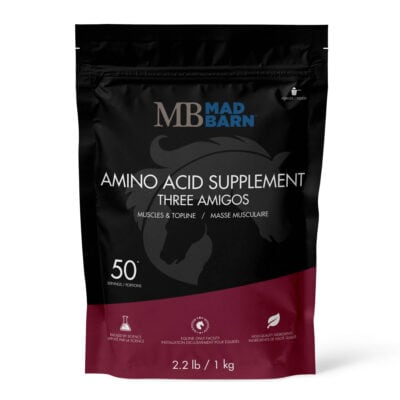
For horses whose diets provide adequate total protein but may be short in key limiting amino acids, Three Amigos provides lysine, methionine, and threonine to support protein synthesis, muscle maintenance, and topline development.
This pure amino acid supplement should be used as part of a balanced feeding program, and an equine nutritionist can help determine whether it is appropriate for your horse.
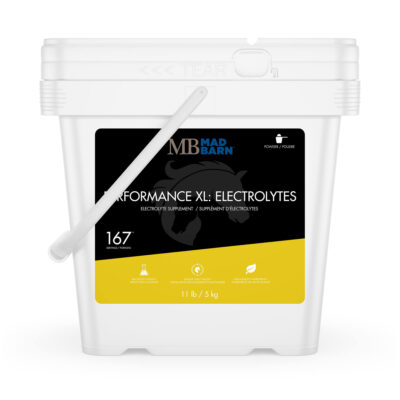
Horses also lose water and electrolytes in sweat, particularly sodium and chloride. Horses that sweat heavily during exercise, hot weather, or prolonged work may need additional electrolytes along with free access to fresh water. [20][21]
For horses that sweat heavily, Performance XL Electrolytes provides sodium, chloride, potassium, calcium, and magnesium to help replace electrolytes lost in sweat and support hydration, fluid balance, and normal muscle function during exercise and recovery.
Electrolytes are important for normal muscle and nerve function, but muscle soreness does not necessarily mean your horse needs more electrolytes. Persistent or recurring muscle pain can have many possible causes and should be investigated rather than assumed to be a nutritional problem. [19][21]
If you are unsure whether your horse’s diet meets their energy, protein, vitamin, mineral, or electrolyte needs, our equine nutritionists can review your horse’s diet and help you develop a balanced feeding program.
Nutrition is one part of supporting healthy muscles. A well-balanced diet cannot compensate for excessive workload, inadequate conditioning, or an untreated injury, but it can help ensure your horse has the nutrients needed to support training and recovery.
Frequently Asked Questions
Here are some frequently asked questions about muscle soreness and strains in horses:
A horse with sore muscles may feel stiff or tender, take shorter strides, resist grooming or saddling, or become less willing to move forward and perform demanding exercises. Some horses also have difficulty bending, engaging their hindquarters or maintaining their usual rhythm. Because hoof, joint, tendon, ligament, back and neurological problems can cause similar signs, persistent or pronounced soreness should be investigated by a veterinarian.
The difference between muscle soreness and a muscle strain is that routine soreness is a temporary response to muscular work, while a strain involves physical damage to muscle fibres. Exercise-related soreness may become noticeable in the hours or days after strenuous or unfamiliar work and should gradually improve during recovery. A strain is more likely to cause localized pain, swelling, firmness, lameness or persistent discomfort, although a veterinary examination may be needed to distinguish between the two.
Telling the difference between muscle soreness and lameness can be difficult because muscular discomfort can alter a horse's gait, while pain elsewhere can cause secondary muscle soreness. Localized tenderness may suggest muscular discomfort, but it does not confirm that the muscle is the original source of pain. A veterinary lameness examination may be necessary to evaluate the horse's movement and determine whether the problem originates in a muscle, hoof, joint or another structure.
Muscle soreness in horses should gradually improve as the muscles recover from strenuous or unfamiliar exercise. The exact recovery time depends on the workload, the horse's conditioning and whether an injury is present. Soreness that persists, worsens or occurs with marked swelling or lameness may indicate a strain or another underlying problem rather than routine post-exercise soreness.
The healing time for a pulled muscle in a horse depends on the location and extent of the damaged tissue. A mild strain may recover relatively quickly, while a substantial tear can require weeks or longer of healing and controlled rehabilitation. The horse should return to work gradually under veterinary guidance, with more demanding activities reintroduced only when the horse remains comfortable.
Whether you should exercise a horse with sore muscles depends on the cause and severity of the discomfort. Controlled movement may be appropriate for mild post-exercise stiffness, but complete stall rest is not necessary or suitable for every muscle problem. A horse that is clearly painful, lame, severely stiff or suspected of having a significant strain should not be pushed through exercise without veterinary guidance.
Muscle soreness after exercise commonly develops when the work is longer, harder or less familiar than the horse is conditioned to perform. Sudden increases in speed, distance, jumping, hill work or collection can place new demands on the muscles, especially after time off. Fatigue, poor footing, inadequate conditioning and continuing to work after the horse's movement begins to deteriorate can also contribute to soreness.
Muscles commonly affected by soreness in horses include those along the back and topline, neck, shoulders, chest and hindquarters. These areas contribute substantially to balance, stabilization, forward movement, acceleration and collection. Tenderness in one region does not necessarily mean that the muscle itself is the primary problem, as horses may develop compensatory soreness when discomfort elsewhere changes how they move.
Poor saddle fit can cause muscle soreness by creating localized pressure and discomfort over the horse's back. Rider position, balance and the demands of the work can also influence how the horse uses their muscles. Recurrent back soreness should be assessed carefully because hoof pain, lameness, back problems and other musculoskeletal conditions may also be involved.
A horse recovering from exercise should receive a balanced diet that provides adequate energy, high-quality protein, essential amino acids, vitamins and minerals for their workload. Vitamin E and selenium support normal muscle function, but excessive selenium can be toxic, so supplementation must be considered within the complete diet. Horses that sweat heavily also need free access to fresh water and may require appropriate electrolyte replacement based on their individual workload and losses.
Electrolytes can support normal muscle and nerve function in a horse that loses substantial sodium, chloride and other minerals through sweat. However, muscle soreness does not automatically mean that the horse has an electrolyte deficiency or requires additional supplementation. Persistent or recurrent soreness can have many causes and should be investigated rather than treated solely as a nutritional problem.
Massage may help some horses with muscle tension or soreness after a significant injury has been ruled out or the initial healing period has passed. Gentle massage and stretching can support an appropriate rehabilitation program, but they should not replace diagnosis or treatment of the underlying cause. Avoid aggressive massage, deep pressure or forceful stretching over an acutely painful, swollen or recently injured area.
Muscle soreness and strains are diagnosed using the horse's history, a physical examination and an assessment of posture and movement. A veterinarian may palpate the muscles for pain, heat, swelling or changes in tone and perform a lameness examination when the gait is altered. Blood tests may help identify muscle damage, while ultrasound or other testing may be recommended for a suspected tear or underlying muscle disorder.
You can help prevent muscle strains in horses by increasing workload progressively and allowing enough time for strength and endurance to develop. A gradual warm-up, appropriate cool-down and adequate recovery between demanding sessions help prepare muscles for exercise and reduce fatigue. Regular hoof care, suitable footing, correctly fitted tack and avoiding abrupt increases in speed, distance or intensity also support comfortable movement.
You should call a veterinarian when a horse's muscle soreness is severe, persistent, recurrent, worsening or associated with significant swelling or lameness. Prompt veterinary attention is especially important if the horse develops marked stiffness, weakness, heavy or unexplained sweating, dark or reddish-brown urine, severe pain, difficulty standing or reluctance to move. These signs may indicate substantial muscle damage or another medical condition and should not be treated as routine post-exercise soreness.
Summary
Muscle soreness is often a temporary response to strenuous or unfamiliar exercise, while a muscle strain involves damaged muscle fibers. Persistent, severe, or worsening signs warrant veterinary investigation.
- Muscle soreness may cause stiffness, tenderness, shorter strides, reduced performance, or reluctance to move
- Strains can occur during slips, falls, sudden movements, awkward landings, or excessive muscular force
- Hoof pain, joint disease, soft-tissue injuries, back pain, and muscle disorders can cause similar signs
- Diagnosis may involve palpation, movement assessment, blood tests, ultrasound, or other targeted tests
- Recovery requires appropriate rest or controlled movement followed by a gradual return to work
- Progressive conditioning, suitable footing, balanced nutrition, and properly fitted tack support muscle health
References
- McGowan. C. Traumatic Muscle Injuries. Veterinary Clinics of North America: Equine Practice. 2025.
- Valberg. S. J. Sporadic and Recurrent Exertional Rhabdomyolysis. Veterinary Clinics of North America: Equine Practice. 2025.
- Liburt. N. R. et al. Exercise‐induced Increases in Inflammatory Cytokines in Muscle and Blood of Horses. Equine Veterinary Journal. 2010.
- Valberg. S. J. Muscle Conditions Affecting Sport Horses. Veterinary Clinics of North America: Equine Practice. 2018.
- Walmsley. E. A. et al. Muscle Strain Injuries of the Hindlimb in Eight Horses: Diagnostic Imaging, Management and Outcomes. Australian Veterinary Journal. 2010.
- Valberg. S. J. Spinal Muscle Pathology. Veterinary Clinics of North America: Equine Practice. 1999.
- Valberg. S. J. Muscular Causes of Exercise Intolerance in Horses. Veterinary Clinics of North America: Equine Practice. 1996.
- St. George. L. B. et al. Adaptations in Equine Appendicular Muscle Activity and Movement Occur during Induced Fore- and Hindlimb Lameness: An Electromyographic and Kinematic Evaluation. Frontiers in Veterinary Science. 2022.
- Suagee-Bedore. J. K. et al. Impacts of DigestaWell NRG Supplementation on Post Exercise Muscle Soreness in Unconditioned Horses, a Pilot Study. Journal of Equine Veterinary Science. 2021.
- Roberts. C. et al. The Relationship Between Blood Lactate, Serum Muscle Enzymes, Jumping Performance and Muscle Soreness in Show‐Jumping Horses. Equine Veterinary Journal. 2014.
- Siciliano. P. D. et al. Effect of Conditioning and Exercise Type on Serum Creatine Kinase and Aspartate Aminotransferase Activity. Equine Veterinary Journal. 1995.
- Greve. L. and Dyson. S. Saddle Fit and Management: An Investigation of the Association with Equine Thoracolumbar Asymmetries, Horse and Rider Health. Equine Veterinary Journal. 2015.
- Dyson. S. et al. Saddle Fitting, Recognising an Ill‐fitting Saddle and the Consequences of an Ill‐fitting Saddle to Horse and Rider. Equine Veterinary Education. 2015.
- Valberg. S. J. et al. Muscle Histopathology and Plasma Aspartate Aminotransferase, Creatine Kinase and Myoglobin Changes with Exercise in Horses with Recurrent Exertional Rhabdomyolysis. Equine Veterinary Journal. 1993.
- King. M. R. and Colla. S. Therapeutic Exercises for Rehabilitation of Muscle Injury. Veterinary Clinics of North America: Equine Practice. 2025.
- Atalaia. T. et al. Equine Rehabilitation: A Scoping Review of the Literature. Animals. 2021.
- Frippiat. T. and Votion. D.-M. Warm-Up Strategies and Effects on Performance in Racing Horses and Sport Horses Competing in Olympic Disciplines. Animals. 2024.
- Nutrient Requirements of Horses: Sixth Revised Edition. National Academies Press, Washington, D.C. 2007.
- Finno. C. J. and McKenzie. E. C. Vitamin E and Selenium-Related Manifestations of Muscle Disease. Veterinary Clinics of North America: Equine Practice. 2025.
- McConaghy. F. F. et al. Equine Sweat Composition: Effects of Adrenaline Infusion, Exercise and Training. Equine Veterinary Journal. 1995.
- Lindinger. M. I. Oral Electrolyte and Water Supplementation in Horses. Veterinary Sciences. 2022.