English
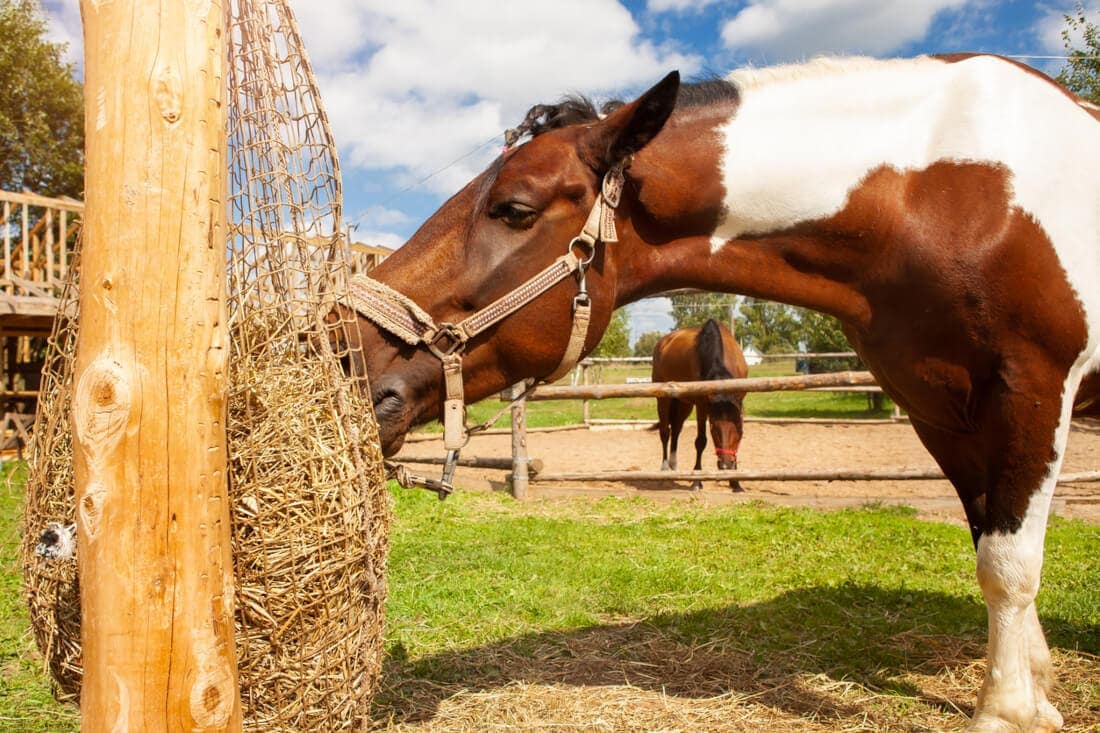
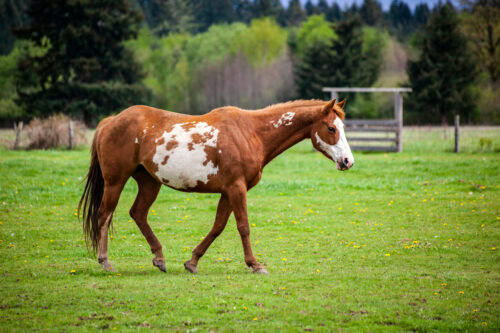
An average horse consumes about 2% of its body weight in hay daily, which equates to 10 kg of hay per day for a typical 500 kg (1,100 lb) horse [1].
With that much forage to manage, simply tossing bales on the ground may seem convenient but often leads to waste, hoof trampling, and even respiratory issues or impaction colic when dust and dirt are ingested.
A well-designed hay feeder keeps forage clean and fresh and helps promote natural grazing behavior by slowing intake. This supports healthy body condition, prevents long gaps between meals, reduces boredom, and minimizes hay waste.
From slow-feed nets and ground rings to round-bale huts and automatic dispensers, the right hay feeder can significantly impact a horse’s health and behavior — supporting digestive function, preventing overeating, improving quality of life, and reducing costs.
This guide explores the most popular hay feeders for horses on the market, highlights key selection criteria, and shares expert tips to ensure every bite of hay counts.
Types of Hay Feeders
Hay feeders (also known as hay holders) for horses are devices or structures designed to hold and dispense hay. These feeding systems benefit horses and farm operations alike by:
- Keeping hay off the ground
- Reducing waste
- Minimizing feed contamination
- Promoting natural, controlled feeding behavior
Hay feeders come in various shapes, sizes, and designs, catering to different environments (stalls, paddocks, pastures) and feeding needs. Some are designed for individual horses, while others accommodate large herds by reducing competition for resources.
This article explores some of the most popular hay feeders that are available on the market, including:
- Slow feeders
- Ground feeders
- Hay rings
- Skid feeders
- Wooden feeders
- Round bale feeders
- Hay huts and covered hay feeders
- Automatic hay feeders
- Hanging feeders
- Corner hay feeder
- Hay racks
- Hay nets
- Hay bags
- Hay balls
- Hay pillows
Selecting a Hay Feeder
When selecting a hay feeder, there are a number of considerations to keep in mind. The size and eating habits of your herd determine the required capacity and number of access points.
Evaluate ease of refilling and cleaning to maintain hygiene and minimize time spent on upkeep. You should also think about how the feeder supports natural grazing posture while fitting your budget and stable layout.
By keeping all of these priorities in mind, you can select a hay feeding system that is efficient and economical while also promoting equine quality of life.
Nutrition Requirements
Hay feeders are an effective tool for owners managing horses with differing nutritional needs. Horses with higher caloric requirements such as lactating or pregnant mares, foals, and horses in heavy work need access to more feed than mature horses at maintenance. [1]
It’s common for horses with a range of energy requirements to live together. Hay feeding systems provide versatility so owners can restrict intake for some horses while allowing free-choice access for others.
Promoting Natural Feeding Behavior
In the wild, horses evolved to eat small amounts throughout the day, spending 16 – 18 hours per day grazing. [2] In modern domestic settings, it’s common for horses to receive two daily meals instead of having free-choice access to forage. [3]
While feeding meals may be more convenient from an operational point of view, trickle feeding is more aligned with the horse’s natural feeding behavior and gastrointestinal system.
When horses do not spend enough time foraging, they may become stressed and develop stereotypies, including: [4]
- Cribbing
- Weaving
- Pacing
- Wood chewing
Long periods without forage increase the risk of gastric ulcers. Horses constantly produce gastric acid, even when the stomach is empty, which can erode the gastric mucosa. Continuous access to hay provides a natural buffer against acid, protecting the stomach lining and reducing ulcer risk.
By providing continuous access to hay, owners can also reduce stress, prevent stereotypies, and manage calorie intake to maintain optimal body condition. A dedicated hay feeding system effectively addresses these management challenges.
What's your top priority with your horse's health?

Enter your email to receive your store credit
Feeding Posture
Horses evolved to eat with their heads low to the ground, a posture referred to as long-and-low neck carriage. [2] Eating with the head held high can cause neck and back pain and impair nasal passage clearance, increasing the risk of respiratory issues. [5][6]
Hay can be dusty, and feeders that force horses to push their muzzles into the forage may aggravate equine asthma and other respiratory conditions. Owners and caretakers should select feeding systems that encourage a natural, head-down posture to minimize dust inhalation and prevent long-term complications.
Safety
Hay feeders come in a range of materials, but suitability varies with the environment and the individual horse.
Fabric or net feeders can entangle a horse’s hooves, shoes, or legs, creating an injury hazard. Conversely, hard plastic or metal feeders may develop sharp edges as they wear.
Positioning feeders at the correct height and location, and conducting routine inspections for wear and hazards, helps prevent injuries.
Bale Dimensions
Hay can be purchased in different formats including round and square bales. Some hay feeders accommodate one or the other. There are also hay feeders that require unbaled hay.
Consideration should be given to which type of hay feeder is most convenient to load with the preferred format of hay.
Feeding Environment
Some operations feed their horses indoors (stall feeding), while others provide feed outdoors during turnout (pasture or paddock feeding).
If stall feeding is preferred, space-saving options such as wall-mounted or corner feeders are helpful. If paddock or pasture feeding is preferred, choosing weather-resistant materials and covered feeders to protect the feed and the horses from weather may be necessary.
Some hay feeders are designed for use during transport. Some options are portable, which allows owners to move the feeding location as needed, while others are permanent installations.
Waste
Hay feeders are especially effective for minimizing waste. When hay is offered directly on the ground, a large portion of the forage gets spread around and trampled as the horses are eating.
Hay feeders are designed to prevent this from happening, which means that less hay is wasted or ruined, reducing overall costs.
Cost, Maintenance & Convenience
The cost of hay feeders varies widely. Factors that influence the purchase price and long-term maintenance requirements include:
- Durability of the materials
- Location of the feeder on the property
- Degree of exposure to the elements
- Number of horses in the herd or paddock
- Expected lifespan of the feeder
Some DIY hay feeders can be built from materials commonly found on the farm, but they require labour to assemble and often lack the durability and functionality of commercial feeders.
Convenience is another consideration when choosing a hay feeder. The required loading frequency and effort for the caretaker depend on multiple factors, including:
- Number of horses using the system
- Which format of hay the feeder can accommodate
- Where hay storage is located relative to the feeder
- Number of feeding locations on the farm
In addition, regular cleaning and maintenance are required to maintain function and safety of the feeders. Choosing a design that is easy to disassemble and clean is recommended.
Outdoor Hay Feeders
Outdoor feeders are built to resist the elements — moisture, UV rays and rough terrain — so your hay stays dry and mold‑free. Many designs also provide multiple feeding stations to accommodate multiple horses and minimize waste in pasture settings.
Ground Feeders
Ground feeders are feed containers designed to sit on the ground in the paddock or pasture. They can be made of metal, wood, plastic, or other material. Some are boxes or low pallets, while others are a ring or crib-shaped. [7]
Styles of ground feeder include:
- Ring feeders (hay rings)
- Skid feeders
- Wooden feeders
| Pros and Cons of Ground Feeders | |
|---|---|
| Pros | Cons |
| Promote natural feeding posture | Exposed to the elements if left uncovered |
| Reduce hay waste | Increased risk of ingesting dirt and debris |
| Minimizes contamination | High installation costs (permanent feeders) |
| 360 degree access for multiple horses | |
| Low installation costs (portable feeders) | |
Bale Feeders
A bale feeder is a metal, plastic, or wood structure that accommodates an entire bale of hay. Some are designed for square bales, others for round ones, and some can accommodate both types. [7]
| Pros and Cons of Bale Feeders | |
|---|---|
| Pros | Cons |
| Promote natural feeding posture | Exposed to the elements if left uncovered |
| High capacity reduces loading frequency | Technically not permanent, but difficult to move |
| 360 degree access for multiple horses | |
The purchase price of bale feeders varies depending on the size and materials, and whether you want accessories like custom hay nets.
Hay Huts & Covered Hay Feeders
Hay huts and covered hay feeders are equipped with a roof to protect hay left outdoors from the weather. Some styles are portable and designed to be lowered over a whole bale of hay. Others are permanent or semipermanent structures, similar to uncovered bale feeders.
| Pros and Cons of Covered Feeders | |
|---|---|
| Pros | Cons |
| Protects hay from the elements | Fewer access points for multiple animals |
| Moderate installation cost | |
Automatic Hay Feeder
Automatic hay feeders are feeding machines that dispense small amounts of hay at fixed intervals over the course of the day. Some designs are hay racks with the addition of a blind, wind nets or other devices that close on a schedule to prevent the horse from continuing to eat. [8]
Advanced versions use computerized chip identification to feed individual horses a measured ration. [8] These feeders are the most expensive type, but are useful for large operations managing horses with different nutritional requirements.
| Pros and Cons of Automatic Feeders | |
|---|---|
| Pros | Cons |
| Feeding schedule can be finely tuned | Horses who learn the feeding schedule may bolt feed |
| Offers tailored feeding for individual horses | Increased risk of resource guarding between horses |
| Encourages movement when the dispenser is closed (horses will leave the feeder to graze elsewhere) |
Does not account for different feeding rates between horses |
| Moderate re-loading frequency | |
Indoor Hay Feeders
If feeding the horse indoors is preferred, there are several different options to choose from. Many indoor feeders can also be adapted for use outdoors, making them a versatile option for many operations.
Hanging Feeders
Hanging feeders are hay holders suspended from or attached to a stable wall, fence, or other structure. These include plastic or metal bucket or trough-shaped feeders that hook onto surfaces. Some hanging feeders are designed to fit into corners and are called corner feeders. Others are made of metal bars and are called hay racks. [7]
| Pros and Cons of Hanging Feeders | |
|---|---|
| Pros | Cons |
| Effective for travel and in stalls | Feeder must be placed at optimal position to promote natural feeding posture |
| Easy to re-load | Low capacity, requires frequent re-loading |
| Space saving | Limited access for multiple horses |
| Low installation costs | |
There are both semi-permanent and portable hanging feeder designs available on the market. It is also possible for facilities to build their own hanging feeders from reclaimed materials around the farm.
Hay Nets & Bags
Hay nets are bags made from mesh that can be hung from a wall, fence, or other immobile surface or object. The size of the holes determines how quickly the horse can access the hay. The smaller the hole, the longer it takes for the horse to consume a given amount of hay. [7][9]
| Pros and Cons of Hay Nets & Bags | |
|---|---|
| Pros | Cons |
| Effective for travel and in stalls | Feeder must be placed at optimal position to promote natural feeding posture |
| Slows rate of intake | Low capacity, requires frequent re-loading |
| Space saving | Limited access for multiple horses |
| Low installation costs | Risk of entanglement in tack or horse hooves |
| Portable | |
Hay nets are an effective tool for slowing consumption as part of a larger weight management program for overweight horses. They are also suitable for use during travel and in stalls.
Hay bags are similar to hay nets – they are designed to hold hay and hang somewhere the horse can access them. The main difference between these two systems is the material used in their construction. While a hay net is made of mesh, a hay bag is made of fabric with one or more openings to allow the horse to access the food. [9]

Hay Balls
Hay Balls are perforated plastic balls that hold hay. Similar to “hunting simulation” cat feeders and many styles of dog puzzles, the horse can play with a hay ball as they try to figure out how to access the hay inside.
Keep in mind that hay balls are not intended as the primary feeding system for a horse. Rather, they offer effective enrichment to keep your horse mentally stimulated between feedings.
| Pros and Cons of Hay Balls | |
|---|---|
| Pros | Cons |
| Provides effective enrichment, which may reduce stereotypies | Not a primary feeding system |
| Easy to soak hay once it is loaded | Limited access for multiple horses |
| Limited capacity | |
| Time consuming to load | |
Hay balls are also an option for use within a broader weight management program, creating a challenge for horses to get at the feed while limiting overall intake. However, using a hay ball for weight management is only effective if the horse is interested in playing with it. Once the horse loses interest, they will abandon it and graze elsewhere.
Hay Pillows
Hay pillows are similar to hay bags, but are meant to be left on the ground. Each hay pillow is made of fabric and stuffed with hay, which horses can access through holes in the fabric.
| Pros and Cons of Hay Pillows | |
|---|---|
| Pros | Cons |
| Promote natural feeding posture | Exposed to the elements if left uncovered |
| Reduce hay waste | Risk of entanglement in tack or horse hooves |
| Low installation costs (portable feeders) | Limited access for multiple horses |
| Hay is easily contaminated | |
Hay pillows offer versatility as they can be placed throughout the farm, both indoors and outdoors. They provide light protection from the elements, but hay is easily trampled once the quantity in the pillow is low.
Frequently Asked Questions
Here are some frequently asked questions about hay feeders for horses:
Slow‑feed nets, hay bags, and hay balls slow intake, mimic natural foraging patterns, provide enrichment, and help prevent overeating and digestive issues.
Provide one extra feeder beyond the number of horses, select designs with multiple access points like ground rings or skid feeders, and allow enough space around each feeder to reduce competition and stress.
Clean feeders weekly to remove debris, mold, and old hay; disassemble removable parts for thorough washing and inspect for sharp edges or wear that could injure horses.
Yes—by preventing hay from being trampled or soiled, feeders can significantly reduce hay waste, translating into significant cost savings over time.
Slow feeders promote trickle feeding, keeping horses' stomachs from emptying and lowering the risk of gastric ulcers while encouraging natural grazing behavior.
Summary
When choosing a hay feeder, horse owners should consider the nature of the horse, the location in which it will be fed, and the convenience and cost of each system. There are many options to choose from, each with its own advantages and disadvantages.
- There are feeding systems available for indoor and outdoor use, and for individual and group feeding.
- All systems require regular maintenance and cleaning to protect horse health and safety.
- Never feed moldy or spoiled hay to livestock.
- The optimal feeding system and program promotes movement and continuous grazing to mimic the horse's natural feeding behavior, which improves overall equine welfare.
References
- National Research Council Nutrient Requirements of Horses. 2007.
- Duncan, P., Horses and Grasses: The Nutritional Ecology of Equids and Their Impact on the Camargue. Springer Science & Business Media. 2012.
- Moore-Colyer, M. et al., Where Are We Now? Feeds, Feeding Systems and Current Knowledge of UK Horse Owners When Feeding Haylage to Their Horses. Animals. Multidisciplinary Digital Publishing Institute. 2023. View Summary
- Hothersall, B., and Casey, R., Undesired Behaviour in Horses: A Review of Their Development, Prevention, Management and Association with Welfare. Equine Veterinary Education. 2012.
- Hodgson. S. et al., Posture and Pull Pressure by Horses When Eating Hay or Haylage from a Hay Net Hung at Various Positions. Animals. Multidisciplinary Digital Publishing Institute. 2022. View Summary
- Ivester, K. M. et al., Environmental Exposures and Airway Inflammation in Young Thoroughbred Horses. Journal of Veterinary Internal Medicine. 2014. View Summary
- 4 Types of Hay Feeders & Choosing the Right One. Palouse Ranches. 2021.
- Nordic AutoFeed - Automatic Slow Feeding Solution. AutoFeed.
- Glunk. E. C. et al., The Effect of Hay Net Design on Rate of Forage Consumption When Feeding Adult Horses. Journal of Equine Veterinary Science. 2014.