English


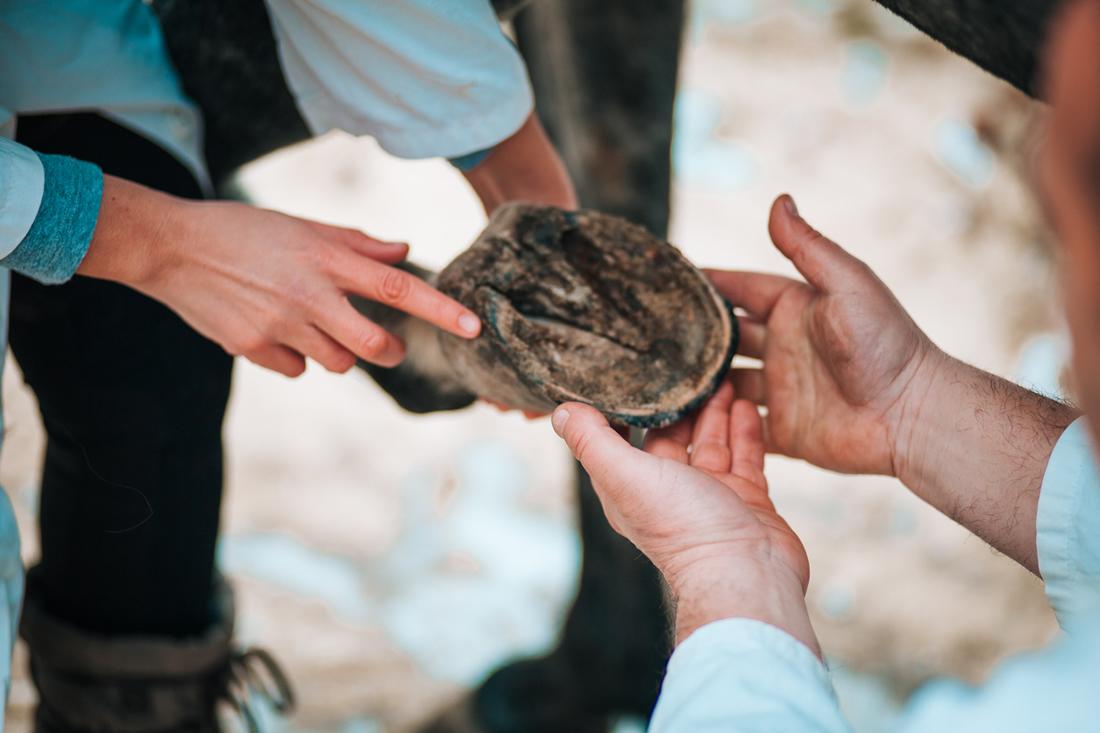
A hoof abscess in horses is a localized bacterial or fungal infection within the hoof capsule that causes a buildup of pus and pressure, leading to sudden, often severe lameness.
The invading microorganisms and the ensuing immune response generate purulent exudate (pus) which causes pressure inside the hoof. This leads to pain, structural damage and lameness.
To prevent potentially permanent damage and suffering, hoof abscesses should be treated promptly.
Clinical examination including a lameness evaluation, the use of hoof testers, and radiographic imaging can aid in the diagnosis of the condition.
Abscesses are treated by promoting drainage of the exudate within the hoof and clearing the infection from it. Supporting hoof growth and a strong hoof structure is critical to regaining comfort and mobility.
What Is a Hoof Abscess in Horses?
A common cause of sudden lameness, a hoof abscess refers to an accumulation of purulent fluid (pus) produced by infected tissue within the foot of the horse. As pressure builds within the rigid hoof capsule, affected horses often exhibit acute pain and varying degrees of lameness.
Equine hoof abscesses typically develop beneath the sole of the hoof or behind the hoof wall. [1][2]
Hoof abscesses can develop if microorganisms gain entrance through the hoof capsule (the epidermal layer) into the inner tissues of the hoof (the dermal layers), usually through a crack, separation, or puncture wound.
Once inside the hoof, these microorganisms become trapped between the sensitive laminae (the tissue layer that bonds the hoof capsule to the coffin bone) and the hoof wall or sole, where they multiply and trigger an inflammatory response. [3]
Bacterial Infection
Hoof abscesses are most commonly associated with bacterial infections within the enclosed space of the hoof capsule. When bacteria invade the inner tissues, the body responds by producing inflammatory fluid and exudate (pus).
Because the hoof capsule is rigid and cannot expand, the accumulation of this material leads to an increase in pressure within the hoof, resulting in significant pain. [4]
Bacterial entry into the hoof capsule typically occurs through a crack, separation, or break in the hoof tissues. Infectious organisms may penetrate the hoof in the following ways: [1]
- A defect or separation in the wall of the hoof
- A crack in the junction between the wall and the sole of the hoof
- A puncture wound on the solar surface of the hoof, including the sole or frog
As pressure and inflammation increase, affected horses often develop sudden, severe lameness.
If left untreated, the infection can extend deeper within the hoof tissues and, in cases involving penetrating wounds, may compromise the podotrochlear (navicular) apparatus, potentially resulting in permanent damage to the hoof and its internal structures. [5]
What's your top priority with your horse's health?

Enter your email to receive your store credit
Causes of a Hoof Abscess
Microorganisms cause a hoof abscess when they enter the hoof capsule through a structural defect in the hoof wall, sole, or white line.
Once inside the enclosed environment of the hoof, bacteria multiply and trigger inflammation, leading to accumulation of pus and increased internal pressure. The most common ways microorganisms gain access to the hoof capsule include the following: [4]
- Foreign objects such as nails, screws and glass can penetrate the hoof
- Horseshoe nails placed inside in the area where the hoof wall meets the sole (in the white line)
- Poor hoof quality due to genetic or environmental factors may compromise the integrity of the hoof
- Wet conditions caused by rainy weather or dirty stalls can cause the hoof to soften and become vulnerable to bacteria entering
- Brittle hooves caused by fluctuating moisture levels in the environment can promote cracked hooves
- Improper hoof management that causes flares or crushed heels can weaken the hoof structure and cause fissures
- Nutritional deficiencies, including in methionine, biotin, zinc, copper and essential fatty acids can compromise the integrity of the hoof wall and white line, lowering the ability to resist infection
All horses can be affected by hoof abscesses. Hoof abscesses are most likely to occur during the wettest seasons of the year including the spring and winter, although they can occur at any time.
How a Hoof Abscess Develops
An abscess forms after foreign material has entered the hoof through an open fissure and subsequently migrated deeper into the structure to form a tract inside of it.
The pressure exerted on the hoof due to the weight of the horse promotes the migration of the microorganisms into the innermost dermal tissues.
The immune system initiates an inflammatory response inside the dermal tissues of the hoof capsule in response to foreign debris in this area. [1] As the invading microorganisms propagate in the tissue, inflammatory cells infiltrate the affected area.
The release of enzymes from the inflammatory cells and microorganisms promotes the death of cells in the tissues (necrosis) and the development of a grey/black colored exudate. [1]
The accumulation of exudate and the presence of inflammation in the tissue elicits a painful response in the horse because the hoof is unable to accommodate swelling.
A hoof abscess forms as the body responds to the infection in the affected tissues by sealing off the area with a thin layer of fibrous tissue. [1]
Clinical Signs of a Hoof Abscess
Hoof abscesses can cause a variable degree of discomfort in affected horses, although most horses experience a rapid onset of severe lameness. In the early stages of the abscess, lameness may be subtle but can later progress to a non-weight bearing state.
A hoof with an abscess within it will be warmer to the touch than the other hooves.
The affected foot will also have a digital pulse that is greater in intensity compared to the other hooves. The pulse is more noticeable on one side of the affected foot if the infection is localized to one side.
If a hoof abscess has worsened over time, it can cause inflammation and swelling that extends into the pastern and even further up the leg past the fetlock joint. The pastern or heel bulbs and the coronary band may also be swollen.
Hoof Abscesses and Laminitis
Laminitis is a painful hoof condition in horses that results from damage to the laminar tissues, which attach the hoof wall to the coffin bone. As these tissues become inflamed and weakened, bleeding or edema (fluid pockets) may develop within the hoof wall or beneath the sole.
These pockets of fluid or blood create internal pressure and pain. If there is a tissue defect, bacteria can enter and infect the area, leading to a septic abscess. In some cases, the fluid remains sterile, resulting in a non-septic abscess. Infected or not, the buildup of fluid increases pressure within the rigid hoof capsule.
During recovery from laminitis, the body attempts to clear damaged tissue and fluid. Some pockets may be resorbed, but many must migrate outward and find a pathway to drain. This drainage process typically begins around two weeks after an acute laminitis episode.
Horses often appear more lame at this stage because the formation of a drainage tract through the hoof tissues is itself an inflammatory process. Although it may seem logical to administer anti-inflammatory drugs at this time, doing so can slow or interfere with the drainage process while providing limited pain relief.
Instead, pain can be managed with Tramadol or Fentanyl patches, which do not suppress inflammation in the same way. Poulticing and soaking may also help encourage drainage and reduce discomfort.
Development of septic (infected) or non-septic abscesses is therefore a common complication of laminitis. Horses with chronic laminitis or non-laminitic metabolic syndrome often have stretched white lines and laminar wedge tissue that is porous, allowing bacteria to colonize deeper within the hoof and increasing the likelihood of recurrent abscesses.
Diagnosing a Hoof Abscess
Diagnosis of a hoof abscess begins with a thorough veterinary examination, including a detailed history and lameness evaluation. Because hoof abscesses can cause sudden and severe lameness, they must be differentiated from other serious conditions affecting the foot.
Symptoms of hoof abscesses may resemble those of severe sole bruising, laminitis, white line disease, or a fractured coffin bone. Establishing an accurate differential diagnosis is essential to ensure appropriate treatment. Horses with abscesses secondary to laminitis are often more lame during the abscess stage than during the initial laminitic episode, which can be mistaken for a laminitis flare or recurrence.
During the lameness exam, the veterinarian will assess weight-bearing, digital pulse strength, hoof temperature, and the response to hoof manipulation. Hoof testers are a valuable tool for locating the focal area of pain in the foot of a horse with an abscess and for distinguishing localized pain from conditions that cause diffuse soreness throughout the foot. [2]
Using a pinching action, the hoof testers apply pressure over multiple areas of the sole, frog, and hoof wall to determine whether the horse reacts to a specific site.
After cleaning the hoof and removing loose or old sole, a fissure or drainage tract may become evident. However, in some cases, no visible tract is present.
If the drainage tract cannot be identified or if a deeper structure is suspected to be involved, radiographs (x-rays) may be taken. Imaging helps rule out fractures and may reveal gas pockets within the hoof capsule produced by bacteria, supporting a diagnosis of abscess.
Infrared Thermography (IRT) has also been used as an adjunct diagnostic tool by measuring heat distribution within the hoof. In one study of 66 horses, including 10 with abscesses, affected horses had hoof temperatures averaging 6.17 °C higher than those without abscesses. [6]
When to Seek Veterinary Advice
Consult your veterinarian promptly if your horse develops a hoof abscess under the following circumstances:
- A foreign object or nail has become embedded in the hoof. Immediate veterinary assessment is required to evaluate the depth, location, and angle of penetration and to reduce the risk of deeper structural damage or infection.
- The abscess continues to drain for more than 48 hours without signs of improvement.
- The horse’s level of pain remains unchanged or worsens after drainage has occurred.
- The horse refuses to eat, appears lethargic, or shows other signs of systemic illness during treatment.
- Flesh begins to protrude from the drainage tract, which may indicate the development of proud flesh (exuberant granulation tissue).
How to Treat a Hoof Abscess
The primary goals of treatment for a hoof abscess are to reduce pain, establish drainage, eliminate infection, and allow the hoof tissues time to heal. Because the hoof capsule is rigid, relieving internal pressure by promoting drainage is the most important step in resolving the condition.
Because hoof abscesses can be very painful for horses, some may benefit from analgesics (pain-relievers) to reduce their discomfort. Pain medications may be offered during the early part of treatment while the abscess is draining.
A veterinarian may prescribe bute (phenylbutazone), firocoxib, or banamine to control pain or swelling in severely affected horses. However, using these before drainage has started may slow or stop the process. Fentanyl patches or Tramadol are alternatives to discuss with your vet.
Antibiotics are not typically prescribed for equine hoof abscesses unless there is a clear cellulitis extending up the leg, or the horse is known to have had a deep puncture wound. [7]
Abscesses should always be treated as soon as possible to prevent extended suffering in affected horses. Treating an abscess promptly reduces the risk of the infection rupturing at the coronet band, a scenario that takes longer to treat and that can cause lasting damage to the foot. [1]
However, most abscess exit sites at the coronary band or heel bulbs heal uneventfully. A hole or slit will be seen growing down the hoof wall. This is not harmful and requires no treatment.
The most important factor in the successful treatment of a hoof abscess is ensuring the abscess has a drainage route. [1]
Establishing a Drainage Tract
An abscess with an obvious drainage track that is free of debris may be treated more easily than one without an established drainage route.
A veterinarian and/or farrier may be needed for the treatment of abscesses where proper drainage is not present.
In some horses, the infection may be present deep within their hoof if it has migrated beneath the sole or further behind the wall away from the sole wall junction or white line. [1]
A veterinarian or farrier may need to establish drainage in a horizontal plane above the sole using a small probe.
Caution must be taken to ensure no further damage to the hoof occurs if a drainage tract needs to be established.
A subsolar abscess should never be approached through the sole as this could lead to problems including hemorrhage and infection in the coffin bone. [1]
Medicated Products and Poultices
Different types of medicated products can be used for treating hoof abscesses.
Ichthammol ointment is a traditional treatment derived from coal tar which is beneficial for its pain-relieving and mild antiseptic properties. [1]
This ointment is also helpful for drawing infection out of wounds on the hoof or other parts of the body.
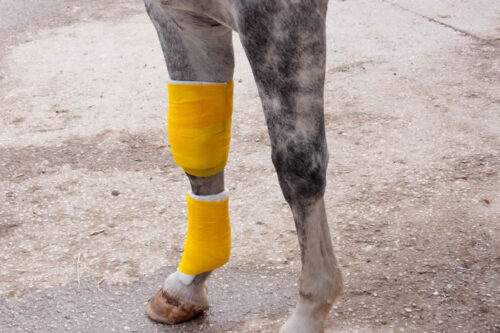
Poultices and Wraps
A poultice is an absorbent, medicated dressing applied to the hoof to encourage drainage and draw out infection. [1] By softening the hoof tissues, it supports continued drainage through an existing tract between the abscess and the outer hoof wall.
Poultices are typically applied to an abscessed hoof for 24 to 48 hours at a time. [1] To maximize the efficacy of the poultice treatment, cover the entire foot including the coronet band.
Commercial medicated poultice pads can be purchased. The pad is used by immersing it in hot water, squeezing it out, and then attaching it to the foot with a bandage. A waterproof tape, diaper, or hoof boot should be used to cover the area and protect the hoof from microorganisms entering the drainage tract.
However, while these are absorbent they fail to draw out moisture. For good drawing out of material, use magnesium sulfate soaks or clay poultice.
A “soak bandage” method may also be used. [1] This strategy involves wrapping the hoof in several layers of soft cotton material and placing Epsom salts inside the wrapping.
Over a period of 24 to 48 hours, the wrapped hoof is saturated in hot water multiple times.
Although soaking can encourage a hoof abscess to drain, oversoaking can weaken the structure and is potentially harmful. Follow your veterinarian’s advice as to how often to soak an abscessed hoof.
Considerations for laminitic horses
When over-softening is considered risky, as in a laminitic horse that is close to penetrating the sole, an alternative is to wrap the hoof in dry cotton or a lightweight towel then cover the entire hoof and halfway up the pastern with heavy duty plastic wrap before booting the foot or applying a duct tape bandage. The plastic wrap will hold in heat and moisture but will not over-soften.
How Long Does a Hoof Abscess Take to Heal?
Horses with a mild infection due to a hoof abscess may be able to return to work in less than a week following treatment. However, abscesses involving deep infections can take several weeks to resolve.
After the abscess begins to drain, the horse typically experiences rapid pain relief over 24 hours. [1] The hoof should remain bandaged until healing is complete.
An antiseptic treatment such as betadine or two percent iodine should be applied to the drainage tract. Medicated putty may also be used within the drainage tract to ensure microorganisms cannot re-enter the hoof.
Horses being treated for an abscess should be housed in a clean, dry area, such as a well-bedded stall or small paddock. Bandages should be removed and changed daily.
An abscess is considered healed after the drainage tract dries out and the affected tissues have healed over the opening of the tract. Only after abscess healing is complete and the affected horse becomes fully sound should shoes be applied to its hooves.

Can a Hoof Abscess Heal on Its Own?
In some cases, a hoof abscess may rupture and drain on its own without veterinary intervention. This typically occurs when the built-up pressure forces the abscess to track upward and exit at the coronary band or heel bulbs. Once drainage begins, pain often improves rapidly.
However, allowing an abscess to resolve without treatment is not recommended. Without proper drainage and cleaning, infection may persist within the horse’s hoof capsule or spread to deeper structures. Delayed treatment can prolong pain, increase tissue damage, and extend recovery time.
Additionally, not all abscesses create an obvious drainage tract. Some remain trapped beneath the sole or behind the hoof wall, continuing to cause pressure and lameness. In these cases, veterinary or farrier intervention is necessary to establish controlled drainage and prevent complications.
Prompt evaluation and appropriate treatment help reduce suffering, limit structural damage, and support faster healing.
Abscess Recovery & Hoof Support
Full recovery from a hoof abscess requires regrowth of the hoof tissue to form a solid structure where the abscess created separation. Successful healing depends on both proper mechanical support and adequate nutrition to rebuild healthy hoof horn.
Farrier Care
Appropriate farrier care is essential during recovery. Correct trimming restores proper hoof balance, reduces abnormal mechanical stress, and supports even weight distribution across the foot.
If significant sole loss or wall separation occurred, temporary protective shoeing or hoof boots may be recommended to protect sensitive structures while new hoof grows in.
Regular trimming helps prevent flares, white line separation, and distorted hoof capsule growth that can predispose horses to recurrent abscesses. Close collaboration between the veterinarian and farrier ensures that structural support matches the stage of healing.
Farriers may also implement therapeutic shoeing strategies when additional support is required. These can include bar shoes, heart bar shoes (particularly when laminar support is needed), or glue-on composite shoes when the hoof wall cannot safely hold nails. Such approaches help redistribute weight and provide additional structural support to compromised areas of the hoof capsule.
When abscesses have resulted in wall defects or extensive drainage tracts, the farrier may gradually rebalance the hoof over multiple trimming cycles to encourage healthy horn growth and prevent excessive leverage forces. In some situations, a temporary period of barefoot management with protective boots may be preferred to allow better monitoring of healing and drainage.
Individual management plans vary depending on the depth of infection, the structures involved, and the horse’s overall hoof conformation. Ongoing evaluation ensures that mechanical support adapts as the hoof regrows and regains strength.
Nutrition for Hoof Regrowth
Optimal keratin synthesis relies on sufficient amino acid supply from the diet as well as several key nutrients, including biotin, zinc and copper.
Ensuring adequate intake of these nutrients is best achieved by feeding a balanced vitamin and mineral supplement that is formulated to prevent deficiencies and support overall hoof integrity. Even horses receiving fortified feeds may not achieve optimal mineral balance depending on forage composition. A comprehensive supplement helps ensure no nutritional gaps contribute to weakened hoof structure or impaired regrowth.
- Amino acids: Keratin, like all proteins, is made of amino acids. Ensure the diet is providing adequate levels of essential amino acids, in particular lysine, methionine and threonine
- Biotin: Vitamin B7 (biotin) is a co-factor for enzymes for making keratin. Several studies demonstrate that 15 – 20 mg of biotin per day is beneficial for supporting hoof hardness and increasing growth rate. [9][10][11][12][13]
- Zinc and copper: A proper balance of the microminerals zinc and copper supports keratin synthesis and provides antioxidant protection. It is recommended to provide these in their organic forms and in a 4:3:1 ratio of iron to zinc to copper in the total diet. [14]
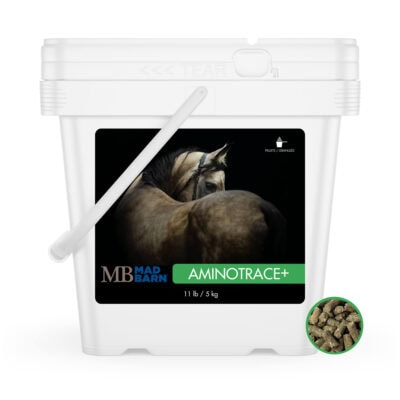
Mad Barn’s AminoTrace+ is a nutritionist-formulated vitamin and mineral supplement designed to support optimal hoof health with enhanced levels of key nutrients required to support hoof regrowth. By providing balanced trace minerals, essential amino acids, and targeted nutrient support, it helps promote strong, resilient hoof tissue during recovery from abscesses and other structural challenges.
Jiaogulan
There is limited anecdotal evidence suggesting the herb jiaogulan may support hoof health by increasing blood flow to the area. Jiaogulan contains gypenosides, which have been shown to activate nitric oxide synthase and increase nitric oxide production, potentially enhancing circulation. [15][16]
Improved blood flow may help deliver nutrients to affected tissues and facilitate removal of metabolic waste during recovery. However, research specifically evaluating jiaogulan for hoof abscess recovery remains limited.
In one case report, laminitic horses were given 1–2 grams of jiaogulan per 500 kg of body weight twice daily and showed improved alertness and increased spontaneous movement. Some horses returned to pasture soundness within 2–14 days with improved lameness scores. [17]
While these findings are promising, jiaogulan should be considered a complementary strategy and used as part of a balanced diet and comprehensive management plan rather than a primary treatment for hoof abscesses.

Preventing Hoof Abscesses
Hoof abscesses in horses are sometimes unavoidable, particularly if accidental penetration or injury is involved.
However, there are some steps you can take to decrease your horse’s risk of developing an abscess:
- Maintain a Clean, Dry Environment: Ensure your horse’s environment is kept clean and dry. Maintain clean stalls and remove manure from paddocks on a regular basis.
- Manage Moisture Levels: Use a hoof hardener product to protect the hoof from damage caused by excess moisture during wet weather conditions. During dry weather conditions, use a product such as pine tar to help the hoof retain moisture.
- Follow a Regular Farrier Schedule: Maintain your horse’s hooves on a consistent trimming or shoeing schedule to identify issues early and support healthy hoof structure.
- Remove Environmental Hazards: Remove sharp objects including nails, pieces of metal, glass, or jagged rocks from your horse’s turnout area to reduce the risk of hoof injury.
- Perform Daily Hoof Inspections: Check hooves daily for cracks, white line separation, bruising, or lodged debris that could create an entry point for bacteria.
- Treat Hoof Conditions Promptly: Address issues such as white line disease, thrush, or sole bruising early to prevent deeper infection within the hoof capsule.
- Support Hoof Integrity Through Nutrition: Provide a balanced diet with adequate amino acids, biotin, zinc, and copper to maintain keratin strength and structural resilience.
- Manage Laminitis and Metabolic Risk: Carefully manage horses with laminitis or metabolic concerns, as stretched white lines and laminar separation can increase susceptibility to abscess formation.
- Avoid Extreme Wet–Dry Cycles: Limit prolonged exposure to alternating wet and dry conditions, which can cause the hoof wall to repeatedly expand and contract and increase the risk of fissures.
For guidance on formulating a hoof-healthy diet and supporting abscess recovery, submitting your horse’s diet and our nutritionists can provide you with a complementary consultation.
Frequently Asked Questions
Here are some frequently asked questions about hoof abscesses in horses:
A hoof abscess is an accumulation of pus caused by bacterial or fungal infection inside the hoof capsule, often due to cracks, punctures, or defects that allow microbes to enter. As the immune system responds, pus builds up and increases internal pressure, causing severe pain and lameness due to the rigid structure of the hoof, which cannot expand to relieve swelling. [1][2][3][4]. If untreated, the abscess can spread and cause permanent damage to internal structures of the foot, such as the navicular apparatus. [5]
Common signs of a hoof abscess include sudden and severe lameness, increased heat in the hoof, a strong digital pulse, and swelling around the pastern or coronet band. As the abscess progresses, pain may become intense and the horse may avoid putting weight on the affected limb. If left untreated, swelling may travel up the leg and cause systemic effects .[1][2]
Diagnosis of hoof abscesses in horses typically involves a lameness exam, the use of hoof testers to locate pain, and sometimes radiographs or thermography to identify gas pockets or increased heat in the hoof. [2][6] Treatment focuses on establishing drainage of the abscess using poultices, wraps, and sometimes veterinary intervention, followed by pain management and antiseptic care to prevent reinfection. [1][7]
To help prevent abscesses, maintain a clean, dry environment, use appropriate hoof hardeners during wet seasons and moisture-retaining products during dry periods. Regular farrier care, balanced nutrition, and environmental management, such as removing sharp objects from turnout areas, can reduce the risk of injury and infection. Ensuring the hoof wall and white line remain healthy is essential for resisting microbial invasion. [4]
A hoof abscess typically causes sudden, severe lameness in one limb with localized pain on hoof tester examination. Laminitis often affects both front feet and causes diffuse pain across the entire hoof. Veterinary examination and radiographs are often required for accurate differentiation.
Antibiotics are not routinely required for uncomplicated hoof abscesses because drainage is usually sufficient. However, if infection spreads beyond the hoof capsule or follows a deep puncture wound, veterinarians may prescribe systemic antibiotics such as trimethoprim-sulfonamides or penicillin.
Healing typically progresses through bacterial invasion, inflammation and pressure buildup, formation of a drainage tract, rapid pain relief after drainage, and gradual hoof regrowth to restore structural integrity. Full recovery depends on proper drainage and time for horn regeneration.
Summary
Hoof abscesses are infections inside the hoof that form when bacteria or fungi enter through cracks, punctures, or weakened white line and produce pus that builds painful pressure.
- Typical signs requiring prompt attention to prevent deeper structural damage including rapid, often severe lameness with heat, increased digital pulse, and sometimes swelling up the pastern.
- Diagnosis relies on exam and hoof testers, with radiographs or thermography used to locate gas pockets or heat patterns when a drainage tract isn’t obvious.
- Core treatment is establishing and maintaining drainage, then protecting the tract with antiseptic care, clean bandaging, and appropriate poultices or soaks while avoiding over-softening.
- NSAIDs may be used cautiously for comfort once drainage starts, antibiotics are reserved for cellulitis or deep punctures, and laminitis-related abscesses often need time and poulticing rather than anti-inflammatories.
- Recovery continues as the hoof regrows and strengthens, supported by a clean, dry environment, regular farriery, and nutrition that supplies amino acids, biotin, zinc, and copper.
- Prevention focuses on hoof hygiene, moisture management, and removing sharp hazards.
References
- O’Grady, S. Hoof Abscesses: A Practical Approach. Virginia Therapeutic Farriery. 2021.
- Redding, W.R. et al. Septic diseases associated with the hoof complex: abscesses, punctures wounds, and infection of the lateral cartilage. Vet Clin North Am Equine Pract. 2012. View Summary
- Fitzgerald, B.W. Hoof Abscesses. AAEP. 2021.
- Cuomo, F. Horse Hoof Abscesses. University of Minnesota Extension. 2021.
- Fessler, J.F. Hoof injuries. Vet Clin North Am Equine Pract. 1989. View Summary
- Kim, S-M and Cho, G-J. Evaluation of Heat Distribution for the Diagnosis of the Hoof with Abscess by Infrared Thermography in Horses. Open Ag J. 2021.
- Simon Constables Equine Vets Foot Abscesses. Equine Vets. 2021.
- Onishi, J.C. et al. Chronic laminitis is associated with potential bacterial pathogens in the laminae. Vet Microbiol. 2012. View Summary
- Comben, N. et al. Clinical observations on the response of equine hoof defects to dietary supplementation with biotin. Vet Rec. 1984. View Summary
- Josseck, H. et al. Hoof horn abnormalities in Lipizzaner horses and the effect of dietary on macroscopic aspects of hoof horn quality. Equine Vet J. 1995.
- Geyer, H. and Schulze, J. The long-term influence of biotin supplementation on hoof horn quality in horses. Schweizer Archiv fur Tierheilkunde. 1993.
- Reilly, J.D., et al. Effect of supplementary dietary biotin on hoof growth and hoof growth rate in ponies: a controlled trial. Equine Vet J. 2010. View Summary
- Buffa, Eugene et al. Effect of dietary biotin supplement on equine hoof horn growth rate and hardness. Equine Vet J. 1992. View Summary
- Mills, CF. Dietary interactions involving the trace elements. Annu Rev Nutr. 1985.
- Hinckley, KA et al. Nitric oxide donors as treatment for grass induced acute laminitis in ponies. Equine Vet J. 1996. View Summary
- Tanner, Miles A. et al. The Direct Release of Nitric Oxide by Gypenosides Derived from the Herb Gynostemma pentaphyllum. Nitric Oxide. 1999.
- Kellon, Eleanor. Use of the Herb Gynostemma pentaphyllum and the Blue-green Algae Spirulina Platensis in Horses. Equine Congress. 2006.