English
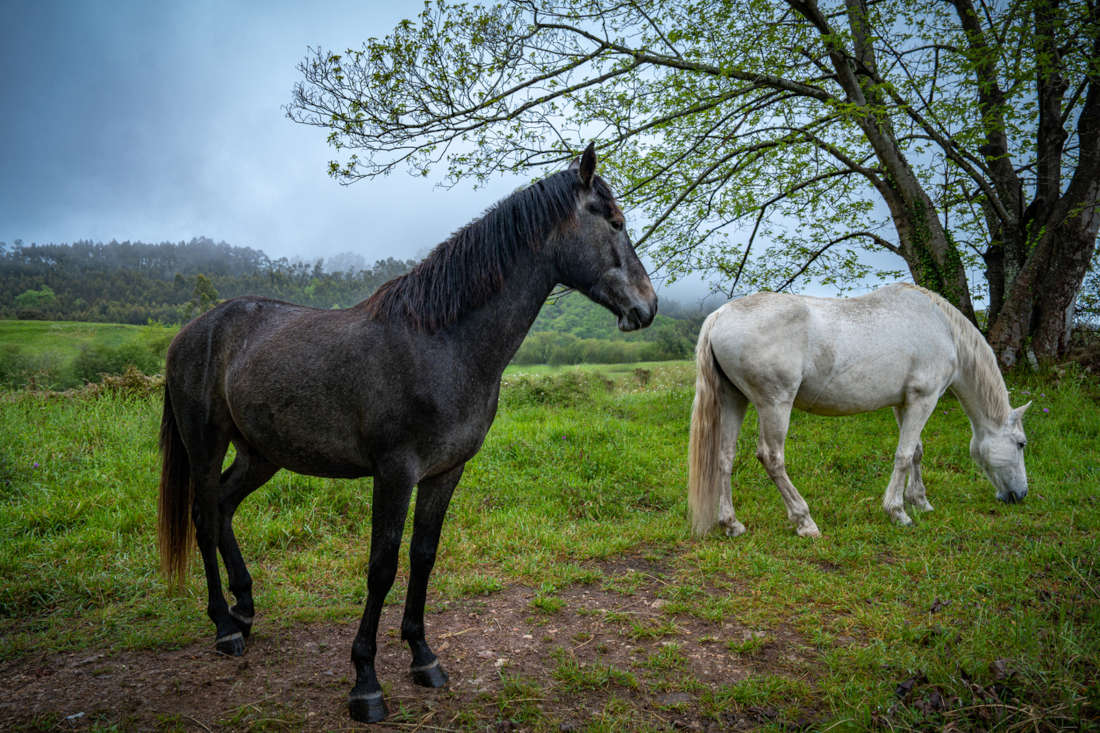
Horse chestnut toxicosis in horses is an uncommon but potentially serious poisoning caused by ingesting seeds or other parts of trees in the Aesculus genus. Fallen seeds, young shoots, leaves, bark, and flowers all contain toxic compounds that affect the equine digestive and nervous systems.
Exposure to horse chestnut is most likely when new growth emerges in spring or seeds accumulate beneath trees in autumn. Affected horses may develop a range of symptoms, such as colic, diarrhea, or incoordination, and severe cases progress to convulsions or difficulty breathing.
Suspected ingestion requires prompt veterinary attention. Keep reading to learn how to identify horse chestnut and buckeye trees, recognize signs of toxicosis, and reduce your horse’s risk of exposure.
Horse Chestnut Poisoning in Horses
Horse chestnut trees, or Aesculus hippocastanum, are large deciduous trees grown as ornamental shade trees throughout North America.
Despite their name, horse chestnuts are not true chestnuts and are unrelated to trees in the genus Castanea. Their glossy brown seeds resemble edible chestnuts but contain toxic compounds and are unsafe for horses and other animals to consume. [1][2][3]
Poisoning in horses occurs after ingesting toxic parts of the tree, including: [3]
- Seeds
- Bark
- Leaves
- Flowers
- Young shoots
While buckeye poisoning in horses is uncommon, exposure can cause gastrointestinal irritation and severe neurologic signs. Exposure risk peaks in early spring with the emergence of young shoots and in late autumn following the drop of mature seeds. Horses with access to adequate forage are less likely to consume Aesculus hippocastanum. [2][3]
The primary Aesculus species of interest in North America include: [4][5]
- Aesculus californica (California buckeye)
- Aesculus flava (sweet or yellow buckeye)
- Aesculus glabra (Ohio, western, white, Texas, or fetid buckeye)
- Aesculus hippocastanum (European horse chestnut)
- Aesculus pavia (red buckeye)
- Aesculus sylvatica (painted or Georgia buckeye)
Horses in North America may also encounter ornamental species such as Aesculus indica (Indian horse chestnut) and Aesculus turbinata (Japanese horse chestnut). [4][5]
Common Names for Horse Chestnut
- Conker tree
- Buckeye
- Soapberry
- Marronnier d’Inde
Table 1. Horse chestnut poisoning in horses at-a-glance
| Category | Key Information |
|---|---|
| Definition |
|
| Primary Cause |
|
| Onset |
|
| Symptoms |
|
| Severity |
|
| Treatment |
|
| Recovery Time |
|
| Prognosis |
|
| Prevention |
|
What's your top priority with your horse's health?

What's your top priority with your horse's health?
Identification
The term “horse chestnut” refers to Aesculus hippocastanum. However, the common names horse chestnut and buckeye are often used for several species in the Aesculus genus.
More than a dozen Aesculus species grow worldwide, and all species are potentially poisonous if ingested. [5]
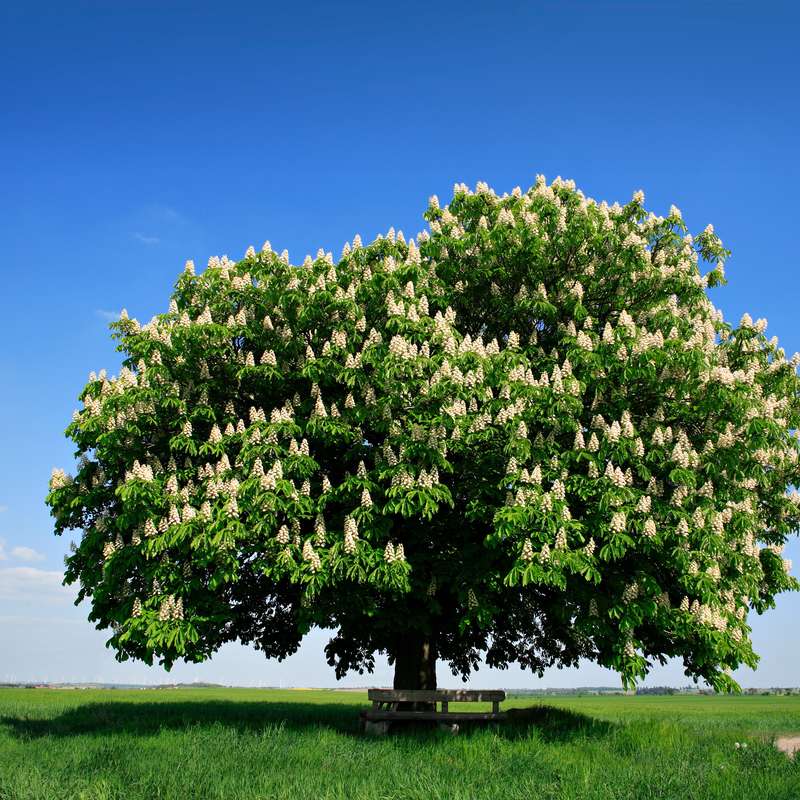 Tree
Tree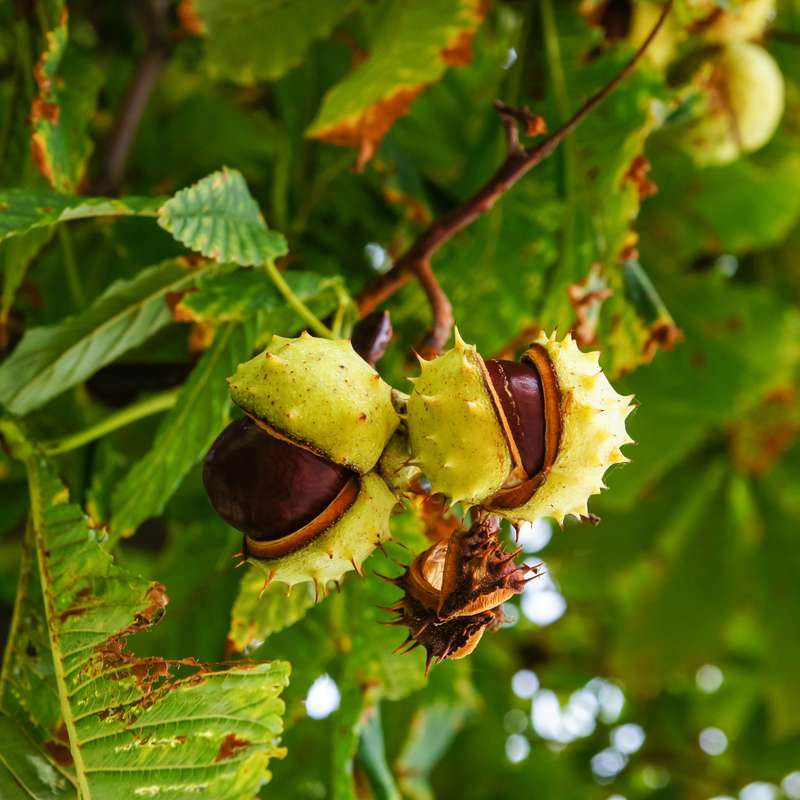 Chestnuts and leaves
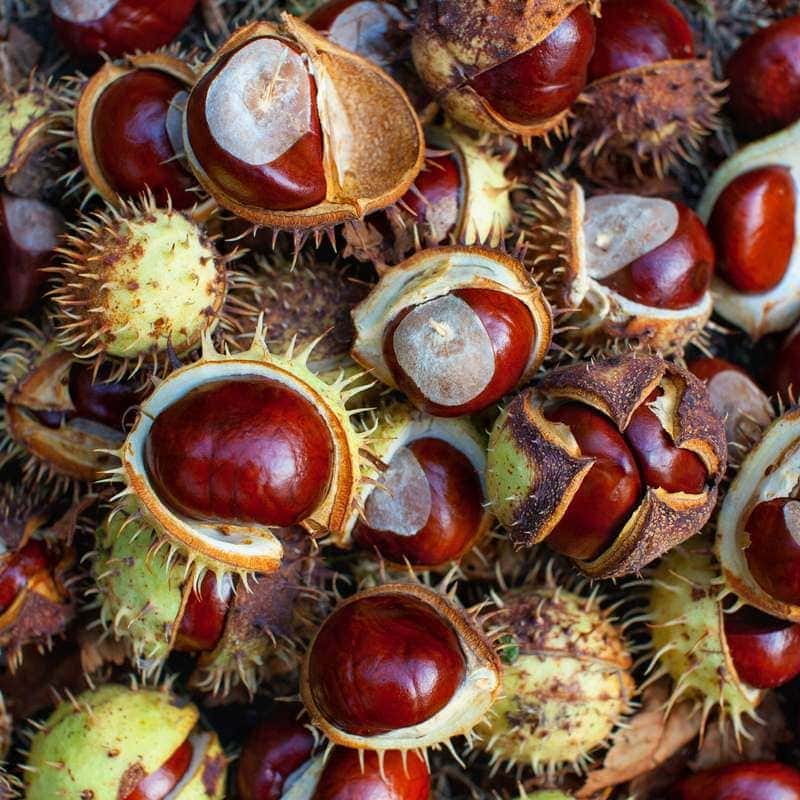 Chestnuts
All Aesculus species have leaves made up of several serrated leaflets that fan out from the end of one leaf stalk. In spring, the flowers bloom in upright clusters called panicles at the ends of the branches.
Flower color varies depending on the species and can be: [2][3][5]
- White
- Greenish yellow
- Pale pink
- Red
The fruit is a leathery capsule containing one to three seeds. Capsule shape, flower color, mature height, and habitat vary by species. [2][3][5]
Relevant Aesculus species include: [3][4][5]
- Aesculus hippocastanum: Common or European horse chestnut is a large European species that has become naturalized in North America. It is widely planted as an ornamental shade tree. Mature trees can reach 98 to 115 feet (30 to 35 m) in height. The flowers are whitish with red and yellow markings. The seed capsule is spiny and contains glossy brown seeds with a pale scar.
- Aesculus glabra: Ohio buckeye is a medium-sized North American tree that reaches 20 to 40 feet (6 to 12 m) in height, and occasionally taller. It has yellow flowers with noticeable gland dots, and a spiny seed capsule. This species is associated with fertile soils and is found throughout much of the central United States.
- Aesculus flava / A. octandra: Sweet, yellow, or marsh buckeyes are medium-sized trees that can reach 82 to 92 feet (25 to 28 m) in height. They usually have yellow flowers and smooth seed capsules. These species are found in the Appalachian region and southeastern United States, where they commonly grow near mountain streams, marshes, and moist wooded areas.
- Aesculus pavia: Red buckeye is a moderately large shrub, reaching about 11 to 15 feet (3.5 to 4.5 m) in height. It has red flowers and smooth seed capsules. This species is native to the southeastern United States and extends westward to eastern Texas.
- Aesculus californica: California buckeye is a smaller tree, ranging from 10 to 39 feet (3 to 12 m) in height, with broad branches. Its leaves have five stalked palmate leaflets. The seed capsule is small, smooth, and pear-shaped. Flower color ranges from white to pale pink. This species is native to California and is most abundant on dry hillsides and in canyons across the Pacific Coast Range and Sierra Nevada foothills.
Toxicology of Horse Chestnut
Research indicates there are several toxic compounds in horse chestnut trees and related Aesculus species. These include: [4][5][6]
- Aesculin or esculin
- Fraxin
- Escin or aescin saponins
- Possibly alkaloids
Aesculin, also called esculin, can lead to neurological signs in animals when ingested. [1][6][7]
Saponins are naturally occurring plant compounds that can irritate the lining of the gastrointestinal tract. [4][5][6][7]
Saponin exposure can lead to: [4][5][6][7]
- Gastrointestinal inflammation
- Abdominal discomfort
- Diarrhea
Like many other toxins, the compounds in Aesculus spp. appear to have dose-dependent toxic effects. Lower exposures are associated with neurotoxicity, while higher exposures may cause hemolysis, or damage to red blood cells. How these effects contribute to poisoning in horses is not fully understood. [4][7]
A precise toxic dose is not established for horses. The concentration of toxic compounds in an individual plant varies across species, plant part, and stage of growth. [6][7] Individual horse factors like body weight and health status also influence the severity of exposure.
Toxic Parts of the Plant
Toxic compounds are present in all parts of Aesculus plants, but the highest levels are found in the following structures: [4][5][6][7]
- Young leaves
- Terminal shoots
- Flowers
- Bark
- Seeds
Seeds are a major concern, especially in autumn when mature capsules split and accumulate beneath trees. Spring exposure is more often associated with young leaves and shoots emerging before other forage is available. [4][5][6][7]
Symptoms of Horse Chestnut Poisoning in Horses
Horse chestnut poisoning primarily affects the gastrointestinal tract and nervous system. Horses that consume seeds, young shoots, bark, or larger quantities of Aesculus plant material are at higher risk of more severe toxicosis. [2][4][6]
Because Aesculus toxins can irritate the gastrointestinal tract and interfere with normal neurologic function, affected horses may show a combination of digestive and movement-related abnormalities. Horse chestnut poisoning is usually not fatal in horses, but severe cases can lead to serious illness. [2][4][6][7][8]
Clinical signs of horse chestnut poisoning depend on the amount ingested and the individual horse’s sensitivity. Symptoms may include: [2][4][6][7][8]
- Colic
- Diarrhea
- Irritated or inflamed mucous membranes
- Lethargy or sluggishness
- Excitability
- Hyperesthesia (increased sensitivity to touch or stimulation)
- Ataxia (incoordination)
- Staggering or stiff-legged gait
- Exaggerated limb movement
- Muscle twitching, trembling, or spasms
- Weakness or paresis (partial paralysis)
- Dilated pupils
- Strabismus, or abnormal eye position
- Recumbency
- Convulsions
- Dyspnea (difficulty breathing)
- Coma
Clinical signs may appear within one to three hours after ingestion of plant material, although onset depends on the plant part consumed, dose, and species involved. [7]
When to Call the Veterinarian
Contact a veterinarian promptly if you know or suspect a horse has consumed horse chestnut. Veterinary assessment is especially important when exposure involves multiple seeds or fresh spring growth.
Signs that require urgent veterinary attention include: [2][3]
- Persistent colic or diarrhea
- Lethargy, weakness, or reluctance to move
- Muscle twitching, trembling, or spasms
- Incoordination, staggering, or abnormal gait
- Recumbency
- Seizures
- Difficulty breathing
- Rapidly worsening illness after suspected exposure
Severe neurologic signs, seizures, or suspected renal involvement carry a more guarded prognosis than mild gastrointestinal signs. Early supportive care can help limit complications while the horse is monitored for progressing signs of exposure. [4][7]
Exposure Risk Factors
Buckeye poisoning in horses is associated with access to ornamental trees and related buckeyes. Trees along fence lines can drop seeds and other plant material inside turnout enclosures.
Exposure risk is seasonal, with both spring and autumn presenting distinct hazards: [4][5][6]
- Spring: Young leaves and sprouts may emerge before other forage is readily available. These young shoots are considered among the more toxic parts of the plant and may be more attractive to horses than mature foliage.
- Autumn: Mature seed capsules split and fallen seeds accumulate beneath trees. Seeds are commonly associated with poisoning and may be investigated or eaten when present in turnout areas.
Storm damage can create access to otherwise unreachable plant material. High winds or thunderstorms can blow parts of the plant into paddocks. [4] Lack of forage availability also increases the risk of exposure. Horses generally avoid horse chestnut and buckeye plant material when adequate forage is available. [4]

Diagnosis
Diagnosis of horse chestnut poisoning is based on: [4][6]
- Known or suspected exposure
- Compatible clinical signs
- Exclusion of other causes of colic or neurologic disease
Common symptoms of horse chestnut poisoning are not specific to this condition. Veterinarians must also consider other causes of colic or neurologic disease when working up a suspected case of buckeye poisoning.
Identifying Aesculus trees or plant material in the horse’s environment is an important part of the diagnostic process. Fallen seeds, chewed bark, or leaves in the turnout area support a history of exposure, especially when signs develop during spring growth or autumn seed fall. [4][6][7]
Laboratory testing may help assess severity, but routine testing does not confirm horse chestnut poisoning. Reported abnormalities in severe Aesculus toxicosis include: [4]
- Changes in blood glucose levels
- Changes in urine indicating kidney dysfunction
- Increased serum urea nitrogen
- Other findings associated with liver or kidney stress
These changes are indicative rather than diagnostic and must be interpreted alongside the exposure history and clinical signs. [4]
Treatment & Management
There is no specific antidote for horse chestnut poisoning. Treatment is supportive and focuses on: [4]
- Limiting further toxin absorption
- Controlling pain or neurologic signs
- Maintaining hydration
- Monitoring for complications
The treatment plan depends on the amount of horse chestnut ingested, time since exposure, clinical signs, and the horse’s overall condition. [4]
Management begins with removing access to the plant. Clear any fallen seeds, young shoots, leaves, bark, and storm-damaged branches from the horse’s environment. Owners can save any remaining plant material for identification if the horse’s diagnosis is uncertain. [4]
Supportive care includes intravenous fluids, electrolytes, and analgesics for colic or abdominal discomfort. Severe cases may require close monitoring to check how well the kidneys are working and whether the horse’s blood chemistry remains stable. A veterinarian may also use diazepam to control seizures or marked muscle spasms. [4][7]
Veterinarians may use activated charcoal to reduce toxin absorption in the gastrointestinal tract. They may also use gastrointestinal protectants and, in selected cases, a laxative or cathartic as part of decontamination. [4][7]
Prognosis
Prognosis for buckeye poisoning in horses depends on several factors, including: [4]
- How much plant material the horse ate
- Which part of the plant was consumed
- How quickly treatment began
- The severity of symptoms
Many cases of horse chestnut poisoning in horses improve once access to the toxic plant is removed, and while poisoning can be fatal, death is uncommon. Horses with seizures, collapse, or marked recumbency carry a guarded prognosis. Those with mild gastrointestinal or neurological signs have a better prognosis. [4]
Most mild to moderate cases improve within several days once exposure stops, with many resolving within 72 to 96 hours. Recovery may take longer when neurologic signs are severe. In these cases, some effects can persist for weeks or months before fully resolving. [4]
Prevention
Prevention focuses on reducing access to horse chestnut trees. Owners should take note of tree placement in managed environments and monitor trees along fence lines for fallen seeds, overhanging branches, and storm-damaged growth.
Seasonal cleanup is one of the most practical prevention measures. Removing fallen seeds during autumn and monitoring young shoots or low branches in spring are effective strategies to help reduce the risk. After storms or high winds, inspect turnout areas for branches, leaves, bark, or other plant material that may have fallen within reach.
Forage management also helps mitigate the chance of exposure. Horses with adequate hay or pasture are less likely to sample unfamiliar or unpalatable plants. Avoid leaving horses in sparse paddocks where toxic plant material may be present.
Where horse chestnut or buckeye trees cannot be removed, fencing can help restrict direct access to trunks, low branches, and areas where seeds commonly accumulate. Regular inspection is still important because seeds and branches can fall or blow beyond the protected area.
Frequently Asked Questions
Here are some frequently asked questions about horse chestnut poisoning in horses:
Horses should not eat horse chestnuts because the seeds and other parts of the tree contain toxic compounds. Despite their common name, horse chestnuts are not intended for equine consumption and are unrelated to edible chestnuts in the Castanea genus. Ingesting horse chestnut seeds, bark, leaves, flowers, or young shoots can cause digestive irritation and serious neurologic signs. [1][2]
Buckeye trees are poisonous to horses because they belong to the Aesculus genus, which includes horse chestnut and related toxic species. California buckeye, Ohio buckeye, yellow buckeye, red buckeye, and other Aesculus species should all be regarded as potentially poisonous if ingested. Toxic compounds can occur in the seeds, bark, leaves, flowers, and young shoots. [1][2]
Horse chestnut and buckeye trees can be identified by their opposite, palmately compound leaves, which typically have five to seven serrated leaflets spreading from a central point. They produce upright clusters of white, yellow, pink, or red flowers in spring, followed by leathery seed capsules containing glossy brown seeds with a pale scar. The capsules may be smooth or spiny depending on the species. Because appearance varies among Aesculus species, uncertain plants should be professionally identified before horses are allowed access to them. [1][2][6]
The toxic parts of a horse chestnut tree include its seeds, bark, leaves, flowers, terminal shoots, and young growth. Toxicity is considered highest in young leaves, shoots, flowers, bark, and seeds, although poisonous compounds may occur elsewhere in the plant. Fallen seeds are a particular concern in autumn, while new leaves and shoots create greater exposure risk in spring. [1][2][4][7]
Signs of horse chestnut poisoning in horses can include colic, abdominal pain, diarrhea, lethargy, weakness, excitability, and increased sensitivity to touch or stimulation. Neurologic signs may include muscle twitching, tremors, incoordination, staggering, a stiff-legged gait, abnormal eye position, or exaggerated limb movements. Severe poisoning can progress to recumbency, convulsions, difficulty breathing, coma, or death, although fatal cases are considered uncommon. [1][4][5][7][8]
Signs of horse chestnut poisoning may appear within one to three hours after a horse consumes toxic plant material. The timing can vary according to the Aesculus species, plant part, amount ingested, and individual horse. Any horse with suspected exposure should be monitored closely and assessed promptly rather than waiting for symptoms to develop. [7]
The number of horse chestnut seeds required to poison a horse has not been precisely established. Adult horses may need to consume more than 20 seeds or a significant amount of bark to develop marked toxicosis, but this estimate must not be treated as a safe exposure level. Toxicity can vary with the tree species, plant part, stage of growth, and individual animal, so any suspected ingestion warrants veterinary advice. [4][7]
If a horse eats horse chestnuts, remove the horse from the source and contact a veterinarian promptly. Clear away any remaining seeds, leaves, shoots, bark, or damaged branches, but save a sample for identification if the plant's identity is uncertain. Do not attempt to administer activated charcoal, medication, or another treatment unless directed by a veterinarian.
Horse chestnut poisoning is an emergency when a horse develops persistent colic or diarrhea, weakness, muscle tremors, incoordination, recumbency, convulsions, difficulty breathing, or rapidly worsening illness. Known ingestion of multiple seeds or fresh spring growth also requires prompt veterinary assessment, even if signs are not yet apparent. Severe neurologic signs, seizures, and suspected kidney involvement are associated with a more guarded prognosis. [1][7]
Horse chestnut poisoning is diagnosed using the horse's exposure history, compatible clinical signs, and the exclusion of other digestive, neurologic, metabolic, or toxic conditions. Finding fallen seeds, chewed bark, leaves, or young shoots in the turnout area can support the diagnosis. Routine laboratory testing does not usually confirm horse chestnut poisoning, but blood and urine findings may help the veterinarian assess organ stress and the severity of the illness. [1][4][7]
Horse chestnut poisoning is treated with supportive veterinary care because there is no specific antidote. Treatment may involve limiting further toxin absorption, controlling abdominal pain or neurologic signs, maintaining hydration, and monitoring kidney function, electrolyte balance, and other potential complications. A veterinarian may use activated charcoal, gastrointestinal protectants, intravenous fluids, electrolytes, pain relief, or seizure-control medication depending on the horse's condition. [1][7]
A horse can recover from horse chestnut poisoning, particularly when exposure is stopped promptly and signs remain mild. Many mild to moderate cases improve within several days, with recovery often occurring within 72 to 96 hours. Horses with seizures, collapse, marked recumbency, or pronounced neurologic abnormalities have a more guarded prognosis, and residual neurologic deficits may persist for weeks or months. [1]
Horses are most at risk of horse chestnut poisoning during spring growth and autumn seed fall. Young leaves and shoots may emerge before other forage is abundant in spring, while mature capsules split and drop toxic seeds in autumn. Limited forage, trees growing along fence lines, and storm-damaged branches falling into turnout areas can further increase exposure risk. [1]
Horse chestnut poisoning can be prevented by keeping horses away from Aesculus trees and regularly removing toxic plant material from their environment. Fallen seeds should be cleared in autumn, young shoots and low branches should be monitored in spring, and storm-damaged or pruned material should be removed promptly. Providing adequate hay or pasture can also reduce the likelihood that horses will investigate unfamiliar seeds, bark, or foliage.
Horse chestnuts are not the same as edible chestnuts and should never be offered to horses. Horse chestnuts and buckeyes belong to the Aesculus genus, while edible chestnut trees belong to the Castanea genus. Although their glossy brown seeds can look similar, Aesculus seeds contain toxic compounds and must be removed from areas accessible to horses.
Summary
Horse chestnut poisoning occurs when horses ingest toxic seeds or other parts of trees in the Aesculus genus. Prompt veterinary care is important because severe cases can cause neurologic and respiratory complications.
- Seeds, young shoots, leaves, bark, and flowers can irritate the gastrointestinal tract and disrupt neurologic function
- Affected horses may develop colic, diarrhea, lethargy, ataxia, muscle tremors, weakness, recumbency, or convulsions
- Exposure risk is highest during spring growth and when fallen seeds accumulate beneath trees in autumn
- Diagnosis considers exposure history, clinical signs, environmental evidence, and other gastrointestinal or neurologic conditions
- Treatment may include activated charcoal, intravenous fluids, pain relief, and seizure medication
- Removing fallen seeds and young shoots while providing adequate forage can help prevent poisoning
References
- Yi. H. Y. and Lee. J. Y. Poisoning Due to Consumption of Horse Chestnut Seed. Clinical and Experimental Emergency Medicine. 2021.
- Horse Chestnut Poisoning in Horses. HorseDVM.
- Aesculus hippocastanum. NC State Extension.
- Plumlee. K. H. Ed. Clinical Veterinary Toxicology. Mosby. 2004.
- Burrows. G. E. and Tyrl. R. J. Toxic Plants of North America. 2nd ed. Wiley-Blackwell. 2013.
- Guide to Poisonous Plants. Colorado State University.
- Orsini. J. A. and Divers. T. J. Eds. Equine Emergencies: Treatment and Procedures. 4th ed. Elsevier Saunders. 2014.
- Burger. S. M. Horse Owner's Field Guide to Toxic Plants. Breakthrough Publications. 1996.