English


![How to Feed Your Donkey – [Nutrition Guide & Sample Diet]](/wp-content/uploads/2023/07/how-to-feed-a-donkey.jpg)
Donkeys and horses may be kept similarly, but they are two distinct species that evolved independently. As such, donkeys have different nutrient requirements and face different health concerns from horses.
Donkeys are descendants of the African wild ass (Equus africanus), a species that evolved in arid desert climates. In these harsh environments, E. africanus relied on sparse, low-calorie plants to meet their dietary needs. [1]
The modern donkey inherited this ability to thrive on lower quality forages, enabling them to maintain their body condition with limited resources. This resilience is one reason donkeys are still valuable working animals in many developing countries.
In North America, donkeys are more commonly kept as leisure mounts and companion animals. This leisurely lifestyle, combined with higher-quality forages and increased digestive efficiency, puts donkeys at risk for obesity, metabolic conditions, and hoof issues.
For these reasons, feeding a donkey requires a different approach than feeding horses. Continue reading to learn everything you need to know about the unique nutrition requirements of donkeys and how you can best meet their needs.
How are Donkeys Different from Horses?
Donkeys and horses both belong to the Equus genus, but they exhibit some key physical differences that influence how they should be managed and fed.
Donkeys evolved from the African wild ass, which lived in semiarid and mountainous environments with sparse vegetation. In contrast, wild horses tend to have access to more abundant vegetation. [7] Donkeys also have unique anatomy, physiology, and behavior adaptations to living in dry conditions with minimal vegetation.
Anatomy
Donkeys and horses differ in their physical size. An average donkey stands between 36 – 48 in (91 – 122 cm) in height and weighs around 400 – 500 lb (180 – 230 kg) . This is considerably smaller than the average horse, which often stands 58 to 72 in (147 – 183 cm) tall and weighs between 900 to 1,400 lb (400 – 640 kg).
These physical differences have practical implications for their care, handling, and work. The smaller, sturdier size of donkeys makes them particularly suited for carrying loads over difficult terrain.
Donkeys typically have flatter backs, larger bones of the head, and longer, thicker ears compared to horses. On the other hand, horses typically have slightly arched backs and shorter ears.
The longer ears of donkeys allow for better hearing and heat dissipation in hot climates while the larger, stronger jaw allows for easier chewing of fibrous plant material.
Donkeys also have smaller hooves and a more upright angle than horse hooves, typically 5° to 10° more upright. Their hooves also tend to be boxier, with a more U-shaped sole. [7]
Donkey hooves absorb more water than horse hooves, an adaptation suited to their natural arid habitat. However, this increased absorption makes donkeys more susceptible to hoof issues in mild or damp environments, such as in fields or paddocks with inadequate drainage. [7]
The unique features of donkey hooves underscore the importance of working with a farrier who is knowledgeable in donkey hoof anatomy and how horse hooves differ to ensure proper hoof care for your donkey.
Digestion
Donkeys have a more efficient digestive system than horses, enabling them to effectively extract nutrients and energy from low-calorie forage. [1] This efficiency means they require a carefully managed diet to prevent weight gain and associated health issues.
Both species of equines rely on microbes in the hindgut to break down fiber that cannot be digested in the small intestine. Through hindgut fermentation, microbes produce enzymes that break fiber into smaller pieces, generating volatile fatty acids (VFAs), which are absorbed and used as an energy source.
However, donkeys have a longer mean retention time than horses, meaning that forage stays in their digestive tract for a greater period. This extended time in the hindgut allows donkeys to break down fibrous plant material more thoroughly, producing more VFAs to use as energy.
Due to their increased digestion time and higher VFA production, donkeys have greater feed efficiency than horses. This means donkeys can extract more nutrients from sparse, fibrous vegetation to fulfill their nutritional needs. [1]
Behavior
Donkeys and horses exhibit distinct behavioral tendencies that influence how they should be managed. While horses evolved to have a strong flight response to help them escape from perceived danger, donkeys have a more developed fight response.
Additionally, assessing pain in donkeys can be more challenging than in horses, as donkeys tend to display subtle expressions of pain, fear, and discomfort. Signs of stress or pain in donkeys may include changes in body stance and increased tail swishing. [5]
Observe your donkey to establish their baseline behavior — their normal behavior when healthy. Understanding this baseline makes it easier to detect subtle changes that may indicate stress or pain. Identifying these signs early allows for timely intervention, potentially preventing health issues such as unexpected weight loss.
Appropriate management for donkeys also includes ensuring their social needs are met. In the wild, donkeys create very strong pair bonds with other donkeys. Separating bonded donkeys can lead to increased stress and result in appetite loss. [7]
What's your top priority with your horse's health?

Enter your email to receive your store credit
Health Considerations in Donkeys
The donkey’s ability to thrive on high-fiber forage means they can be kept in drier environments where horses might not fare as well.
However, this efficient metabolism also means donkeys can gain weight easily, increasing their risk of obesity and metabolic issues. Donkeys also have other unique health considerations that differ from those of horses.
Metabolic Disorders
Metabolic disorders in donkeys refer to a group of health conditions that disrupt the normal metabolic processes, often involving insulin regulation and fat storage.
As with other equines, insulin resistance is a common concern for donkeys, especially those feeding on high-quality forages or energy-dense feeds.
Asinine Metabolic Syndrome
Donkeys, like horses, can develop a form of metabolic syndrome, known in donkeys as donkey metabolic syndrome (DMS) or asinine metabolic syndrome (AMS). AMS is characterized by insulin resistance, obesity, and recurrent laminitis. However, not all donkeys with AMS are obese and lean donkeys can also develop AMS. [11]
If AMS is suspected, testing for insulin resistance is strongly recommended. The intravenous glucose tolerance test (IVGTT) is considered the most accurate method for diagnosing metabolic syndrome in donkeys. [12]
Given the absence of donkey-specific treatment protocols for metabolic syndrome, recommendations for horses are typically applied to donkeys. These include reducing starch and sugar (hydrolyzable carbohydrates) in the diet while ensuring appropriate caloric intake to maintain or achieve a healthy body weight.
Pituitary Pars Intermedia Dysfunction
Pituitary pars intermedia dysfunction (PPID), also known as Equine Cushing’s Disease, is a hormonal disorder that affects the pituitary gland in horses, ponies, and donkeys, particularly as they age. PPID is less prevalent in donkeys compared to horses, but it does occur.
Common signs of PPID include chronic laminitis, excessive hair growth and abnormal shedding. [6] However, changes in coat condition may be more difficult to identify in donkeys than in horses.
Donkeys naturally possess longer and thicker hair coats than horses. Additionally, donkeys begin shedding earlier in winter and continue later into the spring than healthy horses.
Hyperlipidemia
Dyslipidemia refers to dysfunctional lipid (fat) metabolism, and is more common in donkeys than horses and ponies. Donkeys are predisposed to this condition because they are highly efficient at storing and mobilizing fat. [11]
Hyperlipidemia describes rapid, excessive release of fats from adipose tissue into the blood stream. This can lead to hyperlipemia — a severe form of hyperlipidemia which can result in life-threatening liver and kidney damage.
Rapid fat mobilization leading to hyperlipidemia is most likely to occur when there is a negative energy balance as seen in cases of extreme calorie restriction for weight loss. [11]
Risk factors for the development of hyperlipemia in donkeys include:
- Underlying health conditions or disease
- Loss of appetite
- Rapid weight loss
- Dental disease
- Old age
- Obesity
- Pregnancy and lactation
Obesity
Due to their digestive efficiency and predisposition to metabolic disorders, donkeys in domestic management settings are highly prone to obesity. To prevent excess weight gain, it’s important to develop feeding and management plans that are appropriate for donkeys and do not oversupply energy.
Donkeys store fat differently than horses, developing fat deposits on the buttocks, barrel, neck, and abdominal regions. Over time, these fat pads may become hard and calcified. Calcified fat deposits may remain even after a donkey loses weight, and should not impact their body condition score. [2]
Weight loss plans for donkeys should be deliberately slow, aiming for a gradual reduction of no more than 2% of body weight per month. This cautious approach is crucial as donkeys are susceptible to hyperlipemia.
You can monitor your donkey’s weight loss progress using the Donkey Body Condition Scoring Chart and the bodyweight nomogram from The Donkey Sanctuary – a leader in establishing a donkey-specific body condition scale. [4]

Underweight Donkeys
Although excess body weight is a more common concern for donkeys, some have trouble maintaining their body condition. If your donkey is underweight, it is important to consult with your veterinarian to identify any health, dental, or management factors that could be contributing to their weight issues.
Health issues associated with weight loss or poor body condition include:
- Dental issues
- Parasites
- Gastrointestinal issues
- PPID
- Stress and pain
Body Condition Scoring in Donkeys
An objective assessment of your donkey’s body condition is critical to know whether your donkey is overweight or underweight and to track changes over time.
Donkeys are evaluated on a 1 to 5 body condition score, which differs from the 1 to 9 system used for horses and ponies. [4]
1) Poor (Very Thin/Emaciated)
- Thin neck, bones easily felt
- Angular shoulder bones
- Prominent withers
- Ribs can be seen from a distance
- Belly tucked up
- Prominent backbone and hip bones
2) Moderate (Underweight)
- Some muscle development in the neck, but a slight step where neck meets shoulders
- Dorsal withers have a slight cover of muscle
- Ribs felt but not visible
- Poor muscle development on midline
- Limited muscle cover on hindquarters
- Hip bones are slightly rounded, but can be felt with light pressure
3) Ideal
- Good muscle development, bones felt under a light cover of muscle and fat
- Smooth flow from neck to shoulder
- Adequate cover over withers, withers flow smoothly into the back
- Ribs covered with light fat/muscle, but can be easily felt with minimal pressure
- Firm belly with good muscle tone
- Rounded hip bones that can be felt under light pressure
- Good muscle cover in hindquarters
4) Overweight (Fat)
- Thick neck with hard crest
- Shoulders covered in an even fat layer
- Broad withers, bones felt with pressure
- Ribs only felt with firm pressure
- Belly overdeveloped
- Can only feel dorsal and transverse processes with firm pressure
- Hindquarters rounded, bones can only be felt with pressure
- Fat deposits are evenly placed
5) Obese (Very Fat)
- Bulging neck crest
- Shoulders rounded and bulging
- Broad withers, bones only felt with pressure
- Large, uneven fat deposits on ribs and belly
- Broad back with prominent crease
- Hip bones not felt, fat may overhang
- Uneven and bulging fat deposits
Monitor your donkey’s body condition score at least once a month, or more frequently if they are on a weight gain or weight loss program.
8 Steps to Feeding Your Donkey
Feeding your donkey an appropriate diet requires an individualized approach that considers their unique dietary needs and metabolic differences from horses.
Here are eight easy steps to follow when designing a feeding program for your donkey. Following this guide will help you prevent nutrient deficiencies, while keeping your donkey at an appropriate body condition.
For personalized support, book a free nutrition consultation with our qualified equine nutritionists to help you balance your donkey’s diet.
1) Identify Health Status
Before creating a feeding plan, it’s important to assess your donkey’s overall health and identify any conditions or issues that need to be taken into consideration. Common health concerns in donkeys, such as metabolic disorders, dental issues, or hoof problems often require specific dietary adjustments.
If you suspect your donkey may have any health issues, consult with a veterinarian for a full examination. A veterinarian can provide a diagnosis, treatment plan, and recommendations for diet changes tailored to your donkey’s unique health needs.
2) Start with Forage
Forage provides the foundation of the equine diet. Feeding a balanced, forage-based diet helps mimic your donkey’s natural grazing patterns, promotes gut health and supports overall welfare.
For mature donkeys, daily forage intake on a dry matter basis should be 1.3% to 1.7% of their body weight to meet energy needs. [1]
In most cases, feeding around 1.5% of their body weight in hay per day is sufficient. For example, a 225 kg (500 lb) Standard Donkey requires approximately 3.4 kg (7.5 lb) of forage per day.
Providing free-choice hay is generally not recommended for donkeys. When given unrestricted access to hay, they tend to consume over 2% of their body weight in forage, leading to excess energy intake and weight gain.
Selecting the right forage is an important first step in balancing your donkey’s diet. Given their highly efficient digestion, low-quality grass hay or straw are ideal, as these forages have lower energy, protein, and hydrolyzable carbohydrate, while being high in fiber. Low-quality refers to mature forages that are less nutrient dense, similar to a donkey’s diet in their natural habitat.
To prevent weight gain, straw can make up to 75% of the forage intake in the donkey’s diet. The remainder can be provided as hay or low-quality pasture.
Or Enter Donkey’s Bodyweight (lb):
3) Extend Foraging Time
While rationing your donkey’s forage intake is important for weight maintenance, it’s equally important to prolong their hay intake throughout the day to support overall health.
Donkeys are natural browsers, typically grazing on high-fiber plant material for up to 16 hours a day in the wild. Providing a diet that mimics the donkey’s natural grazing behaviors helps satisfy their instinct to forage, reducing boredom-related behaviors and stress.
The digestive system of the donkey is also adapted to process a steady intake of forage, which reduces the risk of issues like colic and gastric ulcers. Prolonged feeding times maintain a consistent flow of fibrous material through the digestive tract, supporting a healthy balance of gut bacteria.
Slow feeder hay nets are an effective tool for prolonging your donkey’s forage intake. Hay nets also make it easier to portion your donkey’s hay to avoid overfeeding.
4) Manage Calorie Intake
Research from the Donkey Sanctuary estimates that mature donkeys at maintenance require 80 – 95 kJ of digestible energy (DE) per kilogram of body weight. This translates to 4.7 to 5.75 Mcal per day for an average 220 kg (500 lb) Standard Donkey. [1]
These estimates align with previous recommendations indicating that donkeys require approximately 75% of the energy intake needed by horses of a similar body weight. [8]
In general, donkeys should not be fed concentrates such as grains or sweet feeds, as these tend to be high in energy and provide excess calories.
If additional calories are needed in the diet, unrestricted hay should be offered. Highly digestible fiber or fat sources can also be added to increase the energy density of the diet without adding sugar and starch.
Donkeys that are growing, lactating, or pregnant have higher energy requirements.
While specific research on pregnant donkeys is limited, current guidelines suggest the following increases in energy intake during pregnancy: [1]
- 9th month: Increase energy intake by 11%
- 10th month: Increase energy intake by 13%
- Final months: Increase energy intake by 20%
The gestation period for donkeys is longer and less predictable than it is in horses, typically ranging from 11 to 14.5 months, compared to 11 to 12 months for horses. [1]
5) Limit Pasture Access
A high intake of energy, protein, and hydrolyzable carbohydrates puts donkeys at risk of obesity, insulin resistance, and laminitis. Fresh pasture grass is typically rich in these nutrients, making it an unsuitable forage source for most donkeys.
Whenever possible, donkeys should be kept on a dry dirt lot with access to appropriately portioned hay and straw.
If avoiding pasture is not an option, a grazing muzzle should be used during turnout to limit the amount of pasture your donkey consumes. This approach helps manage weight and supports metabolic health.
6) Monitor Body Condition
Understanding the donkey-specific body condition scale is essential for effectively monitoring your donkey’s health. Since donkeys are prone to weight gain and obesity, having an accurate assessment of their body condition is key to tailoring their diets appropriately.
Donkeys often develop a pot-bellied appearance due to the longer retention time of forages in their digestive tract. This is why they should be assessed using a donkey-specific body condition scoring system, rather than scales designed for horses.
The donkey body condition assessment focuses on fat distribution on the neck, withers, and hindquarters with less emphasis on the midsection and abdomen.
Fat buildup on the neck, known as a cresty neck, can also signal insulin resistance in donkeys. Keep in mind that once your donkey has developed a crest, it often remains even if the donkey loses body condition in other areas. [1]
7) Balance Vitamins and Minerals
The vitamin and mineral requirements for donkeys are currently estimated based on the National Research Council (NRC) guidelines for horses. Although it is believed that donkeys may have slightly lower needs than horses, research on the specific vitamin and mineral requirements for donkeys remains limited. [1]
To prevent nutritional deficiencies in your donkey’s diet, use a concentrated vitamin and mineral supplement rather than a ration balancer or fortified feed. Feeding a concentrated supplement with a low feeding rate allows you to meet your donkey’s nutrient needs without adding unnecessary calories.
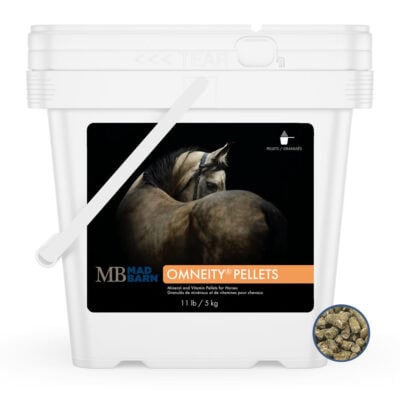
Mad Barn’s Omneity® is a comprehensive vitamin and mineral supplement with a low feeding rate is well-suited to meet a donkey’s requirements for essential micronutrients. Omneity® is formulated with 100% organic trace minerals and provides adequate zinc, copper, and biotin to support healthy metabolism and hoof growth.
The recommended feeding rate for an average 225 kg (500 lb) standard donkey is 100 grams (1 scoop) per day of Omneity® Pellets. This serving provides necessary vitamins and minerals without adding excess calories to their diet.
Free-choice access to loose salt should be available to your donkey at all times. Salt intake not only encourages water consumption but also provides sodium, a key electrolyte necessary for proper bodily function.
Additionally, fresh water should always be provided to ensure optimal hydration.
8) Meet Protein and Amino Acid Requirements
Donkeys require less protein in their diets compared to horses, but it is still important to provide sufficient protein for optimal hoof health, coat quality, muscle maintenance, and growth. [9]
Protein provides the body with amino acids and nitrogen, which are necessary for building and repairing tissues, producing enzymes and hormones, and supporting overall bodily functions.
Initial research suggests donkeys need less dietary protein than horses because they are more efficient at recycling nitrogen. Nitrogen recycling is the process by which donkeys (and other animals) reuse nitrogen from the breakdown of proteins in their body, rather than excreting it as waste. This allows them to conserve protein and efficiently meet their nutritional needs with lower protein intake. [9]
More efficient nitrogen recycling in donkeys has been suggested by research showing donkeys can consume less than 20 grams of protein per day without showing signs of protein deficiency. [10]
However, to meet their nutritional requirements, the Donkey Sanctuary recommends that adult donkeys receive 40 grams of crude protein per 100 kg (220 lb) of body weight. [3] For an average 225 kg (500 lb) Standard Donkey, this means 90 grams of protein daily, which can be achieved through a diet of mixed grass hay and straw.
In most cases, if a donkey’s energy needs are met, their protein intake is likely sufficient. [1] However, it is recommended to perform a hay analysis to ensure their protein requirements are fully met.
Despite their ability to efficiently recycle nitrogen to meet protein requirements, donkeys still need essential amino acids in their diet. Lysine, methionine, and threonine are three amino acids that they cannot produce on their own, even if nitrogen is adequately supplied. These amino acids are important for immune function, wound healing, reproductive function, hoof growth and more.
Mad Barn’s Omneity® contains whey protein, which is rich in essential amino acids. Feeding Omneity® supplies 3 grams of lysine, methionine, and threonine per donkey-sized serving.
Sample Diets
Below are three example diets that can be adapted for your donkey based on their body condition score. The maintenance diet is suitable for donkeys at an appropriate body weight, the weight loss diet is for those that are overweight, and the weight gain diet is for those that are underweight.
Following one of these sample feeding programs will ensure your donkey’s nutritional requirements are met. If you are unsure which diet is appropriate for your donkey, consult with an equine nutritionist before making changes.
If your donkey is losing weight unexpectedly, consult with your veterinarian to rule out a medical cause before making dietary changes. Always introduce dietary changes gradually so your donkey’s gastrointestinal system has time to adjust.
Sample Maintenance Diet
The following sample diet is intended for a mature 225 kg (500 lb) donkey at maintenance, with an ideal body condition of 3 on the 5-point donkey BCS scale.
This diet provides 1.7% body weight in forage to maintain body condition.
| Feed | Maintenance Diet |
|---|---|
| (Amount / Day) | |
| Straw (free-choice) | ~2 kg (4.4 lb) |
| Grass Hay | 2 kg (4.4 lb) |
| Omneity® Pellets | 100 g (1 scoop) |
| Salt | 15 g (1 tbsp) |
Sample Weight Loss Diet
Overweight donkeys require a gradual reduction in calories to promote healthy weight loss without putting them at risk of hyperlipemia. It is generally recommended to aim for no more than a 2% change in body weight over one month. [11]
To reduce calorie intake while maintaining a high-forage diet, a higher proportion of their forage intake should come from straw. If straw is unavailable, low-quality grass hay can be used.
Strategies for weight loss in donkeys are similar to those used for horses:
- Feed lower-quality forage
- Ration forage intake
- Incorporate grazing muzzles
- Use hay nets or slow feeders
- Provide soaked hay
Exercise is another key component of weight loss and weight management in donkeys. Consult your veterinarian for help with designing an appropriate exercise program.
The following example diet is based on a mature 225 kg (500 lb) donkey at maintenance, with a body condition of 4 on the donkey 5-point scale.
To promote weight loss, forage is restricted to 1.3% – 1.5% of the donkey’s current body weight. A higher proportion of forage is straw which is typically lower in energy than average-quality grass hay.
All dietary changes for donkeys should be implemented gradually over 4 to 6 weeks. [1]
| Feed | Weight Loss Diet |
|---|---|
| (Amount / Day) | |
| Straw (free-choice) | ~2 kg (~4.4 lb) |
| Grass Hay | 1 kg (2.2 lb) |
| Omneity® Pellets | 100 g (1 scoop) |
| Salt | 15 g (1 tbsp) |
Sample Weight Gain Diet
Underweight donkeys require a gradual increase in calories to promote healthy weight gain. To increase calories, unrestricted or free-choice forage (hay and straw) should be provided. Increasing forage intake is the safest way to encourage healthy weight gain in donkeys.
Due to their high digestive efficiency and susceptibility to metabolic issues, commercial grains are not recommended for donkeys. Feeding grain-based feeds increases the risk of laminitis and colic. [13][14]
Instead, additional energy should be supplied from highly digestible fiber or fat sources. Beet pulp is an excellent source of highly digestible fiber to increase calorie intake in underweight donkeys.
The following example diet is based on a mature 225 kg (500 lb) donkey at maintenance, with a body condition of 2 on the 5-point donkey scale. To encourage healthy weight gain, forage is offered unrestricted while beet pulp and oil are added as additional sources of calories.
| Feed | Weight Gain Diet |
|---|---|
| (Amount / Day) | |
| Straw (free-choice) | ~1.75 kg (~3.85 lb) |
| Grass Hay | 2.25 kg (~5 lb) |
| Beet Pulp | 250 g (dry weight) |
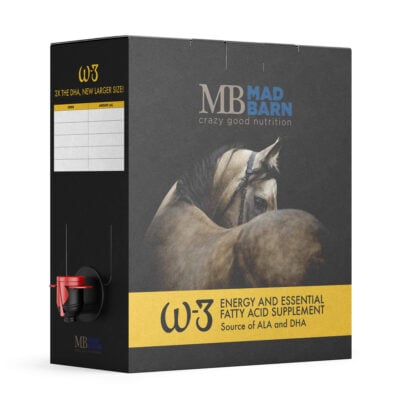
| W-3 Oil | 30 – 60 mL (1 – 2oz) |
| Omneity® Pellets | 100 g (1 scoop) |
| Salt | 15 g (1 tbsp) |
Once your donkey has achieved an ideal body condition, transition them to a maintenance diet so they are not taking in excess calories once their body weight has improved. If they start losing weight again after being on a maintenance diet, consult with your veterinarian.
Frequently Asked Questions
Here are some frequently asked questions about feeding and managing donkeys:
Donkeys evolved in arid environments and are more efficient at digesting fibrous forage, requiring lower-quality diets and specialized management compared to horses.
Low-quality grass hay or straw is ideal for donkeys, as it provides necessary fiber without excess energy that can lead to obesity and metabolic problems.
Because of their efficient metabolism and ability to extract nutrients from poor forage, donkeys can easily gain weight when fed rich hay, concentrates, or excessive pasture.
AMS is a donkey-specific form of metabolic syndrome characterized by insulin resistance, obesity, and increased risk of laminitis, requiring dietary and management adjustments.
Use the donkey-specific 1–5 body condition scoring system, focusing on fat deposits along the neck, withers, and hindquarters, rather than the 1–9 system used for horses.
Avoid high-energy grains, sweet feeds, and unrestricted access to lush pasture, as these can contribute to metabolic disorders, obesity, and digestive issues in donkeys.
Summary
Because donkeys have more efficient digestive systems and a higher risk of metabolic conditions, they need a different feeding and management approach than horses.
- Donkeys are adapted to arid desert environments with sparse vegetation, making them prone to obesity and related health issues in modern domestic management settings
- Low-quality hay or straw should be the foundation of your donkey's diet to support gut health, behavioral needs, and healthy weight maintenance
- Changes to your donkey's diet need to be made gradually to avoid risk of hyperlipemia, which can be life-threatening
- Frequently monitor your donkey's body condition score using the donkey-specific scale and adjust their diet as needed
- For help formulating a feeding program for your donkey, submit their information online for a free consultation with our equine nutritionists.
References
- Smith, G.A., & Burden, F.A. Practical Donkey and Mule Nutrition. Equine Applied & Clinical Nutrition. 2013.
- National Farm Animal Care Council. Code of Practice for the Care and Handling of Equines. (Equine Code of Practice). 2013.
- Burden, F.A., et al. Hyperlipedemia in a population of aged donkeys: description, prevalence, and potential risk factors. J Vet Intern Med. 2011.
- The Donkey Sanctuary. The Clinical Companion of the Donkey. 2021.
- The Donkey Sanctuary. Donkey Body Condition Score Chart. 2020.
- Orth, et al. Development of a Donkey Grimace Scale to Recognize Pain in Donkeys (Equus asinus) Post Castration. Animals. 2020.
- Gehlen, H., et al. Pituitary Pars Intermedia Dysfunction and Metabolic Syndrome in donkeys. Animals. 2020. View Summary
- Burden, F., & Thiemann, A. Donkeys are different. J Equine Vet Sci. 2015.
- National Research Council. Nutrient Requirements of Horses: Sixth Revised Edition. 2007.
- Izraely, H., et al. Factors determining the digestive efficiency of the domesticated donkey (Equus asinus asinus). Q J Exp Physiol. 1989. View Summary
- Wood, S.J. Some factors affecting the digestible energy requirements and dry matter intake of mature donkeys and a comparison with normal husbandry practices. Edinburgh Research Archives. 2010. View Summary
- Mendoza, F.J., et al. Donkey Internal Medicine—Part I: Metabolic, Endocrine, and Alimentary Tract Disturbances. J Equine Vet Sci. 2018.
- Mendoza, F.J., et al. Evaluation of the combined glucose-insulin and intravenous glucose tolerance tests for insulin dysregulation diagnosis in donkeys. Equine Vet J. 2022. View Summary
- Thiemann, A.K., et al. Gastrointestinal Disorders of Donkeys and Mules. Vet Clin North Am Equine Pract. 2019.
- Cox, R., et al. Case control study to investigate risk factors for impaction colic in donkeys in the UK. Prev Vet Med. 2009.