English






Inflammatory Airway Disease (IAD) is a common, performance-limiting respiratory condition that affects horses of all breeds and disciplines, particularly young to middle-aged animals in training. Part of the equine asthma spectrum, IAD is characterized by airway inflammation and increased mucus production without the overt respiratory distress seen in more severe asthma cases.
Horses with IAD may exhibit subtle clinical signs, such as occasional coughing, reduced stamina, and prolonged recovery time after exercise, making early detection and diagnosis a challenge. The condition is most frequently identified in horses kept in stabled environments or those exposed to airborne irritants such as dust, mold, and ammonia.
Treatment strategies focus on reducing airway inflammation and minimizing exposure to respiratory irritants. This often includes adjustments in management practices — such as improving ventilation, soaking hay, and reducing dust — as well as pharmacological therapies like corticosteroids and bronchodilators when necessary.
Since IAD can significantly impact athletic performance, early recognition and intervention are essential. Read on to learn more about the causes, clinical signs, diagnostic approaches, treatment options, and preventive strategies associated with Inflammatory Airway Disease in horses.
Inflammatory Airway Disease in Horses
Inflammatory airway disease (IAD) is a form of equine asthma, a condition causing inflammation of the lungs in horses. [1] At the microscopic level, the inflammation caused by asthma results in bronchoconstriction (narrowing of the airway), thickening of the airway walls, and increased production of mucus that may block airflow. [1]
For horses with severe forms of asthma, these changes result in coughing, wheezing, and increased respiratory effort at rest. [1] Many horses develop a “heave line,” a thickening of the abdominal muscles, as they use these muscles to maximize air intake. [1]
IAD is a milder form of asthma, typically causing poor performance in athletic horses. [1] Affected horses have inflammation in their airways and excessive accumulation of mucus; however, they do not have significant bronchoconstriction. [1]
Consequently, these horses typically do not show signs of increased respiratory effort at rest and only show signs of asthma during exercise. [1]
Symptoms
The main clinical signs of inflammatory airway disease in horses are: [2][4]
- Occasional coughing, particularly during exercise
- Poor performance
- Exercise intolerance
- Poor recovery from exercise
- Increased respiratory effort during exercise
It is important to note that increased respiratory effort in IAD cases only occurs during exercise. Horses with increased effort at rest are more likely to have severe equine asthma. [2]
Causes
Equine asthma is primarily an allergic disease triggered by inhalation of airborne particles. [1] These particles, such as dust, fungi, and molds, trigger an allergic reaction within the lung tissue causing inflammation and damage. [1]
Risk factors that increase allergen exposure include: [2][3]
- Frequent stabling
- Consuming dry hay
- Stalls bedded with straw
- Barns with poor ventilation
However, relatively little is known about the exact cause of IAD compared to more severe forms of equine asthma. [2] Identified risk factors include stabling and exposure to cold, dry environments. [2] There is some evidence that airborne pollutants may also play a role in IAD. [5]
Additionally, IAD can develop at a younger age than severe equine asthma. [2] Horses developing severe equine asthma are typically older than 7 years of age, while IAD can affect horses of any age. [2]
Most horses diagnosed with IAD are under 5 years old. [2] The reason for this age discrepancy is unclear.
Diagnosis
The symptoms of inflammatory airway disease are relatively non-specific and are associated with many other conditions that result in poor performance. A thorough diagnostic work-up is necessary to determine whether the cause of these symptoms is related to IAD.
Other conditions that the veterinarian may consider include: [2]
- Severe equine asthma
- Viral infections, such as equine herpesvirus or equine influenza
- Bronchopneumonia or pleuropneumonia
- Lungworm infection
- Exercise-induced pulmonary hemorrhage
- Roaring or other upper airway conditions
Common diagnostic procedures used to identify IAD include: [2]
- Airway endoscopy
- Bronchoalveolar lavage
- Lung function testing
Endoscopy
Endoscopy involves passing a camera on a long tube through the horse’s nostril into their airways. The camera allows the veterinarian to visualize mucus sitting within the trachea (windpipe). [2]
Healthy horses typically have no mucus or only a few specks of mucus within their trachea. [2] In horses with IAD, large amounts of mucus are visible and may form a continuous stream along the length of the airway. [2]
Bronchoalveolar Lavage
Bronchoalveolar lavage (BAL) is a procedure where the veterinarian introduces sterile saline into the horse’s airway, then collects the fluid for analysis. As the fluid sits in the airway, it picks up cells that can be evaluated under a microscope to make a diagnosis.
Horses with severe equine asthma typically have high levels of neutrophils in their BAL fluid. [2] Neutrophils target bacteria and fungi as part of the immune system.
In contrast, horses with IAD typically have increased neutrophils, eosinophils and mast cells. [2] Eosinophils and mast cells are immune cells that take part in allergic responses.
Lung Function
To test lung function, veterinarians can measure airflow at rest or immediately after exercise using an airtight mask over the horse’s nose. This specialized equipment is typically only available at referral centers that focus on cardiopulmonary health. [6]
Horses with IAD typically have normal lung function at rest, but abnormal lung function during and after exercise. [7]
What's your top priority with your horse's health?

What's your top priority with your horse's health?
Treatment
Specific treatment protocols for inflammatory airway disease have not been established. Most of the recommendations for these horses are based on severe equine asthma, under the presumption that the conditions have related causes. [2]
The three main goals of IAD treatment are:
- Reducing existing airway inflammation
- Opening the airways
- Preventing a new inflammatory response
Controlling Inflammation
Corticosteroids are the main method for reducing the existing inflammation within the horse’s lungs. These medications can either be given systemically (to the whole body) or through inhalation. [2] Systemic steroid treatment can trigger laminitis in predisposed horses, so veterinarians may recommend inhaled steroids for these patients.
Common systemic medications include: [2]
- Dexamethasone
- Prednisolone
Inhaled corticosteroids are given through an equine inhaler or nebulizer. [2] Medications include: [2]
- Beclomethasone
- Fluticasone
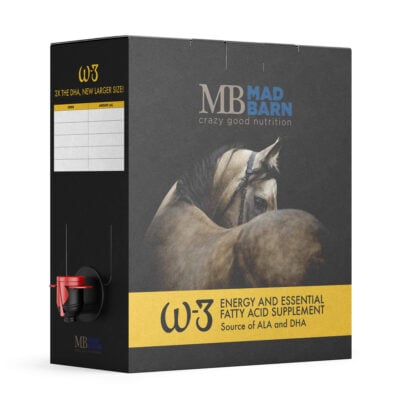
Omega-3 polyunsaturated fatty acids may also help reduce the inflammatory response in the lungs. In one study, supplementing omega-3 fatty acids alongside environmental management strategies resulted in a more rapid improvement in clinical signs compared to unsupplemented horses. [8]
All of the supplemented horses in the study had a resolution of coughing by the 6th week of treatment, versus continued coughing in most of the unsupplemented horses. [8]
Inhalation Therapy
Local delivery of medication via inhalation improves drug deposition in the lower airways while minimizing systemic side effects. Two primary modalities are metered-dose inhalers (MDIs) and nebulizers.
Metered-Dose Inhalers (MDIs):
MDIs consist of pressurized canisters containing corticosteroids or bronchodilators that are dispensed using an equine-specific spacer or nozzle. The spacer allows the horse to inhale aerosolized medication over several breaths, making it easier for owners to administer the medication effectively.

Nebulizers:
Nebulizers convert liquid medications into a fine aerosol of microscopic droplets that reach distal airways. Jet, ultrasonic, and vibrating mesh nebulizers vary in particle size and delivery efficiency.
Although nebulization sessions require longer administration times, they permit flexible dosing of multiple drug classes and can aid mucus clearance through airway hydration.

Choosing between MDIs and nebulizers depends on drug availability, cost, ease of use, and the horse’s tolerance for the dosing equipment. Integrating inhalation therapy with environmental management and systemic treatments helps optimize control of airway inflammation and mucus accumulation.
Opening the Airways
A key feature of equine asthma is bronchoconstriction, or narrowing of the airways. This narrowing makes it hard for air to pass through the tissue, which results in difficulty breathing. Medications called bronchodilators stimulate the airways to open, improving airflow.
Since horses with IAD have minimal bronchoconstriction at rest, the efficacy of bronchodilators in these cases is controversial. [2] Some believe that it may help reduce coughing during exercise and improve clearance of mucus from the airways. [2]
The most common bronchodilators for horses are: [2]
- Aminophylline
- Clenbuterol or albuterol
- Theophylline
- Ipratropium bromide
If bronchodilators are used, it is important that management changes are implemented at the same time. Opening the airway allows more allergens to enter the lungs, which may trigger additional inflammation. [2]
For this reason, many veterinarians recommend using bronchodilators in combination with corticosteroids to minimize any potential inflammatory response. [2]
Some veterinarians also prescribe mucolytics, which are medications that break down mucus in the airway. Currently there is little evidence to support their use in horses with asthma, but they may benefit some horses. [2]

Management Changes
The mainstay of equine asthma treatment is modifying the horse’s management to reduce exposure to allergens. [2] One study showed that environmental changes alone can reduce wall thickening caused by asthma by up to 30%, even without the use of corticosteroids. [9]
Owners should be aware that these management changes are a life-long requirement, as horses typically do not recover from asthma.
Finding management changes that are feasible for the owner while successfully controlling the horse’s clinical signs can take significant time and trial and error.
Feeding Changes
Ingesting feed exposes the horse’s airway to airborne particles released by the feed product. Dry hay contains especially high levels of particulates, including dust, bacteria, and mold spores. [3]
An observational study showed that feeding dry hay increased the likelihood of horses being diagnosed with mild asthma. [10] Changing IAD horses to a low-dust feedstuff can reduce their exposure to these particulates and minimize the inflammatory response.
Alternatives to dry hay include: [3]
- Soaked hay
- Steamed hay
- Haylage
- Pelleted or cubed forage
One study showed that switching to a pelleted feed, alongside other environmental changes, reduced the inhaled dust load by 2 – 3 times. [11] Research has also shown that soaking or steaming hay reduces the number of dust particles, mold spores, and bacterial contaminants. [3]
Horses with asthma consuming steamed hay have reduced tracheal mucus and improved clinical signs compared to horses eating dry hay. [12]
The method of providing hay to the horse can also affect air quality. Feeding horses from a hay net increases exposure to airborne particulates by up to three times compared to feeding off the ground. [13]
Owners should consider feeding horses from mangers or the floor to reduce exposure to particulates. Feeding at ground level more closely mimics the horse’s natural grazing posture, which facilitates proper neck carriage and allows the upper respiratory tract to drain more effectively.
This position encourages natural clearance of nasal secretions and debris, supporting respiratory health and minimizing the risk of airway inflammation associated with inhaled dust and mold particles.
Environmental Changes
The horse’s immediate environment can have a significant impact on their inhaled particulate load. This is particularly of concern in stabled horses, as indoor environments can accumulate airborne particles if they are not properly ventilated. [3]
For horses with IAD, maximizing turnout is important to remove the horse from dusty environments. If outdoor turnout is not possible, installing mechanical ventilation systems or opening windows and doors can improve air quality in the barn.
Bedding is a major source of particulates in barns, with the type of bedding having a significant effect on air quality. [3] Straw is considered the most dusty bedding, although the dust levels depend on its conservation method and how it is stored. [3] Straw also has a higher bacterial and fungal contamination risk than other types of bedding. [14]
Lower-dust alternatives to straw include: [3]
- Wood shavings
- Paper or cardboard
- Straw or wood pellets
- Peat moss
- Hemp
Activity within the barn can also affect air quality. Common barn activities that increase particulate load include: [3]
- Mucking out stalls
- Grooming horses
- Adding new bedding to stalls
- Feed delivery
- Harrowing riding arenas
- Riding in an indoor arena
Horses with IAD should be turned out or removed from the area where these activities are occurring. [3]
Prognosis
Equine asthma is a life-long disease, requiring ongoing management to prevent symptoms from flaring up. With proper management, the structural damage to the lungs triggered by asthma can be partially reversed. [9] Many horses with IAD can have performance careers with proper management and medical treatment when necessary.
Research into equine asthma is ongoing, with a particular emphasis on new treatment options. [6] Researchers are investigating the different phenotypes (presentations) of asthma to better understand why some horses develop mild versus severe disease. [15]
Identifying a horse’s phenotype would allow for specific treatment recommendations that target the cell population within the horse’s lungs, resulting in better outcomes. [15]
Frequently Asked Questions
Here are some frequently asked questions about inflammatory airway disease:
Inflammatory airway disease is a mild form of equine asthma that only manifests during exercise, causing poor performance, exercise intolerance, and coughing, without resting respiratory distress.
Airborne particles, such as dust, molds, and bacteria, trigger an allergic response in the lungs, leading to inflammation, mucus production, and airflow limitation characteristic of equine asthma.
Treatment involves anti-inflammatory corticosteroids to reduce airway inflammation, bronchodilators to open the airways, and lifelong management changes to minimize exposure to airborne irritants.
Equine asthma is a lifelong condition that cannot be cured, but with appropriate veterinary care and management strategies, many horses can maintain athletic performance and quality of life.
Summary
Inflammatory airway disease (IAD) is a mild form of equine asthma that affects horses of all breeds and ages.
- IAD is triggered by airborne particles that activate the horse's immune system after inhalation
- Particle inhalation results in inflammation within the lungs, increased mucus production, and thickening of the airways
- Clinical signs include poor performance, occasional coughing, and prolonged recovery time after exercise
- Diagnosis typically requires combination of endoscopy and bronchoalveolar lavage to identify cell populations within the lungs
- Treatment involves the use of anti-inflammatory corticosteroids, bronchodilators, and management changes to reduce the horse's exposure to airborne particles
References
- Bond. S. et al., Equine Asthma: Integrative Biologic Relevance of a Recently Proposed Nomenclature. Journal of Veterinary Internal Medicine. 2018.
- Couëtil. L. L. et al., Inflammatory Airway Disease of Horses—Revised Consensus Statement. Journal of Veterinary Internal Medicine. 2016. View Summary
- Diez De Castro. E. and Fernandez-Molina. J. M., Environmental Management of Equine Asthma. Animals. 2024. View Summary
- Kinnison. T. et al., Mild-Moderate Equine Asthma: A Scoping Review of Evidence Supporting the Consensus Definition. The Veterinary Journal. 2022. View Summary
- Millerick-May. M. L. et al., Local Airborne Particulate Concentration Is Associated with Visible Tracheal Mucus in Thoroughbred Racehorses. Equine Veterinary Journal. 2013. View Summary
- Couetil. L. et al., Equine Asthma: Current Understanding and Future Directions. Frontiers in Veterinary Science. 2020. View Summary
- Couëtil. L. L. et al., Clinical Signs, Evaluation of Bronchoalveolar Lavage Fluid, and Assessment of Pulmonary Function in Horses with Inflammatory Respiratory Disease. American Journal of Veterinary Research. 2001. View Summary
- Nogradi. N. et al., Omega-3 Fatty Acid Supplementation Provides an Additional Benefit to a Low-Dust Diet in the Management of Horses with Chronic Lower Airway Inflammatory Disease. Journal of Veterinary Internal Medicine. 2015.
- Leclere. M. et al., Corticosteroids and Antigen Avoidance Decrease Airway Smooth Muscle Mass in an Equine Asthma Model. American Journal of Respiratory Cell and Molecular Biology. American Thoracic Society - AJRCMB. 2012. View Summary
- Dauvillier. J. et al., Fungi in Respiratory Samples of Horses with Inflammatory Airway Disease. Journal of Veterinary Internal Medicine. 2019. View Summary
- Clements. J. M. and Pirie. R. S., Respirable Dust Concentrations in Equine Stables. Part 1: Validation of Equipment and Effect of Various Management Systems. Research in Veterinary Science. 2007.
- Blumerich. C. A., Comparison of Airway Response in Recurrent Airway Obstruction-Affected Horses Fed Steamed Versus Non-Steamed Hay. Virginia Tech. 2012.
- Ivester. K. m. et al., Environmental Exposures and Airway Inflammation in Young Thoroughbred Horses. Journal of Veterinary Internal Medicine. 2014.
- Kwiatkowska-Stenzel. A. et al., The Effect of Stable Bedding Materials on Dust Levels, Microbial Air Contamination and Equine Respiratory Health. Research in Veterinary Science. 2017. View Summary
- Leduc. L. et al., Towards Personalized Medicine for the Treatment of Equine Asthma. The Veterinary Journal. 2024. View Summary