English



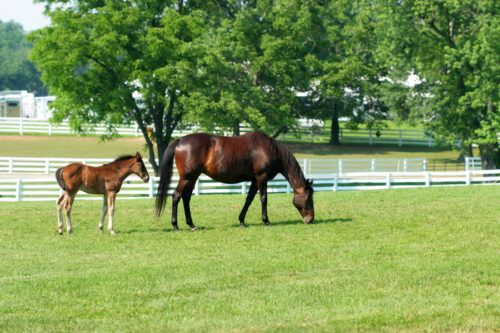
The Irish Draught is a strong and versatile horse breed originating from Ireland. Descended from native Irish horses crossed with various imported horse breeds, Irish Draughts are recognized as the official national horse breed of the Republic of Ireland.
Contrary to their name suggesting a draft-type, Irish Draughts are technically warmblood horses. Their athleticism and size made them popular additions to sport horse breeding programs worldwide, but demand for crosses almost drove the purebred Irish Draught to extinction.
Modern efforts to maintain traditional traits and improve genetic diversity have reinvigorated the breed. Purebred Irish Draughts are now recognized as versatile and willing equine partners, frequently participating in athletic disciplines.
Although these horses are generally healthy, Irish Draughts need good care and management to perform their best. This breed profile will review the history, characteristics, health problems, and nutritional needs of the Irish Draught breed.
Irish Draught History
Irish Draught horses have a rich history that traces back to medieval Ireland, but the breed first gained international recognition in the late 19th to early 20th centuries.
The breed’s evolution from its Irish roots to its current international acclaim was largely driven by its legacy in serving the needs of Irish farmers.
Origin
Historians believe the Irish Draught descends from the Irish Hobby, an extinct small horse breed developed in Ireland in the Middle Ages. These horses crossed with Anglo-Norman war horses brought to Ireland in the 12th century to produce a sturdier type. [1]
The 16th century saw a surge in trade, introduced imported horses from Spain and other European nations to the Irish breeding population. Breeding programs in Ireland primarily produced cavalry horses until the mid-19th century.
Irish farmers sought to create the ideal all-around horse during this period to meet the diverse needs of their rural communities. Crossbreeding with Clydesdales increased Irish horses’ size and hauling capabilities, while Thoroughbred blood maintained the horse’s stamina and lighter conformation. [2]
Governmental registration and inspections of the resulting horses were introduced in the early 20th century, establishing a foundation stock for the Irish Draught breed. [3]
Historic Use
The original Irish Hobbies were small, swift horses used for racing and light cavalry riding. The introduction of larger war horses to Ireland during the Middle Ages led to the development of purpose-bred cavalry horses that were strong enough to carry armoured knights into battle.
Irish Draught horses can trace their development directly to the rugged landscapes of Ireland, where a sturdy, adaptable horse was essential for daily life. These horses were expected to perform a variety of tasks, from plowing fields and hauling goods to carrying their riders to church on Sundays.
Unlike European breeding programs, which bred separate horses for light riding and heavy farm work, Irish farmers wanted to create a single breed suitable for any purpose. Thus began the development of a versatile breed that could do farm work, haul carts, and hunt foxes. [1]
These horses also needed to be economical to keep and sensible to handle. Word eventually spread about the adaptable Irish horses that could excel under saddle, under harness, and in front of a plow. As a result, demand for Irish Draughts grew throughout the British Isles.
However, Purebred Irish Draughts experienced a setback in 1922 when a fire in the Four Courts destroyed the original studbook records. World War I and II also led to significant declines in the breed’s population, and many Irish Draughts were sent abroad for breeding. [3]
Irish Draughts also gained popularity as breeding stock to produce crosses with Thoroughbreds and Warmbloods. As the resulting Irish Sport Horses and Irish Hunters experienced success in several disciplines, the number of purebred Irish Draughts declined. [3]
Breed Registry
The Irish Draught Horse Society was founded in 1976 in Ireland to preserve the purebred breed. The society supports research into improving genetic diversity while maintaining characteristics of the pure Irish Draught horse.
In Canada, The Irish Draught Horse Society of Canada manages the Canadian Irish Draught Horse studbook, as well as the Canadian Irish Draught Sport Horse studbook.
Established in 1993, the Irish Draught Horse Society of North America promotes the breeding and ownership of purebred and part-bred Irish Draughts primarily in the United States.
| Breed Summary | |
|---|---|
| Breed Name | Irish Draught |
| Breed Type | Warmblood |
| Origin | Ireland |
| Breed Registry | Irish Draught Horse Society; Irish Draught Horse Society of Canada; Irish Draught Horse Society of North America |
| Population Status | Endangered |
| Average Height | 15.1 – 16.3 hh |
| Average Weight | 1,400 lb (636 kg) |
| Common Coat Colors | Bay, black, chestnut, gray; solid colours |
| Conformation | Athletic, substantial, expressive head, high-set neck, defined withers, deep heart girth, strong back, long sloping croup, straight legs, short strong cannons, generous hooves |
| Common Uses | Jumping, eventing, dressage, driving, fox hunting |
| Temperament | Gentle, intelligent, docile, sensible, easy-going, adaptable |
| Best For | Riders of all levels seeking a versatile pleasure or sport horse |
| Common Health Concerns | PSSM, developmental orthopedic disease, osteochondrosis dissecans, osteoarthritis, obesity, laminitis, gastric ulcers, hindgut dysbiosis |
What's your top priority with your horse's health?

What's your top priority with your horse's health?
Breed Characteristics
Breeding programs for Irish Sport Horses prioritize the production of horses for competitive equestrian disciplines, while Irish Draught horse breeding follows an established breed standard.
The characteristics described by the Irish Draught breed standard reflect the breed’s versatility and heritage.
Conformation
Irish Draught Horses stand between 15.1 and 16.3 hands tall. These horses have a similar conformation to light draft horses but are more athletic. The ideal Irish Draught displays a proud presence with substance and quality.
These horses have generous but pleasant heads, expressive eyes, broad foreheads, and long ears. A slight Roman nose is acceptable. The neck is set high and connects to well-defined withers, and the chest is not too broad.
Deep heart girths, strong backs, and powerful quarters add to their substance. The croup is long and sloping, not flat-topped or short like some draft breeds. Their legs are straight with flat, clean bones and generous hooves. Cannon bones are short and strong.
Irish Draughts have smooth and free movement without the exaggerated animation of some lighter breeds or the heavy gait of draft horses.
Colours
Irish Draughts come in every solid coat colour, including gray. Excessive white leg markings above the hocks or knees are undesirable.
Temperament
Irish Draught horses have a gentle and intelligent nature. The breed is known for its docile disposition and sensibility, which makes it an enjoyable pleasure horse for riders of all levels. Many Irish Draught owners appreciate the breed’s easy-going personality and adaptability.
Studies evaluating personality variations between breeds found Irish Draughts ranked lowest for anxiety and excitability, alongside American Quarter Horses.
These results suggest Irish Draughts could be more suitable for timid riders who want a reliable English mount. [4]
Disciplines
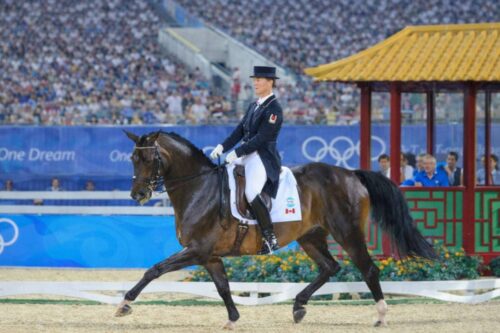
While Irish Draughts do not have the specialized abilities of other sport horses in top-level competitions, their versatility allows them to hold their own in various show arenas. These horses frequently participate in jumping, eventing, dressage, and driving events.
The Irish Draught’s athletic jumping ability and courage make them popular fox hunting mounts, providing a link to the breed’s deep-rooted heritage of hunting with farmers in the Irish countryside.
Irish Draught Health
Irish Draught horses are generally robust but, like all horse breeds, they are vulnerable to various health conditions depending on their lifestyle.
Although the declining purebred population has led to concerns about the breed’s genetic diversity, breeders have made significant efforts to preserve rare bloodlines.
Genetic Diversity
The Irish Department of Agriculture has classified the Irish Draught as an endangered breed. A 2018 report by Horse Sport Ireland evaluating genetic diversity in Irish Draughts found that while the rare bloodlines remain in Ireland, they are critically at risk.[5]
This report also revealed a 10% increase in foal registrations from the previous year, but noted that only 17 rare fillies and 13 rare colts were registered in Ireland between 2013 and 2017. If rare bloodlines are lost, Irish Draughts could experience a significant decrease in genetic diversity. [5]
Maintaining genetic diversity is critical for preserving health in all breed populations. As inbreeding increases and the gene pool declines, the risk of inherited disorders and health problems also increases.
Assisted reproductive technology, such as freezing semen from rare stallions, could help preserve future diversity. [6]
Health Problems
Polysaccharide storage myopathy (PSSM) is a common genetic disease in warmbloods and draught breeds. Researchers have identified the GYS1 mutation responsible for PSSM type 1 in Irish Draught crosses, but further research is required to identify this mutation in Irish Draughts. [7]
This condition is characterized by an abnormal accumulation of glycogen and abnormal energy generation in muscle cells that can cause episodes of tying up in affected horses. Nutritional management with a low-starch diet and ample exercise can help control clinical signs. [7] The diet must also have properly balanced mineral supply and may sometimes provide additional calories from fat.
Developmental orthopedic disease (DODs) such as osteochondrosis dissecans can also affect growing Irish Draught horses. Mineral deficiencies or imbalances and excessive calories leading to rapid growth heighten the risks of this condition, potentially leading to lameness and poor performance. [8]
Lameness can also arise from degenerative joint diseases, such as osteoarthritis, which is associated with increased wear and tear on joints in horses with heavy workloads.
Intense competition and training schedules can influence other aspects of equine health. [8] Performance horses are known to have a high incidence of gastric ulcers and related digestive health problems.
High-stress lifestyles and starch-rich diets can also compromise the gut health of athletic Irish Draughts; however, diligent management can mitigate these risks. [9]

Care and Management
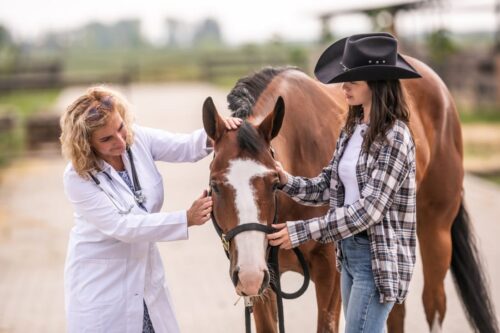
Good basic horse care is important to keep all Irish Draughts happy and healthy, regardless of their job. You should work with your veterinarian to develop an annual wellness program that includes scheduled vaccinations, deworming, and dental exams.
Routine veterinary lameness exams for your Irish Draught can also help identify joint problems before they significantly affect performance. Competition horses often need preventative maintenance to support their joints and stay comfortable in their jobs.
Irish Draughts also need regular farrier care from a qualified hoof professional. Trimming maintains optimal hoof balance to support overall soundness. Some Irish Draughts are maintained barefoot but others need shoes for extra protection, especially if they have a high workload.
These hardy horses are well-suited to living outdoors year-round, but make sure they can access adequate shelter. If your Irish Draught lives inside, make sure to provide regular daily turnout in a social grouping on appropriate pasture. Turnout helps to reduce stress and boredom, promoting healthy muscles, joints, bones, and ligaments.
Keep in mind that full-time turnout on lush grass is unsafe for some Irish Draughts. This breed is prone to obesity and laminitis, and excessive intake of rich pasture grass can exacerbate the risk, necessitating careful pasture management and monitoring. Horses may benefit from dry lot turnout if overweight.
Irish Draught Nutrition
The ideal feeding program for your Irish Draught depends on their individual needs, including their body condition, exercise level, performance goals and health status.
Consult with an equine nutritionist or your veterinarian to formulate a balanced diet that meets your horse’s nutrition requirements and supports their unique lifestyle.
Weight Maintenance
Irish Draughts are generally considered easy keepers, meaning they have an efficient metabolism and have little difficulty maintaining body condition. Farmers developed the breed for economic efficiency so they could survive on limited rations.
While their hearty nature made them ideal for challenging agricultural environments, it also means that modern owners need to be vigilant to avoid overfeeding. Grain-based diets that provide excess energy can lead to obesity and related health concerns in the breed.
While Irish Draughts have a lower susceptibility to equine metabolic syndrome (EMS) compared to other native British breeds, these horses can still develop obesity. [10]
You should closely monitor your horse’s body condition score to ensure they maintain a healthy weight. A body condition score of 5 on the 9-point Henneke body condition scale is considered ideal.
Unexpected weight loss in your Irish Draught could indicate an underlying health issue such as gastric ulcers or hindgut dysbiosis.
Sample Diet
The following sample diet is intended for a mature 636 kg (1,400 lb) Irish Draught Horse with normal body condition at maintenance (not exercising).
| Feed | Amount per day |
|---|---|
| Mid-Quality Hay (8% crude protein) | Free-choice |
| Salt | 45 g (3 tbsps) |
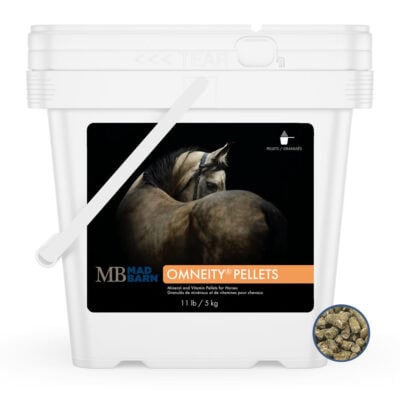
| Omneity® Pellets | 250 g (2.5 scoops) |
| Diet Analysis | |
| Digestible Energy (% of Req) | 106% |
| Protein (% of Req) | 127% |
| HC (starch + ESC; % Diet) | 8.8% |
Mad Barn’s Omneity® vitamin and mineral supplement is included in this feeding plan to provide essential nutrients that are commonly lacking in forage. Feeding Omneity® ensures your horse gets key nutrients required to support hoof health, metabolic function, the immune system and more. [11]
Omneity® is a nutrient-dense supplement that does not contain any added grains, sugars or starches. This makes it an ideal choice for easy keepers, such as Irish Draughts.
Forage
Forage should be the foundation of every equine diet. The average horse consumes approximately 2% of their body weight in forage every day, although horses in heavy work may consume up to 2.5% per day.
While Irish Draughts are not as heavy as draft breeds of their height, they are still substantial horses. The average 636 kg (1,400 lb) Irish Draught horse will consume 13 kg (28 lb) of hay daily.
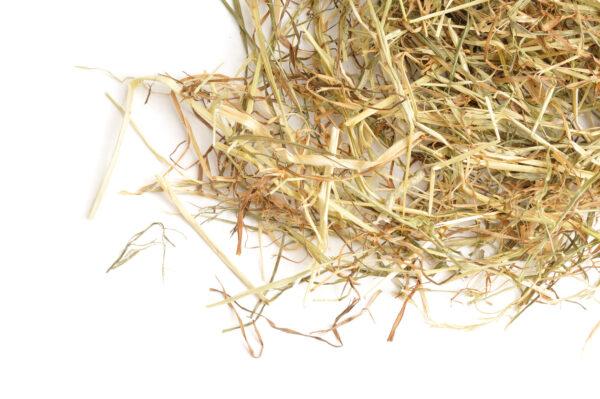
Choosing the right type and quality of hay is important to match your horse’s energy and protein requirements. For Irish Draughts at maintenance (not exercising), mature grass hay is a good option.
Horses in heavier work require higher quality hay that provides more digestible energy and protein. Good forage sources for exercising horses include alfalfa hay and early growth grass hay. [13]
Providing free-choice hay in a slow feeder helps to ensure that your horse always has forage available while regulating intake. If your Irish Draught is overweight and turned out on grass, consider using a grazing muzzle to restrict grass intake.
Individual needs can vary based on the horse’s health status, the availability of forage, and the presence of additional feeds in the diet. Consult with a qualified equine nutritionist to determine the exact feeding requirements for your unique horse.
You can submit a hay sample for analysis to ensure your forage is appropriate for your Irish Draught. The hay analysis report will include the digestible energy, protein, starch, sugar and mineral content of your hay.
Water & Salt
Consistent access to clean, fresh water is essential to maintain adequate hydration in Irish Draught horses. These horses typically require daily water intake between 5 to 15 gallons, depending on their activity level, environmental conditions, and the moisture content of their feed.
Regularly monitor your horse’s water intake to make sure they are drinking enough. Make sure you know the signs of dehydration in your horse, especially if they are exercising in hot or humid weather conditions.
Salt plays a crucial role in maintaining electrolyte balance, promoting proper muscle function, and stimulating thirst in horses.
Nutritionists recommend providing your horse with free-choice plain loose salt in their stall or pasture and adding at least 3 tablespoons of salt to your Irish Draught’s daily feed.
Feeding Recommendations
A forage-based diet is typically sufficient to meet the energy and protein requirements of most Irish Draughts. However, horses in heavy work may need additional feeds to supply required calories.
Diets that contain excess high-starch grains can increase the risks of digestive upset in horses. [11] Instead of feeding commercial grains or concentrates to add energy, horses in heavy work benefit from fiber-rich feeds and fat supplements.
Restricting dietary starch is also essential for managing horses with PSSM. Fat feeding at up to 20% of their caloric intake has been suggested but requires several months to have any effect. [15]
Oils can be poured on top of hay pellets or mixed with beet pulp to encourage intake. Feeding a fat supplement with omega-3 fatty acids provides additional benefits for joint and skin health. [12]
Proper dietary balance is particularly critical for young horses to support healthy bone development and growth. Growing Irish Draught horses face an increased likelihood of developmental disorders when fed diets with too much energy or improper mineral ratios. [14]
Nutritional Supplements
A well-balanced diet, with appropriate inclusion of energy, protein, vitamins, and minerals, is key to your Irish Draught’s health and vitality. Once the diet is balanced, you may want to add other nutritional supplements to support performance or meet specific needs.
- Natural Vitamin E: Irish Draughts with heavy exercise programs or muscle disorders may need vitamin E supplementation to support antioxidant status, immune function, muscle health and adaptation to exercise. While fresh grass is rich in vitamin E, levels of this nutrient diminish over time in cut hay, meaning that horses on a hay-based diet generally need supplementation.
- W-3 Oil is an omega-3 fatty acid supplement that provides a palatable source of microalgae DHA and natural Vitamin E. This fat supplement supports joint function, cardiovascular health, skin condition, and the immune system.
- Visceral+ is a comprehensive gut formula to help maintain stomach and hindgut health in horses. This pelleted supplement contains probiotics, herbs, yeast, amino acids, and minerals that support the entire gastrointestinal tract.
- MSM powder is a natural joint supplement that helps protect against oxidative stress after exercise. This supplement helps maintain healthy connective tissues and cartilage in your Irish Draught’s joints.
- Acetyl-l-carnitine can support efficient energy generation and muscle relaxation in horses with PSSM by directing glucose into energy pathways and away from glycogen, acting as an antioxidant and promoting biogenesis of mitochondria.
Frequently Asked Questions
Here are some frequently asked questions about Irish Draught horses:
The Irish Draught is a strong, versatile horse breed from Ireland and is recognized as the official national horse breed of the Republic of Ireland. Although the name suggests a heavy draft horse, Irish Draught horses are technically warmbloods. They were developed as farm and riding horses that could work in the field, pull carts, and carry riders comfortably. Today, the breed is valued for its athleticism and willing temperament.
Irish Draught horses currently are used for a wide range of disciplines, including jumping, eventing, dressage, and driving. They make particularly popular fox hunting mounts, due to the breed’s hunting background. Historically, they were bred as all-purpose horses for farm work, hauling, riding, and hunting. Their combination of strength and athleticism made them especially useful to Irish farmers.
Irish Draught horses have an athletic build that blends draft strength with sport horse quality. They typically have a generous, pleasant head with a broad forehead, long ears, and expressive eye, which gives them an intelligent appearance. A high-set neck and defined withers create a proud, well-balanced outline, while a deep heart girth, strong back, and powerful hindquarters give the breed a deep-bodied, muscular look. Their long, sloping croup contributes to a smooth topline. Straight legs with flat, clean bone, short strong cannons, and generous hooves create the breed’s sturdy appearance. Irish Draught horses move freely and smoothly without the heavy action of a true draft breed.
Irish Draught horses come in solid coat colors, with bay, black, chestnut, and gray among the most common. Gray is especially well recognized in the breed. Excessive white markings above the knees or hocks are generally considered undesirable in the breed standard. Overall, Irish Draught horses are known for practical, traditional colors rather than flashy patterns.
Irish Draught horses usually stand between 15.1 and 16.3 hands high. That puts them in a moderate-to-large size range with enough substance for farm and sport work. Their height, combined with their strong frame, gives them an impressive but athletic appearance. Individual horses may vary slightly depending on bloodlines and management during growth.
Irish Draught horses are known for having a calm, intelligent, and sensible temperament. They are often described as gentle, adaptable, and easy to handle, which helps explain their popularity as pleasure and sport horses. Compared to many other breeds, Irish Draught horses tend to be less anxious and less excitable. Their steady nature is one of the breed’s most valued traits.
Irish Draught horses can be good for beginners because they are generally gentle, sensible, and easy-going. The breed is known for a docile temperament and lower excitability than many other riding breeds. That said, suitability still depends on the individual horse’s age, training, and management. A well-trained Irish Draught can be an enjoyable partner for novice and timid riders.
Common health problems in Irish Draught horses include obesity, laminitis, osteoarthritis, developmental orthopedic disease, gastric ulcers, and other digestive issues. Osteochondrosis dissecans can affect growing horses, especially if their diets are too energy-dense or mineral balance is poor. Polysaccharide storage myopathy is also a concern associated with draught and warmblood populations connected to the breed. Good breeding, balanced nutrition, weight management, and regular veterinary care help reduce many of these risks.
To prevent obesity in an Irish Draught horse, feed a forage-based diet, monitor body condition regularly, and limit excess calories from grain and rich pasture. Irish Draught horses are often easy keepers, so they can gain weight quickly on lush grass or energy-dense feeds. Dry lot turnout, slow feeders, or grazing muzzles may help control intake when needed. Keeping an Irish Draught at a healthy body condition score also lowers the risk of laminitis and other metabolic problems.
Irish Draught horses generally handle a range of living conditions well, including year-round turnout, as long as they have adequate shelter. They are hardy horses that often do well outdoors, but they still need protection from extreme weather. If kept in a stall, Irish Draught horses benefit from regular turnout, movement, and social contact to reduce stress and support soundness. Pasture access should also be managed carefully in easy keepers to help prevent obesity and laminitis.
To give an Irish Draught the right amount of exercise and nutrition, match the diet and workload to the horse’s body condition, age, health status, and performance level. Most Irish Draught horses do well on a forage-based diet, with additional calories added only when work demands it. Regular turnout and consistent exercise help maintain healthy muscles, joints, and body weight. Working with a veterinarian or equine nutritionist can help ensure your Irish Draught stays fit, sound, and properly fed.
Summary
Irish Draught horses combine athleticism and a calm temperament, making them suitable for a variety of equine disciplines. Historically, they were bred to fulfill diverse roles on farms, in transportation, and for cavalry.
- Originating from a cross between Irish Hobbies and larger warhorses, Irish Draughts were bred for their adaptability in multiple tasks.
- Versatility in work, from plowing fields to fox hunting, shaped the breed's development and demand throughout Ireland and beyond.
- Known for their gentle, easy-going nature, Irish Draughts are well-suited for riders seeking a reliable and sensible mount.
- Genetic diversity is critical for preserving the breed, as it has been classified as endangered due to a declining purebred population.
- Health concerns include Polysaccharide Storage Myopathy (PSSM) and developmental orthopedic diseases, which require careful management of diet and exercise.
- Regular veterinary care, hoof maintenance, and a balanced diet are essential to prevent obesity and ensure overall health.
- Their athletic ability allows Irish Draughts to excel in disciplines such as eventing and dressage, while maintaining their versatility across various activities.
References
- Scharff, R. On the Irish Horse and Its Early History. Proceed Royal Irish Acad. 1909.
- McGahern, A. et al. Mitochondrial DNA sequence diversity in extant Irish horse populations and in ancient horses. Anim Genet. 2006. View Summary
- Lewis, C. Irish Horse Breeding and the Irish Draught Horse, 1917–1978. Ag Hist Rev. 1983.
- Sian Lloyd, A. et al. Horse personality: Variation between breeds. Appl Anim Behav Sci. 2008.
- Brady, K. Irish Draught Horse Stud Book. Horse Sport Ireland. 2018.
- Cabeza, J. et al. Advancements and challenges in in vitro reproductive technologies for the conservation of equine species. Theriogenology Wild. 2023.
- Stanley, R. et al. A glycogen synthase 1 mutation associated with equine polysaccharide storage myopathy and exertional rhabdomyolysis occurs in a variety of UK breeds. Equine Vet J. 2010. View Summary
- Fleck, S. et al. Lameness associated with tarsocrural joint pathology in 17 mature horses (1997–2010). Equine Vet Ed. 2012.
- Hartmann, A. et al. A preliminary investigation into the association between competition and gastric ulcer formation in non-racing performance horses. J Equine Vet Sci. 2003.
- Durham, A. et al. ECEIM consensus statement on equine metabolic syndrome. J Vet Intern Med. 2019. View Summary
- Cipriano-Salazar, M. et al. The Dietary Components and Feeding Management as Options to Offset Digestive Disturbances in Horses. J Equine Vet Sci. 2019.
- Ribeiro, W. et al. The Effect of Varying Dietary Starch and Fat Content on Serum Creatine Kinase Activity and Substrate Availability in Equine Polysaccharide Storage Myopathy. J Vet Intern Med. 2008. View Summary
- Lybbert, T. et al. Feeding alfalfa hay to exercising horses reduces the severity of gastric squamous mucosal ulceration. Proceed AAEP. 2007.
- Kronfeld, D. et al. Dietary Aspects of Developmental Orthopedic Disease in Young Horses. Vet Clin North Am Equine Pract. 1990. View Summary
- Valentine, B.A. et al. Role of dietary carbohydrate and fat in horses with equine polysaccharide storage myopathy. J Am Vet Med Assoc. 2001. View Summary