English




Ketamine is a medication used routinely in equine veterinary medicine, known for its role as a fast-acting anesthetic. It is commonly administered during surgical procedures, diagnostic imaging, and emergency interventions, where it helps induce and maintain anesthesia while preserving cardiovascular function.
Beyond its use in general anesthesia, ketamine is also being explored for additional applications in horses, including pain management and the treatment of certain neurological or behavioral conditions. Its effects on the central nervous system make it a valuable tool in both routine and specialized veterinary care.
Understanding how ketamine works, when it is used, and what to expect during treatment can help horse owners better interpret veterinary decisions and support safe, effective care for their horses.
Ketamine for Horses
Ketamine is a dissociative anesthetic drug used for inducing general anesthesia in many species, including horses. [1] In equine practice, it is most commonly administered intravenously as part of a balanced anesthesia protocol, allowing veterinarians to safely perform surgical procedures, diagnostic imaging, and emergency interventions.
Ketamine works by altering how the brain processes sensory input, producing a state of unconsciousness while maintaining certain protective reflexes and cardiovascular stability. This makes it particularly useful in horses, where maintaining blood pressure and minimizing complications during anesthesia are critical.
In addition to its role in general anesthesia, ketamine also has analgesic (pain-relieving) properties. At lower, sub-anesthetic doses, it may be used to reduce pain and limit central sensitization, particularly in cases involving severe or chronic discomfort.
These applications are typically reserved for controlled clinical settings and require careful dosing and monitoring by a veterinarian.
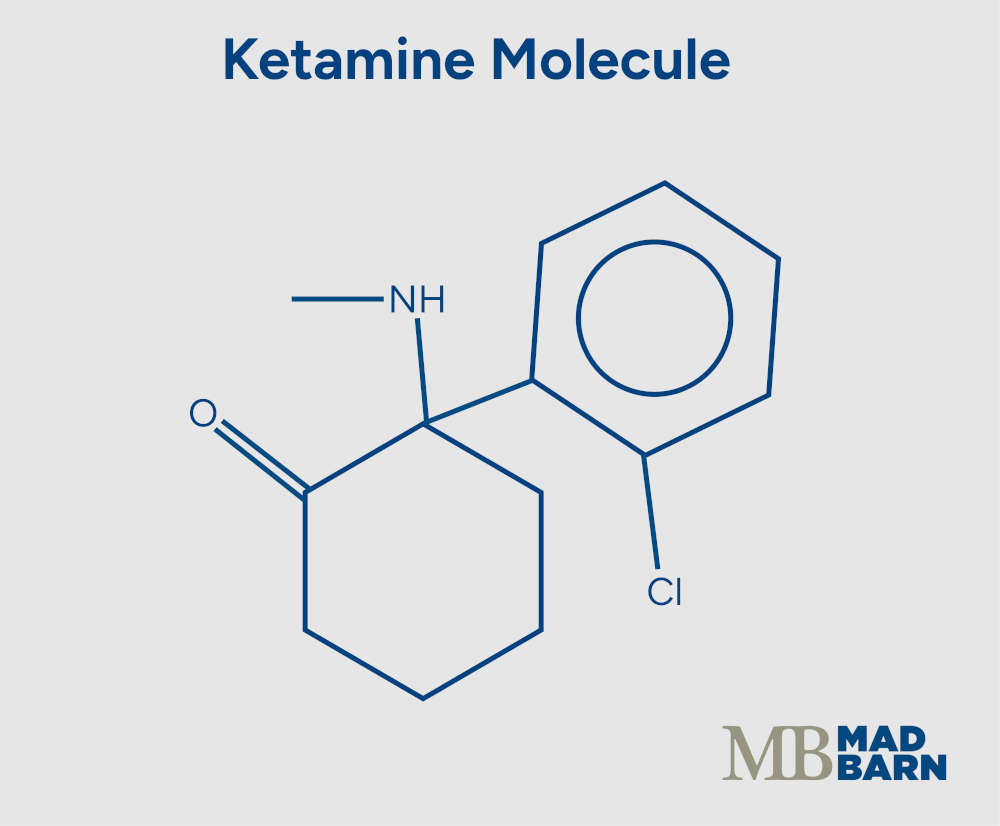
Ketamine is a tightly regulated medication due to its potential for misuse in humans. It has recognized dissociative and hallucinogenic effects, which have led to its use as a recreational drug in illicit settings.
As a result, ketamine is classified as a controlled substance in many countries, including Canada and the United States, and its distribution, storage, and administration are subject to strict regulatory oversight.
For veterinarians and horse owners, this means ketamine is only available through licensed professionals and must be handled according to established medical and legal guidelines. These controls help ensure the drug is used safely and appropriately within veterinary practice while limiting the risk of diversion or misuse.
Available Forms
Ketamine is only available in injectable forms for intravenous (IV; into a vein) use. [1]
Brand names include: [1]
- Ketaset
- Ketalar®
- Ketalean
- Ketajet
- Vetalar
- Ketanest
Ketamine is approved for use in horses by the FDA and Health Canada.
What's your top priority with your horse's health?

What's your top priority with your horse's health?
Drug Class: Dissociative Anesthetics
Veterinarians use dissociative anesthetic drugs to induce general anesthesia, a sleep-like state where the animal is completely unconscious and does not respond to stimuli. [2]
Dissociative anesthetics produce anesthesia by blocking sensory input to the central nervous system. Since there is no sensation coming from the body, the nervous system does not react to pain, touch, sound, or other stimuli. [2]
The other major dissociative anesthetic used in horses is tiletamine. [2] Both medications have a similar effect in terms of inducing anesthesia.
Mechanism of Action
Dissociative anesthetics block NMDA receptors. Under normal circumstances, glutamate binds to these receptors when there is a stimulus (like pain). This produces an excitatory nerve signal that the central nervous system responds to (like moving away from the pain). [3]
Dissociative anesthetics prevent glutamate from binding to these receptors, which prevents nerve signaling. [3]
NMDA receptors are also involved in pain sensation. In the spinal cord, binding of glutamate to NMDA receptors can induce a pain response. [3]
Affected spinal cord neurons are particularly sensitive to repeated stimuli. If a painful stimulus continues, the nerves produce increasingly stronger nerve signals as the body’s way of alerting the animal to pain. Scientists refer to this phenomenon as “central wind-up”. [4]
Once wind-up begins, the affected neurons continue sending pain signals, even if the painful stimulus subsides. Dissociative anesthetics can prevent wind-up from occurring, making them an important part of the pain control plan for surgeries and other highly invasive procedures. [3][4]
Uses in Horses
Ketamine is one of the primary medications veterinarians use to induce general anesthesia in horses. General anesthesia is necessary for surgical procedures where the horse must remain completely still throughout the entire procedure.
General anesthesia may also be chosen by the veterinarian for scenarios in which complete unconsciousness is safer for both horse and handler, depending on the horse’s temperament.
Common uses of general anesthesia include:
- Castration
- Colic surgery
- Orthopedic surgeries such as fracture repair, joint surgery, or removing bone fragments
- Upper airway surgeries
- Wounds requiring extensive management, such as casting or skin grafts
- Dystocia (difficulty giving birth) and cesarean section
- Advanced diagnostic imaging such as CT or MRI
- Some advanced dental procedures
Administration Routes
Veterinarians administer ketamine intravenously as part of their general anesthetic protocol. Most veterinarians combine ketamine with other medications to ensure a smooth anesthetic procedure and recovery.
Often, the procedure begins by sedating the horse with a sedative, such as xylazine. [3] Once the horse is sedate, they administer a combination of ketamine and a muscle relaxant, such as midazolam or guaifenesin. [3]
This combination is important as ketamine has poor muscle relaxant properties on its own. [3]
Prolonged Anesthesia
The first ketamine dose induces anesthesia that lasts around 10 – 20 minutes. For longer procedures, the veterinarian may use additional doses of ketamine or or switch to inhaled anesthetics, like isoflurane. This is decision is based on the anticipated length of the procedure.
Throughout the procedure the veterinarian monitors the horse’s plane of anesthesia (how unconscious the horse is), and adjusts accordingly.
If the planned procedure takes less than 20 minutes, the combination of ketamine and a muscle relaxant is usually sufficient.
For longer procedures, veterinarians have two options for maintaining anesthesia:
- Top-up doses of muscle relaxant, ketamine, and/or sedatives
- Inhaled anesthetics such as isoflurane
Recovery from Anesthesia
Once the procedure is complete, the veterinarian allows the horse to wake up from general anesthesia under supervision, with or without assistance, depending on the scenario. [5] It is important that the horse stays recumbent (lying down) for as long as possible.
Attempting to stand up before a horse has fully regained control of their body can lead to potentially fatal injuries. Some veterinarians may lean or sit on the horse’s neck, or administer small doses of sedatives, to help prevent them from standing up too soon if they show signs of activity.
Storage
Ketamine must be stored at room temperature and protected from light. [1] Light exposure can cause the solution to darken, however this does not affect its potency. Veterinarians do not use the medication if precipitates (solid particles in solution) are present. [1]
Safety Warnings & Precautions
Ketamine is a commonly used medication in veterinary medicine for numerous species. In horses, it has an excellent safety profile and a wide therapeutic index (range of effective doses). [1]
General anesthesia is a complex procedure that requires careful monitoring of the body systems and regular adjustments of anesthetic dose. [1] Given this, many of the complications associated with ketamine use are related to the risks associated with general anesthesia, not the ketamine itself.
Monitoring
Horses under general anesthesia require careful monitoring. Veterinary teams assess the horse continuously for their plane of anesthesia (how unconscious they are) and vital signs. [5]
Depending on the procedure, they may use monitoring devices such as: [5]
- Pulse oximeters: Measures blood oxygen levels
- Electrocardiograms: Record the heart’s electrical activity and heart rate
- Blood pressure monitoring: To assess heart function and delivery of blood to the tissues
They also keep a close eye on the horse’s body temperature. [1] Horses under anesthesia have a low metabolic rate and do not activate normal heat-producing mechanisms. In some cases, the veterinary team may need to use external warming to keep the horse comfortable.
Horses under ketamine anesthesia often keep their eyes open, putting them at risk of drying out or becoming irritated. [1] Veterinary staff apply lubricant at regular intervals to keep the eye surface moist.
Contraindications
Contraindications refer to circumstances where a drug should be avoided or used with caution.
Ketamine itself is a safe drug, however there are several contraindications to general anesthesia as a whole.
Common contraindications for general anesthesia in horses include: [1]
- High blood pressure
- Heart failure
- Liver or kidney failure
- Recent head trauma
- Increased intraocular pressure (glaucoma)
Ketamine can also cross the placenta to a developing fetus. In laboratory animals, there are reports of ketamine causing developmental delays and increased fetal resorption. [1] In general, veterinarians avoid putting pregnant mares under general anesthesia unless the benefit of the procedure outweighs the potential risk to the foal.
Side Effects
Side effects refer to known effects of a drug that are not directly related to their intended effects.
Possible side effects of ketamine use in horses include: [1]
- Increased heart rate and blood pressure
- Muscle rigidity or increased muscle tone
- Preserved reflexes (such as swallowing or blinking) during anesthesia
- Involuntary limb movements during induction or recovery
- Excitement or disorientation during recovery from anesthesia
- Increased salivation
- Temporary changes in breathing pattern
Adverse Reactions
Adverse reactions refer to responses to a drug that are not typically expected under normal administration.
Adverse reactions to ketamine are uncommon in horses, but can include: [1]
- Hyperthermia (fever)
- Unusual eye movements (nystagmus)
- Erratic and prolonged recovery from anesthesia
- Difficulty breathing
- Muscular tremors or spasms
- Seizure-like activity
- Excessive salivation
- Slower gastrointestinal movements
Rarely, cardiac arrest can occur from ketamine administration. [1]
Acute Toxicity (Overdose)
Ketamine is a safe drug when given by a veterinarian and monitored closely. Overdose of ketamine results in respiratory depression (slow breathing or no breathing). [1]
Treatment involves mechanical ventilation until the effects of ketamine wear off enough for the horse to resume breathing on their own. [1]

Drug Interactions
As ketamine is commonly used in combination with other medications, understanding its drug interactions is very important. Drug interactions can affect the metabolism, side effects, or recovery time from ketamine or the drug it is combined with.
Drugs that may reduce the metabolism of ketamine include: [1]
- Alpha-2 adrenergic agonists such as xylazine or detomidine
- Fluconazole
Drugs that may worsen the side effects of ketamine administration include: [1]
- CNS depressants such as acepromazine or methocarbamol
- Neuromuscular blockers such as succinylcholine
- Sympathomimetics such as albuterol, dobutamine, or epinephrine
Drugs that may prolong the recovery time from ketamine anesthesia include: [1]
- Other general anesthetic agents, such as propofol or isoflurane
- Barbiturates such as pentobarbital or phenobarbital
- Benzodiazepines like diazepam or midazolam
- Opioids like buprenorphine or morphine
Regulatory Status and Legal Considerations
Ketamine is a controlled substance in many countries due to its potential for human misuse.
In veterinary medicine, it is a strictly controlled prescription drug that must be stored, handled, and recorded according to federal and regional regulations for controlled substances. [1] As such, only licensed veterinarians are allowed to administer or possess ketamine for animal use.
Ketamine is approved by the FDA and Health Canada for use in animals as an intravenous anesthetic agent. [1] There are both brand name and generic versions of the medication available to veterinarians.
Status in Competition
Ketamine is classified as a controlled substance by most competition organizations, including the Fédération Équestre Internationale (FEI). [6]
Due to its analgesic and sedative effects, even trace amounts of the drug in the horse’s system during competition could mask pain or influence performance.
Withdrawal times for ketamine may vary between competition authorities. Clinical judgment is required to ensure ketamine is not administered too close to an event, where it could affect welfare, obscure signs of disease, or aggravate an existing condition. The FEI’s Prohibited Substances Database notes that horses with locomotor problems in particular should be given adequate rest.
Always check with your competition organization about withdrawal times for ketamine before scheduling a general anesthetic procedure for your horse.
Frequently Asked Questions
Here are some frequently asked questions about ketamine use in horses:
Ketamine is a dissociative anesthetic used in horses to induce and maintain short-term anesthesia. Ketamine is used in horses for procedures such as castration, wound repair, and diagnostic imaging, and is administered intravenously by a veterinarian to provide rapid and reliable sedation and anesthesia.
Ketamine works in horses by blocking NMDA (N-methyl-D-aspartate) receptors in the brain. Ketamine works in horses to disrupt pain signaling and sensory perception, producing anesthesia, analgesia, and a dissociative state while maintaining certain reflexes and muscle tone.
Ketamine is indicated in horses for short surgical procedures and anesthesia induction. Ketamine is used in horses when rapid onset of anesthesia is required, including emergency situations, field procedures, and as part of balanced anesthesia protocols before inhalant anesthetics.
Ketamine is given to horses by intravenous injection. Ketamine is administered in horses by a veterinarian, often following sedation with other drugs, to ensure smooth induction of anesthesia and minimize adverse effects during procedures.
Ketamine works quickly in horses, typically producing anesthesia within seconds after intravenous administration. Ketamine works in horses to provide rapid onset, making it well suited for controlled induction and time-sensitive procedures.
Ketamine has a short duration of action in horses. Ketamine lasts in horses for approximately 10 to 20 minutes after a single intravenous dose, although additional doses or infusions may be used to extend anesthesia depending on the procedure.
Ketamine is generally safe for horses when used appropriately. Ketamine is safe in horses when administered by a veterinarian with proper dosing and monitoring, although risks increase if used improperly or without adequate supportive care.
Ketamine can cause several side effects in horses. Ketamine side effects in horses include increased heart rate, elevated blood pressure, muscle rigidity, and excitement or disorientation during recovery from anesthesia.
Ketamine provides pain relief in horses as part of its anesthetic effects. Ketamine provides analgesia in horses by blocking NMDA receptors, which play a role in pain transmission and central sensitization.
Ketamine is combined with other drugs in horses to improve anesthesia quality and safety. Ketamine is often used with sedatives or muscle relaxants in horses to reduce muscle rigidity, improve relaxation, and support smoother induction and recovery.
Ketamine can cause rough recovery in horses if not properly managed. Ketamine recovery in horses may involve excitement, incoordination, or disorientation, particularly if sedation is inadequate or environmental factors are not controlled.
Ketamine is a controlled substance in veterinary medicine. Ketamine is regulated in horses and other animals in countries such as Canada and the United States, requiring proper storage, record-keeping, and veterinary oversight.
Ketamine is not allowed in competition horses at the time of performance. Ketamine is considered a prohibited or controlled medication in most equestrian disciplines, and appropriate withdrawal times must be followed under veterinary guidance.
Ketamine is not used for standing sedation in horses. In combination with other medications, it is used to induce anesthesia, which requires the horse to lie down as they are unconscious.
Ketamine is a controlled substance because of its potential for misuse in humans. Ketamine is classified as a controlled drug due to its psychoactive effects, which have led to recreational abuse, so its use in horses is strictly regulated and limited to licensed veterinary professionals.
Ketamine cannot be handled or administered by horse owners or barn staff. Ketamine is restricted to use by licensed veterinarians because of its anesthetic effects and potential for human misuse, and it must be stored, handled, and administered according to legal and safety guidelines.
Ketamine is associated with human drug use because of its dissociative and hallucinogenic effects. Ketamine is used medically in both humans and animals, but outside of clinical settings it may be misused recreationally, which is why its veterinary use in horses is tightly controlled.
Summary
Ketamine is used routinely in equine veterinary medicine as a dissociative anesthetic. It is primarily used to induce general anesthesia while maintaining cardiovascular stability. It plays a key role in surgical, diagnostic, and emergency procedures in horses.
- Induces rapid, reliable anesthesia in horses while preserving blood pressure and protective reflexes
- Works by blocking NMDA receptors, preventing pain signaling and reducing central sensitization
- Administered intravenously alongside sedatives and muscle relaxants for balanced anesthesia
- Provides short-duration anesthesia, with repeat dosing or inhaled agents used for longer procedures
- Requires careful monitoring during induction, maintenance, and recovery to minimize risks
- Is a controlled substance restricted to veterinary use due to its potential for misuse
References
- Ketamine. Plumb's Veterinary Drugs. 2024.
- Equine Pharmacology. 1st ed. John Wiley & Sons, Ltd. 2014.
- Doherty. T. et al. Eds. Manual of Equine Anesthesia and Analgesia. 1st ed. Wiley. 2022.
- Shaffran. N. Managing Difficult Pain Cases: Neuropathic Pain & Wind-Up Phenomenon. World Small Animal Veterinary Association World Congress Proceedings. 2013.
- Taylor. P. M. and Clarke. K. W. Handbook of Equine Anaesthesia. 2nd ed. Elsevier Saunders. 2007.
- 2026 Prohibited Substances List. FEI. 2026.